"The whole of society needs to understand that the future will be digital"
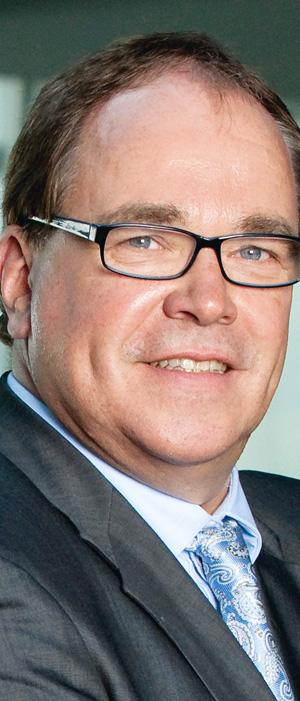
Matthias Ehrlich, a member of the Executive Board of United Internet Media AG and a member of the Executive Board of 1&1 Internet AG, discusses the Swiss digital advertising market in an interview with Werbewoche Editor-in-Chief Pierre C. Meier.


WW: How do the digital German and digital Swiss advertising markets differ?
Matthias Ehrlich: In terms of digital usage, Switzerland is one of the leading countries in Europe. Online penetration is high, as is mobile usage, Internet access is fast, and yet there is this "backwardness" of the digital advertising market in Switzerland. Not only in comparison to Germany, but to the whole of Europe.
Where does that come from?
What is striking is the unusually high dominance of print, which is backed up by powerful publishing houses. In Germany, too, print and print-based online are very strong because large, very professional publishing constructs were built up after the Second World War: the Burdas, the Springers, the Gruner & Jahrs, right down to the smaller ones like Klambt. It turns out that houses that have a "classic" mainstay and could lose something through online do not necessarily run enthusiastically towards online. This also applies to Switzerland. I would see that as a point in any case. But there is another point. When it became clear how strong online was going to become in the first place, many young people in Germany switched professionally from traditional media to online, thus fertilizing the online world with know-how from the traditional sector - in other words, with the actual understanding of advertising. We mustn't forget that digital is first and foremost just a technology and an infrastructure. Only the knowledge of advertising communication allows the implementation and use of the new possibilities. It seems to me that this change from the traditional to the online sector is not happening in Switzerland. What is striking is the high import of German colleagues into the Swiss online business - even in management positions. It is clear that there is a lack of specialists to really drive online forward. Perhaps the training has not been as massive as in Germany. This may be due to the fact that we Germans are a technology-loving and technology-oriented people. After the poets and thinkers, we are now a country of engineers (laughs). In Internet technology today, you see a lot of things internationally that have been developed in Germany at a very high level.
How could online be promoted more?
It is important that the whole of society, the economy, politics and all decision-makers understand that the future will be digital. This does not mean that there will be no more newspapers, nor does it mean that there will be no more TV or radio, but it does mean that a new infrastructure is being laid over the earth with the Internet. Everything is going digital. The way we communicate with consumers is changing. Both in the B2C sector and in B2C. This understanding is a very important social issue, because it determines how successfully you can do business in the future and keep up in purely technical terms. I believe it is an essential competence of a modern industrialized nation to be able to make massive use of the digital infrastructure and to understand how to reach people in a digitized world where they already live in digital communication worlds. This is something that would have to be understood right across Swiss society and the Swiss economy.
Are other small countries in Europe further along than we are?
The European and world champions are the small countries. There are studies by McKinsey that examine the impact of digital communications on a country's gross national product. We see that two countries are the global leaders: Finland and Israel. In the case of Israel, we know why: it is a military power and therefore has an enormous amount of technology and technical know-how, and of course uses both on the Internet. The rest of the top ten are mainly Scandinavians, who were very Internet-savvy at a very early stage. These are comparatively small national structures with small, manageable language populations that are much further along in using the Internet. This can also be seen in the Baltic states. These invested a lot of money in their digital infrastructure after they became independent, and it has paid off for them. Austria has similar problems to Switzerland, but is already further along on this path. From our point of view - we are also active in Austria - this discussion started there two years ago.
When you talk to Swiss customers, where do you see the inhibition threshold? Is it more of a wait-and-see attitude or is there a lack of belief in the digital future?
Given my age, I'm no longer a digital whiz. In my company, I said very early on that we know a lot about technology, but people in the traditional field know better how to use it and what happens with the customer. It's a balance between "don't follow all the hype", don't just start spinning because something new comes along, but first see what I can use from it and how. A non-judgmental, purely utility-based evaluation of the toolkit and then consistently applying it and getting into learning is important. Last year, I felt that Switzerland was on a roll. It may be that the current economic difficulties and the crisis throughout Europe have caused companies to become very passive and very cautious. People don't want to dare to experiment and they don't want to invest now. Although - and here we could learn from all other countries - it is precisely in crises that such painful change processes are easier to implement. It is easier to explain their necessity to your own employees. You can stand up and say: We're in a crisis, we have to find new ways. Actually, you could use that, but I don't have the feeling that that's happening in Switzerland.
Is the tense economic situation in Germany causing online advertising to stagnate or even decline?
In some respects, Germany has been a bit of an island of the blissful. We have a strong domestic economy, but we are seeing the big drivers of the online advertising business, the fast-moving consumer goods companies, seeing their sales slump in the crisis countries of Spain, Italy, Greece, Portugal, and perhaps still in parts of France, because consumers are buying cheaper and non-branded. These losses, together with the rise in raw material prices in some cases, mean that they have giant holes in their balance sheets. What do they do then? They pull some of the money out of Germany. We've been noticing this for two months in the year-end business. Companies are saving money in order to save their balance sheets to some extent. In what is also a dangerous trend for Europe as a whole, there are one or two companies that are beginning to consider whether Europe is still the region where advertising investments should be made in the future, and are perhaps turning their attention back to purely sales-oriented advertising measures. I know some companies that are thinking about withdrawing their long-term investments in brands from Europe in order to invest in countries where a middle class that is just emerging or already exists in some cases, is small in percentage terms but has quite a lot of purchasing power, is hungry for European goods.
Do you see any trends in which industries are moving in this direction?
The FMCG companies were very strong. The financial sector has collapsed completely. The financial sector in particular was one of the industries with the highest digital share. In the automotive sector, we still had a boom because the manufacturers fought against the weakening foreign competition with bargain offers and did a lot of advertising for them.
Let's move on to another point. In Switzerland, the share of digital advertising among FMCG companies is rather low.
This is a development phase. In Germany, too, online was initially introduced and used purely as a sales medium. To a certain extent, Google keywords were seen as synonymous with online advertising. This is nonsense, of course. In the meantime, it has been proven that digital display advertising works just like print ads and that online moving image formats work just like a TV spot.
... but it's the online industry's own fault, because for a long time they were focused on selling the measurable click and left the branding aspect on the side!
That's because many of the protagonists of this online revolution are techies who have earned their money with these clicks. Because image advertising is firmly anchored at the big agencies, the online advertisers are coming over the villages, so to speak. What happens with real-time advertising (RTB) is also a story like that. RTB is a logistical backyard topic that does not decisively advance online advertising in any way. The technology behind it does lower costs, and that's to be applauded, but the branding aspect falls by the wayside. Many online people make the mistake of talking about RTB and the latest tech gimmicks, but fail to compete with TV and print people on the notion of branding. I'm proud that my company has always been very strong on this branding aspect. We invested extremely heavily for a long time without much return on investment. We explained online to colleagues who came from the traditional world, and they taught us traditional advertising in return. We used market research to find out how online advertising works for normal branding or image issues. By means of market studies, we provided the relevant evidence. This paved the way to the large budgets of FMCG companies. One study we helped to conduct led to Procter & Gamble stipulating an internal global online share of 20 percent.
... I strongly doubt whether the proportion in Switzerland is 20 percent.
That's a homegrown problem. A big house like Goldbach, which has many years of experience, is proud of the fact that they do audience platforms. They have to drive branding and imaging. The small adnetworks can't do that. If that's not done enough, then nothing happens and a lot of money is left behind. That's why we're now addressing this very issue with our 4Q (For Quality) initiative, which we launched together with our marketing colleagues from Interactive Media and the two digital agencies Pilot and Plan.net.
Aren't the advertising agencies also challenged?
You have to see: Online is not a simple medium. It's complex and difficult, and expensive to manage. If you only have a small budget for online and you're also operating in a small market, it means that you can hardly refinance the effort you have to put in compared to the large budgets that are practically booked automatically in print or TV. So there are relatively few agencies that are really pushing the online business. In Germany, we've been fortunate to have three agencies that have made a big splash in online: Xenion, now Carat, Plan.net/Serviceplan and Pilot - all agencies that have their roots in online. These three have lit a fire under the butts of the big, global agencies. But marketers have also been putting on the pressure. And so advertisers suddenly wanted to know more about online advertising.
Is the rise in mobile online usage having an impact on the digital advertising market?
Switzerland might be unlucky that by the time the online market could take off, conversion to mobile is already happening, and so the high margins they've had over the last 4-5 years are now being eaten away by the lower monetization in mobile. It will become more and more difficult to take off in online, so Switzerland has to pick up its feet quickly.
What more can associations like IAB do for this besides training?
Generally speaking, the online players have to organize themselves across the board. In Germany, there were initially only a few pure online providers, and the main big players were the print and TV online companies. The online colleagues from the print and TV houses always enjoyed the joint work in the online organizations, because in their companies they were always slowed down a bit. In the associations, we were able to push the things that they would have liked to do, too, but were not allowed to do at home or for which they did not get any investment. With the pressure from the market, they were then able to implement these things accordingly. The cooperation in associations such as AGOF or OVK actually built up the online genre in the first place. Without that, it would not have been possible. A strong association that fights for the online genre is crucial. The individual areas such as performance, quality marketers, online agencies, advertisers, etc. are organized in individual sections, and thus we have the entire value chain in the association.
Interview: Pierre C. Meier