PR on the Social Web: Learning from the WWF
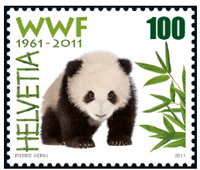
As a representative of an endangered species and a beloved icon, the panda has been the WWF’s emblem from the very beginning. But founding father Sir Peter Scott also chose it for practical reasons: It was perfectly suited for the cost-effective black-and-white use of the logo. To this day, the panda as a design element has hardly changed, but the way the organization communicates has certainly evolved. It has become much more colorful. *WerbeWoche* spoke with Fredi Lüthin, Head of Media at the WWF, and Gabriela D’Hondt, Social Media Manager, about what PR on social media means for a nonprofit organization.


While many companies are still rubbing their eyes in disbelief at social media, WWF Switzerland no longer needs any explanation of what communication on the social web means. The non-profit organization already uses Twitter, Facebook, YouTube and Flickr just as naturally as media relations and corporate publishing. The fact that WWF sees PR on the social web as a long-term and careful commitment is clear from the following four strategic goals:
Inform: Changes in media usage mean that people are spending more and more time on social networks on the web. WWF provides them with relevant information wherever they are. And in an appropriate form, depending on the channel. On Facebook, for example, the WWF talks about its successes in the form of a quiz and then invites the community to give the panda their face.
Provide emotional and social experiences: As part of the community, users should be able to share their experiences with other members and find an ideal home where they feel comfortable, as well as having fun and entertainment.
Maintaining dialog: Web 2.0 thrives on interaction. Topics that concern people are discussed, their opinions are encouraged and exchange is promoted.
Mobilize: The web community should support WWF's goals - both in terms of environmental impact and fundraising.
It is a particular challenge to be part of the world of fans and to build a functioning community. The WWF has recognized that companies and organizations must first be guests in a community and prove themselves to be valid discussion partners. This has worked quite well so far, says Fredi Lüthin: "We are proud of our strong community on both Twitter and Facebook." For him, it is clear that a non-profit organization must be supported by volunteers, donors and other dedicated places in order to be able to act. Although the WWF gained around 170 new fans on Twitter almost overnight to mark its anniversary and cracked the 3,000 mark, those responsible remain sober. They know that a large community is not enough. It only becomes valuable when it participates. Two thirds of our fans are active and with this figure we achieve better results than many internationally active companies, says Gabriela D'Hondt.
A climate that allows for dialog
Although the WWF does not show any faces, the commitment appears very human. The panda is in the spotlight, because the primary aim is to strengthen the organization's image. Incidentally, this has the advantage that the team can be put together flexibly depending on the workload. The human touch is ensured by a very conscious use of language that is adapted to the target group. The communication managers have opted for a consistent "you" approach. They also make sure that the content is conveyed in a relaxed, fast-paced language appropriate to the target group, with a good dash of humor thrown in for good measure. Even if the WWF wants to make a name for itself, the organization - with the exception of the anniversary activities - is not permanently the focus of attention. Links to external sites are just as much a matter of course as space for other opinions. This also creates space to develop and discuss topics. Gabriela D'Hondt is convinced that the fans are engaged because they are not bombarded with marketing. Like every community, the WWF community also has particularly active participants. We know most of the key players personally, because it is important to us to strengthen and deepen online relationships through personal encounters - that is simply part of the process.
What makes social media attractive?
PR on the social web is comparatively cheap, the only thing you have to factor in is the manpower. WWF Switzerland also created a guidebook app for iPhone and Android to mark its anniversary. The organization sees the social web as an opportunity to set topics, communicate in an opinion-oriented way and react quickly and flexibly to other points of view. It is also possible to create thematic worlds in which stakeholders can settle in and get involved. In this way, the goal of mobilizing people is not lost sight of in all activities, be it with online petitions or playfully with the WWF actions on Facebook.
Changes in media use mean that people are online more and more often and are increasingly using content on their mobile phones. For Fredi Lüthin, it is clear: "I want to get to the people, and today that increasingly means: I want to be visible on their phones." He is saying nothing other than that the WWF goes where the people are, namely online. A blog is not an issue for the WWF at the moment; this is more a case of classic PR. The organization conducts extremely intensive media work with up to 80 releases per year, which has proven its worth and should remain so. Nevertheless, the next step is to create a social media newsroom, modeled on that of WWF Germany. Such a newsroom, which brings together all online activities, is not only interesting for editorial teams, but also for bloggers and other interested parties. In addition to the newsroom, increased work with videos is also on the wish list: Films allow for very emotional and informative communication.
As attractive as the social web is, it also has its limits. Facebook in particular is a constant source of frustration for those responsible: Constantly changing policies, Facebook's data claw, the Open Graph, which also gives Google access to a large amount of data, and opaque, changing algorithms for displaying posts can make life difficult for social media managers.
PR on the social web has changed the WWF
And how does the WWF measure its success? Lüthin: At the moment, we're still measuring the change in our fan and follower base, the number of 'likes', recommendations and, most importantly, the comments we receive. However, we also evaluate the links that we shorten with bit.ly. This allows us to monitor how often the link has been used. However, this is not enough for us: we are currently trying to bundle the most important values for a meaningful ROI. Monitoring is also important for the WWF: through monitoring, we not only find out which topics are current and which issues are emerging, we can also determine which waves we have made. In this sense, monitoring is part of qualitative success control for us. We also use monitoring to identify opinion leaders, who we then try to involve in our communication in a targeted manner.
PR on the social web has changed the WWF. Yes, something is happening," says Lüthin. It has become clear to us that all areas of our organization, especially marketing, corporate communications and social media, need to work much more closely together. This is particularly crucial for our campaigns, where the social web will play a very important role in the future. But we are also paying more attention to the cross-media design of our member magazine, which has a circulation of 220,000 copies. This also has an impact on internal processes.
The WWF is trying to motivate its employees to get involved. Many WWF employees are still rather skeptical about online communication. We are trying to show them through our actions that it is worth investing in this channel, emphasizes Lüthin. However, it is clear to us that the employees must recognize a benefit. They see this when social media makes their work easier, be it in research or when it comes to finding out what is on people's minds. We therefore have the clear goal of broadening our internal basis for online communication and involving employees from the various subject areas.
Getting started is easy, but sticking with it is hard, Lüthin has learned about PR on the social web. If you want to be successful in the long term, you need additional resources for social media, otherwise it won't work. It is therefore very important that communication on the social web is embedded in the entire organization and integrated into the processes.
Marie-Christine Schindler
In a nutshell
WWF Switzerland's communications department has seven employees, including one person in French-speaking Switzerland and one in Ticino. WWF is also trilingual on Facebook and Twitter on separate accounts. Today, 60 percent of staff are employed on social media, and this figure is rising, with Fredi Lüthin primarily responsible for the Twitter account and Gabriela D'Hondt mainly for Facebook. The plan is to provide broader support for communication throughout the organization.
Reading tip:
Marie-Christine Schindler (2011): PR on the Social Web. O'Reilly-Verlag; 36.20 francs.