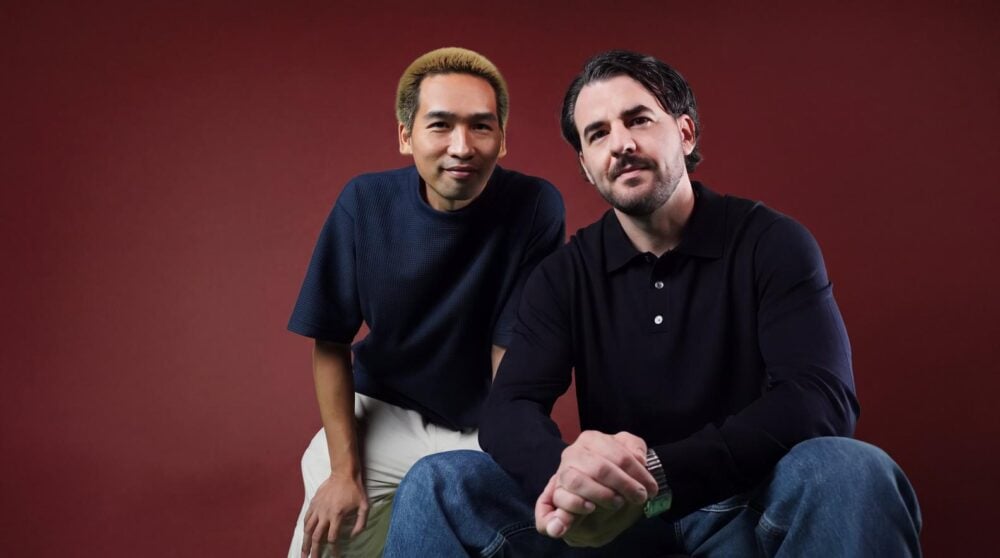
Constructive strategist
As the new president of the Alliance of Swiss Advertising Agencies, Carmelo Buffoli wants to raise awareness of the ASW quality label.


Carmelo Buffoli wants to raise awareness of the ASW quality label as the new President of the Alliance of Swiss Advertising Agencies. "In five years' time, the industry will be completely different because we will be undergoing a similar structural change as typographers did back then," Carmelo Buffoli is convinced. Back then, the digital revolution almost completely wiped out a profession - when suddenly anyone could set texts on a computer and design their own club magazine in their living room. In advertising, such a structural change will develop in such a way that many ideas will increasingly be part of a design that can also be offered by service providers other than advertising agencies - graphic work directly from a print shop, for example. The strategies of such advertising, on the other hand, should be delivered all the more sustainably by the agencies. For the newly elected President of the ASW, this development is one of the most important challenges for his term of office. He formulates his goal in this situation as follows: "I want to make the ASW quality label better known."
Developing strategies is also what he prefers to do in his own agency. "Too often, you just design quickly from the hip. Without any strategic justification," he says. Yet the most exciting thing about advertising is actually asking: What do we implement and how? What measures are we taking? What can we expect?
Buffoli came to advertising "in the golden eighties" via the School of Arts and Crafts. He initially worked as a graphic designer for clients. In 1991, he founded his own small agency and today employs seven people at Weinbergstrasse in Zurich. External specialists are hired as required and charged directly to the client. "An ideal model, in line with the ASW philosophy," he says, because an agency managed in this way has no underemployed staff. And when things get quieter, a lot of work is done in-house again.
In such cases, the father of the family, Buffoli, may have to stay at the agency for another week while his wife and children have already left for India. He has already spent his 14th vacation there this summer, as his wife comes from Tibet and her relatives now live in India. Since then, the subcontinent has also taken a liking to the Italian-Swiss Buffoli. "But I didn't become a Buddhist," he emphasizes, although he has his children brought up in Buddhism by their mother. He didn't meet his wife on a pilgrimage either, but "quite profanely in a Zurich disco". What he likes most about India is the completely unusual approach to time for an advertiser. The Italian has also come to appreciate the food from the Far East.
This coexistence of different cultures was also one of the reasons why Carmelo Buffoli was hired as an advisor to the National Council's Committee on Foreigners' Affairs. As he is a dual citizen, he was asked to advise on the automatic naturalization of the third generation. Since then, he has occasionally given talks on the subject. The bottom line: Switzerland needs foreigners, and it was created by foreigners. However, this situation requires active integration. "I have to integrate and make an effort to do something from my side too." In other words, a foreigner should not abandon his or her original culture at the border post, but rather contribute it in a meaningful way.
In addition to his Italianità, the advertiser now also finds an everyday connection to culture when playing the cello, "consuming books" and looking at constructive art.
Andreas Panzeri