Walensee Stage: «Charlie Chaplin» Makes an Appearance
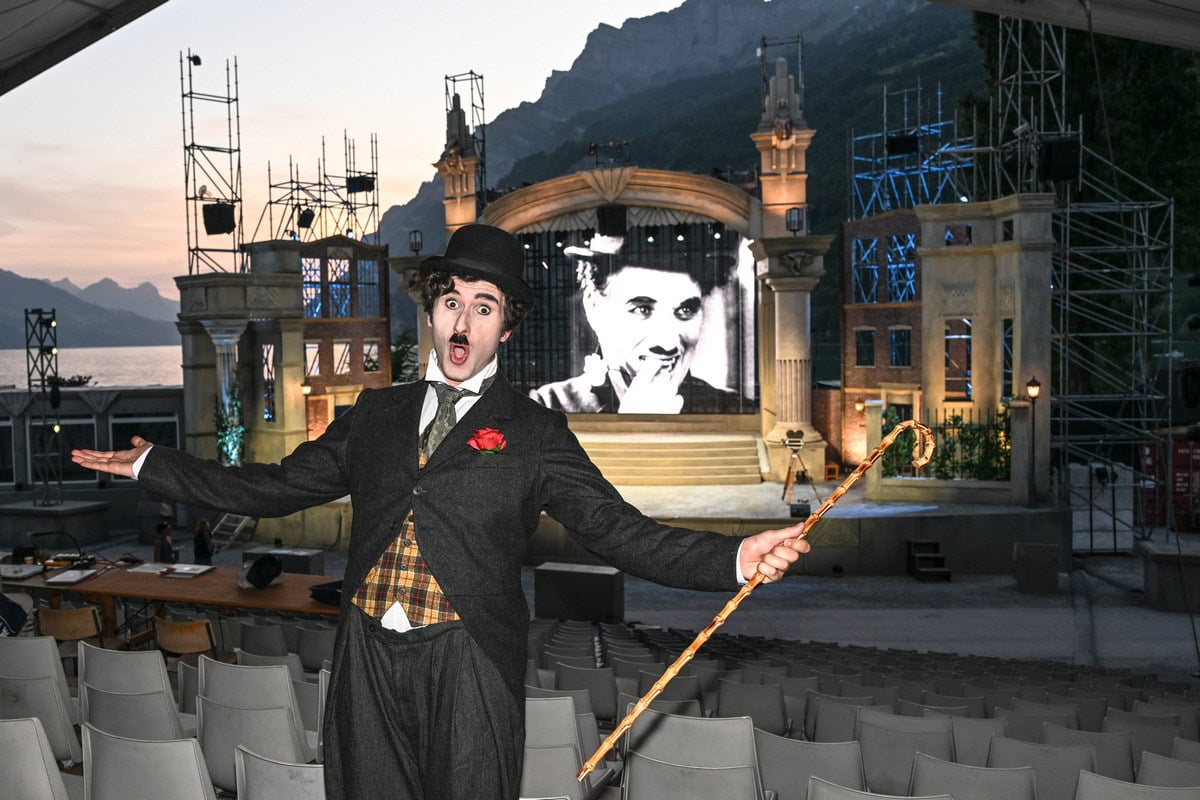
It’s that time of year again for summer stage musicals. The Walensee-Bühne presents *Charlie Chaplin on the Lake*. This lively musical not only tells the story of the magnificent artist that Charlie Chaplin undoubtedly was, but also sets out to trace the footsteps of a man with many faces. m&k spoke with lead actor Steven Armin Novak.


m&k You’ll soon be taking the stage at the Walensee-Bühne as Charlie Chaplin. How has your life changed in recent months, ever since you found out you’d be portraying this icon? What does it mean to you personally to step into the shoes of this legendary artist?
Steven Armin Novak Ever since I was a child, I’ve been a huge admirer of his art—specifically his films and his story. Charlie Chaplin made Hollywood what it is today. He is, without a doubt, an artistic revolutionary of the 20th century. And yet I find that his work has retained its relevance to this day—that’s something that can’t be ignored. Over the past few months, I’ve been studying his work, his persona, and his life very intensively, and through my portrayal, I’m trying to do justice to Chaplin on every level as best I can.
How exactly did you prepare for this role? What movies did you watch, what books did you read, and was there a moment when you thought, «Now I understand who Chaplin really is»?
The main foundation of my preparation was his biography, which I’ve already read for the second time. Charlie Chaplin’s *My Autobiography* is a truly fascinating and insightful book about his life and personality. I can’t even name specific films because I’d probably just have to say «all of them,» or at least as many as I could get my hands on. The same goes for interviews and recordings. Ultimately, the question remains whether it’s ever possible to truly understand who someone really is or was, but I’ve tried to get as close to that answer as possible.
Chaplin is world-famous for the character of «The Tramp,» with his distinctive gait, his gestures, and the melancholy behind them. How did you develop this physical language, and how does it differ from your previous roles, such as in «West Side Story» or «Mrs. Doubtfire»?
His character, the Tramp, is a wonderful model that naturally can’t be ignored when it comes to physical preparation. At first, I tried to simply copy the Tramp—that is, through straightforward imitation and a “copy-and-paste” approach. In the end, you might try to personalize it with your own finishing touches, thereby creating your own unique version of the Tramp.
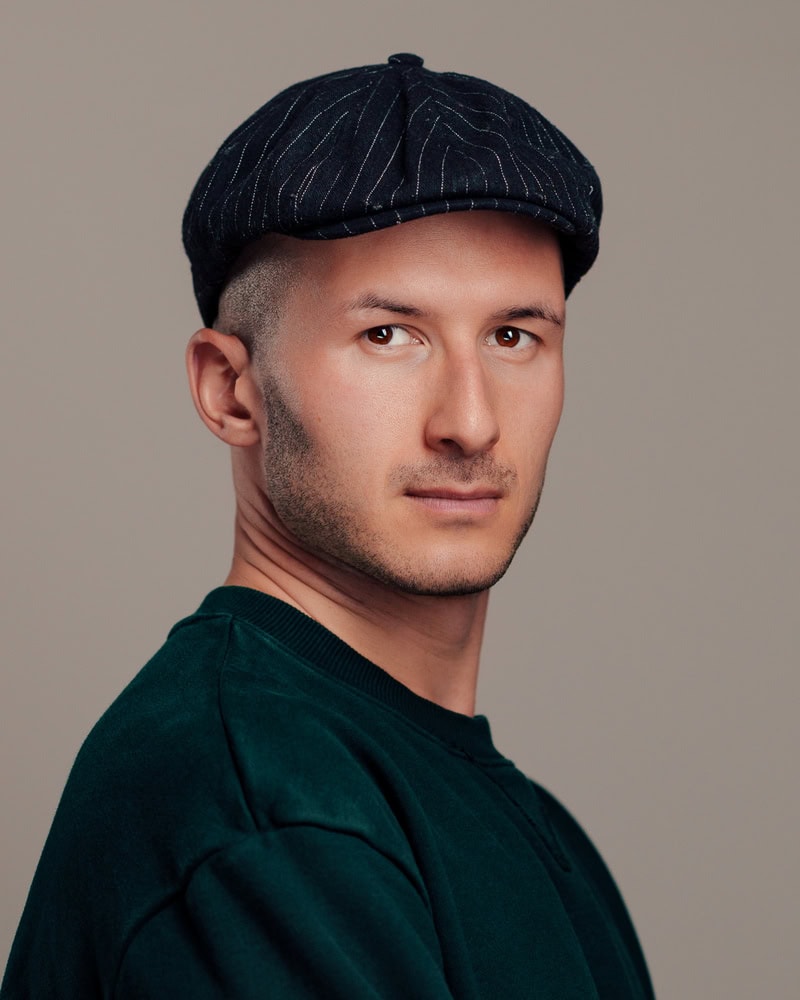
You’re not only an actor but also a choreographer. Did this dual role help you prepare for Chaplin? To what extent does the physical language of a musical differ from Chaplin’s silent-film-style physical comedy?
My background in dance was definitely a big help here. Facial expressions and gestures—body language itself—are the most important building blocks of the silent film era. That was all there was to a film back then—no spoken dialogue; the body served as a language in and of itself. Understanding physicality and being able to break it down, recognizing the precise timing of the comedy and the perfection behind his movements—that naturally makes it very choreographic in a way. I think that the fundamental movement language—or the choreographic style—of a musical can definitely go hand in hand with Chaplin’s physical comedy, and the line between the two is relatively fine.
What were the rehearsals actually like? What was surprising about this production, and were there moments when you had to engage in intense discussions with the team or the director to find the right interpretation?
There are always moments like this when you want to do your job well. With historical figures, you do have certain models to follow, but even then it’s important to understand that it’s not Charlie Chaplin playing himself, but rather me, as the actor, stepping into the role Charlie Chaplin step into the role and embody his iconic character, the Tramp. Then there’s the question of staging: whether the director wants to deliberately deviate from specific facts, and if so, why, and how one would resolve that in that particular case. The creative team, under the direction of Stanislav Moša, gave me plenty of room for questions, comments, and suggestions—and I certainly don’t take that for granted. I can definitely say that we all created „my“ Charlie Chaplin together.
Chaplin wasn't just an entertainer—he was a critic of his time, politically engaged, and sometimes radical in his statements. Which of Chaplin's messages resonate with you personally, and which ones do you want to convey to today's audience through this role?
I believe that Chaplin rarely minces words. These days, many people are primarily concerned with how they’re perceived by others, with general recognition, or with creating a kind of flawless image. But who’s perfect, anyway? After all, it’s our mistakes that truly make us human, don’t they? It may be the more complicated path to form your own opinion, then be convinced of the opposite, and at the same time have to admit that you might have been wrong. However, people are always capable of learning, and that’s exactly what makes life interesting. Chaplin had strong opinions of his own, which he always voiced. This is particularly evident in his later political statements about „global citizenship“ or „cultural identity“ during World War II, which ultimately forced him to emigrate to Switzerland. Parts of these speeches are reproduced in the play, and I hope that this message, above all, will remain in the audience’s memory.
One of the most fascinating aspects of Chaplin's work is the interplay between comedy and sadness. How do you go about maintaining that balance on stage without falling into sentimentality?
I think Chaplin went through three very essential phases in his artistic career: First and foremost, he realized that he was fundamentally funny. Next, he realized that his humor could make others laugh and that he was thus spreading more joy in the world. In the final stage, he also came to realize that his humor could evoke not only laughter and joy, but also tears and sadness. These two building blocks of his art—laughter and tears—are primal emotions that every child experiences every day, which is why everyone can relate to his films in some way. I’d be lying if I claimed that the grand finale of the „Oscars“ left me unmoved. Every time I deliver that final monologue in my role and look into the eyes of my fellow cast members, tears well up in my eyes because it captures a moment of pure gratitude: Chaplin’s toward the American film industry in the 1970s, and mine toward the cast who carry me through this show together every night.
You’ve performed on major stages across Europe—from the Komische Oper Berlin to the Seefestspiele Mörbisch. What makes the Walensee stage special, and how do the audience and the outdoor acoustics differ from your previous experiences?
For me personally, playing an open-air concert is always something very special, because you suddenly find yourself at the mercy of completely different conditions—such as Mother Nature, among other things. The stage and the dreamlike backdrop towering behind it are, of course, an absolute highlight. I don’t think any perfectly lit stage in a theater can evoke the same feeling during an emotional ballad as an open starry sky and moonlight interacting with the stage lights—it creates a whole new atmosphere, and that’s something I find truly special here.
As an artist, what can you learn from Chaplin—not just technically, but also philosophically? Is there anything in his life or work that will change you as an actor, choreographer, or person?
On a moral level, I see a small, hidden message in his life: forgiveness and gratitude are both active processes that I must initiate on my own for them to ultimately truly happen. As an artist—whether as a choreographer or an actor—I place enormous value on body language. Movements also tell stories and make a character human, even without language or music. Through the preparations, I’ve relearned to look more closely at the little things—the details of physicality. I’ll definitely carry this renewed awareness with me into the future.
The premiere is on June 10. How does that feel? Are there still any uncertainties, or are you ready? And what do you hope the audience will take away from this performance—what one thing should stick in their minds?
I'm excited—very excited, in fact. After all, I'm playing Charlie Chaplin. It’s truly a great honor. At the same time, this role allows me to celebrate my 10th anniversary on stage. I’m definitely ready and overjoyed to have the chance to tell Chaplin’s story and, in doing so, perhaps inspire younger generations who haven’t had much exposure to Chaplin yet. For the future, I hope for one thing above all: that people will recognize how important theater and art are, especially in times like these.
Here You can find out everything about the musical here. Tickets for the musical are available here