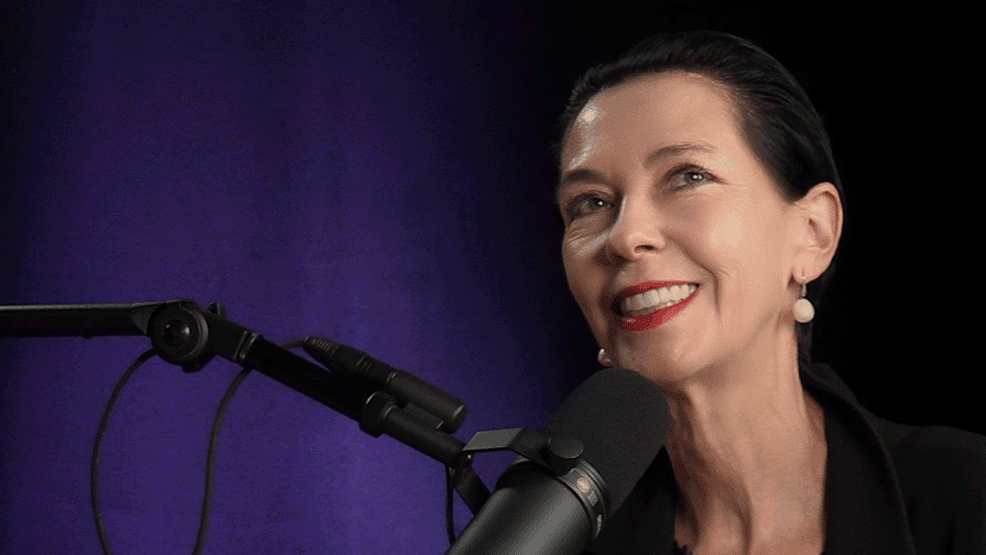
Text Academy Podcast #42: From prompt to partner - ETH researcher Sven Pfiffner on the future of specialized AI systems
In the Text Akademie Foundation’s video podcast «AI and Society—Paths to a New World,» host Christoph Soltmannowski speaks with Sven Pfiffner of ETH Zurich about a quiet revolution: Modern AI systems have long since stopped working on their own. What this means for businesses, interfaces, and our relationship with machines.


Anyone using ChatGPT or Claude today assumes they are talking to a single model. But this idea is outdated. Sven Pfiffner, AI researcher at the Computer Graphics Lab at ETH Zurich, explains: "The future belongs to networked specialists - different sub-models coordinate with each other, similar to specialists in a hospital. The user is transformed from prompter to orchestrator: it is no longer the fine-tuning of every instruction that counts, but the ability to communicate what you want. "This is becoming less and less different from how I would explain it to a team colleague," says Pfiffner.
Trust is good, evaluation is better
As autonomy increases, so does the question of control. As AI works probabilistically, the unexpected can always occur, admits Pfiffner. Ongoing qualitative evaluation is therefore crucial - recording, analyzing and readjusting interactions. He warns of the difference between demo and reality: "Many manufacturers only show controlled scenarios. "It's not the most impressive demo that counts, but the verifiable quality in real use."
Avatars: Fascination and risk
The more complex the systems in the background, the simpler the interface must become. Chat windows are only an intermediate stage in the long term, says Pfiffner. He is working at ETH under Dr. Rafael Wampfler on a digital Einstein that speaks with the physicist's voice and reacts to its counterpart via webcam. However, the more human the machine appears, the higher the risk of emotional attachment. OpenAI had to scale back its GPT model in 2025 after users developed a personal dependency. Pfiffner believes the responsibility lies with the manufacturers: "It has to be clearly communicated - this is a machine, not a person."
AI as a colleague, not a replacement
Pfiffner does not foresee any mass redundancies in the near future, but does see a change: repetitive tasks will be delegated and people will gain space for creativity and personal experience. "Everything an AI creates is a combination of everything it has seen. Humans have their own feelings - and you will always feel that." His advice: develop an intuition for AI systems through regular interaction instead of getting lost in technical details.
The episode on Spotify
The video podcast «AI and Society—Paths to a New World,» hosted by Christoph Soltmannowski, is produced by the Text Akademie Foundation. Two episodes are released each month on Spotify, YouTube and the other major podcast platforms.