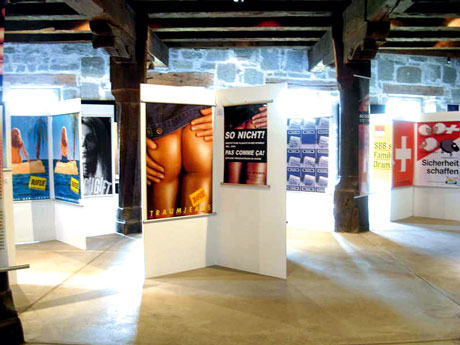
Not like that! Or is it?
The Gutenberg Museum is exhibiting provocative poster art.


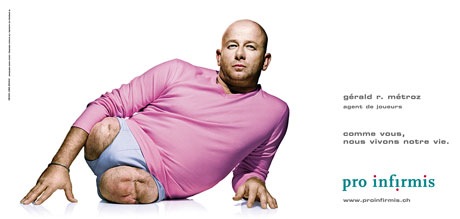
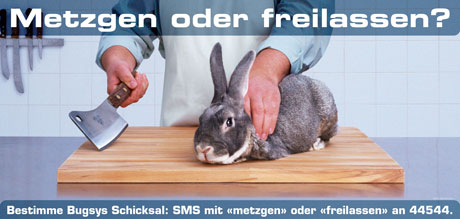
Poster advertising is one of the oldest forms of advertising. It is particularly suitable for conveying short and simple messages. In order for these to have a "striking" effect, the poster must cause a stir. For this reason, posters are sometimes deliberately designed to be provocative - even if the client does not always like to admit it.
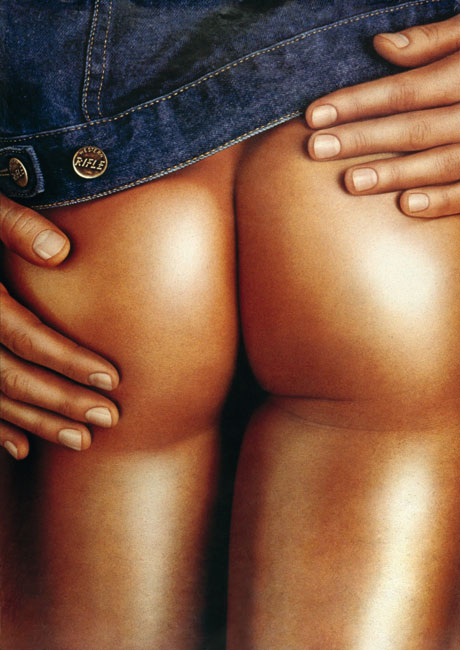
Female figures have been a popular subject in this context for over 100 years. As much nudity as possible always causes a stir. Sometimes it also causes a stir. As recently as 1974, a visible breast had to be covered with a star. In the 1980s, Peter Marti's design of several posters with bare bottoms caused a huge stir. Other posters caused a stir for political, religious or ethical reasons. Posters are rarely banned for legal reasons. In 1947, for example, landlords feared for their good business with alcohol because Eptinger had the slogan "Trink lieber Eptinger" printed on the poster. In 1990, however, the same idea was no longer objected to. The misuse of Leonardo's Last Supper for advertising kitchen appliances was also undesirable. "Blasphemy" was the verdict for the naked backside of a priest who wanted to advertise ambiguously with "Hakle...luja".
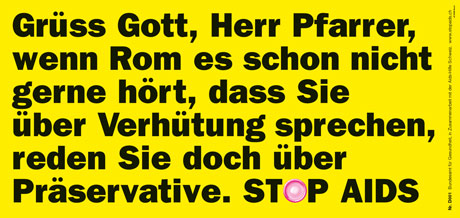
These and other curiosities can be found in the exhibition "Not like this!" at the Musée Gutenberg in Fribourg. On display until June 27 are "controversial posters" from Switzerland from 1883 to 2009: Benetton, Stop Aids, Sloggi, Rifle and, time and again, the SVP are featured in the collection of over 60 subjects. The posters on display come from the holdings of the Basel Poster Collection of the School of Design as well as from the agencies directly "involved". More information and opening hours can be found at www.gutenbergmuseum.ch. pan