Rethinking media: impact before volume as the new currency
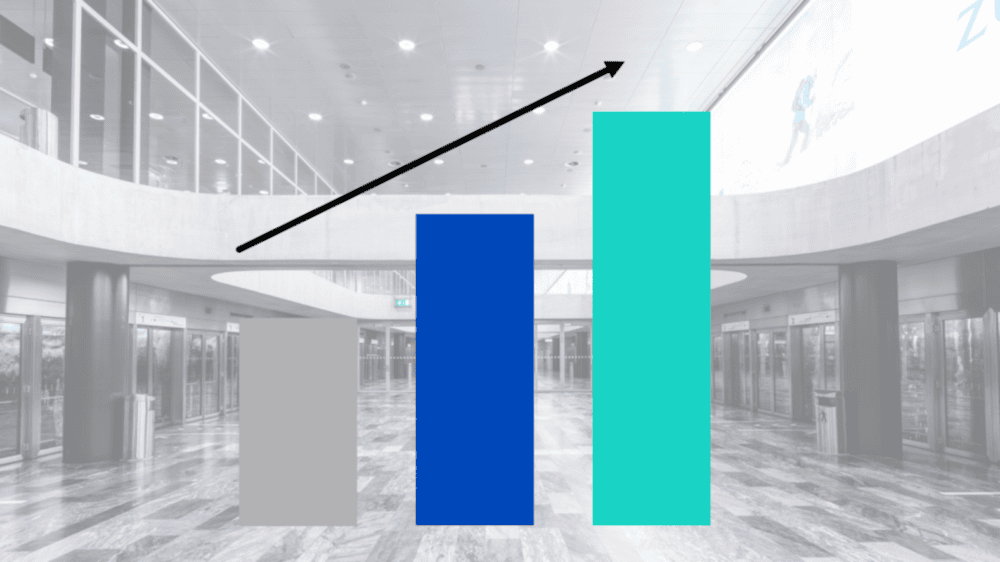
In the dashboard, it's a great campaign: curves point from bottom left to top right. Countless measured KPIs, all green. But in the minds and hearts of consumers? Very little happens there. The metrics for brand awareness have barely moved, sales remain flat. Brilliant media and performance results have not translated into real business success. And now?


Discrepancies between media reporting and effective influence on company performance are not an isolated case, but increasingly the rule. It is the result of a highly complex media reality and immature measurement ecosystems. Target groups are fragmented across countless channels, their attention spans shrinking to fractions of a second. A few powerful platforms claim sovereignty over the interpretation of data and naturally interpret campaign results in such a way that their own platform is attributed the strongest performance. At the same time, the demands on channel coordination and creativity are exploding, while the budgets of CFOs are under closer scrutiny than the Gen Z smartphone screen at dinner.
And in the background, a highly effective fraudster is also up to mischief: It produces sheer quantities of traffic. A true performance hallelujah! Not quite cheap, but highly relevant. Or is it? In many cases, no. The great campaign performance will never reach a human eye. Instead, bots were the recipients of the impressions and the originators of the supposed traffic peak. Ad fraud is more present than the industry would like to admit - and is quietly and steadily eating up media budgets.
Reason for a hangover? Not at all. Because this dynamic offers enormous opportunities for all those who recognize the challenges and take advantage of the bright spots hidden in the shadows. Those who understand the rules of the game can achieve more media impact today than ever before. So how do we tap into the complex media reality in order to achieve maximum impact today and at the same time set the right course for tomorrow?
From reach to impact
The answer begins with a clear priority: impact before volume. Modern, business KPI-oriented media work is not based on vanity metrics of individual channels, but on tangible business success. This means integrated planning across all channels and funnel stages. No silos between awareness and conversion and a consistent focus on what really counts for the business.
At the core of such business KPI-oriented media work is a close interlocking of impact and usage research. Not as an isolated discipline in an ivory tower, but as an integral part of day-to-day business. Operationalized research. A lively interaction in which scientific theory and tangible business reality continuously influence and drive each other. Patterns lead to benchmarks. Benchmarks lead to strategic guidelines. Results flow directly from ongoing implementation back into research, whereby hypotheses are tested, models are sharpened and planning becomes even more precise. This creates a closed cycle in which data is not only collected but also translated into concrete actions and in which each campaign benefits from the findings of all previous campaigns. In the end, success is measured by what contributes to the P&L.
Selecting specific channels, ensuring uncompromising quality
The question of impact leads directly to the question of the ideal choice of channels and the strongest formats. Moving images undoubtedly play a key role in modern media architecture. No other format combines reach, emotionality and memorability so effectively. It shapes brand images, creates closeness and remains in the memory even when attention spans decline. Connected TV is a prime example of the further development of classic moving image logic: with the highest ad recall values of all devices and a recall lift of up to 40 percent when intelligently dovetailed with TV and digital strategies, CTV can reduce costs per recall point and often exceed conversion targets. Used correctly, the channel thus becomes the link between the brand impact of classic TV campaigns and the precision control of digital channels, making it the logical centerpiece of modern campaigns - as long as the advertising impact here is not lost between inventories that are too fragmented.
In addition to moving content, creator content and influencer formats continue to gain in importance and thus provide additional movement in the media mix. Unlike traditional formats, which are relatively easy to weigh up against each other and evaluate in an integrated manner, these channels follow their own dynamics, interaction patterns and success logic, which are not always easy to transfer to traditional measurement models. This is made possible by combining qualitative insights, specific KPI frameworks and platform-related analyses to make their impact measurable. Regardless of channels and formats, one thing is non-negotiable: a high-quality advertising environment. And the responsibility to ensure it. It is the industry's best-kept secret that the major technology providers have little incentive to combat ad fraud in the long term. They make too much money from it. In addition, content moderation is cut back considerably, which further deteriorates the quality of the environment.
The fact is: these are gnarly times for clean advertising spaces. And it is essential for every advertiser to implement consistent quality control along the entire chain, from booking to evaluation. This means using first-party data as a basis, measuring independently of the platform, keeping purchasing channels short and avoiding opaque exchanges. This is the only way to ensure that every franc invested goes where it can have an impact - with real people, not machines. AI-supported advertising formats reinforce this necessity, as central decisions are made in a barely visible black box.
Looking ahead
Anyone looking to the future will recognize that brand building and management will become a crucial source of orientation and trust in a world of constant information overload. We are already seeing a paradigm shift: away from strict lower-funnel logic and towards a balanced use of media and a focus on long-term brand building. That's a good thing! Our industry has been shaken up too much by failed experiments such as Nike. The overvaluation of performance investments led to slumped sales figures and a lack of interest in the brand. New target groups were no longer properly reached. The tried and tested advertising principle that familiarity and purchasing affinity are directly linked still applies today. At least Nike seems to agree with this again. The strong Superbowl impact at the beginning of the year was a return to its roots. And the start of a long, rocky road to rebuilding the brand.
Brand management in a fragmented channel world means dealing with sometimes contradictory requirements. Each platform has its own rules for content and interaction. Impact is created differently everywhere. And the brand must always submit to the exact requirements of the platforms in order to be successful on them. But does it really have to? This is one of the questions that will keep marketing managers awake at night in the future. What is the ideal degree of adaptation in order to appear optimally staged on each relevant platform while keeping internal strategy and production costs under control? To what extent do I stretch my brand guidelines for a platform-native appearance? Where does authenticity end? Where does it even tip over into ingratiation? We already know that there is no universal formula. There are only individual, strategic decisions that must be based on long-term brand value. Those who strike the right balance will achieve extremely strong, credible and effective communication. Directly from the brand core into the awareness of the target groups - and from there into the company's sales.
So where is the journey going?
The future of media work will be decided at the intersection of technology, data sovereignty and creative brand management. Content will be tailored to target groups in real time, virtual influencers will play on platforms around the clock and hyper-personalization promises maximum relevance in every single user interaction. At the same time, these developments harbour risks: from filter bubbles that narrow perspectives to over-optimization that dilutes brand character. Even greater, however, is the strategic dimension of the data issue and autonomy in understanding campaign performance. Mark Zuckerberg's message "Give us your budget and we'll deliver the results" is an invitation to dependency. Those who have sovereignty over their first-party data not only retain control over their media strategy, but above all over their business figures.
All of this leads back to the starting point: yes, media reality is fragmented, complex and sometimes deceptive. But this is precisely where the potential lies. Those who consciously use technology, maintain data sovereignty and consistently focus on impact can not only close the gap between shiny KPIs and real business success, but also turn this gap into a bridge. A bridge that brings brands closer to their target groups, deepens relationships and anchors growth sustainably.
"Ad fraud is more present than the industry would like to admit - and is quietly and steadily eating up media budgets."
"Brand management in a fragmented channel world means dealing with sometimes contradictory requirements."