Why the economy must serve
Dr. Stephan Feldhaus, an expert in ethics and communication, argues that the economy should not be misunderstood as a separate entity. Rather, he says, it is a vehicle that must serve people’s well-being. Executives, in particular, have a responsibility in this regard.


As part of business ethics, corporate ethics deals with the question of the responsibility of companies for individuals, societies and the environment. It is always about individual, social and ecological responsibility at the same time. In this context, Peter Ulrich coined the term "life-serving economy" in his economic ethics concepts. Human economic activity is not an end in itself and does not follow any inherent laws, but always serves to fulfill goals that individuals or groups set for themselves or others.
The way we generally define the economy fits in with this. In the original sense, the term economy describes all human and material expenses and income that serve to secure the livelihood of people - for example through hunting, agriculture or trade and commerce. In the modern sense, economy or economics is the totality of all institutions and actions that serve to meet demand in a planned manner, i.e. to satisfy the needs of all individual people. Economic institutions include companies as well as private and public households. Economic activities include all human activities that make planned and efficient use of scarce resources with the aim of satisfying needs in the best possible way. The need for economic activity arises from the scarcity of goods on the one hand and the unlimited nature of human needs on the other.
In both the original and modern sense, all economic activity ultimately has a "serving" character. People use economic processes to achieve self-imposed goals. So wouldn't it be completely legitimate to say: "An economy that does not serve, serves nothing!"?
However, no one today thinks of a serving function of the economy when we talk about "the" economy in common parlance. "The tax reform is damaging the economy", "The economy needs a flexible labor market" or "AI - used correctly - strengthens the economy": today, it is easy to get the impression that "the" economy exists as an independent entity with its own expectations and needs; and even more, that people are there for the economy and not the other way around. We talk about "the" economy as if people have to fulfill the needs of the economy, to "serve" it.
The "magic triangle"
In the debates on sustainability, we even speak of a "magic triangle" and - alongside "society" and "the environment" - set "the economy" as an independent target. We place purely economic goals and requirements on a completely equal footing with social and ecological goals and requirements. In this way, we suggest that there are inherent laws that are independent of human beings, which need to be balanced with the requirements of society and the conditions of the environment.
However, if we construe "the" economy as an independent entity that follows its own inherent goals, we increasingly lose sight of the fact that the economy, with all its economic processes and laws, is merely a means by which we seek to achieve the goals we have set ourselves. And these individual, social or entrepreneurial goals must be defined by ourselves as consumers or producers, as private individuals or as political or entrepreneurial leaders; "the" economy does not set the goals for us.
Targets are human
Whether and to what extent, for example, a company's turnover should increase and the profit to be achieved should increase even more in percentage terms are targets that are defined and set by the people with management responsibility in a company. There may be plausible reasons for these targets and there may be people who doubt these reasons and consider other targets to be more appropriate. As a rule, the setting of targets follows a process of discussion and consideration within the company. There is no "economy" that demands or determines such a goal as an external superior authority.
This is not about a fundamental criticism of growth. But the point is to understand that any independent application of seemingly ironclad economic laws loses sight of the very people who are actually at stake: the people who set the individual goals and the people who are affected by these goals. The goals, including growth goals, that we want to achieve through economic processes must be set in such a way that they serve people.
I believe it is a major problem that we are increasingly leaving the definition and setting of economic goals in both a business and macroeconomic context to a very small number of individuals. However, if we as individuals and as a society continue to abandon this task, we should not be surprised if economic activity is also dominated by individual and special interests. Then suddenly the economy is no longer there to satisfy the needs of individuals and social requirements, but people are there to satisfy the supposed needs of the economy. But when individual interests gain the upper hand, we individualize the gains and socialize the losses.
From an economic ethics perspective, it can only be a matter of ensuring that all norms, laws and rules as well as all man-made systems, organizations and institutions ultimately have one main purpose, namely to make people's lives (as individuals and in their social and environmental relationships) a success.
Responsibility of the leadership
In this context of economic ethics, responsibility has undoubtedly become a key socio-political category of our current self-image. The demand for more responsibility, as well as the complaint about the lack of it, can be found in almost every statement on the state of development of modern civilization. So in a "life-serving" understanding of the economy, what special responsibility is assigned to the people who take on a leadership role in economic activities and institutions?
In my view, managers have a fourfold responsibility in a business context: firstly, managers have an overarching ethical and integrative responsibility for the success of the whole. In addition, from an ethical point of view, they have an implementing, complementary and innovative responsibility. What does this mean in detail?
Integrative responsibility ...
The integrative responsibility of leaders means incorporating ethical considerations into business activities from the outset. This means that ethical principles and values are integrated into all aspects of business operations, including strategy setting, decision-making, corporate culture that promotes ethical behavior, stakeholder relations and responsible business practices.
It is important to develop a clear vision and mission for medium and long-term success, to create a binding ethical framework by defining guidelines and standards and to build trust and transparency with all stakeholder groups. Action should be guided by the basic conviction that normativity is not the "flip side" of economic rationality, but its foundation, and that there is no fundamental contradiction between economics and ethics.
The personal convictions of managers are the starting point for integrating ethical considerations into business activities. They strongly influence the basic character of a company and shape its behavior. By virtue of their authority, whether it stems solely from their hierarchical position or also from their personality, managers shape the entire organization with their attitudes and values. What is the "style" of leadership? How much time does the manager devote to which tasks? What do they say with admiration or contempt? Through non-verbal communication, a manager can signal whether he or she really stands behind the ideas, goals and tasks. The leader's personal example is "culture-defining" and there is experience that a "cultural revolution" is possible simply through the exchange of leaders.
Of course, assuming integrative responsibility requires a whole bundle of skills and competencies: In addition to excellent technical expertise and assessment skills, managers must have a high degree of emotional intelligence and social skills. This means the ability for personal development and self-reflection, ethical sensitivity and the ability to distinguish between what is merely efficient and what is actually relevant. The ability to engage in dialog and resolve conflicts as well as a high degree of communication skills round off the profile.
... implementation responsibility ...
Managers also have an ethical-implementary responsibility with regard to the applicable framework, i.e. they must comply with the rules set out in the framework in their individual actions. This is therefore a matter of fundamental compliance with the rules. Illegal trade relations, bribery, corruption, tax evasion, unfair competition, price fixing, wage dumping, social and individual inequality and environmental offenses not only violate existing frameworks, but also constitute ethical misconduct.
... complementary responsibility ...
In addition to complying with and implementing the applicable framework regulations in accordance with the rules, managers also have a supplementary ethical and complementary responsibility, i.e. they must actively and independently introduce ethical requirements that are in line with the framework regulations but cannot be sufficiently defined and regulated by them in a generally binding manner. The aim here is to continuously improve the existing framework regulations and/or to make company or sector-specific additions. This can be achieved through codified industry agreements as ethically qualified collective self-commitment of companies as well as through individual ethical self-commitment of companies in the form of the establishment of corporate ethical principles, codes of conduct or company guidelines. In this context, managers should engage in public discussion with their stakeholder groups, particularly in the event of conflict.
... and innovative responsibility
In addition, managers have an ethical and innovative responsibility, i.e. they can be guided in their economic actions and decisions by ethical principles that are not or not yet applied equally to all economic players, for example through framework regulations or industry obligations, be it in product policy, personnel policy or even in concrete and by no means always unsuccessful calls for regulatory corrections, in addition to following, improving and supplementing the framework regulations, rules and agreements.
This can refer to a whole range of individual measures: Environmentally friendly production processes or the reduction of waste and emissions, for example, or products and services that are more ecologically compatible, that promote social equality or bring about fairer access to health and educational services, are not developed by environmental or social authorities, but by companies and businesses on behalf of entrepreneurs. Internal company organization, which ranges from flexible working hours and locations to the provision of further vocational training and qualifications for employees and the establishment of company kindergartens, is also an independent task and achievement of the individual companies and their managers.
The ethical responsibility of managers in the context of a "life-serving" economy is high. But the effort is worth it: ethical behavior also pays off economically in the medium and long term. Only in the short term can the person who avoids the so-called prisoner's dilemma and does not adhere to the agreed rules that apply to everyone maximize the benefits for themselves. In the medium and long term, benefits can only be optimized by acting ethically and responsibly.
"So wouldn't it be completely legitimate to say: 'An economy that doesn't serve, serves nothing'?"
"Today, it is easy to get the impression that 'the' economy exists as an independent entity with its own expectations."
About the author
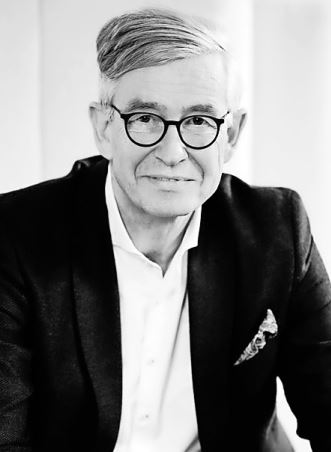
Dr. Stephan Feldhaus is a nationally and internationally renowned communications expert and ethicist. Until 2019, he was Head of Group Communications and a member of the extended Group Executive Board of F. Hoffmann-La Roche AG and has since run the consultancy firm Feldhaus&Partner in Basel, which he founded. He is also - among other things - Chairman of the Board of Directors of Viollier AG and Chairman of the Basel Museum of Antiquities and the Ludwig Collection. With a doctorate in theology, he is also a deacon of the Christian Catholic Church in Switzerland.
"This is not about a fundamental criticism of growth. It's about not losing sight of the people."
"When individual interests gain the upper hand, we individualize the gains and socialize the losses."
"In a business context, managers have a fourfold responsibility."
"Ethical behavior also pays off economically in the medium and long term."