Playboy - A brand for 2021?
«Playboy» is an iconic brand—but does it still fit in an era that is increasingly sensitive to sexism? The publishing duo says, «Yes, of course!»


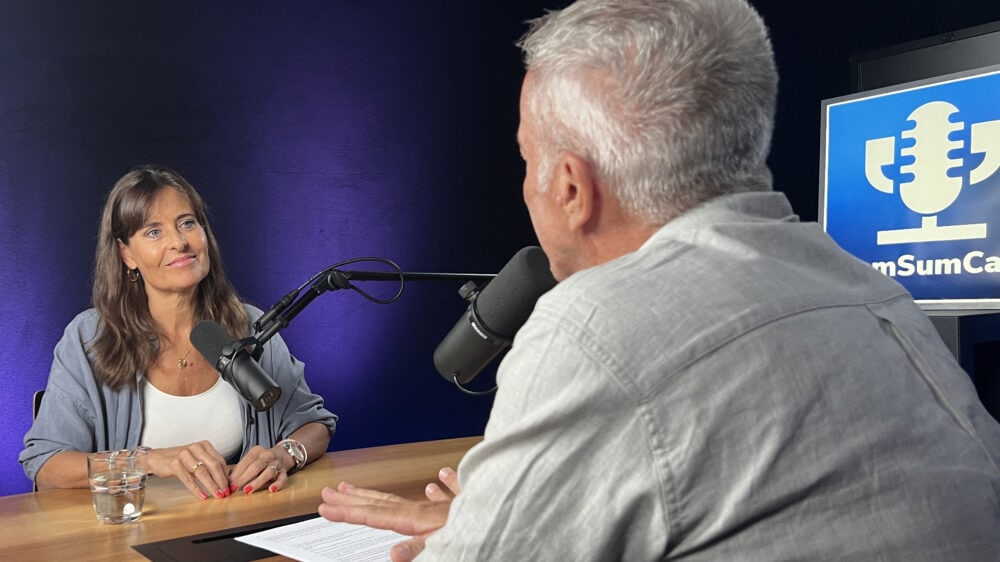
When the German media conglomerate Hubert Burda Media announced in 2019 that it would not renew the license for the men’s magazine *Playboy*, Myriam Karsch and Florian Boitin’s moment had arrived: As a longtime publishing director and an experienced editor-in-chief, respectively, they took over the magazine, went independent—and set a course for growth. What do the two of them think about debates on sexism, the media crisis, and the future development of their brand?
M&K We live in a time when there is lively debate about sexism, gender issues, and equality. Does a brand like «Playboy» even fit into today’s world?
MYRIAM KARSCH I welcome questions like these because they’re critical, but they’re preaching to the choir here. My answer is therefore clear: Of course «Playboy» still fits into today’s world! Topics like diversity and female empowerment are intrinsic to the brand; «Playboy» has always addressed these issues since its founding in 1953. Our cover stars are strong, self-determined women who want to make a statement by having their photos published and who use us to send their message—out of conviction and self-determination.
FLORIAN BOITIN In principle, there are two answers to this question—a short one and a slightly longer one. The short answer is: Ultimately, it’s not us who determine whether something is relevant today, but the market. If our readers and advertising partners didn’t want *Playboy*, they would punish us by ignoring us. However, despite the pandemic, we had a very good year in 2020, growing by 7 percent at newsstands and by as much as 43 percent digitally. Clearly, *Playboy* remains highly relevant today. But if we dig a little deeper and build on what Myriam already said: «Playboy» has always focused on men’s lifestyles. And as far as I know, men haven’t gone extinct yet in 2021 (laughs). What «Playboy» still strives for today is to enrich men’s lives.
Through nude photography?
FLORIAN BOITIN Through topics such as literature, adventure stories, portraits of men, lifestyle topics, style, and yes, even nude photography. Although gender roles have evolved and changed, men still want to be challenged and well entertained; they also want to be inspired «above the belt.» You mentioned the autonomy of your cover stars. And it’s true: they aren’t the ones complaining about sexism. Others do that, on their behalf, so to speak. How do you feel about this kind of discourse?
MYRIAM KARSCH That has a lot to do with ignorance. It’s a fact that there are people who harbor prejudices against *Playboy* without having really looked into it. They might think we’re featuring women we didn’t ask first. (laughs) But the more you explain and the more you delve into the history of our brand—for example, by pointing out that *Playboy* has been advocating for the LGBTQ community, people of color, and women’s rights since the 1960s and has always stood up against all forms of oppression, exclusion, and discrimination—the more likely it is that such prejudices will be broken down.
FLORIAN BOITIN I’d like to quote Jordan Emanuel here. She is an American art historian, journalist, women’s rights activist, and—brace yourselves—Playmate of the Year 2019 in the U.S.! And she goes on to say: «As a Black woman in America, I belong to a double minority. For people like me, it’s truly life-changing to know that a force as powerful as »Playboy’ is on my side.” There’s little more to add to that.
«Issues such as diversity and female empowerment are intrinsic to the brand.»
What do you both personally associate with your brand? What attributes do you associate with «Playboy»?
MYRIAM KARSCH For me, it's freedom, self-determination, and humor—or rather, self-deprecating humor.
FLORIAN BOITIN And since we’re not all that far apart on that front either, we make a really good team. (laughs) I’d even go a step further: I associate «Playboy» with a sense of belonging. After all, we’re not just a magazine that people passively consume. The «Playboy» brand stands much more for a genuine «live experience.» We cultivate personal contact with our readers, both through communication across all channels and at events. You can think of «Playboy» as a club where many sophisticated men come together. And, of course, women too—we certainly don’t exclude them at all. That’s what I personally associate with «Playboy.» And let’s not forget: I also just think the brand is sexy (laughs).

Photo: Gert Krautbauer
When *Playboy* was still part of Germany’s Hubert Burda Media, you worked for the magazine as a senior executive. Now you have sole responsibility for representing and developing the brand in German-speaking countries. Has that changed your perspective on *Playboy*?
FLORIAN BOITIN You’ve described it perfectly. For ten years, I was responsible for the editorial content of *Playboy* at Burda—as editor-in-chief. I’m still in that role, of course, but now, together with Myriam, I’m also an entrepreneur and publisher. What drives me here every day is humility—humility and respect for this great brand. Even though we both now have the opportunity to further develop the brand, we know that our power is only temporary. The fact is: Neither Myriam nor I invented «Playboy.» As is well known, that was a certain Hugh Hefner, back in 1953. Nor did we make «Playboy» a global success; others did that successfully before us. So we have a responsibility to treat this legacy with care.
«Despite all the complexity, we're fortunate that Playboy is such a vibrant brand.»
Can't one sometimes feel overwhelmed by such a legacy? Doesn't it sometimes hold one back from creating something new?
FLORIAN BOITIN I like to tell our team: «If what we do were easy, even chimpanzees could do it.» (laughs) But despite all the complexity, we’re lucky that «Playboy» is such a vibrant brand. And «Playboy» evokes strong emotions. Not everyone out there is a fan of «Playboy.» But for a great many people, «Playboy» is linked to positive associations. More than that: it’s a strong and desirable brand! In my view, the fact that a brand evokes emotions is crucial to its success. That sparks discourse, that creates friction, that generates relevance. And all of that provides the best foundation for our journalism to build upon—to tell stories that move people. It’s only when a brand leaves people cold that things get really difficult.
«I like to tell my team: If it were easy, chimpanzees could do it, too.»
Why did you actually decide in 2019 to take over the «Playboy» license from Hubert Burda Media? Few people are still interested in starting a new media company in the current market …
MYRIAM KARSCH I «grew up» at Burda as a working student; I wrote my master’s thesis there and started my first job as an executive assistant. From my window, I could always see the building that housed the «Playboy» editorial office. And even back then, I thought, «That’s the best brand Burda publishes.» After a brief stint at Springer, I came back and actually ended up at «Playboy,» where I eventually became publishing director. An absolute dream. I always found that very nice—being an employee with the comfort of a corporate safety net. And then suddenly someone comes along and says, «By the way, we’re not renewing the license agreement for *Playboy*.» Sure, theoretically I should have expected that, but still—in a position like that, you practically treat the product as if it were your own. We worked for the cause and always gave it our all to make sure the product was great. Burda offered me the chance to stay anyway—but then there was the option to continue «Playboy» with Florian on our own. I had to sleep on it for a few nights, and then I was absolutely determined to do it.
FLORIAN BOITIN While Myriam is still a very young woman (laughs loudly), I’m what you might call an old, white man. Back in 2019, when Burda decided not to renew the license, I’d already been involved with *Playboy* for many, many years and was at a stage in my life where you start to wonder what’s next. And it really did seem to me that a huge door had suddenly opened. So it was immediately clear to me that I wanted to do this; my gut instinct was, «Go for it!» Now, my brain still works every now and then (laughs), so it was important to me that we find a cooperative solution for the handover with Burda—which we succeeded in doing. And—I’ve actually said this many times before, but I’m happy to repeat it—it was crucial for me that Myriam be by my side. Otherwise, I wouldn’t have done it.
MYRIAM KARSCH I can only return the favor.

What do you value most about being an independent entrepreneur—and which aspects could you do without?
MYRIAM KARSCH The biggest advantage is the short lines of communication and flat hierarchies. We have the freedom to decide for ourselves what we think is good or not. And we don’t have to run everything by the CFO, for example, when we have a good idea. We don’t have to justify ourselves; if we feel like doing something, we just do it.
FLORIAN BOITIN This results in tremendous speed. For example, we launched our «Playboy» wine shop—an idea that, by the way, came from our colleague Karsch—online in just four weeks. This entrepreneurial independence suits us both very well.
But you have to coordinate with the American licensors if you want to expand the brand universe, right?
MYRIAM KARSCH We hold the publishing license for Germany, Austria, and Switzerland. This means that, first and foremost, we publish the magazine and operate the website. We don’t currently hold any other product licenses. Anything that falls into a gray area—such as a branded e-commerce shop—must therefore, of course, be coordinated with the Americans. But that usually works out very well, and we’ve always been creative in this regard over the past few years: We’ve consistently obtained special permits for a «Playboy» gin, a «Playboy» whiskey, and other products.
FLORIAN BOITIN As individuals, we enjoy a high level of trust from Americans. That also explains why we were offered the license right off the bat, without having to pitch our idea. To do that, though, we first had to set up our «Kouneli Media GmbH.» Our company is a startup, after all—so people could have easily asked, «Who the hell is Kouneli?» (laughs)
You explained at the beginning that your 2020 figures looked better than those for 2019, despite the pandemic. Perhaps not in terms of advertising bookings, but in terms of reader interest. So you’re not feeling the impact of the media crisis in print?
MYRIAM KARSCH For single-copy sales—that is, at newsstands—we recorded an index of 107 percent for 2020. This means we grew by 7 percent compared to 2019, even though train station bookstores were largely closed, airports were not busy, and international shipments were restricted. We’ve also grown digitally: For example, our «unique visitor» numbers are 35 percent higher than the previous year, and we’ve increased our «page impressions» by 40 percent. That said, we don’t see a strict separation between print and online; rather, we want to create everything «from a single source» and bring it to life. For us, an outstanding overall product is the most important thing—and also the reason behind this very encouraging growth. Our primary focus is on creating quality products for our readers and users; if advertising revenue follows, it simply rounds out our business model.
FLORIAN BOITIN Perhaps this can simply be boiled down to a truism that may not sound very modern, but one I’m more convinced of than ever:
«Content is king.» That’s why we devote all our energy to telling stories that move and inspire people. On publication day, people head to the newsstand with the clear intention of buying Playboy. And they don’t do that because anyone is forcing them to. They do it because they’re interested in the content. And we see that in our digital world, too: More than half of all users click directly on our website—rather than ending up there through random search results— playboy.de.
«We have the freedom to decide for ourselves what we think is good or not.»
The COVID-19 crisis has put a damper on your strategy to expand the «Playboy» brand universe, particularly in the events sector. Will you put that on hold in the future?
FLORIAN BOITIN No, absolutely not. That’s a very important component of our 360-degree strategy. As far as COVID-19 allowed, we actually held events even during the pandemic year of 2020. We typically plan four «Gentlemen’s Weekend» events per year—very exclusive reader events with a maximum of twelve participants. Due to the pandemic, only two of them could take place in 2020, but at least we were able to spend time with our readers in Barcelona and at the beautiful Lake Tegernsee in Bavaria. Of course, this is and remains very important to us, precisely because we’ve noticed that there’s not only great interest from our readership but also a strong need on the part of our partners. Brands must be experienced in person. Bringing them to life and making them tangible is firmly anchored in our strategy for the future.
And what else are you planning for the «big aftermath»—the time when COVID-19 lets us live a little more freely again?
MYRIAM KARSCH 2022 will be a very special year, as «Playboy Germany» will be celebrating its 50th anniversary. Of course, we’ve already been thinking about this, and we have a long list of things we’ve always wanted to do but have been saving for the anniversary year. Personally, I’d love to see a Panini sticker album featuring all the cover stars, Playmates, and centerfolds (laughs)—it’s something I’ve been dying to do for many years. Also on the list are a series or documentary marking 50 years of «Playboy Germany» on Netflix or Amazon Prime, and an anniversary collection. We’ve already carried out a few smaller projects in 2020, such as «Playboy» face masks or the «Playboy» cookie cutter for Christmas. I still think those are fantastic. As you can see, we’re not short on ideas.
Playboy: How It All Began
The first issue of Playboy was published in the United States in December 1953 and featured a fold-out page with Marilyn Monroe posing, along with a Sherlock Holmes story and an article on desk design in the modern office. More than 50,000 copies of the inaugural issue were sold at 50 cents each.

Myriam Karsch and Florian Boitin are co-founders and co-managing directors of Kouneli Media, a company with 20 employees in Munich. Since December 1, 2019, Kouneli has held the «Playboy» publishing rights in the DACH region for both print and digital channels. This is no coincidence: Before starting their own business, Karsch and Boitin had already been closely associated with «Playboy» for many years under the umbrella of Hubert Burda Media, serving as publishing director and editor-in-chief, respectively.