IGEM devotes itself to the future of Swiss TV advertising at Mascotte
The Electronic Media Interest Group (IGEM) issued an invitation—and many interested attendees showed up. At the packed Mascotte in Zurich, Goldbach CEO Alexander Duphorn and René Plug, Chief Data & Technology Officer at Admeira, gave presentations.


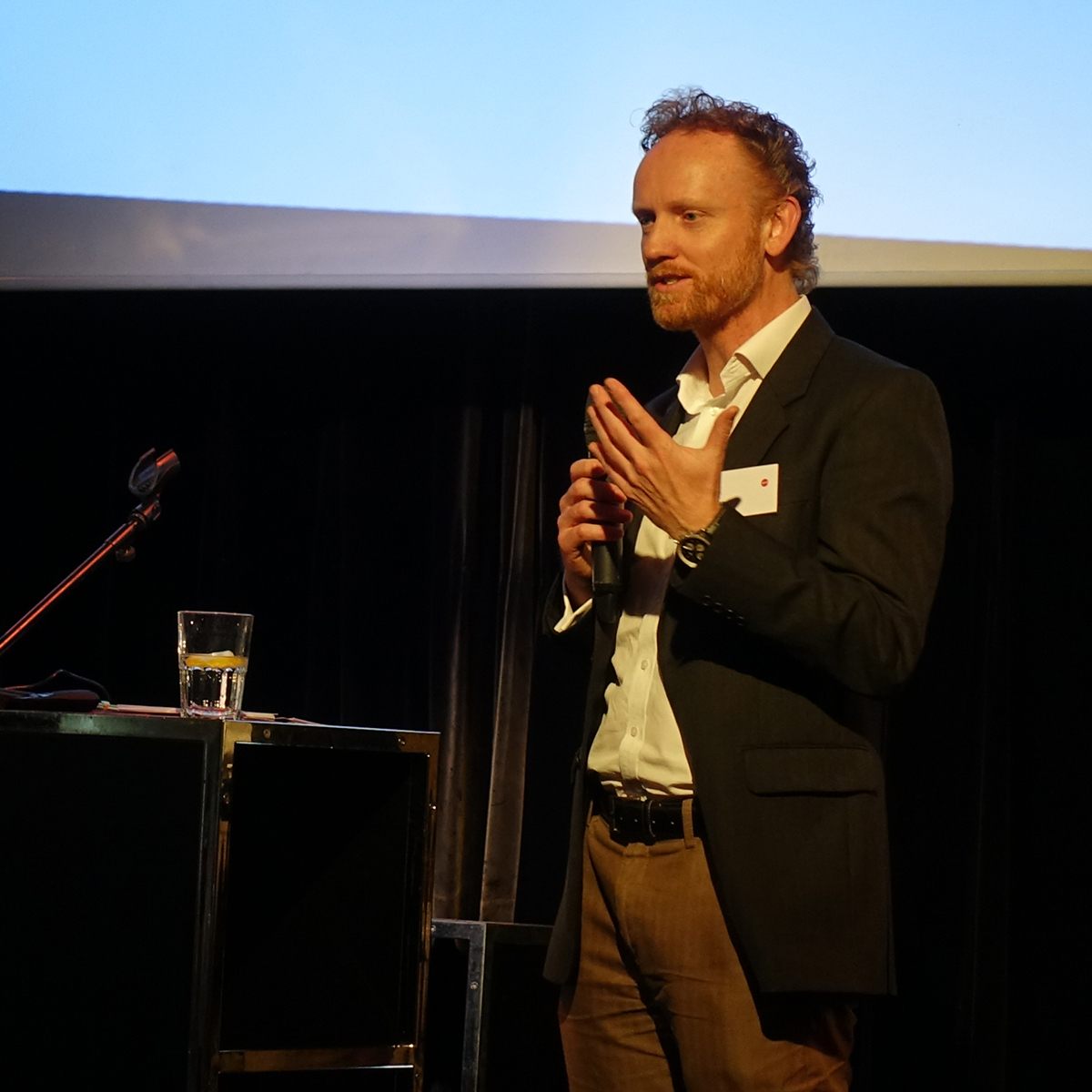
René Plug from Admeira talks about the future of TV advertising (Photos: Werbewoche.ch/Thomas Häusermann)
The fact that the IGEM event "The Future of Swiss TV Advertising" is being met with open ears was already evident in the run-up: The event was moved to the Mascotte due to the great interest of the audience. "We had more registrations today than last year at the 20th anniversary," said IGEM President Stephan Küng (photo below) in welcoming the 140 or so guests at the traditional Zurich location. The topic mobilized: In times of Netflix and rewindable commercial breaks, is there a future for television advertising at all?
The good news: Yes, there is. It's all getting a bit more complicated, but at the same time the options for reaching target groups in a more targeted way are becoming much more diverse.
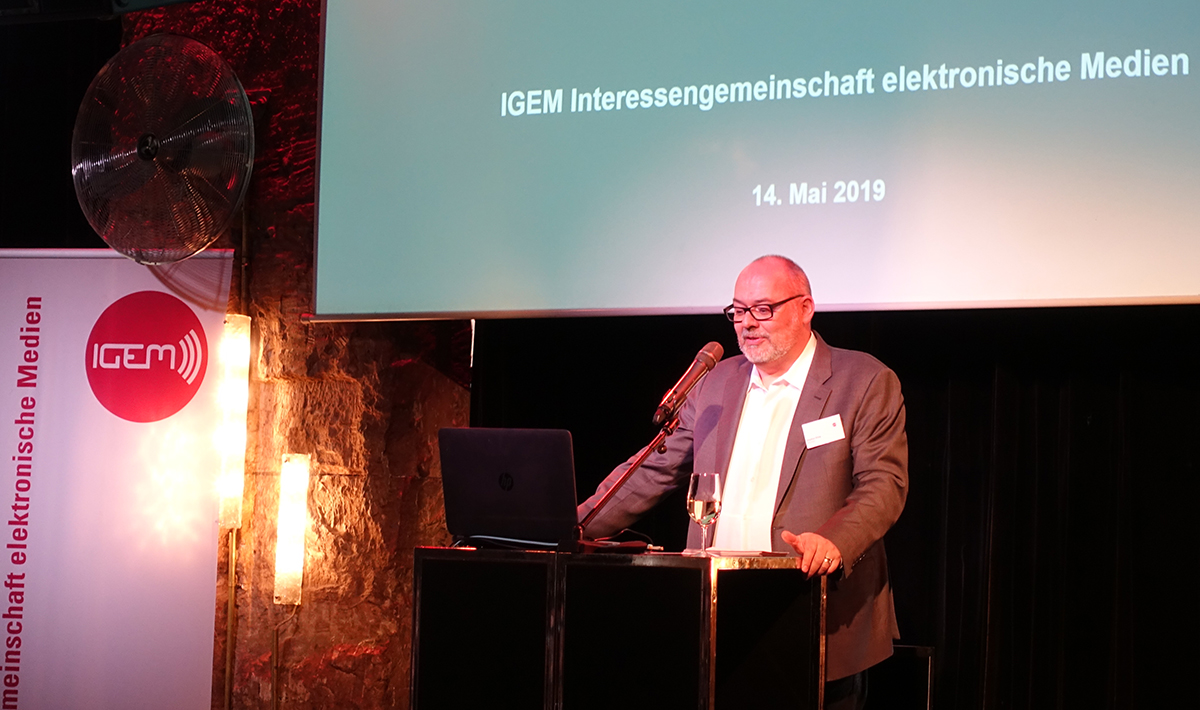
Alexander Duphorn, CEO of Goldbach Media, began his keynote by reminding the audience that the situation in Switzerland is exceptional from a legal and regulatory point of view: "The broadcasters lack sovereignty over their signal! A situation that IGEM, among others, repeatedly criticized in last year's replay TV debate. Swisscom, UPC and other signal processors largely determine for themselves whether and how they offer time-shifted TV to end customers. The broadcasters wanted to have more of a say in what happens to their signal - in the end, the National Council decided that everything would stay the same. The TV stations are compensated for the dwindling advertising revenues. But if they have their way, the amounts are far too low.
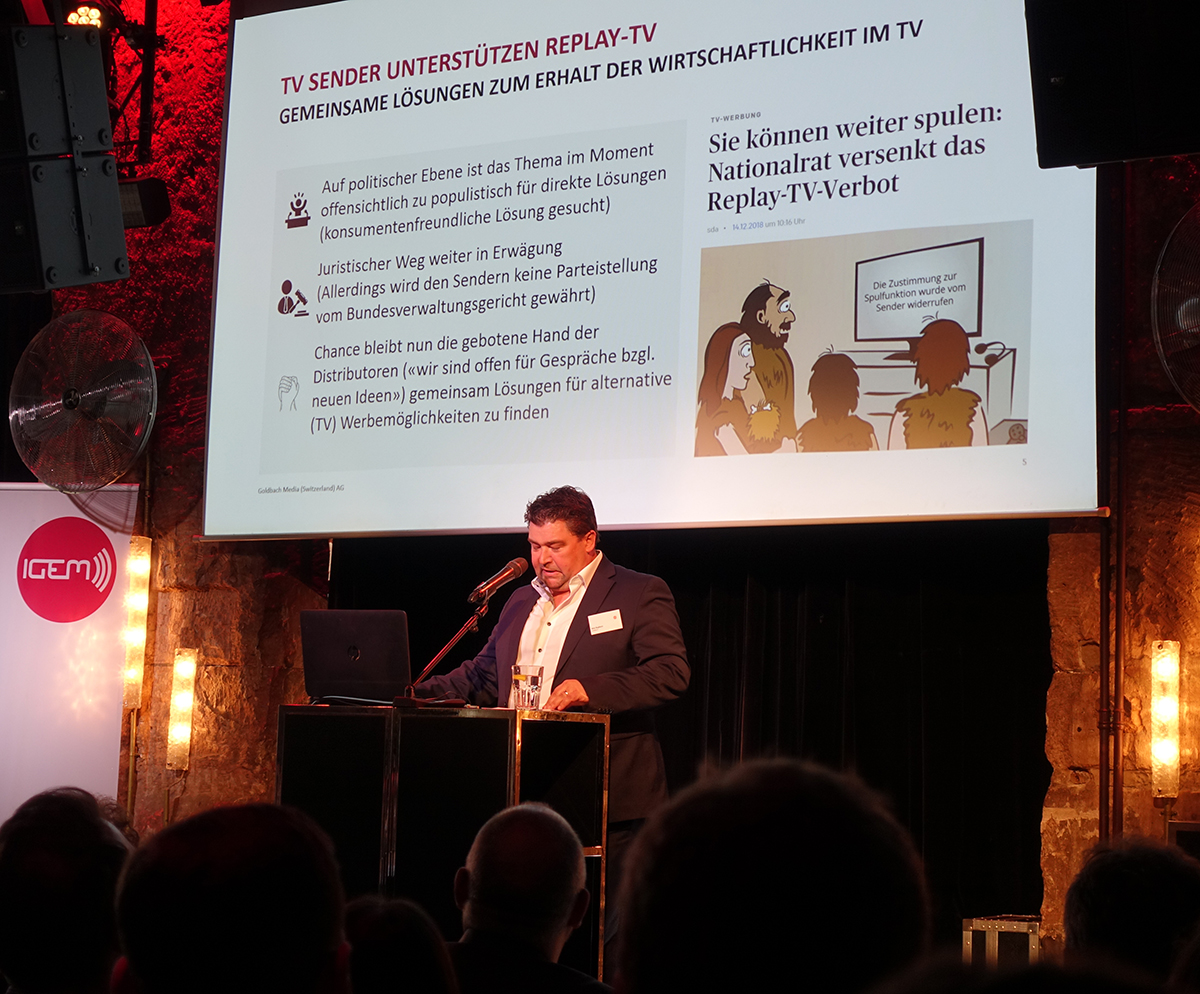
Duphorn once again confirmed that replay TV is not viewed by broadcasters as a fundamental bogeyman: "Rubbish!" is the widespread and populist opinion that broadcasters want to put a stop to time-shifted TV. After all, this service meets a customer need.
And so his following remarks on the future of TV advertising also showed what had already become apparent in last year's discussion: TV broadcasters do not want to abolish replay, nor do they want to restrict it in principle - but they do want to have a clear say. This means for the consumer: Replay use will probably not be quite so free of advertising in the future.
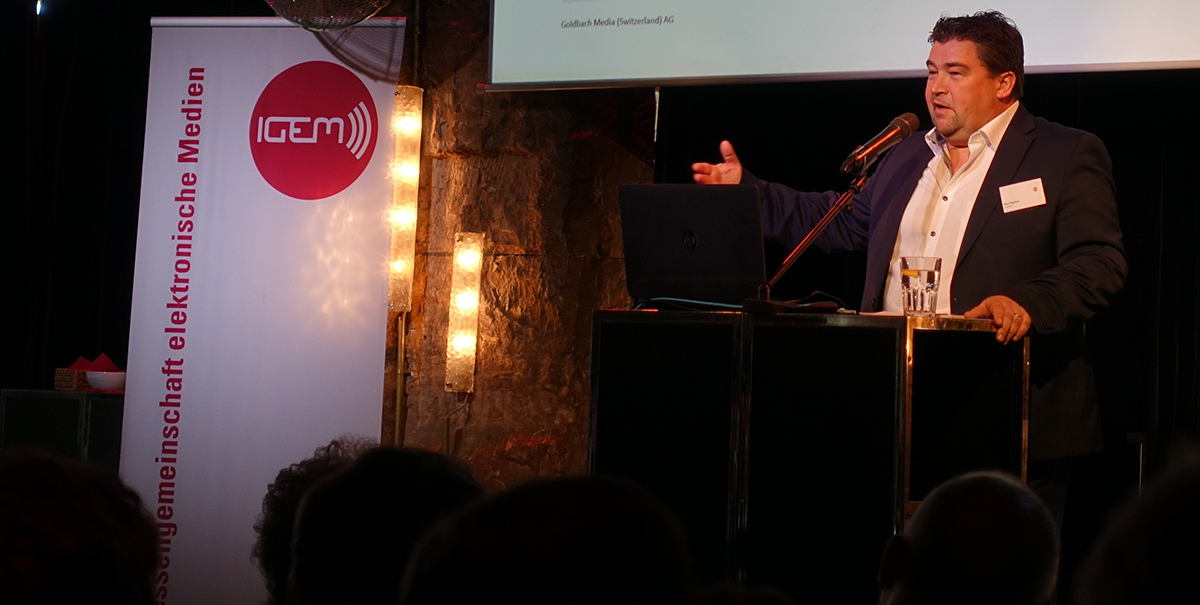
The Goldbach Media boss outlined three ways in which advertising could be integrated into viewers' replay habits in the future.
"Replay Ad" means that the consumer can pause and rewind as usual, but must watch a TV spot at the start of use. Zapping and rewinding are not possible during playback.
At the "Pause Ad" the consumer can fast-forward and zap as usual. However, when the pause button is pressed or playback is resumed, an advertising spot is played. In his subsequent presentation, René Plug from Admeira showed a much more discreet (but consumer-friendly) variant from the USA: A static ad was integrated into the pause screen, but otherwise nothing changed for the viewer.
At the "Fast Forward Ad" the consumer can also fast-forward and skip as before. However, at the end of the first rewind or when skipping an advertising block, two TV spots are displayed. These cannot be skipped. After that, the viewer has 30 minutes of rest and can rewind and skip at will. After this period, he must "earn" the free use of the replay functions again by watching two more spots.
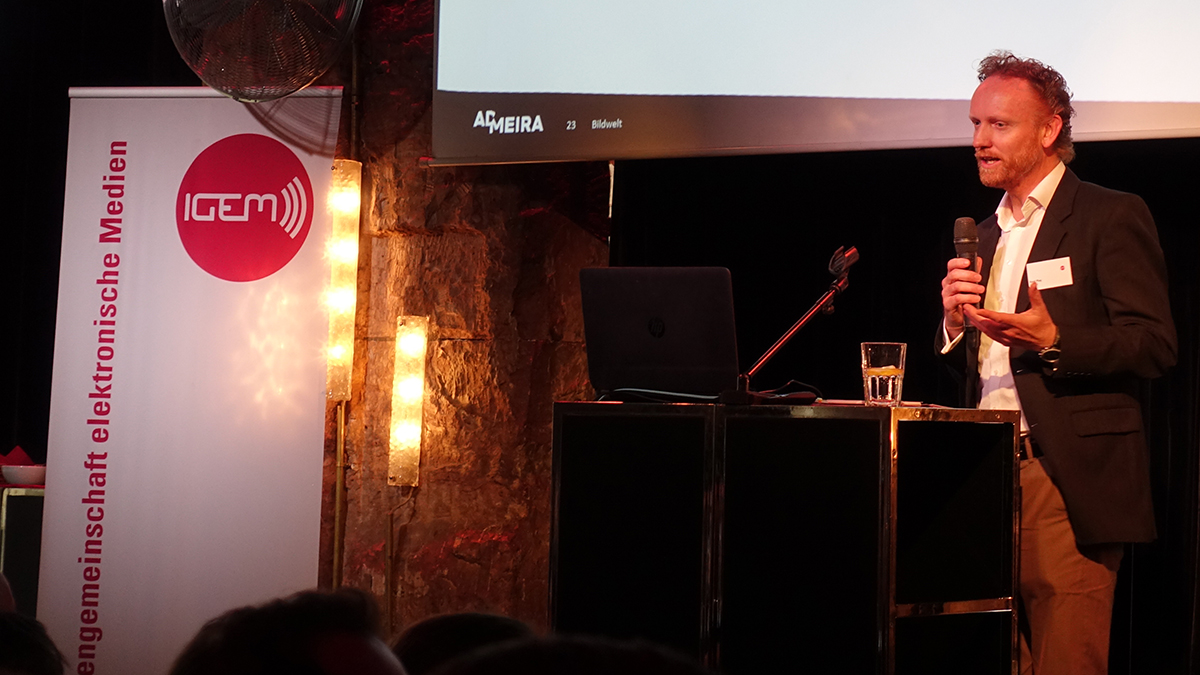
René Plug from Admeira also painted an optimistic picture. His message: "If we understand at an early stage how the market will function and which players are important for us, we will also find the right marketing opportunities in good time." He went on to summarize four trends to keep an eye on. His source: the USA.
First: OTT is on the rise. Over-the-top (OTT) platforms and service providers are becoming increasingly important. OTT means players who prepare their content independently of service providers or TV broadcasters. Netflix is an example of this. The signal can ultimately be played out via countless sources - smart TVs, game consoles, Apple TV, streaming sticks, etc. "The question here for us as marketers is: Where does the advertising run?" asks Plug. The OTT devices (for example, Apple TV), the OTT content (the content producers), or the OTT services in between (for example, Netflix, Amzon or YouTube)? "There are multiple players in this domain that could all offer possible advertising models. That's what makes the market so exciting - but also so complex," Plug said.
Second: The possibilities for Data-Driven TV are constantly increasing. The fusion of online and TV data is creating new opportunities:
At Total video For example, the first TV ads are later continued on other online devices in the household. You see the start of a campaign on the TV screen, the other parts follow on smartphone or tablet.
Data Enable LinearThis refers to the use of online profiles to additionally address the appropriate TV audience. For example, one would know that visitors to Blick.ch also like to watch the program XY. "Then suddenly I have an online-first strategy and no longer a TV-first strategy - but that's an opportunity for TV," Plug is convinced. So in addition to the relevant online target groups, you can also sell the appropriate TV formats.
Addressable TVWe've talked about it a lot at Admeira, but it's still in development," Plug says with a twinkle in his eye. The idea is to use online data in such a way that diversified advertising is displayed on television. One example: Someone searching for "baby carriages" or "diapers" on the Internet falls into the "families and children" custer - and consequently receives different advertising on TV than, say, bachelors who are interested in cars or travel online.
Third: Further introduced plug new interactive formats in front of them. The "OK Button," for example, allows viewers to become active during a TV commercial and directly view more detailed information about a product or service. The "T-Commerce" format, which is also interactive, allows viewers to book and buy movie tickets or event tickets directly from the TV commercial.
Fourth: In conclusion, Plug introduced new, innovative formats before. The "Branded Entertainment Selector" for example, allows the user to choose where and how long the advertising is displayed in the content. For example, would you rather see a two-minute commercial at the beginning of the program or the normal commercial break afterwards?
At "Ad Selector" users can actively choose which commercial they want to see. Audi or BMW? Diapers or retirement plans? This choice in turn provides valuable data about what the end user is interested in.
The "Pause Ad" appears when someone pauses a program. Everything is possible here, from a discreet insertion in the pause display to the playing of a commercial (see above).
The last innovative format presented by Plug: the "Prime Pod". Back to the roots, but rethought: The commercial break is reduced to two spots. The two spots in prime time, each lasting 30 seconds, are sold at a correspondingly high price, and performance is much higher. Since viewers know that the commercial break will only last a short time, they stay tuned. A model that NBC is already practicing successfully.