The car as a shopping channel


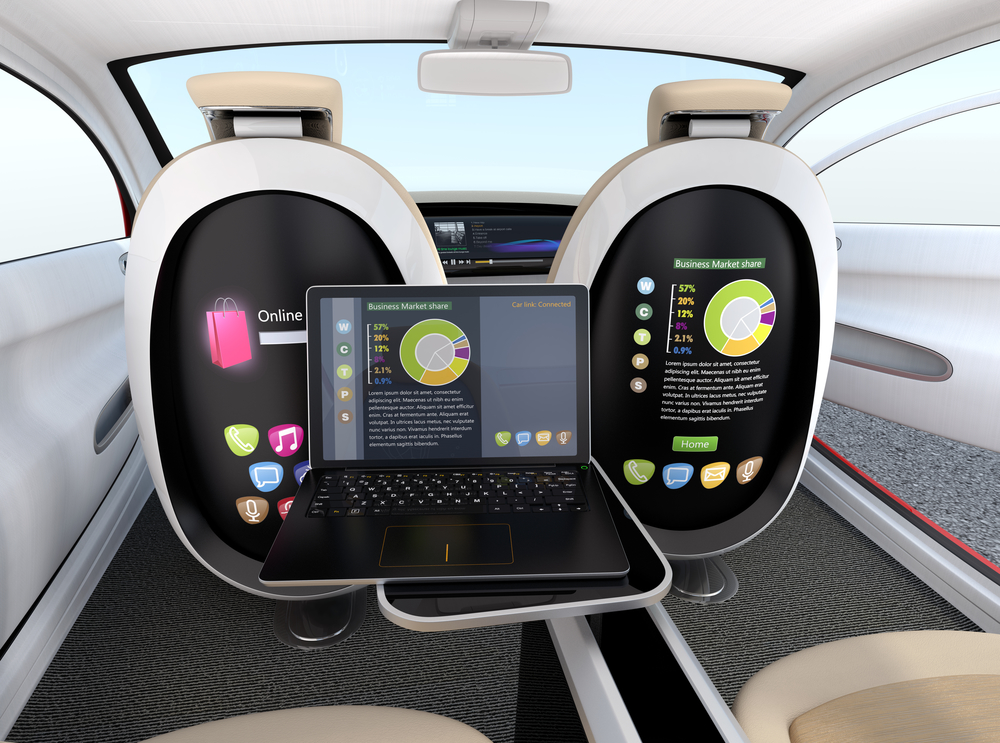
Autonomous driving leaves time for other things, like shopping.It is no longer a question of whether autonomous driving will be possible in the future, only the "when" is controversially discussed by experts. The advantages are too great, the new possibilities too interesting and the expectations of drivers too positive. One of these new possibilities is to establish the car as a completely new shopping channel and thus reach a highly attentive target group. And indeed, when drivers no longer have to focus their attention on the road, they have a lot of free time that can be used for communication, entertainment or shopping.Language as the future interface between man and machineMany major car manufacturers have long since recognized this potential. And instead of being afraid of new market players such as Google & Co, more and more car manufacturers are entering into partnerships with technology companies to jointly design the interior concept of the autonomous vehicle. Ford, for example, has integrated Amazon's voice assistant "Alexa" into its latest models. Audi is working with Baidu, Tencent, Alibaba and other Chinese tech giants and BMW customers will be able to use Microsoft's voice assistant "Cortana" in their cars in future. But innovative technology alone does not make a car: "The big technology companies such as Apple and Google certainly score points with their software expertise," explains Dr. Klaus Büttner, Vice President Autonomous Driving Projects at the BMW Group. "However, it takes more than that to put a safe autonomous vehicle on the road." Many manufacturers rely on voice-controlled technologies, as these are particularly suitable for use while driving because they allow the driver to keep their hands on the steering wheel.Shopping-to-go directly from the carSimilar to the assistants that many people are already familiar with from their smartphones, in future drivers will only have to speak instructions and the voice assistant will respond to the questions or carry out standardized commands, such as simple orders. But this is just the beginning. Visionaries envision a world in which consumers can do their everyday shopping seamlessly from their car. Payment data stored in the car ensures that the driver can leave their wallet in their jacket. It will also be possible to download and listen to audio books or music directly from the car. Restaurants, hotels, service providers or stores can be searched for and navigated to via the voice assistants. The smart system will even be able to make table reservations.New advertising opportunities and the chance to access customer dataThe point of sale "car" is particularly attractive for car manufacturers: they are faced with the challenge of knowing very little about their customers, as customer contact usually takes place via car dealerships. In a world in which customer data is playing an increasingly important role, an in-car marketplace is a good way to find out more about car owners. Another aspect is that connected self-driving cars provide a highly interesting audience for marketers, as the driver of an autonomous vehicle is grateful for any kind of "entertainment". Companies can broadcast advertising messages tailored to the driver via digital roadside advertisements. General Motors, for example, is already experimenting with such campaigns in the USA, in which passing cars are identified and addressed with targeted advertising on subsequent road signs. "The introduction of self-driving cars will lead to a new definition of "mobility" and permanently change the concept of "mobile commerce"," explains Melisa Hadzic, Director of the Internet World trade fair. Dr. Klaus Büttner, Vice President Autonomous Driving Projects at the BMW Group, explains how autonomous vehicles will dominate the mobility of the future, what challenges need to be overcome and when the vehicles will reach market maturity at the Internet World Fair.