
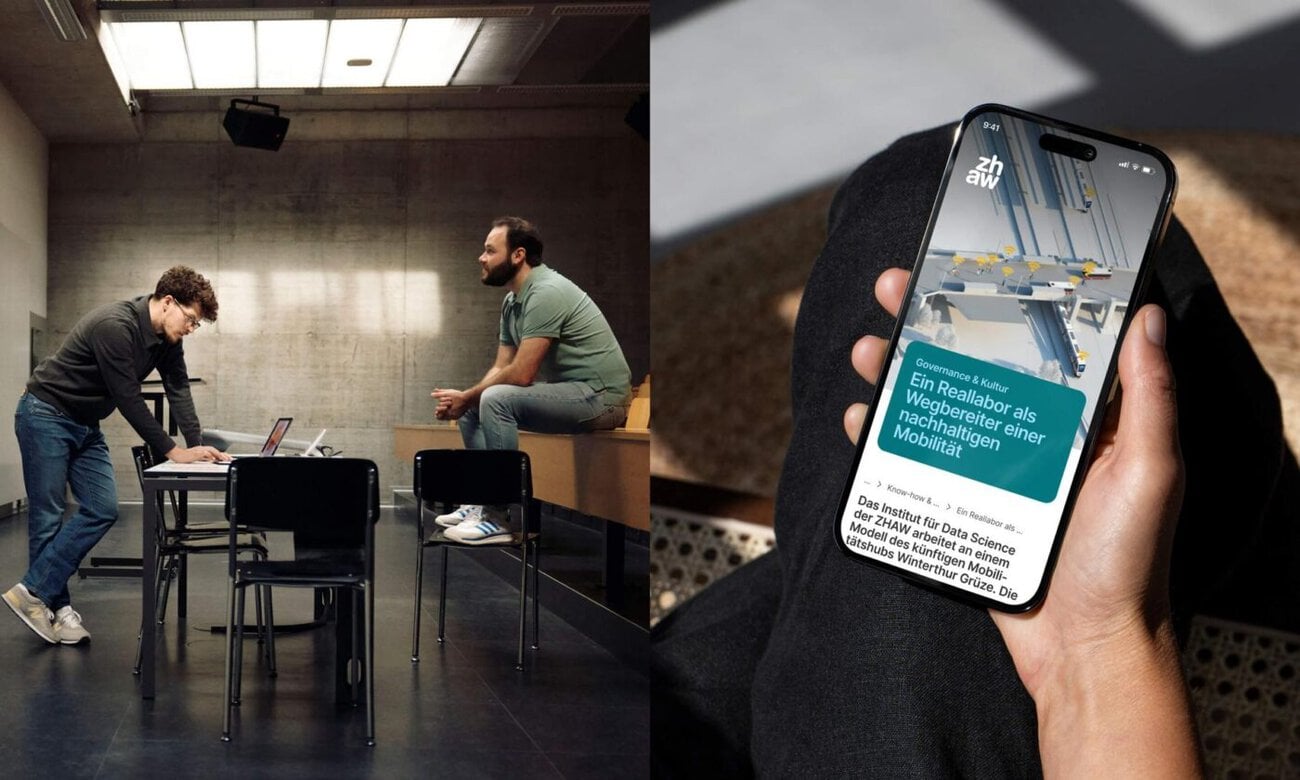
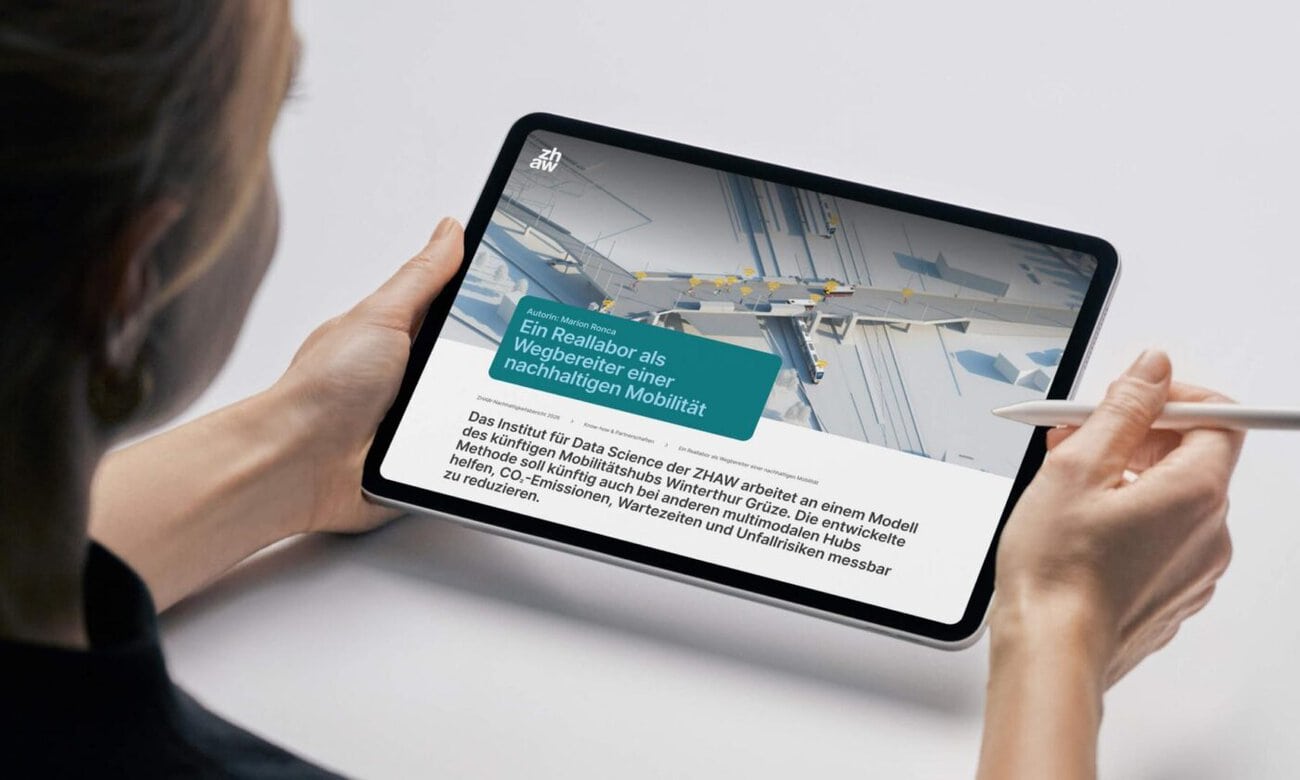
The Zurich University of Applied Sciences (ZHAW) has redesigned its sustainability report: Instead of a traditional document, a digital, interactive platform is now available. The new ZHAW sustainability report was developed in collaboration with the Zurich-based agency relyz and brings together stories, projects, and data on the university’s sustainability efforts—ranging from teaching and research to operations, as well as cross-university initiatives and collaborations. The report aims to provide transparent access to progress, challenges, and underlying data.
Stories and Data on a Single Platform
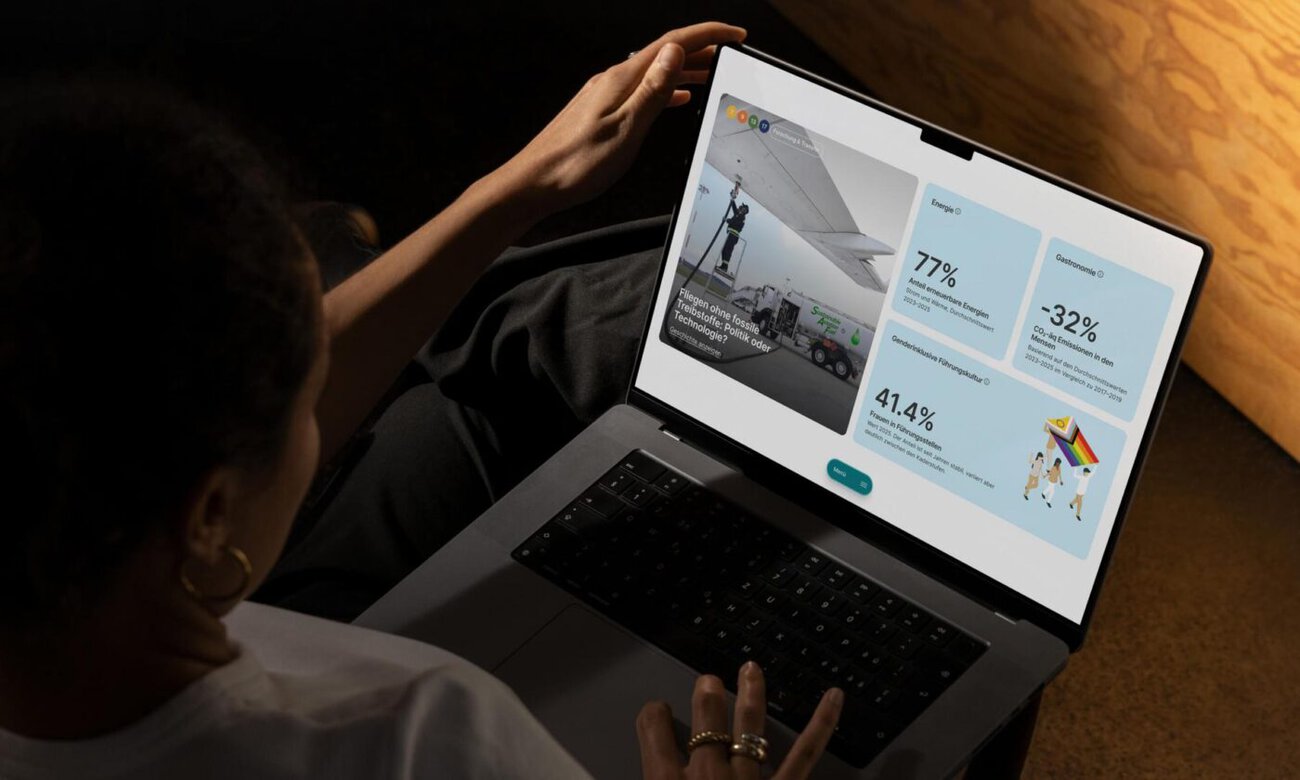
The overarching motto for sustainability efforts at ZHAW is «Applied. Together. Effective.» According to relyz, this vision was translated into a digital reporting format with two complementary sections: In the Content Hub, stories about people, projects, partnerships, and initiatives show how sustainability is implemented at ZHAW. The Data Hub complements this perspective with key metrics and interactive data visualizations.
Data spanning several years can be explored and compared directly within the report, making it possible to track trends over longer periods. Thematic tagging and targeted links connect stories and data. In addition, the stories are mapped to the relevant United Nations Sustainable Development Goals (SDGs).
«With our new digital sustainability report, we’re linking data and stories to show where we’re already succeeding in our sustainable transformation and where there’s still a need for action. relyz has translated these complex requirements into a clear, accessible, and interactive format,» says Francesco Bortoluzzi, Head of Sustainability Programs at ZHAW.
A Concept from Platform to Launch
The sustainability report was developed through several design sprints in close collaboration between ZHAW sustainable and relyz. Information architecture, data visualizations, and user experience were developed iteratively and tailored to the university’s content requirements. The concept was consistently carried forward for the launch: In an accompanying campaign, AI-generated visuals translate selected consumption data into clear comparisons of scale and visual analogies. QR codes and short URLs lead directly to the underlying data and in-depth content in the digital report.

ZHAW is a university of applied sciences with campuses in the canton of Zurich. It combines practice-oriented teaching, applied research, and social responsibility. Through its sustainability efforts, ZHAW states that it contributes to sustainable development in education, research and development, operations, and society. relyz is a Zurich-based agency specializing in digital business consulting and experience design that combines strategy with design, data, and technology to support organizations in developing future-proof digital solutions.
For more information on the ZHAW Sustainability Report, visit the university’s website: https://zhaw.ch/nhb26
Person in charge at relyz: Fabienne Schmidli, Digital Experience Consultant; Person in charge at ZHAW sustainable: Francesco Bortoluzzi (Head of Sustainability Programs).
]]>
Generative AI Communication: From Individual Tasks to Structural Issues
Generative AI has become virtually ubiquitous in Swiss communications departments—as the ZHAW 2026 Trend Study clearly shows. According to the survey, 99 percent of the communications departments surveyed now use generative AI in some form. The majority of these departments are already using the technology systematically, rather than merely on an experimental basis. As a result, the technology has reached a new level: it has long since moved beyond simply changing individual tasks and is increasingly impacting the structures, roles, and budgets of the entire communications department.
The study was conducted in the first half of 2026 by a research team from the Department of Applied Linguistics at ZHAW, led by Nicole Rosenberger, professor of organizational communication and management. The data set consists of an online survey of 115 chief communications officers (CCOs) in German-speaking Switzerland, as well as ten in-depth interviews with CCOs and communications consultants.
AI permeates the entire value chain
The range of applications for generative AI in communications has expanded significantly. The technology is no longer used solely for generating text and images, but also for research, concept development, data analysis, and video and audio production. Accordingly, the study shows that communications departments’ self-assessed level of digital maturity has reached a new high.
However, this leap in development has a downside: Many departments are simultaneously under considerable pressure to cut costs. At about 40 percent of the companies and government agencies surveyed, the budget has decreased in recent years—and at for-profit companies, the figure is even higher than half.
Strategy and consulting expertise are gaining importance
The changing technological landscape is also having an impact on skill requirements. According to the respondents, technical skills such as copywriting or translation are becoming less important, while strategic and consulting skills are becoming significantly more important. The research team sums up the key finding: «The biggest challenge for communications departments is no longer technology itself, but rather its repositioning within the organization.»
This shift raises new questions for communications professionals: What roles does a department that relies on AI need? How is its self-image changing in relation to senior management? And what specific skills need to be developed?
Fifth edition of a long-term project
Since 2018, the research project «Communication in the Digital Transformation» conducted by the Department of Applied Linguistics at ZHAW has been examining the current state and needs of corporate communication in the context of digital transformation every two years. The fifth trend study, published in 2026, focuses on how generative AI is transforming the very structure of communications departments. The trend study also serves as the scientific foundation for ZHAW’s continuing education program, the CAS in Digital Transformation, AI, and Communication.
The study «Communication in the Digital Transformation – Swiss Trend Study 2026» is available for free download: https://doi.org/10.21256/zhaw-2840
]]>
Climate change and resource scarcity are the challenges of our time. The ZHAW sees this as an opportunity for building culture - with circular construction methods, local, renewable building materials and energy sources, digital tools and integral planning.
Normal has created a campaign for the new MSc Integrated Building and Energy Systems course that condenses the complex subject matter into two words: Study Rethink. Under this motto, the campaign shows images in combination with words that strikingly stage this rethinking. The course is aimed at students from various disciplines.
The campaign has been visible on posters (OOH and DOOH) and on various social media channels since the end of January. The landing page, which Normal also implemented in-house, gives interested parties an in-depth insight into the topic. The following film shows the informative website for the course:
Further information on the degree program can be found at: https://www.zhaw.ch/kampagne/ibe
Responsible at the ZHAW: Prof. Dr. Oya Atalay Franck (Director), Tibor Joanelly (Head of Communications), Beat Waeber (Head of the Teaching Department), Alexis Ringli (Lecturer at the Institute of Structural Design), Prof. Dr. Luca Baldini (Head of the Institute of Building Technology and Processes). Responsible for Normal: Martin Arnold (CD), Sven Loskill (AD/Digital Director), Martina Fäh (consulting), Julia Mühlethaler (graphics). Patrik Rohner, Rohner Retouche (image editing).
]]> The project, funded by the Digitization Initiative of Zurich Universities (DIZH), combines media psychology with media design - and provides a practical tool for anyone who produces or strategically uses podcasts.
Three basic types, one model
The focus is on the STF model, which divides podcasts into three basic types: "story", "talk" and "factual". According to the study, whether a narrative is captivating, a conversation works or knowledge is retained depends less on technology than on dramaturgy, understanding of roles and format structure.
Five key findings
- Good stories need dramaturgy. Arcs of suspense and clear protagonists keep the audience on the edge of their seats.
- Chemistry is everything. In talk formats, the relationship between the hosts counts more than any post-production.
- Structure creates trust. Factual podcasts win through recognition and clear processes.
- Sound design seems underestimated. It shapes the atmosphere and identity more than many people think.
- Team beats hierarchy. Collaborative working improves content and the listening experience.
With listening analyses of 30 podcasts, 44 interviews and an interdisciplinary research approach, the study "Designing Podcasts" for the first time provides a sound basis for the professional development of podcast culture in Switzerland - and makes it clear that podcasting has long been more than just chatting with a microphone.
The complete manual Designing Podcasts - First Edition 2025 is available here: https://cast.zhdk.ch/projekte/handbuch-design/
]]> The claim is intended to emphasize the creative process between the initial situation and the finished work and is intended as an activating call to all makers in the student body. The special feature: The campaign developed by the Normal agency makes it clear that the quality of a building only becomes comprehensible once you have dealt with the basics. Modern architecture and civil engineering have long since gone beyond aesthetic and functional aspects. They address ecological issues and demand a holistic approach.
The implementation of the campaign is practice-oriented and shows numerous buildings with a direct connection to the ZHAW. The landing pages are structured like an online magazine and invite you to explore topics such as Hall 180+, the materials collection or the green flair of the student city of Winterthur. The first phase of the campaign has been visible online since the end of August and includes six online films, three print motifs and three themed landing pages.
Responsible at the ZHAW: Oya Atalay Franck (Director), Tibor Joanelly (Head of Communications), Beat Waeber (Head of the Training Department), Philipp Jorisch (Head of the Architecture degree program), Alexandre Fauchère (Head of the Civil Engineering degree program). Responsible for Normal: Martin Arnold (Concept/CD), Sven Loskill (AD/Digital Director). Dynamic Frame (Film Production): Max Carlo Kohal (Director/DoP), Luzius Fischer (Executive Producer), Jeanna Koba (Producer), Sven Bischof (Production Assistant), Sven Brauchli (1 AC), Daniel Blumensev (Post Production Coordinator), Dave Bullivant (Editor), Sislej Vece, Noa Röthlisberger (Assistant Editor), Jonas Fischer (Color Grading). Toniq Sound Agency, Yves Gerber (Sound Design).
]]>
 The Zurich storytelling agency Corpmedia has implemented a completely modular Storyworld campaign for the ZHAW Food and Beverage Innovation degree program, in which more than 352 videos and photos with nine protagonists were created in just one day of shooting.
The basis for this is the award-winning Storyworld framework, which is fine-tuned in advance to include key messages and reusable topics. On set, an experienced team ensures authentic interviews, personal support and brand-appropriate staging so that the protagonists can really shine and convey their stories credibly.
According to Managing Director Timo Wäschle, the focus is on combining content production efficiently and empathetically; real emotions and a safe environment are crucial for recruiting and employer branding. The result is a ready-to-use evergreen content pool for a wide range of channels - from social media and internal communication to AI data enrichment. The "done-for-you" principle is particularly appreciated, whereby the communications department only takes on the selection and final review of the protagonists, while the rest is handled in a structured manner by the agency team.
The Sony Burano was used for the production in 8K, which is normally only used in cinemas, making the content particularly impressive and future-proof. The success is not only reflected in the content itself, but also in the high level of satisfaction of those involved, who report increased self-confidence and a more positive relationship with their own work. Due to its success, stories are now also being produced for other ZHAW degree courses using this principle.
]]>
Artificial intelligence has become an integral part of Swiss teenagers’ lives. According to the James-Focus study conducted by ZHAW and Swisscom, 71 percent of the 12- to 19-year-olds surveyed have used AI tools at least once, and many already use them regularly. The Focus study builds on the James study from November 2024 and focuses on the everyday use of AI among teenagers.According to the study, the usage rate increases significantly with age: 84% of 18 to 19-year-olds already use AI tools, compared to around half of 12 to 13-year-olds. 1183 young people from German-speaking Switzerland, French-speaking Switzerland and Ticino were surveyed for the representative study.
Predominantly school use
The results show that young people primarily use AI technologies for educational purposes, such as for research, explaining topics, demonstrating solutions or generating texts. In contrast, use for entertainment purposes, such as chatbots or image generators, plays a subordinate role.
Favorite is ChatGPT
ChatGPT dominates the world of AI applications. The tool was by far the most frequently used by the young people surveyed. This can presumably be attributed to the fact that it was the first tool to be available to the general public free of charge.
My AI", Snapchat's chatbot, and Microsoft's Copilot follow in second place. "My AI" is particularly popular with girls, which is probably related to the generally high use of Snapchat among young people. A total of 67 different AI applications were named in the study.
Cautious optimism instead of blind euphoria
"The study shows a differentiated picture: most people are cautiously optimistic about the technology. They are not unconditionally euphoric, but reflective," says ZHAW researcher and co-head of the study Gregor Waller. Regular users have a more positive attitude towards the technology. This is particularly evident when searching for information, possibly due to the immediate added value they experience. The study results point to a reciprocal effect: Young people who have good experiences with AI develop more trust - and vice versa.
Attitudes towards AI are also strongly influenced by individual lifeworlds, interests and everyday experiences. Gender-specific differences are striking here: girls rated AI significantly more negatively than boys, the report continues. The researchers suspect that this could be due to socially influenced reservations, stereotypical role models or a lower level of confidence in their own technical abilities. The place of residence also plays a role. Young people from urban areas are more open to AI than their peers in rural areas.
Challenges for education and upbringing
As AI will increasingly shape the lives of young people, the authors of the study believe it is essential to give young people access to AI technologies and enable them to use them in a reflective and responsible manner. They point out that AI users could gain advantages in the school and professional context - for example through more efficient learning, better mastery of complex tasks or increased productivity.
The rapid technological development poses new challenges for both teachers and parents. "The technical development steps are a major challenge. As parents and educators, we are well advised to actively address the issue in order to provide our children and young people with the best possible support," emphasizes Michael In Albon, Youth Media Protection Officer at Swisscom.
In order to strengthen the ability to question critically, young people's confidence in their own skills and knowledge should be encouraged. There is often a lack of differentiated understanding of the risks and opportunities of AI - and the same applies to adults. It is therefore advisable for young people and parents to explore the new technologies together. (Tanja Mettauer/NetzKI Bot/rja)
]]>

Content marketing is key for Swiss companies. 66% of the companies surveyed actively use content marketing, as a recent survey by the ZHAW shows. The majority of companies that do not yet use content marketing are also planning to introduce it. This is also reflected in the budgets: companies invest almost 40 percent of their total budget in content marketing measures. "We are seeing an increasing professionalization of content marketing. This means, for example: Clearly defined strategies, target group analyses and the use of content management tools for the planning, creation and distribution of content," explains Nadine Stahl from the ZHAW, who is responsible for the study.
AI increases efficiency
Larger companies in particular are increasingly using artificial intelligence in their content processes, according to the study. AI is primarily used in automated text creation, content optimization and in analyses to measure success. AI-supported tools for the personalization of content and automated content distribution are becoming increasingly important. Companies that have already gained experience with AI in content marketing report increases in efficiency and improved targeting.
At the same time, according to the study, a lack of specialist knowledge, inadequate internal structures and uncertainties regarding the quality and credibility of AI-generated content are slowing down widespread adaptation. "Our study provides insights into the use of AI in content marketing for the first time. We found that the impact of AI on creativity and authenticity is a controversial topic. While some companies see AI as a supportive tool that complements human creativity, others see the risks of too much automation," explains Stahl. Despite these challenges, however, many companies expect AI to play a key role in content marketing in the coming years.

Data is becoming increasingly relevant
Companies mainly use data to better understand the behavior and interests of their target groups and to analyze the effectiveness of content formats. Nevertheless, many are not yet exploiting the potential of their data. "There is potential for development, particularly in the area of data-based optimization and personalization of content," explains Nadine Stahl.
Variety of content formats
Social media posts and articles on the company website are created most frequently. Podcasts, white papers and best practice studies are considered particularly effective by those surveyed, but are time-consuming to produce. The choice of distribution channels is increasingly target group-specific. The company's own website and social media, especially LinkedIn and Instagram, are seen as particularly relevant channels. "It is interesting to note that companies that work in a data-driven manner are investing in content distribution in a much more targeted manner, focusing in particular on owned media and shared media," says Nadine Stahl.

For the Content Marketing Study 2025 the Institute of Marketing Management at the ZHAW School of Management and Law has investigated the use and spread of content marketing in Switzerland for the fourth time. 924 Swiss companies of different sizes and from different industries took part in an online survey in January 2025. Click here for the entire study.
]]>
"Successful communication is not an individual task, but a joint task that only works together," say Annette Pfizenmayer and Katharina Krämer, co-directors of the CAS Corporate Communications program, explaining Perikom's commitment. "Close cooperation between communications and HR is essential in order to create a strong corporate culture. Through our partnership with Perikom, we want to promote the exchange between science and practice and further advance this interdisciplinary dialog."
Among other things, Perikom organizes regular events for communication and HR experts, such as the annual Swiss HR/Internal Communication Conference. The association also develops further training courses and contributes to research in the field of internal communication. The next Swiss HR/Internal Communication Conference will take place on May 15, 2025 on the topic of sustainability.
]]>
With a view to the start of the 2024 fall semester, the content of the social work course at the Zurich University of Applied Sciences ZHAW was expanded. Andy Was Right's comprehensive communication strategy included the revision of the communication concept as well as the conception, implementation, distribution and measurement of a social media campaign. Particular attention was paid to the long-term reusability of the campaign content.
The aim of the campaign was to raise awareness of the Master's program. The creative social media campaign, which ran from early December 2024 to mid-January 2025 on Facebook, Instagram, LinkedIn, TikTok and YouTube, was designed to encourage interested parties to register for information events and ultimately enrol on the Master's degree program.


The campaign, which ran under the slogan "Zmitzt im Läbe", focused on the transformative potential of social work and showed how graduates of the degree program can play an active role in shaping society. Particular attention was paid to the flexibility of the degree program and the compatibility of studies and family. In addition, the innovative focus on complex case work was emphasized, which makes this Master's unique in Switzerland.
According to the agency, the campaign achieved positive results on all platforms: Awareness was significantly increased and traffic to the Master's program website was boosted.
]]>
Anyone who regularly surfs the internet is sure to have already come across videos of self-proclaimed crypto gurus or dating coaches promising success by dubious means. These types of videos and types served as a template for the new social ads of the ZHAW campaign to promote the Bachelor's degree program in Nursing.
In the short campaign clips, a young man appears who, at first glance, looks like one of those dubious "Alpha Bros". But after a few seconds, it is revealed that the video is actually advertising the Bachelor's degree course in nursing. The videos end with the campaign slogan "Experience success that really fulfills", which calls on students to secure a place at the ZHAW. With this twist, the videos are intended to attract attention and clearly stand out stylistically from other campaigns for comparable degree programs or job advertisements.
In addition to the three main videos, five short interview clips were created with the head of the degree program. These are played organically and offer interested parties a deeper insight into everyday life as a student at the ZHAW.
The campaign has been online since Friday and can be seen on all common social media platforms. Adapted versions are also being played out as DOOH and display ads. These are intended to accompany the target group with dynamic playout across an entire network of screens. The aim is to efficiently increase the frequency of contact with the target group.
Responsible at ZHAW: Patrick Becker (Head of Marketing & Communication ZHAW Health) and Carol Flückiger (Marketing & Communication Manager Nursing). Responsible at Wirz Group: Morris Lötscher, Evelyn Schellenberg, Nico Schläpfer, Lana Zumbrunnen, Nico Keramaris, Freyja Hablitz, Sophia Müller, Nora Moussa, Giovanni Bucca, Yussef Serrat, Oliver Fäs and Jonathan Müller. Production partner: Studio Nord; Nadja von Burg (production/co-director) and Valentin Kathriner (DoP/co-director/post-production).
]]>
AI tools are conquering the everyday lives of young people at record speed. According to the study, around 71% have already had experience with ChatGPT and co. A third of all young people already use AI tools at least once a week, even though this technology only came to the attention of the masses at the end of 2022.
"Never before has a medium been integrated into everyday life as quickly as AI tools have. This means that critically questioning information will become even more important in the future," says ZHAW researcher and co-head of the study Gregor Waller. Young people need to be made aware of the issue and taught how to check information for accuracy.
Social media: Big Four consolidates
Instagram, TikTok, WhatsApp and Snapchat remain the most popular social networks and messengers among young people in Switzerland. These "big four" of digital communication are an integral part of their everyday lives - regardless of age, gender and socio-demographic background. Young people mainly consume content on social networks without commenting on it, sharing it or regularly uploading posts themselves.
Together with other social networks, messengers and video portals, the Big Four are regularly used both to obtain information and for entertainment purposes, with the latter predominating.
Saturation trends in media use
A tendency towards saturation can be seen in young people's media use. Many media activities such as listening to music, using social networks or watching videos on the internet are now so deeply integrated into everyday life that a further increase in usage hardly seems possible. In view of school, teaching, non-media leisure activities or social activities, a kind of natural maximum seems to have been reached. "The stable results could indicate that the digital routines and habits of young people have become firmly established in everyday life," concludes ZHAW researcher and co-author Céline Külling-Knecht.
There was a decline in the use of traditional media. While a quarter of the young people surveyed still regularly used magazine and newspaper portals for information purposes in 2018, this figure is now only 10%. At the same time, more than half of the young people surveyed use social networks as a source of information (57%). Even if traditional news providers are also present on social networks, anyone can in principle disseminate information unfiltered on these platforms. According to the study, this increases the risk of fake news and potentially exposes young people to more manipulation and misinformation.
"Dark patterns" as hidden risks in gaming
Eight out of ten young people game at least once in a while. Among boys, who are around twice as likely to game regularly as girls, gaming is by far the most popular leisure activity. Free-to-play games, such as the mobile game "Brawl Stars", are particularly popular, followed by "Fortnite" and "Minecraft".
The fascination with these games is partly due to so-called "dark patterns", manipulative design strategies that are intended to influence player behavior. These include, for example, loot boxes (random rewards that encourage players to continue playing and buying) or complex in-game currencies (which make it difficult to keep track of actual costs). The "dark patterns" of video games also include time-limited rewards and the resulting feeling of missing out ("Fear of Missing Out" FOMO), social obligations within the game (both increase the pressure to play regularly) and loss aversion (mechanisms where players can lose what they have already achieved).
These games are monetized through microtransactions (payment model in which users can purchase virtual goods in the game). Around half of all young people surveyed have already made such a purchase. "In light of these mechanisms, parents in particular have a duty to get to grips with different games and be open to their children's gaming behavior," says Michael In Albon, Youth Media Protection Officer at Swisscom. Authorities should also keep an eye on the developments surrounding "dark patterns" and intervene with regulation if necessary, as has already happened in some countries such as the Netherlands and the UK.
Prevention of problematic media use
36 percent of the young people surveyed stated that they had been asked about the appearance of their body at least once in the last two years, while around a third had experienced strangers in the digital space wanting to talk to them about sex or approaching them with unwanted sexual intentions.
The differences between girls and boys are significant: girls have experienced various forms of sexual harassment much more frequently. Almost one in two young people have already experienced one form or another of sexually motivated contact on the internet. The frequency of such experiences also increases significantly with age. "It is unacceptable that children are harassed in this way. Platforms such as Instagram or TikTok must be held more accountable here so that young people are better protected", Michael In Albon makes his position on this issue clear.
Gender also plays a role in cyberbullying: at 28%, almost twice as many boys as girls report that they have been abused or insulted online at least once. At the same time, boys are also far more likely to play an active, bullying role themselves. There is hardly any difference in the frequency of active cyberbullying or being affected by cyberbullying. One possibility is that many young people both actively bully and are bullied. "As there is hardly any increase in cyberbullying with age, it makes sense to start prevention on this topic at primary school level," says Céline Külling-Knecht, ZHAW researcher and co-author.
Sport remains the most important leisure activity
When young people spend their free time alone, sporting activities, audiovisual media and music are at the top of the list. Sport in particular has become more important compared to the 2022 James Study and is now the most popular leisure activity.
While gaming and sporting activities clearly dominate for boys, girls focus on other cultural (reading and music) and creative (baking, drawing) activities. As in 2022, the most important leisure activities for young people with friends are sports activities, spending time outdoors in nature and doing things together. Having conversations with friends is also very important to young people.
Young people like to read, and this has been a constant in media use for many years. In addition, more and more book-related content can be found on various platforms such as TikTok, Instagram and YouTube. The content is so widespread that separate names such as "BookTok", "Bookstagram" or "BookTube" have become established for these subcultures. For the first time since 2016, young people's favorite books were therefore surveyed again in 2024. In first place is the Harry Potter series, which has topped the rankings since 2012. Also popular in 2024 are "Greg's Diary", "The Three???" and "One Piece". Since 2012, the most popular books have always been those that have also been made into films. It is striking that reading behavior differs particularly between the sexes. Girls generally read more than boys and also tend to describe it as one of their favorite leisure activities.
For the James Study, around 1,000 young people aged 12 to 19 are surveyed every two years.
]]>