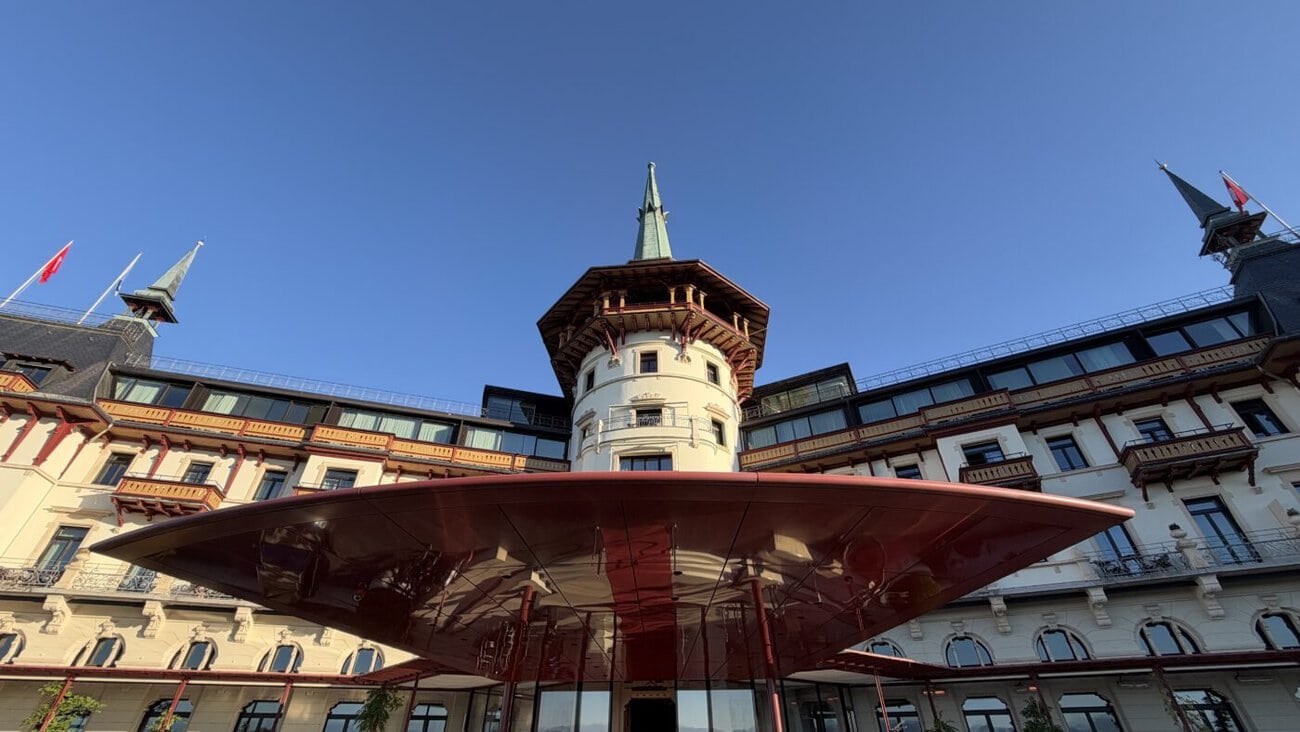
When you stand in front of the Grand Hotel Dolder and gaze at its striking facade—with its central tower, flanking turrets, and jaunty canopy—the image of an opera stage comes to mind: a place of architectural drama where history and the present converge. And it brings to mind Giuseppe Verdi, who viewed his works as a "total work of art": the orchestra, the stage setting, and the dramatic twists and turns of human destinies came together in his work to move the audience deeply. In the 20th century, cinema took up this legacy and transferred the overall dramatic experience from the physical stage to the monumental screen.
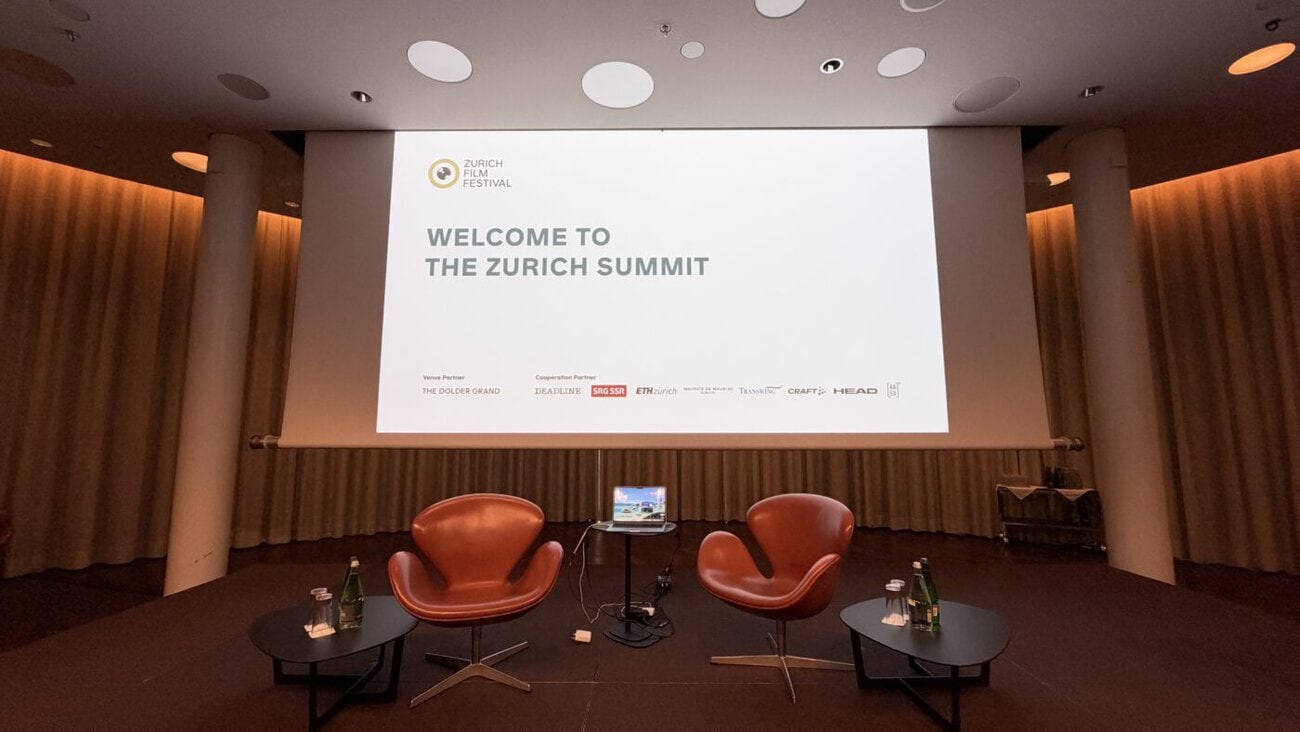
Now we are witnessing the next tectonic development in this chain: Following opera and film, a new, hybrid form of storytelling is taking shape, one that is still struggling to find its final definition. It is a space where passive viewers become collaborative creators, algorithms break down production budgets, and stories blur the lines between movie theater seats and interactive feeds. Amid this technological explosion and social upheaval, a fundamental assessment took place in Zurich:
How does the magic of storytelling endure when the media through which it is conveyed undergo radical transformation, yet the human urge to find meaning remains the same??
Think Tank at the Dolder
When one thinks of Verdi’s *La forza del destino*, one thinks of the overwhelming, inescapable power of fate that descends upon the characters. But up on the Zürichberg, no one was thinking of simply submitting to the upheaval without a fight—on the contrary: Here, people want to be in the driver’s seat and take an active role in shaping the future.
It was precisely this aspiration to leadership that Festival Director Reta Guetg and the new festival president Martin Moszkowicz Right off the bat: The Zurich Film Festival doesn't want to merely passively reflect global trends, but rather actively help shape the rules of the game—«trendsetting,» as Guetg told the British newspaper The Guardian she said. She explained that the Dolder isn't about the usual industry small talk, but rather a genuine think tank.
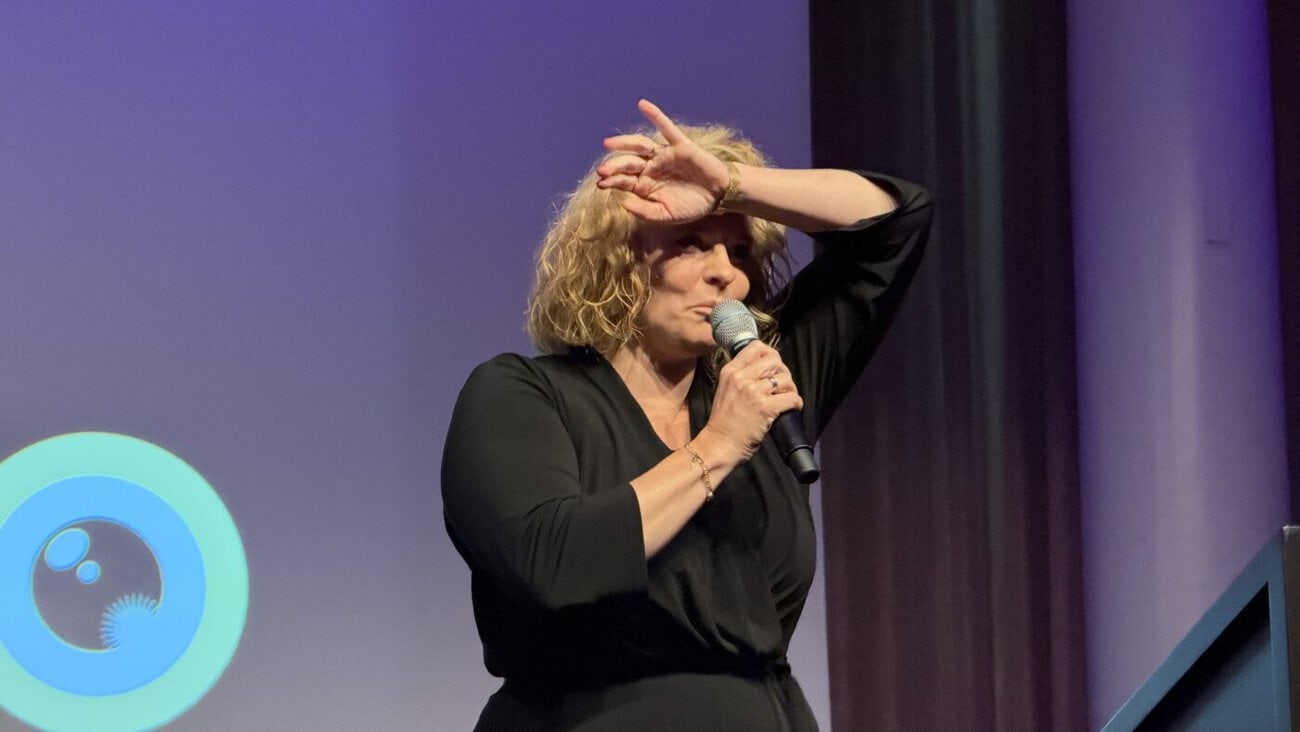
Guetg had the young participants in the «Summit Climber» talent program stand up in the hall and gave those present a clear mission to take with them:
«Be courageous, talk to one another—it's important to have the next generation at the table.»
Moszkowicz wiederum brachte den doppelten Hebel der Veranstaltung pragmatisch auf den Punkt: Man sei hier zusammengekommen, um neue Dinge zu lernen, um bessere Filme zu machen – und am Ende auch mehr Geld damit zu verdienen.
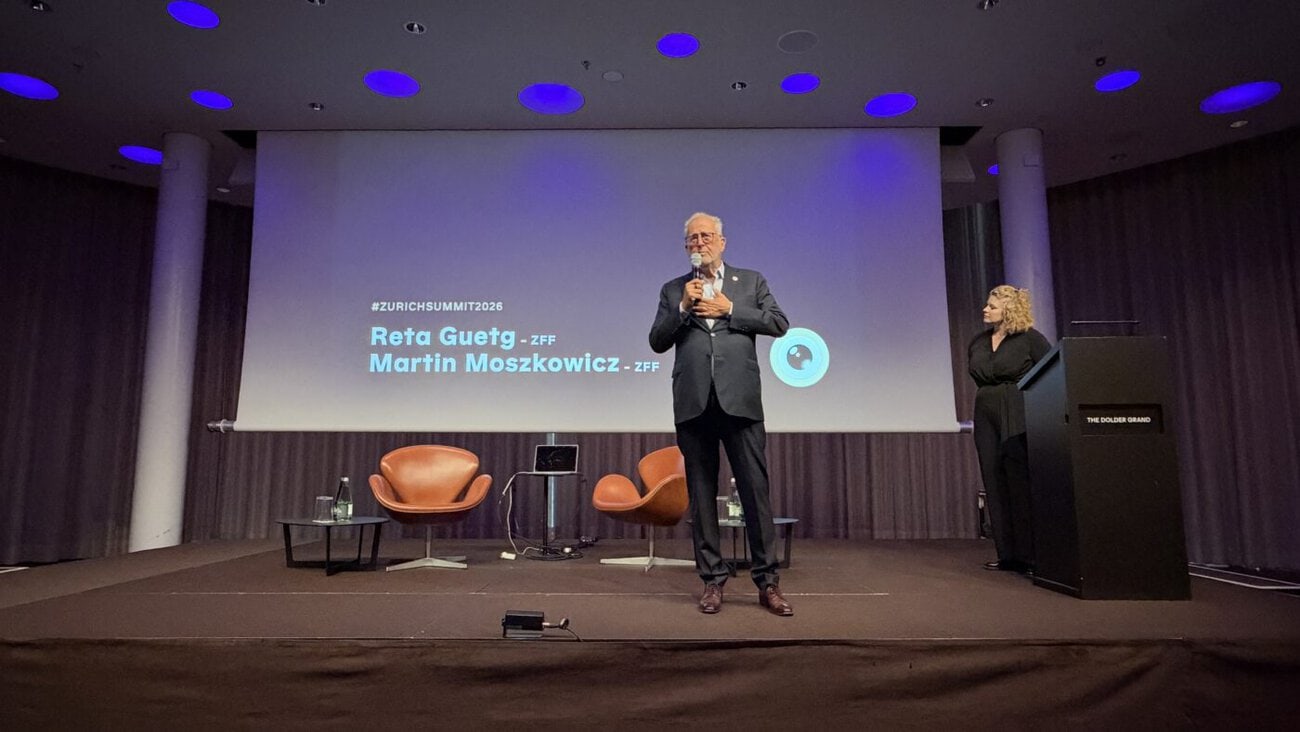
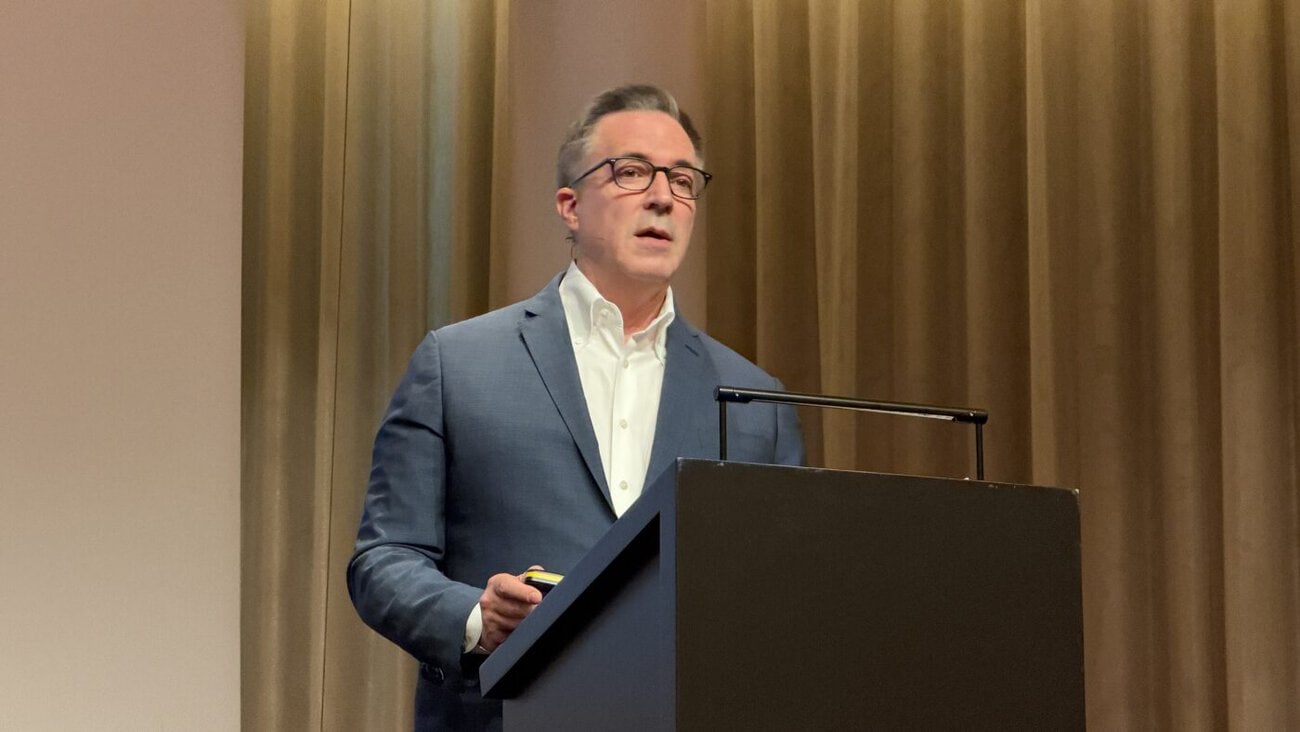
Immediately afterward, the highest-ranking representative of the global film industry further expanded on this balance between bold vision for the future and sound market logic: Bill Kramer, CEO of the Academy of Motion Picture Arts and Sciences. With an eye toward the upcoming 100th anniversary of the Oscars, he grounded the Zurich think tank in a reassuring, almost defiant certainty:
«Technology changes, distribution channels change, and audiences evolve and become more connected despite great distances". But through it all, the human desire to tell our stories—and to see ourselves reflected in those stories—remains. And because of this, movies matter more than ever."
It was the perfect opening chord for a day that evoked the relentless essence of Verdi's The Force of Destiny reminded us: Technology may dictate the rules of the game, but the true «power of destiny» lies within human beings themselves. The future of storytelling is not sealed in code, but in the unwavering will to move, inspire, and shake the audience…
Act I: The Overture – The Ghost of Comfort
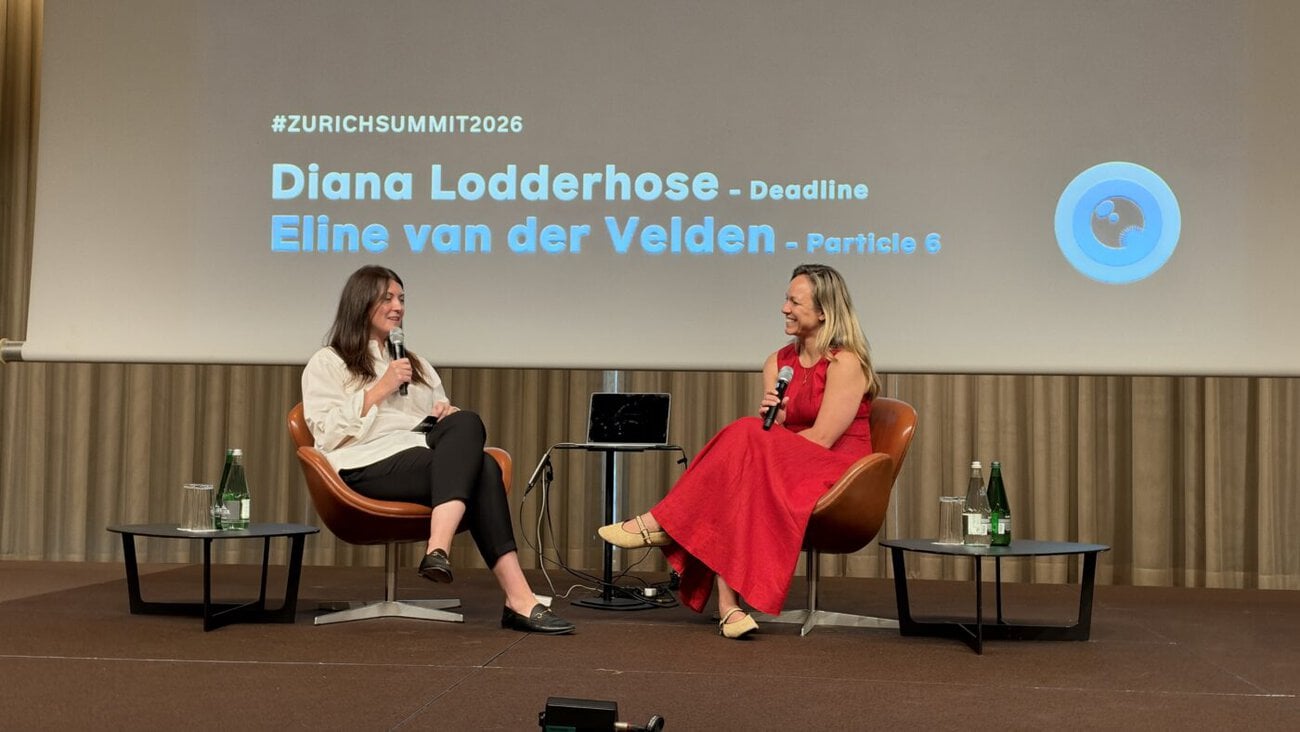
Every turning point begins with uncertainty. Where studios once single-handedly dictated what belonged on the screen, the allure of automated efficiency now reigns supreme. Just how fine the line is between fascinating feasibility and creative self-sacrifice was illustrated right at the start of the session with Eline van der Velden. With «Tilly Norwood,» an actress created entirely by AI, she demonstrated how algorithms are already capable of mimicking human facial expressions and presence—a technological milestone that, however, immediately raised a fundamental question in the audience: Are we witnessing the democratization of film production or the gradual dehumanization of art?
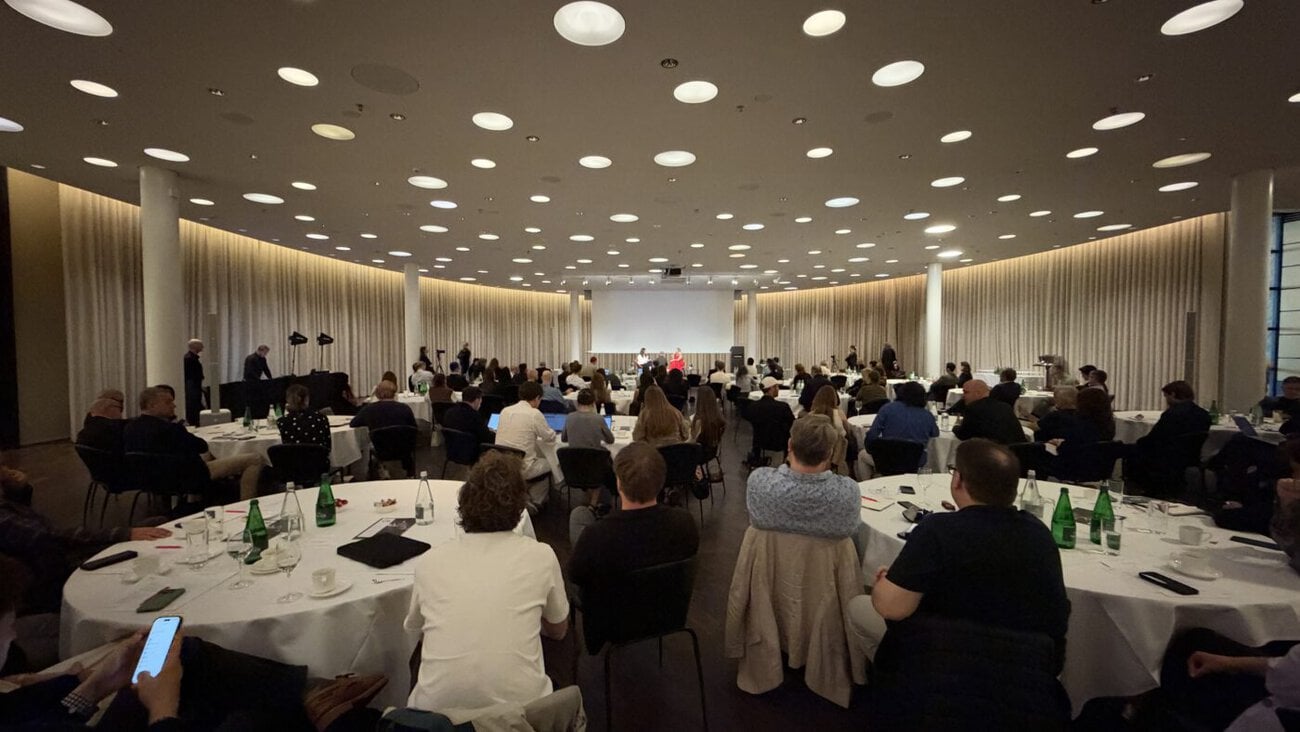
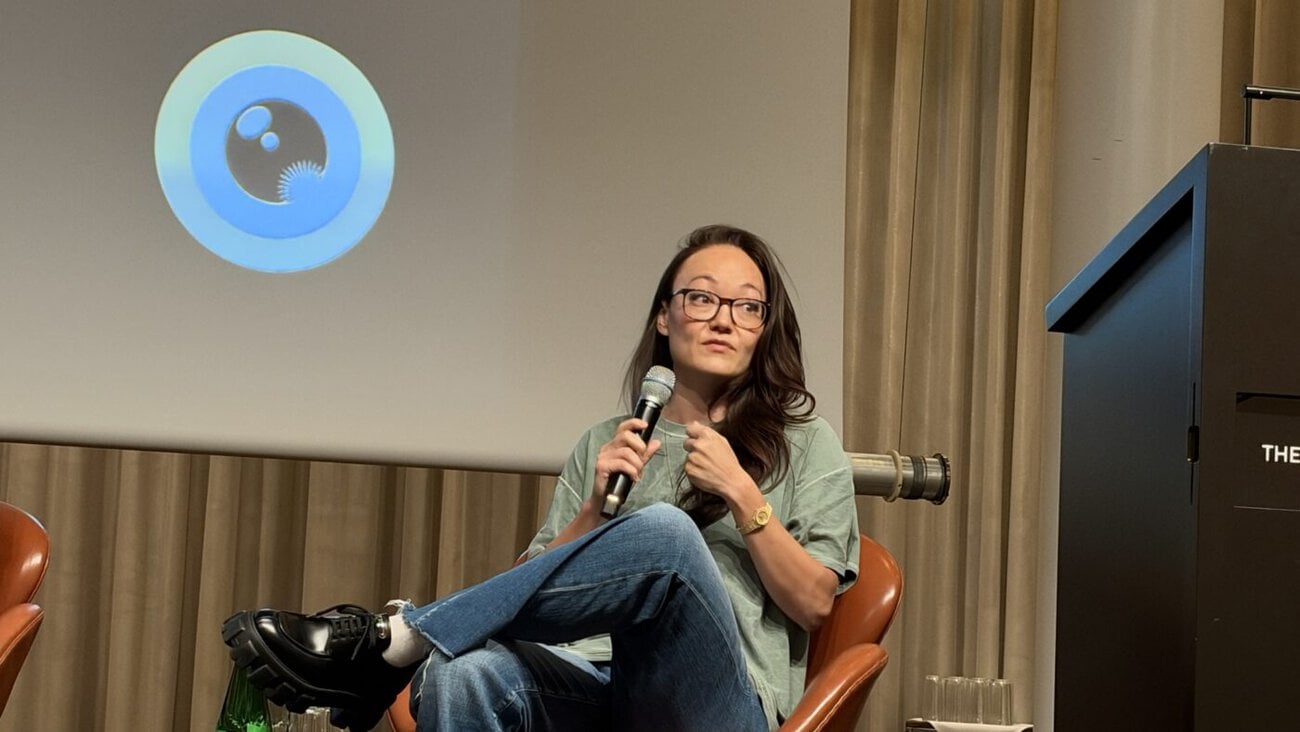
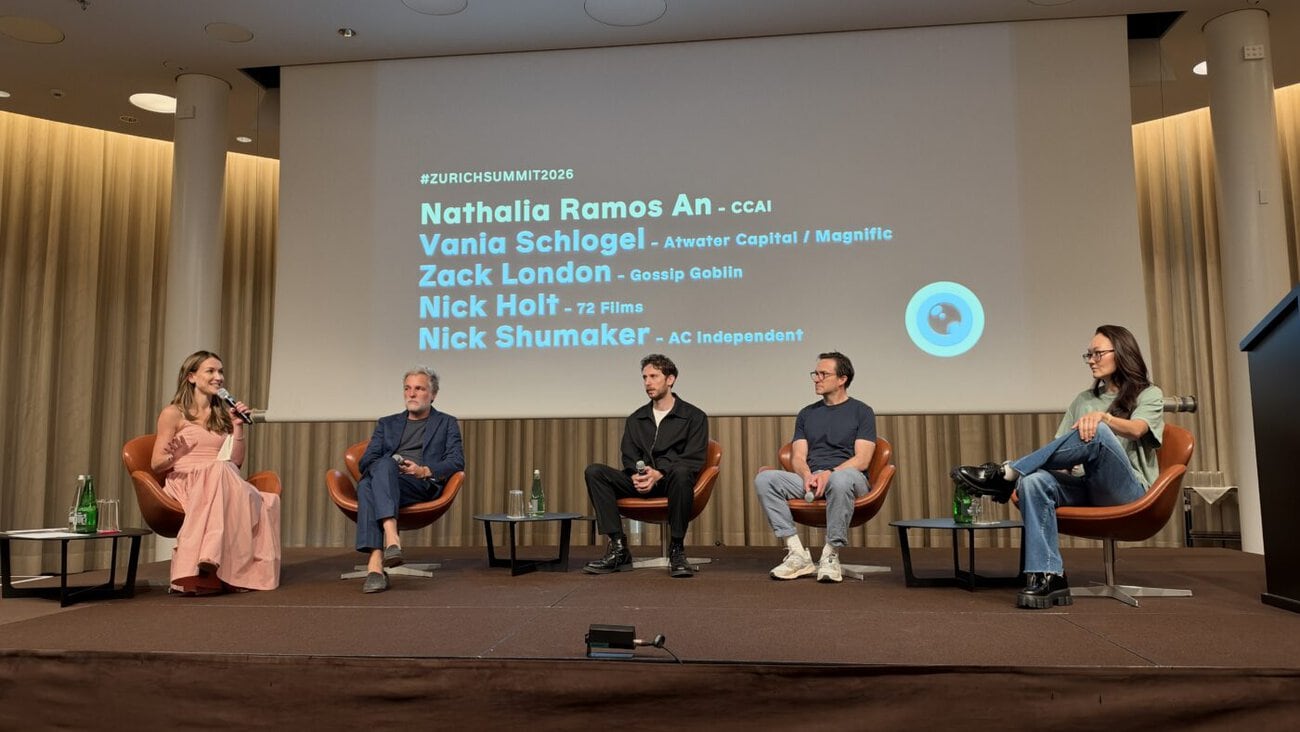
For the real crisis discussed on the panels is not purely a budgetary one, but an intellectual one: the voluntary surrender of our autonomy to the machine. Vania Schlogel, The founder of Atwater Capital issued a stark warning about this «comfort trap» when dealing with generative models. Instead of viewing AI as a practical tool for simply «offloading» tasks, the industry is increasingly falling into a dangerous rut. She described this mechanism as “cognitive surrender”—the human tendency to mentally capitulate to the apparent perfection of algorithms and to accept their synthetic outputs as authoritative without scrutiny.
Her panel colleagues examined the practical implications of this looming subjugation from various perspectives: For Nick Shumaker (Anonymous Content) At stake here is the very foundation of the industry—trust in original creativity. Replacing talent with algorithmic averages robs cinema of precisely those rough edges and quirks that make a work unforgettable. Industry attorney Nick Holt (Figures from Brittenham) highlighted the legal minefield of unresolved copyright issues and the protection of human authorship, while the tech and media investor Zack London warned against the illusion that efficiency gains could be translated one-to-one into cultural value. The panel’s unanimous conclusion: Where machines take over the thinking, the result is not progress, but mere interchangeability.
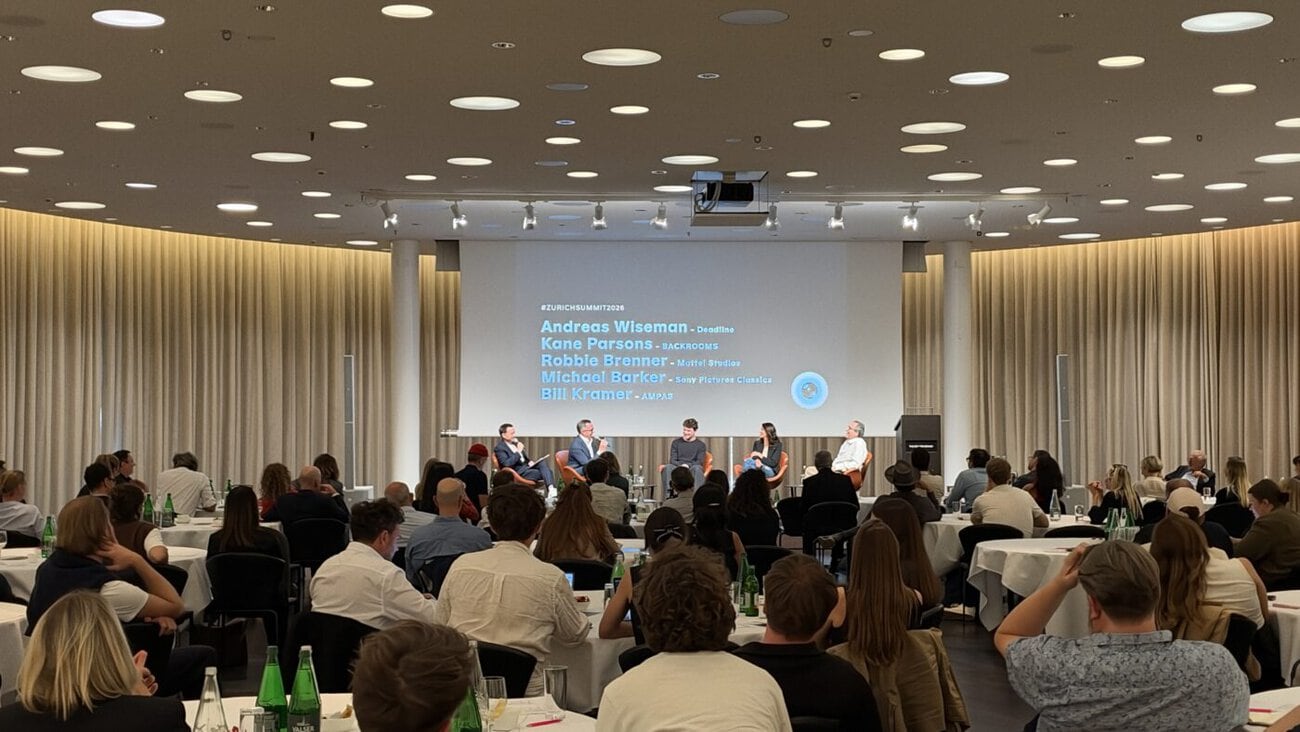
Anyone who crafts stories—whether it’s a feature-length drama or a pithy 30-second campaign—mustn’t give in to this superficiality. The fact that the statistical laws of the tech world are no match for true art was underscored by the Sony Pictures Classics legend Michael Barker with a disarming example: An intern had asked an AI about the «ten rules for a hit» and received strict prohibitions—no black-and-white, no early death of the hero, no older female protagonist. When he showed her Billy Wilder’s masterpiece Sunset Boulevard When she examined these rules, she realized that Wilder had shattered nearly every single one of them—and that is precisely why he made film history. Barker's conclusion:
«Billy Wilder sat at a table like that and made that up, and AI can't do that.»
Es wäre ja kein kompletter Beitrag über das Filmschaffen ohne eigene Bewegtbildbeilage – in diesem Sinne, hier das «Appetizer»-Video zur Story 
Act II: The People Take the Stage – The End of the Elitist Monologue
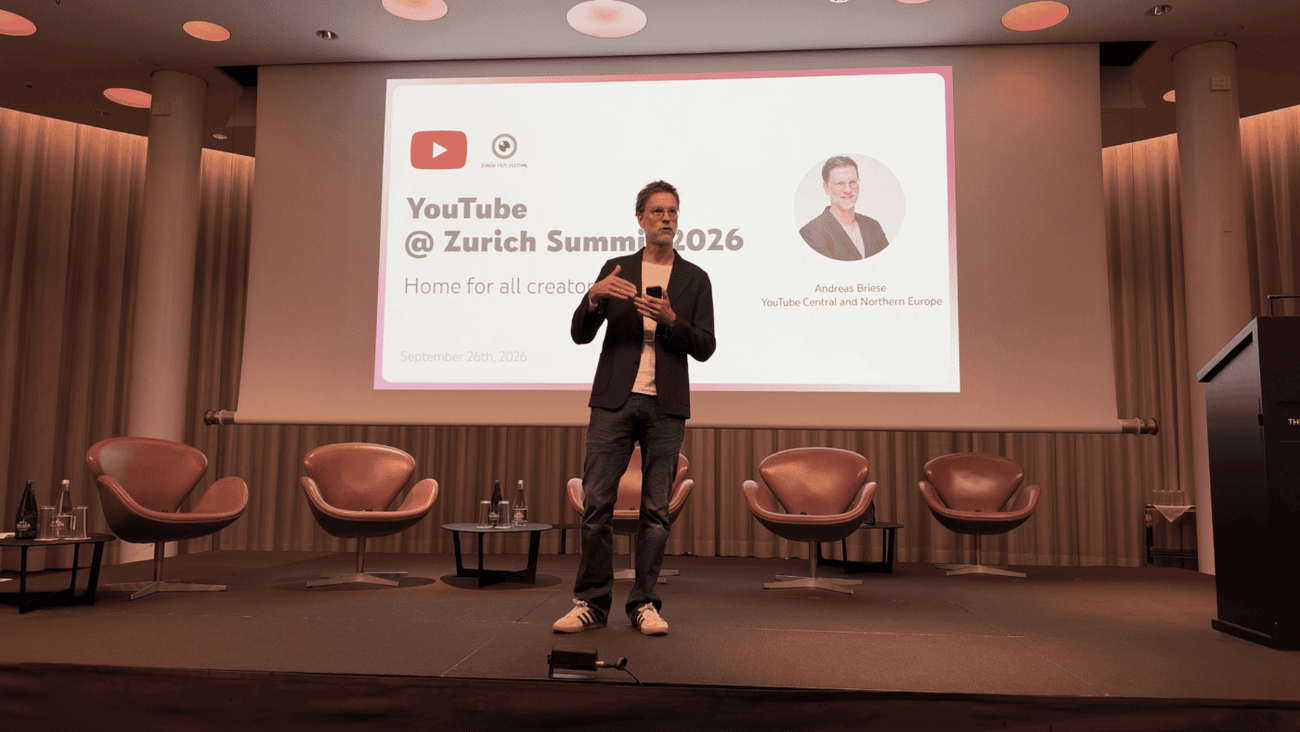
In classical opera, the boxes were reserved for the privileged, while the common people stood in the stalls below. It is precisely this hierarchy that the networked platforms have destroyed. Andreas Briese, Managing Director at YouTube, presented the traditional movie-going audience at the Dolder with hard facts: YouTube is no longer just a smartphone phenomenon—it’s rapidly taking over the living room. The interactive TV screen is the company's fastest-growing platform; over one billion hours are watched on TV sets every day, and more than half of that viewing time is accounted for by programs longer than twenty minutes.
The encounter at the Dolder between two seemingly opposing poles of the entertainment industry underscored just how radically this interplay between audience, brand, and creator has already changed the rules of the game.
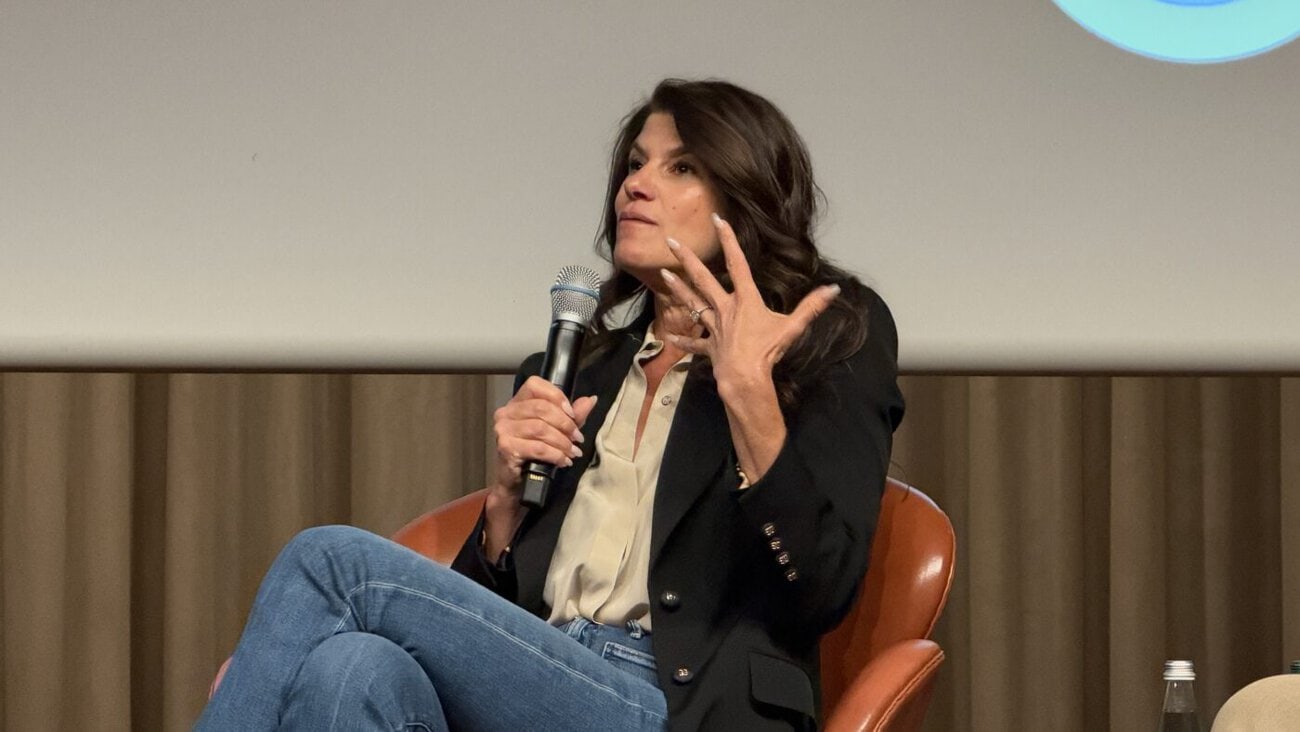
On the one hand Robbie Brenner, President of Mattel Films, which, with the global success of Barbie demonstrated how to transform a historic corporate brand into a global cultural phenomenon through uncompromising auteur cinema. With palpable passion, she rejected the fearful obsession with censorship and control typical of traditional corporations at the Dolder Grand: Those who smooth over every point of friction out of fear of reputational risks end up producing nothing more than commercials, which the audience will punish. Relevance only arises when studios muster the courage to grant their filmmakers true creative freedom and take the audience seriously:
«You can't just make a movie to sell toys—audiences see right through that. You have to respect the audience and give them something truly original.»
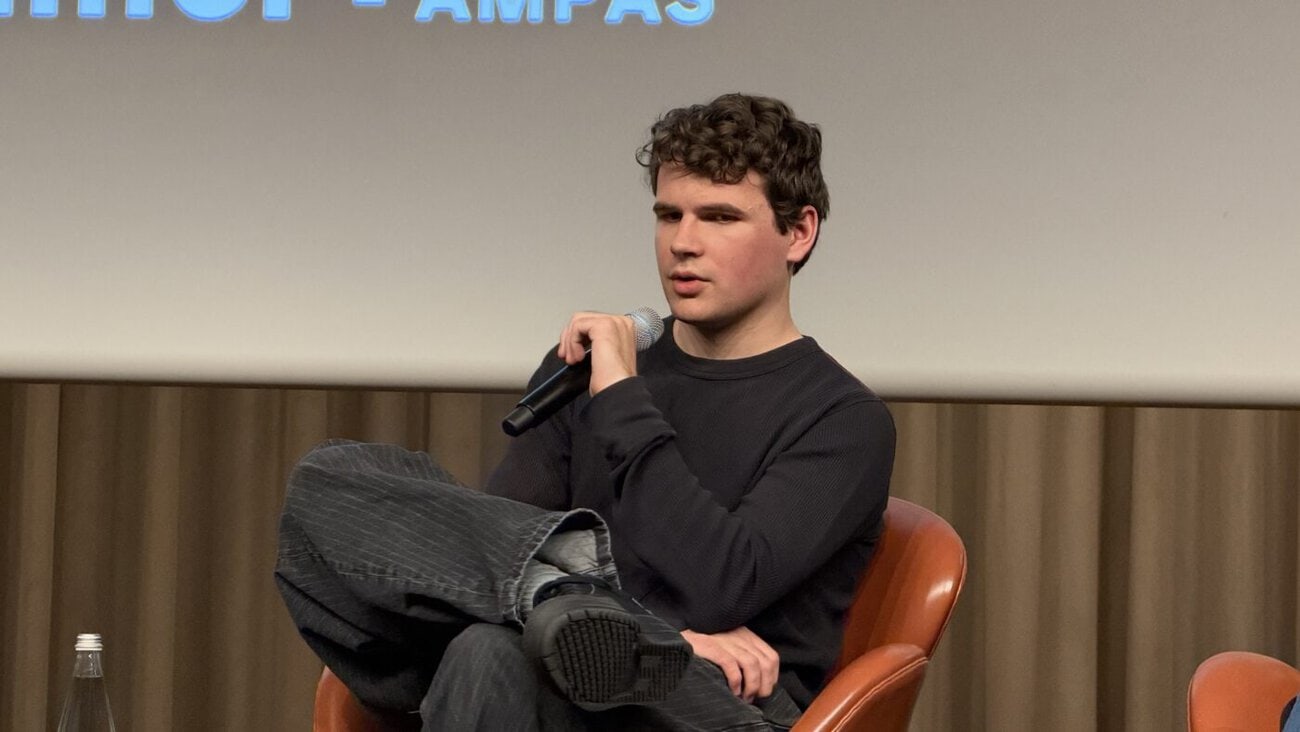
On the other hand Kane Parsons, who, as a teenager, with The Backrooms created a viral sensation on YouTube that captivated millions and prompted Hollywood to sign him directly for the big screen. Whether it’s a billion-dollar toy company or a solo creator in a teenager’s bedroom: the common ground between these two worlds is a rejection of cynical calculation. The true currency of our time is radical closeness to the community, the willingness to take risks through creative friction, and unconditional respect for the audience’s intelligence.
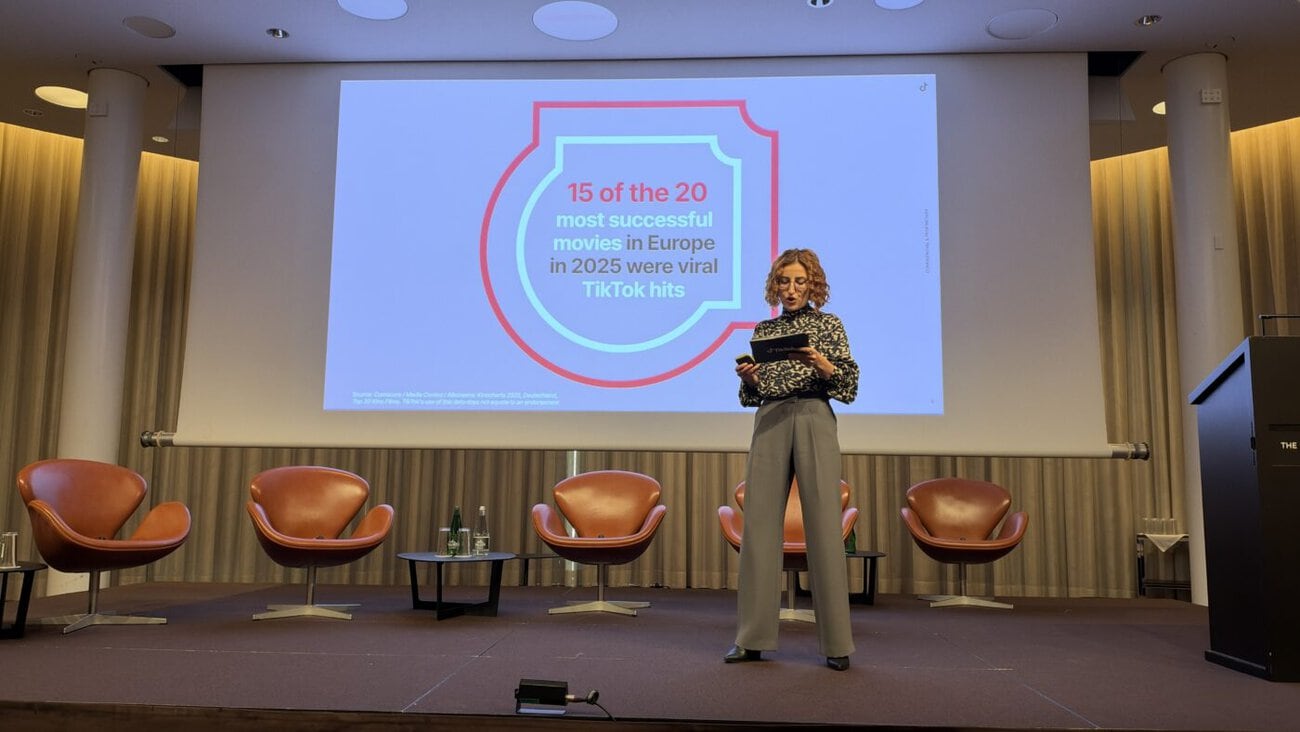
Anyone who still tries to lecture the audience today using traditional one-way monologues will lose them. Hasmik Matinyan TikTok described a global community that posts more than 12 million film and TV-related posts every day. Users are no longer passive consumers; instead, they act as co-creators. Her message to the film and advertising industries is unambiguous:
«Stop the monologue, start the dialogue"."
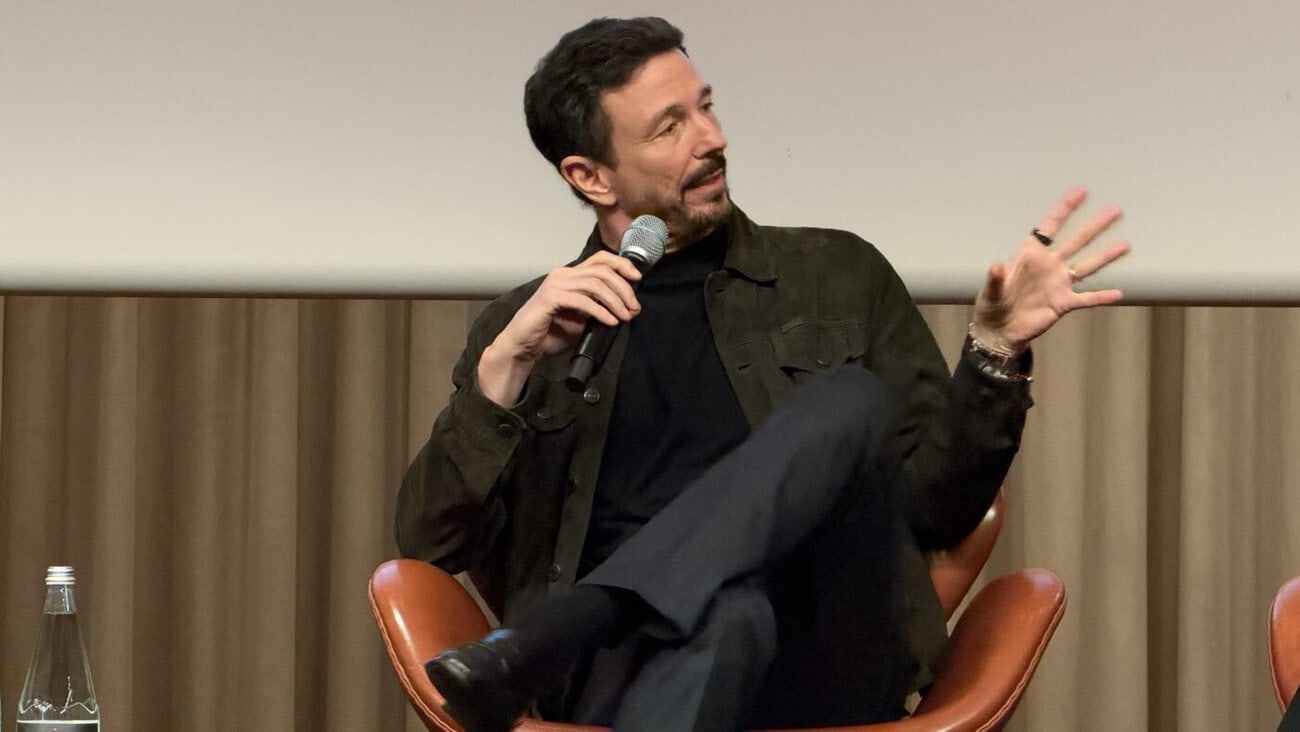
Oliver Berben, CEO of Constantin Film, openly acknowledged how difficult this cultural shift is for traditional players. For decades, Hollywood was determined to keep every image jealously under wraps. But to unleash true viral power and genuine fandom on social media, studios must be willing to let go of the material and put the audience in the passenger seat from day one:
«You have to relinquish some control over the content. And that's very hard for the industry."."
Act III: The Rebellion of the Youth—The Hunger for Truth
Amid the debate over dwindling attention spans, Kane Parsons—whom we mentioned earlier—made a surprise appearance. The 20-year-old director, who launched his found-footage series on YouTube, The Backrooms And when A24 made the direct leap to Hollywood, it clearly refuted common prejudices. The claim that his generation can supposedly only consume bite-sized content is not a biological fact, but rather the result of algorithmic control that young people secretly despise. For them, the movie theater represents a liberating slowdown: a closed space, no distractions, a shared immersion.
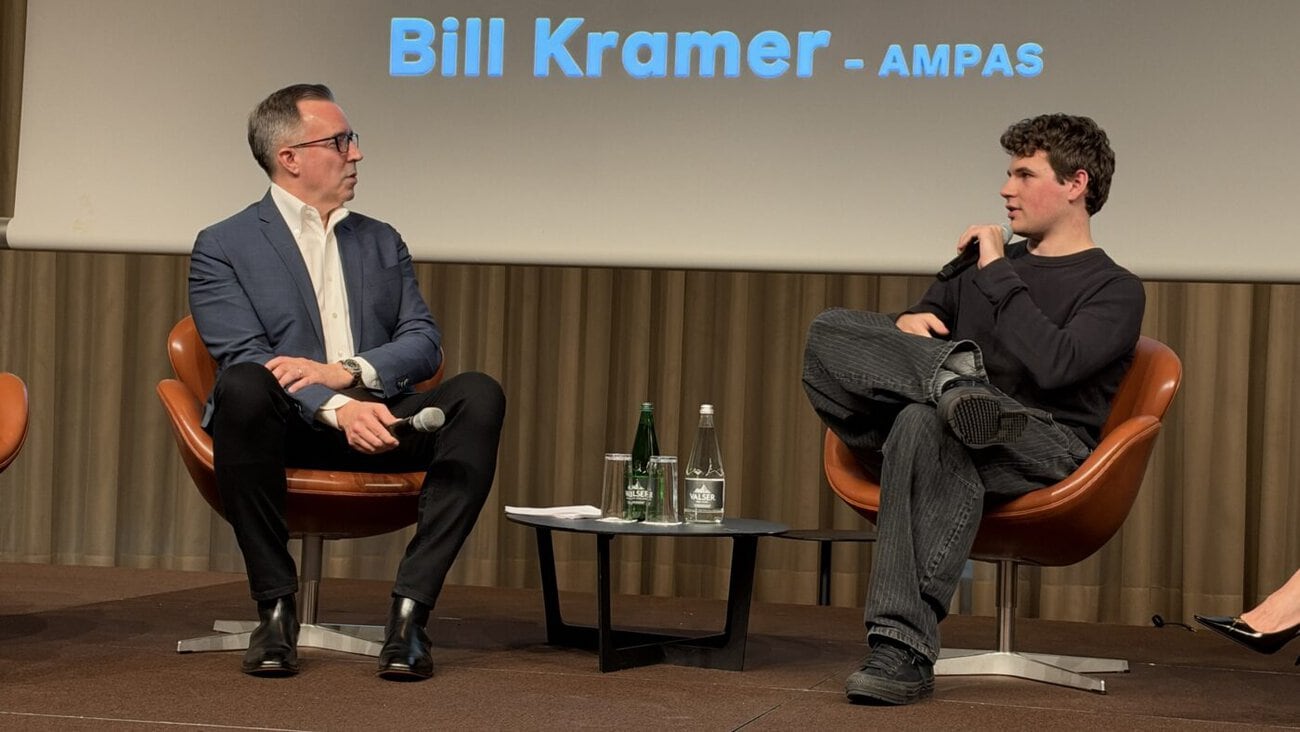
At the same time, Parsons refused to let the distribution industry lock him into genre-based categories. The Backrooms For him, it is not just a simple horror movie, but an existential drama. The "horror" label merely serves as a marketing tool—the path of least resistance:
«I didn't direct a horror film, and I don't see it as a horror project. […] I'm going to try to remain as oblivious to those labels as possible."."
When writing, he didn't calculate his words out of a paranoid fear of how people would react, but rather acted as his own discerning fan.
Act IV: The Battle of the Systems—Mass vs. Extreme Agility
The discussions at the Dolder Grand were moderated by, among others, Andreas Wiseman. The international chief correspondent for the industry magazine Deadline He unerringly put his finger on the studio managers’ sore spots: The era of comfortable growth driven by sheer size was over; what was needed now were radical solutions to address a completely fragmented audience. But how do you steer media companies through these tectonic shifts? Kevin Mayer, who, as a former Disney strategist, orchestrated mega-deals such as Pixar, Marvel, and Lucasfilm and later led TikTok, offered a sobering assessment. The old tactic of dominating global markets with ever-larger franchises has reached its limits. In the era of hyper-personalized feeds, agility trumps sheer size:
«Agility trumps scale; it trumps size; it trumps all of that. You really do need to be open to new things, respond to them in the right way, and embrace them.»
With Candle Media, he’s demonstrating a reversal of the usual model: Instead of squeezing social media snippets out of movies, he’s turning organic YouTube hits like CoComelon into global Netflix hits and feature films.
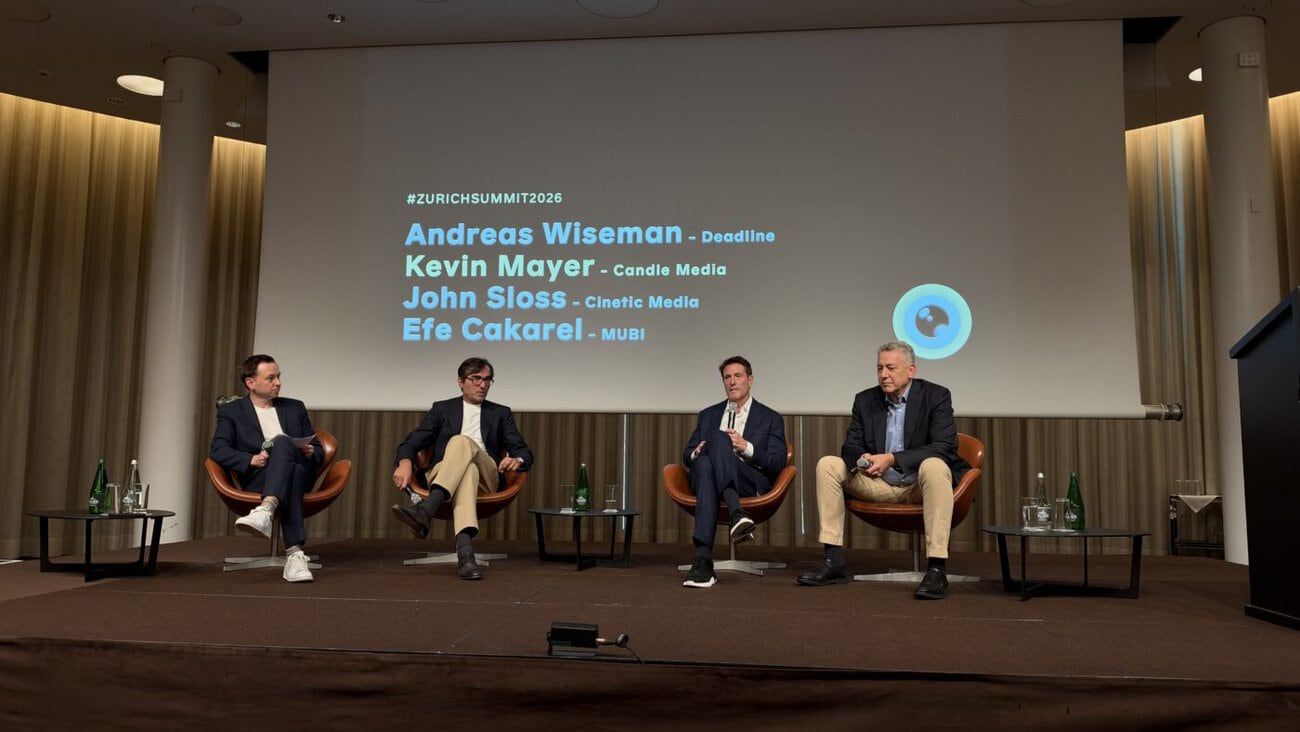
MUBI's founder emphasized that this agility must go hand in hand with radical curation Efe Cakarel. In a world flooded with algorithmic fast food, MUBI deliberately focuses on the opposite: not size at any cost, but integrity and trust. Hyper-personalized feeds may offer short-term satisfaction, but they do not create culture—because culture requires shared experiences:
«Hyper-personalized entertainment gives you satisfaction, but cinema gives you something to talk about. Culture requires shared experiences.»
A panel of high-profile experts, including heavyweights from U.S. agencies, analyzed how this balancing act between cultural identity and global market success can be achieved economically. Roeg Sutherland (CAA Media Finance) and Rena Ronson (UTA Independent Film Group). Her assessment of the international market is unambiguous: The days when global streaming giants blindly subsidized every arthouse film with blank checks are definitively over. She emphasized that the solution does not lie in watering down content for a vague global audience, Janine Jackowski (Komplizen Film): It is precisely the radically local and specific elements that bridge the gap across national borders—anyone who tries to copy American tastes from a drawing board is bound to fail. The ZFF president and producer agreed with this view Martin Moszkowicz who warned against an unfounded fear of the audience: On the movie screen, it is not intellectual complacency that counts, but the uncompromising power of emotion.
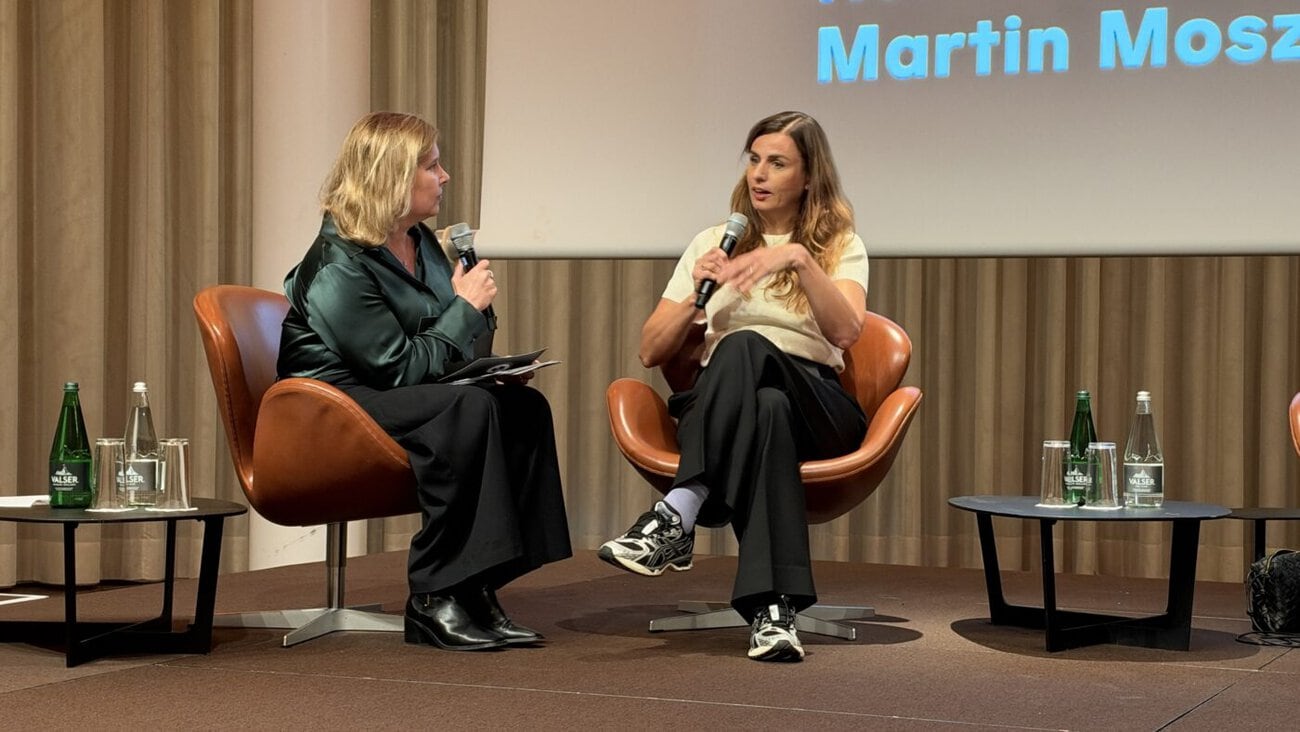
In response to the looming sell-off to purely data-driven platforms, the European alliance «The Creatives»—which includes Jackowski’s Komplizen Film among its driving forces—has put forward a radically independent alternative model. Nine renowned European production companies are joining forces—not through an anonymous financial investor, but as a consortium that is 100 percent owned by the participating creatives. If Europe has lost the tech race against the U.S. and China, it must protect its cultural DNA all the more uncompromisingly:
«The only KPI for this company would be creativity.»
The fact that technology can streamline budgets but can never conjure up an audience was ultimately underscored by John Sloss (Cinetic Media). While cameras, software, and distribution channels have become interchangeable, one resource remains the measure of all things: the human imagination.
Act V: The Finale – The Law of Mastery
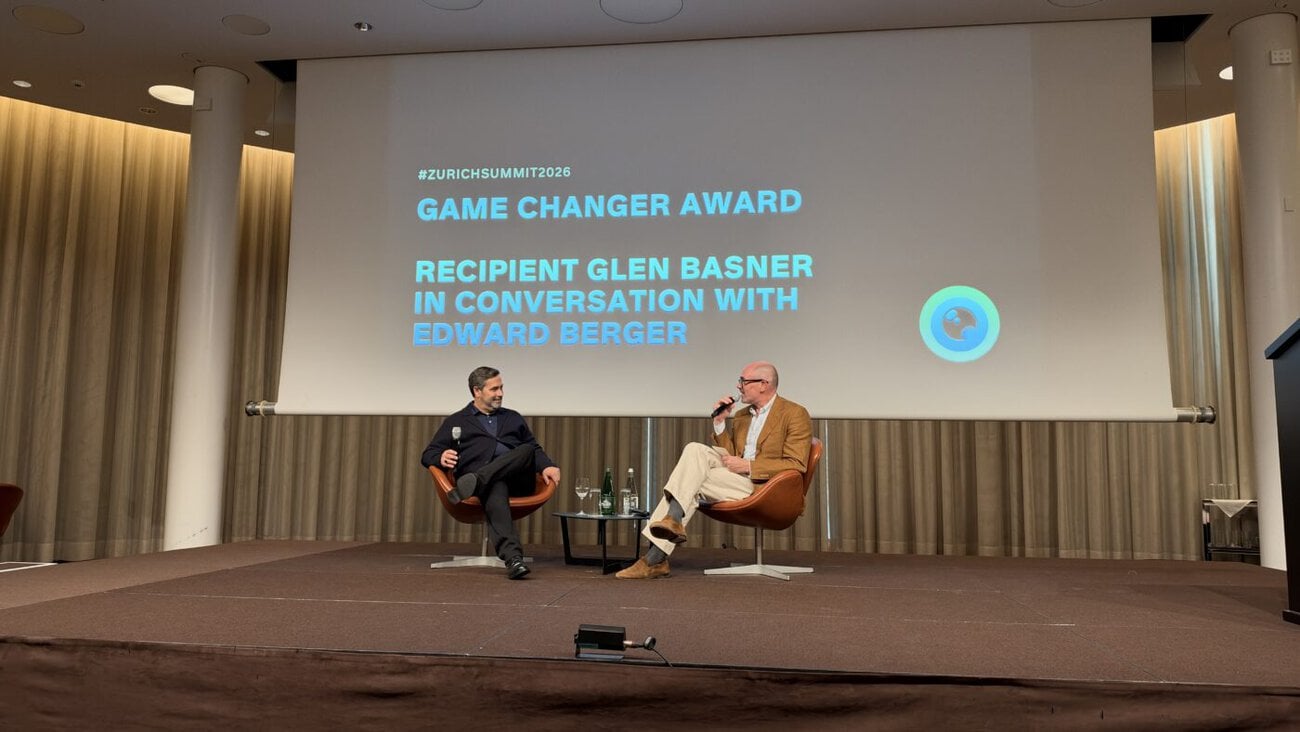
During the summit's ceremonial highlight, Oscar winners Edward Berger (Nothing new in the West, Conclave) and FilmNation CEO Glen Basner keeping in mind what really matters beyond algorithms and funding models. Berger described how Basner, during post-production of Conclave prevented me from rushing to write off the film after a series of solid test screenings. Instead, they invested the remainder of the budget in targeted reshoots to elevate the film from «pretty good» to masterclass status. Berger summed up the essence of this stance:
«You can always do better"."
Basner, in turn, summed up FilmNation's curation theory: It's not about what the market seems to be demanding in advance, but whether the creators' vision is compelling. His motto:
«We want to work on films that inspire us, and that we think we understand"."
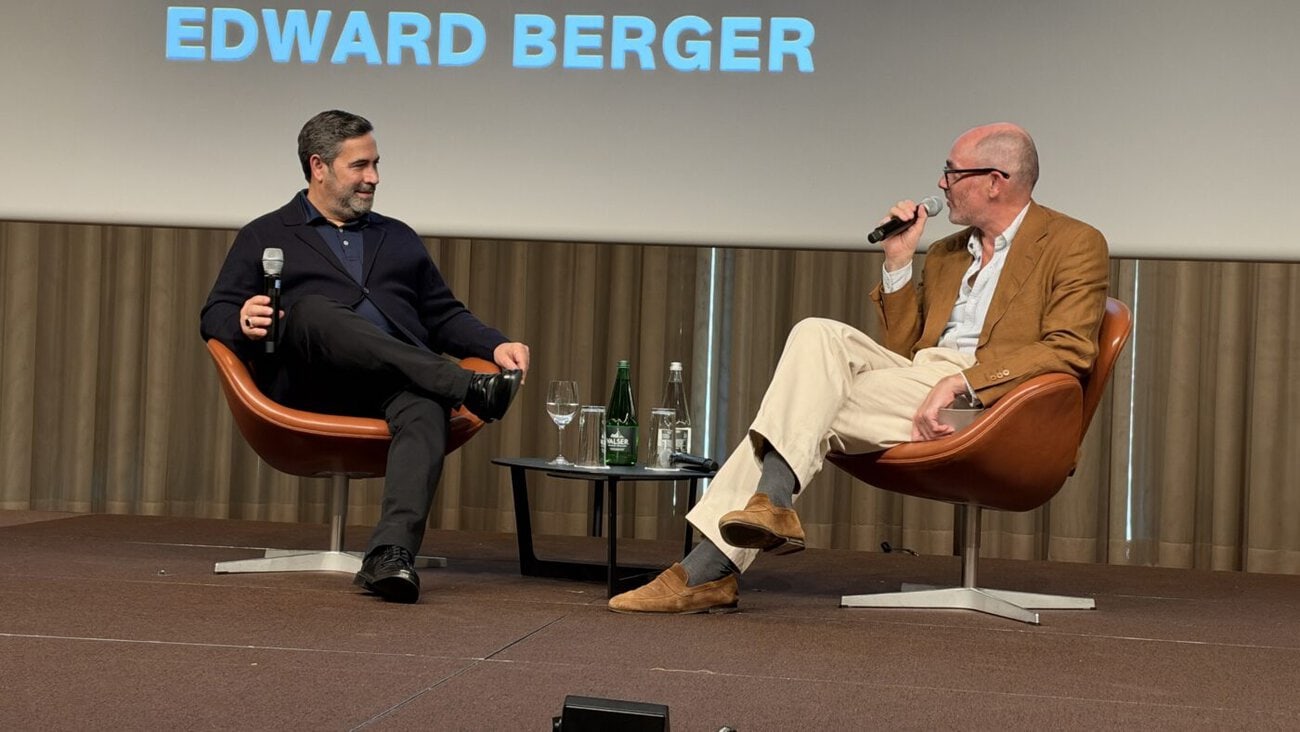
When that spark is ignited, the production budget no longer matters when it comes to the true value of the work. Basner has an unequivocal response for distributors who want to drive down the purchase price of a finished independent film because it was produced on a low budget:
«Fuck you, that's the movie's budget."."
Whether a story is viewed on a twenty-meter-wide movie screen or vertically on a smartphone is of secondary importance: It is not the screen that dictates the narrative; rather, the narrative carves its own path to the audience.
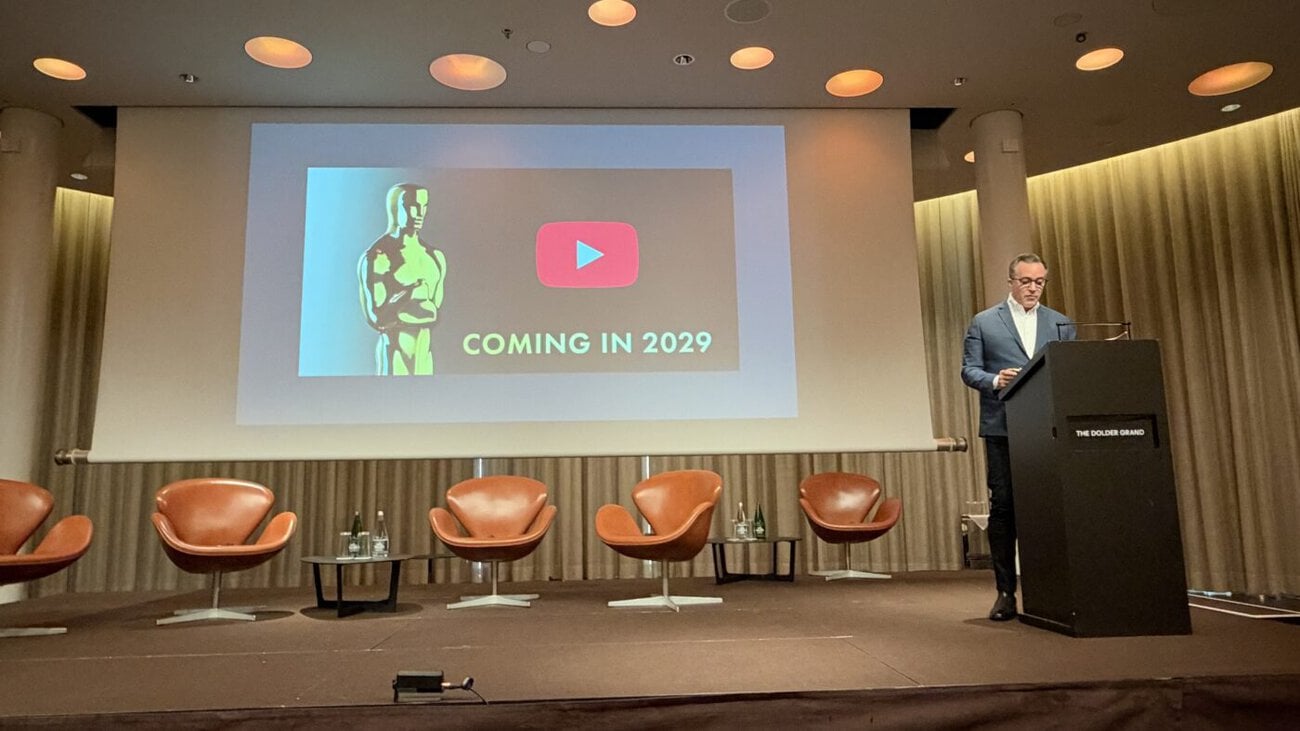
In keeping with this global wave of change, [name] announced Bill Kramer that, starting in 2029, the Oscars will be streamed worldwide for free on YouTube in over 30 languages – Cinema’s most time-honored showcase opens itself unconditionally to our interconnected world.
The message of the Zurich Summit 2026 is crystal clear: Technology democratizes the tools, platforms change the rules of the game, and the audience demands a say. Yet the fateful question of our time cannot be answered by code. Whether on the big screen or in a commercial:
Only stories that touch us deep down and that we truly understand will stand the test of time.
And if you really want to touch people's hearts, you have to have the courage to go the extra mile. There's always room for improvement…
m&k-Service: What the Advertising and Communications Industry Needs to Learn
The inspiration coming from the Dolder Grand extends far beyond the film industry—it serves as a strategic wake-up call for advertisers, marketing decision-makers, and brand storytellers:
-
From an advertising monologue to a radical community dialogue: Brands can no longer send one-way messages in a condescending manner. If you want to be relevant, you have to understand platforms, listen, and have the courage to let creators and fans adapt and remix your brand story.
-
Don't be afraid to be assertive and stand your ground: The assumption that modern audiences can be captivated solely by superficial, 3-second stimuli is misleading. The audience has developed a keen sense for algorithmic triviality. Substantive storytelling, originality, and reliability trump cookie-cutter, glossy campaigns. Even more jarring for storytelling that feels out of step with the times is the reliance on stereotypes…
-
«Inspire us, and we must understand it» as a guiding principle: Glen Basner's principle is the best measure of quality for any concept. Does the campaign evoke genuine emotion, à la Verdi?? Is the emotional core understood right away?? Without this foundation, even the largest media spend will fizzle out, leaving no memory, no significance, and no impact.
-
The Artisan Ethos («You can always do better»): While generative tools produce designs, moods, and texts in record time, human judgment is becoming the key differentiator. The difference between run-of-the-mill mass advertising and outstanding creativity lies in the willingness to rethink a concept, refine the wording more precisely, and not declare the edit finished too soon
Es wäre ja kein kompletter Beitrag über das Filmschaffen ohne eigene Bewegtbildbeilage – in diesem Sinne, hier der «Appetizer» zum Beitrag
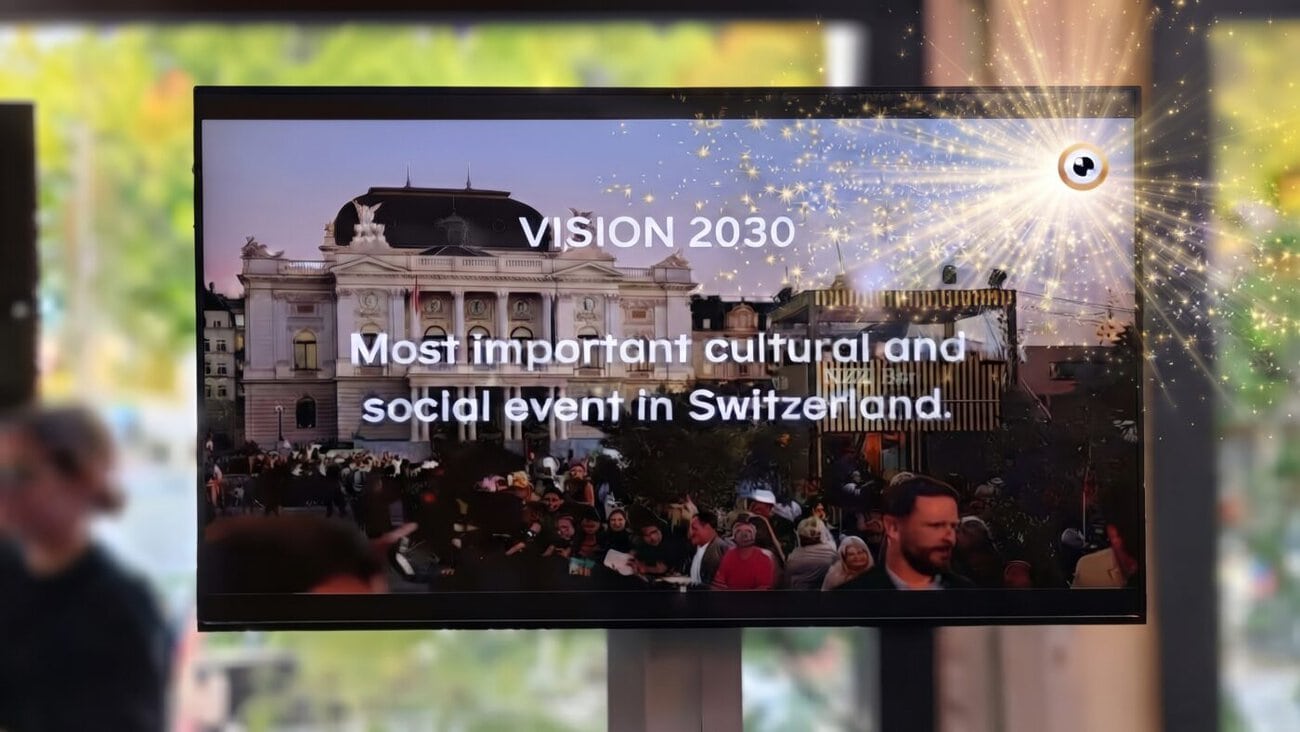
The eye in the Zurich Film Festival logo fits right in with the world of film: it’s all about seeing, about images, and about stories that linger in the memory. In the minds of the general public, the ZFF may not yet be seen as an integral part of the city’s identity quite as naturally as the venerable guilds at the Sechseläuten or the exuberant Street Parade. But that is precisely the long-term goal.
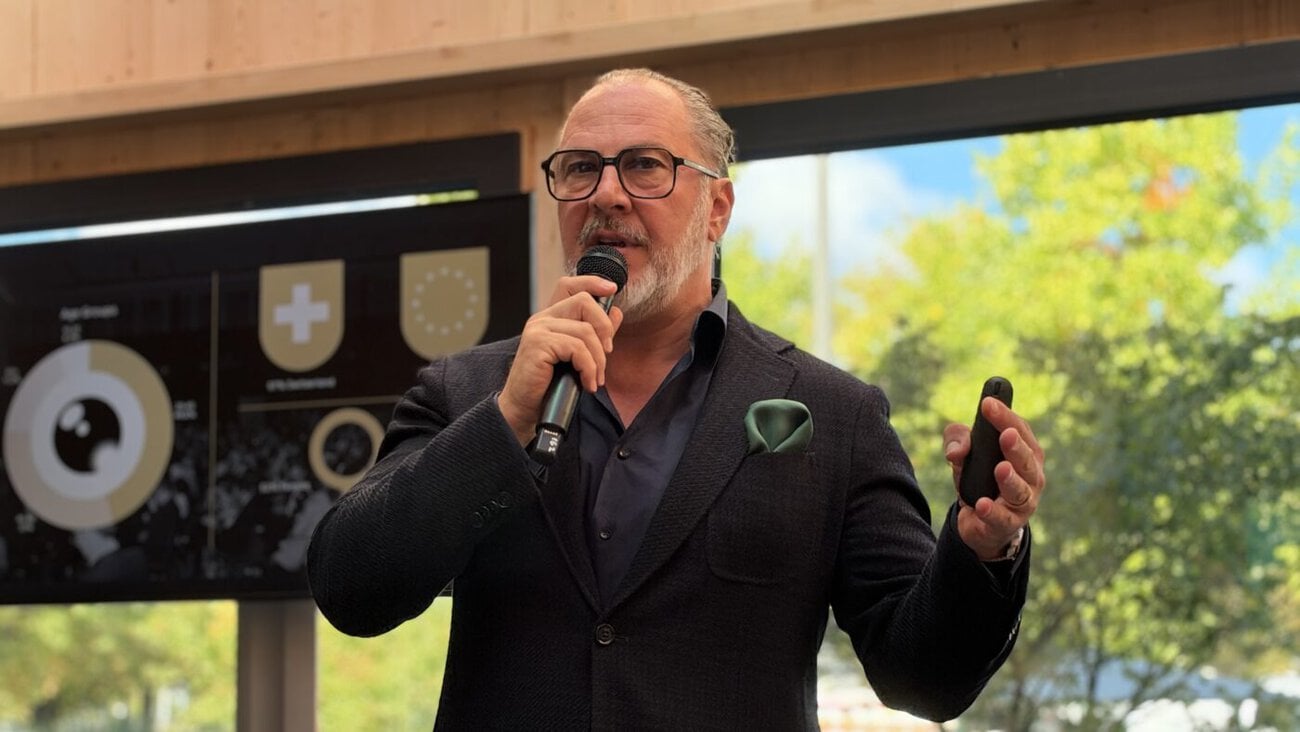
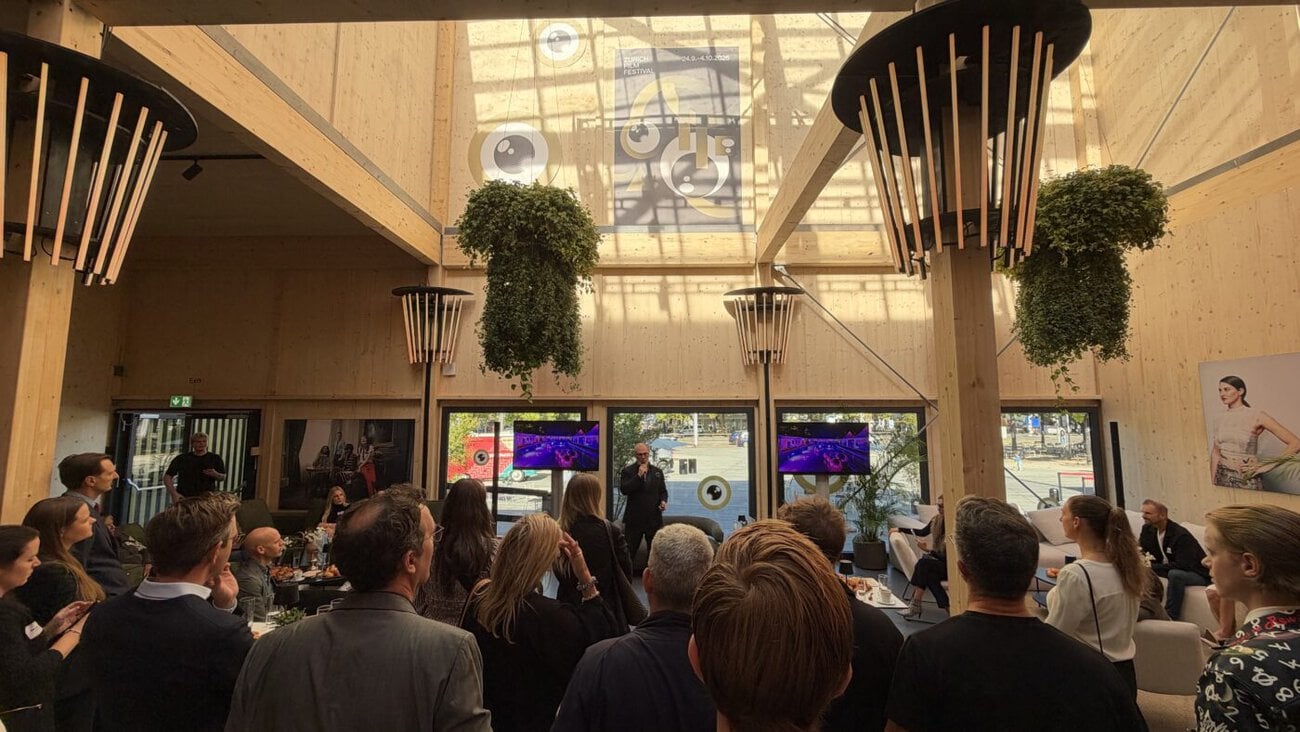
With its Vision 2030, the festival articulates its clear ambition to become Switzerland’s premier cultural and social event. Its marketing efforts also focus on opportunities for brands. Four strategic priorities set the course: More Performance, More Experience, More Premium and More Content. The goal is to combine the buzz surrounding movies and stars with measurable results, personal interactions, and year-round communication.
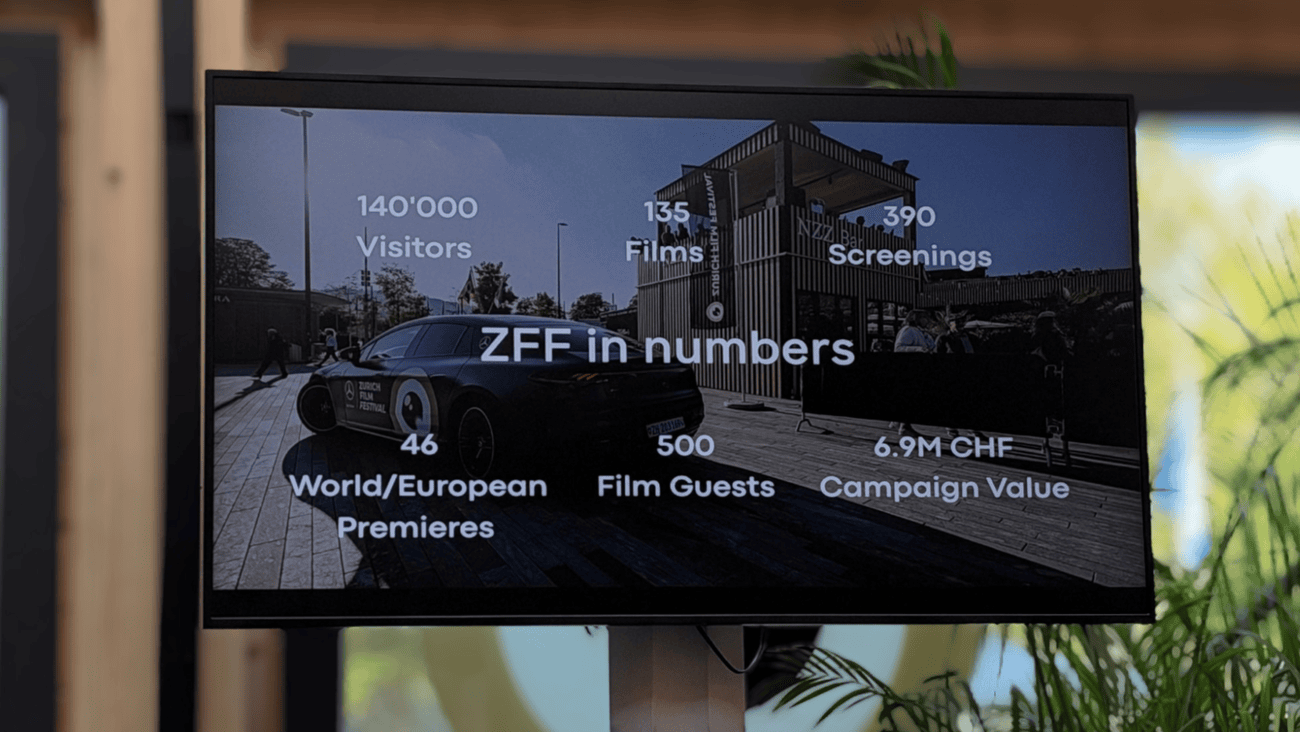
140,000 visitors, 135 films, and 46 premieres
The festival figures presented include 140,000 attendees, 135 films, and 390 screenings. In addition, there were 46 world or European premieres and 500 film guests.. The ZFF estimates the campaign's value at 6.9 million Swiss francs. The festival offers partners a variety of platforms: In addition to the Green Carpet and the Awards, the program includes the Zurich Summit, ZFF Kids, ZFF Galas, Genuss Film, and the ZFF Academy. It ranges from public festivals and industry events to programs supporting emerging talent and culinary events.
The Marathon Hunt for the Film Diamonds and the Artistic Concept
The festival owes it to its artistic director, Reta Guetg, that this commercial success never devolves into meaningless sponsorship. She is responsible for the curatorial search for the gems of the film world—a truly Herculean task in which the team screens, believe it or not, several hundred to over a thousand films each year before a single selection is made. It’s an absolute marathon of preselection, judging, and feverish negotiations in key hubs from Los Angeles to Paris.
Behind this lies an immense amount of work, which Guetg herself describes when she emphasizes that this job essentially never ends and involves traveling from Los Angeles to Paris to London in search of the most important film hubs. Ultimately, the entire team screens several thousand films per year, with each curator responsible for several hundred works, depending on their area of expertise. Reta Guetg aptly summarizes how this artistic concept is based on a subtle, dual approach: «Our mission is to, Upcoming Voices to discover through our contests, and at the same time we bring the big-name Hollywood guests to Zurich, who walk down our red carpet—but also the Up-and-Coming Filmmaker has his famous moment on the Green Carpet."
Digital Reach and Who the Brands Reach
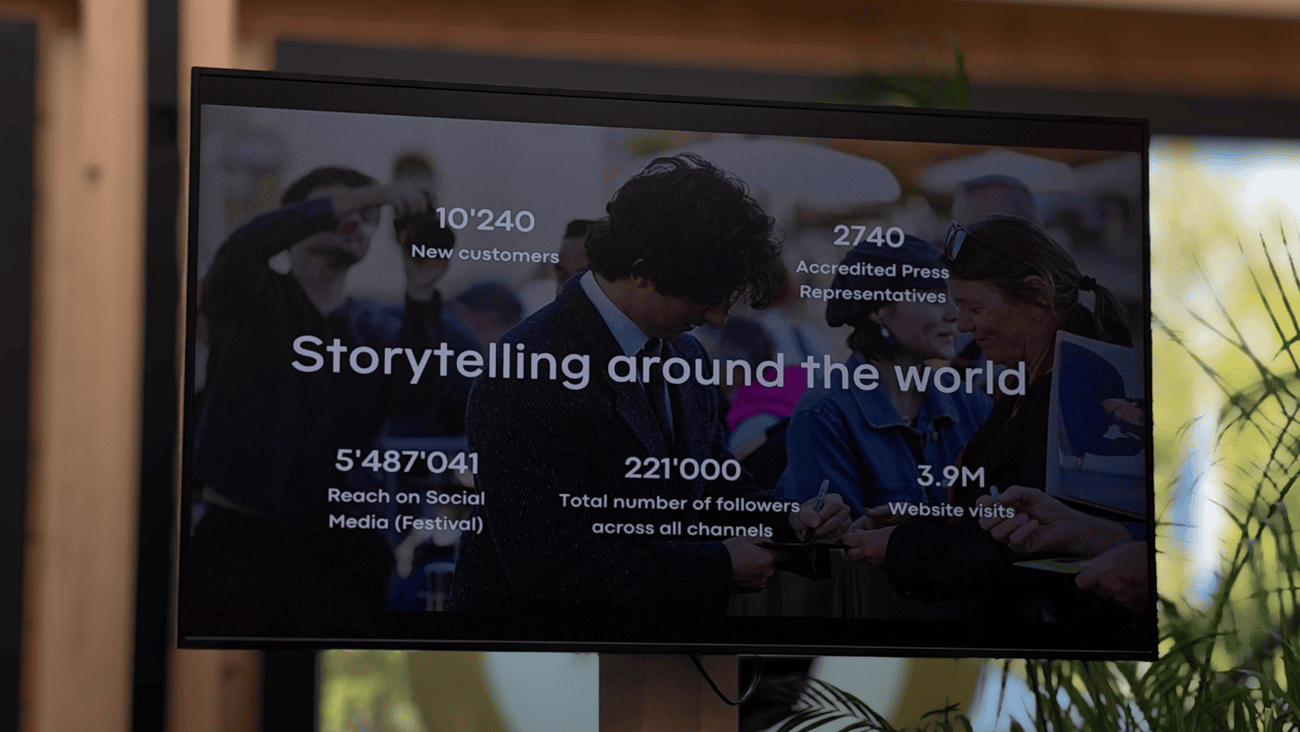
Under the title Storytelling Around the World The ZFF reports a social media reach of 5,487,041 during the festival. Across all channels, the presentation has 221,000 followers, plus 3.9 million website visits. Other key figures include 10,240 new customers and numerous members of the press.
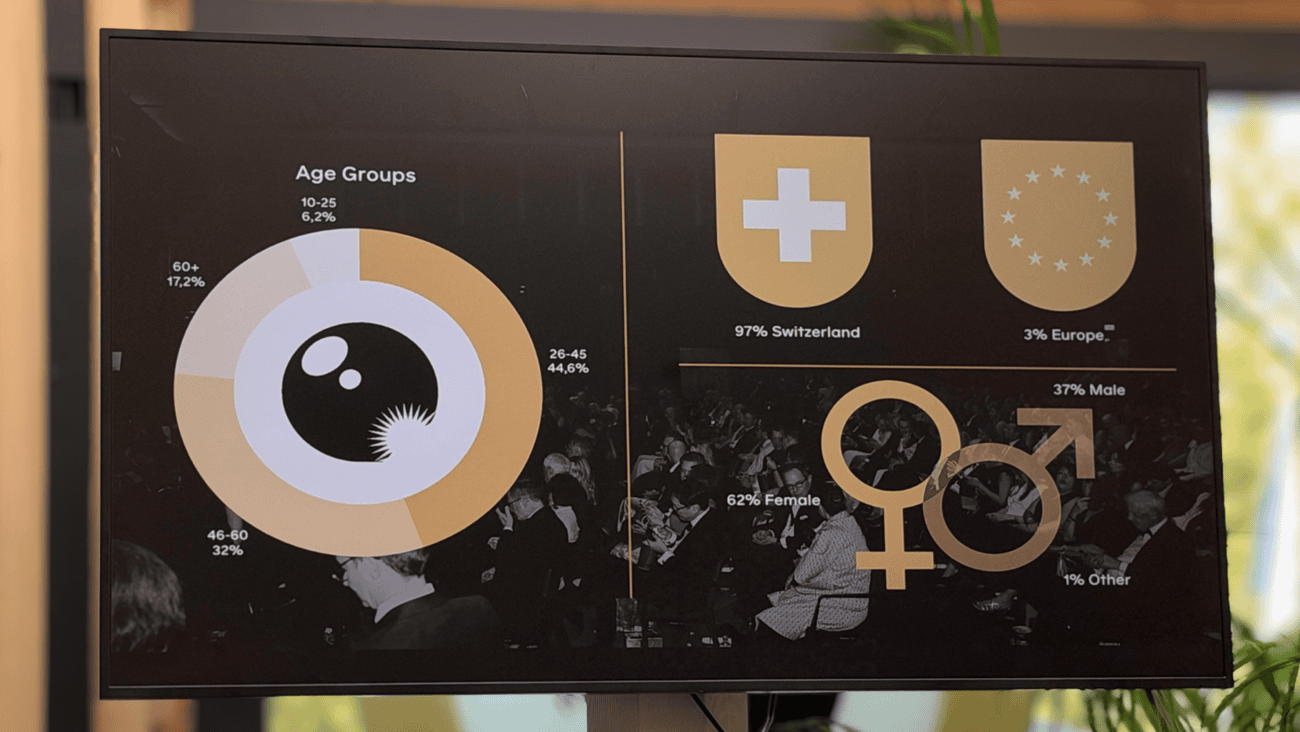
The audience composition is also relevant for marketing purposes: 97 percent are from Switzerland, and 3 percent are from Europe. The age groups are distributed as follows: 6.2 percent (ages 10–25), 44.6 percent (ages 26–45), 32 percent (ages 46–60), and 17.2 percent (60+). The gender breakdown is 62 percent women, 37 percent men, and 1 percent Other. A separate breakdown shows that 55 percent are moviegoers, 25 percent are industry professionals, 15 percent are partners, and 5 percent are ZFF Academy participants.
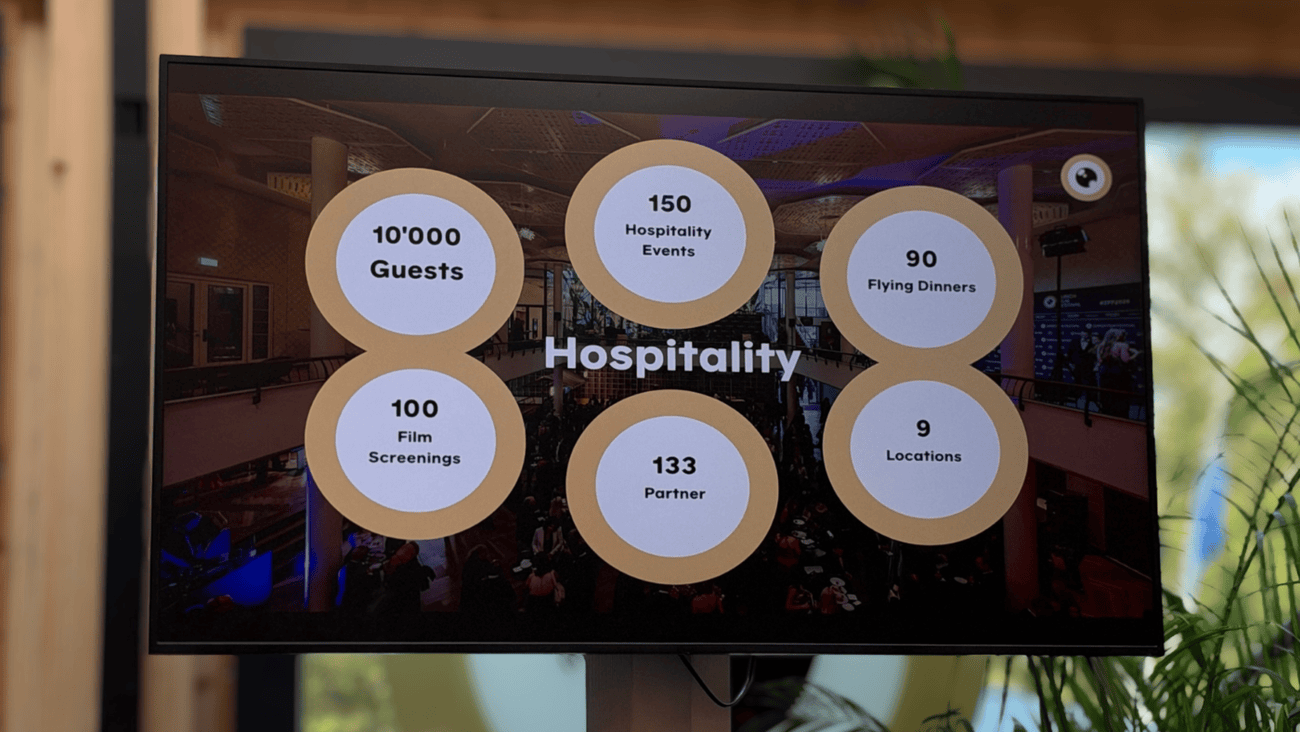
Hospitality: 150 events for 10,000 guests
The offerings for businesses are particularly concrete in the hospitality sector. The presentation cites 10,000 guests, 150 hospitality events, and 90 flying dinners, accompanied by 100 film screenings in a hospitality setting, 133 partners, and nine venues.. Movies provide the occasion, while receptions and dinners provide the setting for conversation.
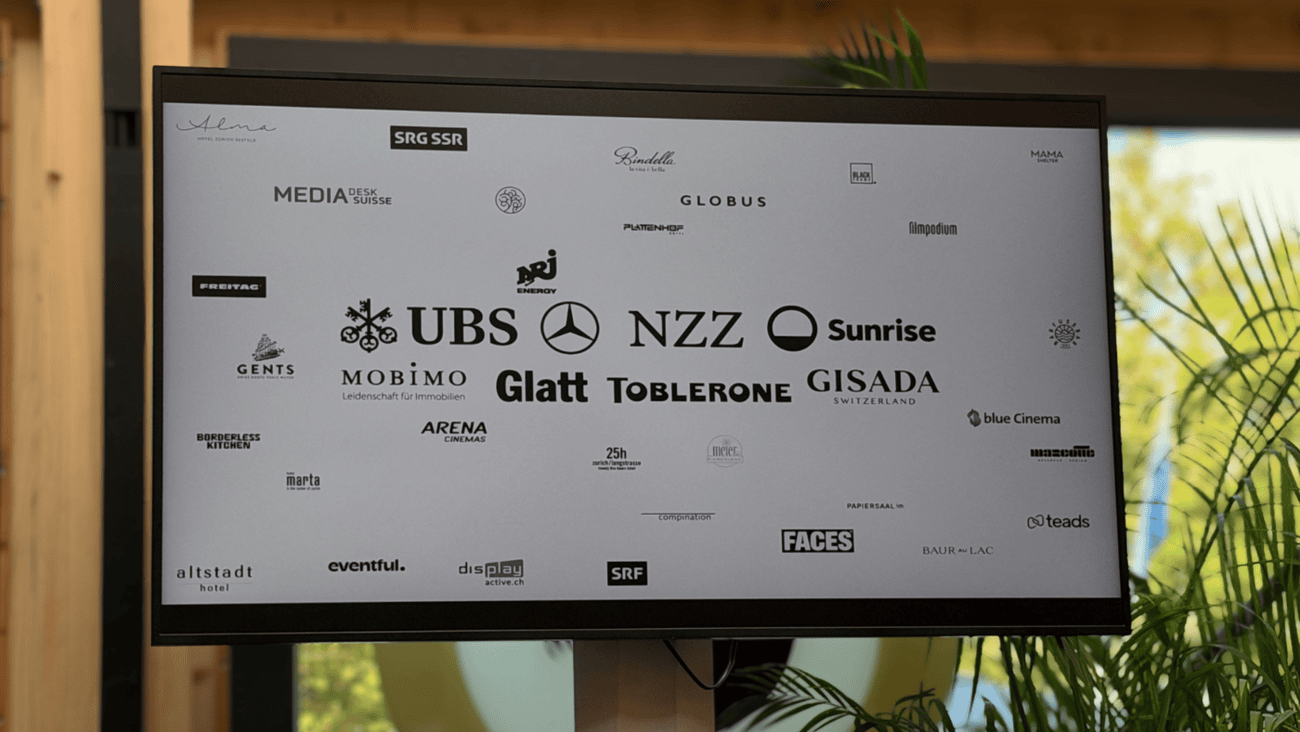
The partner network ranges from prominent heavyweights such as UBS, Mercedes-Benz, NZZ, and Sunrise, to Mobimo, Glatt, Toblerone, and Gisada, all the way to SRG SSR, SRF, Globus, Freitag, Energy, blue Cinema, Arena Cinemas, Weischer, Blick, Faces, Teads, and TikTok.
Four «Mores»: What the ZFF Has in Store
To meet the demands of modern brand management and reinforce its ambitious vision for 2030, the festival has deliberately refined its strategic focus. These four core pillars define the future interaction between brands, creators, and audiences:
-
More Performance: Focuses on measurable return on investment, media value, and the fit between the brand and its audience. In the audio recording, Mehmet Inan emphasizes unequivocally that the strategic lever lies primarily in rigorous data analysis: «We have to work with data so that we can better understand what we’re doing here and what we can do to improve.”.» Only through an in-depth analysis of digital channels, the bestboard, and touchpoints can the performance of future campaigns be precisely managed.
-
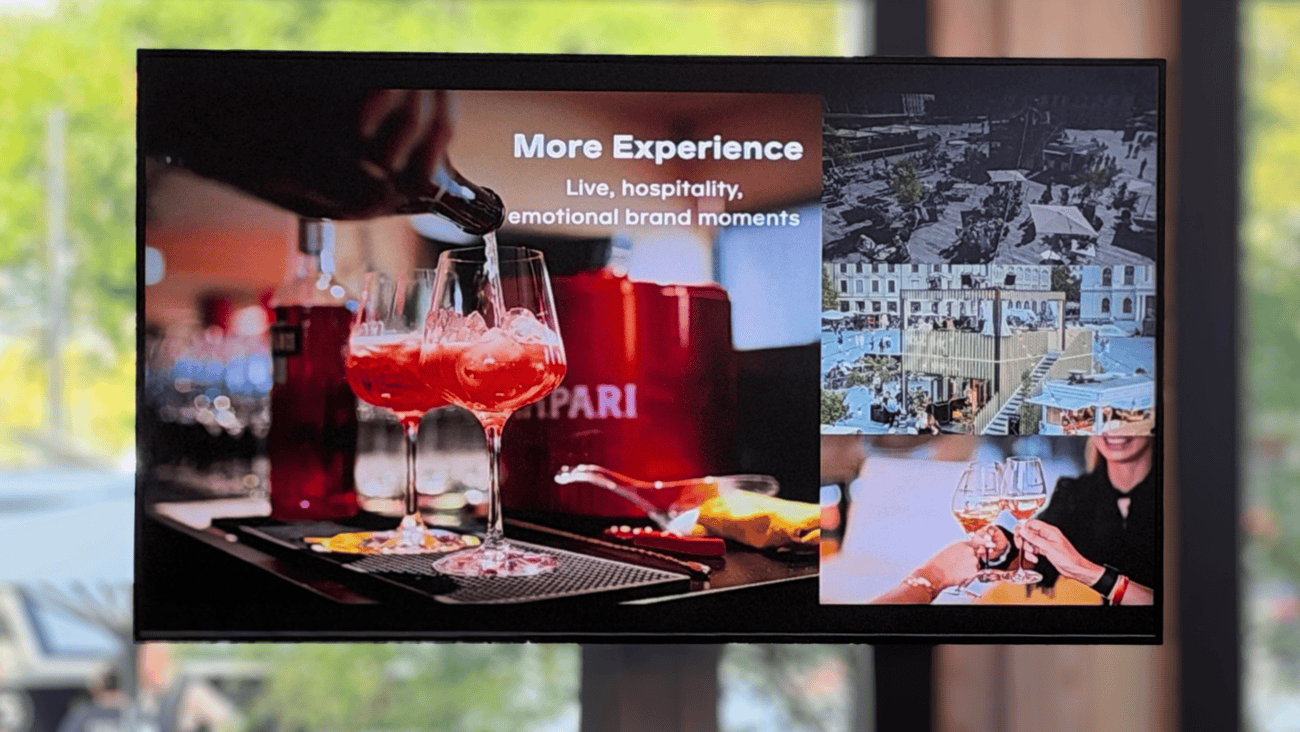
More Experience: Stands for live experiences, hospitality, and emotional brand moments where festival architecture, brand spaces, and in-person interactions blend seamlessly within the festival environment. Whether at the approximately 150 hospitality events, the “Flying Dinners” at the bar, or the tailor-made presentations by long-standing partners such as Mercedes-Benz: here, the brand becomes a tangible experience and creates precisely the emotional anchors that make all the difference in modern sponsorship.
-
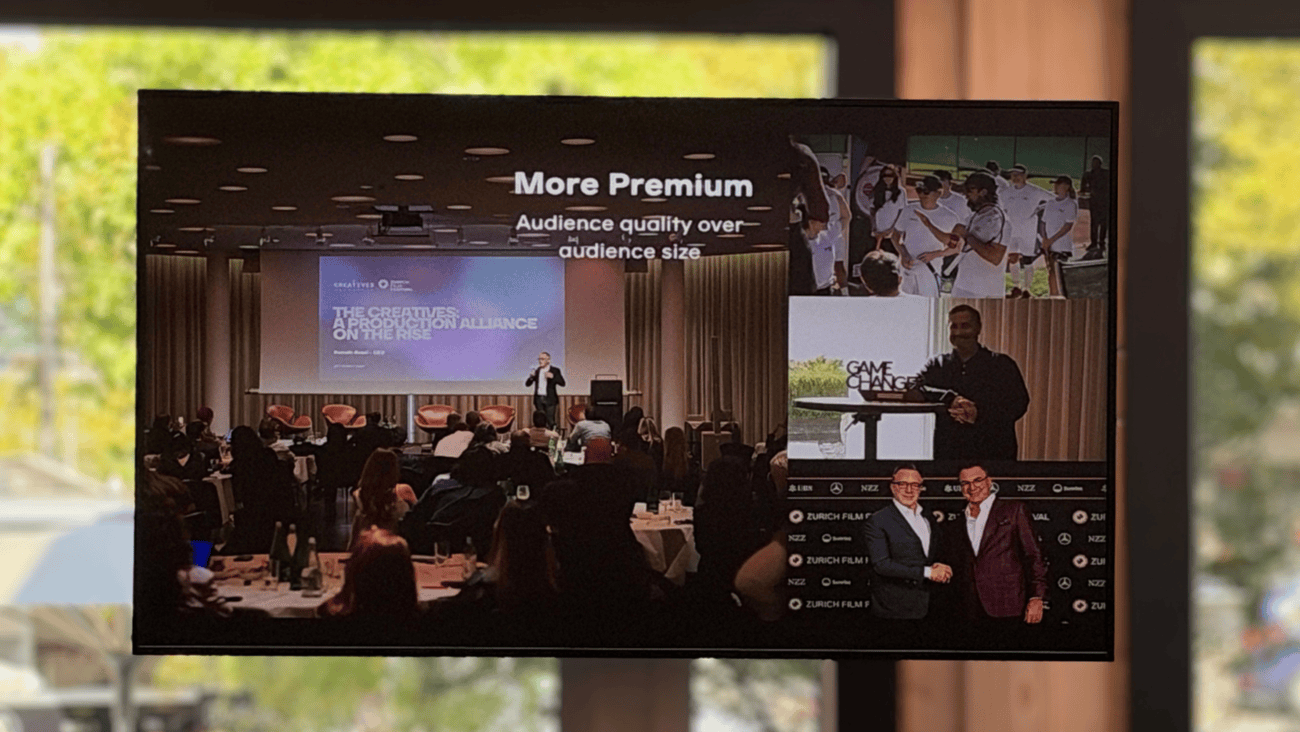
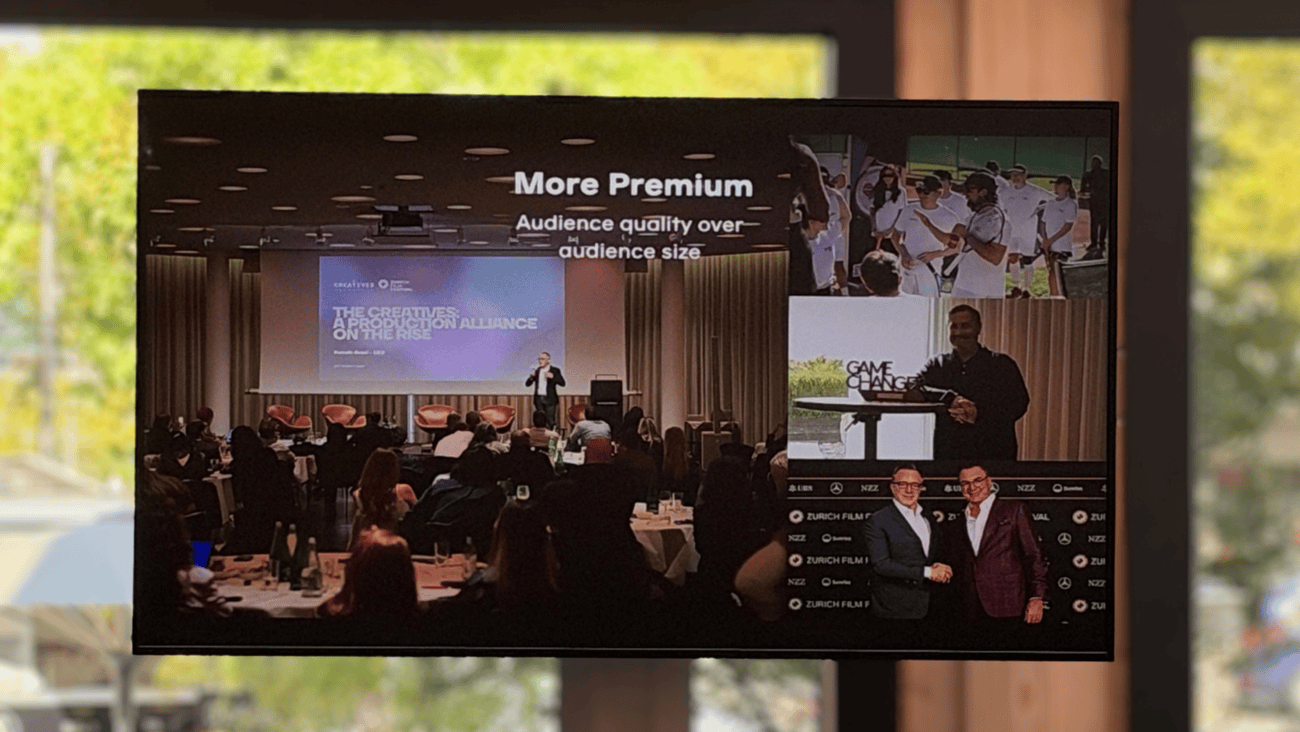
More Premium: States the clear principle Audience quality over audience size. For the ZFF, this means that the qualitative relevance and purchasing power of the contacts reached—from the exclusive networking platform at the Zurich Summit —right down to high-profile premieres—always takes precedence over the sheer number of followers or visitors.
-
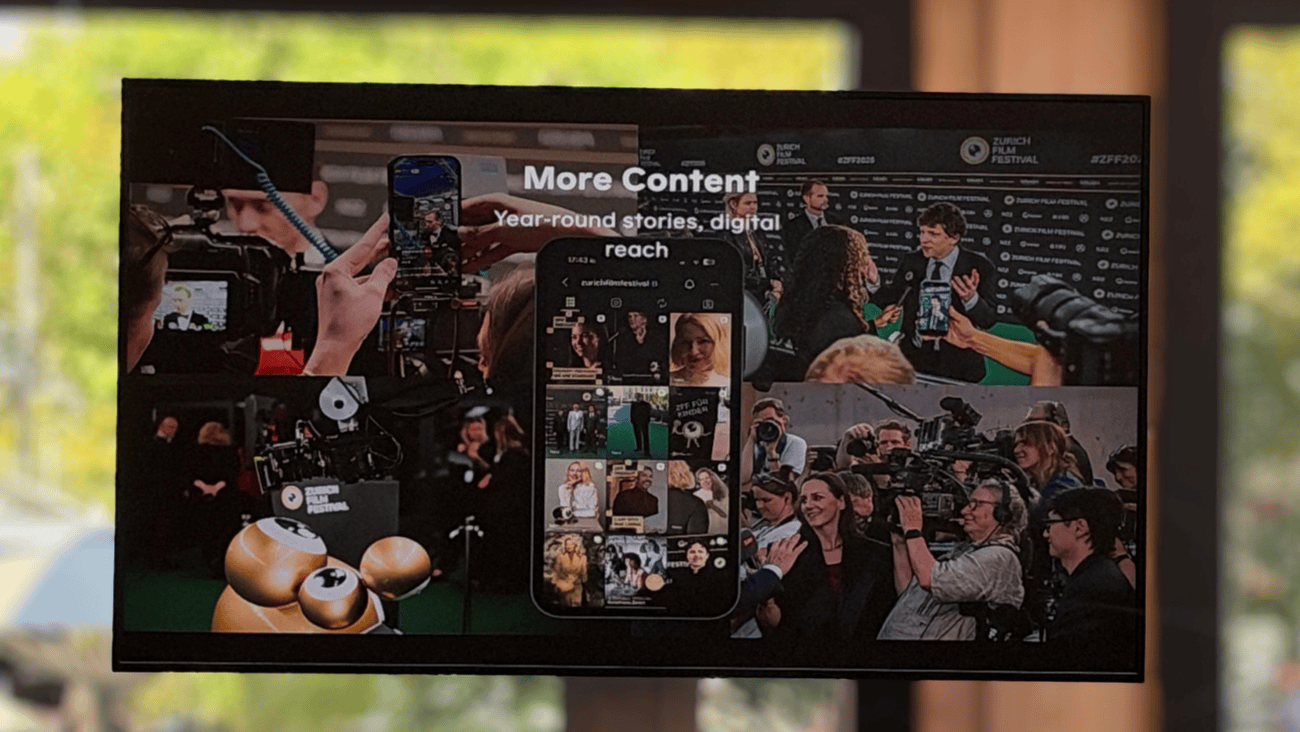
More Content: Focus on year-round stories, ongoing interviews, and digital reach. Since the communication period surrounding the festival has long spanned several months, exclusive behind-the-scenes glimpses and profiles of filmmakers should be shared year-round via social media channels such as TikTok Live to maintain a constant connection with the audience and partners.
Magical Moments and New Spaces
The glamorous awards ceremony at the Zurich Opera House also proved that this blend of subtle sensitivity and glamorous presentation pays off. The coveted Golden Eyes and 25,000 francs in prize money each went to Pierre le Gall’s sensitive work FLESH AND FUEL (feature film) as well as Pete Muller's gripping U.S. drama BUCKS HARBOR (Documentary).
Under the title Innovations The presentation also features visualizations of new festival offerings, such as lounge areas and a glass ZFF Studio for interviews and content production. Thus, the image of the eye in the logo leads to a broader perspective on marketing: Stars and movies attract attention, hospitality fosters connections, and content carries stories forward.
m&k Exclusive: Impressions
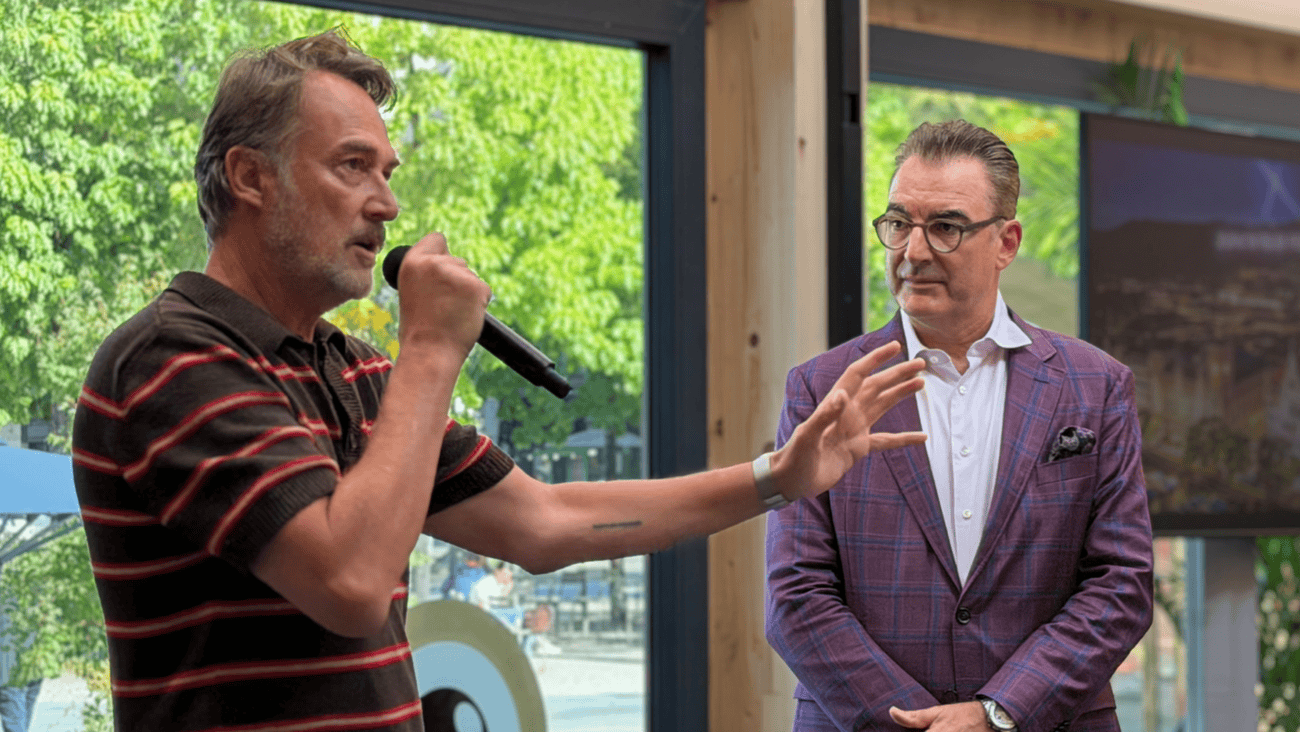
Christian Jungen started out at the box office in Winterthur in 1991. He went on to become a film critic, culture editor of the *NZZ am Sonntag*, editor-in-chief of the film magazine *Frame*, and author of the biography of festival organizer Moritz de Hadeln. He has been directing the Zurich Film Festival since 2020. When the NZZ decided to sell the ZFF after ten years of ownership, he faced the most important decision of his professional life. «A lot of people approached me and said, »This is your chance now.« At some point, I told myself, »If everyone believes I can do this, then I should believe in myself, too.«»
Skin in the Game
Jungen is 53. He made his money in journalism, «where, as everyone knows, you don’t become a millionaire.» Nevertheless, he invested what he had saved. «I don’t have a sugar daddy in the background who’s fronted a few million. So this has to work.» He sees the pressure as an advantage: «You think much more carefully: Do I really need this right now, or is it just nice to have?» He was influenced by Nassim Taleb’s book *Skin in the Game*, a tribute to people who put their own money on the line and therefore make better decisions.
At the Zurich venue, the move has paid off. The Golden Eye Circle patron association has grown significantly since becoming independent. «People appreciate those who take the plunge. They’re also more willing to help them.» Samih Sawiris has become a member; Georges Kern and Carolina Müller-Möhl are also part of it. Membership costs 5,500 francs for Bronze, 10,000 for Silver, and 33,000 for Gold. In return, members receive advance ticket sales, a concierge service, and events throughout the year, such as a group Oscar night. ’A real club culture has developed there,’ says Jungen. «Beyond the financial aspect, it’s also a source of moral encouragement.»
The connection with Sawiris began during a vacation in El Gouna, where his film festival was just getting underway. Jungen attended the opening, offered feedback, and those conversations led to a partnership. «They’re the newer festival and want more Hollywood stars. We have the connections. Sawiris has incredibly good connections in the business world. And when there are two of us, we might be able to get a better deal.» Films that have their world premiere in Zurich can screen in El Gouna two weeks later.
Champions League
There are about 40,000 film festivals worldwide. The *Guardian* ranked the ZFF tenth in Europe. ’If we were talking about soccer, we’d be talking about the Champions League,« says Jungen. »We’re among the best—not at the very top, where Cannes, Venice, and Berlin are, but not in the middle of nowhere either.« For him, this has to do with the city, the airport, the five-star hotels, and the timing at the start of Oscar season, when studios need to boost their films» prestige. «Toronto takes place in a multiplex with escalators. We’re in the heart of the city, with the illuminated opera house in the background.»
That wasn’t always the case. In 2005, Mayor Elmar Ledergerber’s cultural affairs office asked the founders to remove «Zurich» from the name. A «pretentious, flashy event» could damage the city’s image. «We’ve had a positive relationship with Hollywood from the very beginning,» says Jungen. “Today, every festival wants stars—even Locarno.”
The Kunsthaus draws just over half a million visitors a year, the Opera House 230,000, and the ZFF between 135,000 and 140,000. ’We get our visitor numbers in eleven days; the others operate year-round.’ The NZZ’s economic impact study put the figure at 37 million francs, based on approximately 100,000 visitors. A new calculation is underway. Every year, 600 volunteers help out—different people each year. ’Apart from the zoo, there’s nothing in Zurich that’s as deeply rooted in the local community as the ZFF.« The internal motto: From Zurich, for Zurich, and the world.
An office in Hollywood
Jungen spends three months a year abroad, often in Los Angeles. He serves on the Board of Directors of the Golden Globes, where he is responsible for membership. He uses the week of the awards ceremony for meetings: «Everyone is there before the Oscars and the Golden Globes. Meetings at the office during the day, receptions in the evening.» His takeaway from the biography of Moritz de Hadeln: «The festival business is a people business. You have to travel; you have to talk to people—not just on Zoom.» Often, the discussions are about films that haven’t even been shot yet.
In the medium term, the ZFF plans to open a branch office in Los Angeles. Business partner Max Lung, a native of Zurich, already lives in the Hollywood neighborhood. President Martin Moszkowicz, who served for many years as CEO of Constantin Film, commutes between Munich and Los Angeles. «It’s important to have a presence over there so that people think of Zurich when they have a new film.» The network is paying off: Casey Affleck reached out through a mutual friend and will personally present his film this year.
Strategy 2030
By 2030, the ZFF is set to become Switzerland’s most important cultural and social event. Jungen asked ChatGPT about the competitive landscape and received a ranking: Art Basel, Montreux Jazz, ZFF, Lucerne Festival, Locarno. Sawiris asked the same question and received Lucerne in second place and the ZFF in fourth. When asked, ChatGPT explained that classical music is important to Sawiris. «Anyway, we’re not in first place. That’s where we want to be.»
The path to that goal goes through the stars. «We’re actually less in the movie business than in live entertainment. The reason the tickets sell out so fast isn’t the movie. It’s Julianne Moore or John Turturro or Casey Affleck.» The first sold-out movie on the program was «Diamond,» written by and starring Andy Garcia.
The festival is set to have a year-round presence. Premieres for third parties are a business segment; ZFF was part of the «Socceritos» premiere featuring Granit Xhaka. In addition, there are activities for partners at the Golden Globes or in Cannes. When it comes to customer focus, Jungen doesn’t mess around: «We have to focus on the customer without any room for humor. You have to keep asking yourself: Where are the people? If I’m sitting on the tram and everyone is looking at their cell phones, then maybe I shouldn’t be running print ads anymore.» This statement comes from someone who worked for newspapers for 25 years and now reads them on his iPad.
Death threats after two hours
At the Zurich Summit, the industry conference held at the Dolder Grand with 150 decision-makers, Eline Van der Velden introduced the AI actress Tilly Norwood last year. Two hours later, she was receiving death threats. The industry portal «Deadline» recorded its four most-read articles of all time in the first 36 hours that followed. This year, Van der Velden is returning, and Tilly Norwood is making her first major public appearance.
Jungen understands the actors« fears, but doesn’t believe in demonizing the technology. »Television didn’t replace radio, nor has streaming replaced the movie theater. There will be AI-made films, just as there are animated films.« For him, AI is »a bigger game-changer than the invention of the Internet was.« It’s part of everyday operations. Managing Director Mehmet Inan uses it at every level. »In the past, a graphic designer would spend days laying out sponsor dossiers. Today, you just type what you need into Claude or another program, and something pretty usable comes out.« His response to the critics: »Of course, not everything is perfect, but AI is getting better every day.« He isn’t entirely without reservations, though. He sent the questionnaire for the podcast back to the host with feedback: too structured, thrown together by AI—please put more effort into it. »I can always tell when it’s structured like that that it comes from AI.”
The Snowman in the Sun
The ZFF is 90 percent privately funded. So far, it has received half a million francs from the City of Zurich. Jungen doesn’t need subsidies like the Opera House’s 80 to 90 million, but he does need a stronger foundation. «Sponsorship is like a snowman in the sun. It’s still standing, but it’s getting a little smaller every day. And every loss could become a matter of survival.» That, he says, is what drives him to stay on his toes. For planning security and to fulfill its cultural mission, he would like to see a larger contribution from the city. Discussions are underway; the city council must give its approval.
The festival runs from September 24 to October 4, featuring 133 films, 46 world and European premieres, and 21 Swiss films—more than ever before. The first theme in 22 years is «Dream Big.» The festival will open with «Tenzing,» a film about the first ascent of Mount Everest starring Tom Hiddleston and Willem Dafoe. The ZFF has never sold more tickets for any film. «The Swiss and the mountains—it’s just a great match,» says Jungen. Sylvester Stallone canceled his appearance for «I Play Rocky» because he’s filming a TV series, but promised in an email that he’d come next year. The email ended with two words that Jungen wants to print out and frame: «Keep punching.»
The podcast episode on Spotify
The full interview with Christian Jungen is available in «Soltis" Studiocast», the podcast by Christoph Soltmannowski, produced by Castalavista in Zurich-Glattpark.
]]>
"Heroine" is on the Oscar shortlist for Best International Film. The screening will be hosted by the ZFF and organized in collaboration with the US distributor Music Box Films at Soho House Los Angeles. Petra Volpe will accept the award in person.
Since its foundation, the Zurich Film Festival has been committed to Swiss film - to new talent, strong stories and their visibility in the cinema. This commitment does not end at the festival boundaries: With targeted industry events, international screenings and an increased presence during the Award Season, the ZFF also promotes the international exposure of Swiss films and filmmakers. The ZFF is now honoring Petra Volpe for her film "Heldin".
"With "Heldin", Petra Volpe has once again succeeded in creating a socially realistic auteur film with its finger on the pulse of the times that shines a spotlight on the precarious conditions in the care profession and pays tribute to the dedication of carers," explains Christian Jungen, CEO of the ZFF. "In Switzerland, "Heldin" became the most successful domestic film of the year with over 200,000 moviegoers and sparked a debate on improving working conditions in the care sector. We are awarding Volpe the Golden Eye for the cinematic quality and discursive power of her masterpiece and wish her every success in the Oscar race."
Petra Volpe is also delighted about the upcoming award: "We are extremely pleased about this prize and this special recognition. "Heldin" continues to travel the world and shows that Swiss film can have international appeal. I have a special relationship with the ZFF because my first feature film premiered there. It's great to see how the festival has developed and I would like to thank Christian Jungen and the whole team for the award and their support with the Oscar campaign. And as for our chances: You gotta believe!"
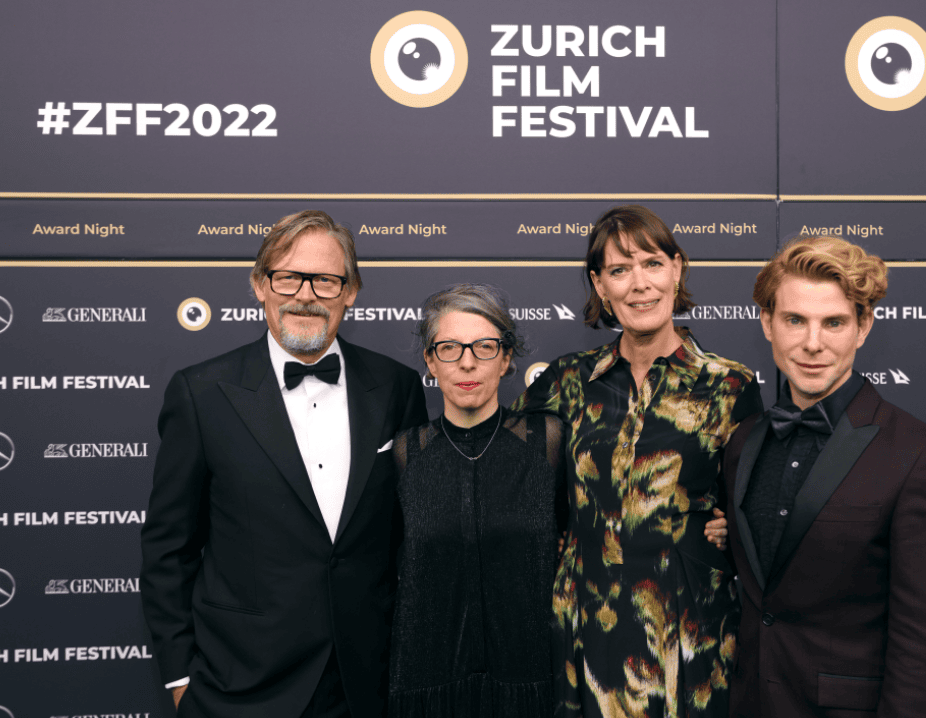
A long-standing connection between Petra Volpe and the ZFF
Petra Volpe's path has been closely linked to the Zurich Film Festival for many years. Back in 2013, she celebrated the world premiere of her feature film debut "Traumland" in the ZFF competition and received great international attention. In 2022, Volpe was a member of the ZFF's international feature film jury chaired by Asghar Farhadi. In the same year, she presented the film "The Golden Years" (directed by Barbara Kulcsar) at the festival as a screenwriter.
Petra Volpe was also present at the Zurich Film Festival with her film "Heldin": the ZFF organized a For-Your-Consideration-Screening for the participants of the ZFF Summit. The lead role is played by Leonie Benesch - she was a member of the ZFF International Feature Film Jury in 2025. The drama about a nurse's challenging night shift became one of the most successful Swiss films of recent years with over 200,000 moviegoers and is on the Oscar shortlist for Best International Film. The ZFF is now honoring this extraordinary success with the award for Petra Volpe in Los Angeles.
Petra Volpe - one of the defining voices of Swiss film
Petra Volpe (*1970 in Suhr, Aargau, Switzerland) is one of the most successful and internationally renowned Swiss filmmakers. After studying at the Film University Babelsberg Konrad Wolf in Potsdam, she established herself both as a director and screenwriter. Her feature film "The Divine Order" (2017) became one of the most successful Swiss films of all time, was shown at festivals worldwide and was submitted as the official Swiss entry for the Oscar. With "Heldin", Volpe has now made it onto the Oscar shortlist for the first time. In her work, she consistently focuses on socially relevant topics, which she tells with great emotional power, precise characterization and high dramaturgical quality. Her new film "Frank & Louis" - an international co-production and her first English-language film - has been invited to the 2026 Sundance Film Festival program.
Continuity of the ZFF presence in Hollywood
By honoring Petra Volpe, the Zurich Film Festival continues its presence in Hollywood. After honoring Tim Fehlbaum in Los Angeles in 2024, the ZFF is once again underlining its role as the festival that not only supports Swiss filmmakers at an early stage, but also supports them on their international path and creates visibility and networking during the award season.
]]> A challenge: while Hollywood stars are walking the green carpet in one place, a ZFF Masters talk is taking place a few minutes away and a Golden Eye is being presented shortly afterwards. "The challenge is to be present everywhere and at the same time deliver content that meets international standards," explains Mola.
Content with proximity and emotion
The team's tasks went far beyond pure event documentation. Black Frame accompanied stars and filmmakers, portrayed the audience and staged emotional festival moments - from the big galas to the quiet nuances. The aim was to create closeness and make the festival spirit a digital experience.
"Our camera is not a barrier, but a bridge," says Mola. "We want to make the energy that characterizes this festival tangible."
Between planning and spontaneity
Behind the success is a precise organization. Who is where and when? Which camera covers which event? Which content has to be published in which order? But despite meticulous planning, the ZFF remains a lively, unpredictable event. Spontaneous interviews, extended award ceremonies and last-minute changes are part of everyday life. "It's precisely these moments that make the festival so magical," says Mola.
Festival praises collaboration
The ZFF is also impressed. "We appreciate the agility of the team and the output that does justice to our festival," says Alessandro Monsurrò, Managing Director of the Zurich Film Festival.

Toblerone is the new sponsor of the Zurich Film Festival. The chocolate brand celebrated this with music star Nemo at the ZFF Opening Night via an extravagant appearance: Nemo wore a necklace on the green carpet, which was adorned with a real Toblerone praline in the shape of a diamond as a solitaire. Two assistants kept it in shape with fans so that it could shine on the star's bare skin throughout the evening.

The idea for the stunt came from Publicis and its social media agency Bagels of Berkeley. Rob Hartmann, ECD at Publicis Zurich, on the successful "chocolate stunt": "'The campaign demonstrates our convictions. We want to surprise, polarize and stand out from the crowd - with the best people, courage and a pinch of grumpiness.ssenwahn. Our goal: to change and challenge the status quo, true to the motto of the Publicis founder: 'Lead the change. Love the change.""
According to the company, the unconventional also has a long tradition at Toblerone: when chocolate with a nougat filling in the shape of a triangle was launched on the market in 1908, Theodor Tobler turned the traditional art of chocolate making upside down with his daring creation. "Theodor Tobler not only demonstrated unique creativity, but also had the courage to fight for his vision despite the headwinds. That reminded us a lot of Nemo. The canton of Bern seems to be a good place for people with rough edges," laughs Carlo Rohner, Marketing Lead Mondelēz International.
Nemo himself said of the performance: "Chocolate is a piece of Swiss culture, almost a culinary art form that has been perfected here and continues to inspire people around the world".
]]>
Change at the top of the Zurich Film Festival: Roger Crotti becomes Chairman of the Board of Directors of ZFF AG. Together with Artistic Director Christian Jungen and Jennifer Somm, Managing Director of the event and marketing agency Spoundation Motion Picture AG, he will further develop the ZFF's strategy. Crotti previously worked at Disney for over 30 years, the last ten years as Country Manager for Germany, Austria and Switzerland. Crotti succeeds Felix E. Müller, who has been President of ZFF AG since 2018.
Felix Graf, CEO of the NZZ, to which the ZFF has belonged since 2016, says: "We are delighted to have gained Roger Crotti, a profound expert in the entertainment business and an excellent marketeer. He will help us to further expand the international appeal of the ZFF and successfully lead the festival, which is celebrating its 20th anniversary, into its jubilee year. I would like to thank Felix E. Müller for his great commitment and outstanding work as Chairman of the Board of Directors over the past five years."
ZFF Director Christian Jungen is also delighted with Crotti's appointment: "With his great commitment and his network, Felix E. Müller has done much to raise the profile of the ZFF in Zurich and Switzerland. We would like to thank him from the bottom of our hearts. Now, with Roger Crotti, we will enhance our reputation on the international film scene, as Roger has excellent contacts in Hollywood and Germany, which are very important to us."
]]> Since October 16, Barbara Frei has been responsible for the day-to-day operations of the Frame with its six halls, lounge, bar and kiosk as operations manager. She has more than two decades of experience in the media and technology industry. Most recently, she was responsible as project manager B2B at Zattoo. Before that, Barbara Frei spent more than 12 years in content and partnership management at Funke Mediengruppe in Berlin.
Barbara works closely with the cinema's program planning and is jointly responsible for the cooperation with Swiss film distributors as well as for all events and functions. She is also responsible for the operating budget as well as for staff management, training and development.
In the newly founded team from the Frame, which is in turn managed by the ZFF marketing agency Spoundation Motion Picture AG, Frei takes over the operational management.
]]>
 Since recently, it's been curtains up for eleven days of exclusive film experience, film enthusiasts and filmmakers as well as stars of Hollywood up close in the middle of Zurich. In a spectacular setting - this year with stars like Jessica Chastain, Ethan Hawke, Mads Mikkelsen and Diane Kruger - the 19th Zurich Film Festival ZFF expects more than 130'000 visitors:inside and shows 148 curated films, inspiring discoveries and intelligent mainstream as well as world and European premieres.
At the same time, the ZFF is already looking further into the future. On the occasion of its 20th anniversary next year, it is taking the opportunity to implement its own self-image even more consistently. The aim is to bring the top-class cinema experience even closer to the audience, to inspire even more people - and at the same time to become even more of a home of talent for the stars of tomorrow.
Publicis Groupe Zurich will accompany this ambition, first and foremost with the social media agency Bagels of Berkeley around the social media experts Rahel Dürsteler, Tatjana Streit, Aurore von Oppersdorff, Iona Jefferies and Luciano Hagge Dias.
What can we expect from the new partnership? What can the audience expect from the "new" ZFF? Jennifer Somm, Managing Director of Spoundation Motion Picture (the agency that markets the Zurich Film Festival), Alessandro Monsurrò, Head of Marketing & Media ZFF, as well as Senior Social Media Consultant Rahel Dürsteler and Social Consultant Tatjana Streit from Bagels of Berkeley have the answers.

Jennifer Somm, why is now the right moment to prepare ZFF for the future?
Jennifer Somm: ZFF is at an exciting point: Corona is behind us, our anniversary lies ahead. And the interest in film is unbroken. For us, the ideal time to start a new era with ZFF.
What tipped the scales in favor of ZFF's collaboration with Publicis Groupe or Bagels of Berkeley?
Publicis Groupe's expertise in breadth and depth is exactly what we need. And the fact that we are both at Bellevue makes us practically neighbors and cooperation very easy and cooperative. The fact that Publicis Groupe even has a movie theater in its own building is a symbol of the fact that it simply fits.
Alessandro Monsurrò, what do you expect from the collaboration?
Alessandro Monsurrò: The mission is very clear: create even more relevant content that develops momentum, moves, excites and engages audiences across Switzerland and beyond. Especially at the festival itself, but also throughout the year, Bagels of Berkeley will support ZFF's social media team in generating attention for the festival, creating excellent stories and playing out content that converts.
How does that work?
Jennifer Somm: By addressing our audience - by which we mean the entire spectrum of our target groups - even more specifically. And by launching the Frame, which we opened with a world premiere on September 27. The Frame gives the ZFF its own home and a year-round presence. In other words, we now have a venue where we can show curated films throughout the year. It was important to us to develop a strong look for the Frame and its own presence that differentiates it from ZFF. Based on this CI / CD, created by Zurich art director Christian Scherler, Bagels of
Berkeley to be responsible for building and managing the new channels on social media.
Rahel Dürsteler, why is social media so important and right for ZFF?
Rahel Dürsteler: Social media has long been a standard or a must in advertising and communication - especially if you want to reach different target groups like ZFF. And we can find, address or integrate almost any:n in the social media universe. In addition, videos, reels and cinema are per se close relatives, practically films in short format, and excellent means for storytelling. This allows us to stage cinema in a true-to-life way.
Tatjana Streit, what concrete measures do you use to implement this at ZFF? What is your trademark, your ace in the hole?
up your sleeve?
Tatjana Streit: We can pull out all the stops, starting with the festival itself: With the office at Bellevue, we are right next door to the ZFF and the festival events. We feel the vibe, can pick up on topics and react spontaneously if necessary. We do daily check-ins with the ZFF social media team. And together with them, we use the direct line to Cast, the study program at the ZHdK, which creates content for the ZFF during the two festival weeks - to name just a few examples. In the medium and long term, we do targeted reporting to show the results for the ZFF partners and to develop positioning strategies with the ZFF team, especially in view of the 20th anniversary. First and foremost, we don't want to generate more and more content, but rather define relevant content and prepare and play it out even better for the selected communities and platforms.
How do you manage to keep ZFF with the Frame in the minds and hearts of the public all year round?
remains?
Tatjana Streit: At Frame, we don't want one-way communication, but discourse with our physical neighbors, visitors, and Zurich's social media users. We don't want to stand out from the community, but act as part of it. We love our city and we love films. That unites us. So we can present the Frame as what it is: a cinema and meeting place in the middle of Zurich's Kreis 4 - urban, intelligent, curated. In short: with everything a cultural heart desires. In addition, we try to generate added value through posts that visitors can expect from a cultural center, i.e. program, events, location and people - informative, but always snackable and entertaining.


]]>

NZZ's core business developed solidly in the first half of 2023, even with the economic challenges, according to a recent media release from the company. The NZZ Core segment, which includes publishing, achieved an increase in revenues and posted earnings almost on a par with the previous year. This, "although long-term strategic investments were made in the further development of editorial teams, technology and digital product development, and additional expenses were incurred in connection with the cyberattack in the spring."
At the corporate level, however, NZZ recorded a significant decline in earnings - despite an increase in revenues. This was primarily due to the decline in earnings at CH Media and the participations. Among the latter, DAAily platforms, the largest international network for architecture and design, and the Zurich Film Festival (ZFF) in particular had to accept declines in earnings. Here, it will be of particular importance in the coming months, "stabilize the course of business (...) and exploit synergy potential throughout the company."
The NZZ Semiannual Report 2023 is available online at this Link retrievable.
]]> Since the very beginning, the large Swiss cinema chain Blue Cinema, formerly Kitag Kino-Theater AG, which belongs to blue+, has accompanied the Zurich Film Festival as Cinema Partner. For many years, screenings have taken place in the Blue Cinema cinemas. The big highlight each time: The premieres and award ceremonies in Zurich's traditional cinema Corso am Bellevue. With blue+ as a media partner, this partnership is now being deepened. blue+ includes the online platform blue News, fiction offerings such as blue Max, and the free TV station Blue Zoom, among others.
"We hold the Zurich Film Festival in high esteem and are impressed by its development and the commitment of all those involved to cinema. That's why we are all the more pleased to be able to fully support the ZFF with our Blue+ ecosystem and all the associated platforms, and to take it even further thanks to the new media partnership," says Wolfgang Elsässer, CEO of Blue Entertainment AG.
Christian Jungen, Artistic Director of the Zurich Film Festival, adds: "Blue Cinema's Corso is our flagship cinema, the place where the ZFF was born and the reason why our festival center is located on Sechseläutenplatz. In this cinema we have experienced star moments with stars like Hugh Jackman, Arnold Schwarzenegger or Sharon Stone. Now we are very much looking forward to expanding our collaboration with blue+. The media partnership opens up new, attractive opportunities for us to communicate on the subject of cinema and film."
]]>
After four years of total renovation, the renovated Kongresshaus on Lake Zurich will open this summer. The 17th Zurich Film Festival (September 23 to October 3, 2021) will be the first major event to be held at the venue over several days. During the second week of the festival, the ZFF will show films from our program in the large 1665-seat auditorium. "The new Kongresshaus with its fantastic location on the lake is a jewel. We are delighted that with the main hall we can now finally do screenings for a large audience of over 1500. A large multi-purpose hall, equivalent to those of festivals such as Cannes, Berlin or Venice, gives us the opportunity to grow," explains ZFF director Christian Jungen. "The staircase and the terrace at the entrance also offer great opportunities for glamorous photo shoots with the stars in front of the lake and the mountains in the background."
The ZFF will use the new location from September 27 to October 1, 2021. It is planned that the festival will show films in the Kongresshaus for the entire duration of the festival. Roger Büchel, CEO of Kongresshaus Zürich AG, is delighted with the partnership: "The Zurich Film Festival needs radiant locations, its visitors are looking for unique experiences, and the new Kongresshaus Zürich needs lighthouse projects. Simply a win-win-win situation."
Film music concert and competition in the Tonhalle
Elke Mayer, Managing Director of Spoundation Motion Picture AG, will be responsible with her team for the realization of the ZFF in the Kongresshaus. She says: "With the opening of the Kongresshaus, the Tonhalle also returns to the lake basin. This is a great opportunity for the festival, which has been organizing a film music concert and the International Film Music Competition together with the Tonhalle Orchestra Zurich since 2012. Film and music are thus also moving closer together again spatially."
The ZFF strengthens its position in the heart of the city by staging the festival in the Kongresshaus. The festival center and the green carpet will remain on Sechseläutenplatz directly next to the flagship cinema blue cinema Corso and the Arthouse Le Paris. They are only a few minutes' walk away from the Kongresshaus. With other venues such as the Arena Cinemas, the Kosmos and the Filmpodium, the festival will be present throughout the city.
]]>