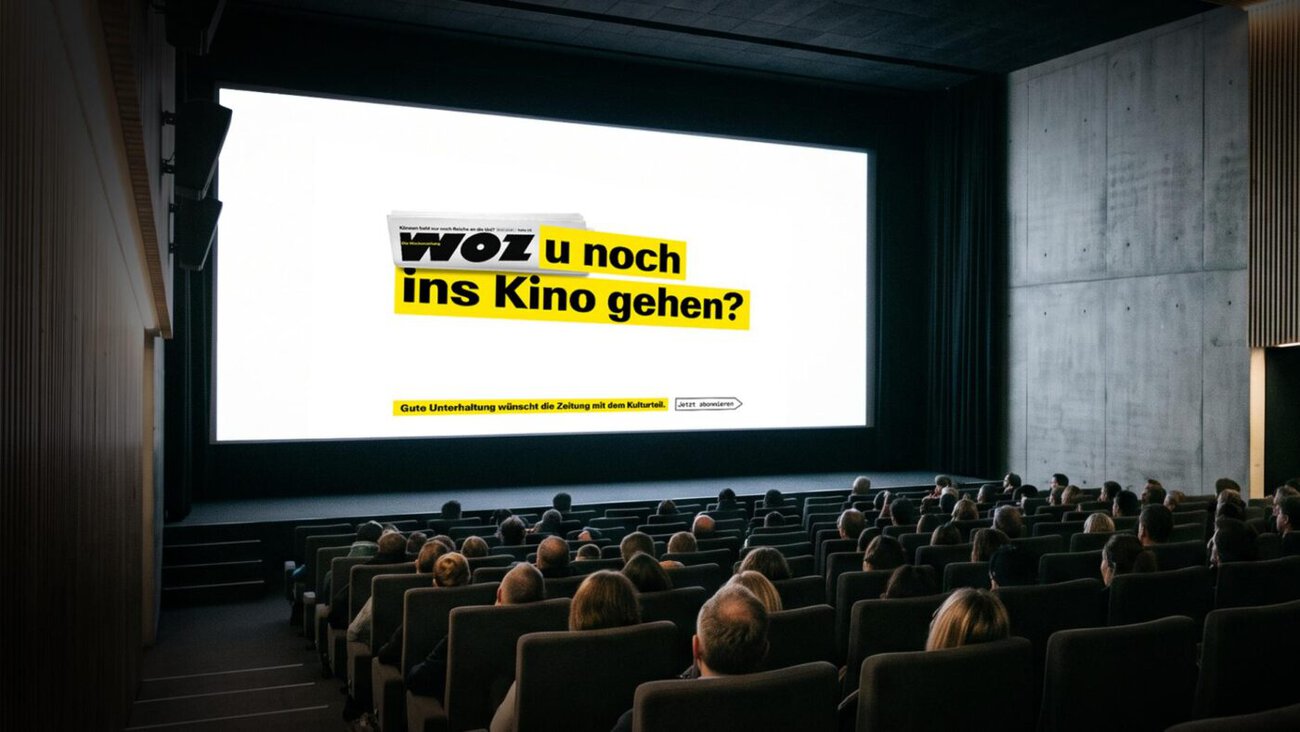
The media landscape is changing rapidly: monopolization, a shift to the right, and a decline in journalistic diversity are shaping the industry. While major publishing houses are cutting jobs and scaling back their offerings, the Swiss weekly newspaper WOZ is taking a stand against this trend with its new WOZ subscription campaign. Following a comprehensive relaunch this spring and the release of a newly developed app, WOZ—in collaboration with the Zurich-based agency Freundliche Grüsse—is launching a campaign that centers on its own logo and the question of «Why?» in journalism.
A combination of letters as a starting point
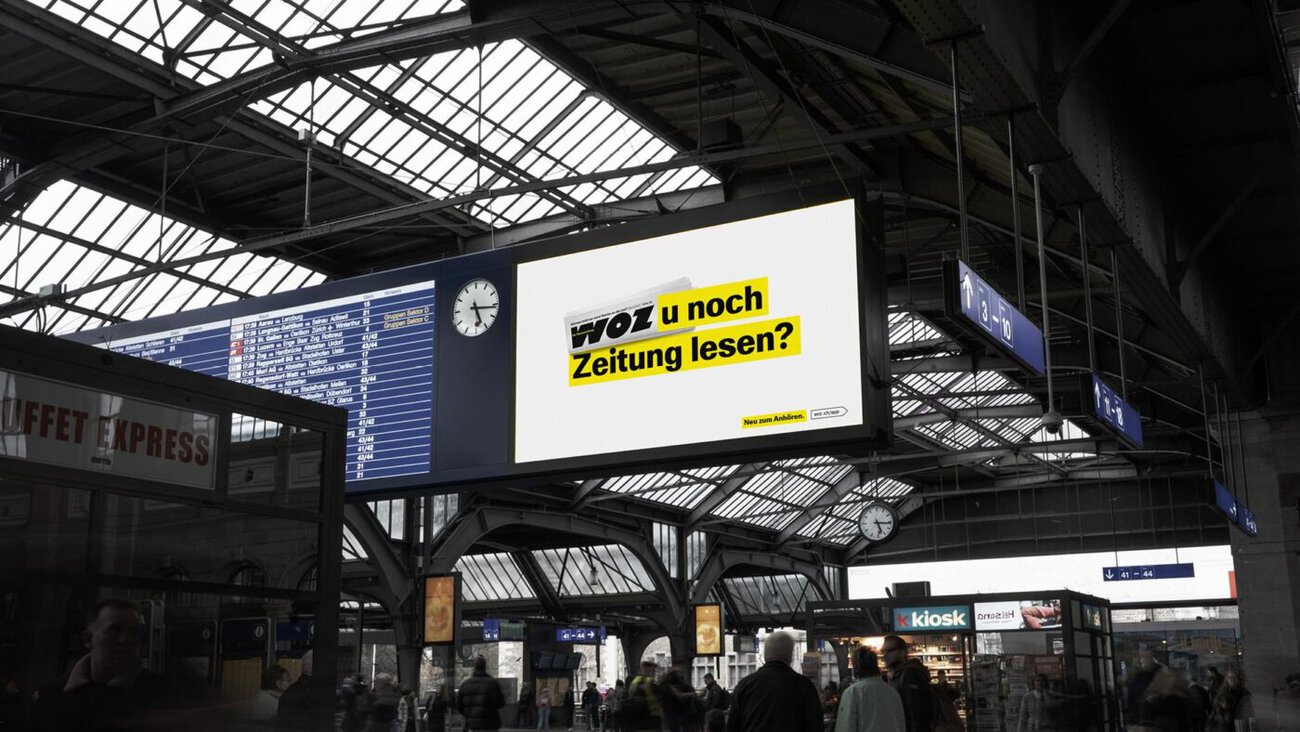
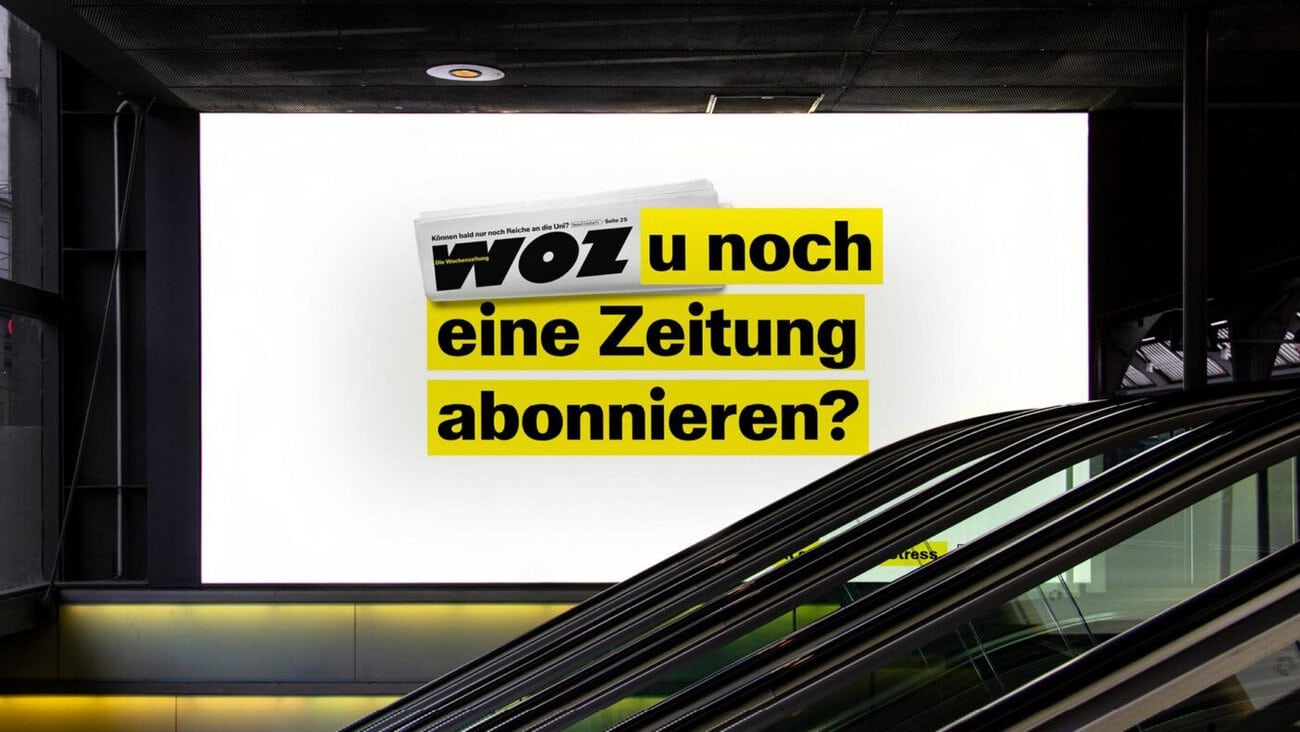
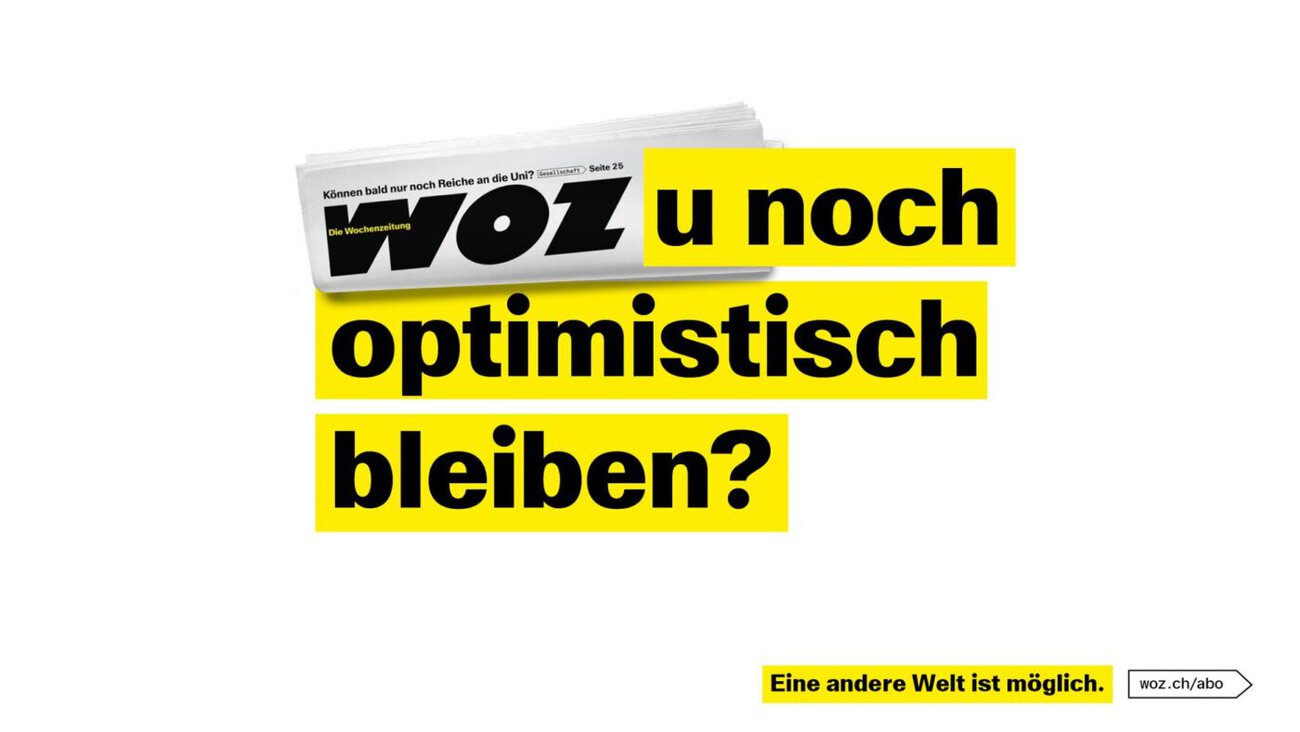
The agency Freundliche Grüsse drew on a visual and linguistic feature of the WOZ for the campaign: The rare combination of letters in the WOZ logo appears in the German vocabulary in practically only one word—«Wozu.» The campaign uses this word as the starting point for key questions, such as why anyone should still read a newspaper. In this way, the WOZ says it underscores its commitment to thoroughly researched journalism that is dedicated to its readers. The striking, minimalist headlines are designed for out-of-home advertising.
Staying Up to Date via Social Media
On social media, the campaign concept is used to respond quickly to current events. Whether it’s climate change, the housing crisis, or data centers—press photos and relevant headlines are designed to draw attention to current journalistic content, even on topics that go far beyond traditional journalism. The accompanying tagline is always: «Now in the WOZ.».
Relevance as the Core Message
With this campaign, the weekly newspaper is positioning itself as a media outlet that takes the time each week to make sense of the world for its readers. The campaign aims to convey the message that the WOZ is more relevant today than ever before. It is being rolled out across various channels: digital billboards, print ads, social media ads, and movie theater slides.
For more information about WOZ and subscriptions, visit https://www.woz.ch to find.
Editor in charge at WOZ: Camille Roseau, Claudia Gillardon (Advertising & Marketing), Alice Bucher (Production). Responsible at Friendly regards: Pascal Deville, Samuel Textor (Creative Direction), Kevin Zysset (Art Direction), Julia Felder (Graphic Design), Andrea Aegerter, Eva Brun (Consulting), Tom Zürcher (Copy / Concept), Timotheus Überall (Copy), Peter Stirnemann (Generation Media)
]]>
In reference to the term "artificial intelligence", the Woz now the construct "Antifascist Intelligence". The play on words is intended to show that the terms "antifascist" and "artificial" are almost identical.
The Woz counteracts problematic international trends with precise and intensively researched reports written by committed and experienced journalists.
The motif has been on display at Zurich main station, on various OOH channels and on kiosk posters since Thursday.

Responsible at the Woz: Camille Roseau, Dominik Müller. Claudia Gillardon (advertising department). Responsible at Friendly regards: Pascal Deville, Samuel Textor (Creative Direction), Julia Felder (Graphics), Eva Brun (Consulting), Media: Peter Stirnemann (Generation Media).
]]>
The Press Council has lodged a complaint against the Woz dismissed. The latter had accused the newspaper of violating the duty of truth in an article. The alleged sentence from the TV documentary had not actually been used. Moreover, according to the Criminal Code, it neither disparaged anyone nor referred to a specific ethnic group or race.
The Woz had in an article from April 6, 2023 described Ruefer's alleged statement as "racist". The controversial sentence is said to have been uttered in the raw version of a recording for the documentary series "The Pressure Game" on Switzerland's World Cup campaign in Qatar 2022. Other media who had seen the original version confirmed that the sentence was uttered in a similar way.
Only selected journalists had access to the documentary footage. They had to agree not to quote the sentence directly in order to be allowed to see the original film excerpts. The Woz was repeatedly denied access to the original, according to the Press Council.
The self-regulatory body for media ethics issues criticized the conduct of Swiss Radio and Television SRF. This was of little help in finding the truth. SRF had restricted access to information to selected journalists and told them what they could and could not publish.
The Press Council considered it a "restriction of media freedom" if a company or authority grants selected media exclusive access to information while excluding other media.
SRF denied the accusation of racism made by its presenter in April 2023. At no point had he made racist remarks about Xhaka as a person or his origin. In an initial version of the film, a statement had been taken out of context so that it could have been misunderstood. Sascha Ruefer therefore withdrew the entire statement. (SDA/swi)
]]>
At the beginning of May, the Woz launched a new subscription campaign (Werbewoche.ch reported). Now the current issue of the Woz as a creative media production during one week on Time Online free of charge. The highlight: a newspaper within a newspaper. Selected articles from the issue can be read and scrolled directly in the banner.
Independent quality journalism is more important today than ever before. Woz and Time have a number of things in common, such as journalistic quality, a critical approach and a commitment to certain social values. That's why the idea was a good fit for both.


Readers:inside from Time Online and Spiegel.de from June 6 to June 12, 2024, five articles from the current Woz-issue directly and free of charge in the special banner format. The banner remains visible and accessible for one week.
Responsible at the Woz: Claudia Gillardon, Camille Roseau (Marketing and Advertising), Dinu Gautier (Social Media Editor). Responsible at Friendly regards: Samuel Textor, Pascal Deville (Creative Direction), Andrea Aegerter (Consulting), Sandro Matter (Programming), Pascal Pfohl (Animation). Production: Visual Fantastix. Media: Stailamedia.
]]> The WOZ wants to expand its readership with the new campaign and also reach people who are not part of its inner circle of readers. The new subscription campaign focuses on the realities of people's lives. We are all changing, becoming more complicated, more middle-class or even more activist and inconsistent. What remains, however, is the demand for good journalism, such as the WOZ for over 40 years.
With the campaign, Friendly Greetings focuses on different aspects of life. This allows current topics to be included and the text-based campaign idea is very adaptable, so the WOZ The subjects refer to current events and the respective location. The subjects tell short stories in short steps and are intended to create a cinematic experience.

The campaign should say: WOZ-reader:in remains WOZ-readers, no matter how life turns out. The new campaign claim "WOZ - a newspaper for life" is intended to emphasize that the WOZ is liked and read by people with a wide range of interests in different life situations.
The 360-degree campaign will be distributed via various channels: print, posters, in-house publications, streetcar hangers, digital ads and social media content. Finally, a cinema spot was created, which will initially be shown widely at selected open-air film screenings this summer.


Responsible at WOZ: Claudia Gillardon, Camille Roseau (Advertising & Marketing), Alice Bucher (Production). Responsible at Friendly regards: Samuel Textor, Pascal Deville (creative direction), David Elmiger (text), Laura Leuenberger (art direction), Damian del Fabbro (strategy), Andrea Aegerter, Eva Brun (consulting), Sandro Matter (digital), Fabian Biedermann (overall responsibility), Zweihund (film production); Jonas Meier (director), Mike Raths (VFX / camera), Jingle Jungle (sound design); Christoph Benz, Fai Baba (music).
]]>
 Lazy, broke and no idea of "real" work are common prejudices against students. Figures from the Swiss Federal Statistical Office prove that this prejudice is wrong: 73 percent of students in Switzerland are gainfully employed during their studies. WOZ debunks this prejudice with pictures full of irony, portraying students doing their part-time jobs and showing in a funny and exaggerated way the strains involved.
WOZ does a lot of editorial work on the topic of work, identifying unequal power relations there and following trade union disputes around the world - thus highlighting possible approaches to empowering precarious workers to stand up for themselves. The campaign will be promoted in an initial phase with a sampling at various universities, poster displays at the respective universities and print advertisements.


Responsible at WOZ: Claudia Gillardon, Camille Roseau. Responsible at Studio Wurst: Pedro Moosmann and Nino Zuberbühler. Photography: Dan Cermak.
]]>
"A commissioned film, how controversial can that be?" is what most of them must have thought when they volunteered to play themselves. Beautiful pictures from the open-plan office on the Limmat, a few questions about everyday editorial life, that was to be expected. But then everything turned out quite differently, and the media professionals of the Wolz collective started sweating for once.
So the result of a tour de force of filming is nothing less than the only real truth about Switzerland's largest media collective. It is the visual prelude to a completely revised corporate presentation of WOZ, which was launched just in time for the relaunch of woz.ch went live.
A pre-release on Twitter was met with enthusiasm, and the makers hope for similar reactions after the release on Facebook and YouTube.
Idea & Concept: Jovica, Aron Marty (docyard GmbH). Directed by: Jovica. Camera: Aron Marty. Production: Andi Bänziger (docyard GmbH). Provocateur: Mario Hipleh. Responsible at the Woz: Claudia Gillardon, Uğur Gültekin, Camille Roseau.
]]> "Ahead of the curve every week" is the new claim. It gets to the heart of what the Woz has always distinguished itself. On the one hand, the exceptionally high journalistic quality and, on the other, the fine sense for socially relevant topics long before they have arrived in the mainstream. It is not without reason that Switzerland's largest left-wing and independent weekly newspaper has the highest value in reporting quality in the comparison group of the Media Quality Ranking 2020. The 40th anniversary campaign also aims to highlight the progressive nature of the Woz Highlight.
With tongue-in-cheek headlines, it is made clear that WOZ has always recognized and dealt with social and political issues at an early stage - and is thus always ahead of the times. The new claim is thus the perfect connector.
The campaign will run from November 15. This will involve "Digital Out of Home" posters, hanging boxes in public transport, cinema slides and advertisements in some print titles such as the NZZ, Le Monde diplomatique and in other media. These media are flanked by a social media measure.
Responsible at Woz: Claudia Gillardon, Camille Roseau, Ugur Gültekin. Responsible at Publicis Zurich: Sören Schröder (Creative Director), Cosima Pereira Köster (Senior Art Director), David Voges (Senior Copywriter), Mathias Bart (Senior Copywriter), Flurin Hardt (Senior Account Director), Judith Schnigula (Account Director). Publicis Media: Silja Achermann (Senior Account Manager), Noor Morad-Yazbeck (Senior Print/OOH Manager). Team Prodigious: PrePress, litho, image editing, motion, realization and production consulting.
]]>
The future does not have the best reputation at present, but giving up is not an option, wrote the Woz in the current issue. "For there to be anything at all like a future worth living in, there needs to be leaps forward in thought." The first bundle of the newspaper was devoted entirely to the future, only the second contained news from the present.
With the anniversary edition, the Woz introduced a linguistic innovation: It now uses the colon in spelling to ensure gender-neutral language. With this decision, the newspaper's employees want to take better account of gender identities. In doing so, the newspaper said goodbye to the indented I, which it was the first newspaper in Switzerland to introduce in its columns in 1983.
The Woz was founded in 1981. The first regular issue appeared on October 1. The newspaper was a product of the youth movement at the time and it wanted to set counterpoints to the reports in the established newspapers. Disparagingly laughed at in the beginning, the Woz to become a serious medium with a growing circulation. Today, according to its own information, it is the largest independent left-wing newspaper in Switzerland, with a growing circulation. (SDA)
]]>
As WoZ co-editor Yves Wegelin told the Keystone-SDA news agency on Thursday, the paper met the deadline for accreditation. On the morning of Oct. 30, one day before the deadline, the WoZ had made a request by mail asking for accreditation for the WEF at the end of January 2020, he said.
At noon on November 12, the answer came that not all media would be admitted to the event. According to Wegelin, the WEF gives preference to media that also work with the organization during the year.
The WoZ had contacted the WEF extremely late, one day before the deadline for accreditation, Yann Zopf from the WEF media office told Keystone-SDA. Based on this, it was determined that the quota for the Swiss media was already full. This had nothing to do with censorship.
Every year, the WEF receives thousands of media requests for accreditation. For reasons of space, a contingent of a maximum of 500 journalists is admitted, although in some cases several journalists from one medium are admitted.
Imprint criticizes decision
Already in 2012, the WoZ had not received the accreditation. At that time, the WEF was probably persuaded to change its mind after media pressure and a political initiative, as Impressum, the association of journalists, announced on Thursday. Thus, the newspaper was able to regain accreditation for the following years in 2013.
According to the imprint, the WEF "does not provide any comprehensible reasons why the WoZ should not receive accreditation. The forum acts arbitrarily and violates the freedom of the press in its actions. For these reasons, Imprint disapproves of this unjustified denial of access. (SDA)

The WOZ reported in that issue on a ruling by the Winterthur district court. Kessler had charged a vegan from Winterthur with defamation. This is the result of a ruling by the Federal Supreme Court published on Friday.
The district court came to the conclusion that the woman had not committed a criminal offense by describing the controversial animal rights activist on Facebook in 2015 as a person with a clearly anti-Semitic and xenophobic attitude. She had linked the post to an online publication in which Kessler was described as an anti-Semite.
Kessler demanded that the WOZ publication of a counterstatement, which the newspaper refused. Kessler therefore filed a lawsuit with the district court of Münchwilen TG, but was unsuccessful. He was also unsuccessful before the Supreme Court and now before the Federal Supreme Court.
In its decision, the Federal Supreme Court states that the WOZ was entitled to reject the counterstatement. The allegation made in the counterstatement was false. Furthermore, a mere denial cannot normally be admitted as a counterstatement. (SDA)

In a ruling published on Wednesday, the Federal Supreme Court supports the decision of the Federal Administrative Court. In March last year, the court concluded that there was a heightened public interest in information about the controversial war material exports, which in principle required a license.
The exports were repeatedly the subject of controversial debates in public and politics. In this context, the media made an essential contribution to the control of official activities, the Federal Administrative Court wrote. It was the task of the media to report on whether the state control bodies were fulfilling their duties.
Seco had given the journalist of the Weekly newspaper (WOZ) refused to provide the requested data from the outset. It took the position that, in accordance with the War Material Act, only the Federal Council's Committee for the Control of Exports of War Material is to be informed about the details of war material exports.
Seco argues that the democratically legitimized control is to be carried out solely by the Audit Commission and not by the public. It also asserted foreign and security policy reasons.
The Federal Supreme Court sees things differently. It does not consider Switzerland's interests to be at risk. If no concrete business secrets can be claimed, Seco must disclose the names of the companies.
WOZ is pleased with the Federal Court's ruling, according to a media release on Wednesday. Thus, the interest of the population in transparency is weighted higher than that of the weapons lobby.
WOZ journalist Jan Jirat had made the request to Seco after the appearance of hand grenades from the federally owned arms company Ruag in the civil war in Syria. (SDA)