
The Swiss Media Publishers Association (VSM) is calling for improvements to Switzerland’s platform regulation. The association welcomes the Federal Council’s efforts to advance the regulation of large platforms. However, the bill must also effectively protect media diversity and freedom of opinion. The VSM is calling for binding measures against systemic risks, greater transparency regarding algorithms, and consistent enforcement of the law against illegal advertising.
«International platforms have a significant influence on what news people actually see. This power to shape public opinion and their enormous economic market power must not go unchecked. Those who shape the public debate must also limit the risks to media diversity and democracy,» says VSM President Andrea Masüger.
On October 14, 2026, the Federal Council decided to proceed with the Federal Act on Communication Platforms and Search Engines (KomPG). The DETEC is to draft a message by the end of June 2027. According to the VSM, the bill contains important transparency and complaint-handling requirements but still has significant gaps.
Platform Regulation in Switzerland: Identifying Risks Is Not Enough
The VSM demands that large platforms not only assess systemic risks but also implement effective risk mitigation measures. These include risks to media diversity, the formation of public opinion, and democratic processes. In its consultation response, the association had already called for Article 20 to be amended accordingly. Platforms should also be required to mitigate identified risks through appropriate measures and to report on their effectiveness. According to the VSM, 65 consultation participants supported the risk mitigation requirement.
The European Digital Services Act (DSA) goes a step further in this regard. It requires very large platforms and search engines to assess systemic risks—including those to media freedom and media pluralism (Art. 34)—and to effectively mitigate them (Art. 35). According to the VSM, Switzerland should also follow this approach.
Limiting the Influence of Opinion, Combating Disinformation
The platforms’ algorithms help determine which journalistic content is visible and what reach it achieves. These decisions are often difficult for media companies and the public to understand. The VSM therefore calls for greater transparency in recommendation systems, genuine choices for users, and transparent decisions regarding the restriction of journalistic content. At the same time, platforms must counter the spread of disinformation, while safeguarding freedom of expression and information as well as editorial independence.
Enforce Existing Law
The association also sees a need for action regarding illegal advertising. Deceptive ads and identity theft are already prohibited. While Swiss media companies are legally responsible for their content and advertising, enforcement against international platforms is often difficult. The VSM calls for clear responsibilities, effective reporting and complaint procedures, transparent advertising archives, and legal representation for the platforms in Switzerland that is capable of taking effective action. Standards for Swiss media should not be lowered.
Protection of Minors, AI, and Copyright Law
The VSM expressly welcomes the planned expansion of child and youth protection. It views the risk mitigation measures for minors, the ban on profile-based advertising targeting minors, and the expansion of the reporting procedure to cover all allegedly illegal content in a positive light. However, media literacy is also essential. «Young people must learn to distinguish reliable news from disinformation and manipulated content. To do so, they need media literacy and access to independent journalism,» says VSM Director Pia Guggenbühl.
The association welcomes the fact that AI search engines are also to be covered by the KomPG. Clarification is needed regarding generative AI applications that select, process, and directly convey information. Copyright issues must be addressed in parallel as part of the implementation of the Gössi motion. The VSM calls for effective protection of journalistic content as well as fair licensing and remuneration models.
In light of the message, the VSM expects regulations that go beyond transparency requirements and effectively hold large technology companies accountable.
]]>
A leadership transition is imminent at Freiburger Nachrichten AG. The Board of Directors has approved the succession plan for the CEO position: Effective May 1, 2027, Emanuel Müller, currently the head of sales and marketing, will take over as the new CEO of Freiburger Nachrichten.
The Return of a Familiar Face
Emanuel Müller, the 46-year-old future CEO, is already very familiar with Freiburger Nachrichten AG. From 2014 to 2018, he worked for the company as a client advisor and key account manager. On July 1, 2026, after a several-year stint in the banking sector, he returned to the company as Head of Sales & Marketing and a member of the executive board. According to the company, Müller’s many years of experience in the finance and publishing industries, as well as his network in the region, make him ideally suited for the role of CEO.
Until his retirement, outgoing CEO Christoph Nussbaumer will remain available to his successor and the Board of Directors to help manage the transition.
With thanks to the Board of Directors
Daniel Schorro, Chairman of the Board of Directors, says: «We thank our current CEO and former editor-in-chief, Christoph Nussbaumer, for his visionary leadership and tireless dedication, which have successfully guided our independent publishing company through times of change.»
Commenting on the future CEO, Daniel Schorro said: «The internal succession plan involving Emanuel Müller gives us confidence. It combines industry expertise and regional roots with a market-oriented perspective. At the same time, we are strengthening our capacity for innovation, which is indispensable in today’s media landscape.»
Outlook on the Challenges Facing the Industry
According to the press release, with the appointment of Emanuel Müller as the future CEO of Freiburger Nachrichten AG, the company is well-equipped to meet the current challenges in the publishing and media industry. These include digital transformation, changing consumer habits, and increasing market pressure. The company’s independence remains its central guiding principle.
Freiburger Nachrichten AG is an independent publishing company with a tradition dating back more than 160 years. The company is owned by more than 450 shareholders who support independent local journalism in German-speaking Fribourg. Its print portfolio consists of the daily newspaper «Freiburger Nachrichten» as well as the local weekly newspapers «Der Murtenbieter» and «Anzeiger von Kerzers.» Together with Radio Freiburg AG, the company operates the digital platform «wir Freiburg.» The company employs approximately 75 people and is headquartered in the city of Freiburg.
For more information about the company, visit https://www.freiburger-nachrichten.ch.
]]>
With the Interact Media Group (IMG)«s acquisition of the »Wiler Nachrichten« in the spring of 2026, a new chapter begins for Marcello Tassone (58): After 38 years as managing director, he will be promoted to »Director of Business Development & Regional Development for Eastern Switzerland.” Starting October 1, Tassone will assume this newly created position.
Marcello Tassone will be supporting sales going forward
Since 1988, Tassone has helped build the «Wiler Nachrichten» and, according to him, turned it into the newspaper with the widest reach in the region. In his new role, he will support and assist the group’s print distribution efforts.
«Over the decades, Marcello Tassone has proven that building close relationships with customers and achieving business success in local journalism are not mutually exclusive—on the contrary, they go hand in hand,» says Olivier Chuard, Chief Business Development Officer at Interact Media Group. «This is precisely the approach we now want to bring to all of Eastern Switzerland. The fact that Marcello Tassone will be sharing his expertise with our publications as a regional development specialist is a boon for the entire group and a great pleasure for me personally.»
A New Beginning Instead of a Farewell
Marcello Tassone himself reflects on his time at the *Wiler Nachrichten*: «For 38 years, the *Wiler Nachrichten* was far more than just my workplace—it was my professional home. I’ve had countless meaningful encounters and made many friends. But this doesn’t feel like a farewell—it feels like a new, personal, and exciting beginning. I’m really looking forward to passing on what I’ve learned over nearly four decades to others.»
He would like to extend special thanks to his team for their long-standing, trusting collaboration and to his customers for their many years of loyalty. Special thanks also go to Rolf Peter Zehnder, the founder of the «Wiler Nachrichten,» who, 38 years ago, gave him the opportunity and the trust to build and achieve so much over the past decades.
For more information about Interact Media Group, visit https://www.img.ch/.
]]>
How can independent local journalism be strengthened in the region? Representatives from municipalities, the media, academia, associations, and foundations addressed this question on September 9 in Rikon. All ten media outlets active in the region were represented at the event organized by the Association of Municipal Presidents (GPV) of the Winterthur District. The future of local journalism is thus high on the region’s agenda—the GPV will continue to address the issue at its fall meeting on November 5.
Independent local reporting is under increasing pressure. Media concentration and centralized newsrooms, the reduction of local capacity, the consolidation of publications, and declining revenue from advertising and subscriptions are leading to a steady decline in locally tailored reporting. This trend affects more than just the media itself: Strong local journalism is considered an essential prerequisite for informed political debates and a functioning federalist militia system.
Ten media outlets at the table
Against this backdrop, the GPV Winterthur District invited representatives from municipalities, the media, academia, associations, and foundations to a thematic event in Rikon on September 9, 2026. Together, they discussed how to strengthen independent local journalism in the region. The event was organized by Manfred Leu, mayor of Seuzach, together with Prof. Dr. Vinzenz Wyss. The municipality of Zell served as host.
«It’s a warning sign when even politicians—who are supposed to be subject to critical scrutiny by the media—lament the consequences of the decline in local reporting,» says Vinzenz Wyss, professor of journalism at the Zurich University of Applied Sciences (ZHAW), regarding the importance of local journalism for democracy.
Representatives from all media outlets active in the region accepted the invitation: Spatz News, Tele Z, Wnti.ch, Top Medien, the Elgger/Aadorfer Zeitung, the Winterthurer Zeitung, the Tages-Anzeiger, Radio Stadtfilter, the Andelfinger Zeitung, and the SRF Regionaljournal Zürich Schaffhausen. As a result, a broad spectrum of different media formats and journalistic perspectives was incorporated into the discussion.
«Local journalism keeps the exchange of ideas and the flow of information alive and helps shape the opinions of a diverse population. Our democracy thrives on this, and it is our responsibility to safeguard it,» says Maja Reding Vestner, mayor of Neftenbach and president of the GPV Winterthur District.
Inspiration and mutual exchange
Prof. Dr. Vinzenz Wyss explained the democratic significance of local journalism and the market failure regarding its financing. Prof. Dr. Guido Keel, Director of the Institute for Applied Media Studies at ZHAW, examined the possibilities and limitations of media funding from a legal perspective, building on the presentation by attorney Manuel Bertschi. Nina Graf, former co-managing director of We.Publish, presented the shared infrastructure for independent media and the «Dorfkönig» project for hyperlocal news. Nicolas Bernet, project manager for media funding strategy in the Canton of St. Gallen, reported on the experiences and considerations from his canton.
During the subsequent «World Café,» participants discussed which forms of support are realistic and politically viable without jeopardizing journalistic independence.
The key takeaways from the event are as follows: Local journalism is affected by market failure, as advertising revenue and subscriptions are insufficient to finance independent local reporting, even though it provides significant social benefits. Local journalism is also considered essential to democracy: it enables independent information, criticism, and oversight; lays the groundwork for local election and referendum decisions; and strengthens community cohesion. Finally, funding must preserve journalistic independence—various direct and indirect approaches were discussed, with clear criteria and the separation of funding from editorial decisions considered crucial.
The findings were then discussed and analyzed during a panel discussion. Moderated by Jakob Bächtold, Managing Director of House of Winterthur, the discussion featured Claudia Kratochvil, Director of the Swiss Association of Municipalities; Andreas Zoller, Head of Public Affairs at the Swiss Media Publishers Association; Prof. Dr. Guido Keel, Director of the Institute for Applied Media Studies at ZHAW, and Rebecca Vermot, Chair of the Volkart Foundation’s Media Commission and former journalist. The discussion focused on the practical, political, and financial feasibility of potential measures, as well as the next steps.
Follow-up at the Fall Meeting
The GPV Winterthur District sees a need for coordinated indirect funding at the federal, cantonal, and municipal levels. It will evaluate the findings from the event and follow up on the topic at its fall meeting on November 5, 2026. Until then, potential measures to secure the future of local journalism at the municipal level will be examined in greater depth. The initial focus will be on fleshing out the approaches discussed and better assessing their potential contribution to independent local reporting.
]]>
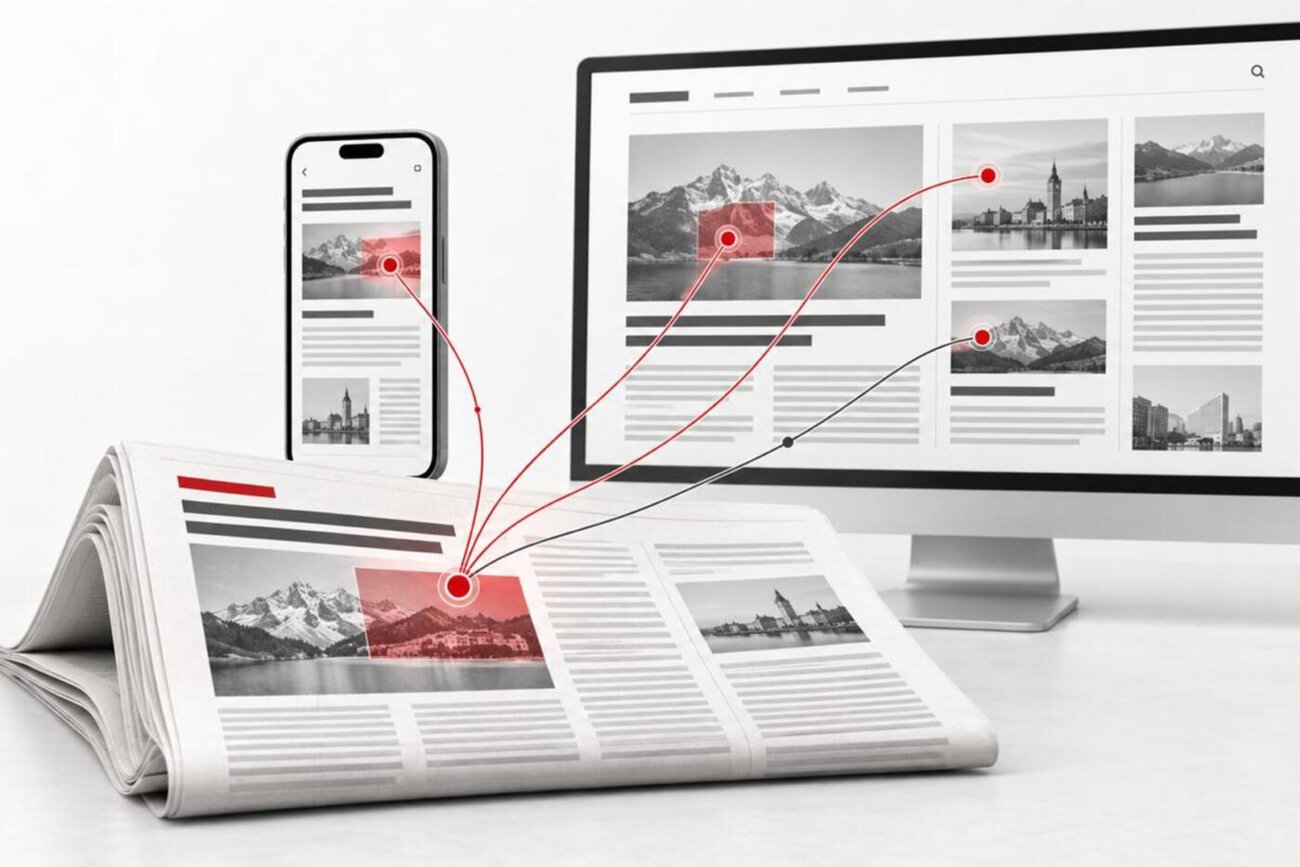
On September 9, 2026, the Swiss Media Publishers Association (VSM) launched a Memorandum of Understanding regarding the use of journalistic content. The guidelines define common principles for citing sources, providing links, and the secondary use of third-party journalistic content. The first signatories to this voluntary commitment are Ringier Medien Schweiz, the NZZ, CH Media, Somedia, the Freiburger Nachrichten, and Gammeter Media. The Conference of Editors-in-Chief also supports the agreement.
Journalistic content can be shared quickly and easily in the digital space today. This makes clear rules all the more important, according to the statement: They help the public understand where information comes from, strengthen the credibility of journalistic reporting, and ensure fair treatment of the work produced by other newsrooms. With the Memorandum of Understanding titled «Transparency and Fair Reuse of Journalistic Content,» the participating media companies say they are creating a common framework that enhances transparency, respects the original journalistic work, and at the same time safeguards editorial independence.
Clearly cite sources and provide links to the originals
The memorandum stipulates: Anyone who reproduces journalistic content from another media outlet must clearly and prominently cite the original source. The source must be cited no later than the first relevant reference to the content and must be repeated in longer articles or when there are multiple references. Online, a direct hyperlink to the original article must also be provided—regardless of whether it is freely accessible or behind a paywall.
According to the Memorandum of Understanding, special care should be taken with regard to exclusive research, interviews, revelations, and comparable original contributions. In such cases, the original journalistic work should remain clearly identifiable through prominent and timely attribution of the source. This transparent attribution acknowledges the research effort invested and prevents the public from getting the impression that the content is the media outlet’s own original work.
The secondary use of journalistic content remains the exception
The memorandum distinguishes between journalistic reworking involving substantial original work and mere secondary use. Anyone who contributes new facts through their own research, draws on additional independent sources, verifies source material, or provides substantial contextualization of their own is producing an independent journalistic work—though the obligation to transparently cite sources remains.
More stringent rules apply to pure secondary use: Paraphrasing or reproducing entire articles or substantial portions thereof is not permitted. Furthermore, secondary use should remain sporadic; systematic use of third-party journalistic content is prohibited.
Journalism competition remains unrestricted
The memorandum explicitly states that journalistic competition should not be restricted. Critical reporting, the verification or refutation of statements, and independent follow-up investigations must neither be prevented nor delayed. In this way, the voluntary commitment combines fair recognition of original journalistic work with the freedom and responsibility of independent newsrooms.
The participating media companies will establish a point of contact through which potential violations can be promptly addressed and resolved. In the event of conflicts, a tiered procedure applies: First, direct contact is made; then, if necessary, the matter is resolved between the editorial leadership of the media companies involved. Consultation at the VSM level is envisaged only in cases of persistent disagreement or repeated, systematic misconduct. At the same time, the participating companies commit to communicating the principles of the memorandum internally and coordinating compliance with them across their editorial channels.
Open to the entire media industry
The Conference of Editors-in-Chief supports the agreement to protect journalistic work and raise awareness of the ethical issues surrounding «plagiarism.» The memorandum is intended to be a dynamic set of guidelines and is to be reviewed at least every two years in collaboration with the participating media companies and, if necessary, adapted to technological developments and new journalistic standards.
Participation is open to all media companies that are committed to the established principles of journalistic integrity and fairness—regardless of whether they are members of the VSM. Membership is granted upon submission of an informal declaration to the VSM office.
More information about the Memorandum of Understanding is available on the Publishers Association's website: https://www.schweizermedien.ch
]]>
Sometimes life changes faster than the car parked in front of your house. And that's exactly where the new campaign for AutoScout24 Direct comes in.
AutoScout24 Direct is designed for people who want to sell their car quickly and easily. What makes it special: Only professional car dealers can bid on the listed cars—and they have exactly 24 hours to do so. If the highest bid is accepted, the car is picked up at your home—no need for test drives or lengthy price negotiations.
«People who sell their cars are often looking for a quick and easy solution. AutoScout24 Direct provides the product—and ROSAROT provides the perfect story, told with humor and precision,» said Manuel Hauslaib, Marketing Director for Automotive at SMG Swiss Marketplace Group.
It's not the sale that's the story. It's the reason behind it.
Selling a car rarely starts with the desire to sell your own car. It starts with something else: life and our needs change, or our current vehicle simply no longer meets our current needs or desires.
This observation also forms the creative foundation of the campaign. Rather than making the auction mechanism itself the focus of the story, it centers on the people and their very personal reasons for selling. In this way, a functional product promise is transformed into a series of short stories that reflect different life situations and needs.
These stories are told using a consistent linguistic structure: names, vehicles, situations, and sales obstacles are interwoven through alliteration and wordplay. A rhythmic voice-over, precise timing, and a distinctive visual style ensure that the product message is not only understood but also entertains and stands out.
«During the pitch, it quickly became clear to us that we didn’t want to run a campaign about an auction. The more compelling moment from a communication standpoint happens before that: Why would someone want to get rid of their car in the first place? That’s where the real stories lie—and that’s exactly where the need for AutoScout24 Direct arises,» says Matthias Koller, co-CEO at ROSAROT.
The campaign will launch in September 2026 and will be featured on TV and digital channels, among other places.
Contact at SMG Swiss Marketplace Group: Sebastian Wagner (Senior Digital Marketing Manager), Michael Reichenbach (Head of B2C Marketing), Manuel Hauslaib (Marketing Director, Automotive). Rosarot team members: Sophie Beisswenger, Deborah Bäbler (Senior Consultants), Franz Neugebauer (Senior Copywriter), Pablo Kunz (Art Director), Sherida Kuffour (Senior Art Director), Fabio Montefori (Graphic Designer), Maria Alcover (Motion Design), Marcin Baba (Creative Direction), Matthias Koller (Creative Direction / Overall Responsibility). Production team: CZAR Film (film production), Florian Nussbaumer (executive producer), Nadia Stähelin (producer), Joana Caiano (director), Biby Jacob (director of photography), Dreamdust VFX (VFX), DubDub (sound design).
]]>
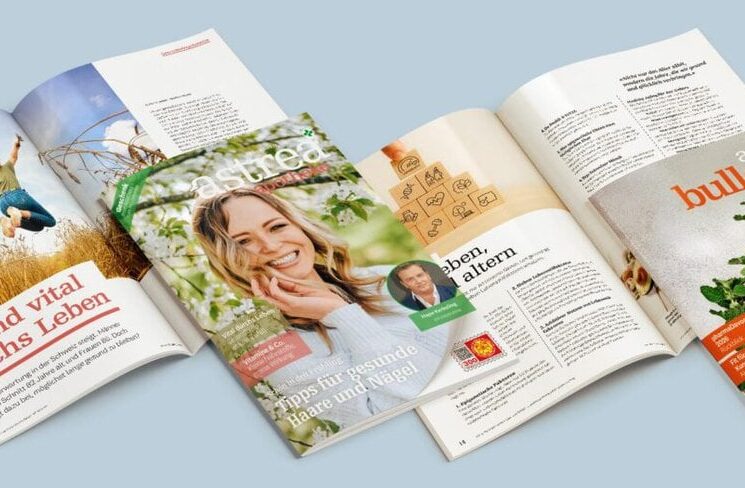
Effective September 1, 2026, Somedia Health AG will take over the publishing business of Healthcare Consulting Group AG—and with it, the role of publisher for the two well-established health magazines «astreaAPOTHEKE» and «astreaBULLETIN.» The publisher will henceforth be Healthcare Media AG, a newly established subsidiary of Somedia Health. For pharmacies, advertisers, and partners, little will change in their day-to-day operations: the team, editorial staff, and points of contact will remain the same.
According to the press release, the change is intended to ensure the long-term continuation of both publications. Somedia Health brings experience in the media industry and the healthcare market and will work with the existing team to further develop the magazines based on their current strengths.
«astreaAPOTHEKE» and «astreaBULLETIN» at a Glance
«astreaAPOTHEKE» is the official customer magazine of Swiss pharmacies and is published on behalf of the Swiss Pharmacists« Association pharmaSuisse, which also owns the trademark rights to the »astrea” brand. The magazine is published ten times a year in German and French and is available free of charge in approximately 600 pharmacies in German-speaking and French-speaking Switzerland. Healthcare Media AG will continue to publish the magazine under this established format.
«astreaBULLETIN» is a trade magazine aimed at pharmacy teams and interested family practice offices. It is published twelve times a year, also in both languages, and each issue includes the «ApothekenExtra» section, which provides specialized information for pharmacy teams.
Continuity: The team and points of contact remain the same
All employees will be retained. Martin Bürki will continue to serve as CEO, Jürg Lendenmann will remain editor-in-chief, and Thomas Schwabe will be responsible for sales. Healthcare Media AG will operate as an independent company within Somedia Health AG. For advertisers, agencies, pharmacies, and other partners, the established points of contact and processes will remain unchanged.
Somedia Health AG: A Growing Portfolio in the Healthcare Market
Somedia Health AG consolidates Somedia’s activities in the areas of media, marketing, and communications for the healthcare sector. The group includes Rosenfluh Publications in Rheinfelden, publisher of the medical journal «Ars Medici,» as well as Helvète Media Sàrl in Martigny, publisher of the health magazines «Salle d’attente» and «Gesundheitsecho,» as well as the medical journals «La Newsletter» and «Medizin Radar.» The astrea magazines now round out this portfolio by serving the pharmacy market. Somedia Health AG is a subsidiary of Somedia and is being further developed in collaboration with entrepreneur and strategy consultant Niklaus Leemann, a partner and member of the board of directors of Somedia Health AG. With more than 720 employees at various locations, Somedia is the leading media company in southeastern Switzerland and operates in the segments of regional media, marketing, communications, digital marketing, and education.
]]>
Digital Ad Trust Inclusion List Establishes Quality Standard for Programmatic Advertising
Programmatic advertising has become an integral part of digital media planning—yet it also poses significant challenges for advertisers and agencies alike. Campaigns often appear on a wide variety of international websites without the quality of the ad environment being verifiable at all times. The Swiss association Digital Ad Trust addresses this issue and, with the Digital Ad Trust Inclusion List, provides a concrete tool for greater control in the programmatic advertising market.
The list includes more than 500 audited websites that have been certified by Digital Ad Trust in the areas of visibility, ad fraud, and brand safety. This provides advertisers and media agencies with a practical foundation for running digital campaigns in high-quality, brand-safe environments.
Widespread use and integration via OneDSP
According to the press release, the DAT Inclusion List has reportedly been used by major, well-known advertisers since its initial release—a sign of the high demand in the market for reliable quality standards. In addition, the DAT inventory can also be booked via OneDSP. This allows advertisers and agencies to integrate quality-certified ad placements directly into their programmatic campaigns and easily leverage the benefits of the Inclusion List in their media planning.
«Our Inclusion List is a concrete step toward greater control and quality in the programmatic advertising market,» says Roland Ehrler, president of Digital Ad Trust. «It helps advertisers and agencies place their ads precisely where they will be visible, appear in a safe environment, and be protected from fraudulent activity.»
Focus on Swiss Media Offerings
The Digital Ad Trust Inclusion List consists primarily of Swiss media outlets. It is supplemented by selected German websites with a high proportion of Swiss inventory. It is intended for all market participants who prioritize transparency, quality, and advertising effectiveness in programmatic advertising.
The certification ensures that the listed websites meet defined quality standards. For advertisers and agencies, this is intended to provide greater certainty when planning campaigns and a better foundation for efficient digital advertising. Publishers benefit from the fact that high-quality journalistic and digital offerings become more visible and can be booked in a more targeted manner.
The DAT Inclusion List is freely available and can be downloaded from the Digital Ad Trust website: https://digitaladtrust.ch/inclusionlist/
]]>
At the annual general meeting of shareholders of WEMF AG für Werbemedienforschung held on June 5, 2026, in Zurich, Yvonne Baumgartner was elected to the WEMF Board of Directors. She succeeds Roger Harlacher and will represent the Swiss Association of Advertisers (SWA) on this board going forward.
Extensive leadership experience in marketing
According to her own statements, Yvonne Baumgartner has many years of national and international leadership experience in marketing. Starting in January 2027, she is also set to take over as managing director of the Swiss Advertising Clients Association (SWA). With her election to the WEMF Board of Directors, she will assume the role previously held by Roger Harlacher as SWA delegate.
All existing members of the Board of Directors were re-elected at the Annual General Meeting. Following the election, the Board of Directors is composed as follows: Marcel Kohler as President and Delegate of the Swiss Media Association (VSM), Johannes Boege, Christoph Marty, Thomas Passen, and Roberto Rhiner as additional delegates of the Swiss Media Association; Beat Krebs as a delegate of the Leading Swiss Agencies (LSA) Association; Thierry Kunstmann as a delegate of the Médias Suisses Association; and Rocco Salvioni as a delegate of the Stampa Svizzera Association.
WEMF as a neutral authority in the Swiss advertising market
WEMF AG for Advertising Media Research sees itself as a neutral and independent industry research organization that ensures transparency in the media and advertising market. For the press and cinema media sectors, WEMF studies are considered the gold standard. Key publications include the cross-media studies MACH Total Audience and MACH Strategy, as well as MACH Consumer, which is regarded as Switzerland’s largest annual consumer media study. In addition, WEMF conducts circulation audits for Swiss print media, certifies DOOH, and compiles various marketing-relevant statistics. With the MedienDB, it provides the market with a platform for efficient ad planning. On behalf of Online Data Switzerland, WEMF is also responsible for project coordination and quality assurance of Swiss online traffic data.
]]>
Ringier has joined the SPUR Coalition (Standards for Publisher Usage Rights) —a nonprofit coalition of media publishers dedicated to shaping the technical and commercial environment so that publishers, as intellectual property owners, can control and monetize how generative AI applications use their content. The founding members of the Ringier SPUR Coalition include the BBC, the Financial Times, the Guardian Media Group, Mediahuis, Sky News, and the Telegraph Media Group.
Participation in the World News Media Congress in Marseille
The new members were announced at the 77th World News Media Congress in Marseille. There, SPUR welcomed 30 new members, bringing its total to 36 publishers and partner organizations. According to the coalition, this is the most significant expansion since its public launch in late February 2026 and represents a coordinated global effort by publishers to gain control over how AI systems handle journalistic content.
Ringier is joining as a «Standard Member» and will work alongside the founding members to advance the coalition’s technical, strategic, and communications priorities. At the heart of this work is SPUR’s telemetry standard: a technical infrastructure designed to enable publishers to track in real time how AI systems use their content and to ensure that this use is transparent and fairly compensated. According to the announcement, the standard is set to be introduced shortly.
Ringier SPUR Coalition: A Global Framework for All Markets
Ladina Heimgartner, Head of Media at Ringier and CEO of Ringier Media Switzerland, emphasized the importance of a unified approach: «For our nearly 100 media brands across 11 countries, quality journalism depends on the integrity of our intellectual property. By making all Ringier media companies part of the SPUR Coalition, we are securing a seat at the table to help shape the technical standards of tomorrow.»
Michael Moersch, CEO of Ringier Media International, highlighted the cross-border aspect: «AI knows no borders, and neither should our framework for protecting digital journalism. By bringing all of Ringier’s international media brands into the SPUR Coalition, we can implement a coordinated, global standard across all our markets. This collective strength ensures that a piece of journalism—whether published in Central and Eastern Europe, Africa, or elsewhere—is protected by the same robust telemetry standard as that used by the world’s leading media companies.»
Ringier is a European media company with a history spanning more than 190 years, approximately 6,000 employees, and more than 130 subsidiaries in 19 European and African countries. With a digital EBITDA share of 82 percent, the company ranks among Europe’s leading media companies, according to its own figures.
More information at: https://www.ringier.com
]]>
At this year’s general meeting of KS/CS Kommunikation Schweiz in Bern, association president Jürg Bachmann made it clear just how much political pressure on the Swiss advertising industry has increased. There are currently 79 political initiatives pending that are relevant to the advertising industry—a sign that is forcing the industry to take action.
Freedom from Advertising as a Democratic Issue
At the 101st General Meeting, attended by approximately 50 participants, the members of KS/CS reaffirmed their commitment to responsible and transparent communication. Advocacy remains a central focus of the association’s work. KS/CS systematically monitors regulatory developments at all levels, analyzes their impact on the industry, and develops well-founded positions in close coordination with the Executive Board—particularly with regard to free market access and consumers’ freedom of choice.
Gregor Rutz, National Council member and president of the «Market and Advertising» parliamentary group, summed up the evening’s key message: «If you want quality growth, you have to champion advertising. It is also an expression of the liberal rule of law and an important part of freedom of communication.» Rutz pointed out that advertising bans would quietly undermine democracy.

In his opening remarks, Swiss wine merchant and wine journalist Philipp Schwander also emphasized the importance of a liberal market: «More and more guidelines from the World Health Organization (WHO) are standing in the way of this free market economy.»
Thanks to the support of its members, the association was able to actively participate in 24 parliamentary debates and six public consultations last year and largely succeeded in representing the industry’s positions.
AI and the Shift of Advertising Revenue Abroad
In his brief presentation, Andrea Masüger, President of the Swiss Media Publishers Association (VSM), highlighted the structural challenges facing the Swiss advertising market. The internet and social media have largely shifted advertising in Switzerland abroad: Three-quarters of online advertising revenue now flows to California and China. The Swiss advertising industry is missing out on this revenue.

Masüger believes that artificial intelligence will further exacerbate the problem: «Artificial intelligence (AI) is making the problem worse because it’s also siphoning off journalistic content. But AI isn’t just affecting the media industry; it will also lead to a highly troubling development in traditional advertising.»
Net advertising revenue stagnation takes center stage at KS/CS general meeting
Roland Ehrler, Vice President of the Foundation for Advertising Statistics, presented the latest figures at the conclusion of the meeting: Overall, net advertising revenues declined slightly compared to the previous year. Revenue increases were recorded in the areas of outdoor advertising, movie theater advertising, online advertising, and promotional items. All other media categories—print, TV, and radio—were unable to increase their revenues compared to the previous year.

Matters Related to the Bylaws and a New Board Member
The members approved all of the board’s proposals and endorsed the annual financial statements, which showed a balanced budget. Roger Baur, owner of Netprofit GmbH, was newly elected to the board. Baur is a co-founder of the IAB Switzerland Association and served as its managing director for eleven years.
For more information about KS/CS Kommunikation Schweiz, visit: https://www.ks-cs.ch
]]>
At the Swiss Media Forum in Zurich on May 7, 2026, the Swiss media industry presented the Swiss Media AI Code. The code establishes common principles for the responsible use of artificial intelligence in Swiss journalism. Numerous media associations and companies are supporting this self-regulatory initiative, including SRG SSR, Keystone-SDA, and the Swiss Media Publishers Association. In addition, WEMF plans to launch an AI audit and a quality label.
A widely adopted industry code of conduct
Andrea Masüger, President of the Swiss Media Publishers Association (VSM), sums up the motivation: «Trust is the media’s most valuable asset. The rapid development of AI presents the media industry with major challenges while also opening up opportunities. To safeguard and strengthen that trust, Swiss media companies have jointly developed an industry-wide AI code of conduct.»
The Swiss Media AI Code is supported by a broad alliance: In addition to the Swiss Media Publishers Association, participants include Médias Suisses, Media Svizzeri, SRG SSR, Keystone-SDA, the Association of Swiss Private Radio Stations (VSP), the Association of Swiss Private Television Stations (VSPF), and the Association of Swiss Regional Television Stations (Telesuisse). The MAZ – Institute for Journalism and Communication – welcomes the initiative.
As a self-regulatory instrument, the Code is based on the Council of Europe’s Convention on Artificial Intelligence, which the Federal Council intends to ratify. A key principle: Media companies and their employees remain responsible at all times for published editorial content—regardless of whether it was created by humans or generated, edited, or distributed with the help of AI systems.
Pia Guggenbühl, director of the VSM, highlights the breadth of support: «The industry’s energy and willingness to find a common solution illustrate that this is a topic of great concern. The fact that the AI Code now before us has such broad support shows that we are on the right track.»
Four Principles and Clear Labeling Requirements
According to Hanspeter Kellermüller, CEO of Keystone-SDA, the AI Code is based on four principles: user awareness, protection of democratic processes, data protection, and transparency. In addition, binding labeling requirements apply. Susanne Wille, Director General of SRG, states: «It is crucial that people in Switzerland can rely on the Swiss media. With the AI Code, we are establishing a common foundation to ensure that the use of artificial intelligence remains transparent and traceable.»
The Code applies to the use of AI systems by media companies that produce, publish, broadcast, or otherwise distribute journalistic content in accordance with journalistic principles—to the extent that such use has a direct impact on journalism as perceived by the public. It is designed as a living document and should be adaptable both periodically and in response to changing circumstances.
Two-tier operational model with an independent ombudsman's office
To ensure compliance, a two-tier reporting and review mechanism is in place: AI reporting offices at the company level serve as the first point of contact for questions or complaints. An independent AI ombudsman’s office acts as the second point of contact for serious cases or those that cannot be resolved amicably. The ombudsman’s office is to publish an annual transparency and implementation report. Participation in the code is open to all stakeholders in the media industry.
WEMF AI Audit and AI Quality Label
At the same time, the independent audit and research organization WEMF has developed the Responsible AI Audit, a new certification and quality label that is intended to be open to all media outlets in Switzerland. Media companies can continuously improve their responsible use of AI through annual audits and demonstrate this to the public and market partners with a certificate and label. WEMF plans to provide more detailed information about this new industry solution in the coming weeks.
Further information on the AI Code of Conduct and the operating model is available from the Swiss Media Publishers Association: https://www.schweizermedien.ch
]]>