 The key finding: graphic design is becoming much more personal again. It is becoming apparent that trends are moving away from the slick and towards the genuine. Brands want to evoke feelings in their target groups and are therefore focusing on stories instead of marketing messages. Design is becoming a stage for individuality and therefore the most effective tool for building real connections.
"Small businesses have the distinct advantage of being bold, unique and authentic - big brands often struggle with this," says Patrick Llewellyn, VP of Digital and Design Services at VistaPrint. "In our noisy and impersonal world, imperfect designs come across as honest. That's what makes them so powerful."
The 2026 design trends bring the handmade into the digital realm, tell of cultural identity, celebrate imperfection and make feelings visible. The focus is not on algorithms, but on people.
The 2026 design trends at a glance
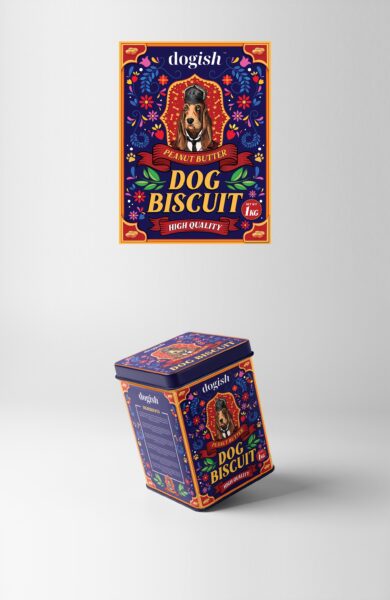
Elemental Folk
Tradition meets modern design: inspired by regional craftsmanship and cultural heritage, warm, expressive designs with floral patterns, ornamental details and bold colors are created. The design is both familiar and contemporary. Elemental Folk is a visual return to the original that celebrates identity and origin.



Hyper-individualism
This trend brings a breath of fresh air to design. It focuses on surreal imagery, plays with distorted shapes and deliberately breaks with convention. The images are sometimes playful, sometimes provocative, but always individual. While many have their design processes completely taken care of by artificial intelligence, this style inspires with the creative handwriting of people.<


Tactile Craft
Embroidery, fabric structures and handmade details find their way back into digital design. The result feels almost tangible: The visual surfaces create a special depth that gives the viewer a sense of warmth. Between DIY charm and a nostalgic feel, this trend generates an emotional closeness - as an alternative to the smooth, often distanced aesthetics of the digital world.


Distorted Cut
When design becomes resistance, visual statements with rough edges are created. Classic collage techniques are reinterpreted by cutting up images, superimposing layers and fragmenting forms. The result is raw, rebellious and full of energy. One thing is certain: This design style is not about pleasing - it's about showing attitude.


Candid Camera Roll
With this trend, creatives are bringing the real back into the visual. Imperfect snapshots, film grain, flash and spontaneous moments appear personal and approachable. In combination with reduced typography, designs are created that are effective and touching with their honesty.


Hyper-Bloom
Sometimes you need a visual retreat - a place to take a deep breath. Gentle gradients, delicate floral motifs and powdery pastel shades transport you to a world between dream and reality. The style acts as an antithesis to hectic everyday life and opens up space for lightness, optimism and a little daydreaming.


Digit-Cute
The aesthetics are somewhere between nostalgia and digital playfulness and ensure a really good mood from the very first moment. Clear structures meet colorful pixel graphics, cute characters and bold colors. The look exudes the charm of early computer games and pop culture. Precisely because it looks so playful, it is particularly sophisticated in terms of design.


Micro-Industrial
What used to be purely functional is now becoming a design concept. Inspired by packaging, technical labels and information graphics, a design style has emerged that celebrates clarity. The targeted use of elements such as barcodes, QR codes and grid structures lends the designs a raw, functional and at the same time modern aesthetic.


Neon Noir
Dark, intense and full of tension - the style is reminiscent of scenes from a neo-noir film. Bright colors, such as electric red, meet deep black, combined with motion blur and rough textures. The urban, energetic look immediately catches the eye and stays in the mind for a long time.


Frutiger Aero Revival
A touch of the future, just as we used to imagine it: Shiny surfaces, soft color gradients and flowing shapes hark back to the tech aesthetic of the early 2000s. Elements such as water, the sky and digital plant worlds lend the designs an almost dreamlike lightness. The style is a loving throwback to a time when technology was still seen as a promise.
Conclusion:
Design is once again allowed to feel, show attitude and have corners. To stand out as a brand, you no longer need the slickest logo or the most perfect image, but personality, courage and a clear message. 2026 will be the year when authenticity counts. The best thing about it: it will be creative, lively and surprisingly beautiful.
Detailed information on the 2026 trends: https://www.vistaprint.de/hub/grafikdesign-trends
VistaPrint is the design and marketing partner for millions of small businesses around the world.The global company currently has employees in more than 25 countries who are able to work remotely on a continuous basis. For over 20 years, Vista has worked closely with and been inspired by small businesses and is committed to providing solutions that meet their unique needs.
]]>

Advertisers plan to prioritize advertising investments in social media (67%) and digital video including CTV (37%) advertising in 2024. This is the result of the latest "Industry Pulse Report 2024" by Integral Ad Science, a leading global platform for media measurement and optimization. Advertisers identified media quality as the biggest challenge for successful social media and digital video campaigns.
Insufficient transparency has a negative impact
More than two thirds (68 percent) of respondents also stated that insufficient transparency in media quality will have a negative impact on social media spending. In the digital video & CTV sector, 84% believe it is particularly important this year to drive forward the classification of multimedia content with machine learning in order to ensure the brand safety of digital video ads. Across all advertising channels, almost three quarters of advertisers (74%) are focusing their advertising investments this year on responsible media measures, including initiatives for sustainability, diversity and inclusion, as well as quality journalism.
The IAS Industry Pulse Report provides insight into the emerging trends and priorities that will drive change in digital advertising in 2024. The findings are based on responses from over 260 US digital advertising decision makers representing brands, agencies, publishers and ad tech providers. The survey was conducted in September 2023 by the market research institute YouGov on behalf of IAS and is available online here.
]]>
What media trends await us in 2024 and which of them should advertisers keep an eye on? In the current dentsu Media Trend Report "The Pace of Progress", media experts from Carat, dentsu X and iProspect have identified the most important developments and present 10 trends that will be of decisive importance for advertising and brand communication in the medium to long term.
Breakthrough of generative AI
Media and advertising are constantly evolving due to technological advances and changing consumer behavior. Both are becoming increasingly individualized, with the aim of better understanding consumers and strengthening relationships with them. The use of artificial intelligence will play a significant role here, making both areas increasingly efficient and effective.
Generative search is revolutionizing the Internet:
Artificial intelligence (AI) has already begun to transform the field of online search, especially in the area of search engine marketing (SEO), and will continue to do so in the future. It is penetrating ever deeper into search engines and virtual assistants and will revolutionize the way we use the Internet. Industry giants such as Microsoft (Bing) or Google have already started to integrate generative AI into their search engines. AI-powered search algorithms will be able to better understand even complex search queries in the context of more natural and conversational input, and deliver more relevant results. Advertisers will have the opportunity to use AI to improve the efficiency of their search campaigns through high-quality and relevant content, and also to create it faster. SEO professionals need to adapt to these developments and integrate AI-based tools and strategies into their way of working to remain successful. The use of chat assistants will also experience a renaissance. AI will help to significantly improve the customer experience when using them and provide customers with faster and more efficient support.
With AI, creativity is rethought
The use of generative AI in the creative industry has already begun and it will have a significant impact in the coming years. For example, it offers the possibility of automated and faster content creation of texts, images, videos and even 2 music. Whether to help with ideation or to optimize designs and concepts, creative processes will be able to be made much more efficient. Generative AI can also be used as part of the creative process to generate personalized content based on the preferences and behavior of the target audience. This improves the relevance of content and increases user engagement. In the area of storytelling, AI is already capable of writing stories or even novels. This can be applied in the entertainment industry as well as in advertising. However, caution is still required here with regard to copyrights and the authenticity of content. Overall, however, the use of generative AI in the creative industry will not only change the way creatives work, but also open up new opportunities for innovative projects and products. At the same time, however, ethical issues must be considered to ensure that creativity and the rights of creators are respected.
Generative campaign optimization
Generative AI will have a significant impact on advertising and has the potential to improve its efficiency and effectiveness. With Meta Advantage+ and Google's Product Studio, these platforms are already using AI to help optimize and measure campaigns. In the course of this, AI could lead to a shift of power to the larger advertising providers, who have high resources and the most data. To prevent smaller providers from falling behind, strategic alliances will be formed with the aim of offering their own generative AI advertising solutions.
Competition between tech giants intensifies
Another trend looks at the future of the big tech giants. Forecasts from dentsu predict that digital advertising spending will slow between 2023 and 2025, with an average annual growth rate of 6.6 percent - significantly lower than in the last 20 years. Faced with this slowdown in growth and increasing competition among themselves, digital platforms are already working to further improve the value of their services, content, data and offerings. In an effort to better monetize their services even in a more difficult economic environment, platforms will increase their investments in functionalities - keyword AI - in order to increase the attractiveness for their users and to expand advertising opportunities.
Climate change and polarizing events impact brand positioning
Climate change will continue to be strongly embedded in consumer awareness, so brands for 2024 would be well advised to continue their strategies to increase CO2 efficiency and to better align their economic efficiency with the issue of sustainability. In a world that 3 is characterized by highly polarizing conflicts around the world in addition to this issue, however, growth will no longer be defined solely as the immediate financial performance of brands. This is because growth also includes the contribution that brands make to improving a society. Companies that create a positive value cycle make themselves and their brands more relevant and crisis-proof.
"Of all the trends, generative AI is the most groundbreaking technological breakthrough of the last decade. Six out of ten respondents to the in-house dentsu 2023 Global Media Client Survey said they are already integrating generative AI into their marketing activities, which means this technology will be front and center in the coming months and years. From search to creative to media planning and production, generative AI will take media efficiency to a new level," comments Robin Jansen Chief Client Officer Media at dentsu Germany & DACH.
]]>

Trend 1: AI - not as new as it sounds?
With the launch of ChatGPT last winter, everyone is talking about artificial intelligence. Yet AI is nothing new, not even in the social media sector. But thanks to new tools like Chat GPT, artificial intelligence is becoming increasingly important in everyday life.
Alice Talotti, Agency Solutions Manager for DACH at Meta, also points out that the use of AI is not all that new: "In social media marketing, AI has long been used for the personalized delivery of content." She adds, "Although the systems know the interests of our target groups much better than we do, not all marketers trust them yet. Advertisers who properly manage and leverage AI will give themselves a competitive advantage today and in the future."
For artificial intelligence to work well, it needs vast amounts of data. Data that will be better protected with the new data protection law in Switzerland - which comes into force on September 1, 2023.
Anyone who has not yet taken the added AI tools into account in their new privacy policy should do so as a matter of urgency.
Trend 2: All video, or what?
TikTok led the way, and other platforms have followed suit: Short videos in portrait format have become the most important format on social media. Instagram calls them reels, YouTube calls them shorts.
Benedikt Böckenförde, Founder & CEO of VISUAL STATEMENTS, also supports this trend: "If you want to reach millions of people via social media, you have to produce vertical videos that many people can identify with. Only those who manage to combine relatable storytelling with vertical video can stand out as a brand on social media from the glut of content."
When it comes to the length of a video, the rule is: as long as necessary, as short as possible. The content determines how long a video can be. Studies show that users decide within 1.7 seconds whether they want to watch a post. If you don't get to the point here, you've lost in the attention game.
Trend 3: How much authenticity do we really want?
Authenticity has almost mutated into a non-word. Everyone talks about it, and everyone understands it a little differently. According to the dictionary, authenticity means that a person's actions are not determined by external influences, but are rooted in the person himself.
At the same time, we are authentic on social media because we want to expand our reach. What works is followed up, what doesn't work is abandoned. More external influence on our actions is probably not possible.
But how else can you stand out from the masses of content if not with your own (authentic) voice? Max Schickler, Brand Partnerships Manager at TikTok, agrees: "In the second half of 2023, companies will dare to do more. Companies will find their own voice, present themselves authentically and without filters to users."
Should creators and companies thus also talk unfiltered about all the dark sides of life on social media? Caren Vonderberg, Country Manager for Austria and Switzerland at Pinterest puts it into perspective: "Platforms, brands and our industry as a whole are called upon more than ever to contribute to a healthy online experience - one that motivates and encourages people instead of dragging them down".
She adds, "Positivity literally pays off: People are proven to trust brands in positive environments more, remember them more often and are more likely to buy from them."
Authentic, yes, but then authentically positive, please? No, it's about finding a good mix of content. Just as news formats take care to include a bright spot in every broadcast - no matter how bad the rest of the news is - companies should also take care not to lose sight of the positive. Not because they aren't authentic, or because this has a positive impact on sales, but because it makes platforms feel a bit more hopeful again.
Trend 4: Is Threads the new Twitter?
While Elon Musk unceremoniously renamed Twitter "X" in what was probably the most bumbling rebranding of recent years, the "meta-copy" Threads reached more than 100 million new users in five days. Threads has thus broken the record for the fastest-growing apps and has become Twitter's biggest competitor.
It remains to be seen how sustainable this rapid growth will be. But the rapid growth shows two things above all: how quickly a platform can lose the trust of its users, and how great the need is for a Twitter alternative.
"The development of threads illustrates the interchangeability of platforms and at the same time underlines the fast-moving and dynamic nature of social media. It shows how quickly something can be forgotten. This makes it all the more important to exchange information about current developments and stay informed," emphasizes Mia Chiarina Fischlin, Social Media Project Manager at WebStages.
At the same time, the current example also shows what influence tech giants like Google, Amazon or Meta have. Only they can dare to take such a step and trigger a corresponding discourse. This makes the choice of social media platform almost political.
Trend 5: Will HR soon be a marketing job?
The battle for the best talent is on. The shortage of skilled workers reached a record level in 2022. What has been predicted for years is now being felt in most industries. The healthcare, hospitality, construction and IT sectors are particularly affected.
However, the situation has also worsened in the search for apprentices. In April, for example, over 40% of the open apprenticeship positions for August were still unfilled.
This has also moved the topic of employer branding and social recruiting up the priority list for many. The launch of new job platforms with videos in portrait format this summer further underscores the trend toward social recruiting.
While many companies are already experimenting with new formats for job ads and increasingly sharing them on social media, with the situation heating up, it's safe to assume that the pressure will lead to more boldness.
"We expect to see more and more creative job ads on social media. That's because fighting now takes place on LinkedIn, Facebook, Instagram and TikTok. Marketing and HR suddenly have to work hand in hand - writing, singing and dancing. Only those who appreciate and respect the expertise of the other department can win in the battle for the best talent," explains Tanja Herrmann, Managing Director of WebStages.
Social Media Trends Tips & Tricks on November 8 & 9, 2023.
On November 8 and 9, Switzerland's largest social media marketing conference will take place for the sixth time - WebStage Masters. TikTok, Meta, YouTube, Pinterest and Twitter (X) - they all share their knowledge during two days of master classes and keynotes. But also Sony, Axa and 20 Minuten will give insight into their best practices on Platz. The best: The conference takes place in a breathtaking setting in the middle of the mountains of Engelberg. The village can be reached from all major Swiss cities in less than two hours. Details about the program and the speakers as well as tickets are available at webstage-masters.ch.
*The article was created in collaboration with WebStage Masters.
]]> The advertising companies were asked about their assessments of and outlook for the Swiss advertising market. Despite uncertainties, 50% expect revenues to rise and 35% to remain stable in 2023. Around a quarter of respondents anticipate a decline in revenues. Most, however, expect revenues to remain flat or increase. Despite this outlook, many advertisers are taking a cautious approach to budgeting. While around half of the companies want to invest the same amount of advertising money, the number of those who want to invest slightly less this year is rising.
The majority of advertisers want to invest about the same amount of money in communications in the new year as last year (49.2%). However, the proportion of those intending to invest less this year is slightly higher (31.8%) than of those intending to spend more (18.9%). This intention is also reflected in the planned media budget: for 54.6% it remains unchanged, for 26.5% it decreases and only for 18.9% of the respondents it increases.
Channel distribution remains constant
Asked about the allocation of funds to marketing channels, respondents will invest 34% of their budget in offline media. Last year, the figure was slightly higher at 35%. The rest of the breakdown remains similar to last year: digital advertising (15%), social marketing (12%), event marketing (11%), website (8%), SEO (8%), email marketing (4%), mobile marketing (3%), digital commerce (3%) and channel/affiliate marketing (3%).
Brand management remains important
As last year, the creation of independent and relevant brand worlds still seems to be of central importance. This is shown by the thematic distribution of funds among specific marketing disciplines. Content/campaign creation and branding continue to be in the foreground. Sales support and marketing operations follow in third and fourth place.
Digital before offline
When it comes to the question of how the media budget will develop within digital and offline, the pendulum once again swings in the direction of digital. There, 42.5% want to invest more in the new year and only 11% less. In response to the same question, only 10.9% more want to invest in offline media and a whopping 42.3% less. Exactly the same number of respondents want to invest the same amount in digital and offline media this year (46% each).
Outdoor advertising, direct marketing and cinema in vogue
In terms of offline media, OOH/DOOH, direct marketing and cinema are once again more in demand than in the previous year. There, the proportion of those who want to invest more is higher than those who want to invest less. The opposite is true for TV, print and radio.
Distribution of offline budget: OOH, TV and print
In terms of the specific distribution of the media budget, OOH/DOOH (27%) TV and print (26% each) are in particularly high demand this year. These are followed by direct marketing (17%) and radio (3%). Little can be expected from cinema and "others" such as events, POS or brochures with 1% each.
Something more direct than programmatic
Advertisers plan to allocate about 53% of their digital budget via direct bookings in 2023 and 47% programmatically.
Distribution of online budget: Google Search, Meta and Youtube
The most popular digital advertising formats in the new year are display, search and video. Here, advertisers plan to allocate their budgets to the advertising inventories as follows: Google Search 27%, Meta 20%, YouTube 16%, Premium Publisher Networks 10%, LinkedIn 7%, Open RTB Networks 7%, Premium Publisher Single Sites 5%, TikTok 4%, Snapchat 1%, Bing 1% and Other 3%.
Improving customer experience is more important than uncertainty
The very important challenges cited this year are improving the customer experience (49%), digital transformation (47%), data management (45%), and customer journey management (43%). Summarizing the very important and significant challenges, the order is as follows: Improving Customer Experience (94%), Data Management (88%), Digital Transformation (86%), Demonstrating ROI (86%), and Choosing the Right Technology (85%). Slightly less important to respondents at present are topics such as artificial intelligence, market uncertainties, shaping organizational change, or shorter time to market.
Personal recommendation remains most important in agency search
Recommendation (80.6%) is still the most important source of information for selecting an agency. Contacts with agency management are slightly less important this year (55.6%) followed by the agency website/appearance (51.4%) and the trade press (29.2%). Rankings and awards play a less important role in this regard.
Chemistry and skills most important
The most important criterion in agency selection is still personal chemistry and cultural fit (94.4%). Followed by an agency's mission/competencies (91.3%), references (59.7%) and agency size (26.4%).
Chemistry Meeting and competition presentation most often
In the new year, Chemistry Meeting is clearly the most used for agency evaluation (32.3%) followed by Competitive Presentation (27.6%). The award of a trial contract has increased in importance compared to 2022. This is followed by direct award and written request for proposal.
Agency services for content and digital
In 2023, advertisers increasingly want to work with agencies in the disciplines of content, digital, analytics, branding and creation. Collaboration for live com or corporate communications is somewhat less in demand and, at best, will be handled by the agencies themselves.
Offers and expense fee most popular
Advertising clients continue to be very interested in fees in the form of offers/scope of work and agile pricing based on time and effort. This year, there has been a slight increase in team hire, while fees based on success parameters are hardly used at all. The latter is generally only used in addition to the basic fee.
In the "Industry Indicator 2023" survey conducted by SWA and LSA between October and November 2022, a total of 174 well-known advertising clients in German and French-speaking Switzerland took part online. The detailed results can be obtained from the offices of the two associations.
Swiss Association of Advertisers (SWA)
Roland Ehrler, Director
T +41 44 363 18 38
[email protected]
LEADING SWISS AGENCIES
Catherine Purgly, Managing Director
T +41 43 444 48 18
[email protected]
 Trend 1: Less is more
Achieving more with less has already emerged as a major challenge in recent months. Rising prices and higher costs also have a direct impact on users' media budgets. Spending on media content is the first area to be cut. At the same time, our time budget is also decreasing. Now more than ever, real service close to the reality of our lives is needed.
Several trend reports come to the conclusion that media companies should offer less, but make the added value for users even more quickly apparent and, in the best case, indispensable. This applies to communication and advertising messages, the value proposition, and also the simplicity of the product features and payment options on offer.
Trend 2: Artificially created content
It was an eye-opener of a special kind when OpenAI launched the new application ChatGPT at the end of November 2022. Suddenly, the possibilities of artificial intelligence seemed to be accessible to everyone, seemingly overnight. Even if the true potential can only be guessed at, some observers see this as the beginning of an AI revolution. It will disrupt knowledge work in the same way that mechanical machines fundamentally changed factory work in the 18th century.
This may not yet occur immediately in 2023. But it is important to understand that social turning points have come about not so much through the invention of revolutionary technologies, but rather through their widespread application. And for that, it is worth thinking about possible moral boundaries now.
Trend 3: Let them find you
When Google presented a study on the search preferences of its users last summer, the results may have surprised some. According to the study, around 40% of younger users do not use Google Maps or Google Search when looking for a place to eat, but are inspired by content on TikTok or Instagram.
Social video is increasingly becoming the place where the search begins - or even more extreme: inspiration is found, even though you don't even know you were looking for it. In this context, Google announced its intention to make search more visual and interactive in the future.
Other providers will follow suit, which in turn will also have an impact on the findability of media content. Because the focus is no longer just on users finding their answers quickly, but just as often wanting to be surprised and unexpectedly delighted.
Trend 4: Replacement process from third-party platforms
Although some trend reports predict the end of social media (again) in 2023, the reality is different: Many media companies are still profiting from social media traffic. Nevertheless, it's no secret: 2023 will be the year when many media and communications companies try to upgrade their user engagement strategies away from third-party platforms.
In view of takeovers, restructuring, and layoffs at platform companies, media companies must develop a holistic audience strategy on and off the platforms. The answer is simple and complex at the same time: Those who can build strong communities around their own offerings will be all the more independent of market-dominating platforms. Some media companies have already understood this and are now selling access to exclusive communities instead of premium content.
Trend 5: New products, bundles and subscriptions
If you think about Trend 1 in a consistent way, you end up with Trend 5: Only those who focus their offering can sharpen their own profile in the flood of content. More and more users want an all-in-one platform for content consumption. At the same time, users are increasingly thinking about reducing their media subscriptions. Both movements will become even more pronounced in 2023.
However, focusing, bundling and redeveloping offerings can only succeed if there is clarity about the company's own portfolio and its market and user needs. Anyone who wants to be successful in 2023 should do their homework in portfolio management as quickly as possible.
Trend 6: Responses to the shortage of skilled workers
"Great Resignation," "Quiet Quitting" and the shortage of skilled workers shaped 2022 - and will remain relevant in 2023. By 2030, 5 million more workers will retire than enter the labor market in Germany alone. At the same time, 4-day weeks, reduced working hours and workation are being discussed. This makes it clear that companies will be under immense pressure to change in the new year.
Anyone who wants to recruit and retain valuable employees must therefore invest in personnel development and corporate culture. In 2023, this includes above all a focus on the psychological safety of employees and the creation of working methods that are accessible to all. For example, by building more autonomy into processes.
Trend 7: Change fatigue
Organizations are expected to become even more efficient, even faster, and even more agile. At the same time, an increasing number of employees state in surveys that they suffer from "change fatigue. While 74% of employees were willing to change their own work behavior in 2016 in order to support organizational change, this figure had fallen to 38% by 2022.
What to do about it? Stopping all change processes for the time being hardly seems to be a feasible solution. Rather, a step-by-step and participative approach should be chosen. The key to successful change lies in finding the right balance between transparent targets and measures based on personal experience that are suitable for everyday use.
Trend 8: Putting words into action
The climate crisis and activist actions have been loudly debated in recent months. In contrast to last year, several trend reports therefore see 2023 as the year of real and sustainable innovation. In 2023, companies will therefore have to focus all the more on how they can offer more energy-efficient products and services or even make their entire production processes more climate-neutral.
But the challenge in 2023 will not only be to manufacture products with lower emissions and to develop new climate-related products and services, but also to make them appealing to users who have so far shown little interest in the subject.
Here you will find all sources and trend reports in the original
Konrad Weber is a strategy consultant and coach in the field of digital transformation. He advises management teams from large companies to startups on the development of new strategies and accompanies teams and organizations through far-reaching changes. He recently published a book on trends and their impact on the media and communications industry. For more than 14 years, he has worked as a bridge builder between content and technology - before working as an independent consultant as a digital strategist at Schweizer Radio und Fernsehen SRF with several years of experience in project management and strategy development.
]]> Werbewoche.ch: With the Zeitgeist Report TBWA\Zurich brings itself not only as an agency, but also as an "Thought Leader" into the discourse. How did the idea for the project come about?
Lukas Diem: The fact that we deal with the topic of Zeitgeist is nothing new for TBWA\. In recent years, we have repeatedly examined trends in Switzerland and developed content on them, which we have regularly published in Werbewoche, among other publications. With the new Zeitgeist Report we wanted to bring a breath of fresh air into this topic again and live up to our claim as a leading player in the field of cultural intelligence.
And why is it important that agencies not only know and analyze trend reports for their customers - but also write them themselves?
As an agency, it is our job to look at consumer behavior and anchor our clients' brands in the current culture in a relevant way. With this in mind, it's critical to both understand prevailing trends accurately and anticipate emerging cultural dynamics early on. Of course, there are already numerous other sources to consult, and we do that as much as anyone. But as part of the TBWA\ network, we have an ace up our sleeve - The Zeitgeist Spotters. These are around 300 colleagues worldwide who systematically document trends and cultural changes. The collected findings are summarized annually in the so-called "Edges" and made available to us. This alone is a great basis that we have always used in our work. But now we wanted to go a step further and validated these global trends locally by surveying the Swiss population. As a result, we now have an even clearer picture of what moves Switzerland today and where people's attitudes and behavior are heading in this country.
Our world is changing constantly and with increasing speed. Not dealing with this as a brand is not an option.
What are your main goals with the report, and how has it been received so far?
With this report, we are now sharing the key findings from this study. In the background, we have also created a comprehensive database that allows us to go into depth and gain specific insights for our clients. The goal, of course, is that this will further enhance the cultural relevance of our work, and thus the communicative presence of our clients. The interest in and feedback from the Zeitgeist Report show us that we are on the right track. It's obvious - our world is changing constantly and with increasing speed. Not dealing with this as a brand is not an option.

How did you proceed methodologically in the creation of the study? Identifying trends and social developments can be a delicate and complex undertaking...
That's right. Not everything that is perceived by the public is automatically a trend. Trends are not necessarily relevant to society as a whole, and not everyone changes their behavior just because others do. That's where it's important to take a closer look. As mentioned above, we first examined the trends documented globally by our Zeitgeist spotters to determine their relevance in Swiss society. For each trend, we asked whether it was being observed and whether the respondents saw themselves as part of this movement. In the end, we were thus able to classify how much the respective trend is already manifesting itself in Switzerland. In order to do justice to the diversity within the population and to understand in which parts of society a trend is occurring and to what extent, we segmented the respondents. Here, Omnicom Media Group was a valuable partner with its research expertise. We didn't simply segment by demographics, but additionally identified clusters within the population based on interests and affinities. We believe this gives us a much more accurate picture of where trends are emerging in Switzerland. We then used these findings to derive recommendations for action for brand communication, as well as for communication and media planning.
It is often a matter of a kind of recollection
What - in your opinion - are the most important findings of the Zeitgeist Reports?
Of the 36 "Edges", i.e. the globally documented trends, ten can be observed in the Swiss population as a whole, while a further ten trends are emerging in one or more segments. The themes are sustainable consumption, mobility behavior, new ideals of beauty and changing attitudes toward performance and work. It was particularly exciting and in some cases surprising to see which parts of the population respond to which trends. Among other things, the report shows that originally highly personal and private topics such as health, the body and nutrition are increasingly becoming the central topic of social discourse. In Switzerland, young women in particular often feel pressured by this. This group is also increasingly questioning its own media and consumer behavior and in some cases radically changing it in order to counteract stress and strain. In general, we find that it is often a matter of a kind of reconsideration. Be it in the context of values and traditions, the handling of data and technologies, or our attitude toward nature.
In the coming years, will you increasingly focus not only on integrating trends into your work - but also on anticipating or even setting them yourself? Where is the path going?
Definitely yes. Cultural Intelligence is to be further strengthened and expanded as a mainstay of the agency. We firmly believe that our clients will benefit from this. With "TBWA\ Shift" we have also recently launched a new line of business. As a brand consulting and innovation platform, which also includes a cooperation with the Zurich-based think tank W.I.R.E, the team works in an interdisciplinary manner on the early identification of opportunities that arise from cultural and technological change. Whether we will be able to set trends ourselves remains to be seen. In any case, we want to ensure that we are "ahead of the change" together with our customers and not only anticipate cultural change, but shape it.
About the Report:
In the Zeitgeist Report 2022, TBWA\ Zurich, in collaboration with Omnicom Media Group Switzerland, presents the most important cultural trends in Switzerland. Based on insights from over 300 globally active "Zeitgeist Spotters," the Swiss population was surveyed on more than 30 trends. The results show which of these global trends are particularly relevant in Switzerland and take a close look at their significance for brands and communications. The digital report can be downloaded at www.zeitgeist-spotter.ch free of charge. A strictly limited print version is available by ordering via [email protected].
