
From a Madison Avenue Pioneer to an Integrated Agency Group
To understand the full scope of this format, it’s worth taking a look at the agency’s history. When Dr. Rudolf Farner returned to the Limmat from the U.S. in the late 1940s, he brought the mindset and working methods of New York’s Madison Avenue to Switzerland. Whether it was Coca-Cola’s market entry, hair salons, establishing the Three Kings Cake for the Bakers« Association, or the Expo »64 pavilion «Defensive Switzerland»: Farner shaped the craft of strategic communication from the ground up. Rudolf Farners’ often-quoted saying also dates from that time: “Give me a million, and I’ll turn a sack of potatoes into a Federal Councilor.”

While the traditional advertising division underwent changes through international agency networks, the core PR and consulting business remained on course. Farner built on this foundation and gradually expanded its offerings. Today, CEO Michel Grunder leads Team Farner Switzerland, an integrated consulting and communications group. Under this umbrella, Team Farner Switzerland brings together Farner Consulting—with expertise in public affairs, issue management, corporate communications, marketing communications, and advertising, as well as specialized agencies such as Rod for creative work and campaigns, BlueGlass and Semsea for SEO, GEO, and performance marketing, jim & jim for next-gen marketing, and Yoveo for video technology and moving images.

Because the job market for new graduates is under pressure—driven by efficiency gains from artificial intelligence and budget cuts on the client side—Farner opened its doors to 75 talented individuals during its anniversary year: ranging from a communications student at ZHAW to a law student at HSG to a marketing professional with several years of corporate experience.

Jessica Reza, Head of People & Culture at Farner, summed up the unique nature of the agency world right from the start:
«Agencies are career springboards. For one thing, because you take on responsibility very, very quickly and gain knowledge at an incredible pace. And for another, you gain a very broad range of insights and practical experience.»
The Four Economies and the Reality Check for the Dolder Grand
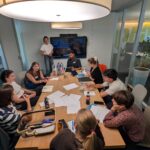
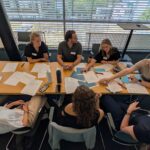
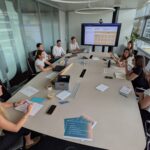
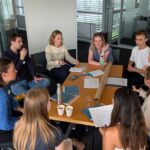
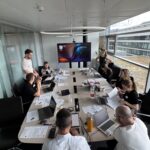
The boot camp consistently avoided tedious lecture-heavy sessions. After brief introductions, participants moved straight into practical case studies. Through four rotating modules—stakeholder economics, shareholder economics, creator economics, and media economics—the groups delved into the interplay of modern communication channels.
In the media economics module, the assignment was to create a campaign for the 125th anniversary of the Zurich luxury hotel The Dolder Grand to develop an earned media strategy to generate maximum impact without a direct media budget. The groups analyzed the existing image—one of aloofness—and got creative, turning the tables: Instead of a perceived exclusive aloofness, they proposed a temporary «Exclusive for Everyone» event—an open house that would open the museum’s world-class art collection and culinary heritage to a broad audience.
The feedback from the plenary session demonstrated just how strong the participants’ motivation was to understand language and strategy across disciplinary boundaries. As Philipp, a student at the University of St. Gallen, put it:
«I'm studying international law at the HSG, but my background is in international affairs. And what interests me most about this boot camp right now is learning how communication, language, and words bridge the gap between disciplines.»
In the area of public affairs, too, the action began right away: In a two-stage advocacy simulation, the teams took on the roles of competing associations, political actors, and media representatives to secure parliamentary majorities for complex bills.


Breaking Patterns in the Age of Generative AI
One of the highlights was the creative module led by Chief Creative Officer Philipp Skrabal. Against the backdrop of ubiquitous generative AI, Skrabal made it clear that while technological tools take over routine tasks, true differentiation arises exclusively from human creativity. AI feeds on existing data patterns; those who rely solely on it produce interchangeable, run-of-the-mill products. Skrabal articulated the core task of creatives in no uncertain terms:
«Creativity is what I like to call a »survival skill' these days. Creativity means breaking patterns, and to do that, you first have to understand them."
Using radical examples—such as the fictional «Sylt Catapult» campaign to mobilize support for the double-track expansion of the Hindenburgdamm, or the presentation of bottled water as «Liquid Death»—Skrabal demonstrated how taking a stand and deliberately breaking taboos can generate attention.


In the creative sprint that followed, six groups were tasked with developing a rental platform for rarely used everyday items. The results showed a remarkable range: «Karma@Home» focused on resource conservation and rhythmic vocal storytelling («Because sharing is awesome»). «Only Gadgets» applied the mechanics of dating apps to tools («Sex rents» with double-entendre headlines for pizza ovens and tents). «Scambi» transformed borrowing into an urban scavenger hunt with community parties. «Nowner» invented the fictional character Robert, who owns nothing but can access everything via an app («Be like Robert»). «THING-DONG.ch» challenged the impulse to consume with «Don’t buy me» posters and the tagline «Owning stuff sucks,» while «Chrims-Chrams» brought unused treasures in Swiss basements back to life with the slogan «Safe e gueti Sach.».


Heated discussions echoed from the workspaces, app prototypes were being clicked through, and props for the pitch were being prepared. One participant summed up the mood after the presentation:
«We just got this super cool assignment to create a campaign. It's really interesting to work with everyone like this and see how a creative process like this unfolds.»
Panel Discussion: The Data Foundation, the Power of Creators, and the Courage to Take a Stand
The third day focused on strategic brand management (led by Head of Branding and CMO Markus Gut), naming processes, and the transition from traditional SEO to Generative Engine Optimization (GEO). In the late afternoon, experts from the various Farner companies gathered for a panel discussion on the practice of modern communication.
Anna-Lena Wohlschlag, Managing Director at BlueGlass, highlighted the interplay between analytics and content: Data is indispensable for uncovering search intent and user behavior, but it is creative storytelling that gives a brand emotional impact. Philipp Nüssli, a guest speaker from Heads Agency, explained that creators and influencers define their relevance not through paid reach but through authentic community relationships—which is why his agency turns down about 90 percent of incoming collaboration requests so as not to compromise its credibility. Anne-Christine Lindner from Jim & Jim emphasized that young target audiences are highly attuned to contrived messages and demand genuine reliability.

Marco Imboden, Managing Director of Corporate Communications & Public Affairs at Farner and former head of communications at renowned corporations, spoke about the dynamics in boardrooms. Out of fear of making mistakes, corporate communications often tends to minimize risk, to the point where messages come across as «lukewarm.» This makes it all the more important for communications professionals to have a thorough command of their craft—from precise writing to quickly grasping complex issues—so that, as valued counterparts to CEOs and board members, they have the courage to demand clear positions.
Pure Adrenaline: When the Amusement Park Is on Fire and the AI Is Sweating
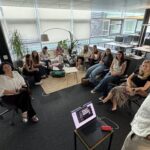
On the fourth day, participants learned in three practice-oriented full-day modules that communicating under real-time conditions requires a strong nerve.
The «Buenaventura» crisis simulation involved reenacting an emergency scenario at an amusement park: Following demonstrations and accidents, a storm of outrage erupted on social media. The participants split into two groups: A crisis response team consisting of park management, security officials, and media spokespeople had to develop a consistent information strategy amid a constant stream of situation reports. At the same time, the opposing group acted as an investigative news team, interviewing eyewitnesses, uncovering contradictions, and demanding tough answers during a live press conference.

«As a student, the insight into crisis communication was incredibly valuable to me—to get a sense of how decisions have to be made under time pressure.»
- Elena Lindner, Crisis Simulation Participant
At the same time, participants in the «AI Academy» experimented with a simulated Meta Ad Manager that Farner had set up specifically for this purpose. They entered briefings, created cross-channel image and text assets using generative AI, and received immediate feedback on simulated community reactions and performance metrics. The «Craft Session,» on the other hand, focused on visual language, color grading, and editing techniques for video formats.

«These young talents have shown just how much energy and sound judgment they possess. If the industry gives them the space they need, I have no fears about the future of communication.»
- Bernhard Schnellmann, Content Consultant and AI Expert, Instructor at BlueGlassFarner


A Wake-Up Call: Let's Put an End to the "Intern Mentality"
The high quality of the results sheds light on a structural debate within the communications industry: the pay and recognition of young professionals. For years, agencies and media companies have tended to keep motivated graduates stuck in a long chain of internships, apprenticeships, and underpaid trainee positions.
Given the rapid pace of technological advancement, this type of internship is outdated. This generation brings with it an intuitive understanding of digital platforms, algorithms, and AI tools—knowledge that many executives must still painstakingly acquire. Anyone who wants to compete for the best talent must offer entry-level positions with salaries that reflect market rates.
In Switzerland, international technology giants such as Google, Meta, Disney, and OpenAI are aggressively competing for the same top talent and offering top salaries. Client companies are also increasingly investing in their own in-house teams with attractive starting packages. Anyone who wants to compete at the highest level must—just as in elite sports—be prepared to invest substantially in up-and-coming talent, rather than fob them off with minimal compensation.
A training program that serves as a model
In the concluding m&k interview, Michel Grunder shared his personal reflections:
«It wasn't just a gift from us to the younger generation; above all, it was a gift from the younger generation to us. We were incredibly inspired by their energy and Thirst for knowledge »benefits."

With its anniversary boot camp, Farner demonstrated what effective knowledge transfer can look like: uncompromisingly practical, free of hierarchy, and using state-of-the-art methods. The format has shown just how much potential the next generation has when given the space and trust to thrive. It is to be hoped that this initiative will set a precedent in the Swiss agency landscape.
]]>When Experience Meets Curiosity
There are formats you can talk about for a long time. And there are formats that explain themselves within a few minutes. IAA Speed Mentoring falls into the second category. A countdown begins. A bell rings. Three mentees move on to the next mentor. Twelve minutes remain—for questions, experiences, career paths, uncertainties, tips—and sometimes for a single sentence that sticks with you.

The first IAA Speed Mentoring event took place on May 11, 2026, in Basel at Helvetia Baloise. Twenty-four up-and-coming talents from the fields of marketing, communications, media, and the agency world met with eight mentors: Ralf Brachat, Markus Bucheli, Gregor Eicher, Silvana Imperiali, Tarkan Özküp, Nelly Riggenbach, Natasja Sommer, and Alexandra Vatansever.

Chantal Landis played a leading role in co-developing the evening together with IAA board members Guido Trevisan, CMO at Goldbach, and Ismail Wicki, Senior Marketing National Sales at Weischer.Cinema. Wicki also kept an eye on the element that set the pace for the format: the countdown. Twelve minutes per round, then a switch. This ensured that mentoring didn’t turn into casual networking, but rather became a precisely timed journey through shared experiences.

What sounded on paper like a well-organized industry event took on a surprisingly vibrant energy in person. It wasn’t a stuffy event for young professionals, nor was it a condescending lecture on careers—rather, it was a space filled with focused conversations. Sometimes quiet, sometimes to the point, and often very direct.

Supporting Young Talent Without Empty Rhetoric
The strength of this format lies in its simplicity. Young talents come prepared with specific questions. Experienced executives share their career detours, mistakes, successes, and perspectives. In between, the very kind of exchange takes place that is often talked about in the industry but rarely facilitated in such a concentrated way.
Chantal Landis, Executive Director of the IAA Swiss Chapter, describes speed mentoring as a format that is particularly close to the IAA’s heart. She says it is popular not only with mentors but also with the young talents who apply for a spot. Following Zurich and Basel, there have already been inquiries from Lausanne and Lucerne. This suggests that the model could catch on beyond individual cities.


Guido Trevisan, who serves on the IAA Board of Directors and is committed to youth and talent development, summed up the essence of the evening: Young talents should not just listen, but also network, ask questions, and benefit from the experience. Mentoring has also played an important role in his own career—as a source of inspiration, new ideas, and guidance.
That is precisely where the real significance lies: here, fostering the next generation is not treated as an abstract HR issue, but as a personal interaction. Those who want to advance need more than just technical knowledge; they need access, guidance, honest feedback, and people who are willing to share their experiences.
AI, Career Changes, and the Matter of Attitude
The evening revolved, with striking frequency, around three topics: AI, career decisions, and attitude.
Markus Bucheli, the host and Head of Marketing & Market Communications at Helvetia Baloise, was asked particularly often when the right time to make a change was. His answer was nuanced: One shouldn’t rush into leaving, but should first systematically explore what options are still available with one’s current employer.

AI was also everywhere. Not as a buzzword, but as a source of real uncertainty. Tarkan Özküp raised the important point that young and older professionals need to create spaces for discussion where they can talk about new topics in an informed way. Don’t just look everything up. Don’t delegate everything. Thinking is still work.
Nelly Riggenbach put it even more bluntly: «Creativity knows no hierarchy.» It’s the best idea that counts, not the highest rank at the table. Her top tip: critical thinking and questioning the status quo.

The Good Spirit in the Room
What really comes across in the video is the atmosphere of the evening. The mentees seem prepared, curious, and open-minded. The mentors don’t seem to be there just out of a sense of duty, but because they’re genuinely interested. Several of them mention that they’ve learned something themselves.
Natasja Sommer was impressed by the young participants« intelligence, curiosity, and preparation. Silvana Imperiali spoke of their enthusiasm, openness, and wide range of questions. Gregor Eicher described the »great spirit« of the young talents, who had »really put him through the wringer.”.

The mentees, too, took away not just business cards, but concrete insights: authenticity, curiosity, pragmatism, soft skills, and respect rather than simply trying to please others. One sentence in particular stuck with them: «You don’t need to be liked; you need to be respected.»


What Could Make the Format Even Stronger
As compelling as the evening was, one journalistic question remains: How can an inspiring evening be turned into long-term support?
Speed mentoring thrives on pace, intensity, and serendipity. That’s exactly what makes it appealing. At the same time, that’s also where its limitations lie. Twelve minutes can open doors, but they’re no substitute for long-term support. Anyone who truly wants to tackle the promotion of young talent at its roots could make the format even more engaging in the future: with follow-up discussions, small peer groups, an alumni network, or concrete matching opportunities between mentors and mentees. Not as a bureaucratization of the positive spirit behind the program, but as a reinforcement of what was already evident this evening.

A format with the potential to be replicated
The IAA Speedmentoring program demonstrates what industry support looks like at its best: approachable, concrete, and cross-generational. It brings advertisers, agencies, and media representatives together around one table. It fosters conversations that would otherwise rarely take place. And it serves as a reminder that careers grow not only through skills, but also through connections.
Basel was therefore not just another stop along the way. Basel was proof that this format can travel. To Zurich, to Lausanne, to Lucerne—and, in fact, anywhere an industry has realized that the future isn’t shaped by panel discussions, but through direct conversation.


