
The Goldbach study on the subject from 2022 already showed that advanced TV has arrived in living rooms in the DACH region. (Werbewoche.ch reported). Further insights into the living room and which devices are used how were provided by Aurelie Brunet de Courssou with the pan-European study "The New Life of the Living Room" by RTL AdAlliance. The study showed what opportunities brands have when they position themselves via advanced TV.
Because Dr. Bernd Riefler, founder and CEO of Veed Analytics, was unable to attend for family reasons, Goldbach CTO Jochen Witte presented the users' perspective. He showed how they use the media offering and how content providers can manage this diversity.
And finally, Johannes Paysen, Managing Director of the sell-side advertising platform Magnite, focused on Connected TV in his presentation. He compared the adaptation in different countries, viewing habits and brand perception on Connected TV.
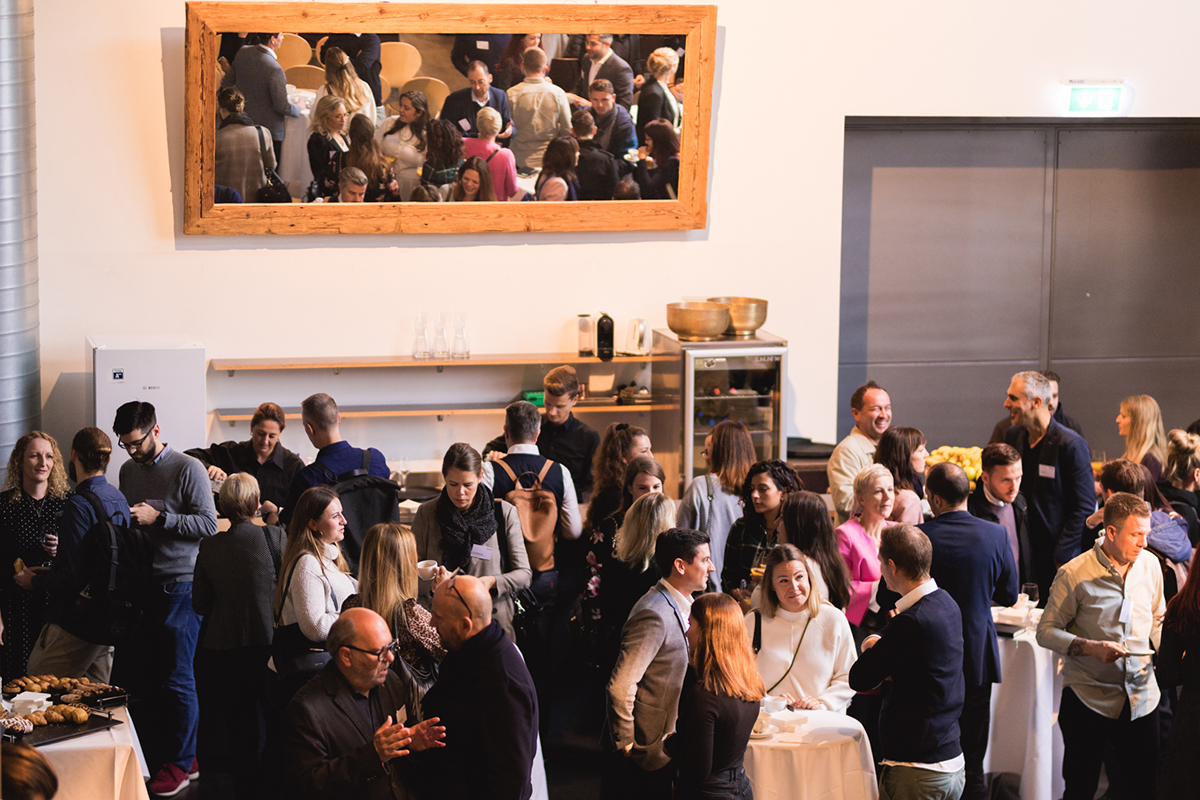
At the subsequent aperitif riche, the guests were able to exchange ideas and network about what they had heard.
"Until now, Online Advertising Day has always taken place at the end of the year. By holding it in February, we now want to mark the start of the digital event year. With today's Online Advertising Day, we have succeeded very well," sums up Stefan Wagner, Managing Director of Goldbach Audience.

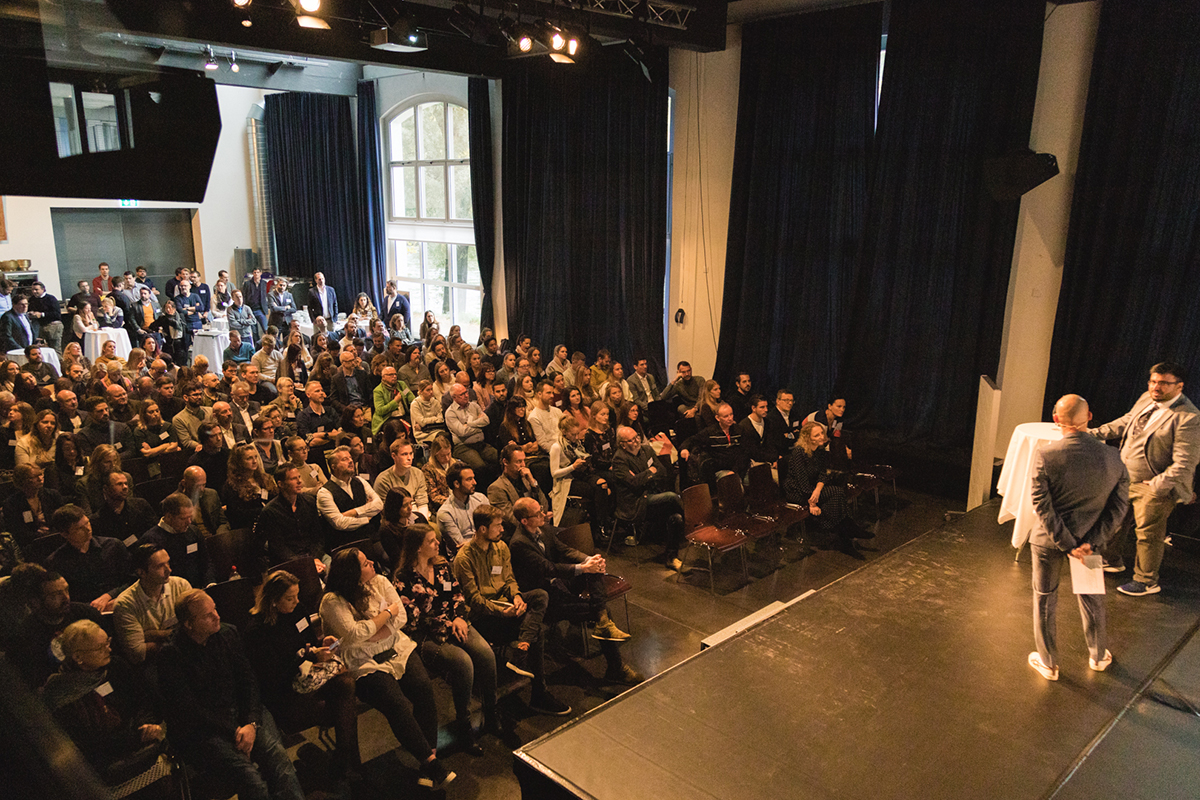
The event kicked off with words of welcome from Stefan Wagner, Managing Director of Goldbach Audience, followed by Alexander Horrolt, Managing Director of Goldbach Next, who acted as moderator throughout the evening.
The series of presentations was opened by Uli Hegge, Head of Privacy and SVP, CE of InfoSum, a company offering identity management and data clean room solutions throughout Europe. Hegge took the audience on a time travel through the cookie universe and highlighted the diverse history of Internet advertising in his remarks. He also shared his personal experiences on the topics of cookies and behavioral targeting.
With his presentation "OneLog: What there is to know about the single sign-on software solution", Silvano Oeschger, CEO of OneLog and Senior Product Manager Technology at TX Group, gave an in-depth insight into the joint venture between TX Group and Ringier. OneLog is to establish a common log-in technology for media companies in Switzerland. OneLog will provide users with a common, cross-site login for all news areas, but activities will not be tracked across sites. This technical solution is intended to support the participating media companies in improving the framework conditions of first party data in the context of product development and advertising purposes and to make the Swiss advertising market more attractive.
Ralf Hammerath, Managing Director of Virtual Minds, also focused on the cookie issue in his presentation "Best practices for cookieless targeting in the post-cookie era". The programmatic expert gave an outlook on the digital market in 2023, the challenges that go along with it and showed solution approaches in the cross-device area for the time after the 3rd party cookie, for example in the form of new channels, for the programmatic set-up.
Anyone who would like to review the day of online advertising again can access the recording of the livestream here.
]]>
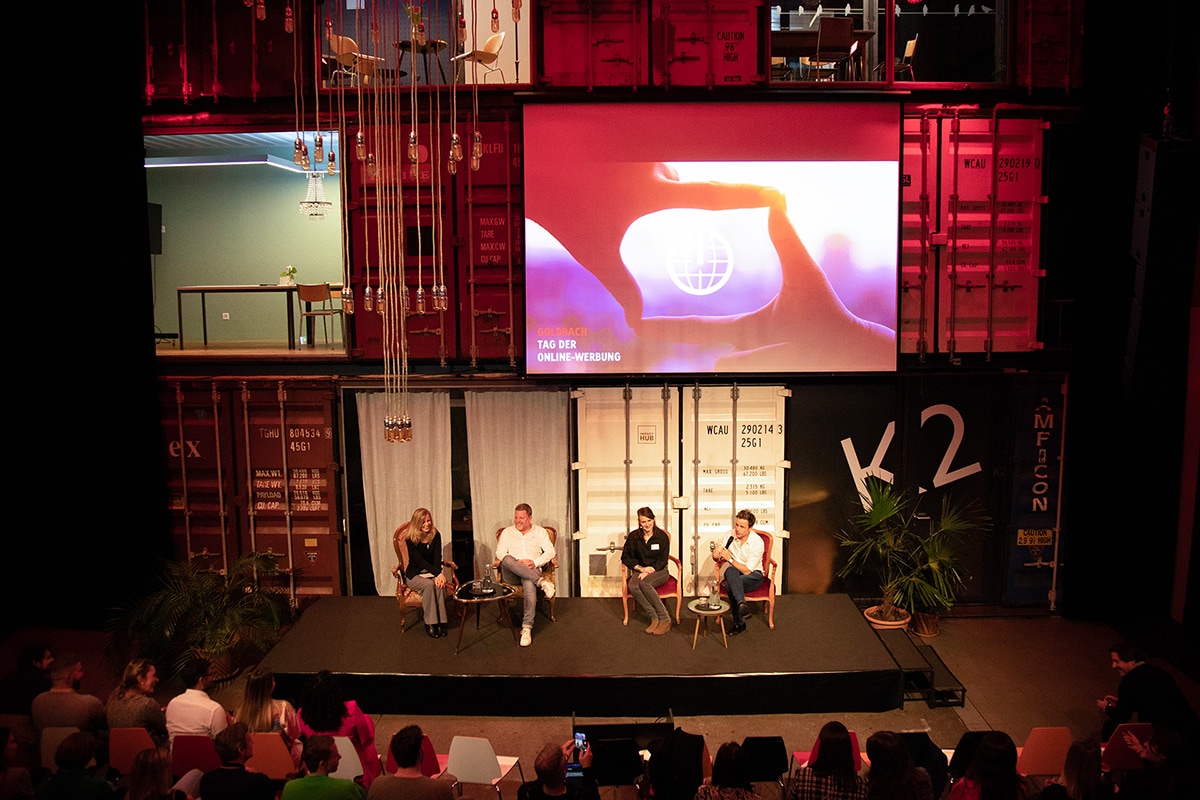
Stefan Wagner, Managing Director of Goldbach Audience, Roman Hirsbrunner, CEO and co-owner of Jung von Matt/Limmat, Alexander Horrolt, Managing Director Digital Ad Services at Goldbach, Ronny Nenniger, Head of Editorial Venty, Miriam Thome, Director Marketplace Management at Xandr and Amir Malik, Digital Marketing Expert at Accenture (from left to right).
A joint breakfast kicked off the Online Advertising Day. Alexander Horrolt, Managing Director Digital Ad Services, welcomed the guests and guided them through the event.
Amir Malik, Digital Marketing Expert at Accenture Interactive, opened the series of presentations with the latest trends in data-driven marketing, addressing the importance of artificial intelligence and algorithms. In a digital world where needs are changing rapidly, personalized customer targeting is at the center. "We live in times where you can reach people as individuals," Amir Malik emphasized, showing what this means and the new issues facing advertisers.
Under the title "Diversity in Tech", Miriam Thome, Director Marketplace Management at Xandr, explained the opportunities and challenges that arise from diversity in companies and the tech industry in particular. Central factors for the emergence of a diverse corporate culture are open dialog between all reference groups as well as support from the management.
The editorial team of 20 Minuten's youth format Venty, Emel Erikci and Ronny Nenniger, together presented to the audience how to score with a young target group with new, timely storytelling on TikTok and Instagram. Erikci, who also has experience in accompanying children, also pointed out the volatility of today's youth and that you have to follow the fleeting trends and hypes.
"Online advertising has been with me for half my life" - with this statement Roman Hirsbrunner opened his contribution and thus the last presentation of this year's Online Advertising Day. The CEO and co-owner of Jung von Matt/Limmat used the example of his own agency to convey to the audience how important and timeless creativity is and where the journey is leading. He also provided insights into the newly developed, agency-internal app "Q", which made it onto the "Best of Swiss Apps 2019" shortlist. (Werbewoche.ch reported). Find out more about "Q" in the exclusive interview with René Schwarz, Chief Experience Officer at Jung von Matt/Limmat, in the upcoming Advertising week 10/2019.
The event ended with a subsequent networking lunch. Stefan Wagner, Managing Director at Goldbach Audience, is pleased: "With today's event, we were able to share our enthusiasm for online advertising with the audience through inspiring presentations and show the diverse range of topics that digital marketing has to offer."

Despite the impending restrictions imposed by the draft revision of the Data Protection Act, lively discussions continue about the emerging opportunities in online marketing. This was also proven by the 13th Online Advertising Day, which attracted over 220 visitors to Zurich's Limmat Hall on Wednesday, November 15, 2017. Selected experts gave presentations: Emily ffrench Blake (Global Head of Partner Sales and New Markets at Spotify), Sascha Corti (Technical Evangelist at Microsoft Switzerland), Urs Langenegger (Co-Founder of Bandara VR), and Raman Sidhu (VP Business Development at Beemray) took visitors on a journey into the world of online business and shed light on the latest trends and biggest challenges facing the industry.
After the welcome by Stefan Wagner, Managing Director of Goldbach Audience (Switzerland), Alexander Horrolt, Managing Director of Goldbach Digital Services, led through the morning.
To kick things off, Emily ffrench Blake reported on audio streaming on Spotify. Raman Sidhu gave a presentation on exciting possible applications of location-based advertising. The subsequent panel discussion on the current challenges of online advertising mainly revolved around the question "How do you have to behave in order to protect yourself as well as possible from AdFraud?". Sascha Corti then provided insights into the world of artificial intelligence and explained the importance of bots in an era of digital assistants and conversational platforms. Urs Langenegger concluded the series of presentations with a paper on the potential of augmented and virtual reality in an advertising context. The discussions stimulated by the speakers could be deepened at the subsequent flying lunch.
The next Online Advertising Day will be held on 10/31/2018.

It was already clear in the welcoming speech by host Stefan Wagner, Managing Director of Goldbach Audience, and co-host Alexander Horrolt, Managing Director Goldbach Digital Services: The twelfth Online Advertising Day is all about augmented reality, automation and data-driven marketing.Afterwards, industry experts Jens Pöppelmann, Martin Hubert, Matthias Sala and Uli Weissbrod presented the latest achievements and trends in online business.

Jens Pöppelmann, Director Media Operations IP Germany/Media Group RTL, started off by clarifying various questions about the transparency of the systems. For example, whether this transparency can be guaranteed in the face of increasing automation, or which key performance indicators still play a role in media planning.

Martin Hubert, Managing Director Nugg.ad and VP Advertising Zalando Media Solutions, provided insights into data-driven marketing with facts and the presentation of smart technologies.

Reality and virtuality mix
After a short break, things got playful and serious: Matthias Sala, CEO and founder of Gbanga, explained that mixed reality games are strongly on the rise and can be perfectly used for advertising. As an example, he showed a video of the Mercedes chase in Zurich, where a Mercedes recently chased the players. Using smartphones, they learned their next destination or a so-called safehouse - this time a department store - where they were invulnerable to the chasing Mercedes. Those who were not chased and eliminated in the game app advanced - one of the players even to the point of winning the Mercedes. "This is an example of how advertising can be today to reach the target audience," said mixed reality professional Matthias Sala.
The customer is addressed much more personally
In today's mixed reality apps, the real environment and virtual reality are mixed in such a way that the player experiences an immersion. "With immersion, you're so immersed in the game that it's almost reality for you - you feel like you're really in a flower meadow, for example, but you're only wearing data glasses. Simply put, mixed reality connects transitions - you feel part of the whole and, when it comes to advertising, you are addressed much more personally than before. The buying decision is made more often that way." Speaking to Advertising Week, the Gbanga CEO told us that his company is in a position to choose the attractive projects: "With Mixed Reality, we offer something new that motivates us a lot. Every game has our heart and soul in it. You can feel that, just like when I read a novel, I can feel if the author is just reeling off another story, or if it's written with passion."
Gloomy forecast with great truth content
Uli Weissbrod, a journalist and developer of media projects, presented a rather gloomy but all the more realistic forecast for the future of print media. He started right away with a kick in the stomach pit: "Change or Die is the motto - there is no alternative!" he proclaimed. Those who don't understand, or even want to understand, the fundamental transformation of media society are disappearing. "On the ranking list of leisure activities, TV, radio, mobile telephony, Internet and landline telephony are at the top, while "time with the partner" ranks second to last, ahead of sleeping," said Uli Weissbrod.
"Content needs to be shared and opened"
Traditional craft and industry would continuously disappear, investments partly made "for the wastepaper basket" - such as the launch of People magazine: "Nobody was waiting for another People magazine, the project was doomed to fail from the start."
The only remedy is new strategies: "Content must be shared and opened up. The days of gatekeepers saying stop are over. The sharing culture is becoming stronger and stronger." The winners would be media that specialize in niches and cater strongly to their readers: "General interest is over, special interest is in demand. Relevance beats reach - the traditional media houses are losing circulation, while websites such as "Correctiv" stand for independent, investigative journalism and are successful with it."
His tip: Publishers should stop whining, leave their ivory towers and finally - if not already too late - face the current challenges. Uli Weissbrod: "At the beginning of the 1990s, publishers should have asked themselves what the future would bring. Instead, many just smiled about the online development. They didn't have a plan B - and when the development became more and more rapid, they went under - while the 'threat' had been there for a long time, visible and noticeable - but almost no one cared." Conclusion: Those who want to survive, and advantageously survive successfully, must adapt to the changing needs, if they have not already done so for a long time. (mgl)
Header image: Alexander Horrolt, Martin Hubert, Uli Weissbrod, Jens Pöppelmann, Matthias Sala and Stefan Wagner (from left).
Due to the great interest, the event was held for the first time this year in Zurich's Kaufleuten, according to a statement. Alexander Horrolt, Managing Director of Goldbach Audience, welcomed the guests to this year's Online Advertising Day and guided them through the event. The speakers addressed the topics of artificial intelligence, digital marketer networks, smart TV and mobile advertising. They ventured an outlook on how the online world will continue to develop.

The four presentations were kicked off by Alexander Oswald, Managing Partner of Futura, with the topic "The Future of Mobile Advertising. Does it have a future?". Thanks to his more than twelve years of experience in the field of mobile strategies on the part of manufacturers and advertisers, he presented how mobile users can be encouraged to interact with concrete solutions.

Matthias Wahl, Managing Director of OMS, gave the audience an insight into how the online network of many regional daily newspapers could be successfully positioned in the market through quality, marketing and clear differentiation.
"Big Data is more than lots of data" began Wolfgang Nimführ, Executive Big Data Sales Consultant for IBM Europe. The computer scientist and specialist for Big Data solutions showed the visitors "Watson", the intelligence of this computer program and various possible applications from industry.

The event began with mobile, the small screen, and ended with big screen TV. Thorsten Schütte-Gravelaar, Managing Director Smartclip Germany, showed how Smart TV is increasingly merging linear television and the digital world.

The key to branding success, he said, is the combination of advertising on traditional television extended by the interactive possibilities of digital forms of advertising.
The presentations met with a positive response from the audience and generated lively discussions among the participants at the subsequent stand-up lunch.
