
At the SVI general meeting in Olten on Friday, the association looked back on a difficult year. Financial challenges and increasing regulatory pressure characterized the situation. The SVI closed 2024 with a loss of CHF 12,756. Managing Director Andreas Zopfi therefore called for a change of perspective in which the industry leaves "crisis mode" and views the current circumstances - including regulatory changes and geopolitical uncertainties - as the new normal.
The meeting focused on the elections to the Board of Directors: After 13 years, President Philippe Dubois stepped down. Board members Micaël Müller (Migros Industrie), Hansruedi Schafflützel (Wipf) and Patrick Semadeni (Semadeni Group) also stepped down. Tobias Leischner (Bourquin) was unanimously elected as the new President. Rolf Eicher (JobTalente), Roberto Polizzi (Migros Industrie), Othmar Wohlhauser (Wipf) and Rudolf Zimmerli (Proderma) were also newly elected to the Board.
In his laudatory speech for outgoing President Dubois, Managing Director Zopfi paid tribute to his consistently focused work and his role as a bridge builder.
In the statutory part of the meeting, the members unanimously approved the annual report, minutes and budget for 2025. They also approved a 5% increase in contributions from 2026 - the first since 2010. The full minutes will be available at the end of May 2025 on the SVI website available.
]]>
SVI President Philippe Dubois welcomed 21 voting members to the 61st Annual General Meeting of the Swiss Packaging Institute SVI in Olten on Friday. The past year 2023 was characterized by the war in Ukraine and the Middle East, with the corresponding impact on the global economy. In the packaging industry, the last upheavals from the corona crisis slowly subsided and other issues such as energy shortages, raw material prices, deindustrialization, economic downturn, shortage of skilled workers and increased regulatory activities in Switzerland and the EU weighed on the industry. In view of all these facts, the Board of Directors defined and sharpened the SVI's strategy for the next three years at its last meetings, the SVI writes in a press release.
Out of crisis mode
Managing Director Andreas Zopfi considers it necessary to change the narrative from crisis mode and calls for the current situation to be understood as the "new normal", which includes both wars and increased regulatory pressure. The past year was dominated by "sustainable transformation" and the SVI had fulfilled its duties in the office and implemented its strategy and mandate. Zopfi's report focused on the topics of internal and external communication, law and politics as well as the results of the last SVI business survey. Training remains an important strategic pillar of the SVI. The review of the Swiss Packaging Award 2023 is positive, with 48 entries and two Swiss winners also scooping a World Star.
2023: Better earnings situation
The association's annual financial statements for 2023 showed a better income situation than in the previous year. Income from the Academy was satisfactory, even though a certain reluctance to offer courses was noticeable. As the CAS training was not well received, the SVI will write off the initialization costs in full in 2023. Overall, operating income of CHF 643,568 and expenses of CHF 588,622 resulted in a profit of CHF 2841 for 2023. The budget for 2024 seems realistic, even if the year did not start as well as expected due to the weak economy.
There were no personal elections on the agenda this year. Board elections for the period 2025-2027 are due next year, as well as the election of a new President, as Philippe Dubois would like to retire for good. There are also plans to relocate the head office to Olten in August 2024.
]]> The submission deadline for the Swiss Packaging Award 2024 has expired. In recent years, the SVI has received an average of 45 to 50 submissions per year. This year, there have only been 27 entries so far. Of these, 7 entries were for the Young Talent Award. Winners and nominees benefit from a high profile among their employees and customers. The below-average participation can therefore not be attributed to the value of the award, writes the SVI in the press release. Research and telephone calls by the SVI have shown that companies have to take care of their day-to-day business in these turbulent times. Staff shortages, price wars and the regulatory madness are currently preventing departments from focusing on innovation as usual.
The SVI understands the companies' situation. For this reason, the SVI has decided to suspend the Swiss Packaging Award 2024 and continue it in the summer. What does this mean? The SVI will reopen the submission window in June, week 26, and will once again motivate the industry to take part.
The award ceremony will now take place on October 17. The date has been chosen so that it is still possible to submit the winning packaging to the World Packaging Award. Despite the circumstances, the SVI is confident that the interruption is the right decision. The Swiss Packaging Award is and will remain the innovation window for the Swiss packaging industry.
]]>
Originally, submissions for the Swiss Packaging Award - the most prestigious prize in the Swiss packaging industry - were only to be possible until 15.01.2023. Now the organizers announce that the deadline has been extended until the end of January. Registration is possible online.
Who can participate?
The competition is open to innovative packaging, packaging aids, displays (product-carrying systems, presentation elements) as well as packaging and packaging systems that have been developed, designed, manufactured or distributed by Swiss companies or persons or by foreign companies or persons that have introduced their entries to the Swiss market. Several packages may be submitted per entrant.
Young talents are also called upon to enter their packaging ideas in the Swiss Packaging Award: For pupils and students, participation is free of charge. They will be judged by the jury in the corresponding category. The prerequisite is that the products have not been launched on the market.
Eight awards to be won
The Swiss Packaging Award is presented in the categories Sustainability, Convenience, Design, Marketing, Technology / Construction / Machine Systems. In addition, there will be the Young Talent Award and the Audience Award as special categories. For the first time, the Special Jury Prize will be awarded. Here, the members of the jury will award prizes for what they consider to be outstanding entries. Packaging of all materials is eligible for the competition. The focus is on promoting and honoring holistic packaging solutions, regardless of the packaging material. A jury of 16 experts nominates up to three packages per category in a judging process lasting two days, from which a winner is chosen.
Public votes for most popular packaging of the year
The winner of the audience award will not be decided by a panel of experts, but by consumers, who will use e-voting to choose their favorite packaging of the year. The public vote will take place from February 15 to April 15, 2023.
]]> The Swiss Packaging Institute SVI has given the go-ahead for the Swiss Packaging Award 2023 set. Eligible for submission are innovative packaging, packaging aids, displays as well as packaging and packaging systems that are developed, designed, manufactured or distributed by Swiss companies or persons, or projects that have been introduced to the Swiss market. Several packages can be submitted per entrant.
Young talents are also invited to enter their packaging ideas for the Swiss Packaging Award: Participation is free of charge for pupils and students. They will be judged by the jury in the corresponding "Young Talent Award" category. The prerequisite is that the products have not been launched on the market.
Eight awards, new special prize
The Swiss Packaging Award is presented in the categories Sustainability, Convenience, Design, Marketing and Technology / Construction / Machine Systems. In addition, there are the Young Talent Award and the Audience Award as special awards.
The special jury prize will be awarded for the first time. Here, the members of the jury will award outstanding submissions from their point of view. Packaging of all materials is eligible for the competition. The focus is on promoting and honoring holistic packaging solutions, regardless of the packaging material. A jury of 16 experts nominates up to three packages per category in a judging process lasting two days, from which a winner is chosen.
Consumers vote for the public winner online
Consumers decide who receives the audience award. They use e-voting to select their favorite packaging of the year. The public vote will take place from February 15 to April 15, 2023.
By participating in the award, individuals and companies can benefit from the opportunity to present themselves to a broad public. A win or a nomination brings the company high attention, confirms the own performance and motivates the employees. All award-winning and nominated packaging, as well as the companies or individuals involved in it, may use the official Swiss Packaging Awards signet. The winners also automatically qualify for the World Star Packaging Awards, the international packaging competition of the World Packaging Organization WPO.
The award ceremony of the Swiss Packaging Award will take place on June 8, 2023.
]]> After two years of online events, the General Assembly 2022 could again be held physically with participating members on May 19. President Philippe Dubois welcomed 20 voting participants to the 2022 General Meeting in Rheinfelden. After a brief review of the impact of the Corona crisis, the President noted that we have moved on to the next crisis virtually seamlessly. The war in Ukraine will also pose major challenges for the Swiss packaging industry. The entire value chain is facing upheavals, the scope of which is not yet at all clear. Above all, the availability and price increases of raw materials, transport services and energy are putting a strain on the industry. There is currently no relief in sight. In the Federal Office for National Agricultural Supply (BWL), the packaging industry was already declared systemically relevant in 2020 under the leadership of the SVI. Even in the current crisis, this could help to ensure that the supply situation for companies with packaging materials and energy in Switzerland remains guaranteed. Nevertheless, there will be changes.
Sustainability remains the defining issue
Despite the Corona crisis, the issue of sustainability has not lost its importance. It will continue to challenge the industry and lead to a rethink. Nevertheless, optimum protection of the contents must always be considered as the basic function of packaging, demanded President Philippe Dubois and Managing Director Andreas Zopfi in their remarks. The heated debates in the pre-Corona years about disposables, plastics and the poor image of packaging have not come to a standstill. The SVI responded by stepping up educational efforts about the functions and performance of packaging. Among other things, a partnership was established with the trade journal Pack current agreed. It remains a goal of the association to communicate the benefits of packaging more clearly and more broadly to the public. For this reason, the SVI was also one of the first associations to join the national pact "Closing the loop for plastics and beverage cartons".
Continuing education courses could take place, but still expandable
Due to Corona, the technical events could only be held online for the most part, but nevertheless attracted a high level of interest in the industry. The introduction day to packaging and the basic seminar were successful. The training program for packaging managers, which leads to a federal diploma, is still struggling as a result of the Corona crisis. At the moment, it is not possible to achieve a satisfactory class size.
Swiss Packaging Award successful
The 52nd Swiss Packaging Award last year was also influenced by the government's Corona measures. A total of 46 packaging solutions were submitted by 34 different participants. A physical award ceremony was not possible in spring 2021, which is why the winners were initially informed in writing. However, the award ceremony, which was festive as usual, could then be made up for on August 17, 2021 in the Kursaal Bern.
Reorganization of the office
After Andreas Zopfi returned to the SVI as Managing Director on October 1, 2020, the office was completely reorganized in 2021. Philipp Stalder successively took over the management of the new SVI Academy in the second half of the year, formally then as of January 1, 2022. Consolidating the SVI's position in French-speaking Switzerland is the task of Jérôme Bovet. In 2022, the breakthrough in French-speaking Switzerland must be achieved for the SVI's offers, otherwise the SVI's position in French-speaking Switzerland is fundamentally up for debate, said Andreas Zopfi. Susanne Köhler, responsible for communications, left the SVI in the second half of the year. She was succeeded as press editor by Dirk Schönrock, formally as of January 1, 2022. The office team also includes accountant Anita Werren from OBT AG, but she is not employed by the SVI.
New websites were designed and launched for the SVI and the SVI Academy in 2021. In addition, the SVI is increasingly active on social media channels. In addition, a business survey was launched among members in 2021 for the first time since 2014. Very encouraging: Around two thirds of the companies are optimistic about the future.
Small profit and 10 new members
SVI's financial statements for 2021 closed with a small profit of CHF 833. In addition, the long-standing trend of declining membership was reversed: SVI recorded ten new members in 2021. The membership fees of the SVI will not be increased to 2023.
It was with regret that the resignation of Michael Villiger from the Board was announced. Tobias Leischner, CEO of Bourquin SA, was proposed and elected as a replacement. The SVI would also like to have the entire value chain of the packaging industry represented on the board in terms of personnel. With Micaël Müller, Head of CoE for Packaging at Migros Industrie, a representative of the retail trade was newly elected to the Board. All other existing board members were confirmed in their positions and Philippe Dubois was re-elected as president.
The SVI Board for the term of office 2022 to 2025 is now composed as follows: Christine Arnet, Philippe Dubois (President), Tobias Leischner, Micaël Müller, Hansruedi Schafflützel (Vice President) and Patrick Semadeni.

]]>

Thanks to the support of the competence partner Swiss Packaging Institute (SVI), a diverse supporting program has been put together. According to the organizers, the concentrated competence in specialist topics and innovations should enable relaxed networking to usher in the economic upswing.
Highlights and special areas of Empack 2022 will be the "Packaging Talks" in cooperation with SVI, a special "Award Exhibition", first-hand insights, case studies and talks. With a true "Workbench" zone and many other networking zones for the long-awaited live communication, all elements and components related to the overarching exhibition theme "The Future of Packaging" are designed to bring together Swiss industry expertise. To this end, around 3,150 guests are expected in the capital for both days of the fair. During this time, one can also examine the products of the SVI's "Swiss Packaging Award 2021" at booth G42 in hall 3.0.
Specialized and focused among experts
Specialized and focused, visitors to the show can experience the entire packaging part of the value chain from the creative development phase to the technical packaging and filling process with state-of-the-art machinery. Important key players in the industry such as Mettler Toledo (Schweiz) GmbH, Biplast AG, Schmalz AG, Schelling AG, Tanner & Co. AG, Saropack AG or the premium partners Bluhm Systeme GmbH and elitec AG are already at the start to present the latest technologies and service concepts to the participants.
Kristina Nadjarian, Marketing & Content Manager at Easyfairs Switzerland GmbH, is looking forward to the trade fair with her team: "Live events like trade fairs create unique, personal encounters - no other marketing tool can do that in this form. Especially the participation in trade fairs like EMPACK and the parallel LOGISTICS & AUTOMATION is, in my opinion, extremely important for the players of the respective industries."
On Wednesday, March 30, 2022, at 10:05 a.m., the first topic will be "Packaged in bio, but how?!" with Niklas Voss from FKuR Kunststoff GmbH, and the discussion round "Meet the speaker" will start at 10:35 a.m.. At 11.00 a.m. Detlef Gnauck from Out Nature by PreZero will give a presentation on "Silphie fiber as an alternative raw material for paper". In the afternoon at 1:00 p.m., Babette Sigg from Konsumentenforum and Niklas Voss from FKuR Kunststoff GmbH will moderate the panel discussion "What was that about plastics and circular economy?"
At 2 p.m., Urs Stillhart from Saropack and Ottavio Scatà from myclimate will demonstrate how sustainable packaging solutions and climate protection are compatible. Starting at 2:45 p.m., Nadine Rüegg from ZHAW will present the topic "Bio-based materials for the production of plastics - a market overview". Roy van den Oudenhoven and Pierre Barth, from NYCO Flexible Packaging will highlight the topic "The contribution of flexible packaging to sustainability" from 3.30 pm.
Special area for haptic experiences: "Workbench
In the special "Workbench" area, there will be real workbenches so that various materials for modern packaging can be examined and touched live with experts on site. This will give visitors the opportunity to literally grasp raw materials used for packaging in their original form. They can also hear experts explain how these raw materials are subsequently turned into packaging and what special features should be taken into account during processing. To learn more about the possibilities and areas of application, questions can be put to the experts from the participating exhibitors: NYCO Flexible Packaging, ZHAW Campus Reidbach, KATZ - Plastics Training and Technology Center, Swiss Recycling or Redilo GmbH.
More information on www.empack-schweiz.ch
]]>
"Consumers expect sustainable packaging," explained Salome Hofer, Head of Sustainability and Economic Policy at Coop, at this year's SVI Annual Conference, providing insights into a consumer survey from 2020. Sustainability is often equated with "plastic-free" in this context. Less packaging waste or even zero waste are also at the top of the wish list.
At the same time, demand for convenience and takeaway offerings has been increasing for years. However, Hofer reported that it is only possible to a limited extent for the large retailers to offer unpackaged food. One exception is the fruit and vegetable assortment, where unpackaged goods have been common for many years. In some cases, wishes and reality diverge: For example, customers at Coop can now leave their own containers at the fresh produce counter to have cheese, sausage or meat packed, but the offer is only rarely taken up. Overall, Coop is therefore striving for optimized packaging that saves material, is recyclable and at the same time meets the product requirements.
Vincent Colard, an ecodesign engineer at the French association Citeo, pondered what would happen if there were no more packaging in 2030: Around 40 percent of food would spoil before reaching the end consumer. The Frenchman does not think a ban on plastic makes sense because plastic offers too many advantages. Instead, Colard pleaded for the expansion of collection and sorting systems. As early as 2025, PET, PE, PP and PS are to be collected and sorted in France in various types of packaging. Another approach, he said, lies in the eco-design of packaging. The entire value chain must be included in the development of recyclable packaging.
The ideas of Dr. Isabelle Chevalley, a member of the National Council for the Green Liberal Party, who advocates less incineration of waste and more recycling, also go in this direction. She explained the weaknesses of Swiss waste management to the conference participants. The main problem, she said, is that the cantons act independently of each other and do not benefit from synergies. Instead, she said, there are overcapacities that have to be compensated for by importing waste from neighboring countries. About 20 percent slag remains after incineration, which has to be landfilled and which no one wants anymore. Biowaste and plastics would have no place in waste incineration plants (MWIP). "You wouldn't think of throwing your food scraps down the chimney," Chevalley said. Plastics are too valuable to burn, he said. Chevalley believes it is up to the municipalities to create appropriate collection structures. Necessary measures, he said, include nationwide coordination of waste management, providing incentives for innovative packaging and following international guidelines.
"For me as a chemist, it is completely incomprehensible why plastics are so little appreciated," said Dr. Stefan Pirker, who works on chemical recycling processes at OMV Refining & Marketing. There are cycles for glass, paper, sheet metal and aluminum, why - apart from PET - not for plastics? With the help of chemical recycling, plastics are broken down again into their building blocks, resulting in polymers of pure quality. In principle, these polymers can also be reused for food packaging. Unlike mechanical recycling, the process is endlessly repeatable, Pirker explained. The process is energy efficient, he said, and requires temperatures similar to those used in pizza baking. Composite materials can also be recycled. Currently, the costs are high and the process is not as widely recognized as mechanical recycling, he said. In the medium term, however, Pirker sees it as a useful addition: "With the appropriate cycles, plastic would be a raw material of the future!"
Casper van den Dungen, general manager of Poly Recycling, has been active in PET recycling for 30 years. He explained that harmonization of standards is important, such as is being done through RecyClass. All players in the value chain would thus be provided with important information that is important in the production and recycling of the packaging. Standards were initially developed for PET, he said, but could gradually be applied to all other polymers. The use of digital watermarks, such as those used in HolyGrail 2.0, as well as artificial intelligence to make sorting materials easier and more precise, also offer promising prospects for plastics recycling, he said. Van den Dungen expressed confidence that all of the EU's set targets can be achieved by 2030.
"Which functions of the packaging can we do without?" is the central question for Thomas Galatik from Dow Chemical Europe. After all, the entire packaging design is based on these requirements and, if necessary, allows for a less complex packaging structure. Galatik sees an opportunity in biobased plastics on condition that agricultural waste products are used for them, the disposal of which requires energy, he says.
Long-used packaging materials are well known and well studied, explained Dr. Thomas Gude, deputy head of Swiss Quality Testing Services, in his presentation "Bioplastics: Sustainability versus Safety." Natural materials such as bamboo, which are used as an alternative to plastic, contain substances and allergens that can have undesirable consequences for food safety, he said. That's also the case with monomaterials that don't provide a sufficient barrier, he said. "What is sustainable still has to be safe," the food chemist indicated.
Fulvio Cadonau, Manager Business Development at Smurfit Kappa Hoya Papier und Karton, also advocated a sensible combination of packaging materials. Ultimately, the decisive factor is which barriers are required for optimum protection of the packaged goods. Where possible, Smurfit Kappa uses monolayer solutions that can be disposed of in the waste paper. Activated carbon is used as a barrier to filter out undesirable substances such as MOSH, MOAH or bisphenol A. Cadonau did not reject plastics: where necessary, they are used to ensure ideal product protection. This can then be in the form of a plastic bag in a carton, for example, which can be easily separated and disposed of. Cadonau also advocated looking at the entire supply chain and choosing sensible combinations for primary and secondary packaging.
Eric Pavone, Business Development Director at Bobst Mex, spoke about trends in sustainable flexible packaging solutions. Plastics are increasingly being replaced by paper with water-based dispersions of polymers. New bio-polymers are also being tested for use with paper, he said. RCF, Regenerated Cellulose Film, for example, is already widely applied to coffee bags and compostable films, while PLA - polylactic acid - is finding initial applications in compostable food trays as well as flexible packaging.
In the concluding panel discussion, moderated by Dr. Karola Krell, participants agreed that standards are needed for evaluating the recyclability of packaging. The industry, he said, is investing a lot of money in developing new sustainable solutions that also make money. Pavone suggested that Switzerland should take a pioneering role: both recycling streams, technologies and a high level of awareness among the population are given. These could be used and proactive steps could be taken. Dr. Gude agreed. As a small, agile unit, Switzerland is also in a position to develop solutions quickly and easily in matters of food safety. There will likely be a coexistence of different packaging solutions, Cadonau said, because "what works for one doesn't work for the other." The value of packaging is still not clear to most consumers, he said. This is where the food industry would have to come in and educate people about the meaning and functions of packaging.
The next SVI Annual Conference will be held on January 19, 2022, on the topic "Shooting Star Packaging?"
]]>
For this year's Swiss Packaging Award, there were 41 entries in six categories and two special awards. The sustainability category has increased due to the social debate about sustainable packaging and the European Union's requirements for recycling plastic packaging. It was on par with the marketing and technology categories this year. Companies are investing heavily in the development of new packaging solutions. Accordingly, monomaterials, material savings and alternative packaging materials were a big topic.
The Swiss Packaging Institute SVI was particularly pleased to once again receive three applications for the Young Talent Award, according to a statement issued on Wednesday. The SVI hopes that this trend will continue.
The judging had already taken place at the end of February in the auditorium of the School of Applied Forest and Food Sciences HAFL of the Bern University of Applied Sciences in Zollikofen. For two days, the jury examined and evaluated the submitted packaging. New to the jury is Patrik Geisselhardt, managing director of Swiss Recycling. He brings his expertise in the evaluation of sustainability aspects.
The winners of the Swiss Packaging Award 2020
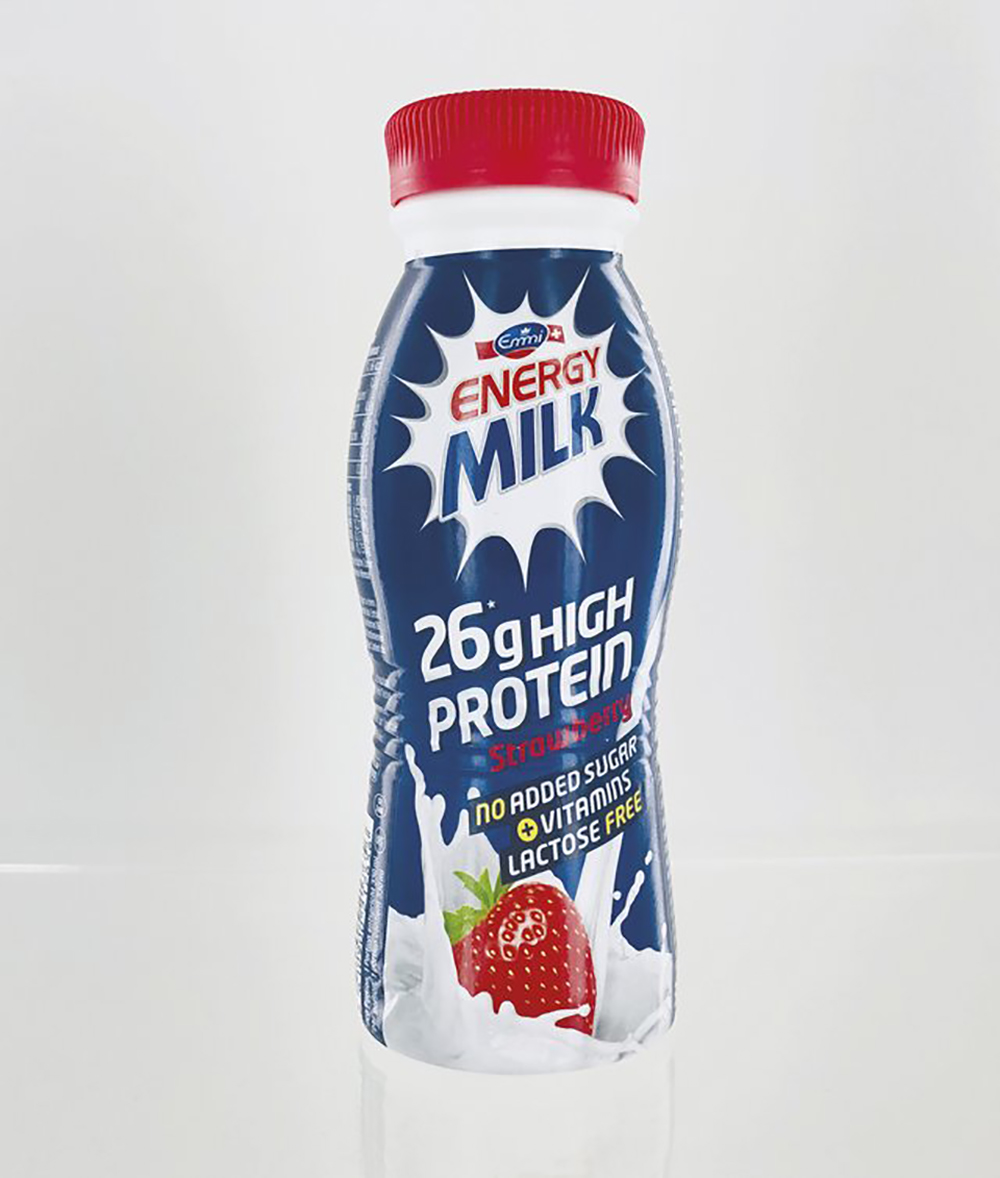
Sustainability category
Wafer thin PET 20my film for Emmi
- Sender: Nyco Flexible Packaging
- Manufacturer: Nyco Flexible Packaging
- Client/User: Nyco Flexible Packaging
- Design: Emmi Switzerland AG
Category Convenience
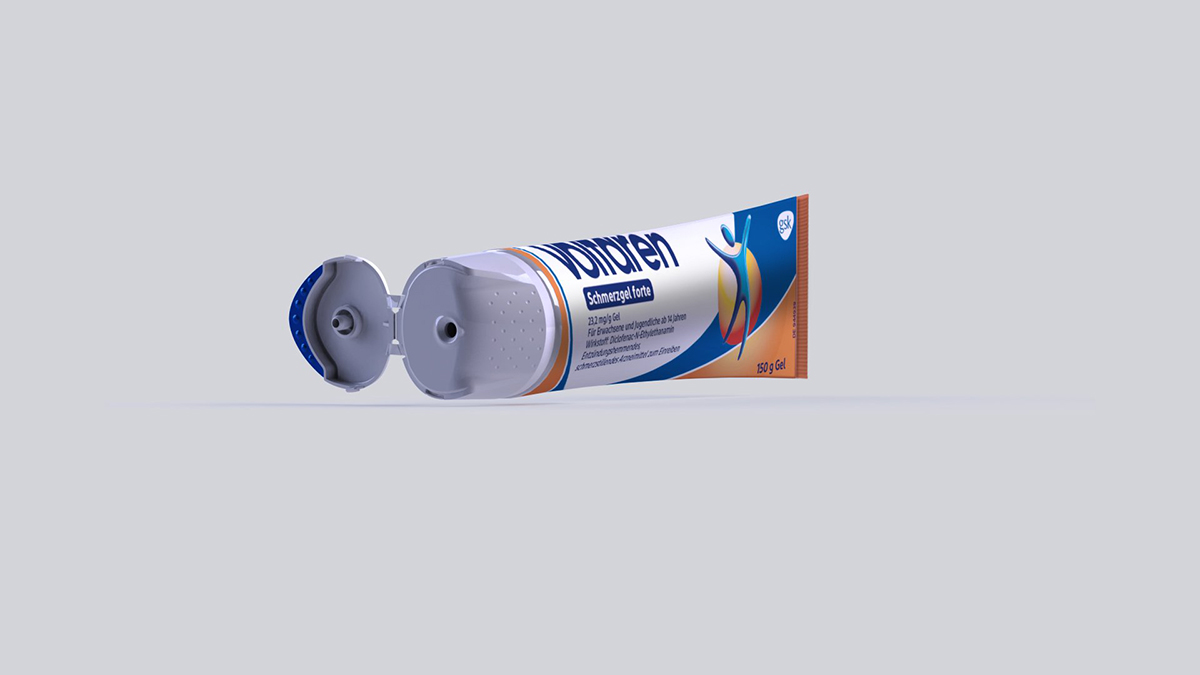
GSK Voltaren - Easy-to-open closure
- Sender: Hoffmann Neopac AG
- Manufacturer: Hoffmann Neopac AG / Kutterer Mauer AG
- Client/user: GSK
- Developer: GSK / Hoffmann Neopac AG / Kutterer Mauer AG
- Design: GSK
Design category
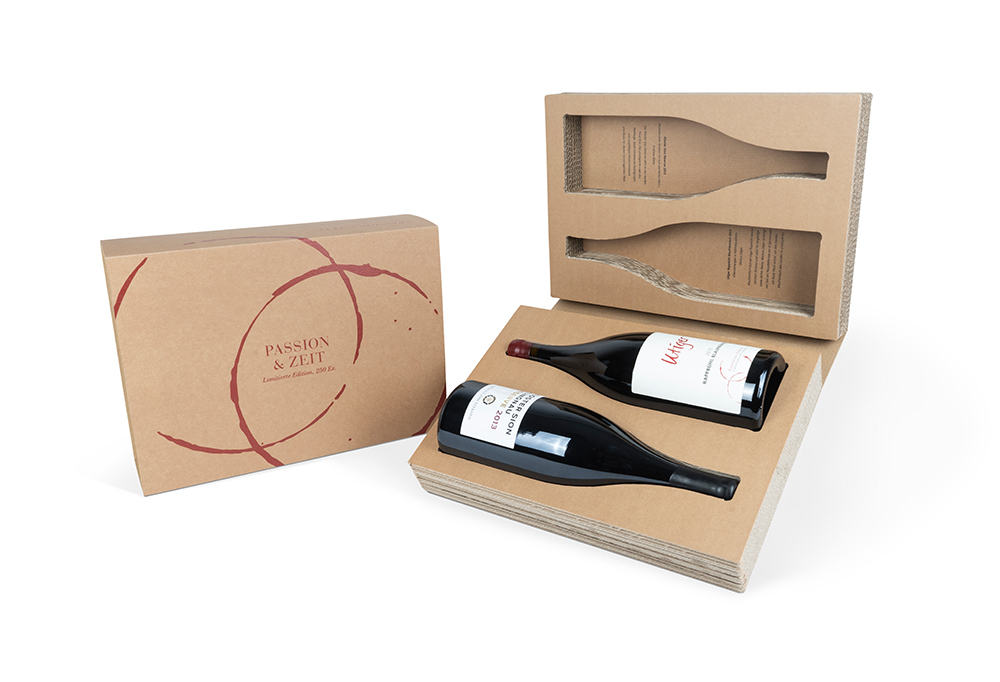
Passion & Time wine packaging
- Sender: Schelling AG
- Manufacturer: Schelling AG
- Client/user: Andreas Meier & Co. vine nurseries/vineyards
- Developer: Stefan Fricker
- Design: Megura AG Advertising Agency ASW
Marketing category
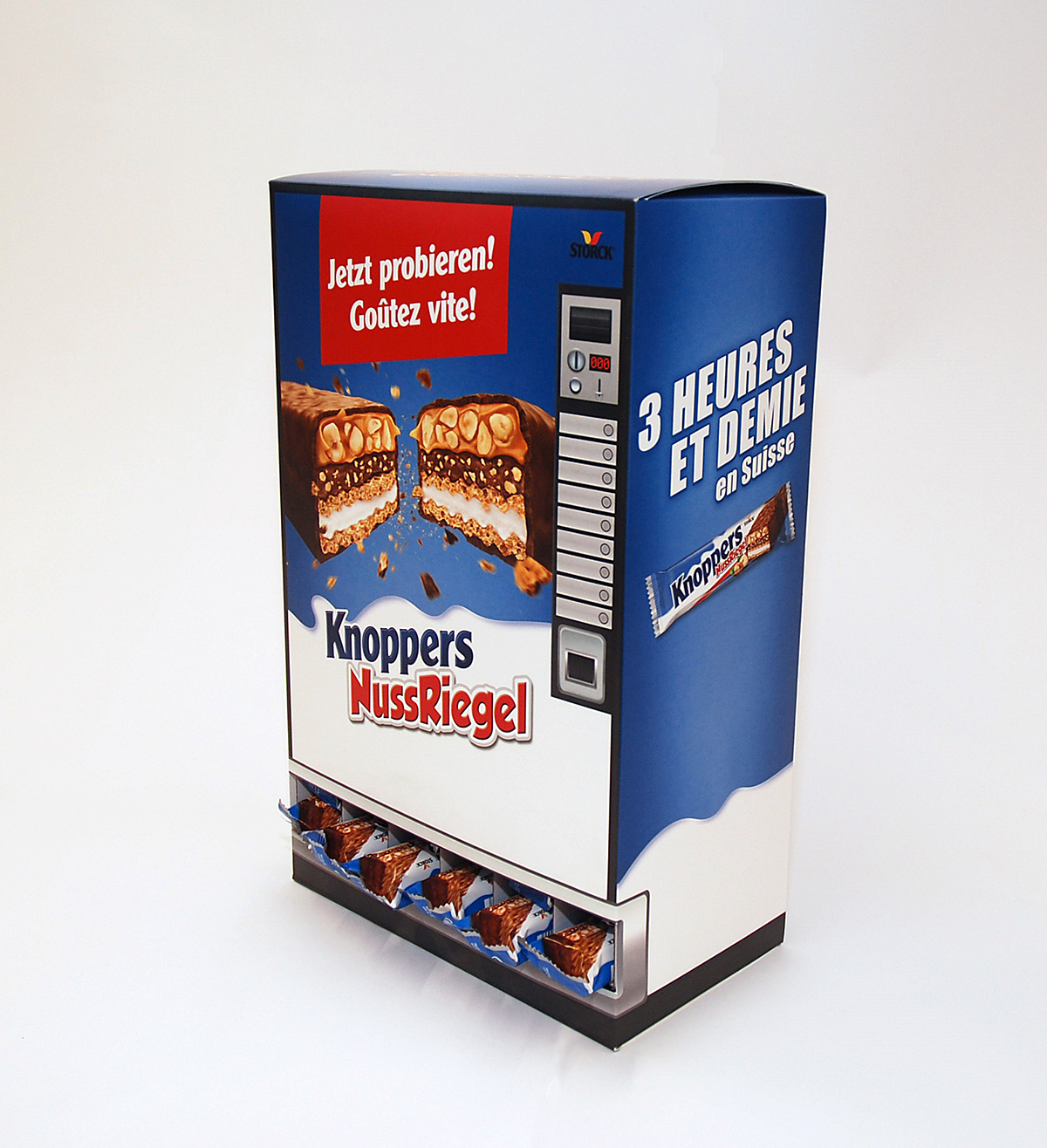
Dispenser Knoppers nut bar
- Sender: Swiss Pac AG
- Manufacturer: Swiss Pac AG
- Client/user: Storck (Schweiz) GmbH, Zurich
- Developer: Streuplan AG/Swiss Pac AG
- Design: Streuplan AG, Zurich
Technology category
Refill packaging
- Sender: Bachmann Forming AG
- Manufacturer: Bachmann Forming AG
- Client/user: Curaden AG
- Developer: Bachmann Forming AG
- Design: Bachmann Forming AG

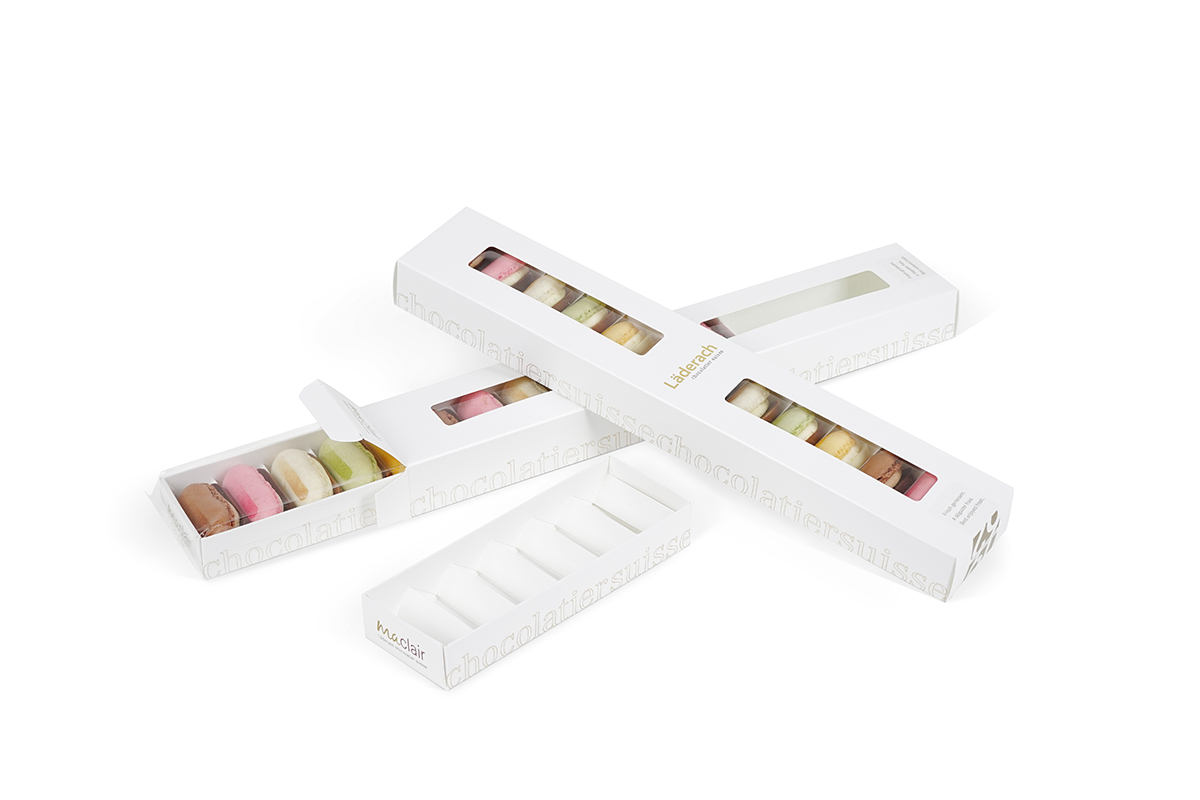
Category construction
MaClair packing
- Sender: Schelling AG
- Manufacturer: Schelling AG
- Client/user: Läderach (Switzerland) AG
- Developer: Stefan Hofmeier
- Design: Baldinger & Baldinger advertising agency
Young Talent Award
Treats to-go
- Naïm Hanhart
- Lorena Märki
- Lucas Santos
- Lea Strässle
- Lucas Tschannen
Audience Award
Tinplate packing Lällekönig
- Sender: Andreas Kopp AG
- Manufacturer: Andreas Kopp AG
- Client/User: Jakob's Basler-Leckerly
- Developer: Andreas Kopp AG
- Design: Jakob's Basler Deliciously
