 What does Switzerland actually sound like? Cozy and familiar, like a conversation in a café, or clear as a mountain lake? Precise as a well-oiled clockwork mechanism, open, diverse, or quiet and full of stories? To Switzerland Tourism, the country sounds like this: Sounds from nature, such as raindrops falling on a lake; animal sounds like cowbells; the sounds produced during cheese-making; and the acoustic signals of famous modes of transportation, such as the Bernina Express, the Belle Époque boat, or the cable car at Glacier 3000: Using these sounds, Switzerland Tourism, together with the French musician and composer Thylacine, has brought «Swiss Sounds» to life—a new musical piece created from the unique sounds the musician recorded during a trip through Switzerland. A melodious campaign that also garnered international attention: At the US International Awards, a prestigious international competition for film, video, and digital communication projects, the project received the Grand Award—the highest honor—in early July.
Sound is increasingly becoming a strategic tool for creating an emotional connection with brands and ensuring brand recognition. After all: There are an increasing number of touchpoints in the digital world where, as sound expert Philipp Schweidler—partner and Director of Strategy at Toniq—puts it, «sound has long played a key role as a means of engagement for a modern brand.» As the fastest way to reach a target audience’s ears, sound also drives differentiation: «With sound branding, companies have the opportunity to communicate with their target audiences across a wide variety of touchpoints and clearly set themselves apart from their competitors through a unique brand sound,» explains Philipp Feit, Chief Creative Officer at the audio agency German Wahnsinn. «In a world where so much is becoming increasingly homogenized and dominated by generic AI-generated content, sound offers the chance to break away, be different, and reposition oneself.»
Among other things, the agency serves as the lead agency for audio branding at MediamarktSaturn and has developed the Pandora Hub for this purpose: an AI-powered multitool that allows a brand’s sound and its unique sonic universe to be scaled in a matter of seconds and applied to all audio and video assets. This is important because, when it comes to sound, consistency is key: «It’s no longer just about having a jingle, but about developing a consistent acoustic identity,» says Eduardo García, founder and CEO of German Wahnsinn.
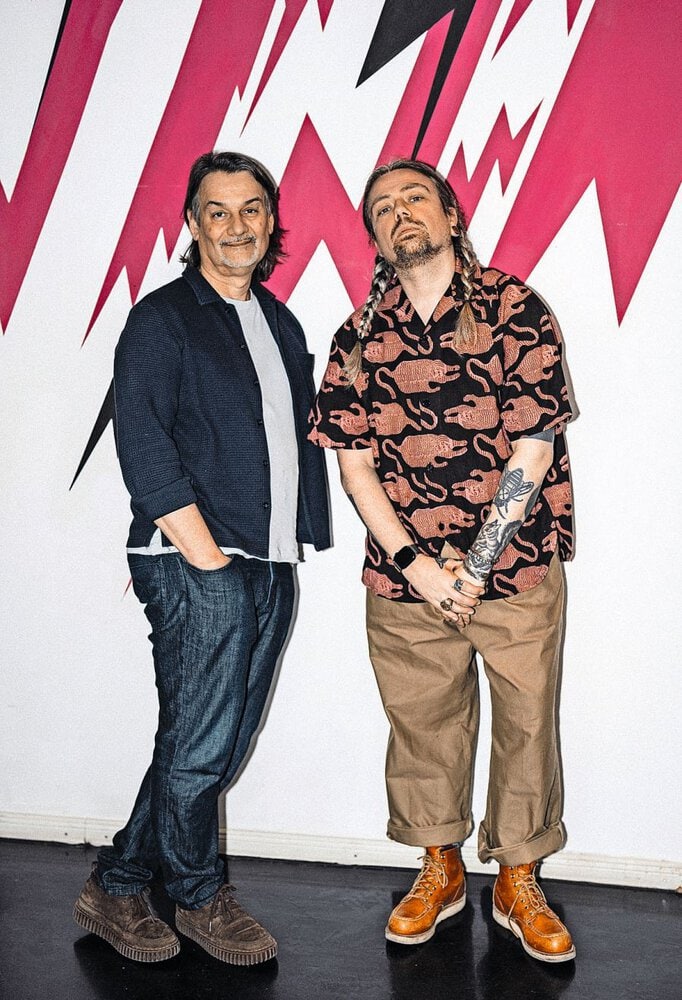
Part of the brand identity
Brands like McDonald’s and Netflix have already achieved this: According to a study by SoundOut’s Sonic Branding Index, which analyzed more than 170 audio logos and surveyed over 70,000 participants, the distinctive sound logos of these brands have now become an integral part of their brand identity. According to SoundOut, a clearly recognizable sound can strengthen the connection between a brand and its consumers—provided the sound is used consistently and over the long term.
The NZZ is now doing the same: It categorizes this brand’s products, broadens perspectives, provides guidance in public discourse, and encourages a shift in perspective. A new brand sound created by the Toniq agency for the NZZ is now designed to convey this as well: It translates this principle into sound by making the interplay of consistency and change audible. A fixed sequence forms the core, while timbre, space, proximity, energy, and emotional temperature vary depending on the application. At times, the sound comes across as focused and analytical; at others, cinematic and expansive; at still others, intimate and editorial; and at yet others, representative of events and brand presentations.
System for the Entire Portfolio
The Brand Sound System was developed as a versatile audio element for branding campaigns, podcasts, events, social media, and editorial formats. It is based on a strategic brand voice that defines how the brand should sound. The MeloMetriq survey format, developed by Toniq, also ensured that the sound design not only reflects subjective preferences but also specifically supports the brand identity. «The overarching idea of an acoustic shift in perspective has given rise to a system that can be applied across the entire NZZ portfolio,» explains Philipp Schweidler of Toniq (see interview). «And the fact that this idea aligns so well with the brand positioning while also ensuring the necessary flexibility is truly something special!»
Toniq also recently developed a unique sound identity for Swiss Casinos. The new brand sound connects the physical casinos with the online experience and is designed to create a consistent acoustic brand universe across all touchpoints. A flexible audio system created for this purpose conveys the brand’s values—namely, self-confidence, excitement, and the joy of gaming—and ensures a unified brand presence, right down to the on-site casino experience, through a recognizable sound language and a distinctive sound logo.
Sound as Part of Brand Management
Yet not all brands have discovered the power of sound—or they underestimate it. Why? Schweidler says: «To put it somewhat provocatively: Because many companies haven’t yet learned to treat sound as part of brand management, but instead view it simply as a production issue. But the emotions this triggers don’t work in the brand’s favor and therefore don’t generate any real value. In my observation, however, this is often simply a matter of process: People are used to discussing a logo, a color, or a typeface internally when these elements are laid out side by side on a board. Visual communication has a much longer history; it’s well-established in many companies, with clear guidelines, budgets, and responsibilities. These structures are often missing when it comes to sound.» This is a fatal mistake, because sound can have a direct impact on a company’s success: According to a study in the Journal of Consumer Sciences, recurring acoustic brand cues strengthen brand recall and recognition and also positively influence attitudes toward the brand as well as purchase intent.
Sound branding, however, has long been more than just the creation of a short audio logo. A sound must work as a commercial, but also in a podcast, an app, a social media clip, or a physical space. The challenge is to create a recognizable sound language that is flexible enough to adapt to different situations. «Today, a brand’s sound must do much more than simply serve as background music or an audio logo at the end of a commercial,» explains Philipp Feit. «In our view, this requires significantly more foresight, strategic thinking, and a comprehensive concept.»
One famous sound that is anything but interchangeable is Ricola’s jingle: «Riiicooolaaa» has been the catchphrase of this traditional Swiss brand for more than 30 years, impressively demonstrating just how effective acoustic branding can be—beyond campaigns and trends. And even across generations.
]]>
The Swiss social media full service agency Tings is taking the next step in sound identity for companies. For paid campaigns on Meta, Tiktok and Co., the agency is now working with the music technology company Loud Parade.
The London studio has already implemented campaigns for Puma, Nike and Rihanna. The AI technology analyzes the campaign concept for the desired emotions and, based on this, creates the appropriate sound together with real musicians. This enables the creation of license-free, yet appealing ad sounds.
]]>
Raiffeisen stands for 124 years of solidarity with Switzerland: always close to the people and at the same time on the pulse of time. Based on these core principles, Raiffeisen has fundamentally revised its sound identity together with Department of Noise, the agency for audio branding.
The overriding challenge was obvious: Raiffeisen's cooperative background makes it a very multi-layered company that is locally active throughout Switzerland. How can this be represented holistically? How can the heterogeneous stakeholders be involved in the development in such a way that the creative flow in the process does not suddenly back up or even seep away?
Breadth of possibilities gave security
"As a first step, we created clarity about the needs and strategic requirements for our sound identity by involving all areas of the bank," says Jürg Moosmann (Project Manager Marketing Services & Branding at Raiffeisen). "Within these guard rails, DoN then presented us with very different musical designs, which we were able to examine in turn in the large committee for common denominators regarding their effect. This gave us a strong feeling for the possibilities of implementation, which gave us security and helped us in our evaluation. This contributed significantly to the success of the project."
Empirical survey tool
In addition to the attitude of the project team, the empirically designed survey tool developed by DoN was also decisive in the discourse. This was used to take the pulse of the bank's employees and customers regarding impact and brand fit. Markus Meier (Marketing Services & Branding at Raiffeisen) says: "It was exciting to see how the 'right' perceived sound has sought its very own way through the various evaluation instances like water and has thus been able to form itself into the undisputed Raiffeisen sound."
The sound assets developed (audio logo, on-hold music and event sound kits for physical and digital events) are now in use and clear the way - for a holistic Raiffeisen brand experience.
Responsible at Raiffeisen: Jürg Moosmann, Markus Meier and Evin Kocaman (Marketing Services & Branding), Bruno Dietsche (Senior Art Director Digital), Raphael Baer (Group Communication/Live Communication), Sandra Bürkle (Head of Marketing), André Stöckli (Head of Sponsoring & Events), Anita Lleshaj (Marketing Raiffeisenbank Zurich), Elodie Schwab (Digital Live Communication), Mario Dietsche (Member Marketing), Patrick Menétrey (Consultant Marketing Lausanne), Gianluca Cantarelli (Head of Marketing and Communication Ticino), Daniel Terenzi (Consultant Marketing Bellinzona). Responsible at Metadesign: Uta Zidorn (Creative Director). Responsible at Department of Noise: Florian Goetze and Ph!L!pp Schweidler (Strategy, Creative Direction & Production), Meng Tian (Research), Yves Gerber (Creative Producer), Michael Stuber (add Strategy).
]]>