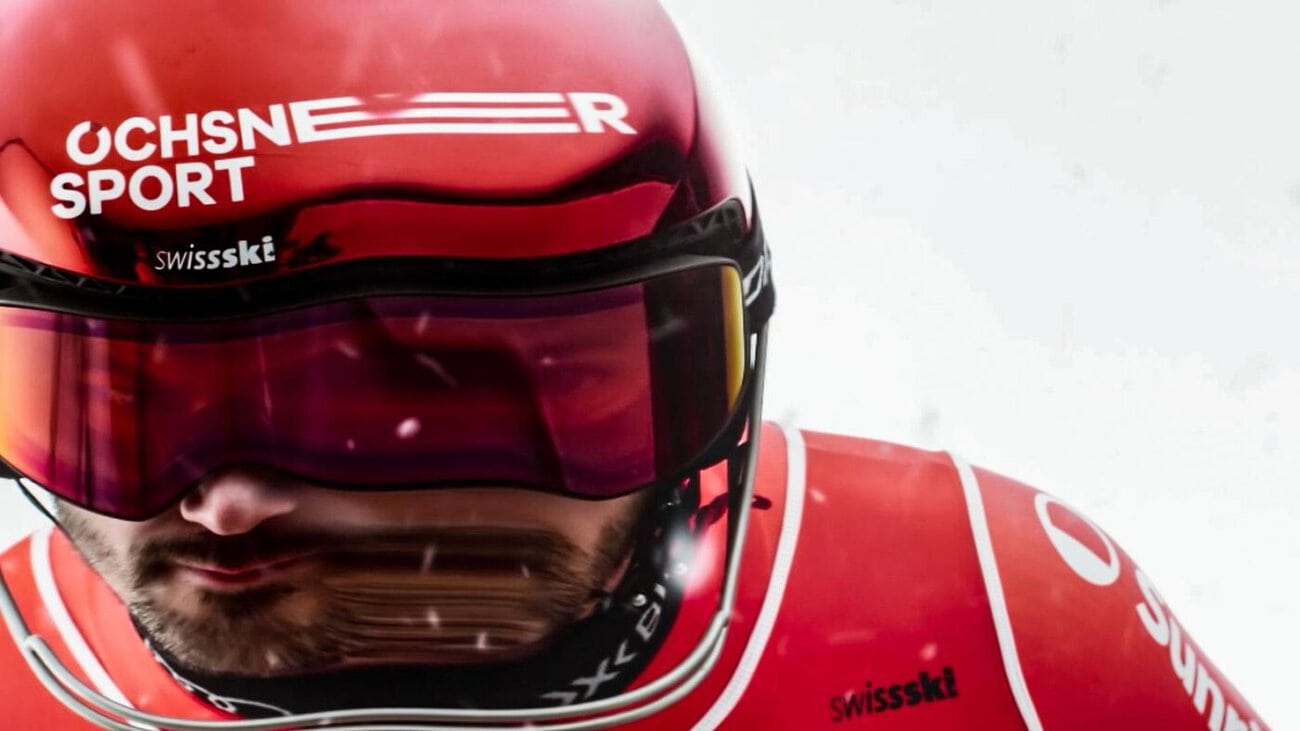
Im Wintersport entscheidet oft ein einziger Moment: eine Kurve, eine Kante, ein Schlenker oder ein Sprung. Genau darum dreht sich die neue Ochsner Sport Winterkampagne, die von thjnk Zürich umgesetzt wurde. Die Ideallinie muss von Rennen zu Rennen immer wieder neu gesucht und gefunden werden, denn das Zusammenspiel von Athlet:innen, Schnee und Material macht jede Fahrt einzigartig.
Ochsner Sport Winterkampagne: Gegen sich selbst antreten
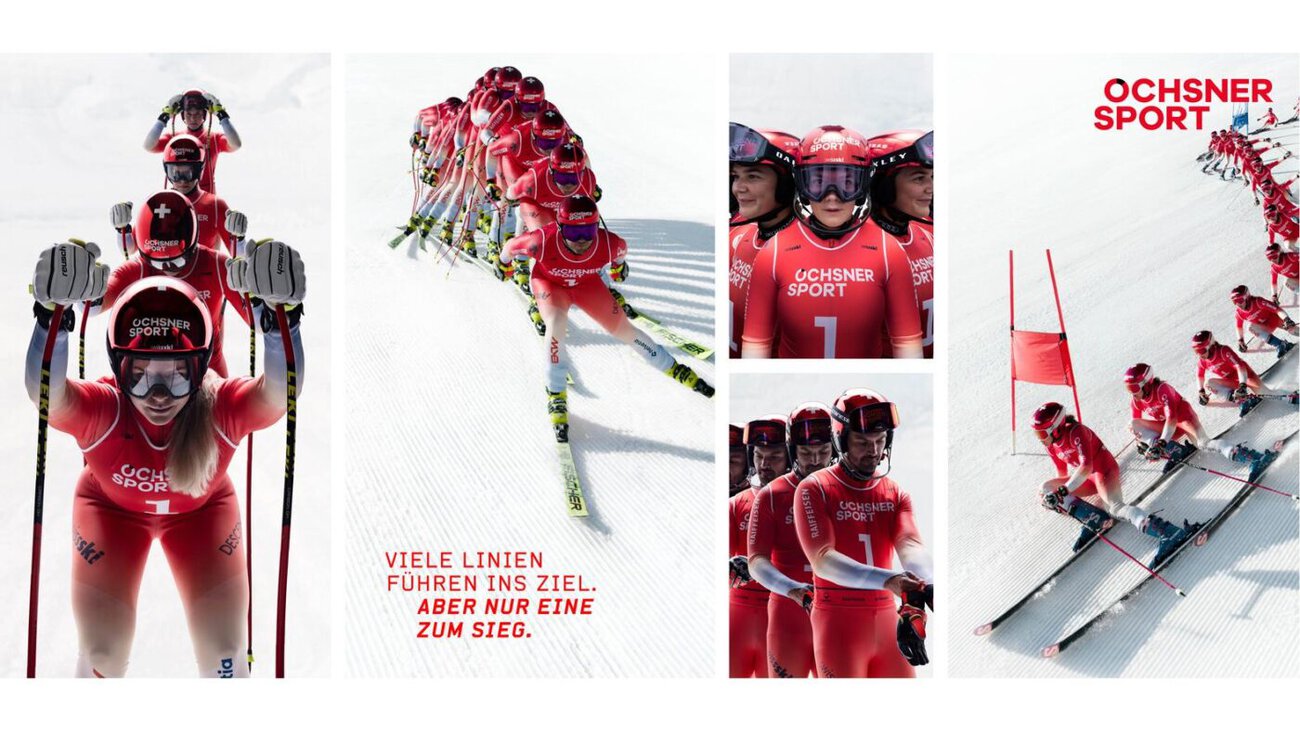
In der Kampagne schickt Ochsner Sport Loïc Meillard, Corinne Suter und Dania Allenbach auf die Suche nach ihrer idealen Linie. Im Kampagnenfilm treten die Athlet:innen gegen sich selbst und gegen all die Linien an, die auf der Piste gefahren werden können.
White Void und Morphing-Effekte
Umgesetzt ist der Film in einer grenzenlosen White-Void-Landschaft, in der vertraute Bezugspunkte verschwinden. Es gibt nur noch die Athlet:innen und die Jagd nach der Linie. Mit Morphing-Effekten und visueller Vervielfachung trennen sich verschiedene Versionen der Athlet:innen, kreuzen einander und werden erst auf der Ziellinie wieder eins. Gedreht wurde mit vier Kameras simultan. Der Film erzählt so von den unendlichen Möglichkeiten jeder Fahrt.
Carmina Burana als Kontrapunkt
Den musikalischen Kontrapunkt setzt «Fortune plango vulnera» aus Carl Orffs Carmina Burana mit markantem Rhythmus und dramatischer Orchestrierung. Die Kampagne startet am 24. Oktober mit dem ersten Weltcuprennen. Sie läuft die ganze Saison rund um die Live-Übertragungen auf allen SRG-Kanälen, online, am POS und auf Social Media.
Responsible at Ochsner Sport: Marco Greco (Leiter Marketing), Patrizia Wyss (Teamleiterin Klassische Kommunikation), Claudio Keist (Teamleiter Content & Social Media)
Responsible at thjnk Zurich: Alexander Jaggy, Pablo Schencke (GF Kreation), Lukas Amgwerd, Lukas Frischknecht (Creative Direction), Daniela Bär (Text), Susanna Fill (Art Direction), Lea Scherz, Julien Le Goff, Xenia Marty (Graphic Design), Andrea Bison (GF Beratung), Romaine Brunner, Andrea Häfliger, Maja Langecker (Beratung), Gordon Nemitz (GF Strategie), Carole Räber (Strategie)
External partners: hillton (Produktion), Per-Hampus Stålhandske (Regie), Patrick Pichler (DOP), Yanik Müller (Executive Producer), David Bertschinger Karg (Managing Director), Raya Al Souliman (Post Producer), Alexander Wyssling (Line Producer), R26B (Creative Postproduction), Jean-Baptiste Krauss (VFX Supervisor), Simon Bourne (Color Grading), Nicklas Amin (Editor), Jingle Jungle (Audio Postproduction), Rob Büchel (Sound Design), Sandro Baebler (Photographer), Tim Brühlmann (Creative Consulting Photo), Anja Baebler (Photo Koordination), Randy Looser (Art Department), Michele di Fede (Digital Assistant), Noah Malin (Drone Photo), Linda Sigg (Hair & Make-Up), Sebastian Heeb & Claudio Zingarello (Lighting Assistants), Frederick Iliano (Director / DOP Social), Nicholas Iliano (Photographer Social), Sven Lerjen (2nd DP & AC)
]]>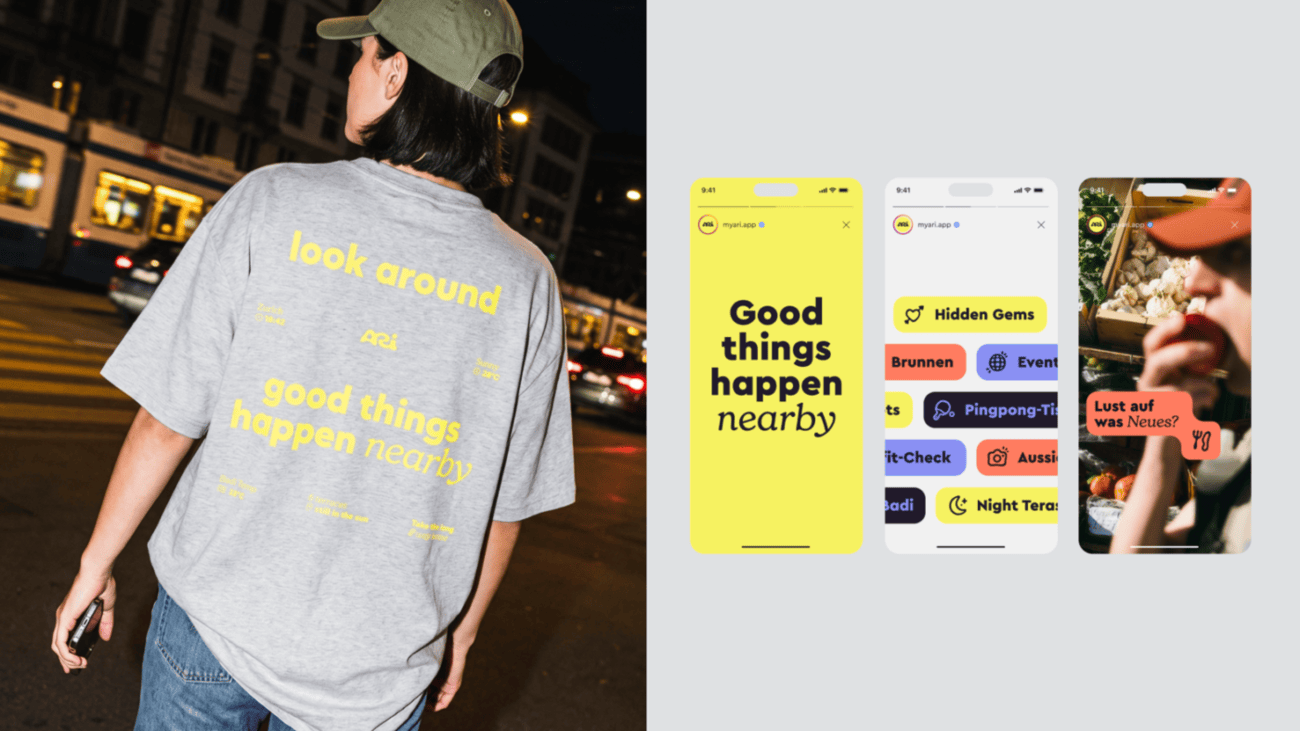
Das Schweizer Start-up Livemap will mit seiner neuen App Ari das urbane Leben einfacher und erlebnisreicher machen. Die App bündelt lokale Echtzeitinformationen, Veranstaltungen und personalisierte Routen an einem Ort. Für die Launchkampagne Ari und die dazugehörige Markenidentität zeichnet Wirz verantwortlich. Die Kampagne ist auf Social Media ausgerichtet und soll Ari als neuen Begleiter für das Stadtleben bekannt machen.
Die Launchkampagne Ari setzt auf Erlebnisse statt Funktionen
Ausgangslage: Obwohl Zürich unzählige Möglichkeiten bietet, bewegen sich viele Menschen im Alltag auf denselben Wegen und besuchen dieselben Lokale. Informationen zu Veranstaltungen, Freizeitangeboten und Mobilität verteilen sich zudem auf verschiedene Plattformen. Ari vereint relevante Informationen und Funktionen an einem Ort und soll helfen, die Stadt auch abseits bekannter Wege zu entdecken. Die Herausforderung für Wirz bestand darin, dieses vielseitige digitale Angebot in eine verständliche, attraktive und eigenständige Marke zu übersetzen.
Mit Botschaften wie «Wäre ohne Ari nicht passiert» und «Ari weiss wo» überträgt die Kampagne das Markenversprechen in konkrete Alltagssituationen. Kurze Videos und statische Sujets erzählen von überraschenden Entdeckungen und spontanen Erlebnissen, die ohne die App womöglich ausgeblieben wären. Das reicht von der unerwarteten Partynacht über das versteckte Café ohne Warteschlange bis zu bislang unbekannten Quartierperlen. Statt einzelne Funktionen zu erklären, rückt die Kampagne die Erlebnisse in den Vordergrund. Umgesetzt wurde sie gemeinsam mit dem Headstart Collective.
Markenidentität aus der Stadt heraus entwickelt
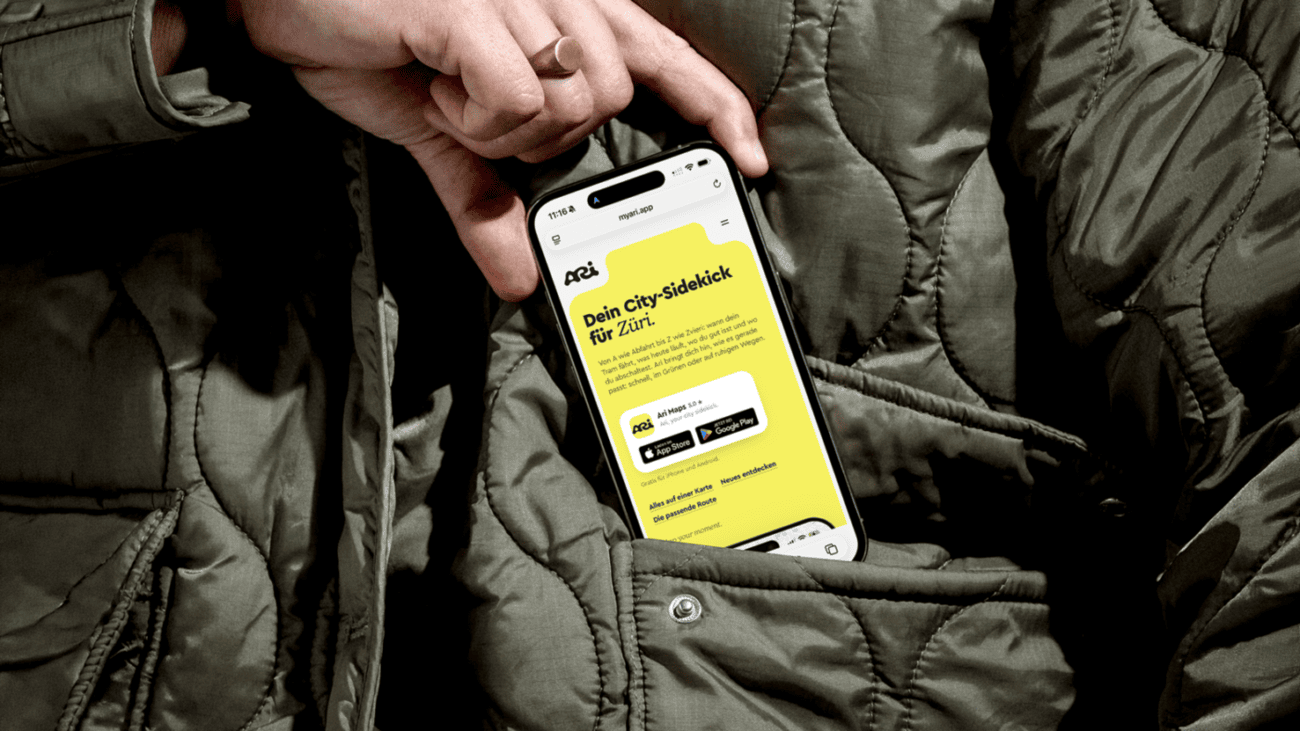
Gemeinsam mit Livemap entwickelte Wirz einen ganzheitlichen Markenauftritt. Er umfasst die kreative Markenidee, eine visuelle Identität sowie die Tonalität. Im Zentrum steht nicht die Technologie, sondern das, was sie den Menschen ermöglicht: mehr entdecken, mehr erleben und mehr aus dem eigenen Stadtleben herausholen.
«Statt uns an den üblichen Codes aus Tech und Mobility zu orientieren, haben wir direkt in die Stadt geschaut. Ihre Farben, Formen, Bewegungen und Eigenheiten wurden zum Ausgangspunkt für eine Identität, die neu wirkt, ohne fremd zu sein», sagt Daniel Wegmann, Director Brand Design bei Wirz. Die Identität soll einen konsistenten Auftritt über verschiedene digitale Kontaktpunkte hinweg ermöglichen und bildet das Fundament der Lancierungskampagne.

Weitere Städte sollen folgen
Kristin Umbach, Chief Commercial Officer bei Livemap, sagt: «Zürich hat mehr zu bieten, als die meisten im Alltag sehen. Wir wollten eine Marke, die Lust macht, den gewohnten Weg zu verlassen. Dass wir Ari mit Schweizer Daten in der Schweiz bauen, spürt man daran, wie gut die App Zürich kennt.» Livemap habe nun die Grundlage, Ari in Zürich zu verankern und danach in weitere Städte zu tragen.
Mit dem Start in Zürich legt Livemap den Grundstein für die weitere Etablierung von Ari als digitalem Alltagsbegleiter in Schweizer Städten. Weitere Städte sollen im kommenden Jahr folgen.

Verantwortlich bei Livemap: Kristin Umbach (Chief Commercial Officer), Daniela Sandau-Jensen (Lead Brand and Communications), Hannah Bahl (Strategy & Consulting)
Responsible at Wirz Group: Florian Avdic, Daniel Wegmann, Patric Franz, Jannic Mascello, Nando Aebi, Laura Hüppi, Morris Lötscher, Tim Lieberherr, Elena Gabriel, Laura Schädler, Corinne Räber
Verantwortlich bei Headstart Collective: Mariana da Costa Pinto (Teamleiterin Pre-Production, Creative Director & Regie), Nico Bellabarber (CEO Headstart Collective & Head of Pre-Production), Alessandro Mignone (Teamleiter Post-Production & Videograf), Lara Chesi (Projektleiterin & Creative Director), Celina Fröhli (Schauspielerin), Rayan Leuenberger (Videograf), Dylan Marzoli (Editor)
]]>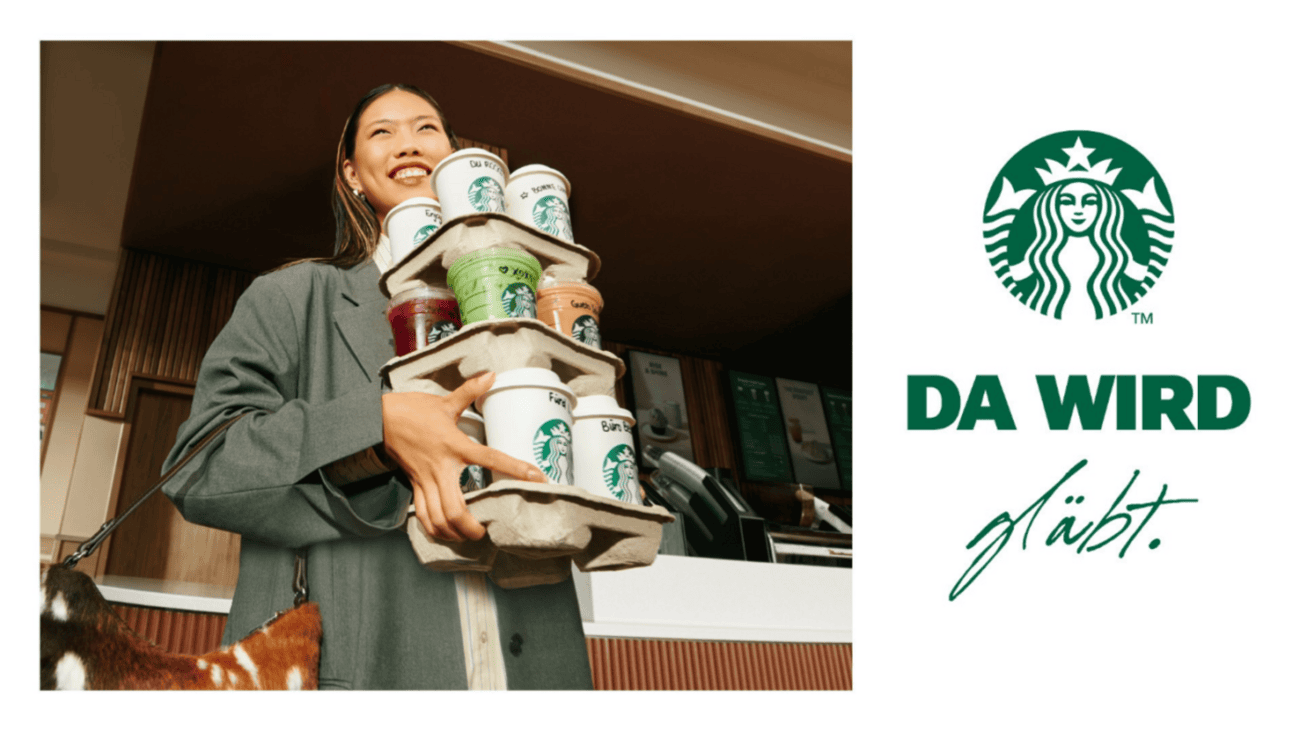
The agency jim & jim created a promotional video for Starbucks Switzerland to mark its 25th anniversary. Under the tagline «Da wird gläbt,» the campaign showcases the diversity of everyday life in Swiss coffeehouses and how it is shaped by the people who frequent them. At its heart is a locally produced hero film that weaves together different Starbucks moments into a shared world.
First Campaign for the Swiss Market: jim & jim Starbucks
Starbucks has been operating in this country for a quarter of a century. However, there has never been a campaign produced specifically for the Swiss market. Following a multi-stage pitch process, jim & jim 2025 emerged as the lead agency for Starbucks Switzerland. This year’s assignment was to develop a hyperlocal campaign designed to give the brand a distinct profile in the Swiss market and to strengthen its brand image in the long term.
The Starbucks Moment as a Starting Point
The strategic starting point was the assumption that everyone can experience their own “Starbucks moment.” Whether it’s a first date, an afternoon of studying, a coffee together after a workout, or a quick break between appointments: According to the press release, the brand thrives not only on its products but, above all, on the people who give these moments their meaning. Accordingly, the campaign tells stories set in and around the coffeehouses.
A Film as an Ongoing Journey
At its core is a hero film, produced in Swiss German and in a French version for French-speaking Switzerland. The camera moves from person to person. What initially appears to be a series of individual episodes gradually comes together to form a cohesive world, until the film ends with a wide shot of the coffeehouse, where the stories unfold simultaneously. A barista serves as the host, guiding the audience through the film. The Starbucks cup serves as the central motif, and the handwritten cup messages add a Swiss touch to the scenes.
The film is carried by a voice-over in dialect: warm, observant, and with a touch of humor. The visual style relies on natural light, authentic situations, and recognizable locations. Filming took place over three days at the Starbucks Coffeehouse on Marktgasse in Winterthur, ZH, and at Lake Sihl, SZ.
Jessica Dubois, Managing Director of Starbucks Switzerland and Austria, explains: «For 25 years, Starbucks has simply been a part of daily life for many people in Switzerland—on the way to work, during lunch breaks, and when meeting up with friends. But what defines us as a brand is created anew every day in our coffeehouses: through our baristas, our guests, and the many small interactions that take place there. It is precisely these moments that we’re highlighting for the first time from a Swiss perspective with »Da wird gläbt.’”
Multi-asset strategy with multiple flights
The hero asset is accompanied by six cutdowns, seven static visuals, and three in-store versions for display in coffee shops. The campaign will run in several flights in 2026 and 2027, primarily on online channels and via programmatic DOOH.
Responsible at jim & jim: Ann-Christine Lindner (Overall Direction), Andrin Buchli (Co-Lead, Media & Campaigning), Bianca Stofer and Beatriz Machado (Creative Direction), Linus von Stumberg (Director, Edit, Copywriting), Mariska van Lavieren (Producer), Nico Drechsel (Director of Photography), Titi White (Photography), Simon Hardegger (Color Grading), Lea Schnegg and Nina Cutkovic (Sound Design). Person in charge at Starbucks Coffee Company Switzerland: Kerstin Goutier-Sauer
]]>
The campaign for Swiss processed vegetables is entering its third round. The Swiss Vegetable Producers Association (VSGP) is once again featuring Sandro Scheibler, the Ninja athlete from Oftringen, who has just qualified for the finals of «Ninja Warrior Germany.» He is the campaign’s leading figure and, following his appearance last year, is taking on the role of ambassador for the second time.
Encounter at the Freezer
The story begins with a training session on the company’s own obstacle course. Afterward, Scheibler stands in front of the refrigerator and realizes he hasn’t bought anything. Then he remembers the supply of frozen beans in the freezer. He opens the door, and a vegetable producer hands him the beans. Thus, the new social media campaign takes the title «From the Field to the Fridge» literally. This segment will be shared across social media channels in German, French, and Italian.
From the field to the freezer in just a few hours
Behind the scenes, there’s a compelling argument for frozen beans: Usually, only a few hours pass between harvest and industrial freezing. The beans are transported to the processing plant, washed, sorted, briefly blanched, and then flash-frozen. This rapid processing helps preserve the valuable nutrients. Flash-freezing involves temperatures as low as minus 40 degrees Celsius. The rapid freezing process creates small ice crystals that protect the vegetable’s cell structure. According to the press release, the nutrients are largely preserved.
The key message: When you reach for a package of frozen beans, you’re bringing a fresh taste of Swiss agriculture to your plate—even if it’s been a while since your last grocery trip. The association is highlighting these benefits in a two-part campaign featuring two social media videos.
TikTok Is Going Green
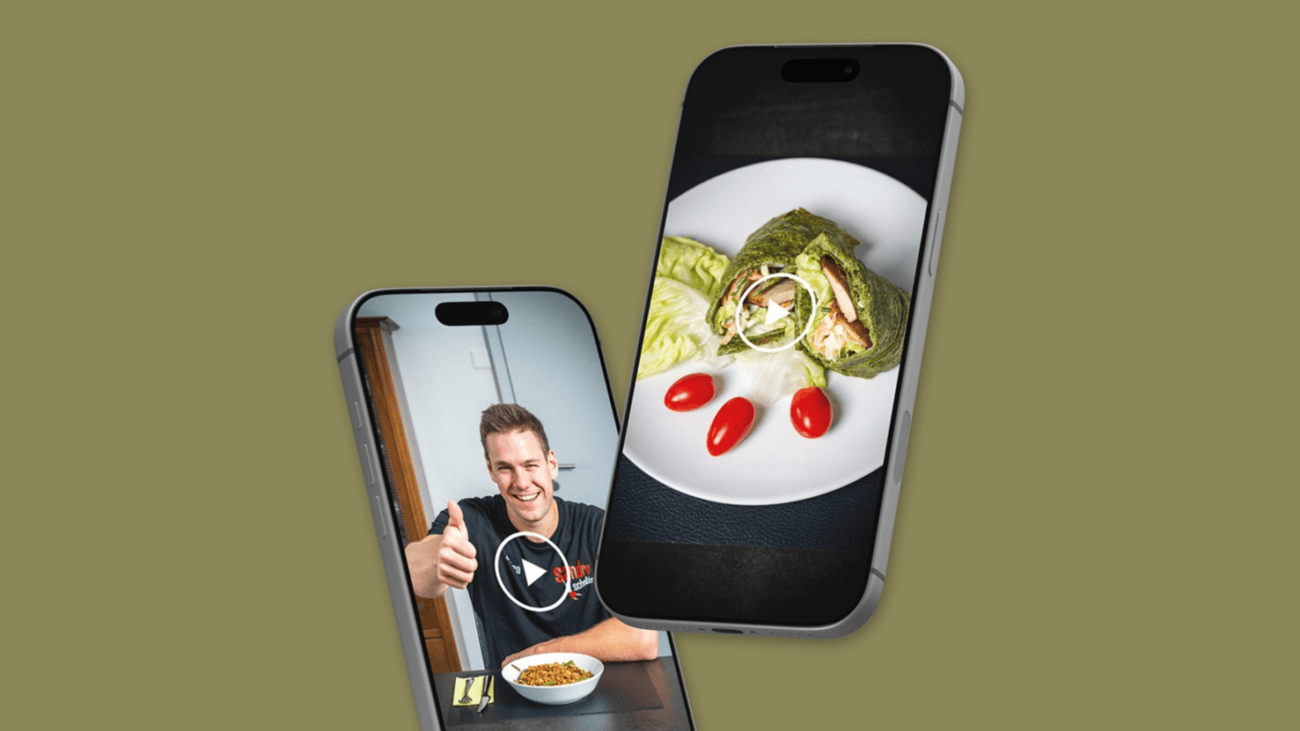
The second part is aimed at TikTok users and is designed to inspire them to try the recipe at home. Under the motto «Let the Ninja Warrior cook!», Scheibler prepares a spinach and cottage cheese wrap. The ingredients go into the blender, the green batter is poured onto the baking sheet, and then it goes into the oven. The wrap is filled with leaf lettuce, carrot-cabbage salad, and tofu. The recipe video shows, step by step, how frozen spinach is transformed into a new meal.
On the campaign page www.processed.ch the recipe can also be recreated. The two parts complement each other: On Meta, the encounter at the freezer reveals the Swiss origin, while on TikTok, Scheibler provides inspiration for your own meal. The recipe video is available at https://processed.ch/spinat-wraps/ The promotional video is available at https://processed.ch/bohnen-2/.
Responsible at VSGP: Markus Waber, Deputy Director and Head of Communications & Marketing (client). Person in charge at brisanz: Tobias Frehner, Project Manager; Beat Aberhard, Art Direction & Screen Design. Additional contributors: Philemon Kleeb, Recipe; Jan Mezger, cine studio, Video & Animation; ringier-advertising, Marketing.
]]>
This coming Sunday, the clocks will be set back, and it will get dark an hour earlier in the evening. The Swiss Central Association for the Blind (SZBLIND) is using this moment as an opportunity to remember people whose eyesight is lost or is deteriorating. With «Augelüüchte,» the SZBLIND is launching a cross-media fundraising and awareness campaign. The idea comes from Spinas Civil Voices.
SZBLIND Eye Lights: A Pair of Candles as a Symbol of Unity
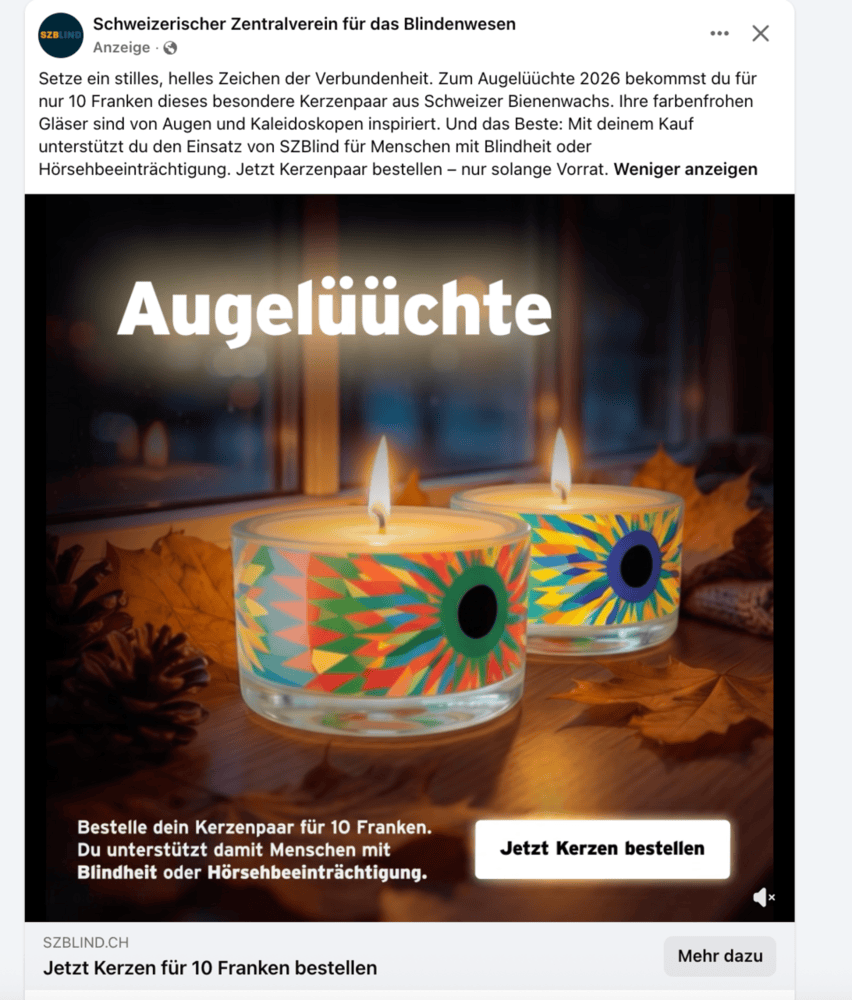
«Augelüüchte» aims to give a new emotional meaning to the often-unpopular moment of the clock change. People can order the specially designed pair of candles made from Swiss beeswax for 10 francs and let them burn at home as a quiet, bright symbol of solidarity. The campaign benefits people who are blind or have hearing and vision impairments.
From the Ad to the Email Journey
The campaign is designed to attract attention, inspire enthusiasm, and connect new people with SZBLIND and its work. Social media and Google Ads, as well as an email campaign, direct users to the landing page where they can place an order. A follow-up email series introduces these new contacts to SZBLIND’s work and invites them to provide further support.
A recurring moment as a point of reference
By tying in with an annual event, «Augelüüchte» has the potential, according to the press release, to evolve into a quiet, luminous ritual in the future. Makes sense, doesn’t it?
Responsible at SZBLIND: Martin Nideröst (Head of Marketing and Fundraising)
Responsible at Spina's Civil Voices: Susi Kammergruber (Creative Director, Strategy), Nicolas Stark (Art Director), Beat Egger (Copywriter), Conny Geibel (Head of Cross-Media Strategy), Eric Schwegler (Digital Marketing Consultant), Kadir Demirtas (Production)
]]>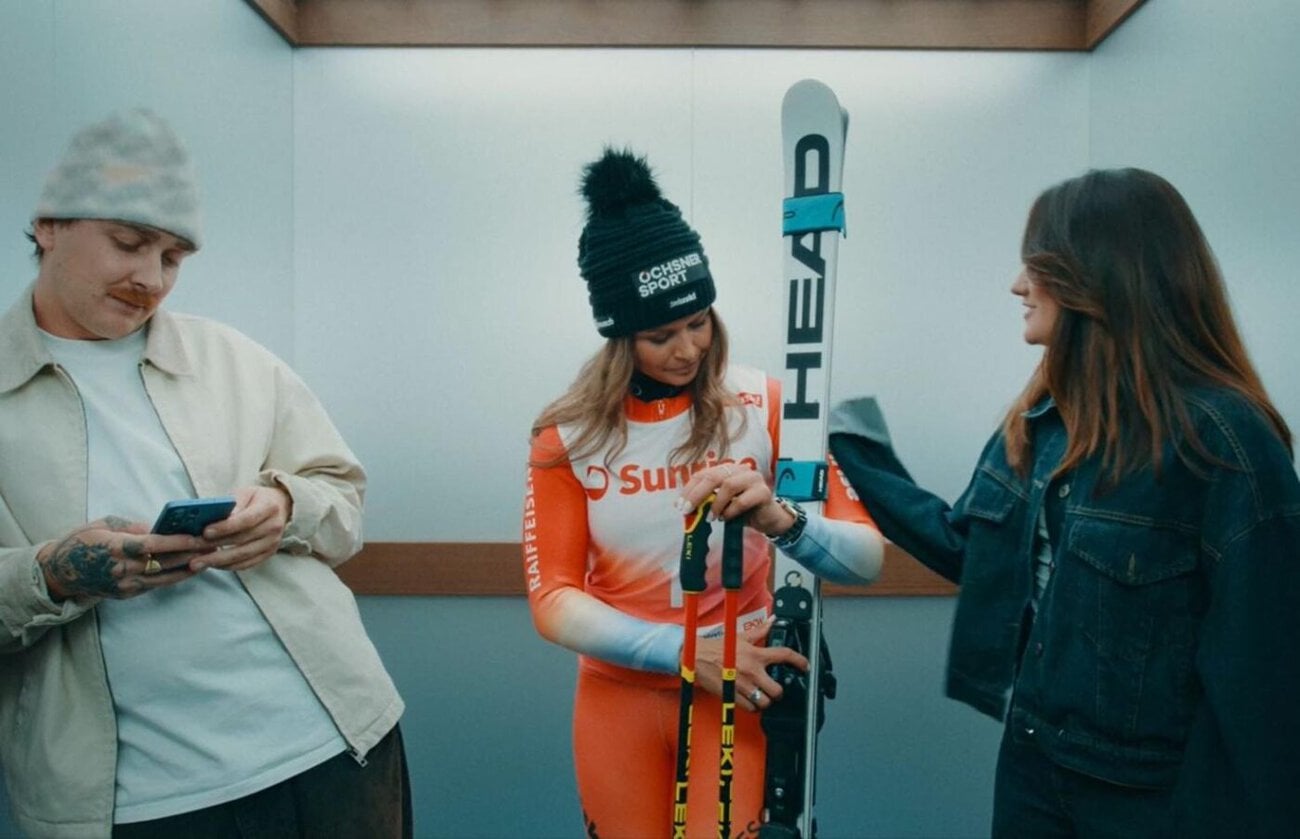
To kick off the World Cup season, Swiss-Ski is launching a series of clips for the «Tipp Champion» prediction game in the official Swiss-Ski app. The spots for the 2026/27 Swiss-Ski Tipp Champion will be released on an ongoing basis throughout the season. The setting remains the same in every clip: Actor Junior Page (Juni from the series «Tschugger») and Valais-based influencer Noa Atla, playing the roles of fans, run into Marco Odermatt, Corinne Suter, and Lenz Hächler on the lift. The concept and direction are by Tim Duerig and Luca Schaeffner, and the videos were produced by Zehneinhalb.
An elevator, two fans, many moments
The stage is deliberately small: an elevator, the doors close, a few seconds with two or three people—and every time, a story unfolds. Sometimes Junior Page celebrates a «shared» successful weekend with Marco Odermatt and Lenz Hächler, even though he was the only one who actually guessed correctly. Other times, he plays the role of a stand-in coach. When Junior and Noa stand side by side in the lift and sneak glances at each other’s cell phones, the bet becomes a source of suspense among friends. Every spot ends with the «ding» of the lift doors and a tagline.
The series thrives on the observation that placing a bet turns viewers into participants: Those who have placed a bet experience the excitement differently, celebrate differently, and suffer differently. With Junior Page and Noa Atla, Swiss-Ski is bringing two faces to the campaign that will reach a young, digital audience. According to the press release, the videos deliberately focus on humor and a sense of connection with the athletes rather than on the competitive aspect. Because the spots work well on their own, they can be rolled out as a social media series throughout the season and posted whenever the next race is coming up.
The Game Behind the Swiss-Ski Tipp Champion
With around 25,000 participants, the ’Tipp Champion« is the centerpiece of gamification in the Swiss-Ski app. Before each World Cup race, fans predict the podium finishers and earn points. In the 2026–27 season, points from the »Monthly Quiz Challenge” will also be included in the overall standings. In addition, there will be three automatically assigned leagues—based on canton, favorite athlete, and discipline—as well as a monthly leaderboard with prizes. Private prediction groups can be created up to five minutes before the season opener on October 24 in Sölden.
The ads are running on social media and YouTube, accompanied by a newsletter and a landing page. The campaign’s visual identity has been redesigned for this season to align with the app’s design and Swiss-Ski’s «Glow for Snow» look.
«We didn’t want an explanatory video, but rather moments that every fan can relate to—and that make them want to place their own bets,» says Luca Schaeffner, Content & Channel Manager at Swiss-Ski. “Tipp Champion” is supported by its main partner, Sunrise.
Responsible at Swiss-Ski: Luca Schaeffner (Content & Channel Manager)
Agency/Production: Ten and a Half – Director: Tim Duerig, DoP: Daniel Bleuer, 1st AC: Thomas Boff Hrabovsky, Gaffer: Christoph Eser, Sound: Dieter Meyer, Art Department: Atelier Lomann, Joel Tweitmann, HMU: Rachel Amacker, Editor: Tim Troxler, Color Grading: Trinipix, Christoph Walther, Equipment Rental: Blow Up
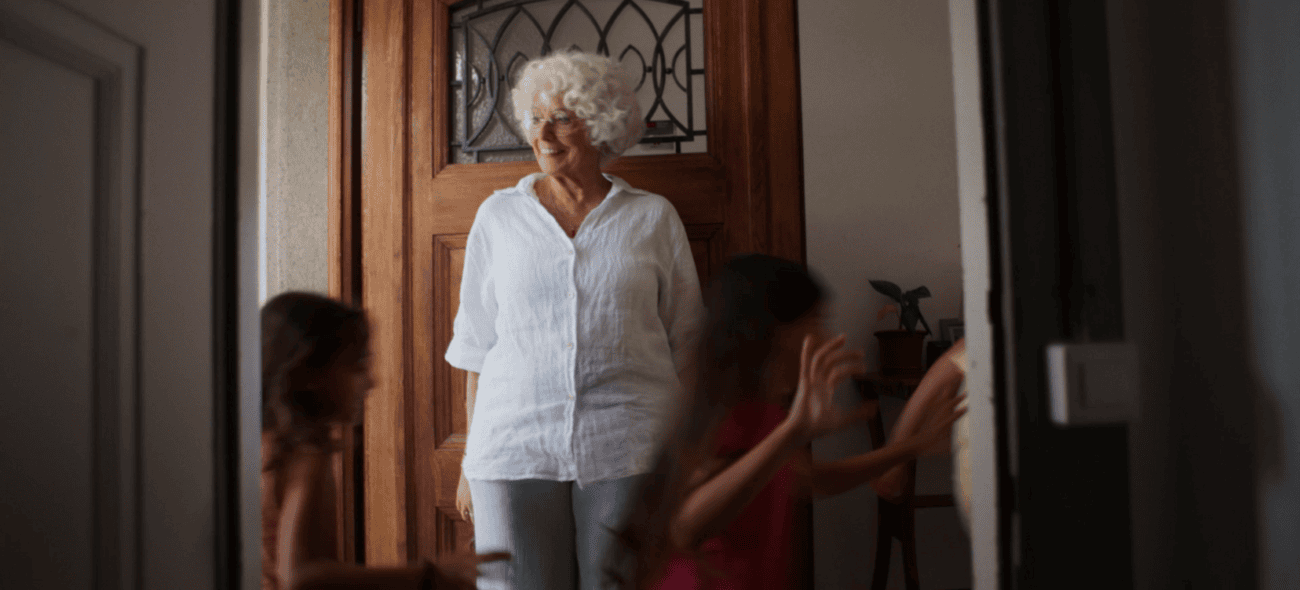
The new Terre des hommes promotional film is titled «A Signature Changes Lives.» The TV commercial, produced by the Lausanne-based production company Pain Fromage Studio, shows how a bequest in a will impacts the lives of children around the world. The cast consists almost entirely of in-house staff members. The children in the film are primarily from the foundation’s local community. The spot is currently airing on all SRG channels in German, French, and Italian.
Terre des hommes promotional video makes the invisible visible
According to the foundation, Pain Fromage Studio’s commercial portrays in a realistic and emotional way what is often overlooked when it comes to a bequest: the positive impact on children that extends beyond one’s own lifetime. The production company was founded in 2024 by actors and satirists Vincent Kucholl and Vincent Veillon, known for shows such as «Bon Schuur Ticino,» «Tschugger,» and RTS’s «52 minutes.» They were joined by their longtime collaborators Maude Golay and Vincent Sager. This marks Pain Fromage Studio’s first collaboration with Terre des hommes.
In-House Casting for Authenticity
To tell the story as authentically as possible, nearly the entire cast comes from within the foundation. Lydia, an accountant in her day job, plays the doctor. Anaïs, who normally specializes in migration and child protection, takes on the role of the teacher. Just under half of the children are from the immediate families of the actors; the rest come from the wider Terre des hommes community. A professional casting call was held only for the lead role.
The voice-over artists for all three language versions were also selected from within the organization. Pascal Pittet provides the voice for the French version. He worked for Terre des hommes for 39 years, serving as the director of bequests from 2018 to 2026. Since his retirement in April, he has continued to volunteer with the organization. The narrators for the German and Italian versions are also employees.
You can watch the German version of the commercial here:
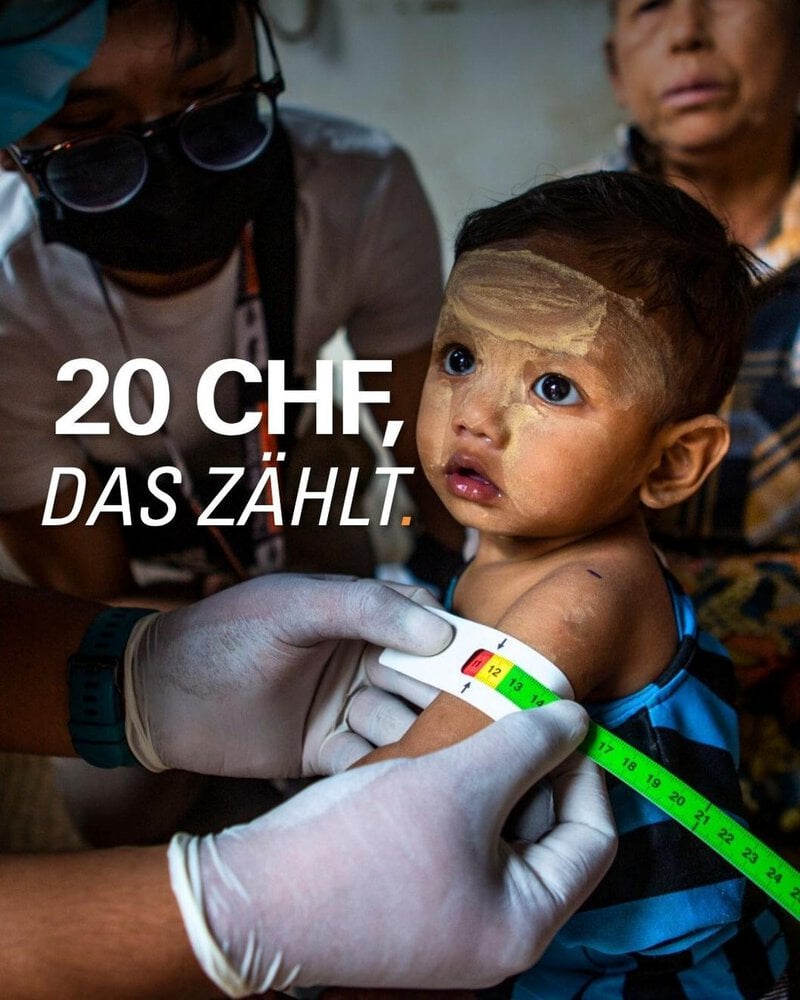
«That's What Counts» Campaign for Social Media and Out-of-Home Advertising
The 42-second spots will air in October on all SRG channels. At the same time, the new fundraising campaign, with the slogan «That counts,» launched on Monday, October 19. The ads are designed to highlight that even small donations can make a real difference in children’s lives. The campaign will be visible starting October 19 in outdoor advertising in Zurich, Bern, Lausanne, and Geneva, as well as online.
The French version of the commercial is also available online:
]]>
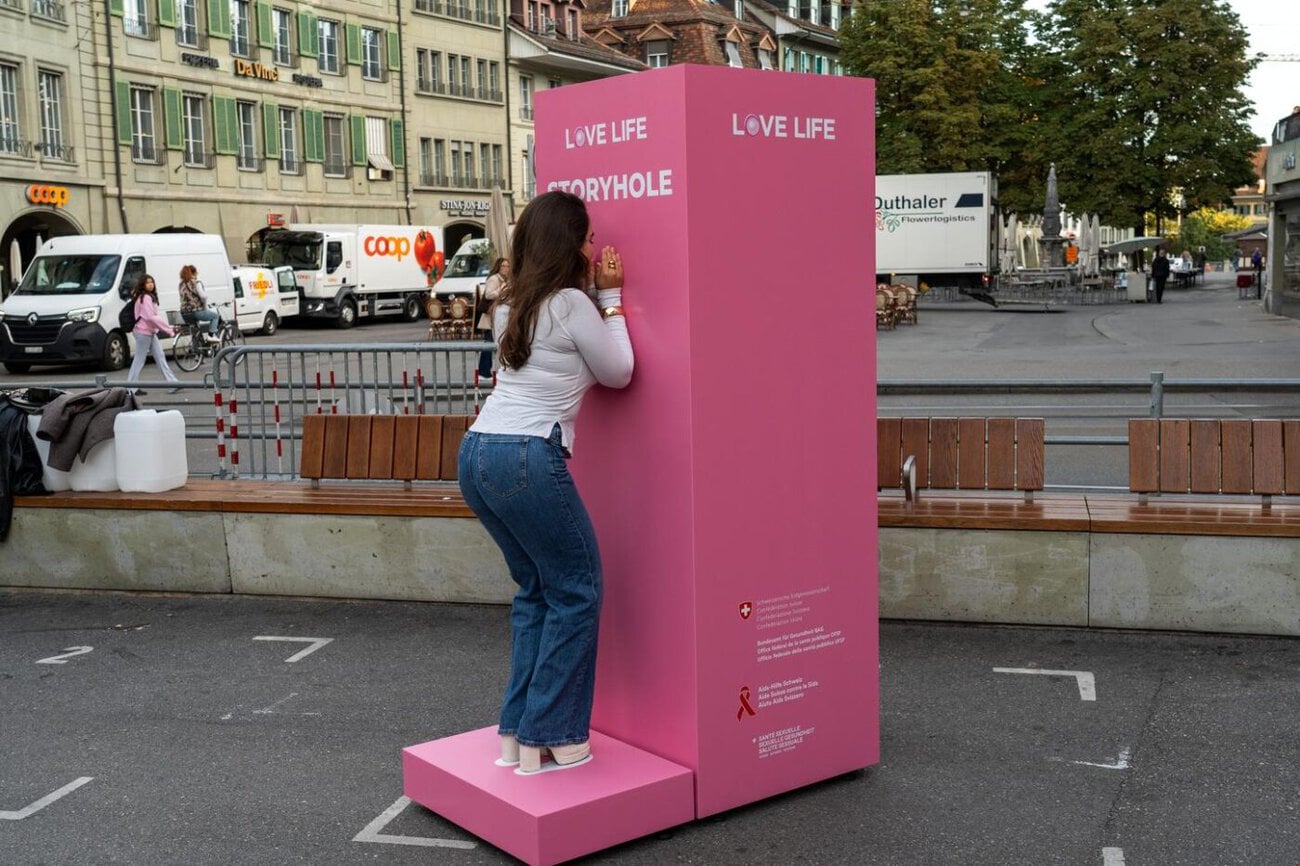
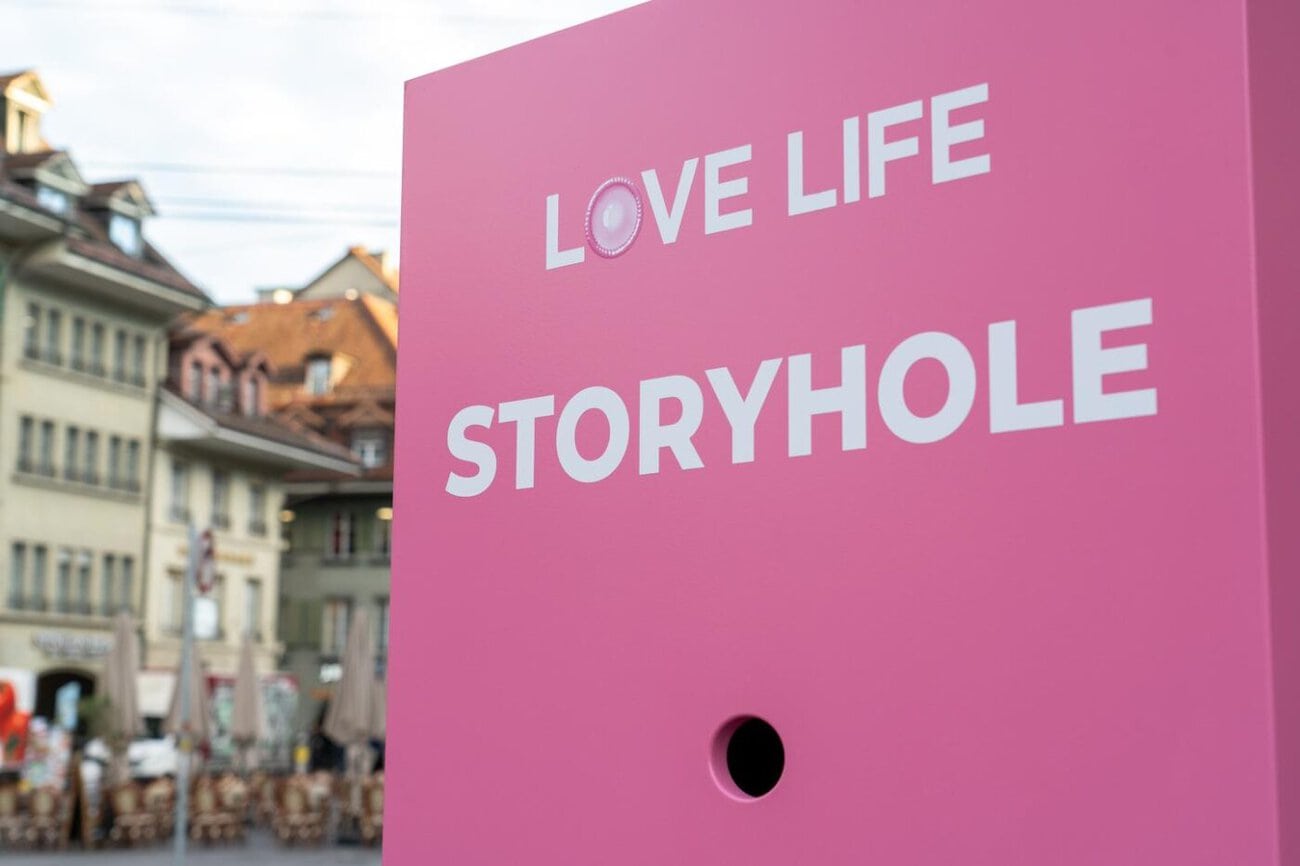
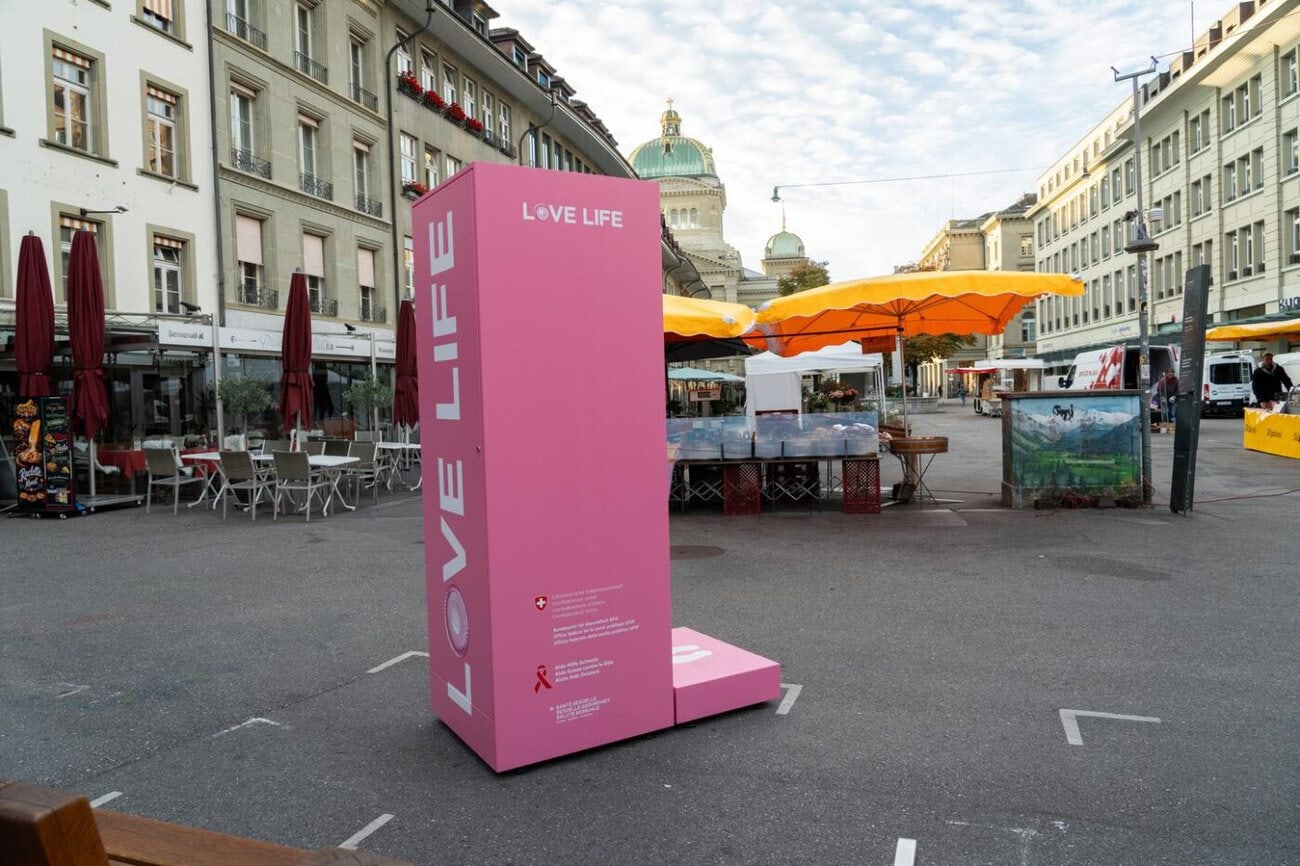
The Federal Office of Public Health’s (FOPH) LOVE LIFE campaign is now focusing on the 16- to 26-year-old age group. Every year in Switzerland, around 90,000 young people have their first sexual experiences. Some of them, even at a young age, belong to population groups at increased risk of contracting HIV or other sexually transmitted infections (STIs).
The LOVE LIFE campaign complements the school curriculum
This age group was chosen because it is heavily exposed to this issue. According to the cantonal curricula, HIV/STI prevention is also part of the school curriculum. The campaign provides clear and practical information on safer sex, thereby supplementing what is taught in school.
The campaign focuses on the realities of young people’s lives. LOVE LIFE reaches them in their own language and through the channels they use, especially on social media. Through formats such as videocasts and short videos, the campaign provides information on safer sex and maintaining sexual health.
Online and Offline Dialogue
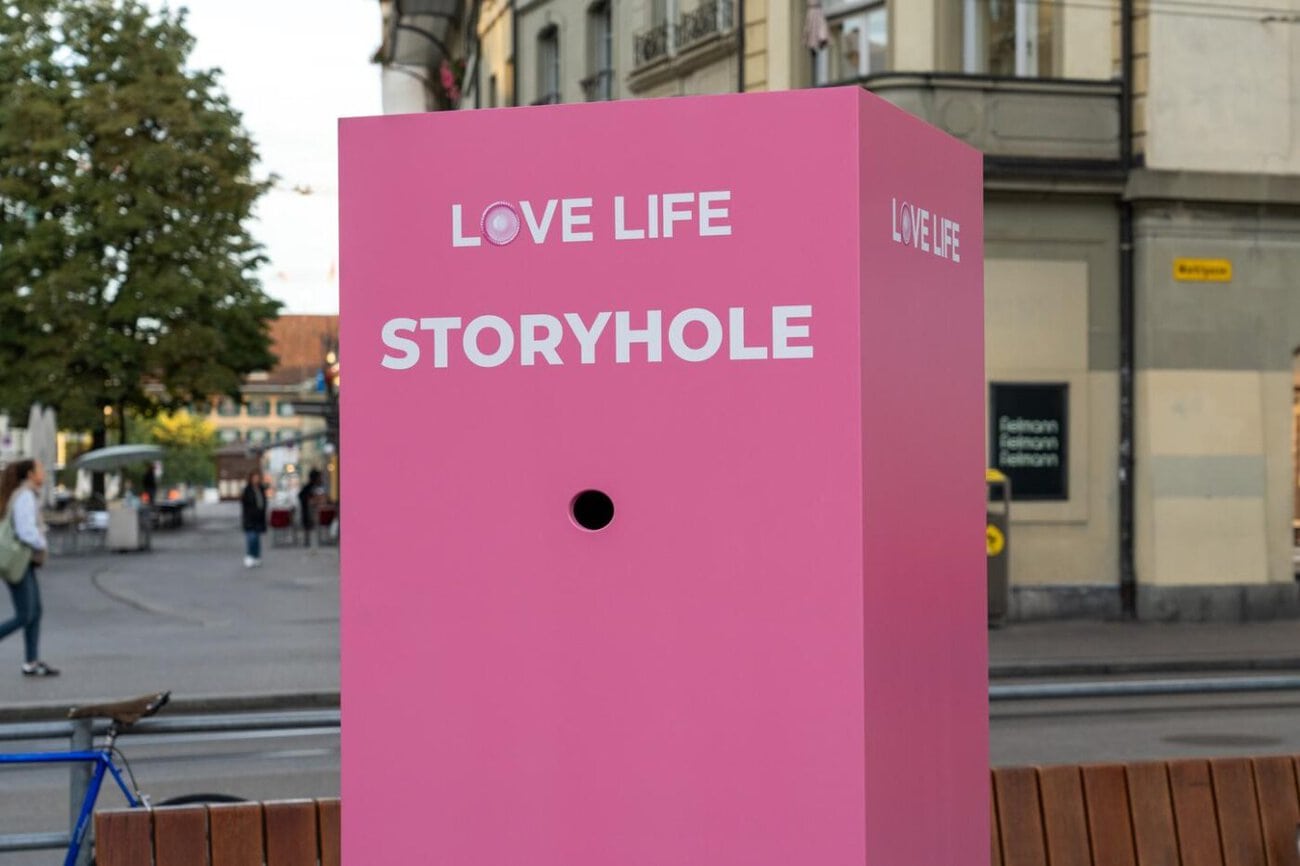
At the same time, the campaign creates space for exchange, dialogue, and active participation. Teens and young adults can ask questions both offline and online, voice their concerns, and engage with relevant topics. The campaign provides links to additional resources, such as the lovelife.ch website and the Safer Sex Check, which offers personalized protection and testing recommendations.
«Thanks to Switzerland’s pioneering work in the prevention of HIV and viral hepatitis, as well as improved treatment options, we have already achieved a great deal. However, there are still several hundred new infections each year,» said FOPH Director Anne Lévy at the launch of the campaign. It is therefore important to stay the course and provide young people with reliable information.
Parham Sendi, an infectious disease specialist and head of the Communicable Diseases Division at the FOPH, believes it makes sense to raise awareness early on, «so that young people know how to protect themselves from infections.» The Federal Commission on Sexually Transmitted Infections (EKSI) also supports this approach. President Milo Puhan explains: «After all, safer sex will only become firmly established in the population if each new generation is made aware of it.»
Part of a national prevention program
The LOVE LIFE campaign is one of the measures included in the National Program «Stop HIV, Hepatitis B, Hepatitis C, and Sexually Transmitted Infections (NAPS)» adopted by the Federal Council. Its goal is to ensure that by 2030, there will be no new transmissions of HIV or the hepatitis B and C viruses in Switzerland. The number of other sexually transmitted infections is expected to decline.
The campaign is jointly sponsored by the FOPH, Aids-Hilfe Schweiz, and Sexuelle Gesundheit Schweiz. An estimated 450,000 Swiss francs per year is expected to be available for this purpose from 2026 to 2029.

The Swiss Media Publishers Association (VSM) is calling for improvements to Switzerland’s platform regulation. The association welcomes the Federal Council’s efforts to advance the regulation of large platforms. However, the bill must also effectively protect media diversity and freedom of opinion. The VSM is calling for binding measures against systemic risks, greater transparency regarding algorithms, and consistent enforcement of the law against illegal advertising.
«International platforms have a significant influence on what news people actually see. This power to shape public opinion and their enormous economic market power must not go unchecked. Those who shape the public debate must also limit the risks to media diversity and democracy,» says VSM President Andrea Masüger.
On October 14, 2026, the Federal Council decided to proceed with the Federal Act on Communication Platforms and Search Engines (KomPG). The DETEC is to draft a message by the end of June 2027. According to the VSM, the bill contains important transparency and complaint-handling requirements but still has significant gaps.
Platform Regulation in Switzerland: Identifying Risks Is Not Enough
The VSM demands that large platforms not only assess systemic risks but also implement effective risk mitigation measures. These include risks to media diversity, the formation of public opinion, and democratic processes. In its consultation response, the association had already called for Article 20 to be amended accordingly. Platforms should also be required to mitigate identified risks through appropriate measures and to report on their effectiveness. According to the VSM, 65 consultation participants supported the risk mitigation requirement.
The European Digital Services Act (DSA) goes a step further in this regard. It requires very large platforms and search engines to assess systemic risks—including those to media freedom and media pluralism (Art. 34)—and to effectively mitigate them (Art. 35). According to the VSM, Switzerland should also follow this approach.
Limiting the Influence of Opinion, Combating Disinformation
The platforms’ algorithms help determine which journalistic content is visible and what reach it achieves. These decisions are often difficult for media companies and the public to understand. The VSM therefore calls for greater transparency in recommendation systems, genuine choices for users, and transparent decisions regarding the restriction of journalistic content. At the same time, platforms must counter the spread of disinformation, while safeguarding freedom of expression and information as well as editorial independence.
Enforce Existing Law
The association also sees a need for action regarding illegal advertising. Deceptive ads and identity theft are already prohibited. While Swiss media companies are legally responsible for their content and advertising, enforcement against international platforms is often difficult. The VSM calls for clear responsibilities, effective reporting and complaint procedures, transparent advertising archives, and legal representation for the platforms in Switzerland that is capable of taking effective action. Standards for Swiss media should not be lowered.
Protection of Minors, AI, and Copyright Law
The VSM expressly welcomes the planned expansion of child and youth protection. It views the risk mitigation measures for minors, the ban on profile-based advertising targeting minors, and the expansion of the reporting procedure to cover all allegedly illegal content in a positive light. However, media literacy is also essential. «Young people must learn to distinguish reliable news from disinformation and manipulated content. To do so, they need media literacy and access to independent journalism,» says VSM Director Pia Guggenbühl.
The association welcomes the fact that AI search engines are also to be covered by the KomPG. Clarification is needed regarding generative AI applications that select, process, and directly convey information. Copyright issues must be addressed in parallel as part of the implementation of the Gössi motion. The VSM calls for effective protection of journalistic content as well as fair licensing and remuneration models.
In light of the message, the VSM expects regulations that go beyond transparency requirements and effectively hold large technology companies accountable.
]]>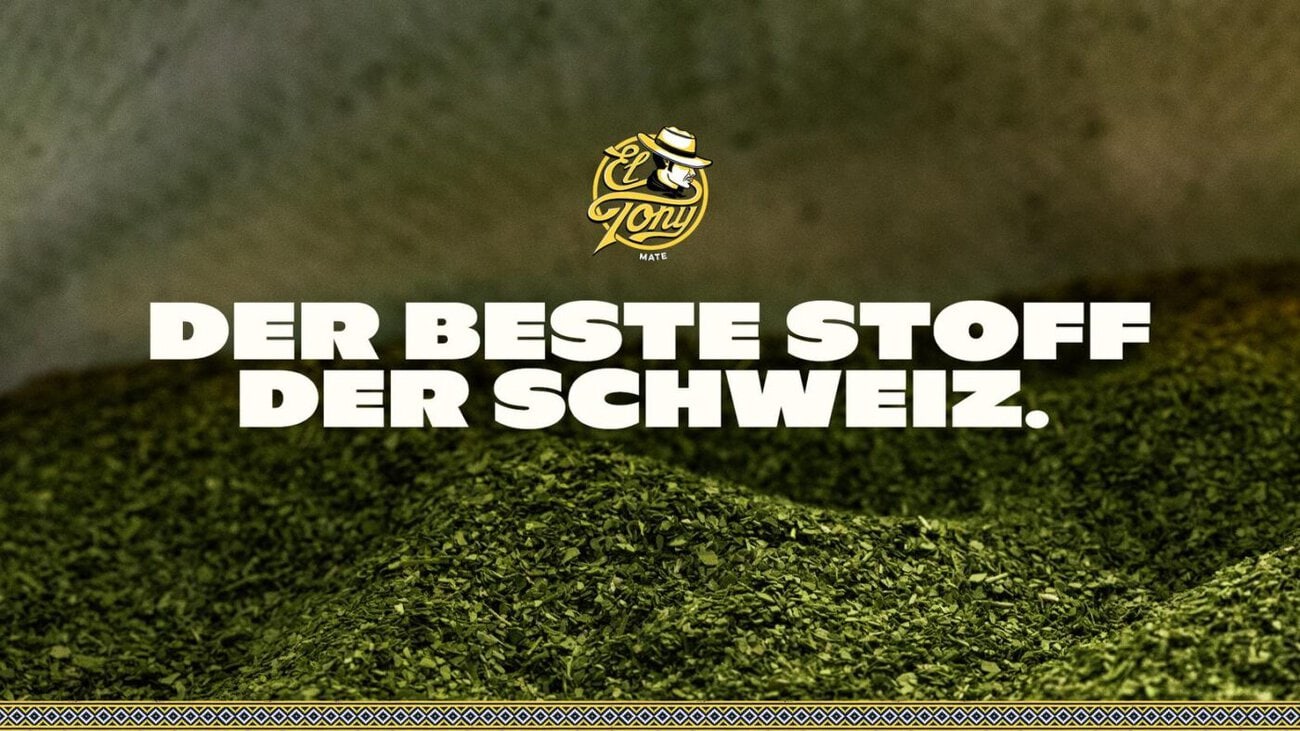
The El Tony Mate campaign celebrating the 100th anniversary of the Pindo plantation in Argentina is all about making a splash. Jung von Matt Limmat, in collaboration with El Tony Mate, has developed a Narcos-style campaign under the tagline «Switzerland’s best stuff—Energy you can trust.» Original images from mate production are paired with headlines that are unmistakably double-edged.
A Hundred Years of Plantation History as a Starting Point
According to the company, the highest-quality mate has been grown since 1926 at the Pindo Plantation in Argentina, founded by the Swiss Alfons Scherer. According to the press release, authentic Argentine cultivation techniques, Swiss precision, and strict quality standards form the «Reason to Believe» behind every can of El Tony. The anniversary year features two highlights: a limited-edition 100th-anniversary can and the Pindo Chronicles, a short documentary series about the plantation’s history. The series was conceived and produced by the Zoomer agency.
Alexander Bähr, Marketing Director at El Tony Mate, says: «The Swiss know what quality is, and they can taste it.» He adds that Pindo’s partners« 100 years of mate excellence provide the perfect opportunity for the company to tell the story behind it, »with pride and a touch of humor.”.
Be loud and shake things up: the El Tony Mate campaign
The goal of the anniversary campaign is to make a splash and shake things up. It combines original images from Pindo’s production facilities across TV, out-of-home (OOH), and social media with headlines that are unmistakably ambiguous. The copy and concept are designed to directly reinforce the brand promise «Energy you can trust» and build a bridge between the popular lifestyle beverage and the quality- and sustainability-conscious producer. The press release states that this play on double meanings isn’t meant to be provocative for the sake of it, but rather serves a brand that speaks as boldly as its product tastes.
Konstantin Schwone, senior copywriter at Jung von Matt Limmat, says: «It was important to us to convey El Tony’s quality in a way that is not only understood but also fun and exudes healthy self-confidence.» Thanks to a strong story and a bit of courage from everyone involved, they succeeded in doing just that.
Jung von Matt Limmat is responsible for the overarching concept, campaign design, text content, and the creation of campaign assets. The campaign has been running throughout Switzerland since October 1.
Responsible at El Tony Mate: Alexander Bähr, Director of Marketing
Responsible at Jung von Matt Limmat: Konstantin Schwone, Senior Copywriter; Luigi Vitiello, Senior Art Director.
External partners:inside: Zoomer (image and video footage for *Pindo Chronicles*), Marcelino Simon (edit), JingleJungle (voiceover and mixing), KiloKilo (final artwork and motion design)
]]>
AI-generated content and the algorithms of digital platforms are increasingly shaping which information becomes visible and receives attention. As a result, traditional media are coming under greater pressure, while at the same time it is becoming more difficult to identify the sources of information and the interests behind them. On November 9, 2026, pr suisse will host a roundtable in Bern to address the question of what responsibility professional communication bears under these conditions. The focus will be on the role of PR in democratic opinion-forming.
Declining Trust in the News
The Reuters Institute’s Digital News Report 2026 shows that in Switzerland, only 42 percent of respondents still trust the news in general. Internationally, social media and video platforms continue to gain importance as sources of information. According to the report, personalized information spaces can reinforce existing beliefs and make it more difficult to exchange different perspectives. This raises the question of who shapes public opinion and on what basis people evaluate information.
The Role of Public Relations: Between Impact and Responsibility
PR and communications professionals are also taking advantage of these new digital opportunities, as their goal is to generate interest in specific topics and encourage desired behavior. This raises several questions: Where is the line between legitimate advocacy and manipulation? How can trust be built in an increasingly fragmented information landscape? And how can professional PR contribute to an informed, diverse, and constructive public debate?
pr suisse will discuss these questions at the second roundtable, «The Role of PR in Democratic Opinion-Forming,» about three weeks before the next federal referendum Sunday.
Experts and Framework Conditions
Participants in the discussion include Prof. Dr. Diana Ingenhoff, professor of organizational communication and public diplomacy at the University of Freiburg, and Dr. Angela Müller, executive director of AlgorithmWatch CH. They will be joined by Urs Wiedmer, Head of Communications at the Federal Department of Education, Research, and Innovation (WBF) and spokesperson for Federal Councilor Guy Parmelin, as well as Mikis Graf, Managing Director of Bertakomm. The event will be moderated by Véronique Haller, co-founder of Momentum Strategists and member of the Société Romande de Relations Publiques (SRRP).
The roundtable will take place on Monday, November 9, 2026, from 5:00 p.m. to 7:30 p.m. at the Raiffeisen Forum, located at Schauplatzgasse 11 in Bern. Participation is free for members of pr suisse. Space is limited to 50 people; the registration deadline is November 1, 2026.
About pr suisse
According to its own information, pr suisse (Swiss Public Relations Association, SPRV) is the nationwide professional association for PR and communications specialists, with approximately 1,200 members. With seven regional chapters, the association has a presence throughout Switzerland. It connects communications professionals from agencies, companies, organizations, and government agencies; represents the interests of the industry; and is committed to quality standards, professional education and training, and the societal recognition of public relations.
]]>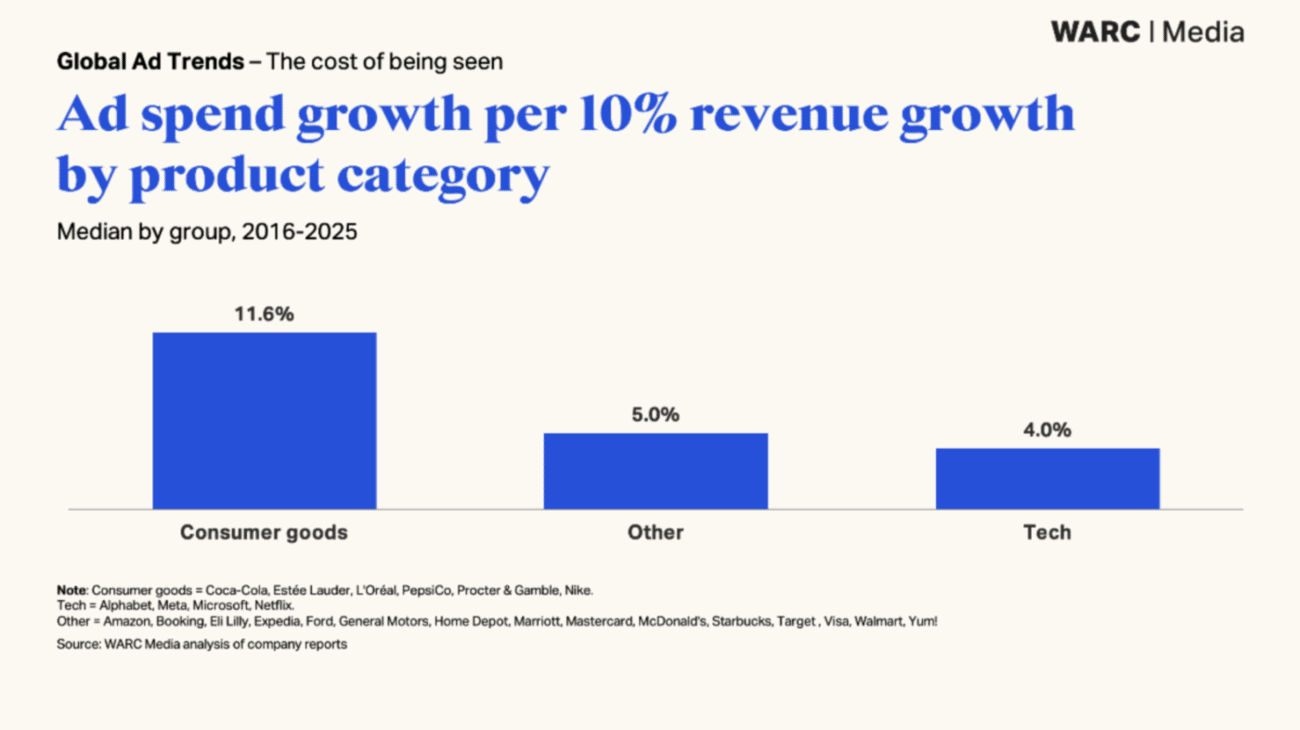
Ad spending by global brands is growing more slowly than their revenue. This is according to the report «Global Ad Trends: The Cost of Being Seen» by WARC Media. The study examines how advertising intensity has changed among 25 of the largest advertisers and to what extent major brand owners are driving the growth of the global advertising market. Consumer goods manufacturers are an exception to this trend.
Advertising Expenditures by Global Brands: Share of Revenue Declines
WARC Media forecasts that global advertising spending will grow by 11.9 percent this year to 1.34 trillion U.S. dollars. Adjusted for inflation, this represents a 61.3 percent increase over 25 years, driven by new channels such as retail media and platform advertising. However, advertising intensity has declined in recent years.
Among 25 major U.S. advertisers, the combined ratio of advertising spending to revenue fell from 6.1 percent in 2019 to 5.5 percent in 2025. This does not mean a retreat from advertising: Advertising spending rose by a combined 56 percent, while revenue rose by 73 percent.
Big Tech is driving down the rating
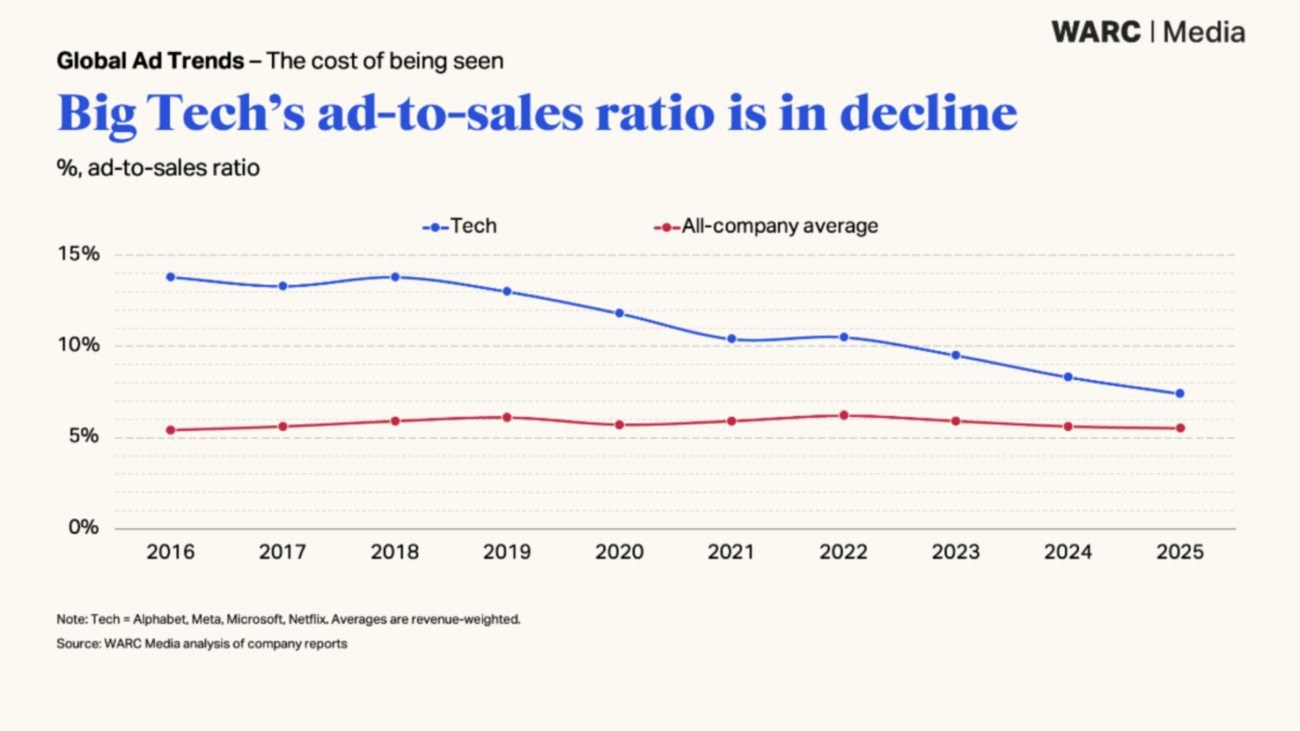
For Alphabet, Meta, Microsoft, and Netflix, the combined ratio fell from 13.0 to 7.4 percent between 2019 and 2025. Their combined revenue grew by 146 percent, from $379 billion to $931 billion. If the companies had maintained their 2019 spending rate, they would have invested $121 billion in 2025, according to WARC—$52 billion more than they actually did.
The consumer goods industry is taking the opposite approach
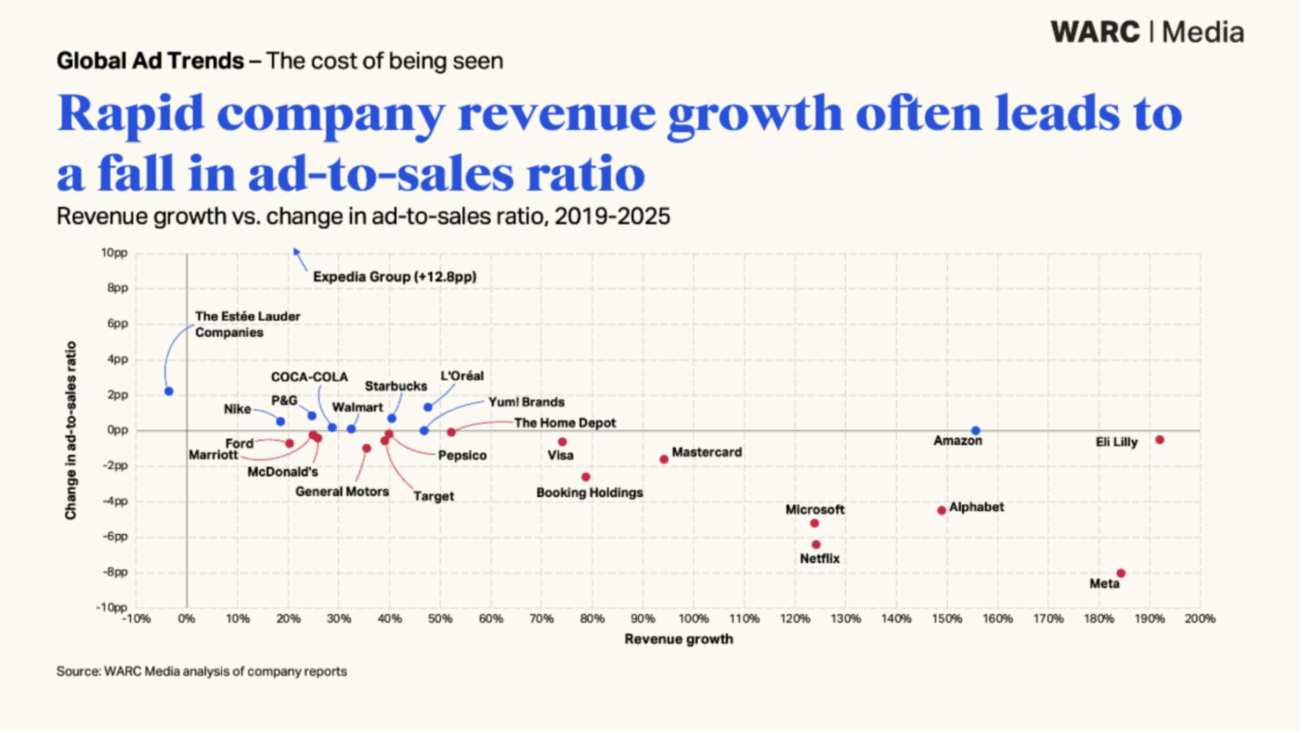
The six consumer goods brands analyzed—Coca-Cola, Estée Lauder, L’Oréal, Nike, PepsiCo, and Procter & Gamble—showed divergent trends. Five of them increased their ratio between 2019 and 2025, while PepsiCo’s remained largely stable. Due to weaker revenue growth, the combined ratio rose from 11.6 percent in 2023 to 12.5 percent in 2025. Their advertising spending grew by 36 percent from 2019 to 2025, while revenue grew by 29 percent.
The picture is mixed for the remaining 15 advertisers. The revenue-weighted average remained the same or rose slightly, but ten companies saw their share decline. Ford fell from 2.3 to 1.6 percent, General Motors from 2.7 to 1.7 percent, Visa from 4.8 to 4.2 percent, Mastercard from 5.6 to 4.0 percent, McDonald’s from 1.7 to 1.3 percent, and Target from 2.0 to 1.4 percent. Marriott, Booking Holdings, Eli Lilly, and The Home Depot also saw declines. Amazon and Yum! Brands remained largely unchanged, while Walmart, Starbucks, and Expedia saw their shares rise.
Three Factors Behind the Divide
WARC identifies three factors that influence advertising intensity. First, weak sales: Companies that maintain their advertising spending during difficult market conditions may see an increase in advertising intensity. Second, budget shifts: Funds that used to be allocated to sales teams for trade and shopper marketing are now flowing into retail media and, consequently, into advertising placements. Third, ownership of attention: Companies like Alphabet and Meta own an audience and can grow without having to pay for attention.
Alex Brownsell, Head of Content at WARC Media, says: «The global advertising market is growing rapidly, yet companies ranging from Meta to Mastercard and McDonald’s are spending a shrinking share of their revenue on advertising.» Only consumer goods companies, which were suffering from slowing revenue growth and saw their trade budgets shift to measured media, increased their advertising intensity. The expansion of platform spending by smaller companies and cross-border e-commerce providers is far outpacing the growth in advertising investment by major brands. This has major implications for the ecosystem of agencies and service providers in the enterprise market.
Methodology
WARC analyzed annual SEC filings from 25 large publicly traded U.S. companies. The ratio is calculated by dividing annual advertising spending by revenue and multiplying by 100. Since some companies report only combined sales and marketing expenditures, WARC supplemented the data with industry figures from Schonfeld & Associates and its own ROI benchmarks. WARC Media subscribers can read the full report. A podcast discussing the findings is scheduled to be available starting November 17.
]]>