
The campaign subjects show people rushing towards the eponymous viaduct arches. The activating motto "Off to im Viadukt" and the dramatic staging are intended to make it clear: Anyone looking for unique fashion, culinary and shopping experiences will find an open door at im Viadukt.
The campaign has been running in Zurich since May 22 as a poster, DOOH and on social media.


Responsible at the Viadukt Foundation: Caroline Zinsli (Manager & Center Manager at the Viadukt), Rahel Huber (Junior Manager & Marketing at the Viadukt). Responsible with Mona and Mateo: Mišel Gavran, Hannah Mey, Tabea Ott, Otis Horiuchi, Mona Fluri, Mateo Sacchetti. Photography & Film: Olivia Schenker, Oriana Tundo, Style Council.
]]>
The mood among people in Germany appears to be better than the general economic forecasts: 64% of the population as a whole describe their current personal economic situation as 'rather good' to 'very good' and expect it to remain so in the coming year. Readers of regional daily newspaper brands (print, e-paper, paid online offerings) are even more optimistic, with 70 percent rating their personal economic situation as good to very good. Another 70 percent expect no change in the coming year. Nevertheless, 46% say they are paying more attention to offers in advertising due to the inflation of recent years and are increasingly turning to cheaper own brands in stores (RTZ readers: 39%; total population: 42%). In general and across all sectors surveyed, Germans pay attention to value for money and high quality. Whether food or clothing, living or DIY, these items receive approval ratings of around 80 percent, while readers of regional daily newspapers are always slightly more quality-conscious.
What people look for when shopping
These are the findings of the latest "Germany, your shopping trends" study by the Score Media Group. The national marketing platform for regional daily newspaper brands wanted to know what people pay attention to when shopping, how they use new shopping services and tools, as well as their attitudes towards sustainability and fast fashion. Another aspect revolves around information behavior and attitudes towards advertising.
When it comes to the question of where people spend their money, there are clear differences between the individual sectors. While food is unsurprisingly predominantly bought in bricks-and-mortar stores (total: 87%; readers: 83%), consumer electronics often end up in the digital shopping basket (total predominantly online: 42%; readers: 41%). Interesting: Almost a quarter of paid online users already buy food primarily online (23%; RTZ readers: 9%). In the case of clothing, online and offline shopping are on a par (total predominantly online: 35%, predominantly offline: 33%; RTZ readers predominantly online: 34%, predominantly offline: 33%).
Information and advertising
How and where do people obtain information before making their purchases? How is advertising evaluated and used? Whether readers or the population as a whole: advertising in regional daily newspapers - printed, in the e-paper or on the news sites in front of and behind the paywall - enjoys the highest level of trust both in Germany as a whole (52%) and among RTZ readers (64%). Free weekly newspapers (readers: 58%; total: 47%) rank second, ahead of radio (readers: 54%; total: 45%) and linear TV (readers: 48%; total: 41%). In terms of the information content of advertising, free weekly newspapers and regional daily newspapers are the first choice for 55% of readers and over 40% of the total population. Radio (readers: 49%; total: 40%) and linear TV (readers: 48%; total: 40%) follow in second place.
These figures are confirmed by a look at purchase activation. Across e-paper, paid online offerings and the printed edition, two thirds of RTZ readers (67%), for example, specifically use brochures/inserts in their regional daily newspaper to plan their grocery shopping and 60 percent find advertising in their subscription newspaper useful. For 59 percent, advertising in the regional daily newspaper provides a good overview of offers and discount promotions. Of course, retailer apps are also relevant for offers and discounts these days: two thirds of respondents now use at least one app (RTZ readers: 65%).
]]>
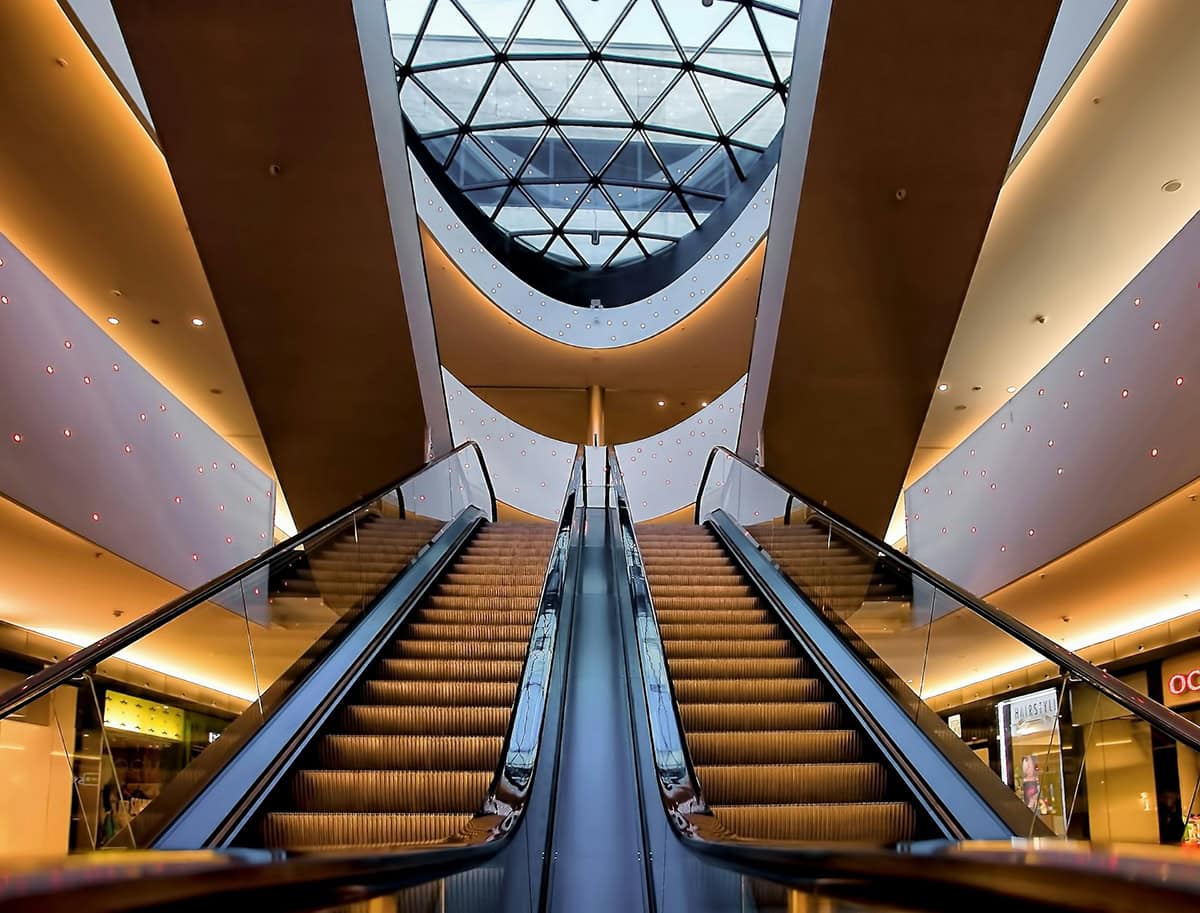
"The weeks before Christmas are very important for shopping centers and the retail trade in general," says Marcel Stoffel, founder of the industry organization Swiss Council of Shopping Places. "Experience shows that around 20 to 25 percent of annual sales are generated in November and December," says the expert.
In order to attract as many people as possible to the shopping centers during this phase, the centers offer various promotions and events. Because it is clear among operators that you can no longer score points with stores alone.
The Mall of Switzerland in Ebikon, Switzerland's second-largest shopping center with 65,000 square meters of space, has set up an indoor Halloween mini golf course, for example. Visitors can play there throughout October in a spooky Halloween atmosphere and post selfies on social media.
Christmas preparations are also already in full swing: the St. Gallen shopping arena, for example, is building a train on which customers can ride through a lavishly decorated polar landscape. And at Sihlcity in Zurich, a tree house is being built where they can enjoy wintery dishes before Christmas. Fairy lights and lots of decorations are a matter of course at all the centers.
Online retail remains major competition
"If you feel comfortable, you stay longer and spend more," says Stoffel. However, it is difficult to measure whether all this effort is financially worthwhile for the centers. "But those who save on visitor events and decorations will notice in the long term. Because the competition never sleeps," he says.
Shopping can also be done online. But towards the end of the year, the shopping experience will come to the fore. This allows bricks-and-mortar retail to set itself apart from online retail, explains UBS retail expert Meret Mügeli. After all, online shopping in particular is causing problems for shopping centers.
It is true that online business stagnated in the first half of 2024 at 3% compared to the previous year. But Mügeli says: "This slowdown cannot be interpreted across the board as a shift back to bricks-and-mortar retail".
Rather, following the sharp rise in online shopping during the coronavirus pandemic, this is probably a continuing normalization effect. "On the other hand, consumer demand is subdued overall, which is also reflected in online retail sales."
The expert assumes that total Swiss retail sales will increase by 0.3% in real terms - i.e. taking inflation into account - in 2024. "Adjusted for prices, there will be a slight improvement in momentum, as last year was characterized by a significant slump in demand," she says.
Restraint in consumption
Shopping centers are also noticing the subdued mood among consumers. "The general rise in prices can of course be felt," says Sihlcity, for example. While footfall is more or less stable, people are also shopping and consuming more consciously and at lower prices, says center manager Sandro Engeler.
Nevertheless, the shopping centers are generally positive, even if they are not making any sales forecasts. "Compared to 2019, we are seeing a slight upward trend in both sales and visitor numbers," says Fabienne Diez, Center Manager of Shopping Arena St. Gallen. Compared to the previous year, sales are "stable", she adds.
At retail giant Coop, which operates 50 shopping centers such as Volkiland, Letzipark and the Wankdorf Center, the trend is also positive, according to a spokesperson. "We are confident that we will achieve our goals," he says.
Expert Stoffel hears different things from the sector: "The mood is particularly good in centers that are fully let. Vacancies are noticed by customers and have an impact on overall sales."
Small and very large shopping centers also tend to fare better than medium-sized centers with around 20,000 square meters of space. "The smaller ones are often well utilized as local supply centers and larger ones can also integrate offers such as leisure or health facilities that attract customers thanks to their space," says Stoffel. But regardless of size, marketing activities will increase at all centers in the coming weeks - and the fairy lights will twinkle. (AWP/Tabea von Ow/swi)
]]> Consumers are currently paying even more attention to quality and seasonality than to the cost of products when shopping for food. Regionality and animal welfare are also more important to them than price this year - throughout the DACH region. Quality is the undisputed number one issue in Switzerland. Surprisingly, price plays a slightly lesser role: it is still important for three quarters of Swiss consumers, compared to 79% in the neighboring German-speaking countries.
This was the result of a user survey conducted by Bring! Labs AG, operator of the shopping list app Bring! and the brochure app Profital. In collaboration with the market research institute Statista, the Swiss company conducted a survey on shopping behavior in the DACH region. Almost 2,800 Swiss users of the Bring! and Profital apps were surveyed, as well as around 23,000 German and around 3,000 Austrian users of the Bring! app.

Quality most important
Just like in the other DACH countries, quality is the most important topic for food shopping in Switzerland in 2024 with 96%. Although price still concerns 75% of consumers, its importance has decreased compared to other topics, meaning that it is currently in sixth place. Seasonality, on the other hand, is the trend of the year: while it played a role for just 58% in the previous year, it is currently an important topic for nine out of ten Swiss (90 %) when buying food. Regionality (89 %), animal welfare (82 %) and sustainability (77 %) also ranked higher than purchase price. The Nutri-Score, on the other hand, received little attention: for just 33% of respondents, it plays an important role when shopping.
Saving in other areas
Even though fewer consumers are thinking about price first when buying food than in previous years, this does not mean that the Swiss do not want to save money. However, they are less likely to tighten their belts when it comes to food than in other areas - above all clothing and shoes (50 %) or furniture and furnishings (41 %). Only just under one in eight (13 %) plan to reduce their spending on food in 2024. When the Swiss save on food, it is primarily on meat and fish (38 %), unlike in neighboring German-speaking countries.

This is also in line with the food trends for 2024. When asked which diets will influence them in the current year, a third said organic (33 %), followed by sugar-free (31 %) and vegetarian (22 %). The Swiss therefore want to eat more consciously and healthily in 2024.
A small majority (52 %) of Swiss consumers are convinced that a high income is a prerequisite for a healthy diet. There is a corresponding need for retailers and manufacturers to provide information to show that a healthy diet does not necessarily have to be associated with high costs.

Other results:
- 52 percent of respondents are more likely to go to the supermarket than the discount store for their weekly shopping compared to the previous year
- 60 percent plan their purchases more carefully than last year
- For 54 percent, offers and promotions are important when buying food
- 62 percent buy goods in stock when they are on offer
The entire report is available here.
]]> Swiss consumers are paying increasing attention to offers when planning their purchases - and increasingly doing so digitally. This is the finding of the Shopper Guide 2023 by Bring! Labs AG, operator of the shopping app Bring! Every year, the Swiss company analyzes the shopping behavior of Swiss consumers on the basis of anonymized shopping lists from the Bring! app and a survey among its users.
Offers are playing an increasingly important role in shopping planning - from the choice of brands and products (46 percent) to ultimately the choice of store (42 percent). The Swiss inform themselves digitally about current offers; almost one in two (49 percent) use brochure apps, websites or offer newsletters for their shopping planning. But other factors beyond price also have an influence on long-term shopping behavior - for example, zero waste (31 percent) emerged as an important factor for the first time.
80 percent pay attention to the price
A trend is continuing: The Swiss are increasingly looking at money when planning their purchases. For example, 80 percent currently pay attention to product prices when shopping. Current offers are also becoming increasingly important: While they were very important for 36 percent in 2022, this figure rose again significantly to 46 percent in 2023 and thus includes almost half of all Swiss consumers. A development that is certainly due to the sharp rise in consumer goods prices as a result of inflation. Almost half of consumers (46 percent) also choose certain brands and products on the basis of current offers and promotions; 42 percent even select which store they store in on this basis.
To save money, the Swiss prepare their purchases well: For almost one in three (31 percent), extensive study of advertising brochures is an integral part of their weekly planning. More and more are making use of digital options. Around half (49 percent) of those surveyed said they find out about current offers and special promotions online, whether via brochure apps, social media, newsletters or special websites. For three quarters (75 percent) of those surveyed, digital formats have a clear advantage: thanks to the smartphone, they are always at hand and can therefore also be viewed while on the move.
For 45 percent, the ecological aspect also plays a role in their choice of digital handouts. Overall, the Swiss:in plan around one to two purchases per week.
The Shopper Guide 2023 stands here ready for download.
]]>