
Rethinking Emotional Advertising
What exactly happens on a person’s face when they watch a commercial—and how does that affect memory, liking, and purchase intent? These questions are at the heart of the new study «Follow the Feelings—Emotional Advertising as an Impact Booster» by Screenforce and the research institute eye square. For the first time, the study focuses on the power of emotional appeal—with a level of precision that was previously unattainable.
The system uses the AI-powered measurement method Hume AI, which analyzes facial images of individuals while they are consuming media and advertisements. The system detects highly nuanced facial expressions and microexpressions and can distinguish between 48 different emotional nuances—ranging from joy to nostalgia to empathy.
Methodology: Reanalysis of over 10,000 advertising exposures
The study is based on a comprehensive analysis of two existing Screenforce studies: «Track the Success» from 2021 and «Mapping the Impact» from 2023. Both studies provided datasets containing more than 10,000 advertising exposures, including facial images that could not be analyzed in such detail during the original survey. The focus of these previous studies was on attention; emotions were only touched upon. The new study fills this gap.
The right balance of emotions is what matters
A key finding: It’s not just a matter of how many emotions are triggered, but which ones. Too few emotions quickly become boring; too many confuse viewers and overwhelm them. The optimal number is around 22 emotions triggered per ad exposure.
Emotions stemming from what is known as the «interest factor»—including interest, fascination, admiration, and appreciation—have a particularly strong impact on ad recall and purchase intent. Negative emotions such as shame or guilt, on the other hand, should be avoided at all costs: they cause people to view advertisements for a shorter time and remember them less well afterward. The link between negative emotions and reduced viewing time can be clearly demonstrated statistically.
TV offers the best platform for emotional advertising
A comparison of media channels shows that TV offers a particularly effective platform for emotional advertising. On TV, positive emotions have the strongest effect on unaided ad recall and purchase intent. They are particularly effective on the big screen—in a relaxed, “lean-back” setting. Attention metrics also favor linear and broadcast-based formats: For TV, the median viewing duration per ad exposure was 15.0 seconds; for BVOD (Broadcaster Video on Demand), it was 19.8 seconds—compared to 7.4 seconds on YouTube, 1.9 seconds on Instagram, and 2.0 seconds on TikTok.
Spontaneous ad recall reflects these trends: 13 percent of TV exposures were recalled correctly, while for BVOD the figure was 20 percent—compared to just 1 percent for Instagram and 3 percent for TikTok.
Creative stylistic devices as targeted emotional boosters
The study also provides specific recommendations for creative design. Strong audio branding serves as an emotion booster: A well-known song measurably increases feelings such as joy, excitement, amusement, and ecstasy. Brand-specific songs also foster positive emotions like joy, satisfaction, and love, while simultaneously reducing anxiety and distress.
Storytelling fosters emotional engagement, with likable protagonists having an enormous impact: admiration increases by 11 percent, and satisfaction by 10 percent. Humor works across all levels and significantly increases joy, amusement, excitement, and love, while reducing shame and pain. Sustainability communication triggers surprisingly strong positive emotions—joy increases by ten percent, and excitement by nine percent.
Not every emotional approach is suitable for every usage situation. The analysis shows that the time slots «Work is Done» (end of the workday) and prime time (6:00 p.m. to 10:00 p.m.) offer the best conditions for emotional advertising. During the day—when there are more distractions—and late at night, emotional commercials have a harder time making an impact.
Emotional Advertising as a Strategic Priority
Malte Hildebrandt, CEO of Screenforce, summarizes the study’s key finding as follows: «Emotions should be at the heart of every campaign: They capture attention, foster positive associations, and enhance a brand’s significance at the very moment consumers are ready to buy.»
The study thus also confirms the widely cited findings of advertising researcher Peter Field («The Extraordinary Cost of Dull»). Field describes what he calls the «Tedium Tax»: To achieve the same impact with a boring campaign as with an emotionally compelling one, a significantly higher media budget is required.
The study «Follow the Feelings – Emotional Advertising as an Impact Booster» is available for download in the Research section of Screenforce: https://www.screenforce.de
]]>
In its latest study, the TV genre initiative Screenforce Switzerland examined the positioning of YouTube compared to TV in the Swiss advertising market. The Insight Institute conducted qualitative interviews with 26 video experts. The results were presented for the first time at the Screenforce Day at the end of May.
The focus was on six comparison criteria: Targeting, flexibility, measurement, reach, price and quality. The results show clear differences, particularly in terms of targeting, advertising impact and the quality of the advertising environment. While TV stands for broad audience appeal, high credibility, demonstrable measurability and a consistent quality environment, YouTube scores above all for flexibility and granular targeting.
From the respondents' point of view, TV formats perform better in the evaluation of content: they are considered to be of higher quality, more credible and more effective - not least due to the usage situation, the technical quality on large screens and the stronger emotionalization through storytelling.
At the same time, respondents also see advantages in YouTube, particularly in terms of budget efficiency, speed and target group precision. However, a price comparison is difficult, as numerous factors such as spot length, target group definition and contact frequency have to be taken into account.
YouTube: neither friend nor foe
Overall, the experts see YouTube neither as direct competition nor as a supplement to TV, but as an independent channel with specific strengths. The choice between TV and YouTube therefore depends heavily on the campaign objective, target group and budget.
As one interviewee summed it up: "TV is like a Zürcher Geschnetzeltes, YouTube is fast food. Both taste good." The full study results are available on the Screenforce Switzerland Website retrievable.
]]>
In this year's Screenforce study "The World of Screens", Screenforce Switzerland teamed up with market research institute GfK Switzerland to investigate which moving image content people in Switzerland consume on which channels and screens and to what extent device usage is changing. Advertising recall and advertising perception were also surveyed. Screenforce presented the results for the first time on Tuesday as part of Screenforce Day 2024 (Werbewoche.ch reported).

TV the most important channel, TV sets and cell phones the most popular devices
Among other things, the survey asked which media channels are used for the moving image content "news", "feature films", "series", "sport", "entertainment" and "knowledge". For all content, respondents cited TV - live or time-shifted - as their most important channel. According to the study, TV is clearly ahead of social media, YouTube and video streaming for most content.

Unsurprisingly, the big screen, i.e. the TV set, is still the most frequently used device for all TV content. Just behind the big screen and with an upward trend is the cell phone, which is used most for TV content from the "news" area. Video streaming also shows a similar distribution of device usage, albeit at a lower level. Here too, the TV set is considered more important than the cell phone by the study participants overall.

The situation is different for YouTube content, where the cell phone is the most relevant for all content. The medium-sized screens of tablets, laptops and desktops play a subordinate role for all content.

Young people also consume TV content on the small screen
Screenforce paid particular attention to device usage for TV content in the study. To this end, the three target groups 15-29 years, 30-49 years and 50+ years were examined in detail. Unsurprisingly, the young target group in particular is increasingly consuming TV content on their cell phones - in the case of "news", "entertainment" and "knowledge" content even more than on their TV sets. Cell phones are also becoming increasingly popular among the middle target group, although it is only for "news" that more people watch on their cell phones than on their TV sets. In the 50+ age category, there is no serious competition to the TV set.
Advertising on TV is remembered and is best received
In order to determine advertising recall on the individual channels, the study participants were asked to indicate on which channel they remembered an advertisement from their favorite brand. More than a third indicated live TV. Together with time-shifted TV and TV streaming, the TV offerings achieved an advertising recall of 60 percent.

In terms of screens, as with importance and usage, TVs and cell phones are also well ahead of medium-sized screens in terms of advertising recall.
Finally, Screenforce wanted to know how advertising on the individual channels scored in terms of authenticity, trustworthiness, quality, likeability, credibility and emotionality. According to the study, the verdict here is also clear: TV advertising is best received in all aspects.

Together with the market research institute GfK Switzerland, the TV genre initiative Screenforce Switzerland conducted a representative online survey of 1501 people aged 15-74 in German-speaking (1002 people) and French-speaking (499 people) Switzerland. The surveys took place from April 3 to 17, 2024.
]]> For the study, the Insight Institute surveyed over 1,000 people online and 30 people by means of in-depth interviews. Based on the study results, Screenforce Switzerland determined the credibility factor on behalf of the Arbeitsgemeinschaft Fernsehwerbung Schweiz (AGFS), which means that the findings from the study can also be applied in practice.
In just over 1,000 quantitative online interviews, as well as 30 one-hour in-depth interviews, the Institute asked participants in February and March of this year about the credibility of the moving image channels TV, YouTube, Instagram, Facebook and TikTok and the advertising on these channels.
The respondents had to state how they perceive the credibility of a channel and the associated advertising. For each channel, they were also asked how high they expected the credibility to be. This resulted not only in the expected and perceived credibility, but also the so-called credibility gap, i.e. the difference between expected and perceived. To be able to measure credibility, the institute determined so-called drivers and barriers for the credibility of the individual channels. In addition, there are 16 credibility aspects (8 each for channel and advertising), which emerged from the in-depth interviews and were answered by the respondents and weighted according to their relevance.
TV is number one in all 16 credibility aspects
The results clearly speak in favor of TV. Both expected (74 percent) and perceived (72 percent) credibility is by far the highest for the oldest of the five channels. The same applies to TV advertising (67 percent perceived credibility). The channel was thus rated more credible than YouTube by almost a third (55 percent expected / 44 percent perceived). Social media platforms are clearly at the bottom of the list, each with less than 30 percent perceived credibility. The same picture is reflected in advertising recall, where TV is also at the top, and is repeated in the credibility aspects, where TV was rated best for all 16, in some cases by over 20 percentage points more.
Based on the study results, Screenforce Switzerland determined the credibility factor on behalf of the Swiss Television Advertising Association (AGFS). This should enable the findings from the study to be applied in practice. For this purpose, Screenforce Switzerland calculated the 16 credibility aspects with their weighting, whereby a factor could be determined between each moving image channel. This results in statements such as: A contact on TV is 1.56 times more credible than a contact on YouTube.

Study for download as PDF.
]]> Screenforce Day 2022 will again take place on site. After the digital edition in 2021, this year's highlights and insights on TV and moving images will be presented live at the Kongresshaus Zurich from 8:15 a.m. to 12:00 p.m., followed by a standing lunch. The event will be hosted by German TV presenter Wolfram Kons and organized by Screenforce Switzerland.
In the 2022 edition, our industry experts await guests with six attractive articles on all aspects of TV. The new Screenforce Switzerland study shows what the credibility factor is all about. There is also an international look at Total Video, hybrid TV research is explained in simple terms, as is the interplay between data and content in program research. In addition, Feldschlösschen presents how their TV campaigns drive brand relevance through emotionality and reach. Finally, the audience learns the top factors for successful change.
Details on speakers and registration: www.screenforce.ch
Screenforce is a TV genre initiative of the DACH region. The alliance consists of 12 TV marketers for TV and moving images and represents 95% of the TV advertising market of Germany, Austria and Switzerland. In Switzerland, Screenforce is driven by the Arbeitsgemeinschaft Fernsehwerbung Schweiz AG (AGFS). This is an association of the national marketers Admeira, CH Media, Goldbach Media and the Interessengemeinschaft Elektronische Medien (IGEM).
]]>
Following editions 1 and 2 of the Screenforce Academy, the third edition of the TV event will take place from April 5 to 7. The event is free of charge and will be held virtually in the morning. German TV presenter Viviane Geppert will moderate the program, which is made up of keynote presentations, cases and talks.
The presentations will be given by experts from the leading TV marketing companies and their parent companies, as well as from external companies. The target group includes young professionals, students, young marketers and anyone interested in media, marketing, journalism and communications.
This year's program includes Patrick Esume, for example. The American football expert will talk about how the Superbowl is setting new standards in TV and streaming. In addition, Alena Buyx, Director of the Institute for History and Ethics of Medicine at the Technical University of Munich TUM, will talk about media and responsibility. Thilo Mischke, journalist, author and TV presenter, will address the topic of investigative journalism in a talk.
Here to register for the Screenforce Academy 2022.
The Screenforce Academy was launched by the TV genre initiative Screenforce. With its partners, the TV marketers' initiative covers around 95 percent of the TV market in the DACH region and supports advertising impact and media research as well as Total Video communications and marketing. In the future, the Academy will be held twice a year, in spring and fall. The aim is to establish the event in the marketing and media industry in the long term.
]]> The first virtual Screenforce Academy in spring was very well received by the more than 1,000 participants, as the organizers write in a statement. The fall edition will now follow from October 19 to 21. The event will focus on professional and practical training in the media world, which is constantly evolving at an ever faster pace.
New job profiles are emerging, others are undergoing lasting change. On three mornings, Screenforce gives participants an insight behind the scenes of TV. In addition, participants have the chance to interact. There will be chats, Q&A sessions and networking opportunities.
As with the last event, there will be a variety of speakers and topics. The Screenforce TV marketers will impart TV knowledge in exciting presentations. Among other things, the audience will learn more about the role of TV journalism in society, data science in TV marketing and the Olympic Games on TV. The event will be hosted by German Taff presenter Viviane Geppert.
The Occasion will once again take place virtually and free of charge.
]]> Screenforce, the initiative of TV and moving image marketers in Germany, Austria and Switzerland, presents the experimental DACH study "Track the Success", the further development of the highly regarded advertising impact study "Not all Reach is Equal" from 2020. Once again, the study compares the impact of identical advertising spots on different media channels -TV, BVOD, YouTube and Facebook. This year, however, the focus is on the reception situation during media consumption.
At its core, "Track the Success" explores the question of how viewers and users receive media content and what implications this reception situation has on the impact of advertising. Three factors were examined for this purpose: Perception, Reaction and Impact. Perception" includes all variables relating to the technical playback of the advertising: how long the advertising was played, with which sound setting and which screen coverage. The second factor is the viewers' visual attention: How long did they look at the screen during the ad?
"Reaction" means emotional response and activation. How well does advertising succeed in emotionalizing the viewer? Are they more relaxed or activated when viewing content and advertising?
"Perception and reaction are decisive for the effect. They describe the reception situation in detail and thus provide indications of the contact quality, which ultimately explains the differences in impact," explains Malte Hildebrandt, Managing Director of Screenforce Germany. "With the Track the Success study, we can validly prove on the basis of high case numbers that TV and BVOD are clearly superior to YouTube, but especially Facebook, in all categories examined."
Memory best with TV advertising
Advertising on TV is particularly effective. It is best remembered spontaneously and is also ahead in aided recall. In comparison, TV achieves the strongest effects in free advertising recall with 52 percent, followed by BVOD (44%). The US platforms YouTube (34%) and Facebook (30%) follow in 3rd and 4th place.
TV is also ahead in terms of aided advertising recall with 60 percent, while BVOD is almost on a par with 57 percent. YouTube (47%) and Facebook (43%) place well behind. These significant differences in impact are all the more remarkable because BVOD and YouTube were each tested half on smart TV and half on smartphone. This does not correspond to the real distribution of usage. BVOD offers are predominantly used on the smart TV, YouTube on the smartphone. This tends to give YouTube an advantage in the context of the study. This is all the more true because only non-skippable ads were tested on YouTube to ensure the fairest possible comparison of the media.
Skippable advertising is much more widespread in reality, however. On Facebook, half were optimized commercials. The ranking of the media in advertising recall is identical for Germany, Austria and Switzerland, with slightly varying figures.
Purchase intention difficult to influence
Purchase intention is generally more difficult to influence because it depends on several factors. The differences are therefore smaller, but the pattern remains the same. TV and BVOD are tied with 26 percent each, followed by YouTube (23%) and Facebook (20%).
Emotionalization influences attention
Looking at the overall emotionalization during attention to the ad, BVOD is in first place with 6.1 seconds, followed by TV (5.4 sec) and YouTube (5.3 sec). Facebook (1.7 sec) cannot achieve comparable emotionalization. Positive emotions are so important because people are then more receptive to advertising messages. Consumers who are positively associated with a brand are generally also more willing to buy.
Emotionalization: Differences between content and advertising
The differences between content and advertising are also striking. In TV and BVOD, advertising has a comparably strong emotional impact as content. (TV: content 33%, advertising 31% // BVOD: content 38%, advertising 35%). For YouTube, the discrepancy is somewhat greater, at minus 5 percentage points (content: 35%, advertising 30%). At minus 21 percentage points, the losses to content are highest on Facebook (content: 33%, advertising: 12%).
De- and tense reception
TV as a lean-back medium shows a relaxed state of viewers during advertising, while YouTube as a lean-forward medium shows a somewhat more tense reception of advertising. This indicates a stronger disturbance by the advertising. BVOD sorts itself in between. With Facebook, the fleeting nature of the contact means that the spots are not very activating.
Change between content and advertising is perceived differently
TV shows a balanced activation level during advertising and content. On Facebook, the changes between content and ad are too fast to lead to large breaks in activation. The break is all the more obvious with YouTube: Whereas with TV, advertising is learned and accepted and "runs with it," a change between content and advertising on YouTube generates significant fluctuations.
For the study "Track the Success" Eye Square created 549 so-called "in-home media ethnographies" in the period from January to March 2021. This refers to precise recordings of the media usage behavior of study participants in their familiar surroundings. This procedure offers the great advantage of mapping reception behavior as undisturbed as possible and thus as close to reality as possible. An online survey of the participants, in which classic advertising impact parameters such as advertising recall and purchase intention were determined, rounds off the study design. Eight different advertising media from brands in various industries were analyzed. The study results are available at Screenforce.ch available for download.
]]>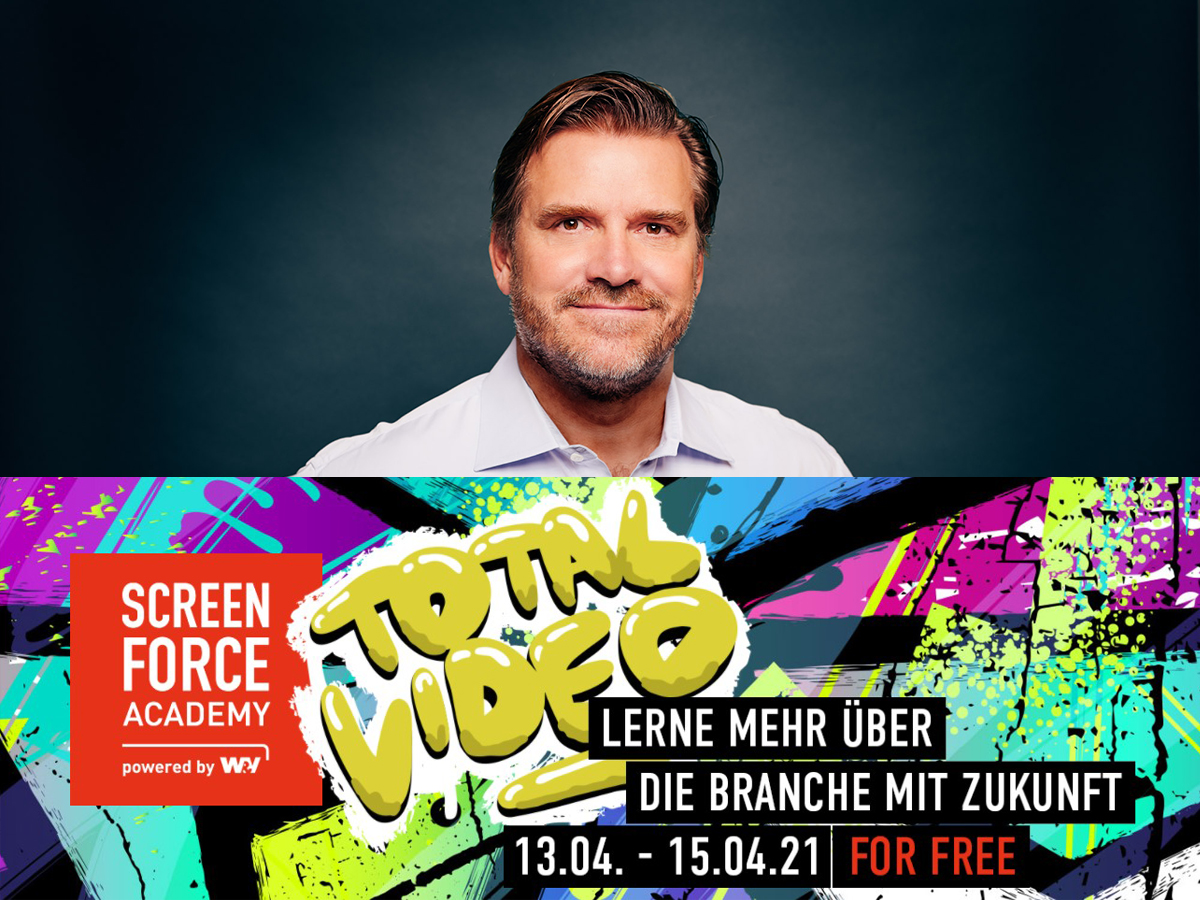
Advertisingweek.chMalte Hildebrandt, the Screenforce Academy is aimed at "students in the field of media and communications as well as young professionals and marketers who want to increase their career opportunities in the long term. What is offered to them, in brief?
Malte Hildebrandt: Our participants get an all-round look behind the scenes of TV and digital moving image offerings as well as the latest trends in advertising. All this is presented by real movers and shakers in our industry. What we present over the three days are not off-the-shelf lectures. All presentations are brand new and have been explicitly tailored to the needs of the young media generation. Moving image is a growth market. All doors are open to young talent.
What are the challenges of designing and delivering training programs like the Screenforce Academy "remotely"?
By now, we're all used to participating in events virtually. The rapid developments of the past year have naturally played into our hands. University seminars have long been held remotely, and much of our work is done via video conferencing. Although I'm very much looking forward to the time when we can once again have face-to-face exchanges at events, we'll be sticking to the virtual concept at our Academy in the future, too. It has the enormous advantage that we can put together a first-class program for our participants without limiting the number of guests. We now have just under 1000 registrations. That would have exceeded our capacities as an on-site event.
Your target group for the Academy is perhaps the first generation of junior communicators and junior marketers, whose youth has been shaped more by digital media than by TV. Does that change the approach Screenforce uses to address these people?
Not at all, because we've been taking a holistic approach for years. Just take the title of our Academy: "Backstage Total Video - Behind the Scenes of all the Screens". The decisive factor is not the transmission path, but the quality of the content.
Especially here in Switzerland, TV advertising has to deal with complex challenges, as it is much easier to skip commercials on replay TV than in Germany and Austria. Why should young communicators and marketers still rely on TV campaigns?
When advertising is done well, when products or services are advertised that offer people concrete added value, they stick with it. More and more advertisers are focusing on the topic of purpose, for example. Consumers are interested in what a company whose products they buy stands for. What was true 20 years ago is even more true today in a fragmented media landscape: TV makes brands - as countless studies have shown.
What program highlights are you personally looking forward to in particular?
Each program item is a highlight in itself. As with the structure of an orchestra with all its instrumental groups, our three-day event is also orchestrated according to a clear scheme. Every single contribution contributes to the success of the whole. What makes me particularly happy is how much heart and soul all the protagonists put into their work in the run-up to the event, and that we were able to win Viviane Geppert as an outstanding moderator for our Academy.
]]>
For the first time in 2021, the Screenforce Academy takes place virtually, making it easier for all interested parties from Switzerland to participate. Controversial views and out-of-the-box thinking make the Academy a platform for discussion and idea generation. During three mornings, speakers from the top management of German media companies give an exclusive and practical insight behind the TV scenes in the form of keynotes, cases and talks. The program will be hosted by "taff" presenter Viviane Geppert. The event is free of charge and open to anyone interested in TV and especially to students of media and communications as well as young professionals and marketers.
The Screenforce Academy was launched by the TV genre initiative Screenforce. With its partners, the TV marketers' initiative covers around 95 percent of the TV market in the DACH region and supports advertising impact and media research as well as Total Video communications and marketing. In the future, the Academy will be held twice a year, in spring and fall. The aim is to establish the event in the marketing and media industry in the long term.
]]>