 Anyone involved in business should be knowledgeable about finance. So far, so uncontroversial—and that’s exactly how Marcus Schögel begins the conversation. But then he shifts gears: The president of the Society for Marketing and professor at the University of St. Gallen (HSG) believes that the demand—which has grown increasingly vocal in recent years—that marketing must speak the language of finance in order to justify its place within a company is misguided. Finance, he argues, is merely a functional perspective on a company—no more and no less than the sales perspective. The fact that this single perspective has become dominant has to do with shareholder value and the quarterly performance reports of publicly traded corporations. According to Schögel, marketing has allowed itself to be co-opted in a way that does not help when it comes to understanding how to manage a company over the long term.
A feature that doesn't come into play until later
Schögel’s objection is fundamental. He argues that stock-market-driven companies are driven by quarterly results, and some even admit that they think too short-term to be able to plan for the long term. So why, of all things, should marketing be subordinate to a discipline that only comes into play once the deal has already been made? He emphasizes that this has nothing to do with an inflated ego, but rather with logic: it simply makes no sense for a single function to dominate all the others.
It all starts with the customer
For Schögel, every business starts with the customer. He cites Peter Drucker, his academic mentor, and the Balanced Scorecard pioneers Kaplan and Norton, who all agree on this point: First, you need a customer who pays—«before I can count the peas.» He attributes the fact that things often work the other way around in everyday practice less to conspiracy than to systems. He expressly refuses to promote a theory circulating on social media that IT providers had early on declared marketing to be an internal corporate enemy. What is verifiable, however, is that with the introduction of ERP systems, the key-figure logic of accounting was pushed to the forefront—researchers like Thomas Davenport have described this. But if a company’s information base is built on accounting metrics, its business model will also be primarily mapped through financial figures. This is evident even in executive training: first strategy, then finance, then HR—and eventually, at the very end, marketing.
No more excuses—but no worship of numbers either
Does that mean marketing tends to resist measurement? Schögel admits that the claim that impact simply cannot be expressed in numbers has a long tradition in marketing—but today it mostly serves as an excuse. There’s now a database for almost everything. The real question is whether a data point is valid and reliable and actually reflects what one believes. As an example, he cites the Net Promoter Score: Hardly anyone measures satisfaction anymore; everyone measures the NPS—even though the metric often doesn’t reflect what it’s supposed to. Data is also retrospective; it says nothing about the future, but it helps us understand the present. Analytical skills, a sense of what’s expensive and what’s affordable, calculating media investments—none of this is rocket science, but rather a necessity. The more interesting question, however, isn’t «Marketing, what do you contribute from a financial perspective?» but rather: What does Finance do, what does Marketing do, where do the two intersect, and how can we develop this further together?
The CMO belongs at the table
This puts Schögel on the management team. A CEO, as he understands the role, facilitates a committee that develops strategy collectively—and in doing so, deliberately gives marketing not just a little, but significant room to operate. He knows plenty of CEOs like that. On the other hand, however, there are those—mostly finance-minded executives—for whom marketing is primarily a cost center that produces «colorful cardboard.» He would recommend that they familiarize themselves with the marketing mindset—because it helps them understand that there are long-term benefits that can be monetized, just not today, but only in the future. And what is the common language that CFOs and CMOs should find? It’s, says Schögel, «business model speak»: a shared understanding of value proposition, structures, operating model, revenue streams, and technologies—always from the perspective of what competitive advantage a company is striving for and how it converts that into money. Because making money remains the goal. «I don’t make a penny,» he quips dryly, «from counting peas.»
From Title to Attitude
The fact that the CMO title is becoming less common—Schögel points to a decline from 71 to 66 percent—worries him less than one might expect. The debate is over twenty years old; BMW, too, had once abolished the CMO role and distributed its responsibilities among the other board members. It wasn’t the role itself that was eliminated, but simply a redistribution of the work. Today, the roles have different names: a Chief Commercial Officer is responsible for revenue and growth, with «growth» being nothing more than the modern form of growth marketing. A company in Basel, on the other hand, has a Chief Customer Officer in charge of marketing and IT—without being any less market-oriented as a result. Whether someone is called a CMO or a Growth Officer, or whether a CEO simply calls himself “customer-centric,” ultimately doesn’t matter to him, as long as the focus is on the customer and that’s what sets the company apart from the competition.
A Matter of Courage
Anna Kohler counters this: The discussion about impact and relevance has been going on for years, and yet surprisingly little has changed. Many brands nodded in agreement but then played it safe. Schögel sees two aspects to this—a question of courage and one of paying close attention. Instead of simply copying best practices, he says, we need to ask what truly contributes to differentiation. He cites the well-known 60/40 rule from Les Binet’s impact research: About 60 percent of resources should go toward long-term brand building, and 40 percent toward short-term sales promotion. In reality, however, up to 86 percent flows into short-term digital measures—and the least goes toward the brand. Those who focus solely on return on advertising are aiming for very short-term effects, and no one knows for sure whether these even work in today’s media landscape. He has a clear answer to the ongoing debate over reach versus relevance: Relevance has always been key; reach is merely a nice-to-have. When a «big corporation from Mountain View» advertises that it owns the most important search engine and the best video platform, it reminds him of the 1990s, when ARD and ZDF boasted about being at the forefront and *Bild* cited a million readers who couldn’t possibly be wrong. The same arguments—now grounded in financial considerations. The question driven by Generative Engine Optimization, on the other hand, leads back to the core: Who are we, and what do we want to be relevant for?
What AI Sees in a Very Matter-of-Fact Way
Both agree that the AI transformation is forcing the industry to engage in precisely this kind of self-reflection. Schögel doubts that someone who puts together a clever campaign in five minutes using Claude or ChatGPT is providing the kind of quality the market truly needs. Above all, however, he rejects the convenient narrative that AI is the realm of values and humanity. An AI doesn’t look at a map of values. It evaluates, in a cold, hard-nosed way, which data points best represent a company—and those aren’t the self-declared values, but rather what’s found on high-reputation platforms like Wikipedia, in press releases, on company websites, and in customer reviews. His colleague Dennis Herrhausen put it aptly: These days, AI sits right next to you as a member of the buying center. The AI evaluates what can realistically be found, while humans overlay their preferences on top of that. This dual evaluation gives rise to an old yet new obligation: to reflect on whether one actually has a functional performance advantage that makes the product unique—and how to convey to the person presented with five options the specific feature that tips the scales in favor of the purchase.
Imagination as a Required Course
«You need both,» says Schögel, «and it’s absolutely essential.» Today’s CMO must have a firm grasp of financial data and metrics and be able to explain where the levers of influence lie. There’s no getting around it. At the same time, he refers to a text from the 1970s: «The Marketing Imagination» by Harvard professor Theodore Levitt. You need the fundamentals, but you also need imagination—a sense of how to fit into a culture. He explains the current boom in cultural marketing by noting that many companies have become estranged from their target groups and subcultures. An Amazon web store with the company’s own logo is not enough; a creatively designed flagship store, on the other hand, sets a company apart. At the HSG, they therefore consciously venture into the creative realm: Students collaborate with agencies and learn what creative processes look like—a demand that agency professionals had been making for years and which he believes is correct. For him, the best students are those with openness, drive, and a unique flair—a mix of creative thinking, curiosity, and a strategic perspective that recognizes that it’s not the fancy Instagram post that drives business. This is developed through project work, group settings, and a three-day boot camp, from which students emerge exhausted but full of joy and a “twinkle” in their eyes. Those who neglect this quickly end up in a place where “operational chaos replaces intellectual calm.”.
Schögel's Advice to a CEO
What advice would he give to a CEO who wants to lead his company into the future in a credible and creative way? “If I had a formula,” Schögel jokes, “I wouldn’t say it out loud”—and responds with examples. Hilti realized as early as the 1960s that its products were too expensive for retail sales, and so it learned to think from the customer’s perspective: direct sales, on-site product development, open innovation, and collaboration. No member of the executive board has ever been able to bypass sales, so discussions there revolve more around customer problems than anything else. He also mentions Jura, the manufacturer that consistently stays close to its customers with its fully automatic coffee machines and doesn’t let itself be distracted by capsules, as well as Stöckli—companies that are all heading in the same direction.
Kohler notes that it is no coincidence these are not publicly traded corporations—and asks whether customer focus isn’t a luxury reserved for those who don’t have to justify themselves on a quarterly basis. Schögel disagrees: It is not a luxury, but a strategic decision. Cooperatively run institutions, an insurance company, a cantonal bank like the one in Graubünden—they are all geared toward avoiding short-term pressure to perform. One of these CEOs once told him that he had the luxury of being able to focus on the customer—and in the same breath corrected himself: It’s not a luxury, but the core of the strategy. And so the conversation ends where it began. After all, it is precisely companies that are not driven by shareholder value that can often demonstrate most convincingly just how financially successful they are. The CEO in question is a virtuoso when it comes to financial metrics—he knows exactly why and how he uses them.
Perhaps that is the real answer to the wrong question. It’s not that marketing needs to learn the language of finance. Both sides need to speak the same language—that of the customer.
The podcast episode on Spotify
You can find Marcus Schögel's article here.
]]>
The case surrounding On and the so-called “Lex On” is more than just an industry controversy. It reveals a fundamental strategic question that is relevant far beyond Switzerland: What does origin actually still mean in a globalized value chain?
The initial situation is well known. A globally successful Swiss brand is allowed to use the Swiss cross even though its products are manufactured abroad. Some speak of an overdue adjustment to the reality of global value creation. Others speak of a dangerous dilution of one of the world's strongest labels of origin.
Logic of value creation
The pro position argues that the logic of value creation has fundamentally changed. Today, value is created less at the point of production and more where products are developed, designed and branded. This is often precisely where the Swiss contribution lies: in engineering, design, innovation and brand management. A strictly production-based definition of Swiss made therefore falls short. It would disadvantage precisely those companies that scale globally and at the same time anchor their strategic core competencies in Switzerland. From this perspective, Lex On is not a special case, but a necessary step towards updating an outdated understanding of origin.
Labels of origin are not business categories
The contra position argues that origin labels are not economic categories, but signals of trust. And it is precisely these signals that only work if they are clear, consistent and intuitively understandable. So far, Swiss made has been exactly that: a strong, easily decodable promise, closely linked to production in Switzerland. If this logic is weakened, there is room for interpretation. And room for interpretation is the enemy of any strong brand. The danger lies not in the individual case, but in the signal effect. If Swissness becomes arbitrary, it loses its differentiating power.
An additional dimension is the question of protectionism or legitimate protection. Some of the criticism is perfectly understandable, as it is about protecting a collective brand value that has been built up over decades. At the same time, different business models clash. Companies with production in Switzerland bear structurally higher costs than those with global production. If both are allowed to use the same signals of origin, this creates a field of tension. In this area of tension, the boundaries between legitimate brand management, the call for a level playing field and a certain, often implicit protectionism become blurred. The decisive factor is therefore not whether protectionism plays a role, but how much of it makes sense. Too little leads to a dilution of the brand, too much slows down innovation and international competitiveness.
Swissness is not an individual asset
What we are really seeing here is a governance problem. Swissness is not an individual asset, but a collective good, built up over decades by a wide variety of industries. This creates a classic area of tension between individual optimization and collective value preservation. This is precisely where clear guidelines are needed that are neither too rigid nor too arbitrary.
In the end, it comes down to a simple but important question: how far can Swissness be stretched before it loses its economic value? After all, the value of a label of origin does not come from its use, but from the trust it inspires. And trust is based on clarity.
By Prof. Dr. Marcus Schögel, President of gfm - the Swiss Marketing Association and Institute of Marketing at the University of St. Gallen
]]>
To kick off the presentations, Prof. Dr. Thomas Rudolf explained the "High Five" model for business model transformation, which is based on five central elements: Service offering, service creation, cost model, revenue model and value proposition. These elements must be coordinated in order to achieve a successful transformation. Rudolf also discusses the importance of disruption and how companies can protect themselves from it by paying attention to disruptive processes in different industries.
Tobias Zehnder from Webrepublic explains that AI marketing offers many opportunities, but also requires a return to proven strategies. It means a change in collaboration and opens up a great adventure. With AI, processes become faster, but human expertise and content curation remain crucial. Although AI tools could replace agencies, the need for human operation and strategy remains. Agencies must prove their added value through innovation and consulting to remain profitable.
Prof. Dr. Marc Gruber presents the "Market Opportunity Navigator", a tool that helps companies to systematically identify and evaluate new market opportunities and focus on the best ones. In the face of technological progress, it is crucial for companies to think outside the box and tap into new products and market categories. The tool offers structured guidance in three steps and makes it possible to systematically develop ideas that might previously have only arisen spontaneously. Using Logitech as an example, Gruber shows how the tool was applied in a workshop.
Emmanuel Wandji Tchatat, Head of Operations Zeam, talks about his experience as a TikTok admin for the amateur football club Delay Sports Berlin in Germany. Despite being an amateur club, the club has more followers on TikTok and Instagram than most German professional teams. This shows that entertainment and the presence of well-known influencers are more important than sporting performance for the younger generation.
At the end of the gfm Trend Conference, Dominique von Matt, GfM President and Chairman of the Board of Directors of the Jung von Matt/Limmat agency, reflects on the fact that society is in a state in which the unthinkable is becoming the norm and people are increasingly looking for anchors of trust. They are increasingly finding these trust anchors in trusted brands, which is why the concept of the love brand is being overtaken in favor of the trust brand. He emphasizes the importance of trust for the future of brand management. Von Matt also announces that the next award ceremony will take place on March 25, 2025.
The afternoon of the 33rd gfm Trend Conference was opened by Tyler Brûlé, editor-in-chief of the premium lifestyle magazine Monocle. His presentation was entitled "How to stand out in a standardized world". He referred not only to the media environment, but also to advertising, which, according to him, has become very interchangeable these days: "Every commercial looks the same". Brûlé blamed this on the advertising industry's self-imposed guidelines aimed at correctly reflecting social developments. He also emphasized the importance of not overlooking older target groups, as they are still numerous and have purchasing power, despite the hype surrounding younger generations.

Later in the afternoon, Nathalie Wappler, Director of SRF, and Michael Hermann, Managing Director of Sotomo, made an appearance. Wappler firmly contradicted the opinion that TV and radio are dead and presented current figures that prove the opposite. However, she conceded that SRF's programs do not reach 27 percent of the German-speaking Swiss population and that it is therefore necessary to work on new offerings.

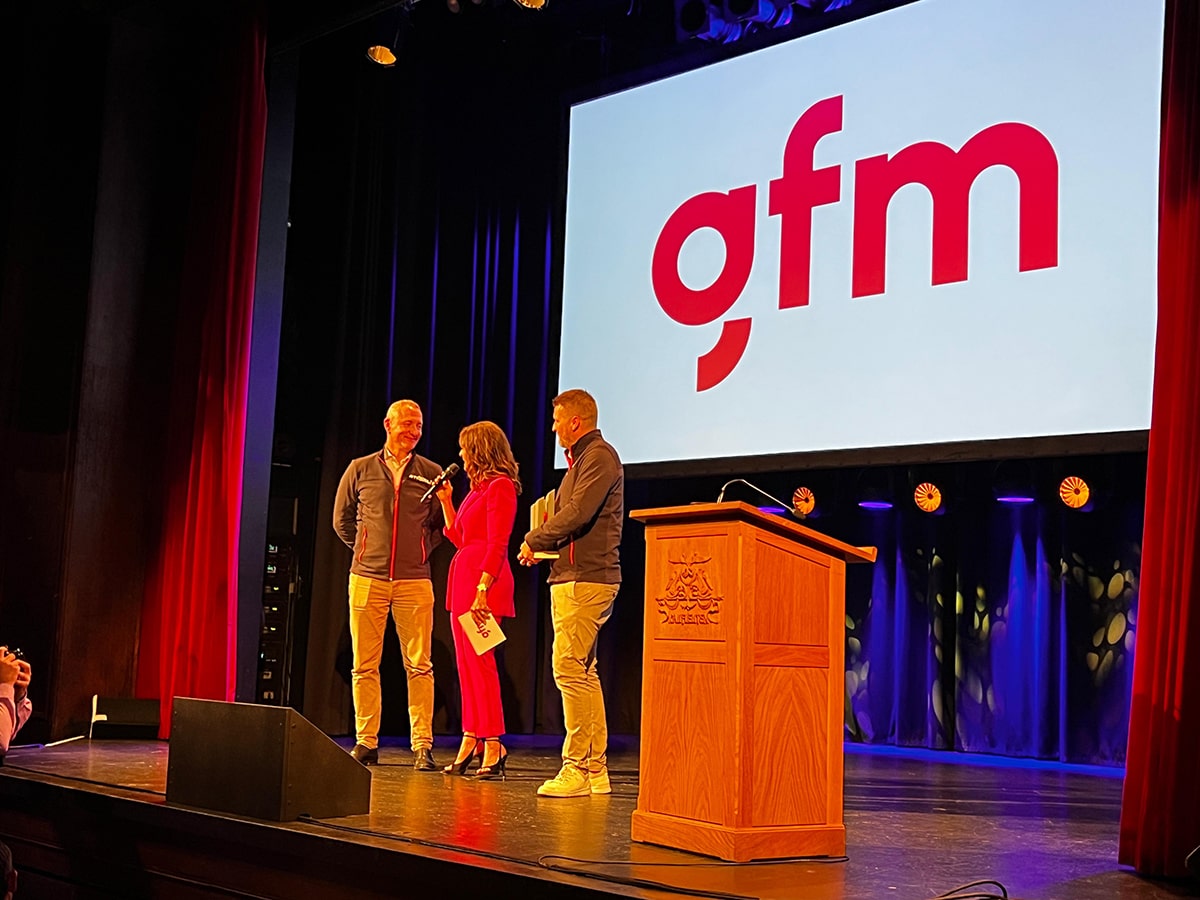
Stöckli was able to convince the Gfm jury with its clear positioning and innovative products. in addition, Stöckli had always succeeded over the years in adapting to changing conditions and adapting the "go-to-market" strategy from direct-to-consumer D2C to B2B2C.
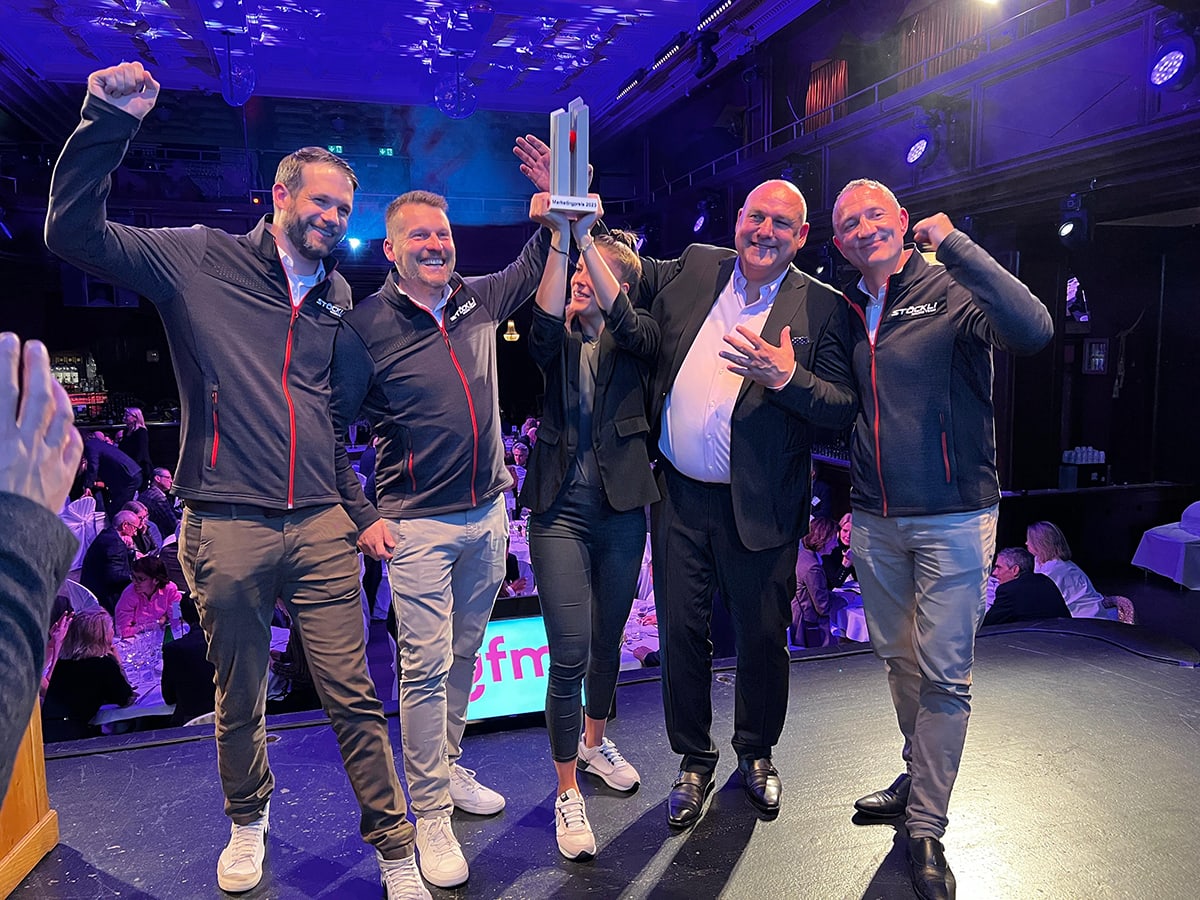
With the "Annual Award of the Foundation for Marketing in Corporate Management", Gfm annually honors a company that distinguishes itself through outstanding marketing achievements. For the Gfm Marketing Award, successful entrepreneurial results are evaluated, which can be attributed to a high degree to innovative marketing strategies and effective measures.
According to Marcus Schögel, President of the Board of Trustees, various points were decisive in Stöckli's selection as the 2023 Marketing Award winner. These included the unique (premium) positioning of the brand in an intensely competitive environment, the focus on performance benefits (technology to offer quality), the innovative services (ski subscriptions, etc.), and the adaptation of the "go-to-market" from D2C to B2B2C to changing conditions (post-Covid).
The jury also believes that Stöckli deserves this award because of its generally successful focus on market-oriented business management. Stöckli's international presence is particularly impressive, with 60 percent of its business abroad and 900 specialist dealers. This dynamic in channel management and the channel mixer is remarkable, Schögel emphasized in his laudatory speech.

Stöckli also dared to experiment, such as entering the bicycle market, even if they sometimes failed. This willingness to try new things is seen as necessary today.
During the pandemic, the company adapted its distribution strategy and reached out to specialist distributors. This adaptability and the high quality and innovation in the products have impressed.
The laudatory speech goes on to emphasize that Switzerland and its companies, like Stöckli, can sustainably differentiate themselves by focusing on innovation, product quality, customer orientation and added value. Marketing also means understanding and responding to customer demand. This is the way to stay ahead in the markets and to stay one step ahead of the competition. Schögel in the original wording:
"Marketing doesn't just mean doing something good for the customer; above all, marketing is about tapping into the willingness to pay. We can generate added value from our access to Switzerland, quality, customer orientation, whereas others have to stretch themselves a long way to achieve this. And if we don't get involved and say, let's go further up into the markets, then at some point we'll have the problem that others will say, we can do that too."
 For the study, Globeone asked 1,200 Swiss consumers what they thought of the purpose statements of the leading Swiss companies. "The respondents assessed how memorable, credible and clearly formulated they thought the formulations were. They also indicated whether a statement has personal relevance for them and whether, in their view, it provides an understandable answer to the question of why a company exists," explains Carina Hauswald, Managing Partner of Globeone.
Statement from Lindt & Sprüngli most convincing
The top performer is Lindt & Sprüngli with its purpose statement "We enchant the world with chocolate": 81.1 percent of the Swiss think the wording is successful. "There is certainly a lot of pride in the internationally renowned company. In addition, the purpose naturally hits a nerve, especially in times of crisis," says Hauswald.
Second place went to "Coop, for me and you." with 72.6 percent approval. The cooperatively organized retail and wholesale company puts its customers at the center of its activities and does not aim to maximize profits. "More than 2.5 million cooperative members think that the Coop Group lives its purpose credibly every day," Hauswald explains. "Public approval of the company's statement is therefore correspondingly high."
Third place goes to the Geberit sanitaryware group. After all, 66 percent like the statement communicated as a mission: "With innovative sanitary products, we sustainably improve people's quality of life.
Few memorable statements in the last places
The last five places in the survey results are occupied by the formulations of SGS (29 percent), Sika (28.5 percent), Six (27.3 percent), Vontobel (24.5 percent) and Credit Suisse (21.7 percent), which has run into difficulties after years of mismanagement. As the low approval rating indicates, a significant credibility crisis was already apparent at Credit Suisse before the recent turmoil. "It is also striking that many of the last-placed companies communicate relatively long, less memorable purpose statements and thus give away a lot of potential," explains Hauswald. The specialty chemicals group Sika, for example, expresses itself in comparative detail with the message "To anticipate and meet future challenges by providing reliable, innovative, sustainable, and long-lasting solutions in the construction, building, and manufacturing".
According to the study, it is generally apparent that some large Swiss companies are not yet succeeding in striking the right tone with their purpose statement. "This also applies to companies that actually have a good reputation basis for being able to successfully communicate topics such as sustainability and future viability to employees, customers and the critical public," says Hauswald. However, formulating a purpose statement that is understood and positively evaluated by the general public is not trivial, as the study shows. "Valuable conclusions can be drawn from the Swiss public's evaluations as to what constitutes a successful and positively received statement and in which areas companies can score particularly well."
Not only the wording is important
Often, however, it is not the statement itself that is less well received by the public. "In most cases, the entire purpose concept has not yet been sufficiently filled with life, actively communicated and made tangible for the target groups. Fortunately, however, this can be worked on." The public quickly recognizes discrepancies between the actual business conduct and the announced purpose.
Sometimes a critical image of the entire industry also rubs off on individual companies. "Of course, this makes the starting position more difficult, but it does not fundamentally prevent credible positioning with a socially relevant corporate sense," says Hauswald.


Besides the Purpose Statement Study Globeone also has a Purpose-Readiness Study including Indext. Go to the results of this study this way.
The results of the largest survey of the Purpose credibility of leading Swiss companies will be presented on gfm Webinar "Corporate Purpose - the most credible Swiss brands 2023". discussed with Simon Aschermann and Carina Hauswald, Managing Partners at Globeone. Interested parties will learn more about the how and what of purpose-driven brand positioning and get insights and answers from Nadja Lemke, Senior Vice President Global Branding & Marketing at Schaeffler.
For those who decide at short notice here to the registration.
]]>
As part of a study, the management consultancy Globeone investigated how credibly Swiss companies position themselves How credibly can Swiss companies position themselves? For this purpose, the "Purpose Readiness Index" (PRI) was developed, which consists of 15 purpose-relevant image attributes in five image dimensions.
Accordingly, the PRI created on the basis of the survey results indicates, on a scale of one to one hundred and in four levels, how credibly companies and institutions can represent a socially relevant corporate purpose in the public perception. Companies with a PRI score of less than 50 often lack the appropriate basis for credibly communicating their purpose, while companies with a score above 70 have a high purpose credibility that is hardly overshadowed by negative associations. The current PRI ranks 60 leading Swiss companies.
Almost two-thirds are "Purpose Ready
The study shows that 64 percent of Swiss brands can be described as "purpose ready. They show no major deficits in purpose-relevant image dimensions. Five brands (eight percent) are considered fully credible and thus have a very good basis for successful purpose activation.
With a score of 72.3, Victorinox is in first place in the Purpose Readiness Index (PRI). Migros, Geberit, Lindt & Sprüngli and Coop are also among the leaders with PRI scores of more than 70. Around 36 percent of the brands surveyed are struggling with credibility problems, which also make them more susceptible to greenwashing accusations.
"Retailers, technology brands, cooperatively organized retail companies and traditional consumer brands in particular are proving to be particularly credible in terms of purpose-centric positioning in the public perception," says Carina Hauswald, Managing Partner at Globeone. "Many PRI winners certainly also benefit greatly from their everyday proximity to customers."

Consumers take a critical view of companies
In comparison on the first Purpose Readiness Study for Switzerland from 2020 However, it is noticeable that the top performers in the Purpose Readiness Index (PRI) no longer achieve quite such high scores: Second-placed Migros, for example, lost 6.5 index points, PRI winner Victorinox 5.1 index points. Mobiliar lost 6.2 index points and slipped from fifth to 15th place.
"The decline in ratings is probably also a sign that Swiss consumers are generally measuring companies more and more critically in terms of their purpose promises - a trend that is also increasingly evident in other industrialized countries," says Hauswald. "There is also an increased demand on particularly credible brands to constantly improve their socially relevant contribution, to provide concrete evidence of it and to communicate it transparently." Even brands that score fully on future viability, sustainability, authenticity and social relevance would have to live their purpose around the clock and make it clear in order to maintain or enhance their reputation.

Second study focuses on statements
The Purpose Readiness Index uses various image dimensions to show how ready a company is to position itself credibly with a purpose. In addition, Globeone wanted to find out how the statements of Swiss companies that already communicate a purpose are received by the public. Even the best foundation for purpose communication is of no use if the formulated statement misses its mark and is not received by the intended target groups.
On the results of the Purpose Statement Study it goes this way.
The results of the largest survey of the Purpose credibility of leading Swiss companies will be presented on gfm Webinar "Corporate Purpose - the most credible Swiss brands 2023". discussed with Simon Aschermann and Carina Hauswald, Managing Partners at Globeone. Interested parties will learn more about the how and what of purpose-driven brand positioning and get insights and answers from Nadja Lemke, Senior Vice President Global Branding & Marketing at Schaeffler.
For those who decide at short notice here to the registration.
]]>
The Gfm speakers presented the latest marketing trends to around 300 guests at the Aura Zurich on Tuesday. Dominique von Matt, president of Gfm, appealed to the audience's willingness to take risks: "We have to act consistently according to the motto 'think big, start small, learn fast and fail cheap'." Courage, he said, is imperative for innovative strength and competitiveness. Sonja Mechling, CEO of Kaiser + Kraft: "Many of the use cases probably won't work - so what?"
But Swiss companies are hesitant about digital transformation and wait instead of exploiting new potential. "Technology develops quickly, but our brains do not," says Anne Scherer from the University of Zurich. Speed is crucial when it comes to exponential developments.
"At the Trend Conference 2023, the aim was to show participants how they can successfully navigate through this transformation," explains Gfm Managing Director Jean-Marc Grand. The presentations of the experts showed in a practical way how companies can profit from digitalization.
Social presence as a killer app
In the Metaverse, people can meet, experience something together and help shape it. Here, interpersonal closeness is created again, which has been lost in the meantime due to technologies. According to Prof. Dr. Thorsten Hennig-Thurau from the University of Münster, social presence will help Web 3.0 and virtual worlds achieve a breakthrough.
"Thanks to data and AI, we are getting to know our target groups better again. This allows us to tailor offers to them and personalize interactions," says Laura Meyer, CEO of Hotelplan. Online communication can become more humanized again. "The key here is to try things out early without spending a lot of money," Meyer is convinced - especially when the industry has been hit hard by disruption.

New opportunities for effective and efficient marketing
Content is consumed differently today on various levels than it was a few years ago. At the conference, Mirco Hecker from TikTok will show how the video platform redefined moving images.
Algorithms calculate the interests of users and play out content in a more targeted manner. Artificial intelligence and machine learning enable very personal messages. The impact of advertising is massively increased by individualization.
In addition, processes can be accelerated through the proper use of tools like ChatGPT. "You will not be replaced by an AI. But you will be replaced by a human using it," Anne Scherer quoted a Twitter post.
Think big, start small, learn fast
Digital transformation and technological progress do not serve as a substitute for human know-how, personal proximity and human resources. Instead of dreaming up sci-fi scenarios, the task is to embrace these new tools, use them to simplify daily activities, and thereby create added value.


The Chief Marketing Officers (CMOs) Roundtable, held in collaboration between the Gesellschaft für Marketing Schweiz GFM and Deloitte at Zurich's Trustsquare Eventspace, gave experts and entrepreneurs the opportunity to share their insights from the publication with the audience. Their perspective combines the knowledge from research with the experience from practice.
During Thursday's discussion, panelists emphasized the need for companies to be flexible in their marketing strategies. The CMOs from Breitling, Läderach, Zurich Insurance and Bank Cler also spoke about the challenges posed by the ever-changing marketing landscape. It is crucial to stay one step ahead of the competition, they said.
Swiss innovative power in transition
"Strategic thinking and curiosity are two important qualities we look for in new employees," says Daniele Calderoni, Group Head of Brand Marketing at Zurich Insurance. However, only 28 percent of the companies surveyed in Deloitte's study, published in mid-February, consider themselves willing to take risks (Werbewoche.ch reported). Creativity or a positive error culture is considered less important in a global comparison.
The presence of Swiss companies in the Metaverse also leaves something to be desired. While in other nations only 8 percent of respondents said they had no plans yet regarding Metaverse, in Switzerland the figure was 12 percent. Virtual opportunities are gaining relevance, however. Breitling CMO Tim Sayler, for example, says that as early as 2020, Breitling will begin issuing an NFT with every watch sold.
For a sustainable economy
However, in terms of sustainable products and long-term commitment to sustainability, Switzerland is a frontrunner in an international comparison. Sustainability must be firmly anchored in the corporate strategy, he says. "First deliver, then communicate," says Gregor Eicher, Head of Marketing & Sales at Bank Cler, at the CMO Roundtable. Economic considerations are seen by participants as an opportunity, not a risk, and are already largely present in corporate decisions.
]]>
This year's winner Victorinox convinced the Gfm jury with its outstanding branding and products - but also with its long-term focus on the well-being of its employees. Even during the Corona crisis, when sales plummeted by more than 30 percent, the Elsener family refrained from layoffs and instead used the time for process improvements and innovations.
With the "Annual Award of the Foundation for Marketing in Corporate Management", Gfm annually honors a company that distinguishes itself through outstanding marketing achievements. For the Gfm marketing prize, successful entrepreneurial results are evaluated, which can be attributed to a high degree to innovative marketing strategies and effective measures.
"The Victorinox company expanded internationally more than 70 years ago and has thus carried a piece of 'Swissness' out into the world for many decades, with the pocket knife, with watches, luggage, knives and fragrances," said Stefan Michel, president of the Foundation Board, about the winner of the 2022 Marketing Award.
Véronique Stephan new on the Gfm Board of Directors
The members of Gfm were welcomed by President Dominique von Matt at Kaufleuten in Zurich. After the annual report on the past business year, the last item on the agenda was a vote by those present on the members of the board. Véronique Stephan, Head of Market Passenger Traffic and Member of the Executive Board at Swiss Federal Railways SBB, was newly elected to the Board.
The following members of the Board of Directors were re-elected for a term of three years:
- Reto Dahinden, CEO Swica Health Organization
- Rolf Fallegger, Member of the Group Management Lindt & Sprüngli
- Sunnie J. Groeneveld, CEO Inspire 925
- Martin Schneider, CEO Swiss Txt
- Quido Stillhard, Head of Digital Products Schindler Management
- Dominique von Matt, President of Gfm

Photo: Tai (Jannick) Tongmool

This year, the Gfm jury was impressed by the high product value, the compatibility with all leading Swiss banks and the rapid growth of Twint over the past years, the Gfm writes in a statement. The company has succeeded in establishing itself as the leading payment app in Switzerland against global competitors such as Apple Pay and Google Pay.
With the "Annual Award of the Foundation for Marketing in Corporate Management", Gfm annually honors a company that distinguishes itself through outstanding marketing achievements. For the Gfm Marketing Award, successful entrepreneurial results are evaluated, which can be attributed to a high degree to innovative marketing strategies and effective measures.
Two women new on the Gfm board
The Gfm has awarded the Marketing Prize during its 80th General Assembly. The members of Gfm were welcomed by President Dominique von Matt at Kaufleuten in Zurich. After the annual report on the past business year, the last item on the agenda was a vote by those present on the members of the board. Andrea Kramer, Head of Marketing/Procurement at Coop Genossenschaft, and Jelmoli CEO Nina Müller were newly elected to the Board.
The following members of the Board of Directors were also re-elected for a term of three years:
- Hans-Jörg Aerni, CEO of the Wipf Group
- Christoph Brand, CEO of Axpo Holding
- Elke Guhl, Chief Customer Officer of Migros Fachmarkt
- Bea Knecht, Founder & Board Member of Zattoo International
- Michèle Rodoni, CEO of die Mobiliar
- Daniela Steiner, Co-Owner of Felfel
- Torsten Tomczak, Director of the University of St. Gallen

Anna Hug, Veronika Elsener and Mariateresa Vacalli (from left to right) will serve on the Gfm Foundation Board for at least three years. The Foundation Board awards the "Annual Prize of the Foundation for Marketing in Corporate Management", which recognizes companies for outstanding marketing achievements. The next award ceremony will take place on Tuesday, October 27, 2020.
Veronika Elsener has worked in various positions in the family-owned company Victorinox for over 25 years. Since 2009, she has been responsible for the continuous development of brand management, and today, in her role as Chief Marketing Officer, she is responsible for global brand communication.
Anna Hug worked as Export Market Manager for Création Baumann for ten years before joining Hug in 2010. After holding management positions in Private Label and Development & Innovation, she has been Co-Managing Director Markets at the Lucerne-based company since 2019.
Mariateresa Vacalli has been CEO of Bank Cler since September 2019. After completing her education in operations and production engineering at ETH Zurich, she held various management positions at telecommunications companies and as Chief Digital Officer of the BKB Group.
The current Board of Trustees of Gfm
- Geri Aebi (Wirz)
- Nadine Borter (Contexta)
- Dr. Beat Bühlmann (Swisscom)
- Veronika Elsener (Victorinox)
- Anna Hug (Hug)
- Thomas Landolt (IBM)
- Thomas P. Meier (Ricola)
- Prof. Stefan Michel (IMD)
- Ulrich H. Moser (conavest)
- Thomas Passen (Ringier Axel Springer)
- Jeannine Pilloud (Ascom)
- Dr. Felix Reiff (Bayer)
- Prof. Dr. Marcus Schögel (HSG)
- Florian Teuteberg (Digitec Galaxus)
- Mariateresa Vacalli (Bank Cler)
- Dr. Dominique von Matt (Gfm)
- Marc Werner (Galenica)

Due to the spread of the coronavirus, the Federal Council has decided to ban large events with more than 1000 people until at least March 15, 2020. As an event with around 450 guests, the Trend Conference of the Swiss Marketing Association (GFM) does not fall under this provision. Nevertheless, in view of the tightening situation, GFM has decided to move its event from March 31 to August 31. The health of the participants and an unencumbered conference experience have the highest priority, according to a statement on Friday.