The SWA's anniversary annual meeting focused on the trends and challenges of tomorrow's marketing. In his welcoming speech, SWA President Roger Harlacher emphasized right at the beginning how much has happened in the field of AI since last year: "The development is gigantic - AI has definitely taken its place. What we need now is a deep dive into the new technologies and the marketing of the future."
According to Harlacher, speed is the biggest challenge here, but reflection is also required. Because in a world in which more and more is possible faster and faster, values and reliability are becoming more important for brands, and orientation and trust are gaining in significance. Hence his appeal to the audience: "Let's be inspired by the new possibilities and technological trends for brands, but let's also take enough time for reflection".

Strong SWA in its anniversary year
The SWA was founded in 1950 and is now celebrating its 75th anniversary. Roger Harlacher was particularly pleased that the SWA is still a strong voice in the Swiss advertising market at the age of 75 - even stronger than ever before. After a successful year for the association with numerous activities such as webinars, expert group meetings and various initiatives, the SWA was able to announce a new record number of 215 active member companies.
There were five departures from the Board of Directors and four new Board members were elected. This means that the 11-member Board of Directors from various sectors is once again complete.
There was a surprising change in the Executive Committee. Roger Harlacher announced that he had decided to step down as President. After 16 successful years, he felt the time was right for a successor. He brought Jan De Schepper, Chief Sales and Marketing Officer of Swissquote, onto the stage right away (Markt-kom.com reported). Jan De Schepper expressed his thanks for the introduction and is looking forward to the exciting topics and challenges in the association. On behalf of the Board of Directors, he also announced that Roger Harlacher had been appointed Honorary President for his services.

SWA Director Roland Ehrler also took the opportunity to bid Roger Harlacher a fitting farewell. As a special farewell gift, he received a painting specially created for the occasion by his son, freelance artist Luca Harlacher. After the emotional farewell to Roger Harlacher, Johannes Hapig welcomed the guests as host and led them through the evening with wit and charm.

Kemp-Robertson and Polomski: What the future holds
The first keynote speaker was Paul Kemp-Robertson, Chief Content Officer at Lions, who presented the eager audience with "44 Ways to Win in 2029". At the same time, he emphasized that there is not just one path that leads to success, but many paths. In addition to some predictable inputs such as "Understand your emerging buyers" or "Win the internet every day", Kemp-Robertson also presented some surprising tips that brands can use to stand out in the age of AI: "Focus on what will not change" and "Over-index on trust".
Kemp-Robertson also emphasized the importance of creativity and vision. His advice to the audience: "Be a visionary, not a creator". And to management he recommends: "Don't kill creativity in the name of efficiency". Because he is certain that something will still be true in 2029: "It is creativity that makes brands famous". Not entirely unironically, he concluded by telling the guests: "Ignore predicitons about the future." Because we all have it in our own hands how we face the future.

The second keynote speaker Jens Polomski, LinkedIn Top Voice for AI and co-founder of SnipKI from Cologne, was on the SWA stage for the second time in a row. He reminded the audience that AI is more than just a text generator and showed impressive examples of what AI can achieve not only in the audiovisual sector, but also in medicine and materials research.
Polomski emphasized the possibilities that AI offers us to implement ideas quickly and cheaply. Even without programming skills, we can build and integrate tools ourselves. And at a speed that is almost unbelievable. Polomski needed just over eight minutes to create his own image generator with AI. He concluded by advising the guests: "There are no more excuses for not implementing ideas", and looking to the future, he is certain that "there is still a lot to come".

Panel discussion and aperitif riche
After the two presentations, Johannes Hapig hosted the "Next Gen Marketing Podium". Jens Polomski was joined on the panel by "Advertiser of the Year" Andrea Bison (Thjnk), Yaël Meier (Zeam) and Jan De Schepper (Swissqoute).

At the end, SWA Director Roland Ehrler thanked the audience for their patience and quickly moved on to the celebratory stand-up dinner. The mix of guests from customers, agencies and marketers as well as the 75th anniversary provided plenty to talk about for a long time.

The next SWA Annual Meeting will take place on March 19, 2026 at StageOne in Zurich.


The SWA annual meeting took place on Tuesday in Zurich-Oerlikon with over 400 members and guests from the advertising industry. The association also celebrated its 75th anniversary. On the topic of "Next Gen Marketing", the two keynote speakers Paul Kemp-Robertson, Chief Content Officer at Lions from London and Jens Polomski, LinkedIn Top Voice for AI & Co-Founder snipKI from Cologne, gave an insight into how they see the future of marketing and communication.
Last year, the long-standing SWA President, Roger Harlacher, announced his resignation to the Board of Directors at today's 76th General Assembly. Harlacher was elected to the Board in 2006 and became President of the Association in 2009. During his time in office, the SWA has developed into a strong lobby group and a valuable partner in the advertising market, according to the association. Roger Harlacher was made Honorary President at the AGM in recognition of his services.
Jan De Schepper, Chief Sales and Marketing Officer of Swissquote Bank, will take over as Chairman. De Schepper has been a member of the Board of Directors since 2018. He began his career in branding at Feldschlösschen and continued it at Bacardi-Martini, Saatchi & Saatchi and McDonald's. In 2015, he moved to Swissquote to head the marketing department. In 2019, he was promoted to CSMO and became a member of Swissquote's Executive Board. De Schepper is also a member of the Board of Directors of Neobank Yuh and holds an MBA in International Management from the University of Geneva.
]]>
Despite ongoing uncertainties, 60 percent of the advertising clients surveyed expect their sales to increase in the new year. Around 26% see no change in turnover and only 13% expect a decline. They expect a similar revenue trend as in the previous year. 45% expect an increase, 35% expect no change and only 19% anticipate a decline.
2024: more sales and more earnings
Last year, 82% of advertising companies recorded either the same or higher turnover. This led to an increase for around 44% of those surveyed and to unchanged earnings for around 40%. Only around 18% of companies reported a decline in turnover and 17% in earnings.
Stagnation of communication budgets in 2025
While 51% of advertising companies do not intend to make any changes to their communication budgets, slightly fewer (21%) will increase their budgets than reduce them (28%). This trend is also confirmed by the statements on the development of media budgets.
Consistency in the marketing channels
The breakdown of the marketing and communication budget shows no surprises for 2025. Just under a third (29%) will be spent on traditional (offline) marketing, 13% on event marketing and everything else on digital channels. Social media (12%), display ads (11%), content marketing (10%) and the company's own website and search engine marketing (8% each) account for the largest budgets.
Investments in content creation, branding and sales
In 2025, advertisers want to allocate the most resources to the marketing disciplines of content/campaign creation (25 percent), brand strategy/brand building (24 percent), sales support (19 percent) and marketing operations (16 percent). All other disciplines are less in demand. Sales and Marketing Operations were up on the previous year.
Digital continues to grow - offline remains under pressure
While advertisers plan to split the media budget roughly equally between digital and offline communication, significantly more respondents (38%) want to spend more money on digital than offline (13%) in 2025. However, the proportion of those who want to invest the same amount in offline/online channels is almost the same (55%). Only 6% want to invest less in digital media in the new year, compared to 31% of respondents for offline media.
Classic dominated by OOH/DOOH, print and TV
As in the previous year, within the offline media budget, the OOH/DOOH segment is likely to benefit most from an increase (25.9%) or the same amount (42.4%) of advertising investments.
Direct marketing is also likely to see an increase (19.5%) or the same amount of investment (37.9%). For print, 45.3% of respondents want to invest the same amount, but 31.4% want to invest less and only 7% want to invest more. In contrast, the same number of customers want to invest more or less in TV (9.3%) and 25.6% do not want to make any changes. It is striking that in 2025, 45% of those surveyed cannot afford or do not want to invest in TV, 50% in radio and 57% in cinema.
When it comes to the specific media budget distribution, OOH/DOOH (28%), print (28%) and TV (20%) are the clear top 3. Direct marketing comes in fourth place with 17.6%. All other traditional media (including radio and cinema) each account for less than 3 percent.

Video before display and search
In 2025, digital campaigns will be booked directly (50.2%) and programmatically (49.8%) in roughly equal measure. This is roughly the same as in previous years.
The most popular forms of advertising are clearly video (31.3%), followed by display (29%), search (23.2%) and native (14.2%). Video has thus taken the lead here and search has lost some ground. The distribution among individual providers was not surveyed in the current industry indicator.
Data and customer management as top challenges
Once again, there is little change in the challenges facing advertising clients in the new year. The same topics are at the top of the list as last year. Only this time, "data management" (83.5%) has taken the top spot. The other top topics are "improving customer experience" (78.8 percent), "customer journey management" (77.6 percent), "digital transformation" (73.8 percent) and "artificial intelligence" (71.8 percent).

When choosing an agency, the main focus is on recommendations
The most popular source of information for selecting an agency continues to be personal recommendations (88%) and clearly stands out from all other sources of information. Other important sources of information are the agency website/social media (49.4 percent) and contacts with agency management (48.2 percent). This is followed at a clear distance by the trade press (27.1 percent), the LSA website (25.9 percent), creative rankings (14.1 percent), the LSA ranking (14.1 percent) and the Effie Awards (3.5 percent).
Personal chemistry and culture are most important
The three most important criteria for agency selection are unchanged from the previous year:
Firstly, personal chemistry/culture (97.6 percent), secondly, understanding of the role/skills (83.5 percent) and thirdly, references (74.1 percent).
In addition, agency size (32.9%) remains a relevant criterion mentioned by clients. All other mentions such as rankings, memberships or certifications are each below 4 percent.
Chemistry Meeting as a popular evaluation tool
Chemistry meetings (39.4%) are now clearly the most frequently cited method for evaluating an agency. This is followed by the written request for proposal (25 percent), the competition presentation (20.6 percent) and the direct award (17.6 percent). The trial order (9.5 percent) or the strategy workshop (5.2 percent) are less popular.
The companies surveyed currently work with a good six agencies. Of these, 37% of advertising clients have had this relationship for over 5 years, 45.7% for 2 to 5 years and 11.1% for 1-2 years. Only 6.2% limit their collaboration to the project in question.
Agency support remains constant
Advertisers plan to invest more in the following areas at their top 3 agencies in 2025: Content (40.2 percent), Marketing Technology (32.1 percent), Brand/Communication Strategy (28.7 percent), Media Strategy (27.8 percent) and Creation (26.8 percent). Less will be spent on Live Com (34.7 percent), among other things.

Quotation and agile pricing as the most common form of remuneration
When it comes to the remuneration of agencies, the most common options are the offer and agile pricing (on a time and material basis). Percentage fees and team hire follow slightly behind. The performance-based fee model is rarely used.
Climate remains an issue
For a good third of respondents, the carbon footprint of an advertising campaign is important or very important. Another third answered neutrally with "neither" and for a further third, sustainability is less or unimportant. Nevertheless, 47 percent of the companies surveyed are already carbon-balanced.

Media providers and marketers have a duty to protect the climate
A good 35% of advertising companies believe that media providers/marketers are responsible for the climate. In this context, 23.5 percent of respondents would like to see transparency regarding the media's carbon footprint and 11.8 percent would like media providers/marketers to take on the compensation of non-reducible emissions in addition to transparency. Just under 19 percent of respondents said that agencies should calculate emissions and manage them with their customers.
A further 16.5% of companies believe that the advertising industry has no need to take action on climate change and 15.3% want to leave the issue to politicians. Only around 12% of respondents believe that advertisers should determine, reduce and offset their own CO2 emissions in advertising (including media).
Versatile use of AI
AI is penetrating numerous areas at advertising companies: Translation (82.7 percent), content creation (72.8 percent) ad creation (53.1 percent), data analysis (48.1 percent), automation (46.9 percent), programmatic advertising (34.6 percent), personalization (32.1 percent), campaign optimization (29.6 percent), social media (21 percent), predictive analytics (18.5 percent), sediment analysis (13.6 percent) and lead generation (11.1 percent).

Between October and November 2024, a total of 143 advertising clients in German- and French-speaking Switzerland took part online in the "Industry Indicator 2025" by SWA and LSA, 139 from German-speaking Switzerland, nine from the French-speaking part of Switzerland. Participants were recruited on a personal level. The aim was quality over quantity and it was crucial for meaningful answers that only people who are actually responsible for marketing communication and involved in working with the agencies receive the questionnaire. The detailed results can be obtained from the offices of both associations.
]]>
Since 2017, the Swiss Advertising Client Association SWA and Leading Swiss Agencies LSA have been collecting and publishing a meaningful price/performance index for media contacts.
Newspapers and magazines have been characterized by major changes in recent years. To take this into account, the selection of titles was fundamentally revised for the following analysis. The adjustments to the selection of titles - in particular the inclusion of high-reach but low-cost titles from the group of special interest titles - have significantly reduced the price-performance ratio compared to the previous selection.
Although many curves show a downward trend compared to the previous year, in most cases this is not an effective decline. Rather, based on the old universe of securities, there has been an increase in the price-performance ratio. The year 2024 could therefore be seen as a new start (index 100).
On TV, the planned thousand contact price (CPT) for older target groups remained stable overall, although it continued to rise in German-speaking Switzerland and Ticino, but fell significantly in French-speaking Switzerland. Among younger target groups, the planned CPM is rising constantly throughout Switzerland. The reason for this is that they are increasingly using digital and new channels.
In the cinema, the index value for Switzerland as a whole and the entire population rose slightly (+1.2 points).
In radio, the MPLI measures the situation with a one-year delay. By the end of 2023, an increase in price of 1.9 points can be observed across the whole of Switzerland and the entire population.
In the OOH market, the figures can now be reported again following a change of method in the SPR+ model. A new index point (index 100) was defined as the starting point for 2023. In a year-on-year comparison, some steep price increases (+6.2 points) were recorded across the whole of Switzerland and the population.
With the annual publication of the Media Price/Performance Index MPLI, the LSA and SWA associations want to make a joint contribution to transparency in the Swiss media business. The price/performance development of digital channels is currently missing from the index because the dominant players in this area are reluctant to "look at their cards", as the associations put it.
]]>
The study was conducted this spring in 91 countries with around 13,000 people - 224 of them from Switzerland. Overall, more women (63% worldwide, 57% in Switzerland) than men (37% worldwide, 43% in Switzerland) participated. This indicates that the topic of DEI - short for Diversity, Equality and Inclusion - may have a higher relevance for women.
DEI is a reason to quit for nearly one in seven people
The results of the study show that around 14 percent of the marketing professionals surveyed worldwide would like to leave the industry due to a lack of diversity, equality and inclusion. In Switzerland, around 8 percent of respondents would like to turn their backs on the industry. This figure rises to 11 percent for people with disabilities - and even 17 percent for LGBQ+ people.

Swiss companies make progress in terms of DEI
Based on the answers to the questions relating to well-being, positive behaviors and the absence of discrimination, the global DEI inclusion index is 63 percent worldwide. Switzerland scores above average, with an index of 70 percent above the global average. The Inclusion Index is made up of three sub-indices, "sense of belonging," "absence of discrimination," and "presence of demeaning behavior," based on employees' perceptions of their work environment and the company.
In this context, 57 percent of the Swiss marketers surveyed agree with the statement that their company is taking active steps toward more diversity and equality. 49 percent believe that the situation has improved with regard to DEI compared to the last two years.

According to the study, all minority groups are relatively well represented in the Swiss advertising industry - compared to global data. Only persons with disabilities are underrepresented at 6 percent, compared to an international average of 22 percent.
The most common grounds of discrimination: Age, gender and marital status
Globally, the study cites age, gender and marital status as the most common forms of discrimination. Forty-one percent of women, 42 percent of parents and 39 percent of dependents believe family responsibilities hinder careers.
It is particularly interesting to note that both 12 percent of 18- to 24-year-olds and 15 percent of 55- 64-year-olds say they have experienced discrimination because of their age. Some because they are too inexperienced, others because they are too old.
The situation is very similar in Switzerland: 22 percent of respondents think that age is an obstacle. This figure rises to 28 percent among respondents aged 44 to 54. Furthermore, 44 percent of those who have dependent children believe that marital status hinders their career in their company.
Significant wage differentials in Switzerland
The study shows a considerable pay gap for women at all positions in Switzerland: -22% at executive management level, -9% at senior level, a considerable -32% at specialist level and -2% at junior level.

For ethnic minorities, this wage gap exists only at the lower levels with -25% at the junior level. One possible reason for this could be that the new employees are not sufficiently familiar with the wage structure. No corresponding differences could be identified at the other function levels.

Interested parties can download the entire study from the SWA website. The international results on "The Global DEI Census 2023." there are here. The "Deep Dive" Switzerland is available here.
]]>
On Sunday it was clear: The people of Biel want bilingual advertising. This means that in the future, advertisements in the city of Biel must be designed in the two official languages, German and French. With 52.9 percent in favor and 47.1 percent against, the voters accepted the proposal. The voter turnout was 34.4 percent. As the associations Aussenwerbung Schweiz, KS/CS Kommunikation Schweiz and the Swiss Association of Advertisers SWA had already announced in a joint statement (advertisingweek.ch reported), they criticize the revision of the regulations in particular the "compulsion to bilingualism" for advertisements in Biel. The "Biel advertising ban", as the associations say, would stand alone internationally and have negative effects.
Werbewoche.ch spoke exclusively with SWA Director Roland Ehrler after the vote.
Werbewoche.ch: Mr. Ehrler, how are you doing?
Roland Ehrler: Thank you for asking. After a short but intensive voting campaign, I am above all disappointed. Just 576 more votes and the controversial billboard regulations would have been rejected by the Biel electorate. Unfortunately, the city of Biel was always one step ahead and, in our view, simply misinformed the population. After all, Article 5 clearly states that commercial posters "must" be designed in the two official languages! However, the city of Biel interprets its own regulations quite differently and let it be known during the referendum campaign that there was still plenty of room for maneuver and that slogans such as "ici c'est Bienne" from EHC Biel did not have to be translated. As a voter, I would have been a bit confused. What applies now? The strict regulations or the lax implementation? The whole thing thus degenerates into the arbitrariness of a few officials and in the end then leads to an advertising police in Biel!
The total revision comprises 27 articles. Article 5 is a particular thorn in your side. What is it about, if you look at it objectively?
There is no doubt that the regulations deserve a revision after 20 years. However, with the new Article 5 and the compulsory bilingualism (German/French), an unnecessary tightening has been hidden in the regulations. After all, this is a massive encroachment on the economic freedom of the advertising companies guaranteed in the Federal Constitution. In addition, the language requirement also contradicts the Bernese cantonal constitution, which stipulates in Article 50 that the canton and the municipalities should create favorable framework conditions for the economy. The city of Biel is doing exactly the opposite here and is not doing itself or the economy any favors. This was also evident in the non-partisan committee with the Biel FDP, SVP, Partie Radical Romand, GLP, Biel SME's, Handels- und Industrieverein, the EHC Biel and four national associations (AWS, SWA, KS/CS and Promarca).
What impact will this have?
As already mentioned, regulations will soon be in force that are sharply worded and prescribe bilingualism for Biel. At the same time, companies are dependent on the room for maneuver of Biel's officials. And we take the city president, Mr. Fehr, at his word that slogans do not have to be translated. Since a great many posters contain such slogans, perhaps in the end nothing will happen and the regulations will degenerate into a mere paper tiger? As you can see, the legal uncertainty is very high, especially due to the communication of the city of Biel. We will therefore clarify further legal possibilities against the new regulations within the framework of our current objection and together with the committee.
Now the Bernese cantonal constitution prescribes bilingualism for the municipality of Biel - were you caught on the wrong foot?
No, not at all. This article of the cantonal constitution is about the promotion of bilingualism and that is good and right. In Biel-Bienne, for example, bilingualism has been practiced for a long time without any language restrictions. On street signs, in the stores or in the official information to the population. In the case of commercial posters, however, this is simply going too far. Especially when other articles of the same cantonal constitution are being infringed upon, and then even the federal constitution. Even Biel organizations, which otherwise stand up for bilingualism, were against this coercion and the French Partie Radical Romand. They were all of the opinion that one achieves less with coercion than with voluntariness.
As justification for the revision, reference was made to Article 6, according to which the French-speaking minority feels disadvantaged by the excessive proportion of German-language posters. Are there any figures that confirm or refute this?
APG carried out a survey and found that today about 1/3 of the posters in Biel are already displayed in French without any compulsion. This does not mean that the French-speaking minority is not important to the companies. Furthermore, we must not forget that there are still posters in other languages, e.g. in Italian or English. With a strict interpretation of Article 5, these posters would also be prohibited from the date of validity of the new regulations!
Should advertisers have been more considerate of bilingualism?
I do not blame anyone at this point. It was previously the law that any company could advertise in the language it wanted on posters. After all, the companies paid for it. Incidentally, advertising money, of which the city of Biel also received a nice share.
EHC Biel was also part of the opponents' committee. Why?
Quite simply, as an SME, the EHCB is affected by the language constraint like other companies in Biel. The poster campaign for the season opener was last texted in English: "Welcome back: get your ticket now!" Under the new regulations, this would no longer be allowed! And the monolingual "ici c'est Bienne" would also have to be translated on posters, strictly speaking. Even Biel's city president doesn't want that!
As already mentioned, the revision includes 27 articles. Are there other articles that are considered (too) restrictive from the perspective of the advertising clients?
Only Article 5 with the language requirement is really bad. Everything else can be accepted.
How do you assess the forecast? Will the advertising volume, i.e. the budgets for billboard advertising in Biel-Bienne, decline?
The city of Biel writes in its message to the electorate that the revision will have no direct financial impact. On the contrary, they even expect higher fee income for larger formats. However, I think - and we explained this to the city several times during the objection process - that the city will have to reckon with a decline in advertising revenues. No one will rewrite their English poster texts in German and French just for the city of Biel. Furthermore, the legal uncertainty could lead to Biel simply being left out of a national poster campaign in case of doubt.
Their slogan was: "No language compulsion in Biel!" In retrospect, one is always wiser. Shouldn't the consequences of a "yes" vote have been better communicated?
Our NO committee has supported this referendum campaign in particular with a Website, flyers and a poster campaign were realized in record time with the agency in flagranti in Lyss. The effects of the regulations were somewhat more difficult to explain and were therefore the focus of the media work as well as in the social media channels. In the voting campaign, I was most pleased to have direct contact with the people of Biel. When we distributed flyers on two Saturday mornings, there was a lot of good feedback about the campaign and the commitment of the NO committee. The city hardly expected this. In this sense, I think we did a good job and thank everyone for their commitment. In the end, the result of the vote was very close!
Do you fear that this could have a signal effect for other cities?
I hope not and bilingual cities are not so many! The SWA, as an association representing the interests of advertisers, is in any case prepared to continue to campaign against such nonsensical bans.
When does the new regulation come into force?
The regulations will be implemented in the next few months, according to the city of Biel. However, the last word has not yet been spoken...
]]>
The parties SVP and FDP, the Parti radical romand (PRR), the GLP as well as the chamber of commerce and industry, the Bieler KMU and the EHC Biel do not want a language obligation in Biel, as representatives:inside said on Friday in Biel before the media. They spoke of an international stand alone advertising ban.
Article 5 of the new regulations says: "All advertisements must ( ..) be designed in the two official languages". Andreas Sutter (FDP), who spoke in favor of promoting bilingualism, was disturbed by this mandatory formulation. For him, an optional formulation would be more appropriate.
For Sutter, it is also unclear how the new regulations could be enforced. In his eyes, it is not even possible, because it is unclear how violations are to be dealt with.
PRR representative Bryan Manzoni also expressed the opinion that bilingualism should be promoted in Biel, but not with these regulations. The economic freedom is to be weighted higher. One could not dictate to the companies how they should advertise.
In addition, the opponents advocate, among other things, the preservation of the freedom of language and art. In their opinion, internationally active companies would no longer be able to present their English-language advertising slogans in Biel. This would result in a loss of advertising revenue in Biel. The Biel City Council approved the new regulations at the end of April. (SDA/swi)


As the associations Aussenwerbung Schweiz, KS/CS Kommunikation Schweiz and the Schweizer Werbeauftraggeberverband SWA announced in a joint statement on Monday, they criticize the revision of the regulations in particular the "compulsion to be bilingual" for advertisements in Biel. The "Biel advertising ban," as the associations say, would stand alone internationally and have negative effects.
The associations see five reasons against bilingual advertisements. First, advertisers would be restricted by the regulations. Second, the revised regulations violate the Federal Constitution. The constitution guarantees economic freedom, advertising freedom, freedom of expression and artistic freedom, the communiqué stated.
Thirdly, it is not expedient for advertisers to design a separate bilingual campaign for the Biel location. Fourth, bilingualism is often not feasible for design reasons. And fifthly, fewer campaigns would be realized in Biel as a result of the revision.
The municipal council wants a total revision of the 21-year-old advertising regulations. The council also wants to ensure that posters and advertisements do not impair the quality of life and safety in public spaces. After the discussion in the city council next Wednesday, the electorate is expected to decide on the regulations on June 18. (Werbewoche.ch reported). (SDA/swi)
]]>
Climate change is one of the most urgent problems of our time and is increasingly influencing consumer behavior. That's why this year the SWA has focused on the topic of sustainability in marketing and communications, to inspire and motivate all partners in the advertising market. In doing so, advertising companies are called upon to make a contribution to a sustainable future. As an association, the SWA wants to support its members in this, among other things with information and initiatives. In order to determine the status quo of sustainability communication, market research was carried out at the beginning of the year by the ZHAW, which was supported by the SWA.
The SWA also participated in the global sustainability study conducted by the World Federation of the WFA. As the latest results of the ZHAW study "Swiss Sustainability Benchmark 2023" show, 57 percent of the companies surveyed find it difficult to communicate their sustainability efforts credibly, and 40 percent fear accusations of greenwashing. This illustrates how important and topical this issue is.
Two new board members
For the first time on the big SWA stage, Johannes Hapig, Co-Editor-in-Chief of m&k, took over the moderation of the annual meeting. In his welcoming speech, SWA President Roger Harlacher addressed the importance of the green transformation. This requires attitude from the companies. And not at some point, but now, as Swisscom is demonstrating. In addition to sustainability, the SWA is also addressing its key topics this year: transparency, prices and services in the media business, security in the digital market, and further unnecessary advertising restrictions. The 74th General Meeting was held in the run-up to the event. The SWA was able to report a new record of 209 members and elected two new board members, Laura Loos from Coca-Cola and Urs Odermatt from l'Oréal Suisse.
"Communication means power"
As the first guest speaker of the evening, Prof. Dr. Johanna Gollnhofer, Director of the Institute for Marketing and Consumer Insight at the University of St. Gallen, provided an answer to the question of how brands can credibly communicate sustainability without greenwashing or greenhushing. Because although sustainability is important to consumers, everyone understands something different by the term. Moreover, consumers have become true greenwashing detectives, which is why many brands prefer not to talk about the topic at all rather than risk negative reactions. "Greenhushing" is not a solution, however, according to Gollnhofer, because "communication means power." Companies should ask themselves what exactly their target group understands by sustainability, which sustainable goals fit their own brand identity and how these are best communicated. On the last point, Gollnhofer pleads for more wit and playful lightness - "that would give sustainability wings".
"Bock for a sustainable tomorrow"
Jan Pechmann, Managing Director of BAM! GmbH VE and initiator of the Marketing For Future Award, who would like to see marketing that makes renunciation look cool and reason look sexy and thus "makes you want a sustainable tomorrow. According to Pechmann, this is achieved through the marketing trinity of credibility, creativity and commerciality. Or to put it another way: a sustainability promise that is as concrete and verifiable as possible is communicated uniquely, emotionally, enthusiastically and with wit, and also brings the company economic success. Because greenwashing can only be avoided through credibility. With creativity, the message reaches the target group and sticks. But without commercial success, companies have no incentive to stick with it and continue their own sustainable transformation. Sustainability must not only be worthwhile - it must be worthwhile!
Sustainability as part of the corporate culture
Michel Siegenthaler, Head of Commercial & Marketing Management at Swisscom, presented a current case on the topic of sustainability. For the company, sustainability is not a trend, but has been part of its corporate culture for 25 years. Although the company relies 100 percent on renewable energy, has reduced its CO2 footprint by 80 percent and recycles used cell phones with a Second Life program, the brand had been hesitant to advertise sustainability. The risk of facing greenwashing accusations or leaving the important field to competitors were carefully weighed. Finally, the decision was made to address the issue of sustainability in the telecommunications market - with a campaign that involves all touchpoints throughout and consciously distinguishes itself from other sustainability campaigns through its urban appearance. Although the success of the "Now instead of someday" campaign cannot be quantified directly in terms of sales, the positive impact on the brand's reputation is clearly visible.
Appearance for the advertiser of the year
At the end of the presentations, the newly awarded "Advertiser of the Year" André Hefti answered Johannes Hapig's questions. The head of marketing at Switzerland Tourism was honored above all for his communications during the pandemic and for the commercials featuring international celebrities Roger Federer, Robert De Niro and Anne Hathaway, with which the tourism organization scored several viral hits. On the subject of sustainability, Hefti referred to Switzerland Tourism's Swisstainable program and the fact that Switzerland is always at the top of renowned rankings as a sustainable travel destination. When asked whether more or less regulation in sustainability communication is better, he answered quite diplomatically "as much as necessary, as little as possible" - and then added: "Orientation and transparency are more important than regulations".
The most important facts about the 74th General Assembly of the SWA
The 74th AGM of the Advertising Clients Association took place immediately before the Annual Meeting. The SWA can look back on another intensive and successful year. Once again, the numerous webinars on various specialist topics, the meetings of the six expert groups, and the leader event held at Google in Zurich in the fall were in great demand among members. At the same time, SWA was able to represent its members on all important topics and make its voice heard. For the first time, SWA can report a record number of 209 active members.
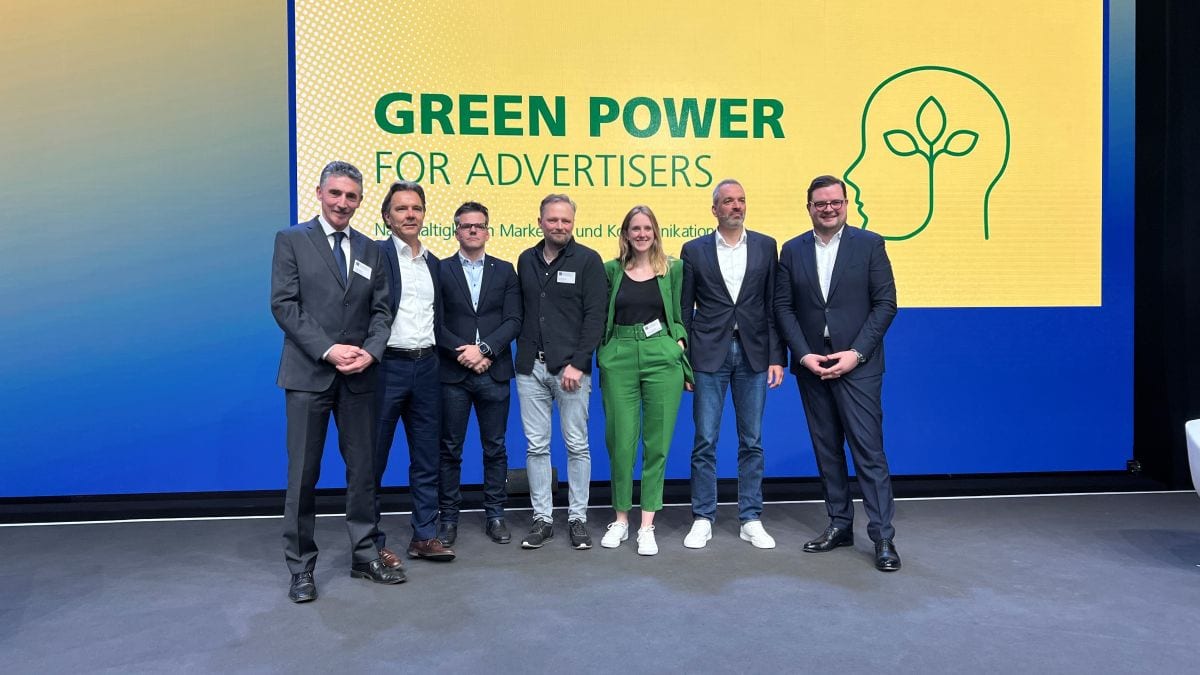
The detailed annual report with the theme "Green Power for Advertisers". here retrievable.
]]>
 The Federal Data Protection Act (FADP) has been revised in recent years. The revised text of the law (revDSG) together with its revised ordinance (revDSV) will now, after lengthy discussions in Parliament and the public, be definitively published on
come into force on September 1, 2023. These provisions have far-reaching implications for companies in the Swiss advertising industry.
Swiss companies that already comply with the provisions of the EU's General Data Protection Regulation (GDPR) will be able to implement the revDSG with manageable effort. However, if a company is now dealing with these provisions for the first time, it will mainly be the implementation of the new compliance obligations and the review of contracts with service providers, customers and other third parties that will take up some financial, time and human resources.
In addition to the revision, however, there have been other developments in data protection in recent years that present companies with quite a few thorny legal issues and practical problems. The IAB Switzerland Association IAB, the Swiss Media Publishers Association VSM, Leading Swiss Agencies LSA and the Swiss Advertisers Association SWA have jointly developed an industry recommendation to help their members answer questions that frequently arise in the implementation of the revised data protection law.
The guide was written by the Vischer data protection team under the leadership of David Rosenthal and Rolf Auf der Maur, Head of the Legal Working Group at IAB Switzerland.
"For the associations involved and their members, data protection is a constant, complex core issue. Accordingly, there was a great need for a recommendation for the industry that not only illuminates the extensive implications, but also highlights typical problems and provides practical solutions to them," says Urs Flückiger , Managing Director of IAB Switzerland. "With the new guide, developed by proven experts, a profound assistance with concrete recommendations for action has been created."
]]>Since 2017, the Swiss Advertisers Association SWA and Leading Swiss Agencies LSA have been collecting and publishing the meaningful price/performance index for media contacts.
Across all print publications evaluated, the cost per thousand (CPM) increased by 6 percent year on year. In the previous year, CPM inflation was already 10 percent. A reduction in advertising prices to Jan. 1, 2022 at 20 minutes (D+F), Swiss Illustrated, L'Illustré and Sunday View has helped to mitigate this increase slightly. Rising contact figures in print remain the exception, and many publications continue to struggle with falling figures. At the same time, most publishers have not adjusted their advertising rates. This has a negative impact on the index.


In TV, the plan TKP in the annual review in German-speaking Switzerland rose again significantly among younger target groups (15-49 year olds), with plus 9.3 percent compared to the previous year. The delayed introduction of Hi-Res TV - hybrid TV data - as of July 1 is cited as one of the reasons for this. Due to a corresponding price adjustment, plan TKPs remained relatively stable, especially among older target groups, but nevertheless rose among younger viewers. The general loss of reach from linear TV and a lack of experience with the new hi-res TV data continue to cause effective contact performance to deviate sharply from planned figures time and again.


The performance of "analog" out-of-home (OOH) offerings is stable to slightly declining year on year. However, DOOH has not yet been surveyed in the index. The survey of digital offerings is planned for 2023 in the index.


In cinema, the index increased by a low 0.9 points this year. Due to Corona, there was no MACH Cinema study for 2021 and therefore no contact data.


In radio, there was a general increase in prices due to declining audience numbers. Prices themselves remained largely stable.
With the regular publication of the Media Price/Performance Index, the two associations jointly make an important contribution to transparency in the Swiss media business.
]]>
As last in 2019, SWA President Roger Harlacher opened the big annual meeting as host. In his introduction, he briefly looked back at the first fictions of human-machines and addressed the state of today's technologies. Whether humanoid robots or the monitoring of elderly people by systems with artificial intelligence: The fields of application of new technologies are limitless and already show science without fiction.
For Harlacher, the future is therefore more "man and machine" or "man and technology. This makes it all the more important for marketers to take a close look at this technological development. As an association, the SWA wants to put people at the center and accompany its members on this challenging marketing journey into the future.
Regarding the association, Harlacher explained, as previously at the 73rd General Meeting, that most advertising companies and the SWA had come through the pandemic well. In the process, the SWA was able to quickly convert its services and offerings to digital and achieved new attendance records with its webinars, for example.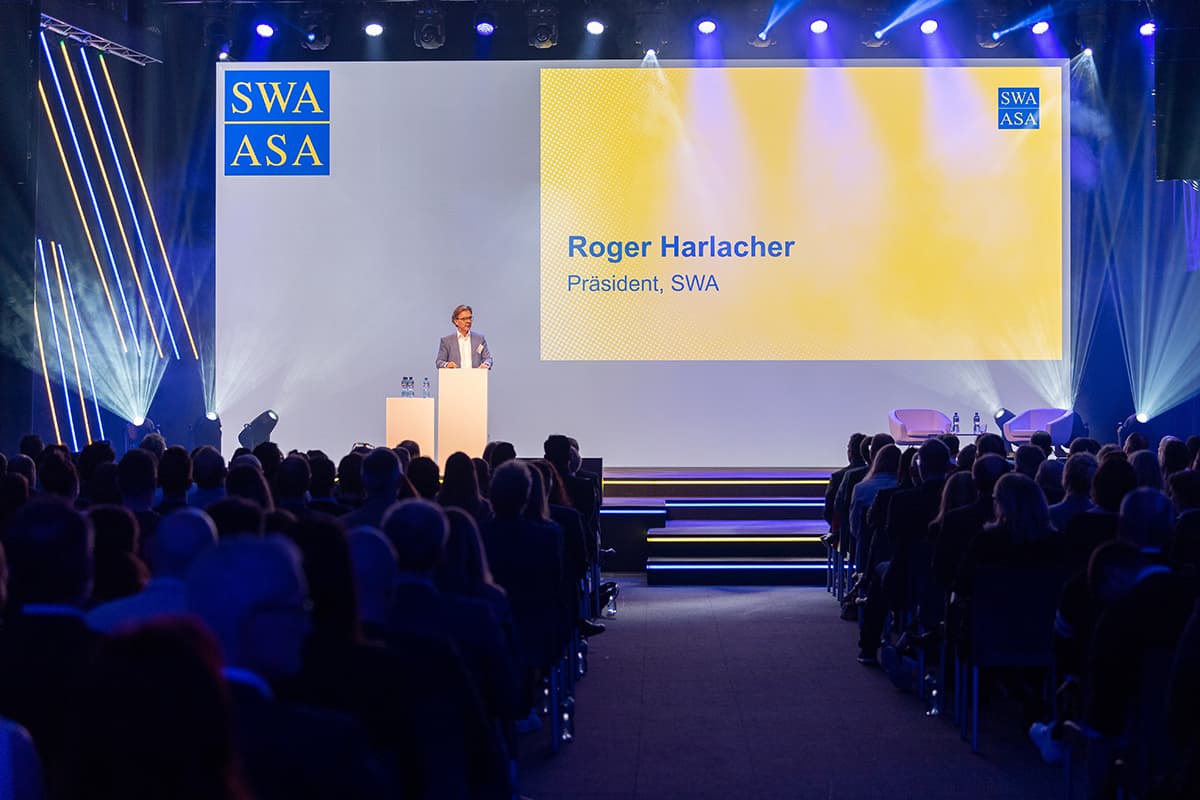
Another milestone last year was the founding of "Digital Ad Trust Switzerland" together with Leading Swiss Agencies and IAB Switzerland. (Werbewoche.ch reported). With the certification of websites in Switzerland, advertising clients thus receive more security and transparency in the areas of ad fraud, viewability, brand safety, and user experience. Clients and agencies should therefore definitely rely on such certified websites in the future.
There are currently few changes in the composition of the Board of Management. This is because four new members were elected to the Board most recently in October (Werbewoche.ch reported). Due to numerous new members in 2021 as well as in the current year, the association has now grown to over 200 members.
Speaker on AI in marketing and communication
The speaker, scientist and author Professor Peter Gentsch from Berlin brought in the scientific view. For him, AI is a particularly powerful tool for marketing and communication. But unfortunately, many marketers often lack imagination. Many companies today still look too closely at how AI can be used to optimize existing processes. What he finds exciting, however, is the question of how to improve product experience. This would open up new business models with AI! Finally, he touched on professions that more or less have to worry about AI competition. Teachers and dentists will hardly be affected by AI in the future. People in sales and service are more likely to have to worry. New professions will emerge, such as Head of Bot Creative, In-world Marketing Architect, Memory Augmentation Therapist or Machine & People Ethics Manager.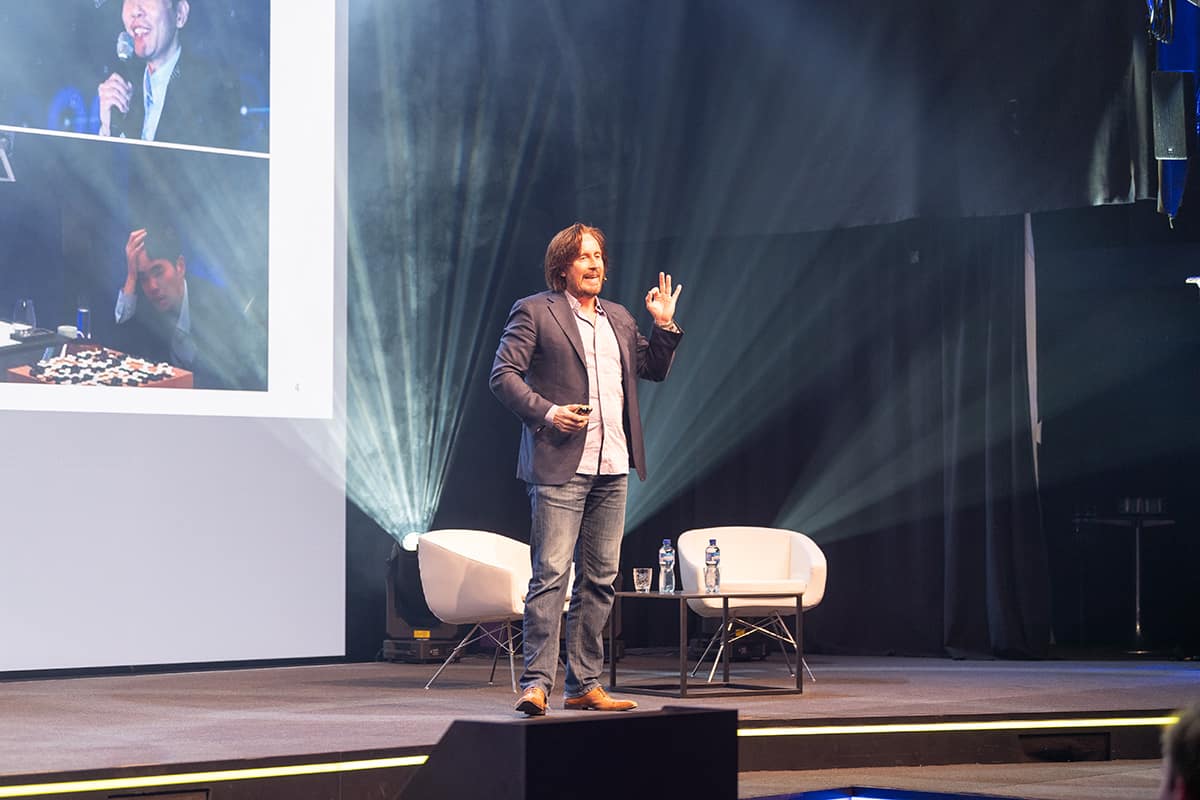
The AI expert and book author Mieke De Katelaere from Brussels assessed artificial intelligence from an engineer's perspective. For the Belgian, AI is not something you believe in more or less, but a tool for which no task can be complex enough. This includes designing 360-degree customer experiences. AI is good, bad and ugly. She has written about this and the responsibilities involved in her book. Guests at the annual meeting were able to take the first German edition home with them in a goodie bag.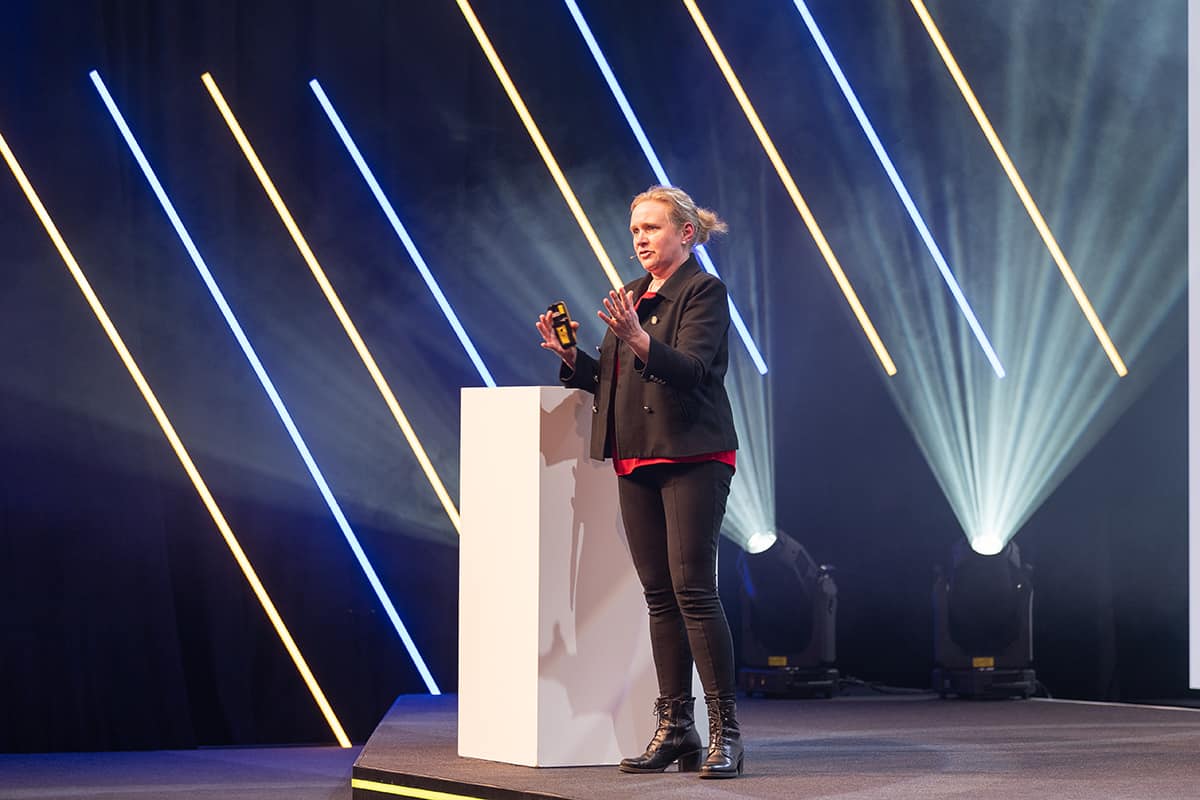
The transformation expert Thomas Ruck by Accenture Interactive from Zurich started with Nasa engineers who put on their AR glasses in the morning to send Mars robots on a journey. Is such a future also conceivable for advertisers? He then took the audience on a virtual streetcar ride along Zurich's Weinbergstrasse, which is abundantly flanked with billboards. AI helps to recognize which poster creations are comparatively better noticed and remembered. With numerous other examples, he showed what AI can do today and concluded by asking whether the audience was ready for AI or not.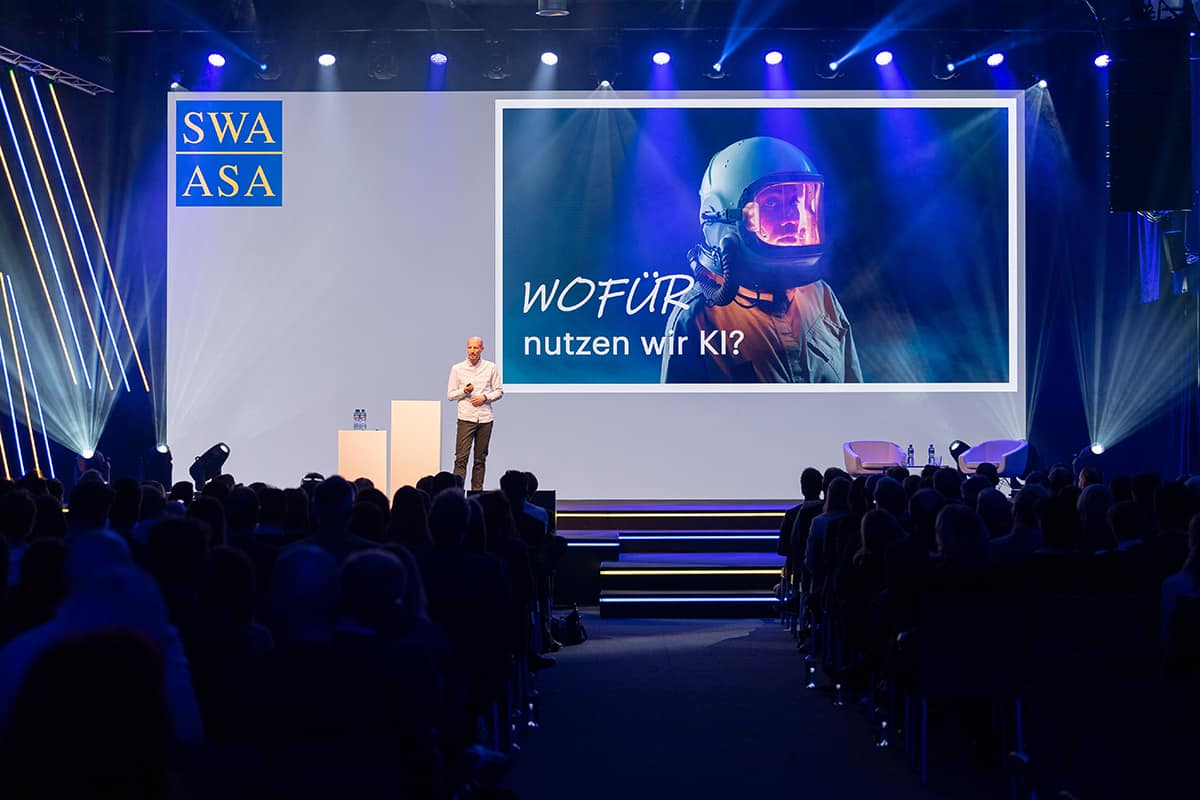
"Advertiser of the Year" David Schärer on AI and Covid
As a surprise, SWA offered the reigning "Advertiser of the Year", David Schärer a short platform. In the talk between the moderator Patrik miller and Rod's co-founder was about more than just the FOPH's Covid communications. He talked about how BAG campaigns were realized on short notice and where AI is already being used in the agency. As an advertiser, he is naturally opposed to advertising bans on legal products and thinks the industry should be influencing public sentiment and legislation much earlier.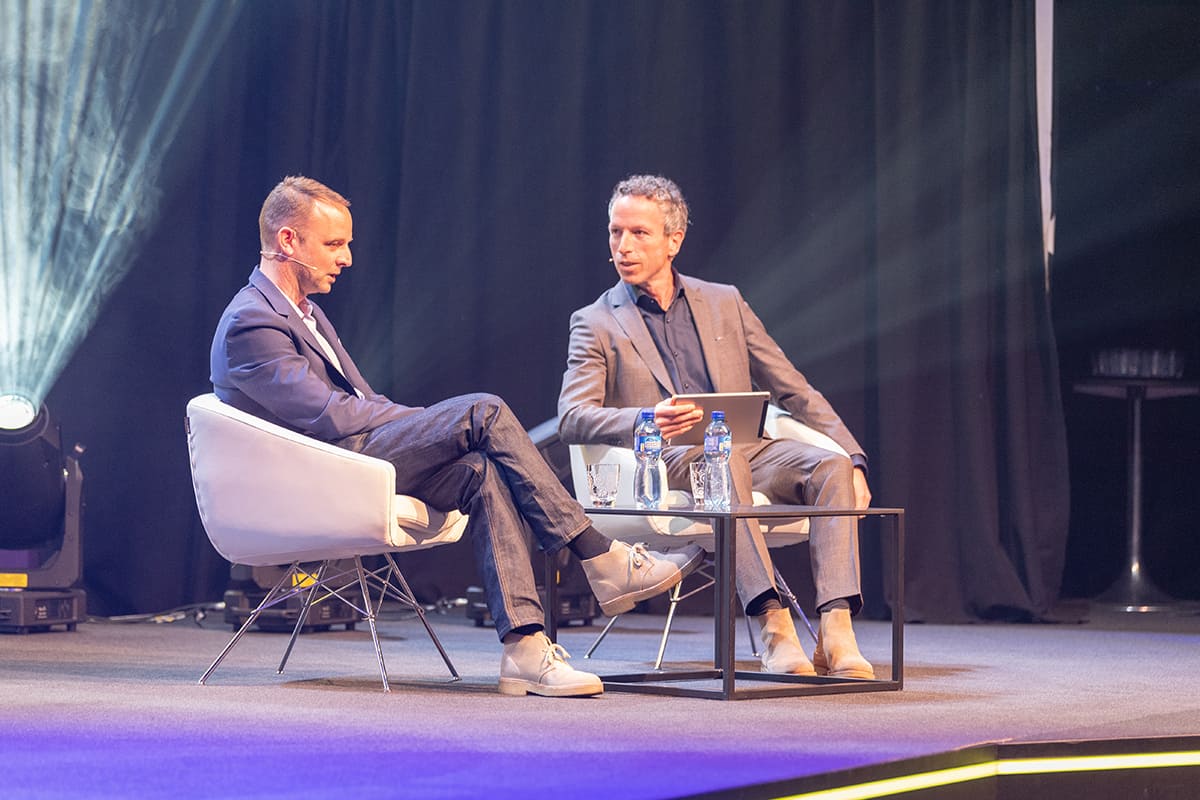
Afterwards, SWA Director Roland Ehrler led over to the standing dinner. After all, many advertising clients, agency and media representatives had only met virtually for many months. All the greater was the pleasure of all the personal encounters and exchanges until late in the evening. The traditional SWA goodie bag with contents from sponsors and members was gladly taken home.
The next SWA Annual Meeting will be held at StageOne on March 15, 2023.