
Growth was particularly strong at several regional stations. Sunshine Radio increased its reach by 34%, Radio FM1 by 24% and Radio 32 by 21%. The Group's flagship stations also made gains: Radio Pilatus gained 14 percent and Radio 24 around 12 percent more listeners. The CH Media radio group is thus continuing its growth course and reaching a new record in its history.
The trend in the digital sector is also pointing upwards. Virgin Radio set a new record with 132,000 daily listeners - an increase of 12%. The digital station Flashback FM even increased its reach by 50% and now reaches 114,000 people per day.
"These results underline the strong position of our radio stations in the Swiss market and confirm the effectiveness of our strategy in an increasingly digital environment," says Nicola Bomio, Head of Radio at CH Media. The constantly growing reach not only increases the relevance of the stations, but also their attractiveness for advertising customers, Bomio continues.
The current figures are based on Mediapulse Radio Data for the third quarter of 2025 (German-speaking Switzerland, 15+, Mon-Fri, 24 hours). They show that CH Media Radio remains a key player in the Swiss audio market - both analog and digital.
]]> CH Media is taking over 100 percent of the shares in Radio Central AG, Radio Sunshine AG, Radio Eviva AG and Neue Medien Zentralschweiz Werbe AG, the sales and marketing organization of the three radio stations, with retroactive effect from January 1, 2022. By acquiring the radios, CH Media is further expanding its radio portfolio and strengthening its position in Central Switzerland, where it already operates a private radio station in the form of Radio Pilatus.
Organizationally, the three stations will be affiliated with CH Media Entertainment's Regional Electronic Media division. The team headed by Roman Spirig will be taken over. In his function as Program Manager, Roman Spirig reports to Nicola Bomio, Head of Radio at CH Media Entertainment. Alfons Spirig, owner of the Central Switzerland radio stations Central, Sunshine and Eviva, will in future act in an advisory capacity as "Senior Consultant Corporate Development Radio Central"; he will report to Florian Wanner, Head of Regional Electronic Media. All employees will be taken on; the parties have agreed not to disclose the purchase price.
The licenses of Radio Central and Radio Sunshine will be taken over. The transfer of the licenses to CH Media is subject to the approval of the Federal Office of Communications, or OFCOM. In order to comply with the "2-plus-2 rule" of radio licenses, CH Media returned the Radio 32 license this spring and will do the same with the Radio Bern1 license in the fall. Assuming OFCOM's approval, CH Media will thus have two radio licenses for Radio Sunshine and Radio Central in the future.
Roger Elsener, Managing Director Entertainment and member of the CH Media Executive Board, is delighted: "The three radio stations enrich our portfolio and enable us to further strengthen our position in the Swiss radio market and in Central Switzerland in particular." Florian Wanner, Head of Regional Electronic Media, adds: "We are very pleased about the addition to our CH Media Entertainment radio family and extend a warm welcome to our colleagues."
]]> Sunshine Radio, Radio Central and Radio Eviva each have a new radio app. The apps are intended to bring innovation to the Swiss radio market and various added values for users. This would also open up new ways for advertisers to reach and win customers.
According to NMZ, the apps are flexibly customizable and can transform according to the needs of users* and advertisers.
Contests with one-click entries
Contests on the radio are popular, but until now, they required phone numbers or websites that listeners had trouble remembering to enter. On the new apps from Radio Central, Sunshine Radio and Radio Eviva, users can now more conveniently enter contests that are currently running on the radio.
According to NMZ, this will make radio contest participation more effective and interesting - also for advertising customers who want to hold a raffle.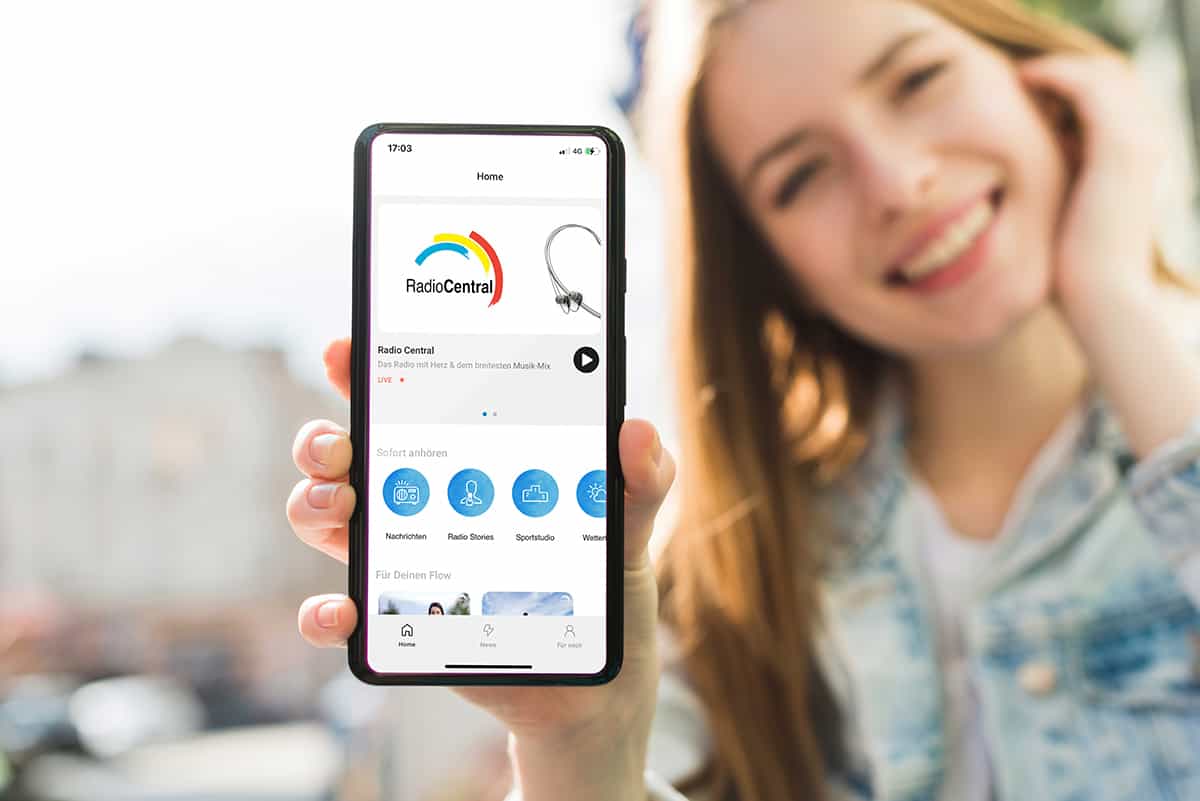
Interactive playlists in on- and offline mode
In addition, the new apps of the respective radios offer various new playlists. There is also a new option to skip music in a radio app. Songs can be skipped up to 6 times per hour. The playlists can now also be listened to offline via download.
In the future, brands, stores and products will be able to sponsor playlists and place their message directly in them. Advertising spots in the playlists will no longer just be audible, but can also be clicked on by users. Playlist sponsors will have their own playlist as well as direct, interactive advertising with links to stores or offers.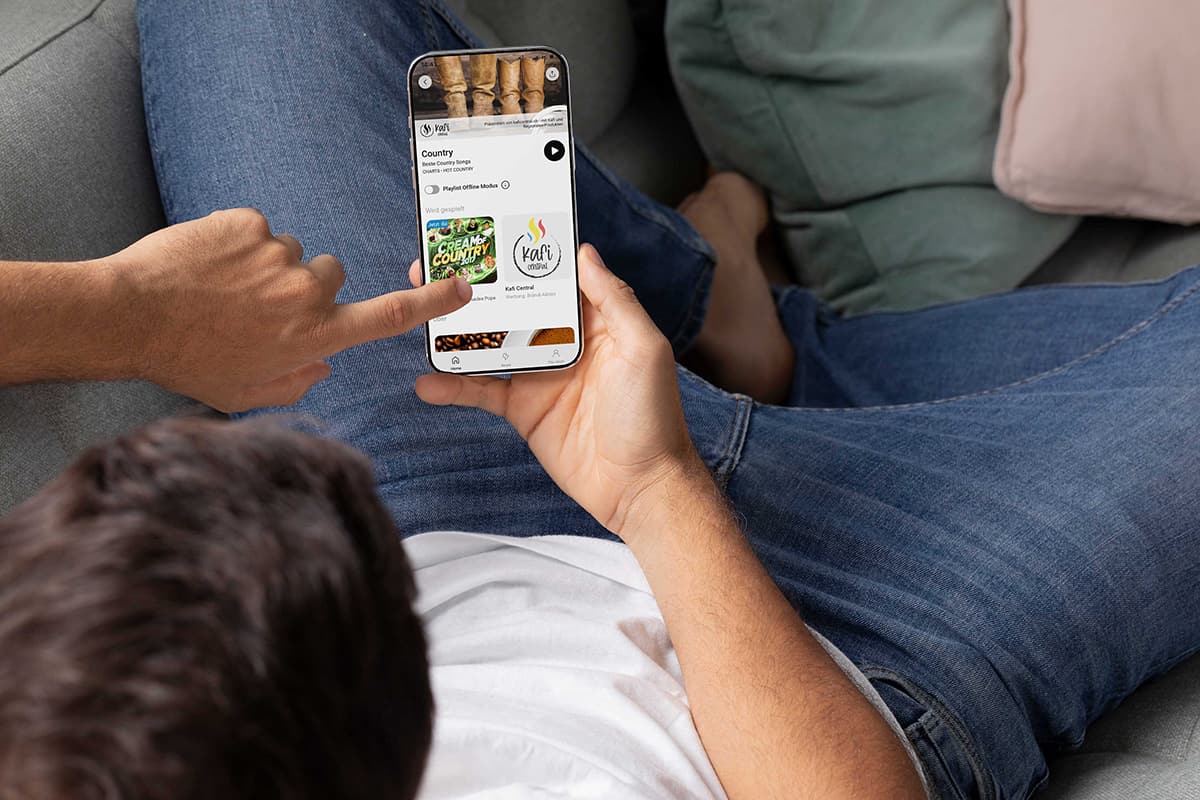
Personal Wallet
App users automatically receive their personal wallet when they download the app. Podcasts, radio broadcasts and music tracks can be added to the "personal wallet" with a "Like. There are also coupons and vouchers that give users discounts on selected products, discounts and promotions of all kinds.
For advertisers, this channel offers an opportunity to please users. The additional advertising on the radio could also increase the reach and the customer base.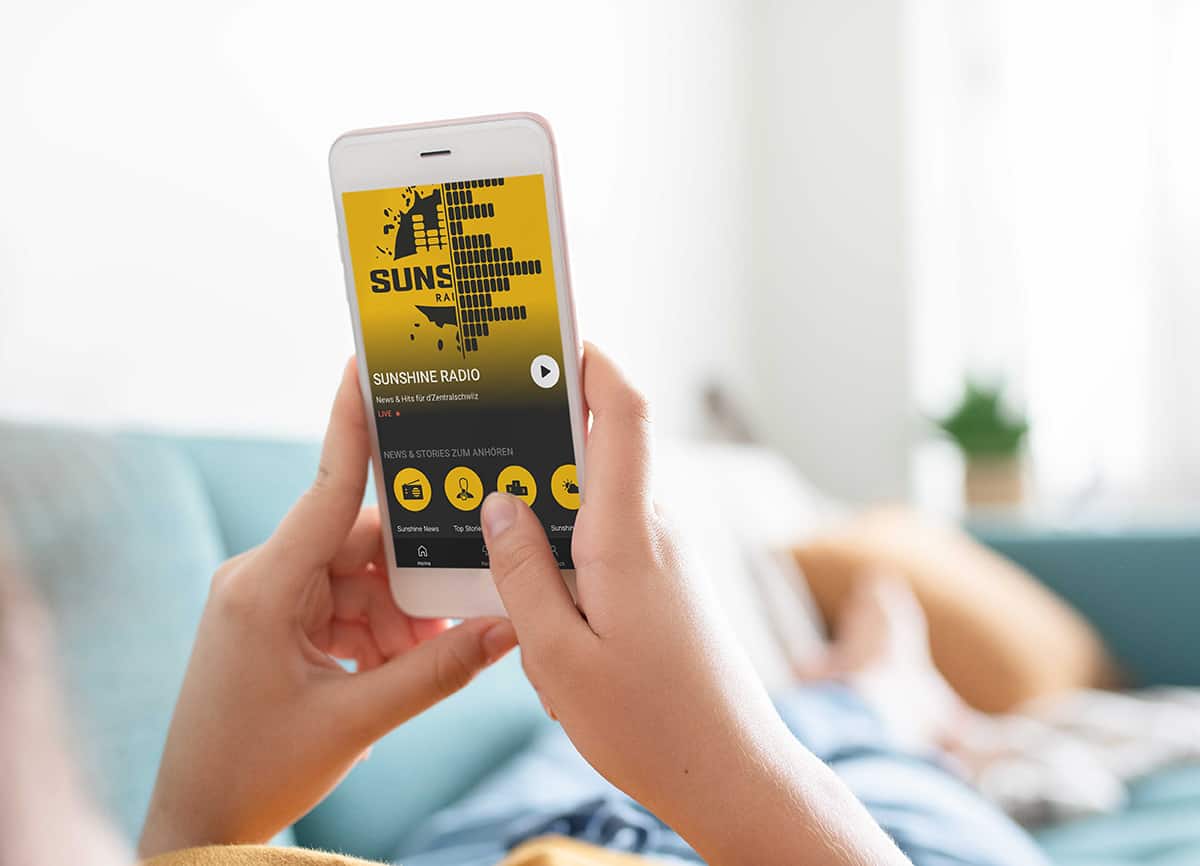
Effective advertising with pre- and mid-rolls
According to statements by Neue Medien Schweiz, pre-roll spots are becoming increasingly popular in the advertising industry. With pre-rolls, an advertising spot is played first before the radio stream, playlist or podcast.
In the future, it will be possible to display pre-roll spots with a brand or product cover in the apps. Currently, the new app offers the option of linking mid-roll spots to products, landing pages or social media accounts. In the app, these spots can be clicked on by users, which is an advantage for advertisers, NMZ said.
The marketing company of Radio Central, Sunshine Radio and Radio Eviva plans to add further innovations on an ongoing basis. "A 360-degree solution on this scale was only sketched out a few years ago, and many people talked us out of it as sheer impossibility," explains program director and CEO Roman Spirig. "But in 2022, it's here because a team and an extremely innovative partner believed in it unceasingly. A very special day for us, as well as for the radio industry."
The apps can be downloaded for Android from the Google Play Store and for iOS devices from the App Store.
]]>The share purchase is related to the succession plan of the publisher of the Boten der Urschweiz, Hugo Triner, who wanted to hand over the strategic co-responsibility for the two radios with his retirement and enable clear majority conditions.

In 1989, Hugo Triner founded Radio Schwyz together with other local newspaper publishers from Schwyz. The name was taken over by the initiators of a competing project, who had also applied for the license. They were integrated as minority shareholders. Alfons Spirig, who had already played a decisive role in the development of Radio Sunshine as editor-in-chief five years earlier, was chosen as managing director. Although Radio Central was the last radio station in Central Switzerland to start, Alfons Spirig and his motivated team succeeded in becoming the radio station with the largest audience in Central Switzerland. Success factors were an attractive music and information concept, many long-term employees, the expansion of the broadcast area and the name change. In 2012, Bakom commissioned a study that certified Radio Central as the most regional radio station, i.e. with the most regional content. In the process, 38 radios were examined for their regionality. In 2002, Radio Central bought Radio Eviva. In 2012, Radio Sunshine was acquired, which resulted in the sale of Radio Eviva due to the RTV law. Today, Radio Central and Radio Sunshine employ around 47 people working in the main studio in Rotkreuz and in Lucerne. Radio Central reaches around 210,000 listeners daily, Radio Sunshine 115,000. Radio Central is the fourth largest local radio station in Switzerland.
In the future, Hugo Triner will concentrate on the board of directors of his traditional companies (newspaper and printing house) or the presidency of the Triner Media Foundation. Before the sale, he had held around 40 percent of the shares in Radio Central and Sunshine, the same as Alfons Spirig.
Sunshine Radio is not just putting on a new summer dress. The claims "News & Hits für d'Zentralschwiz" and "Let the Sunshine in" stand for lifestyle, core values, modernity and the region at the same time, according to the statement. Sunshine Radio wants to represent the urban Central Switzerland even better with the consistent innovations. On Friday, 26.06.2015, the new logo was unveiled on the Kapellplatz, during the Lucerne Festival, in Lucerne.

The claim "News & Hits für d'Zentralschwiiz" sets the main direction of the program. Sunshine consistently plays hits of the modern era. The content with news and stories is entirely geared to Central Switzerland. This means that anyone who listens to Sunshine Radio knows what's going on in Central Switzerland - but world events that interest Central Switzerland are also important.
The second claim, "Let the Sunshine in," is not only a "retro trend" and reminiscent of courageous radio pioneers. "Let the Sunshine in" also stands for the fresh, cheeky, friendly entertainment and rubrics that help define the program. Music plays a central role. The new morning show "Sunny Side up", gets the Central Swiss into the day - the following show "Hitarbeiter" gets Central Switzerland through the working day in a motivating way - and the evening show "Sunshine Feierabend" celebrates the end of the day, which the listeners truly deserve. Sunshine Radio aims to be the perfect informative, fresh and entertaining companion throughout the day. What's happening in the region and the world? Which club is hot right now? What's the top story of the day? Who's topping the charts? Which celebrity just became a father? What does the new album by ... sound like? Sunshine Radio has the answers ready every day.
In cooperation with the internationally renowned Dutch company Pure Jingles, the latest jingles were created, sung by Caroline Chevin, among others. The new Sunshine Radio is joined by the professional male station Voice, known from films, series and television. Sunshine Radio thus gets the voice and the sound that the hit radio station of Central Switzerland always wanted.

To visually support the new program, a new logo was designed in collaboration with the Lucerne design agency Wave. The lettering "Sunshine Radio", as the name, is the most important element in the new logo, which is kept in simple 2 colors, blue and yellow.
Today's presenters and editors would be surprised if they had to go on the air with the technical equipment of that time, according to a statement from Radio Sunshine. With the simplest of means, euphoric, emotional radio was made 30 years ago. The presenters of that time, Matter, Richter, Dekker and Spirig, will mainly talk about that time, when the days for them had rather sixteen than ten hours, neither CD's nor computers facilitated their work and every editorial message had to be written by themselves.
]]>
The merger is expected to lead to savings in infrastructure and organization. According to a joint announcement on Friday, the current majority shareholders of Radio Sunshine, Andreas Kleeb and Ulrich H. Moser, are selling their shares. These will be transferred to Triner Medien Holding and Radio Central managing director and board member Alfons Spirig, who together already control Radio Central. Triner Medien Holding is also the publisher of the Schwyz daily newspaper Bote der Urschweiz.
Former Sunshine owners Kleeb and Moser will remain on the board of directors of the Zug-based radio station. Radio Sunshine Managing Director Marco Meier retains his position. He also remains a member of the Board of Directors and a shareholder.
The two radio stations justify the merger with the media concentration in Central Switzerland. Lucerne-based LZ Medien, which owns the Neue Luzerner Zeitung and its regional editions, as well as Radio Pilatus and Tele 1, dominates the region.
Three locations
Radio Sunshine broadcasts from Rotkreuz ZG and reaches 122'000 listeners; Radio Central, which is based in Brunnen SZ and also has a studio in Lucerne, has a net reach of 196'000 listeners. The three studios are to be retained. The two radio programs are to remain distinguishable despite the takeover. Spirig said on request that Radio Central will continue to be aimed at a rather older audience and Radio Sunshine at a rather younger audience.
The takeover and the appearance under a common roof are intended to make the two radios more attractive for the advertising market. There will also be synergies in infrastructure and organization. According to Spirig, the two radio stations each have 27 jobs. In the short and medium term, a few jobs will be cut at both radios, according to the statement. The job cuts are to be made largely through natural attrition, it said. (sda)
The AGM elected Kleeb as the new Chairman of the Board of Directors. He succeeds Markus Ruoss. The latter stepped down after 27 years due to age, but remains on the Board of Directors. Ruoss was a co-founder of the station in 1983.
Other board members are Jürg Weber, Managing Director of Neue Luzerner Zeitung, and Radio Sunshine Managing Director Marco Meier. It had already been announced in April that Kleeb and Moser would take over the majority of shares from Ruoss. In the meantime, the Federal Office of Communications (Bakom) has granted the necessary approvals. (SDA)
(Image: Keystone)
Marco Meier and Ulrich Moser will become members of the board of directors. Meier will remain managing director, Radio Sunshine announced on Friday. Andreas Kleeb will become chairman of the board of directors. Markus Ruoss himself will remain on the board of directors. The transfers still have to be approved by the Federal Office of Communications.
Radio Sunshine was founded in 1983 by Ruoss and two partners. The station broadcasts a full program in central Switzerland via FM, cable and the Internet. According to its own information, the radio reaches over 120'000 listeners daily.
]]>