
Dani Von Euw and Alfons Spirig have been working as wrestling reporters for Radio Central since the turn of the millennium. Both the former top wrestler Von Euw and the "Schwingfluencer" Spirig have always been keen to provide a platform for the small and big heroes of wrestling.
But now the two want to break new ground and make room for a breath of fresh air. Radio Central is therefore looking for a successor and is launching the casting for "Central's next Schwingreporter". On May 4, interested parties can put their talent to the test at the Radio Central studio in Rotkreuz. The radio audience can help decide who will succeed von Euw and Spirig.
]]> CH Media is taking over 100 percent of the shares in Radio Central AG, Radio Sunshine AG, Radio Eviva AG and Neue Medien Zentralschweiz Werbe AG, the sales and marketing organization of the three radio stations, with retroactive effect from January 1, 2022. By acquiring the radios, CH Media is further expanding its radio portfolio and strengthening its position in Central Switzerland, where it already operates a private radio station in the form of Radio Pilatus.
Organizationally, the three stations will be affiliated with CH Media Entertainment's Regional Electronic Media division. The team headed by Roman Spirig will be taken over. In his function as Program Manager, Roman Spirig reports to Nicola Bomio, Head of Radio at CH Media Entertainment. Alfons Spirig, owner of the Central Switzerland radio stations Central, Sunshine and Eviva, will in future act in an advisory capacity as "Senior Consultant Corporate Development Radio Central"; he will report to Florian Wanner, Head of Regional Electronic Media. All employees will be taken on; the parties have agreed not to disclose the purchase price.
The licenses of Radio Central and Radio Sunshine will be taken over. The transfer of the licenses to CH Media is subject to the approval of the Federal Office of Communications, or OFCOM. In order to comply with the "2-plus-2 rule" of radio licenses, CH Media returned the Radio 32 license this spring and will do the same with the Radio Bern1 license in the fall. Assuming OFCOM's approval, CH Media will thus have two radio licenses for Radio Sunshine and Radio Central in the future.
Roger Elsener, Managing Director Entertainment and member of the CH Media Executive Board, is delighted: "The three radio stations enrich our portfolio and enable us to further strengthen our position in the Swiss radio market and in Central Switzerland in particular." Florian Wanner, Head of Regional Electronic Media, adds: "We are very pleased about the addition to our CH Media Entertainment radio family and extend a warm welcome to our colleagues."
]]>
The stream of the Ob- und Nidwaldner Kantonalschwingfest in Kerns has already been accessed by over 20'000 users.
For many years, Radio Central listeners have enjoyed live coverage of more than 20 wrestling festivals per season. In addition to the Central Swiss Cantonals, Radio Central also broadcasts the popular mountain and partial association festivals, as well as Unspunnen, Kilchberg and the Federal Wrestling and Alpine Games. This year, the radio station also received the license for video productions of Central Swiss cantonal festivals, in particular the Ob- and Nidwaldner in Kerns and the Schwyzer Kantonalen Schwingfest in Muotathal.
At the Ob- und Nidwaldner Kranzfest in Kerns, Radio Central broadcast the best pictures directly from the saw-meal ring via its own TV channel TV Central, receivable on Swisscom Blue TV and via YouTube stream on radiocentral.ch and in the new Radio Central APP, in addition to the proven audio reports.
In addition to the two reporters Alfons Spirig, Gregor Rohrer and Laura Schelbert, Daniel von Euw and Torsten Betschart, two former wrestlers and now experts/commentators with doctoral degrees, also sat in the commentary tribune.
Already next weekend they will be in action again and analyze the swings of the best and cheer along with their colleagues. Via TV Central and Radio Central they will broadcast the Schwyzer Kantonale Kranzfest in Muotathal live. By the way...already chairman Ernst Schläpfer was an athlete and chairman with doctor title.
The live video stream is produced by the Lucerne-based production company Orisono GmbH in cooperation with Radio Central.
]]> Sunshine Radio, Radio Central and Radio Eviva each have a new radio app. The apps are intended to bring innovation to the Swiss radio market and various added values for users. This would also open up new ways for advertisers to reach and win customers.
According to NMZ, the apps are flexibly customizable and can transform according to the needs of users* and advertisers.
Contests with one-click entries
Contests on the radio are popular, but until now, they required phone numbers or websites that listeners had trouble remembering to enter. On the new apps from Radio Central, Sunshine Radio and Radio Eviva, users can now more conveniently enter contests that are currently running on the radio.
According to NMZ, this will make radio contest participation more effective and interesting - also for advertising customers who want to hold a raffle.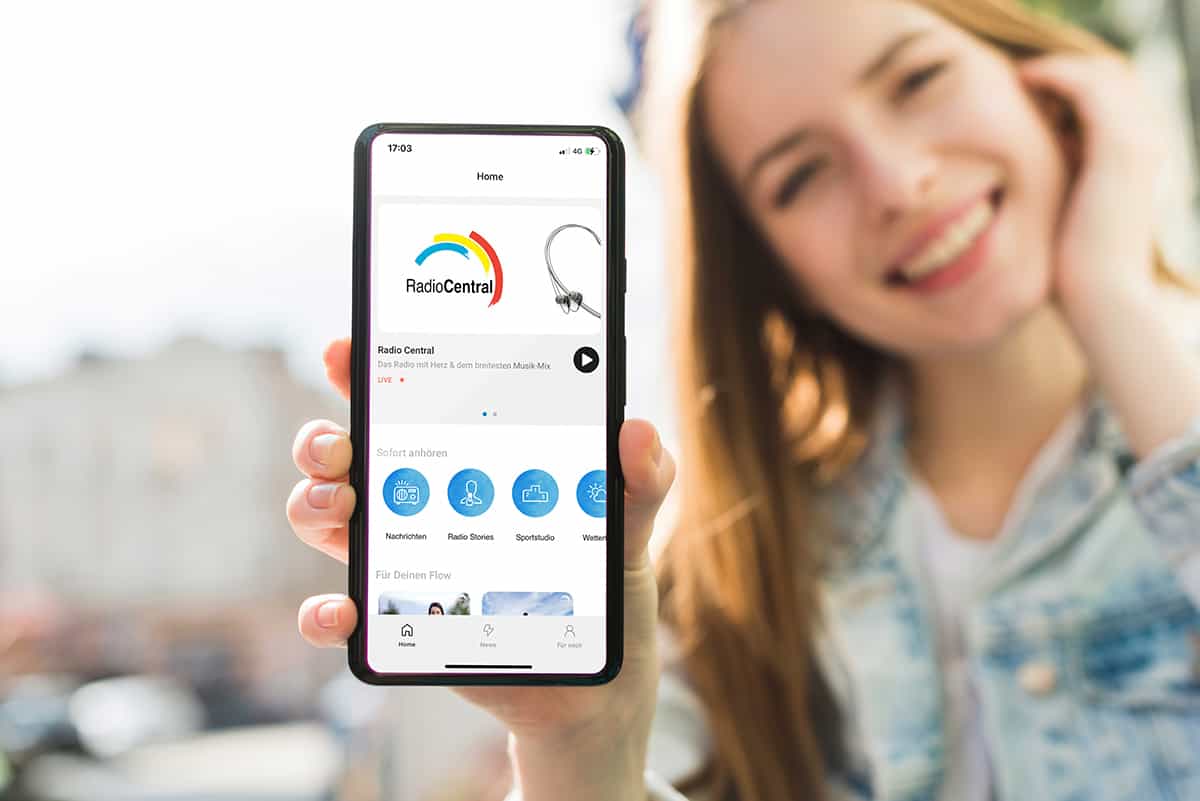
Interactive playlists in on- and offline mode
In addition, the new apps of the respective radios offer various new playlists. There is also a new option to skip music in a radio app. Songs can be skipped up to 6 times per hour. The playlists can now also be listened to offline via download.
In the future, brands, stores and products will be able to sponsor playlists and place their message directly in them. Advertising spots in the playlists will no longer just be audible, but can also be clicked on by users. Playlist sponsors will have their own playlist as well as direct, interactive advertising with links to stores or offers.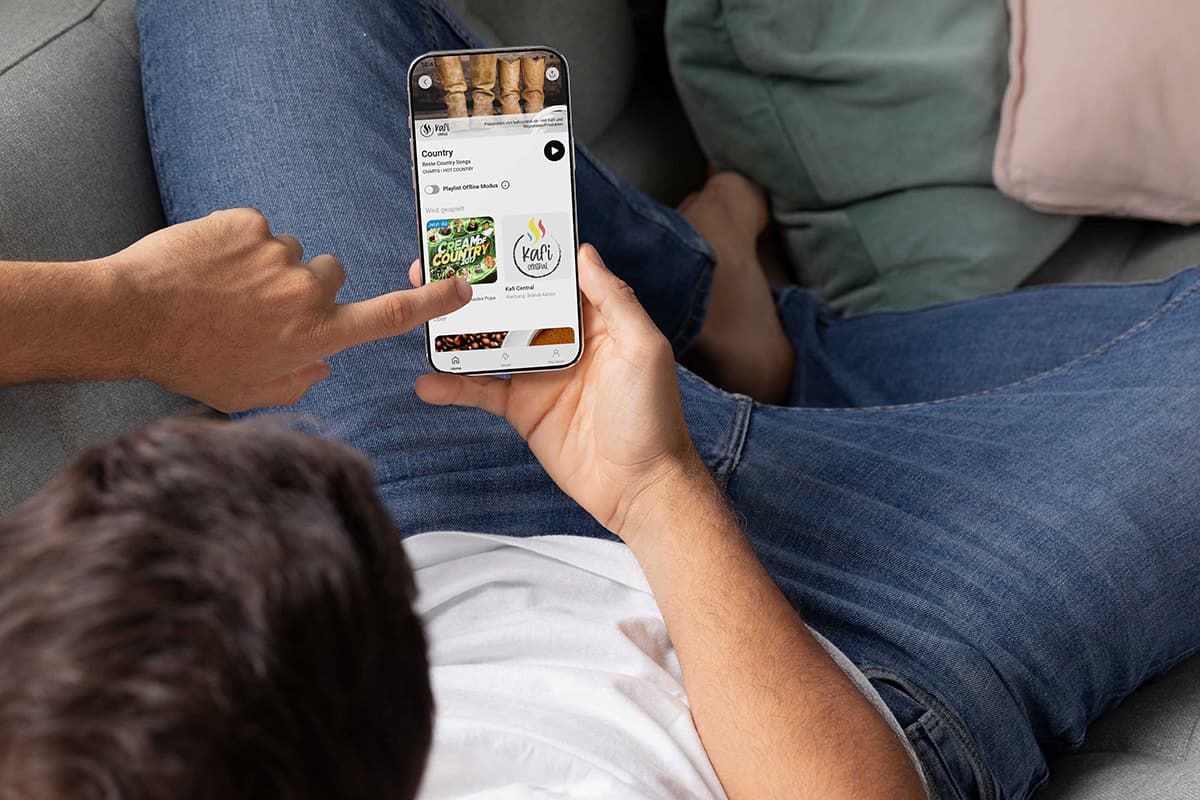
Personal Wallet
App users automatically receive their personal wallet when they download the app. Podcasts, radio broadcasts and music tracks can be added to the "personal wallet" with a "Like. There are also coupons and vouchers that give users discounts on selected products, discounts and promotions of all kinds.
For advertisers, this channel offers an opportunity to please users. The additional advertising on the radio could also increase the reach and the customer base.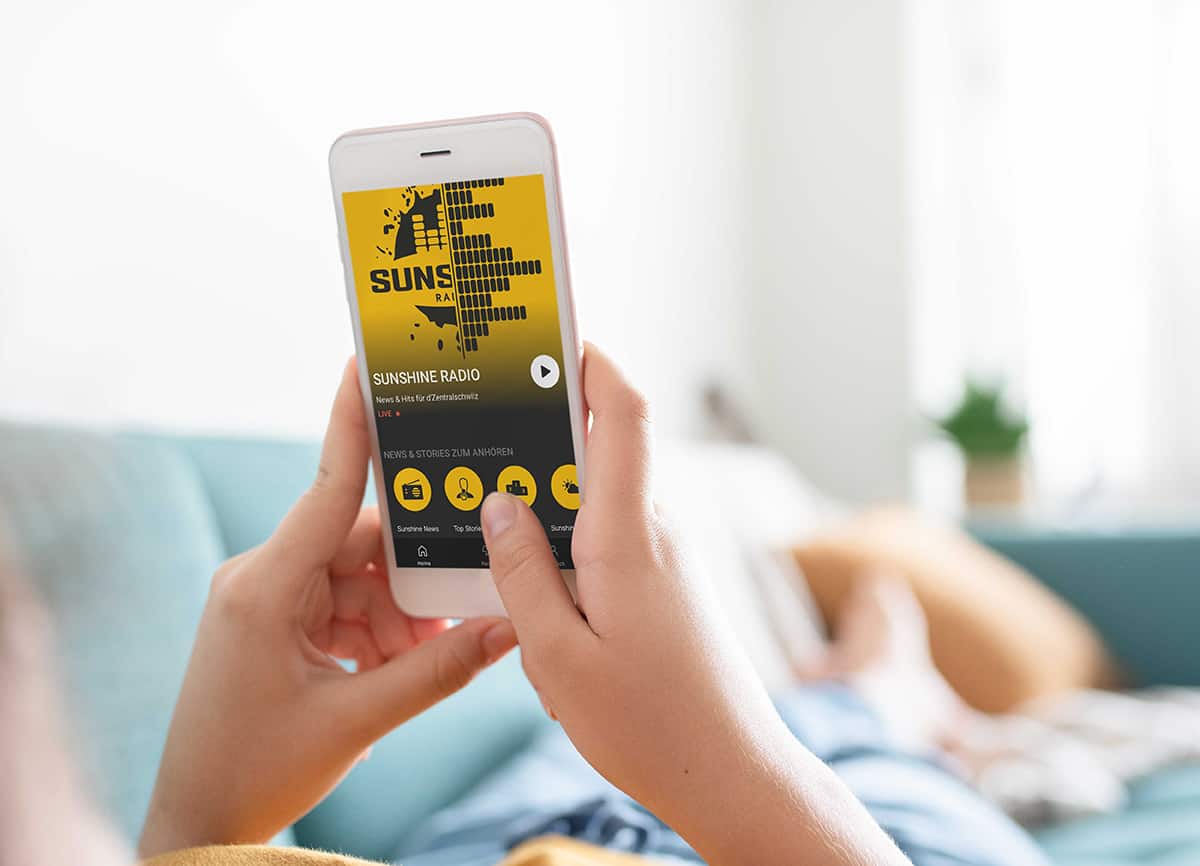
Effective advertising with pre- and mid-rolls
According to statements by Neue Medien Schweiz, pre-roll spots are becoming increasingly popular in the advertising industry. With pre-rolls, an advertising spot is played first before the radio stream, playlist or podcast.
In the future, it will be possible to display pre-roll spots with a brand or product cover in the apps. Currently, the new app offers the option of linking mid-roll spots to products, landing pages or social media accounts. In the app, these spots can be clicked on by users, which is an advantage for advertisers, NMZ said.
The marketing company of Radio Central, Sunshine Radio and Radio Eviva plans to add further innovations on an ongoing basis. "A 360-degree solution on this scale was only sketched out a few years ago, and many people talked us out of it as sheer impossibility," explains program director and CEO Roman Spirig. "But in 2022, it's here because a team and an extremely innovative partner believed in it unceasingly. A very special day for us, as well as for the radio industry."
The apps can be downloaded for Android from the Google Play Store and for iOS devices from the App Store.
]]>
In January, Radio Central challenged a ruling by the Federal Department of the Environment, Transport, Energy and Communications (DETEC). The latter had refused to provide the license with a fee share and referred to the Federal Council's decision, which defined the coverage areas of local radio stations unchanged in 2017.
Radio Central, which received a broadcasting license with a performance mandate without a fee share for the coverage area of Central Switzerland South in 2008, argued that the radio landscape had changed massively in the meantime. It would hardly be possible to fulfill the performance mandate without fee money.
In addition, Radio Central was subsequently thrown into the balance by the fact that Radio Pilatus, which broadcasts in a similar area, returned its license to the Federal Office of Communications (Bakom) in July of this year. As a result, it is now the only licensed radio station with a performance mandate that focuses mainly on the mountainous and peripheral regions of central Switzerland.
Disadvantage because of DAB
The Federal Administrative Court, on the other hand, came to the conclusion that fees for Radio Central would mean unequal treatment compared to other radio broadcasters in the region. The return of the Radio Pilatus license with a regional performance mandate did not change this, as other radio stations were still present in the area in question.
Radio Central also criticized a violation of the principle of legal equality by arbitrarily reviewing the coverage areas. Other radios would have a comparably large broadcast area thanks to DAB, but would still receive fees.
It is true that the change in the radio landscape has an influence on the economic potential of Radio Central, the judges wrote. However, it is not their place to reduce the discretion of the Federal Council by their own idea regarding the definition of the coverage areas.
Radio Central also criticized the planned support of news agencies with fee money, especially since the Federal Council was thus making massive changes in connection with the distribution of fees. According to the court, however, this does not constitute unequal treatment vis-à-vis the complainant, because it concerns news agencies and not a radio broadcaster. Radio Central must bear the procedural costs of 1500 francs. (SDA)

There are many reasons for this. As has been the case throughout Eviva's history, successful advertising marketing could not be established or was insufficient, according to a statement. Radio Eviva is to remain in an existing marketing environment and its Eviva members and listeners.
Of the DAB+ radios licensed at the time, Radio Eviva was still the last radio in operation with a DAB license. Radio Eviva also had to reckon with the fact that no DAB radios in the conventional sense would have been licensed for DAB+ when the license expired. A DAB+ license is no longer necessary with mass operation via DAB. All of today's FM radios will switch to DAB+ in a few years. This will allow the Radio Central group to operate a third or more non-licensed radios with Sunshine Radio (both Radios Central and Sunshine have a FM license). Radio Eviva will continue to reach listeners via DAB+, cable and satellite.
Radio Eviva was sold in 2012 by Radio Central to Sepp Trütsch, Beat Diener and Christian Kuhn (Werbewoche.ch reported).
The share purchase is related to the succession plan of the publisher of the Boten der Urschweiz, Hugo Triner, who wanted to hand over the strategic co-responsibility for the two radios with his retirement and enable clear majority conditions.

In 1989, Hugo Triner founded Radio Schwyz together with other local newspaper publishers from Schwyz. The name was taken over by the initiators of a competing project, who had also applied for the license. They were integrated as minority shareholders. Alfons Spirig, who had already played a decisive role in the development of Radio Sunshine as editor-in-chief five years earlier, was chosen as managing director. Although Radio Central was the last radio station in Central Switzerland to start, Alfons Spirig and his motivated team succeeded in becoming the radio station with the largest audience in Central Switzerland. Success factors were an attractive music and information concept, many long-term employees, the expansion of the broadcast area and the name change. In 2012, Bakom commissioned a study that certified Radio Central as the most regional radio station, i.e. with the most regional content. In the process, 38 radios were examined for their regionality. In 2002, Radio Central bought Radio Eviva. In 2012, Radio Sunshine was acquired, which resulted in the sale of Radio Eviva due to the RTV law. Today, Radio Central and Radio Sunshine employ around 47 people working in the main studio in Rotkreuz and in Lucerne. Radio Central reaches around 210,000 listeners daily, Radio Sunshine 115,000. Radio Central is the fourth largest local radio station in Switzerland.
In the future, Hugo Triner will concentrate on the board of directors of his traditional companies (newspaper and printing house) or the presidency of the Triner Media Foundation. Before the sale, he had held around 40 percent of the shares in Radio Central and Sunshine, the same as Alfons Spirig.
The Federal Department of the Environment, Transport, Energy and Communications (DETEC) had previously given the go-ahead for the licensing of Radio Eviva. The digitally broadcast folk music radio station will be sold by Radio Central to three private individuals. This was announced by the Uvek in a press release on Thursday.
Until now, Radio Central has operated the two licensed stations Radio Central and Radio Eviva. As the provisions of the Radio and Television Act (RTVA) stipulate that a company may hold a maximum of two radio licenses, Radio Central transferred the Radio Eviva license to three private individuals before acquiring Radio Sunshine. After DETEC approved this transfer, the transfer of Radio Sunshine to Triner Medien Holding and Spirig Medien (45% share each) became possible. The owners of the two companies jointly own Radio Central.
With DETEC's approval, the two local FM radio stations in Central Switzerland, Central and Sunshine, will have the same owners in future. Radio Sunshine will also be able to meet the requirements of the radio license under its new ownership.
Radio Eviva to private individuals
Radio Central has sold a total of 81 percent of the shares and voting rights in Radio Eviva für Volkskultur to the three private individuals Beat Diener (38 percent), Sepp Trütsch (38 percent) and Christian Kuhn (5 percent). 19 percent will remain with Radio Central. In 2007, Radio Eviva received a license from DETEC to broadcast a popular radio station via the DAB+ digital transmitter network in German-speaking Switzerland. The company had already been licensed by the Federal Council in 1995 and 1997 to broadcast satellite, medium wave and cable radio.
]]>
According to a statement on Friday, 38 percent each will go to Sepp Trütsch and Beat Diener and 5 percent to the current editor/presenter and program director of Radio Eviva, Christian Kuhn. With the concession, the new owners also assume the obligation to continue to run Radio Eviva within the concession guidelines. Nothing will change for the members and patrons of Radio Eviva. The association, which is integrated into Radio Eviva, will also continue in full.
Radio Central's stake in Radio Eviva is still 19 percent, as the press release explains. With the sale of the share packages, Radio Central is fulfilling a provision of the RTVA, according to which a media company may not own more than two radios. Because the two majority shareholders of Radio Central Radio Sunshine
the sale of the shares has become necessary.
Sepp Trütsch new Chairman of the Board of Directors
Radio Central will continue to provide the program hours of Ländlerzmorge and Ländlerabig as well as the news to Radio Eviva. Otherwise, Radio Central will withdraw completely from the operational management of Radio Eviva with the sale of the shares. The Board of Directors of Radio Eviva will step down at the forthcoming Extraordinary General Meeting. Sepp Trütsch, Beat Diener and a representative of Radio Central will be proposed for election to the Board of Directors. Sepp Trütsch will serve as Chairman of the Board of Directors. These share sales are subject to the approval of the Uvek.

(Image: Sepptruetsch.ch)
The merger is expected to lead to savings in infrastructure and organization. According to a joint announcement on Friday, the current majority shareholders of Radio Sunshine, Andreas Kleeb and Ulrich H. Moser, are selling their shares. These will be transferred to Triner Medien Holding and Radio Central managing director and board member Alfons Spirig, who together already control Radio Central. Triner Medien Holding is also the publisher of the Schwyz daily newspaper Bote der Urschweiz.
Former Sunshine owners Kleeb and Moser will remain on the board of directors of the Zug-based radio station. Radio Sunshine Managing Director Marco Meier retains his position. He also remains a member of the Board of Directors and a shareholder.
The two radio stations justify the merger with the media concentration in Central Switzerland. Lucerne-based LZ Medien, which owns the Neue Luzerner Zeitung and its regional editions, as well as Radio Pilatus and Tele 1, dominates the region.
Three locations
Radio Sunshine broadcasts from Rotkreuz ZG and reaches 122'000 listeners; Radio Central, which is based in Brunnen SZ and also has a studio in Lucerne, has a net reach of 196'000 listeners. The three studios are to be retained. The two radio programs are to remain distinguishable despite the takeover. Spirig said on request that Radio Central will continue to be aimed at a rather older audience and Radio Sunshine at a rather younger audience.
The takeover and the appearance under a common roof are intended to make the two radios more attractive for the advertising market. There will also be synergies in infrastructure and organization. According to Spirig, the two radio stations each have 27 jobs. In the short and medium term, a few jobs will be cut at both radios, according to the statement. The job cuts are to be made largely through natural attrition, it said. (sda)
This means that Radio Central's programming can now also be received in "flawless CD quality" from Frauenfeld to Freiburg and from Basel to Erstfeld, according to a statement. The DAB+ transmitter network is constantly being expanded, but already supplies all densely populated regions.
Radio Central's licensed coverage area is Central Switzerland with the cantons of Schwyz, Uri, Obwalden and Nidwalden, Lucerne, Zug and the greater area of upper Lake Zurich including Glarus. The station, which has locations in Brunnen and Lucerne with special program windows for Central Switzerland and the greater area of upper Lake Zurich to Glarus, reaches 198,300 listeners daily and is, according to its own information, the sixth largest private radio station in Switzerland.