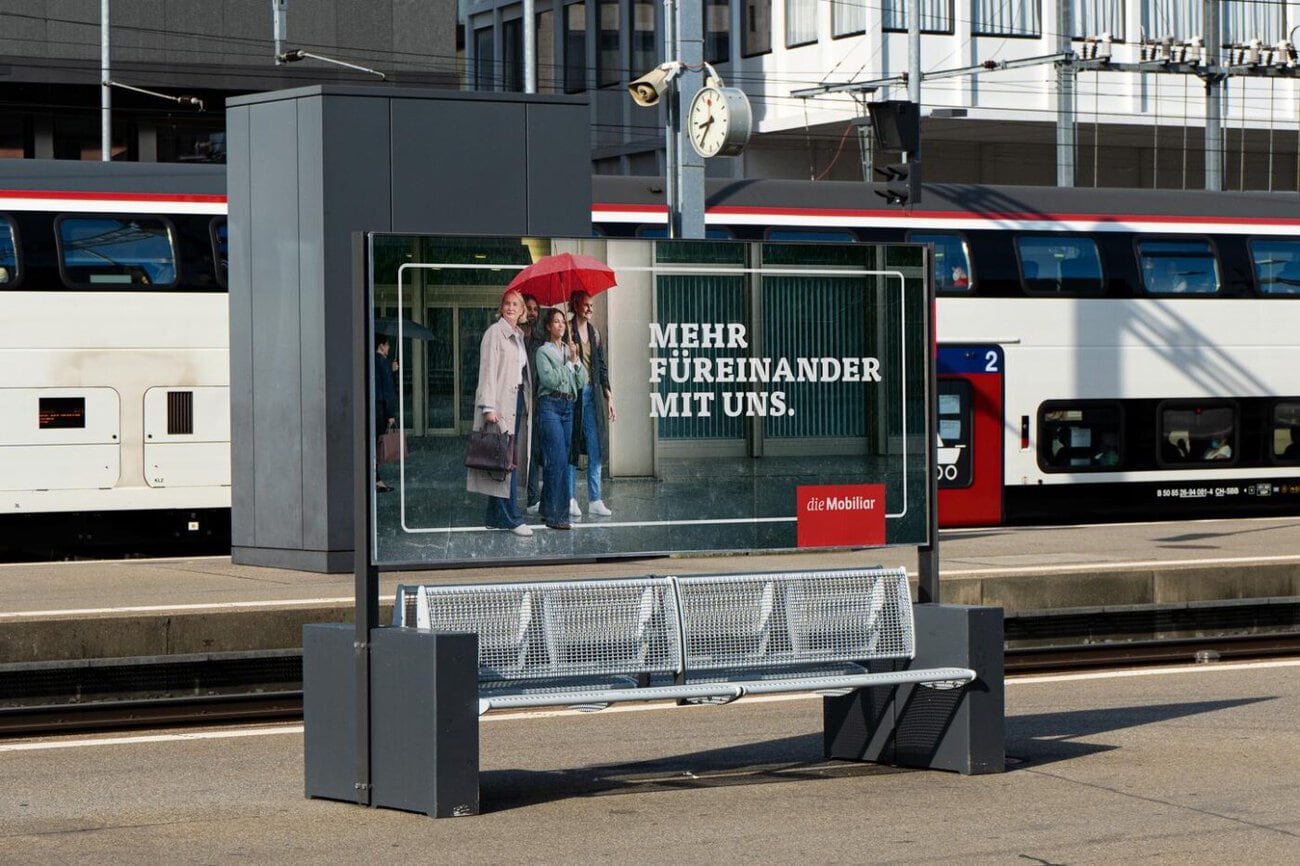
With its new campaign, Mobiliar is highlighting its role as an employer. Mobiliar’s employer branding was developed in collaboration with the agencies Leo, MetaDesign, and Prodigious. The goal is to demonstrate the values of being people-oriented, approachable, and responsible—not only toward customers but also in day-to-day interactions—and to strengthen its position as an attractive employer.
Tradition Meets Flexible Work Models
Approximately 6,500 employees work for Mobiliar throughout Switzerland, which is celebrating its 200th anniversary this year. As a cooperative-based company, it combines stability with creative freedom, according to the press release. Flexible work models such as part-time work, job sharing, and location-independent work are actively practiced and are intended to promote a healthy work-life balance.
According to its own figures, Mobiliar has been one of Switzerland’s most popular employers for the past three years. After taking first place last year, it once again impressed in this year’s survey conducted by the Handelszeitung and the market research firm Statista, achieving a top score in its employees« recommendation rate. This makes it the most popular employer in the »Insurance and Health Insurance” category and ranks it second in the overall standings of all Swiss companies.
Mobiliar Employer Branding with Real Employees
The campaign highlights topics that are particularly important to employees: working together, supporting one another, communicating as equals, and even humor in the workplace. This sense of togetherness is also reflected in the campaign’s execution, as most of the people featured in the videos and on the posters are actual Mobiliar employees.
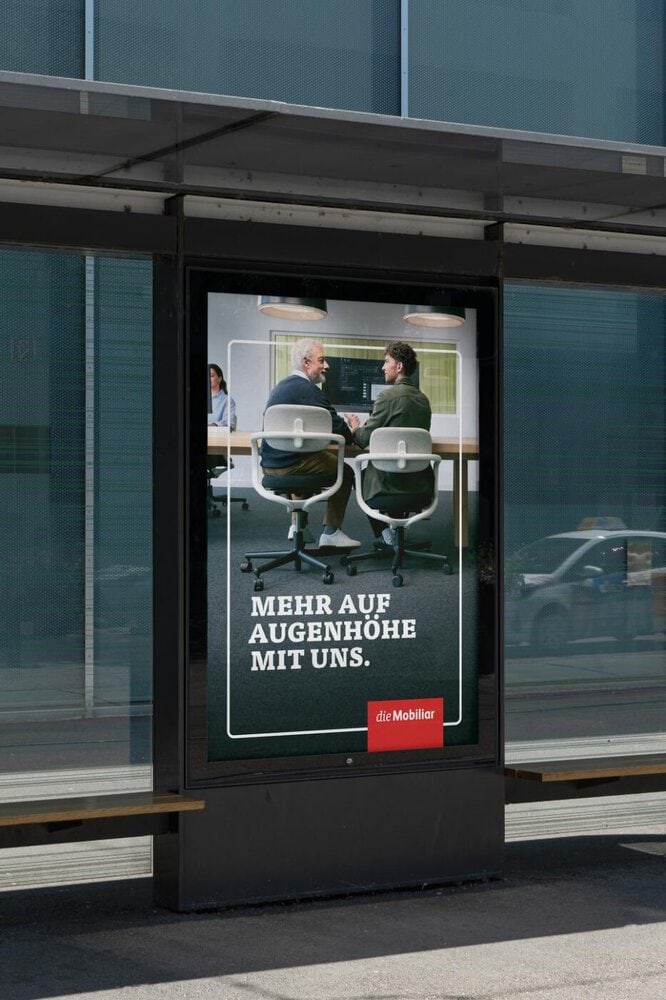
«While traditional employer campaigns list benefits, our new campaign lets people experience firsthand what makes working at Mobiliar special: the sense of community, the joy of work, and the feeling of making a difference together,» says Vera Koch, Employer Branding Manager at Mobiliar.
Three movies in 16:9 aspect ratio
The campaign includes the themes «Umbrella,» «Elevator,» and «Eye Level,» each in 16:9 format and in German.
Responsible at Die Mobiliar: Vera Koch, Employer Branding Manager; Sylvana Bucher, Employer Branding Specialist; Raúl Fernández, Employer Branding Specialist
]]>
New Business Barometer Confirms Omnicom as the Leader
COMvergence’s New Business Barometer for the first half of 2026 paints a clear picture for Switzerland: Omnicom Media dominates new business with a net gain of $33 million. In total, thirty pitches with a net total volume of $95 million were recorded in Switzerland during the reporting period from January through June 2026. During the same period last year, there were 32 account changes with a nearly identical total volume of $95 million.
Of the 24 pitches decided in the first half of 2026, only three accounts went back to existing agencies, according to COMvergence—the rest switched to media network agencies. Most of the pitches—18, to be exact—were international or global reviews, while 12 took place exclusively in Switzerland. According to the survey, these local reviews account for 33 percent of the media spending tracked in Switzerland. By comparison, worldwide, local pitches accounted for 58 percent of the reviews underway in the first half of 2026.
Publicis Media and Mediaschneider in second and third place
In the ranking of the eight media agency groups, Omnicom Media leads with a net profit of $33 million, of which $31 million is reportedly attributable to eight new clients. According to the press release, the accounts retained or newly won include Dyson, Adidas, and On. Publicis Media follows in second place with three new clients and a net volume of $11.4 million. Third place goes to the Mediaschneider Group, an independent company with a total volume of $11 million. According to the press release, Mediaschneider Zurich won the largest pitch of the first half of the year in Switzerland and successfully retained the Helsana account.
According to the report, the three largest individual pitches of the first half of the year were those from Helsana, Heineken, and Dyson, with a combined net volume of 27 million U.S. dollars.
Mediaschneider Zurich Reports Highest Volume of New Business in the First Half of the Year
Looking at the top five media agencies with the most successful new business, the New Business Barometer shows that an independent agency tops the list: Mediaschneider Zurich achieved the highest figure with a total net volume of 10.6 million U.S. dollars, thanks to its successful retention of the Helsana account. In second place, with a net total of $10.2 million, is Hearts United, which was formed from the merger of Hearts & Science (Omnicom) and Mediahub (Interpublic/Mediabrands). Third place goes to the PHD Network, which also belongs to Omnicom Media, with a net new business volume of $8.9 million, including the Adidas account. In fourth place is Dentsu’s Red Star, which is reported to have successfully defended the Heineken account, followed by WPP Media’s Wavemaker with a net new business volume of $4.4 million.
In total, COMvergence tracked and validated the budget changes of 23 media agencies from January through June 2026—including eight independent agencies and fifteen network agencies belonging to international holding companies.
]]>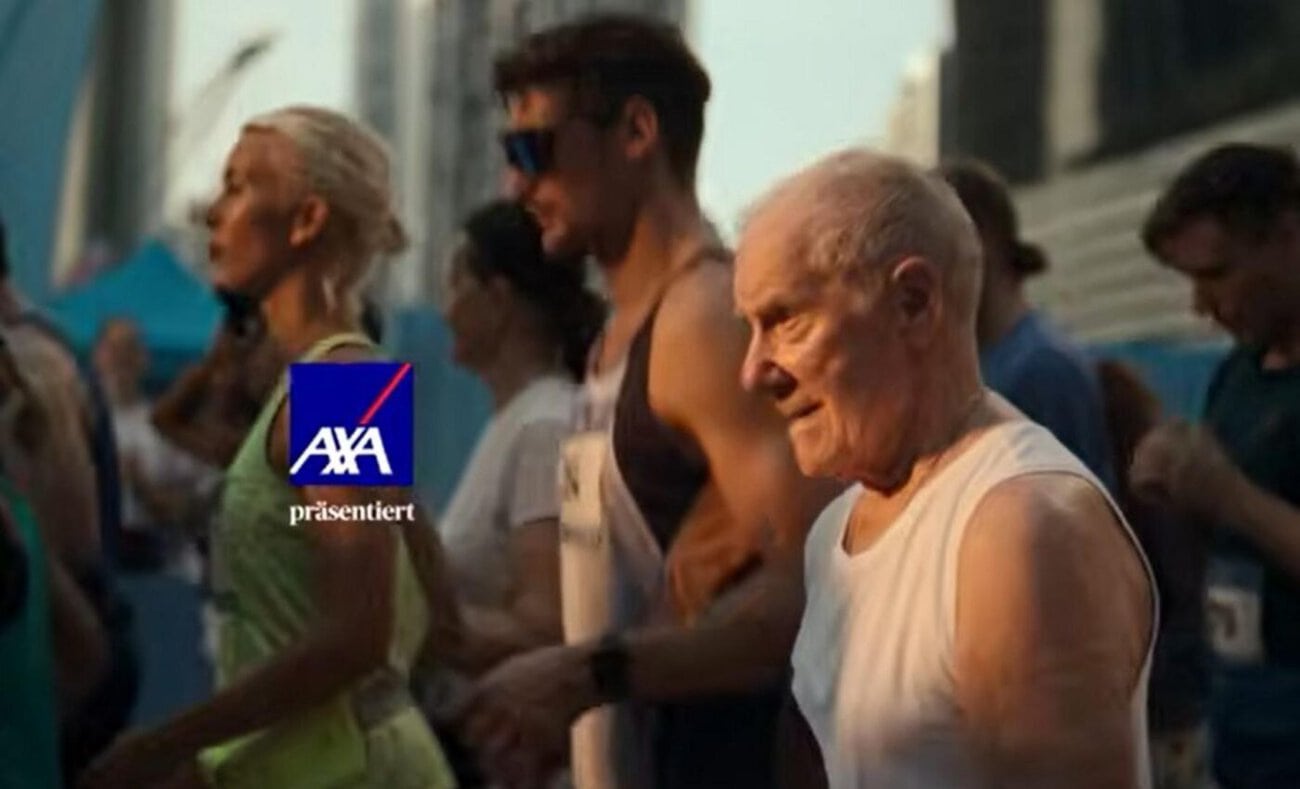
The AXA brand campaign continues the insurance company’s global brand communication and focuses on financial planning for every stage of life. Dreams, goals, and passions know no age—yet age often influences what people are believed capable of and what opportunities are open to them. With the global campaign «Age Shouldn’t Be a Risk,» developed by Publicis Conseil and Publicis, AXA advocates for a nuanced perspective on aging and highlights why appropriate financial planning is important at every stage of life.
The campaign is the latest iteration of the multi-year global brand concept «The future shouldn’t be a risk» and follows last year’s campaign, «Independence shouldn’t be a risk.» This year, the focus is on people in different stages of life and their individual plans, needs, and passions. AXA positions itself as a partner dedicated to supporting people of every generation with tailored retirement planning solutions.
A New Perspective on Aging
At the heart of the campaign is an emotional film that challenges common perceptions about aging. It shows people who, regardless of where they are in life, are pursuing new goals, launching their careers, or following their passions. The situations depicted range from an active retiree running a marathon to a young chef just starting his career.
In this way, the campaign highlights that people cannot be reduced to a mere number representing their age. To be able to pursue one’s own goals and passions as independently as possible at every stage of life, it is important to plan for the future early on and in a way that suits one’s current life situation. Good retirement planning is therefore based not solely on age, but on a person’s individual plans and needs.
The film, developed by the AXA Group, will air in several European countries. In Switzerland, the campaign will run from September 21 through the end of November on television as well as on digital and social media platforms. The goal is to strengthen AXA’s brand awareness and promote awareness of financial planning at different stages of life.
Swiss street interviews challenge first impressions
In addition to the international film, AXA Switzerland is focusing on original content developed specifically for social media. Street interviews conducted in German-speaking Switzerland and French-speaking Switzerland playfully illustrate how quickly people are pigeonholed based on their age. With surprising questions and a humorous shift in perspective, the videos encourage viewers to question their first impressions. Their central message: Any age is the right age to pursue your own interests and passions.
Retirement planning is based on life, not on a number
Every stage of life brings with it different desires, needs, and questions. That’s why the campaign in Switzerland is aimed at people of all ages. AXA supports individual and business customers in choosing retirement planning solutions that fit their specific life situations—with the goal of enabling people to realize their dreams and pursue their passions with as much autonomy as possible.
«People of all ages have plans, goals, and passions. With our campaign, we want to encourage people to question existing notions about aging. At the same time, we want to encourage everyone to actively engage with their personal financial planning so that it meets their individual needs,» says Antonia Lepore, Head of Marketing at AXA Switzerland.
All promotional materials lead to the campaign’s landing page. There, interested individuals can find information and solutions related to personal and occupational retirement planning, tailored to their specific needs. The campaign aims to raise awareness of this topic among people at every stage of life and highlight suitable options for them.
Client: AXA GIE and AXA Switzerland. Agencies: Publicis Conseil and Publicis (creative), Wavemaker Global and Mindshare Switzerland (media).
]]>
Benefits as an integral part of the employer's promise
For many employees, employee benefits have long been more than just an added perk. From flexible work schedules to health and wellness programs and financial benefits, they have now become an integral part of the employer’s promise. At the same time, many benefits are now taken for granted and increasingly viewed as a natural part of modern work. This is the conclusion reached by the employee benefits study «Publicis More: Benefits with Impact» by Publicis Media.
According to the survey, 57 percent of respondents find employers who offer a wide range of employee benefits more attractive. 48 percent of 18- to 75-year-olds would even switch employers if another company offered significantly better benefits at the same salary. Among the generation just entering the workforce, that figure rises to nearly 60 percent. Forty-five percent agree that a good benefits package can help offset a lower base salary.
Opinions on the current offerings are mixed
The study also shows that employee benefits serve different purposes. More than half of employees are satisfied with the benefits offered by their current employer. Thirty percent rate the benefits package as neutral, while 18 percent are dissatisfied. For employers, there is thus potential in a mix that combines reliable standards with offerings tailored to different needs and life stages. Certain benefits are already perceived as part of the basic package offered by an attractive employer. These include, for example, overtime compensation, flexible work hours, professional development, a company pension plan, and a parking space.
Usage also varies by function. For everyday benefits, the study shows an average usage rate of 92 percent. For protection benefits, the rate is 86 percent; for development benefits, 82 percent; and for care benefits, 73 percent. These figures refer to the unweighted average of the benefits shown among respondents who selected at least one benefit.
Time management and working from home remain key
When it comes to flexible work arrangements, additional days off or special leave top the list with 66 percent approval. Flexible working hours receive 64 percent approval, and a 35-hour workweek with full pay compensation receives 63 percent. Generation Y, in particular, prioritizes time autonomy: 68 percent consider flex time to be important, and 66 percent view the 35-hour workweek with full pay as important.
Working from home is increasingly seen as the norm, but it remains a factor in employers' decisions. 47 percent say that sufficient opportunities to work from home influence their choice of employer. 43 percent indicate that a reduction in the number of days they can work from home could prompt them to switch employers. Among Gen Z, the corresponding figures are 57 percent and 54 percent.
Generational differences shape expectations
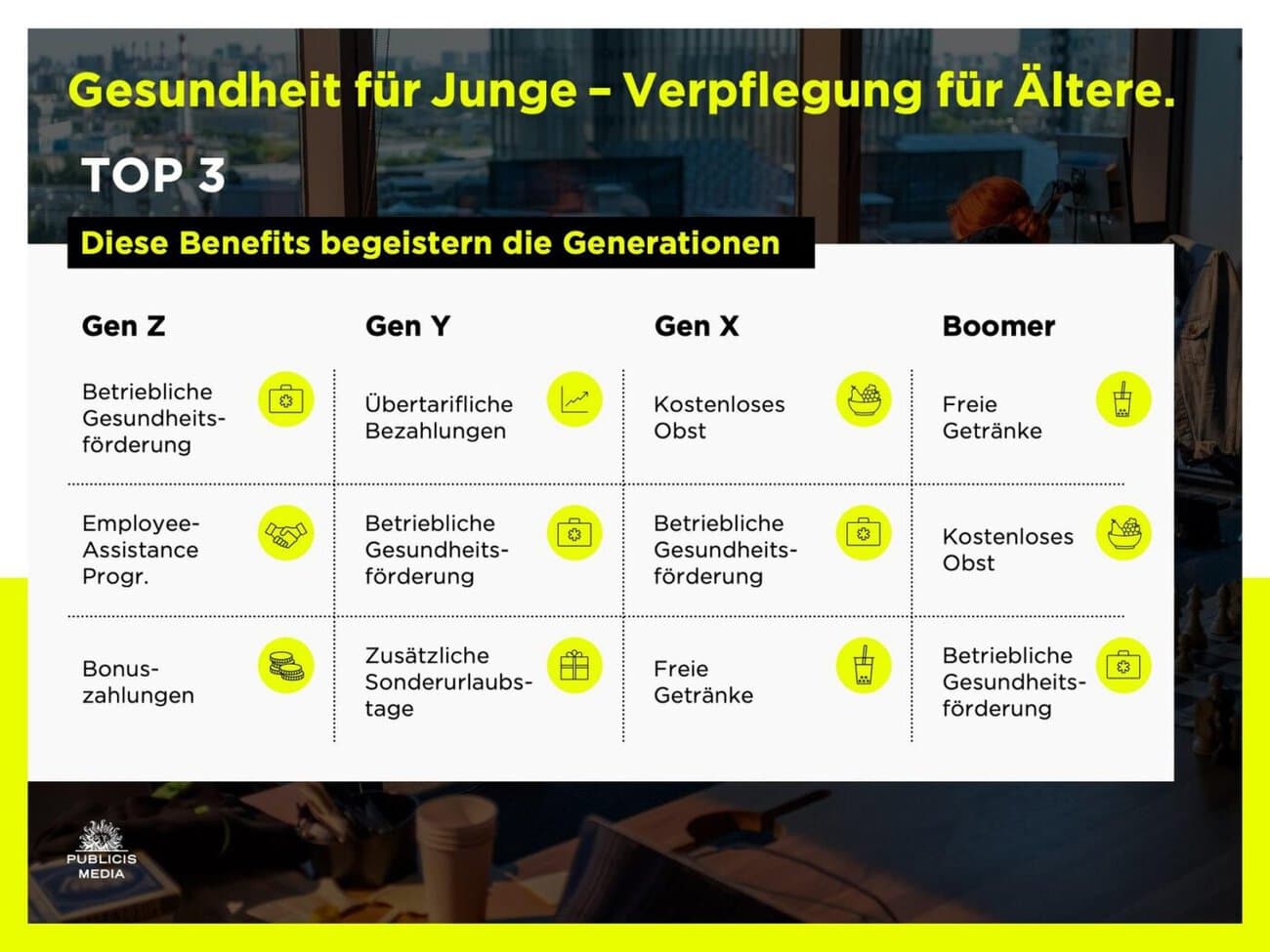
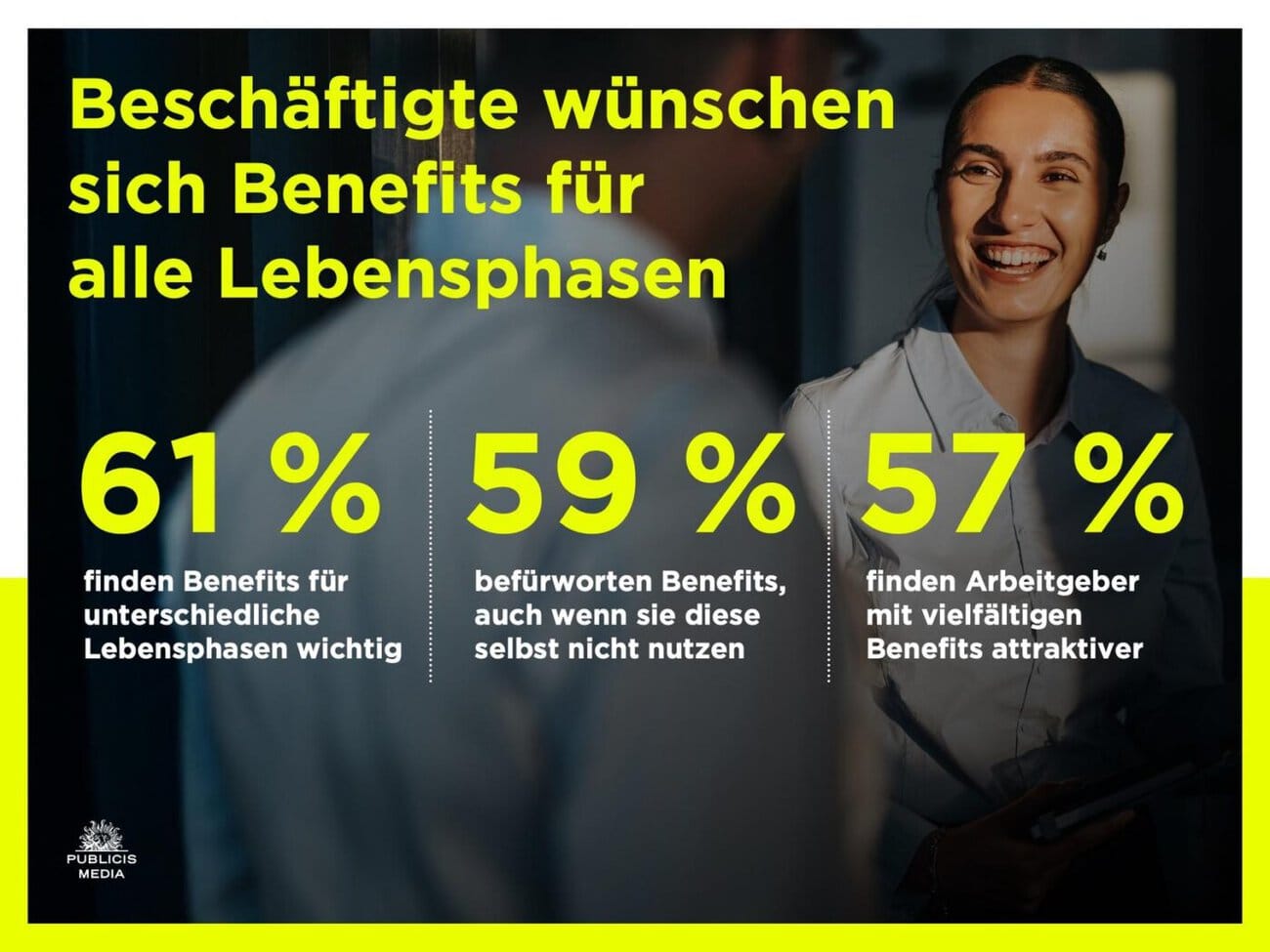
Expectations also vary across generations. For Gen Z, bonus payments, additional special leave days, and support during serious illnesses—each at 42 percent—are particularly often decisive factors in choosing an employer. Boomers most frequently cite overtime compensation at 29 percent, flexible work hours at 28 percent, and bonus payments at 27 percent. At the same time, 61 percent consider benefits for different life stages to be important, 59 percent support such offerings even if they don’t use them themselves, and 57 percent find employers with a wide range of benefits more attractive.
«The results show that an effective benefits package must combine several functions: Standards create reliability, while offerings tailored to different life stages convey additional appreciation and increase the employer’s appeal to employees. For employers, it is crucial to tailor the mix to the needs of their employees and to communicate it effectively,» said Birgit Pabst, Chief Talent Officer at Publicis Media.
For the employee benefits study «Publicis More: Benefits That Make a Difference,» the Publicis Media Data Studio conducted a representative online survey of 2,716 German-speaking individuals aged 18 to 75 in Germany. The study examined Gen Z (ages 18 to 28), Gen Y (ages 29 to 44), Gen X (ages 45 to 59), and Boomers (ages 60 to 75).
For more information about Publicis Media: https://www.publicismedia.com
]]>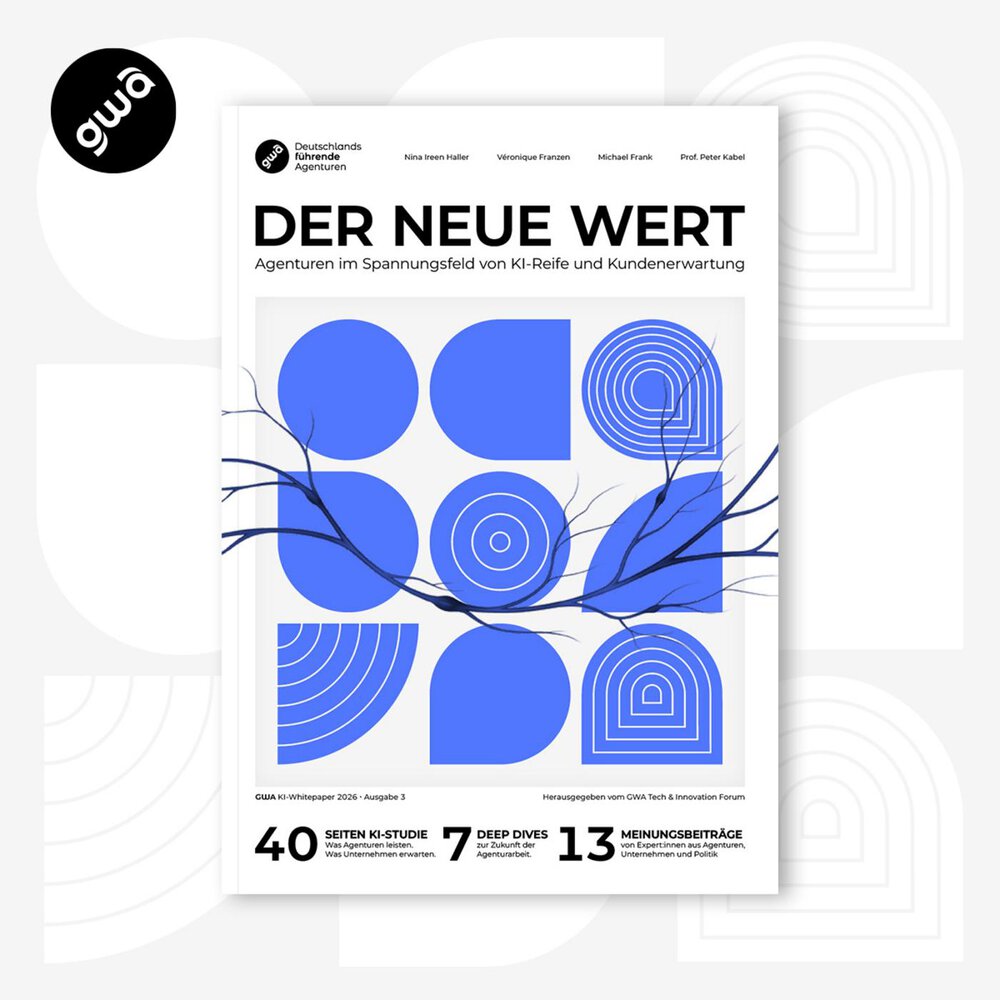
The GWA AI White Paper 2026 This is not a technology report, but rather a decision-making framework for companies and agencies alike. Under the title «The New Value. Agencies Caught Between AI Maturity and Customer Expectations,» the GWA (General Association of Leading Communications Agencies) has published a roughly 120-page study based on two empirical surveys: In collaboration with the Handelsblatt Research Institute (HRI), 170 CEOs and CMOs were surveyed about the future of AI use in marketing. At the same time, the GWA surveyed 78 managing directors of member agencies. The white paper is supplemented by about a dozen interviews with experts as well as seven in-depth analyses on topics such as business and compensation models of the future, visibility in an era of AI-generated content floods, training the next generation, creativity, and regulation.
80 percent want to do more in-house—but agencies are still in demand
According to the GWA AI white paper, 80 percent of the marketing decision-makers surveyed plan to handle more tasks in-house in the future. This most commonly applies to research and market research: 52 percent plan to increase in-house use in these areas. In the creative department, the figure is 50 percent, and in the production of advertising materials, it is 44 percent. As their main motivation, 61 percent of companies cite efficiency gains, 54 percent cite greater effectiveness, and 49 percent cite cost reductions.
Nevertheless, this trend does not signal a retreat from agency relationships. Only 8 percent of the companies surveyed expect the role of agencies to diminish in the future. Rather, the market situation should be viewed as a transitional phase: Only 10 percent of the companies surveyed have established AI as an integral part of their processes, while 45 percent report using it regularly in specific processes.
Nina Haller, GWA Board Member and Managing Partner at muehlhausmoers, summarizes the white paper’s key insight as follows: «As production becomes faster and, in some cases, almost infinitely scalable, value will no longer be derived from how much we produce or how long it takes us to do so.» Value is shifting toward judgment, guidance, context, impact, and responsibility. «Agencies must now translate this very shift into their services and business model, or they will be replaced,» says Haller.
Agencies Have Matured Technologically—But Still Have Weak Spots
76 percent of the GWA agencies surveyed have already introduced AI-based products or services. 72 percent consider themselves advanced in their use of AI, while another 24 percent describe themselves as experts. Only four percent still consider themselves beginners.
However, technological maturity alone does not solve all challenges. Sixty-seven percent of agencies cite a lack of skills, expertise, or talent as the biggest hurdle to AI implementation. Fifty percent see a lack of time and resources as a problem, 45 percent cite legal uncertainties, and 42 percent point to difficulties with technical integration.
Michael Frank, GWA Board Member and CEO of Die Crew, emphasizes: «It’s no longer a question of whether AI can be used, but rather what concrete value it creates. Cost efficiency is one potential benefit, but not the only one. Agencies must link their use of AI to a clear value proposition—that is, to the question of what value is being created.» According to Frank, as companies increasingly take on operational tasks themselves with the help of AI, their need for guidance, technological integration, strategic consulting, creative quality, and responsible management increases.
Young Talent at GWA AI White Paper: Consciously Developing Skills
One of the most pressing questions raised by the GWA AI White Paper concerns the development of the next generation of talent: How will experience, judgment, and creative excellence be cultivated in the future if AI is taking over precisely those tasks that young professionals have traditionally learned through on-the-job training? Véronique Franzen, spokesperson for the GWA Forum Tech & Innovation and Managing Partner at Publicis Media, sees this as «a fundamental problem for all employers, not just agencies.» Everyone must explore new ways of learning and, for example, strongly promote mentoring. «It’s not the next generation as such that’s at stake. What’s at stake is the ability of organizations to no longer let competence develop incidentally, but rather to consciously develop skills and experience in the future,» says Franzen.
According to the study’s findings, there is no indication of large-scale job cuts due to AI: 72 percent of companies expect employment levels to remain the same or increase. In fact, 47 percent of agencies plan to create new jobs or roles through AI; only 13 percent plan to cut jobs.
AI doesn't reduce costs—it just shifts them
One of the white paper’s central arguments challenges a widely held belief: that automation inevitably leads to lower costs. While AI can indeed make individual work steps faster and more cost-effective, At the same time, however, new cost drivers emerge: licenses, models, tokens, and computing power—as well as infrastructure, technical integration, governance, and quality assurance—become significant economic factors. The crucial question for companies and agencies, therefore, is not where AI saves costs—but rather where costs are shifting, what new dependencies are emerging, and how budgets will need to be allocated in the future.
The GWA AI White Paper 2026 is available for download at: http://gwa.de/ki-paper
]]>On a hot and humid late-summer evening, Publicis brought together the Swiss communications community for «Cannes Unpacked.» The trio on stage—Samuel Wicki (ECD at Leo Burnett), Robert van den Heuvel (ECD at Leo Lausanne), and Arnaud Debia (Global Creative Development Director at Ipsos)—offered far more than just a retrospective. The focus was on the pressing question of the future role of humans in an advertising universe shaped by algorithms.
While technology seemed to be everywhere at first glance, the award-winning campaigns and the latest market research data revealed a remarkable shift: humanity is emerging as a decisive competitive advantage.

The Backlash Against the Perfection of Machines
More than 40 percent of this year’s submissions used artificial intelligence to speed up processes or generate new visual worlds. At the same time, skepticism among the public is growing. According to the Ipsos AI Monitor, 65 percent of people worldwide view these rapid technological advances with some concern.
As a counterpoint to the perfect—but often soulless—AI output, the juries praised works that celebrated the imperfect, the real, and the deeply human. The Film Grand Prix winner, Claude, provided a prime example: Instead of blindly extolling the possibilities of technology, the platform humorously warned of the dangers of subtly placed advertising in large language models—a clear statement that technology must serve humanity, and not the other way around.
Polaroid put it even more radically, under the guiding principle that, after years of taking refuge in technology, it was now time to use reality to escape digital sensory overload.

Even tech giants took a surprisingly analog approach: Coinbase’s Film Craft Grand Prix entry depicted a break from virtual constraints toward real, unpredictable life—completely without CGI, shot with real actors and physical sets.
Trust as the Most Valuable Currency
In times of geopolitical tensions, disinformation, and AI-generated fake content, consumers are looking for guidance. An exclusive Ipsos study for Nestlé shows that established brands rank higher than chatbots and influencers in terms of credibility. However, trust is not built through technical features, but through genuine empathy.

Data from the Ipsos study «The Misfits Way» shows that campaigns that actively foster genuine brand resonance, credibility, and relevance achieve up to 32 percent greater impact. When creativity and empathy go hand in hand, effectiveness increases even more significantly.
AXA Insurance demonstrated this impressively with its «3 Words» campaign: By adding three crucial words to insurance policies—coverage for domestic violence—the brand secured the Grand Prix in Creative Effectiveness this year, following its Titanium award the previous year, accompanied by a 9 percent increase in new business. A relevant brand purpose drives measurable growth when it delivers on the industry’s core promise. AXA continued this thread with the support of Afghan rapper Sonita to draw attention to the plight of women under the Taliban.
Tell Stories Instead of Lecturing
A striking finding from the Ipsos analyses: Only 49 percent of all advertising materials tested still tell a coherent story. Yet narrative storytelling has been shown to double short-term brand awareness.
Works such as those by Heinz demonstrated that storytelling can resonate even with the simplest of means: The agency discovered that the outline of the familiar French fry bags exactly matches the shape of its own brand logo—a purely visual connection that sparked a global response without any high-tech elements.

OREO also used a seemingly absurd story about cows with belt patterns for a nationwide campaign in Mexico that scaled directly at the point of sale.
The closing message: Be Bold, Be Human, Keep Thinking
To wrap up «Cannes Unpacked,» the trio of speakers distilled the essence of the roughly one-hour event into three concise calls to action: «Be Bold,» «Be Human,» «Keep Thinking.» These form a strategic counterbalance to an industry that, in its fascination with algorithms, sometimes loses sight of common sense.

Be Bold: A call for radical courage and conviction. Analyses of this year’s Cannes entries show unequivocally that run-of-the-mill caution gets lost in the background noise of social media feeds. Effective communication requires a clear profile, surprising ideas, and a willingness to take a genuine stand—even if it means ruffling a few feathers.
«Please, be bold.»
— Samuel Wicki, Executive Creative Director at Leo Burnett
Be Human: A return to empathy as the most powerful driver of advertising impact. While machines can analyze data and generate content every second, an intuitive understanding of social nuances, pain points, and genuine emotions remains the undisputed domain of humans. Technology must not be an end in itself, but must serve human needs.
«The other one, of course: be human.»
— Arnaud Debia, Global Creative Development Director at Ipsos
Keep Thinking: Arguably the most urgent message of the presentation: Despite sophisticated AI tools and automated campaign processes, one must not delegate one’s own critical thinking to algorithms. As Robert van den Heuvel noted with a smile: Anyone who blindly follows the system’s instructions will inevitably end up in a creative dead end. Independent critical thinking, strategic foresight, and sound judgment remain indispensable.
«And I think one of the most important things—if you ask me—as we move forward together is: please, keep thinking. Don't just blindly follow Google Maps.»
— Robert van den Heuvel, Executive Creative Director at Leo Lausanne
]]>

SBB Senior Citizens Campaign: Mobility as a Social Promise
With a new SBB senior citizens campaign, SBB is specifically targeting people aged 60 and older. The communication strategy, developed by Leo Switzerland, focuses on a central question: What role does public transportation play in the daily lives of this growing demographic—and how does it help them stay mobile and socially connected?
People aged 60 and older are an important customer group for SBB. The campaign’s central theme is fostering a sense of connection: By train, tram, bus, and boat, older adults can easily reach places that are important to them. At the same time, public transportation allows them to maintain personal connections with friends and family.
Two TV commercials as the emotional centerpiece of the SBB senior citizens campaign
At the heart of the campaign are two emotional TV commercials created in close collaboration between Leo Switzerland and SBB. Among other scenes, they feature a grandfather visiting his grandson, friends meeting by the lake for an aperitif, and a couple dancing. The visual style is fresh, and the camerawork is dynamic. The images are accompanied by a specially composed soundtrack and an emotional voice-over.
Matthias Bütler, a member of SBB’s Group Executive Board and acting Head of the Passenger Transport Market, notes: «Many people aged 60 and older lead active and independent lives today. SBB and the public transit sector support them in staying mobile, pursuing their leisure activities, and maintaining social connections. With this campaign, we’re showing how public transit can contribute to this.»
The communication initiatives are intended to encourage older adults to choose public transportation as their primary mode of travel. The campaign will run nationwide starting June 22 on TV, in (D)OOH, online, and in print.
Person in charge at SBB, Passenger Transport Division: Matthias Bütler, Member of the Group Executive Board and Acting Head of the Passenger Transport Market Division. Agency: Leo, Zurich Director, Cinematography, Photography: Gonzaga Manso Film production: Shining film Recording studio: DubDub Production & Image Editing: Prodigious
]]>
MetaDesign New Zurich: Visual Concept for an Economic Region on the Rise
FRZ (Zurich Airport Region) has published «New Zurich,» a development strategy that brings together inspiration, ideas, and concrete recommendations for action for one of Europe’s most dynamic economic regions. MetaDesign New Zurich represents more than just a design project: The Zurich-based brand consultancy gives this ambition a clear visual identity in the strategy reader and ensures its visibility.
The FRZ is the leading network for business, science, and politics in the Zurich Airport region. The organization connects more than 850 companies from 100 cities and municipalities, which together provide more than 200,000 jobs. MetaDesign has been supporting the FRZ with brand management since 2023—currently with the visual concept and design of the strategy reader ’New Zurich.«.

Neon yellow as a signal, blue as an anchor
Written by Thomas Sevcik, Remo Daguati, Rahel Kindermann Leuthard, and numerous guest authors, the «New Zurich» reader is intended to serve as food for thought and an invitation to actively help shape an innovative and visionary economic and living environment. According to the press release, the strategy reader is a powerful tool for the FRZ to bring the «New Zurich» concept—as a space for thought and action—into the public conversation, raise key issues, and foster discourse.
From a design perspective, the striking neon yellow conveys New Zurich’s visionary aspirations to the outside world, while shades of blue are intended to emphasize its roots in the airport region. A conceptual framework positions «New Zurich» as a space that is emerging and whose «moment has arrived right now.» According to MetaDesign, a variety of visual concepts and perspectives express the complexity of «New Zurich» as an economically vibrant urban landscape set amidst nature—where history, innovation, and development converge alongside rural charm, urban character, and international connectivity.

A Shared Space for Thought and Action
Rahel Kindermann Leuthard, Managing Director of FRZ, describes the approach as follows: «»New Zurich’ is a shared space for thought and action that is currently taking shape and requires ongoing dialogue for its development. MetaDesign understood the central role and necessary flexibility of the Strategy Reader as a vehicle for our needs and implemented it in a visually compelling way—from the basic idea to the key areas of economic development.”
Christoph Knecht, COO of MetaDesign Zurich, adds: «»New Zurich’ has been conceived from the outset as an open development process. The strategy reader provides the right framework for this while also setting clear guidelines. We are thrilled to be helping shape this economic and living space together with FRZ from the very beginning, and we look forward to seeing what contribution ‘New Zurich’ will make to the airport region and Switzerland in the medium and long term.”

For more information about the project and the brand consulting firm MetaDesign, visit https://www.metadesign.com available.
Person in charge at FRZ Zurich Airport Region: Rahel Kindermann Leuthard, Managing Director. Contact at MetaDesign: Christoph Knecht, COO of MetaDesign Zurich. Authors of the Strategy Reader: Thomas Sevcik, Remo Daguati, Rahel Kindermann Leuthard, and numerous guest authors.
]]>
«Our doors are open to all»—a collective call for inclusion in the workplace
What began five years ago as an initiative has evolved into a recurring commitment to openness and visibility: In 2026, BCG and Publicis Groupe Switzerland, together with 40 other companies, are once again standing up for the LGBTIQ+ community and for inclusion in the workplace. This year’s motto is «Our doors are open to all»—and it deliberately focuses on the workplace as a place where people are not only accepted but can also be themselves.
Especially at a time when many organizations are scaling back their diversity initiatives or making them less visible, the participating companies are, according to the press release, deliberately sending a counter-message: one of principle, responsibility, and visibility. Diversity, they say, is not a short-term trend, but a long-term commitment that must be consistently upheld.
From Inclusive Recruiting to an Inclusive Work Environment
Following last year’s campaign titled «Always Welcome – Employees of All Kinds,» which focused on inclusive recruiting, this year’s campaign centers on the workplace itself. Companies from a wide range of industries—from consulting and technology to healthcare and financial services—are participating and visually embodying this philosophy.
Visually, the campaign draws on the diversity of Pride and LGBTIQ+ flags and brings them into the public sphere—vibrant, confident, and impossible to miss. The continuity of the initiative is key: only in this way can sustainable change take root in people’s minds and within organizations, according to the press release.

Creative concept by Leo, produced by Prodigious
The campaign has been running across multiple media platforms since June 15—from traditional billboards to digital screens and social media. The creative concept was developed by Leo in Switzerland, while Prodigious is responsible for production and animation. The campaign is visible throughout the Zurich Pride Festival and is intended to send a strong, collective message in support of an inclusive work environment.
Karl Werner, Zurich Office Lead at BCG Switzerland, sums up the direction we’re taking: «Diversity only has an impact where it is consistently put into practice: in everyday life, in decision-making, and in a culture of genuine collaboration. »Our doors are open to all’ represents our long-term commitment to a work environment where everyone feels included, can contribute, and can reach their full potential.”
Learn more about the initiative on the Publicis Groupe Switzerland website: https://www.publicisgroupe.ch
Contact at BCG Switzerland: Karl Werner, Zurich Office Lead. Contact at Publicis Groupe Switzerland / Leo: Samuel Wicki, Executive Creative Director; Susan Baumgartner, Managing Director. Production: Prodigious.
]]>
In mid-April 2026, CSS launched an integrated full-funnel campaign for its property insurance products—developed by Digitas and Saatchi & Saatchi Switzerland. The CSS property insurance campaign aims to raise the market visibility of travel, household, liability, and building insurance and make insurance coverage more accessible through a distinct communication strategy.
Wordplay Instead of Damage Reports
At the heart of the new CSS Property Insurance campaign is a creative headline concept featuring pithy wordplay: «Luggage. Lost?» «Water. Damage?»—short, two-part phrases that spark a story in the minds of the target audience. The campaign deliberately avoids the visual depiction of damage typically used in insurance advertising. Instead, each image shows a single monochrome object against a corresponding background—tailored to the respective insurance line. The overarching campaign slogan is «Good thing you’re insured.»
Large-Scale AI-Driven Production
The production logic behind the campaign is just as unusual as its visual style. Since the decision was made early on in the ideation process to deliberately avoid depicting people, it was possible to implement a dynamic creative setup that automates ad production and format adaptation. The objects were generated using prompts—completely eliminating the need for stock images or elaborate photo shoots. In total, more than 3,800 assets were produced in four languages, which are deployed throughout the entire sales funnel in a manner tailored to the target audience and format—from awareness to retention.
The flexible campaign logic also makes it possible to quickly incorporate current events, seasonal occasions, or cultural themes into communications—such as those related to vacation periods, major sporting events, or national holidays. This ensures that the campaign remains relevant and attention-grabbing over extended periods of time.

Pitch Win for Digitas and Saatchi & Saatchi Switzerland
The foundation for the collaboration was laid by a pitch process at the end of 2025, from which Digitas, in partnership with Saatchi & Saatchi Switzerland, emerged as the winner. Together, the two agencies and CSS developed a scalable marketing platform that combines creative distinctiveness with data-driven delivery. Lukas Trinkler, Digital Marketing Specialist at CSS, explains the decision: «In a dynamic market environment, in addition to targeting specific audiences, visual uniqueness, compelling messaging, and creative excellence are the key factors for successful communication. The proposed approach therefore convinced us right from the start.»
Initial Results and Outlook
The first advertising materials have been visible at a wide range of digital touchpoints since mid-April. According to the company, initial performance data already points to increased visibility and improved click-through rates. The campaign is scheduled to run for the next two years.
For more information about CSS Property Insurance, please visit the product page: https://www.css.ch/de/privatkunden/versicherungen/sachversicherungen.html
Responsible at CSS: Lukas Trinkler, Digital Marketing Specialist. Contact at Digitas: No further information. Responsible at Saatchi & Saatchi Switzerland: No further information.
]]>
Publicis Intelligent Content at the Heart of Production
Publicis Groupe DACH is strengthening its cross-agency production capabilities under the umbrella of Publicis Production and establishing its proprietary approach, Publicis Intelligent Content. This approach is designed to produce personalized content that is developed based on data and performance, executed with high creative quality, and supported by Agentic AI capabilities.
Publicis Production works directly with the Group’s creative and media teams to translate the creative agencies’ campaign ideas into effective content and media formats. Based on data and performance insights, creative ideas are designed to have a greater impact across all channels. Seamless delivery through the media teams ensures that the content reaches the right target audience in the right place at the right time, according to the announcement.
100 Years of Craftsmanship Meets Proprietary AI Tools
According to the company, the Publicis Intelligent Content approach allows production teams to combine 100 years of craftsmanship with cutting-edge technology and world-leading data expertise. This involves the use of a broad set of proprietary AI tools that enable end-to-end campaign management, from briefing to performance measurement.
Christopher Kehrhahn, Head of Publicis Production DACH, sums up the approach: «For us, AI isn’t just another tool. It’s the fuel that transforms production from a mere service provider into a driver of value creation for brands.»
Power of One: Efficiency Through Integrated Collaboration
According to the announcement, advertisers benefit from the seamless integration of the Publicis agencies, which work closely together as part of the Power of One model. In this setup, the development of creative ideas and their implementation go hand in hand, brand messages are delivered consistently across all channels, and time-to-market is reduced. This is intended to eliminate the inefficiencies common in traditional models—such as incomplete briefings, fragmented workflows, and a lack of integration between content and performance data.
Kehrhahn adds: «With Intelligent Content, we enable the scaling of personalized content while minimizing wasted reach. At the same time, we deliver targeted and channel-specific content that has been proven to perform better and contribute to our clients» business success. This enables brands to respond more quickly and effectively to market trends and growing content demand with their content.”
Publicis Production is Publicis Groupe’s global content production network and, according to the company, brings together more than 6,000 experts across 52 locations. The network is part of the global Publicis One structure.
For more information about Publicis Production and the Intelligent Content approach, visit https://www.publicisgroupe.de.
]]>
Maybaum Film Anniversary: From the Living Room to 1,150 m² of Production Space
What began in 2006 in a shared apartment in Burgdorf has grown into one of Switzerland’s leading content agencies in the field of moving images: This year, Maybaum Film’s anniversary marks the 20th birthday of the owner-managed company headquartered in Baden. On May 29, 2026, the 25 employees, along with clients, partners, family, and friends, will come together to celebrate at the Merker Areal.
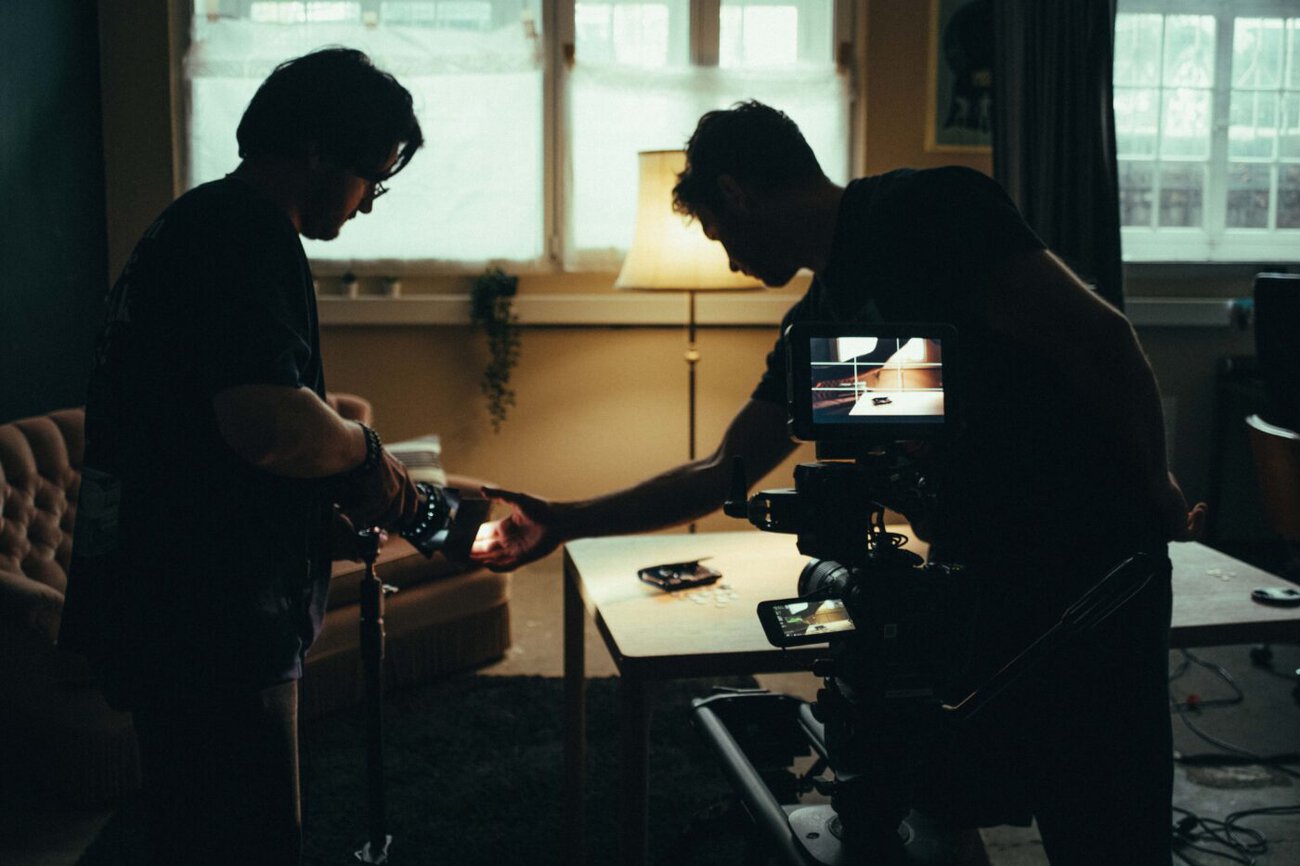
The beginnings were incredibly modest: Founders Michel Alraun and Laurent Ulrich worked together to serve their first clients right out of their own living room. Today, Maybaum Film in Baden has more than 1,150 square meters of production space, four independent camera crews, a green screen and video podcast studio, an in-house post-production facility with eight editing suites, a sound booth, a color-grading suite, and its own distribution department. According to the company, it produces more than 200 video productions per year and has offices in Bern and Zurich.
Laurent Ulrich comments on the company’s development: «Seeing what Maybaum Film has become makes me very proud. Thanks to innovative strategies and an in-house workflow, we can compete with the best in the industry. It has always been clear to us that we want to create a sustainable corporate structure. That makes me all the more pleased that, after 20 years, we can now usher in the next chapter of Maybaum Film—as always, with courage and that extra dose of dedication.»
mayAcademy: Internal expertise becomes publicly available
This anniversary year is not only a time for celebration, but also for strategic development. The transformative power of artificial intelligence is rapidly changing the creative industry—and, according to Maybaum Film, the company has been exploring this technology from the very beginning. The expertise gained through this process has been shared internally until now. In 2026, the training program will be made publicly available under the name mayAcademy.
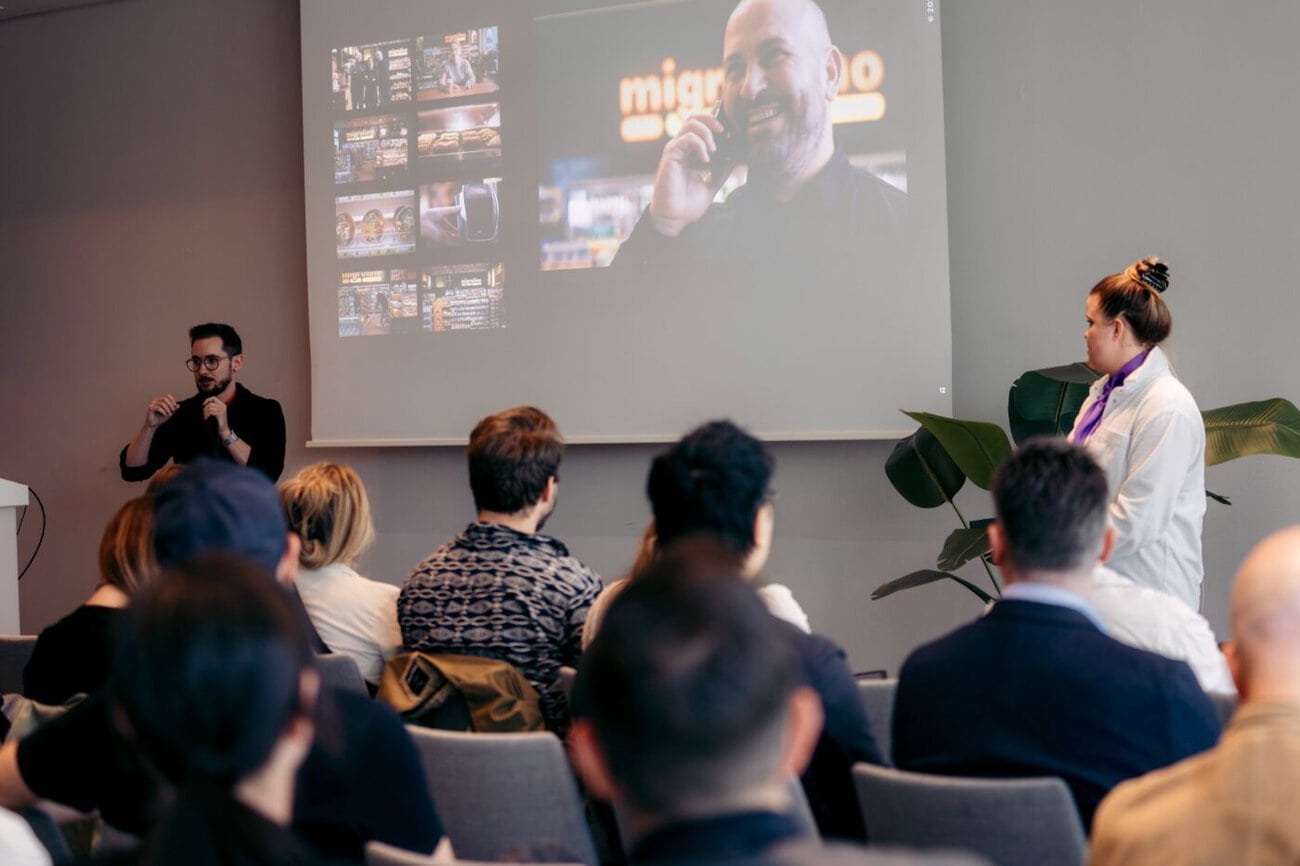
New training and education facilities are being built on more than 500 square meters right next to the Baden train station; according to the company, these facilities are set to be unique in Europe. Twenty years of expertise in video production, strategy, marketing, and branding are being combined with hands-on experience in generative AI and other AI tools.
Michel Alraun explains the decision: «Thanks to my many years of service on the board of the Swissfilm Association, we have succeeded—together with ICT Vocational Training—in launching the new federal vocational examination for »Multimedia Content Creator.’ During this process, I realized that my second passion is education. With Maybaum Film, we have a unique opportunity to combine our knowledge from thousands of video productions with our enthusiasm for new technologies. At the mayAcademy, we will therefore impart not only theoretical but, above all, hands-on knowledge, thereby making an active contribution to the further development of industry standards.”
Both Maybaum Film instructors and external experts will be part of the training program. The first workshops, courses, and presentations will begin in late summer 2026.
Flavio Alraun is gradually taking on leadership responsibilities
In addition to strategic expansion, succession planning is also a key focus of Maybaum Film’s anniversary celebrations. The current leadership team—Michel Alraun (Founder & CEO), Laurent Ulrich (Founder / Managing Partner, Producer), and Michel Frutig (Managing Partner, Creative Director)—will remain active in operational roles and on the board of directors. At the same time, Flavio Alraun is gradually assuming more leadership responsibilities; starting in 2027, the Maybaum brothers will jointly lead Maybaum Film as co-managing directors.
Flavio Alraun started as an intern at Maybaum Film in 2011. After earning his degree in communications planning, he spent five years gaining experience at Publicis Zurich, where he served as the account manager for one of Switzerland’s best-known brands, Swiss, and was involved in numerous campaigns launched internationally. He has been back at Maybaum Film since 2019, where, as Head of Production, he is responsible for a large portion of client relations and oversees video productions as well as strategy and marketing projects.
Flavio Alraun on the industry’s development: «Our industry is constantly evolving: Everything is expected to be faster, better, and more affordable, while the demands for quality and impact are steadily rising. We began early on to align our processes and mindset with these demands. This continues to give us a competitive edge today—including when it comes to working with artificial intelligence. As a result, we’ve been able to reliably meet our customers» needs and continue to grow as a team—professionally, organizationally, and spatially.”
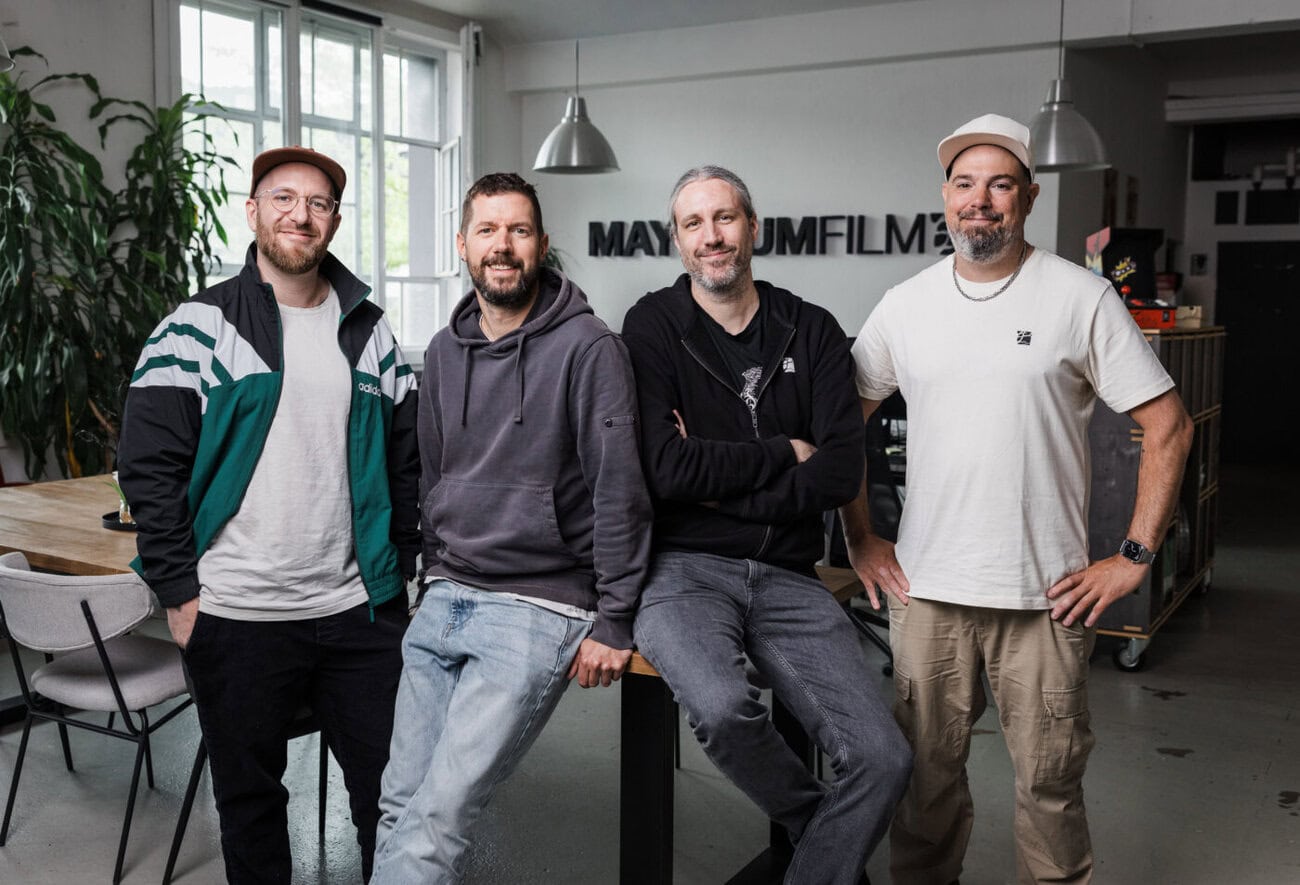
Anniversary Celebration on May 29, 2026
On May 29, 2026, the celebration will begin at 4:00 p.m. at the Merker Areal in Baden. The surprise program will feature a live stage, dance floors, movie screenings, a gaming area, food trucks, drinks, and much more. Creative Director Michel Frutig sums it up: «We want to look back on 20 years of exciting productions, celebrate our amazing team and everyone who has ever worked with us—but above all, we want to toast to another 20 years for an entire evening and night. No long speeches, no self-congratulation—just what Maybaum has always been about: having fun with what we do!»
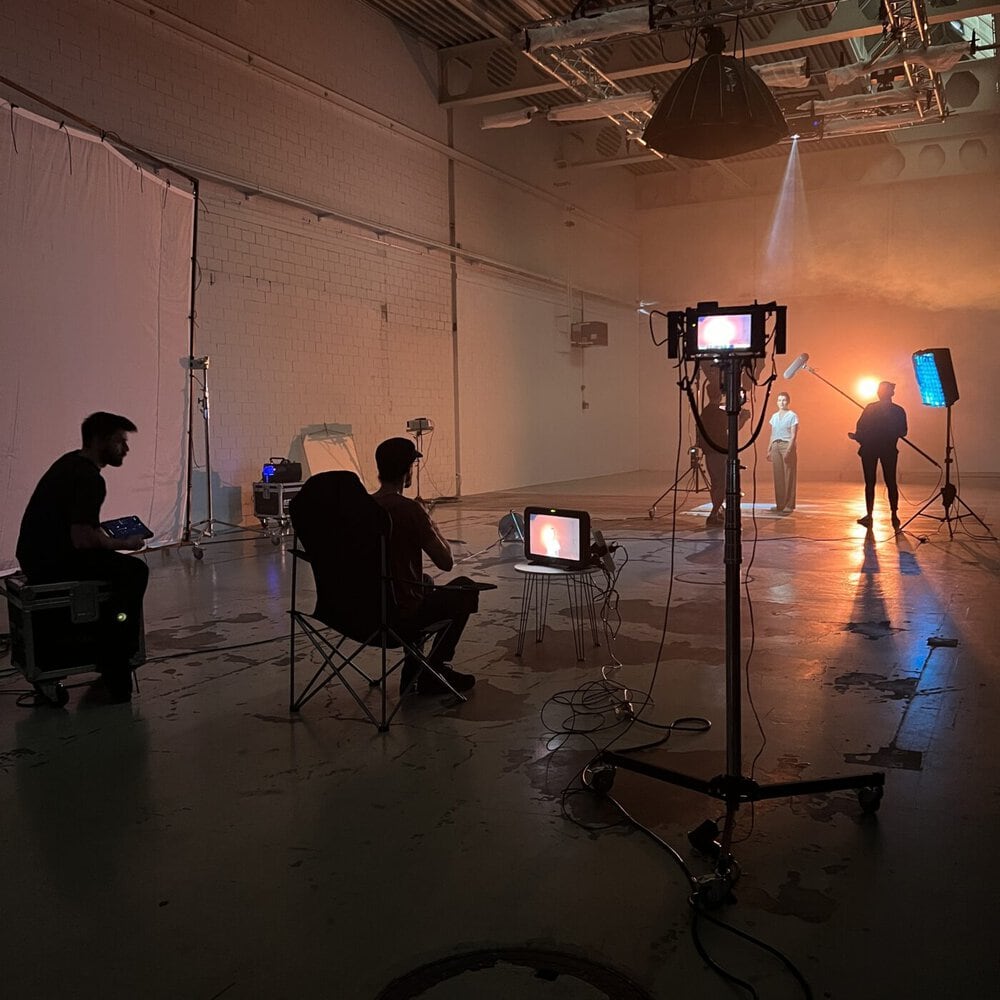
For more information about Maybaum Film and the mayAcademy, visit https://maybaum.ch.
]]>