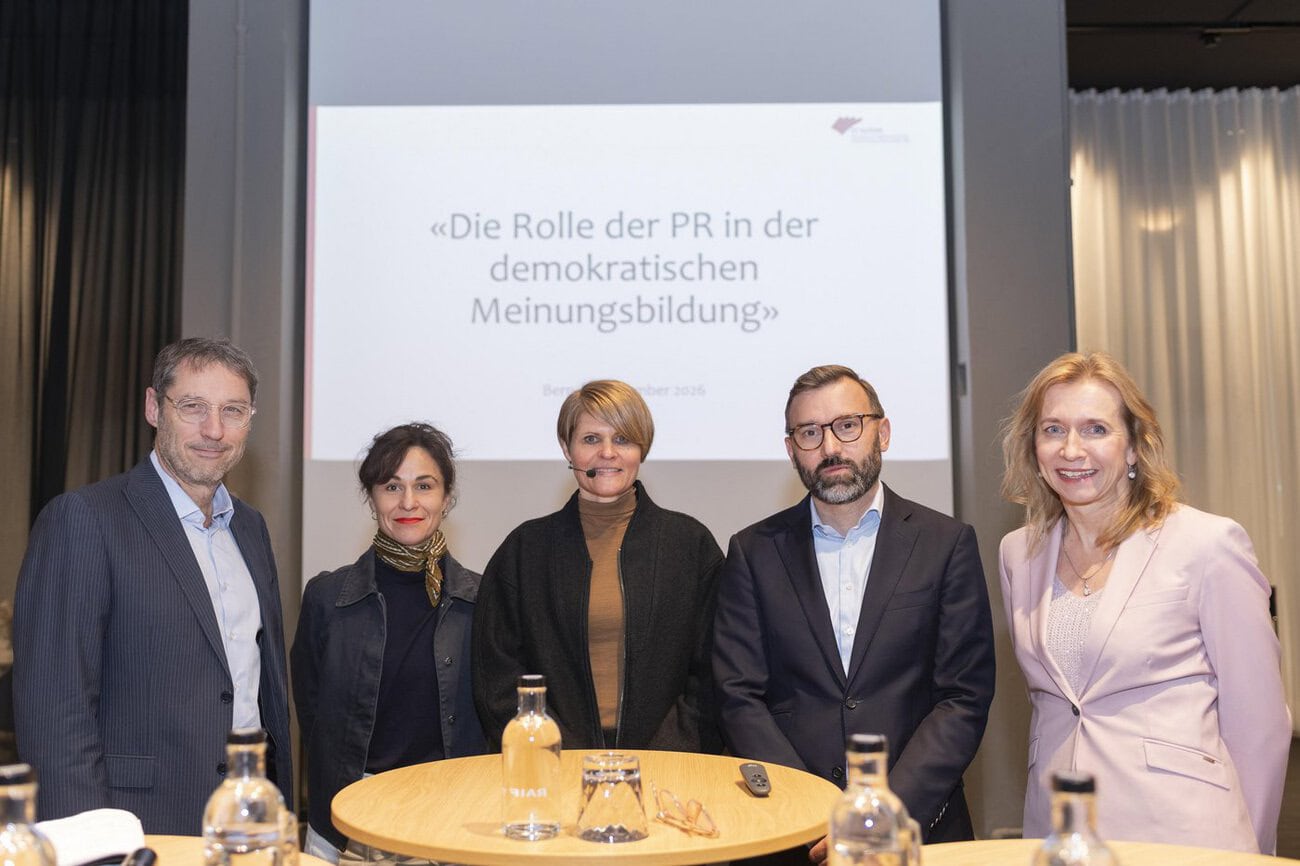
Knapp drei Wochen vor dem Abstimmungssonntag: der pr suisse Roundtable
Der Zeitpunkt der Diskussion war nach Angaben des Verbands bewusst gewählt: Wenige Tage nach den US Midterms und knapp drei Wochen vor dem nächsten eidgenössischen Abstimmungssonntag stehe die Frage nach Einfluss, Vertrauen und demokratischer Meinungsbildung besonders im Fokus.
Unter der Moderation von Véronique Haller, Co-Founder von MOMENTUM Strategists AG, trafen vier Perspektiven aufeinander. Prof. Diana Ingenhoff von der Universität Freiburg ordnete die Rolle der PR wissenschaftlich ein. Mikis Graf von Berta Kommunikation brachte die Sicht der Agenturpraxis ein, Urs Wiedmer als Sprecher von Bundesrat Guy Parmelin jene der Bundeskommunikation. Angela Müller, Geschäftsleiterin von AlgorithmWatch CH, beleuchtete Plattformmacht, Algorithmen und demokratische Öffentlichkeit.
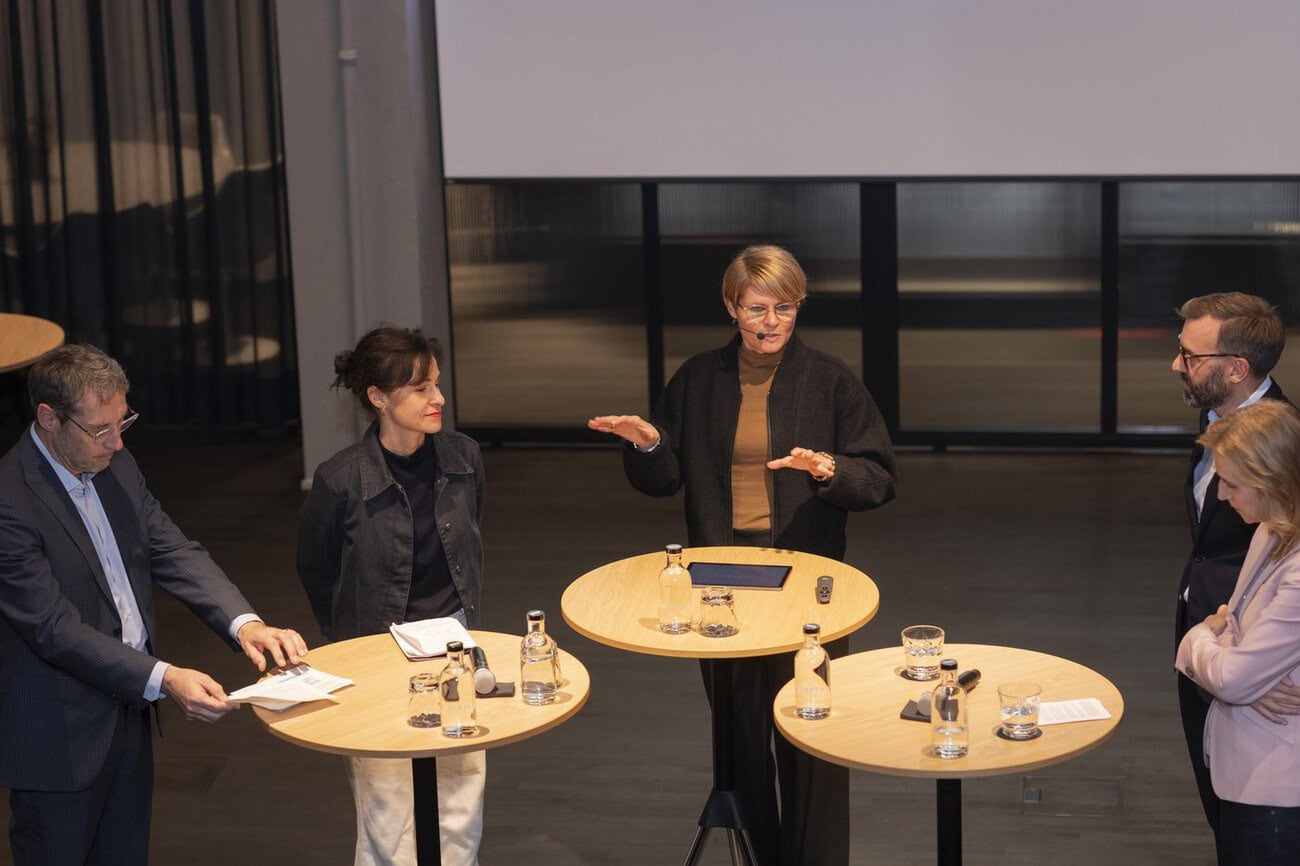
Plattformen und KI als Gatekeeper
Die Spielregeln der Meinungsbildung verändern sich laut der Mitteilung grundlegend. Digitale Plattformen und KI-Systeme grosser Technologieanbieter würden zunehmend zu Gatekeepern und beeinflussten, welche Informationen Menschen erreichen. Wer seine Stakeholder erreichen und am öffentlichen Diskurs teilnehmen wolle, komme an diesen Kanälen kaum vorbei. Gleichzeitig dürfe sich professionelle Kommunikation deren Aufmerksamkeitslogiken nicht einfach unterwerfen.
Reichweite und Aufmerksamkeit liessen sich mit Budgets verstärken, Vertrauen hingegen nicht. Es entstehe durch Glaubwürdigkeit, Transparenz und nachvollziehbare Fakten.
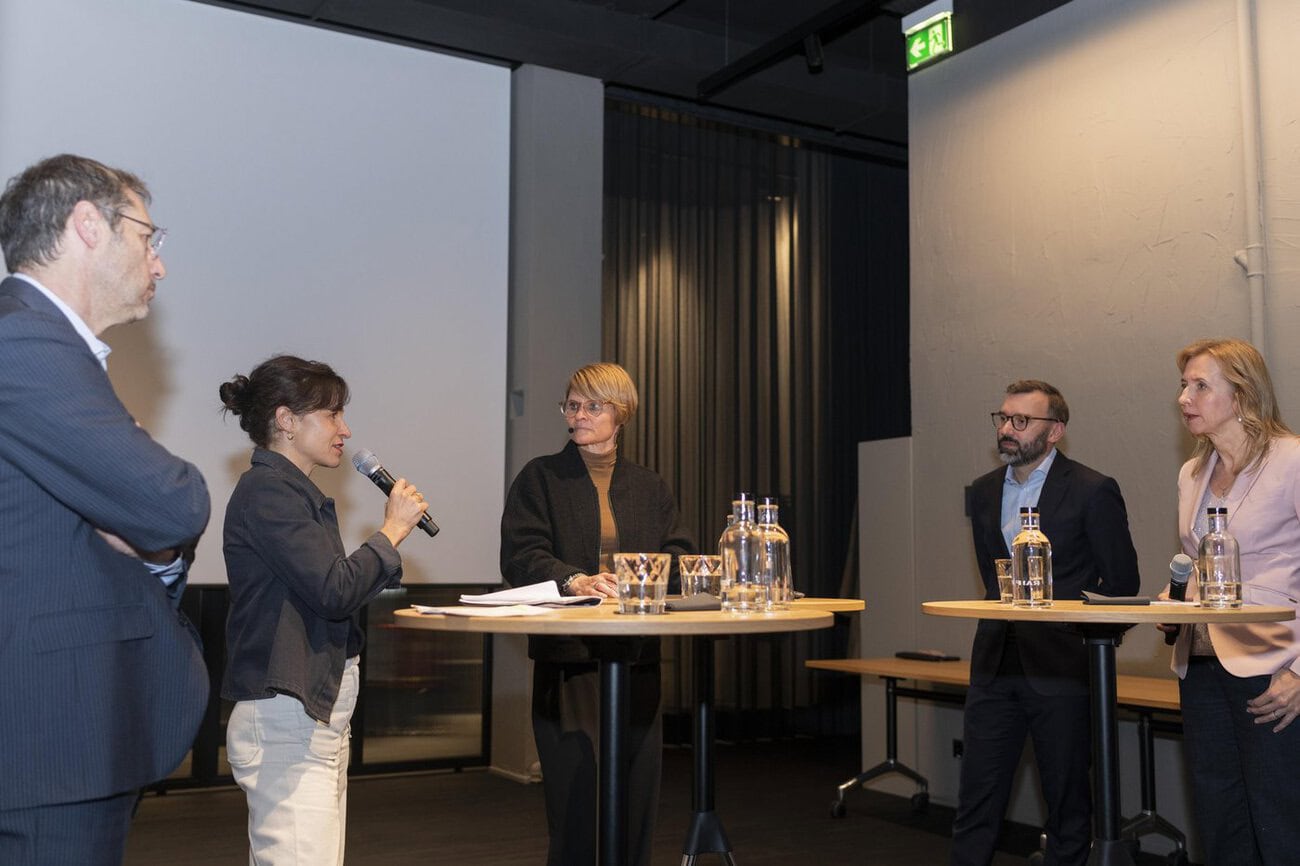
Faktenbasis und Orientierung als Aufgabe
Daraus leitet pr suisse eine wachsende Aufgabe für die Branche ab: gemeinsam mit den Stakeholdern eine verlässliche Faktenbasis zu schaffen, den Zugang zu Informationen sicherzustellen und Orientierung zu geben. Darin liege auch eine Chance. Je grösser Informationsflut und Verunsicherung würden, desto wichtiger werde professionelle Kommunikation, die einordne und den gesellschaftlichen Diskurs ermögliche.
Für den Verband ergibt sich daraus nach eigenen Angaben der Auftrag, die Diskussion über Qualität und Verantwortung professioneller Kommunikation aktiv zu führen. Zudem will er Orientierung für die Branche schaffen und ihre Rolle gegenüber Gesellschaft und Politik sichtbar machen. Die entscheidende Frage sei nicht, ob PR Einfluss nehme, sondern wie verantwortungsvoll sie damit umgehe.
pr suisse ist der gesamtschweizerische Berufsverband der PR- und Kommunikationsfachleute mit rund 1’200 Mitgliedern und sieben Regionalgesellschaften. Mit den Roundtables bietet er eine Plattform für aktuelle Herausforderungen der Branche. Weitere Informationen gibt es auf prsuisse.ch.
]]>
How important is public relations in Swiss companies and organizations? How is its value perceived, and what influence does communication have on strategic decisions? pr suisse is exploring these questions in a recent survey.
The goal is to gain a clear picture of the value that PR adds in Switzerland and to highlight the importance of professional communication. To achieve this, it is essential to have as broad a participation as possible from the industry.
That’s why communication professionals are needed: Those working in the PR and communications industry can help strengthen the position and standing of their own discipline by participating. Every piece of feedback counts and is taken into account in the evaluation.
The survey takes about ten minutes to complete. Responses are anonymized and analyzed in aggregate form.
The survey will remain open until the end of the week. Take part now and help shape the future of PR in Switzerland:
]]>
AI-generated content and the algorithms of digital platforms are increasingly shaping which information becomes visible and receives attention. As a result, traditional media are coming under greater pressure, while at the same time it is becoming more difficult to identify the sources of information and the interests behind them. On November 9, 2026, pr suisse will host a roundtable in Bern to address the question of what responsibility professional communication bears under these conditions. The focus will be on the role of PR in democratic opinion-forming.
Declining Trust in the News
The Reuters Institute’s Digital News Report 2026 shows that in Switzerland, only 42 percent of respondents still trust the news in general. Internationally, social media and video platforms continue to gain importance as sources of information. According to the report, personalized information spaces can reinforce existing beliefs and make it more difficult to exchange different perspectives. This raises the question of who shapes public opinion and on what basis people evaluate information.
The Role of Public Relations: Between Impact and Responsibility
PR and communications professionals are also taking advantage of these new digital opportunities, as their goal is to generate interest in specific topics and encourage desired behavior. This raises several questions: Where is the line between legitimate advocacy and manipulation? How can trust be built in an increasingly fragmented information landscape? And how can professional PR contribute to an informed, diverse, and constructive public debate?
pr suisse will discuss these questions at the second roundtable, «The Role of PR in Democratic Opinion-Forming,» about three weeks before the next federal referendum Sunday.
Experts and Framework Conditions
Participants in the discussion include Prof. Dr. Diana Ingenhoff, professor of organizational communication and public diplomacy at the University of Freiburg, and Dr. Angela Müller, executive director of AlgorithmWatch CH. They will be joined by Urs Wiedmer, Head of Communications at the Federal Department of Education, Research, and Innovation (WBF) and spokesperson for Federal Councilor Guy Parmelin, as well as Mikis Graf, Managing Director of Bertakomm. The event will be moderated by Véronique Haller, co-founder of Momentum Strategists and member of the Société Romande de Relations Publiques (SRRP).
The roundtable will take place on Monday, November 9, 2026, from 5:00 p.m. to 7:30 p.m. at the Raiffeisen Forum, located at Schauplatzgasse 11 in Bern. Participation is free for members of pr suisse. Space is limited to 50 people; the registration deadline is November 1, 2026.
About pr suisse
According to its own information, pr suisse (Swiss Public Relations Association, SPRV) is the nationwide professional association for PR and communications specialists, with approximately 1,200 members. With seven regional chapters, the association has a presence throughout Switzerland. It connects communications professionals from agencies, companies, organizations, and government agencies; represents the interests of the industry; and is committed to quality standards, professional education and training, and the societal recognition of public relations.
]]>
Artificial intelligence has long since become part of everyday communication. It supports research and content creation, speeds up processes, and opens up new ways of working. At the same time, it is becoming increasingly difficult to determine whether content is authentic, accurate, or manipulated. For communications professionals, this means greater demands in terms of verification, evaluation, and accountability.
As of August 2, 2026, new transparency requirements under the AI Act will take effect in the EU. Among other things, they require the labeling of deepfakes and certain AI-generated content. Switzerland is also working on new rules: A draft bill for public comment on the implementation of the Council of Europe’s AI Convention is expected to be available by the end of 2026.
But labeling alone does not build trust. It says nothing about whether content is accurate, sources have been verified, or rights have been respected. This is exactly where PR Suisse comes in.
With these new recommendations, the professional association provides its members with guidelines for the use of AI:
- Carefully review content and sources
- Provide transparency where it is relevant for understanding the context
- Protecting personal and confidential data, as well as copyrights and privacy rights
- Preventing Deception, Manipulation, and Discrimination
- Protecting the Freedom to Form One's Own Opinions
- Clearly Define Responsibilities for AI Content
- Targeted Development of AI Skills Among Communication Professionals
PR Suisse views the recommendations as a contribution to quality assurance in professional communication. Organizations are called upon to provide appropriate AI systems, clarify responsibilities, and define where human review and approval remain mandatory.
To the AI Recommendations
]]>
Tanja Hollenstein sees current developments as a major opportunity for the industry: «Especially in the age of AI, professional communication is becoming more relevant than ever. The easier it becomes to generate content, the more important context, credibility, and trust become. That’s why PR is a management task.» Together with the Central Board and the Executive Board, she aims to further strengthen the industry’s relevance and the positioning of pr suisse improve skills, ensure quality, and provide targeted support for the next generation.
Following engaging presentations by Mayor Nicola Pini, the CEO of the Locarno Film Festival, Raphaël Brunschwig, and the President of the Società Ticinese di Relazioni Pubbliche, Dimitri Loringett, outgoing President Alberto Stival was honored for his many years of service at the well-attended General Assembly on June 12 in Locarno and was awarded honorary membership in pr suisse.
There were also changes on the Central Executive Board: Simon Koch now represents the SRRP in place of Romain Pittet. Thomas Odermatt succeeds Olivier Burger as representative of the ZSPR. In addition, Corinne Durey is stepping down as chair of the Examination Commission. pr suisse extends its heartfelt thanks to all outgoing members of the Central Executive Board for their tremendous dedication.
Looking ahead to 2026, pr suisse has set clear priorities. The association aims to further expand its nationwide partnerships with educational institutions and strengthen the «pr suisse» brand. The goal is to further promote quality in education and continuing education within the communications industry and to increase the professional association’s visibility. Other priorities include developing programs specifically for younger professional members, as well as thematic activities on «Quality and Responsibility in PR,» including roundtables and a study conducted in collaboration with the ZHAW.
With its new leadership, revised organizational structure, and priorities for 2026, pr suisse aims to further strengthen its role as the national voice of the PR industry.
m&k is the new official publication of pr suisse
Effective July 1, m&k magazine—and with it, the entire www.markt-kom.com ecosystem—will serve as the official publication of pr suisse. Galledia Fachmedien AG, under whose banner m&k operates, expresses its gratitude for the trust placed in it and looks forward to the collaboration.


]]>

Ahead of pr suisse’s first roundtable on «The Productive Use of AI in PR» on June 17, three industry experts shared their views on opportunities, risks, and responsibility. In this interview, Stephanie Peeters (Corporate Affairs and Communications Manager, JTI), Daniel Jörg (Partner & Chief Strategy Officer, Farner International | Team Farner), and Markus Niederhäuser (Head of Continuing Education at IAM, ZHAW) discuss AI in PR—objectively, incisively, and from different perspectives.
When you look at the current use of AI in PR, what concerns you most personally? Where do you see the opportunities and the risks?
SP: AI is a partner that can take the burden off routine tasks, thereby freeing up time for what PR is really all about: context, relationship-building, and genuine listening. Yet PR is and remains a deeply human discipline. Empathy, sensitivity to nuances, and an understanding of complex stakeholder interests cannot be automated. Problems arise when the thoughtless use of AI leads to interchangeability.
DJ: The question that concerns me most is: How do we combine AI with the expertise and experience of our people? Every day, we see senior consultants make enormous strides as soon as they provide AI with relevant context and challenging problems. At the same time, we see that inexperienced consultants often get stuck with AI on the „most obvious“ solution—and that’s poison for our business.
The challenge, therefore, is not a question of tools, but a question of culture: As a consulting firm, how do we establish and celebrate a shared ambition—a shared culture of critical and creative thinking—across all levels of seniority? That is precisely where the great opportunity lies—experience meets the engine room, combining speed and depth in one. And that is also where the greatest risk lies if we fail to pull it off: AI as a crutch for mediocrity—good enough not to stand out, bad enough not to make a difference.
MN: What concerns me most is the speed at which AI is currently and dramatically changing communication practices. This has the potential to overwhelm both communication professionals and organizations. In addition to the well-known legal (e.g., data protection) and ethical (e.g., stereotyping) issues, I see a particular risk that AI will be used as a pretext to cut back on communication resources. The opportunities presented by the use of AI are just as diverse: Efficiency gains through AI-supported automation processes create room to focus more on strategy, consulting, and relationship management. While AI can enhance creativity and quality, this is not a given.
What does quality in PR mean to you, especially in the age of AI?
SP: Quality arises when people contribute their own ideas. AI can provide support, but quality in PR thrives on critical thinking, experience, and the ability to connect different perspectives. This makes skills such as sound judgment and reflection all the more important.
DJ: The biggest challenge for most communicators today isn’t generating more content—it’s standing out in a relevant way. Achieving exactly that—cleverly and precisely, with AI as the engine—is what quality means in the age of AI. It’s no longer about output, but about greater relevance per unit of attention.
MN: AI does not fundamentally change the quality standards for communication. PR should continue to have a clear strategic focus, produce relevant content, communicate credibly and responsibly, and make a measurable contribution to value creation. To ensure this, people are still needed. Quality does not result from increased efficiency, but rather from the people who initiate, oversee, and monitor communication processes. In light of looming threats such as fake news, transparency is becoming perhaps the most important indicator of quality.
What question should the PR industry now discuss collectively regarding the productive and responsible use of AI?
SP: How can we avoid being tempted to forget the human aspects of PR just because it's convenient to use AI?
DJ: How do we train the next generation? PR consultants with expertise can use AI to produce high-quality results in a short amount of time. Consultants who lack this experience are quickly tempted to accept AI’s „most obvious“ result.
The industry must therefore come together to discuss how we can train young talent in this new world—and quickly instill in them critical thinking, genuine ambition, and a sense of context and quality as a way of life. For me, this is the central question of responsibility that we as an industry must address. Not because AI is dangerous, but because otherwise we run the risk of losing a generation of consultants before they’ve even had a chance to develop their own voice and judgment.
MN: How will we shape the interaction between humans and machines in the future? Communications professionals will increasingly work with AI agents rather than with teammates. This calls for clear PR guidelines and organizational governance, as well as new skills among employees. PR associations, training institutions, and the companies themselves must support PR professionals in meeting these diverse challenges.
Here Click here to register for the roundtable.
]]>
Flinxio aims to sustainably improve the search for service providers in the Swiss advertising market. With over 6,500 pre-listed agencies and other service providers, the portal offers a market overview that is unique in Switzerland. pr suisse is now supporting Flinxio as a patronage partner in the needs-oriented further development of the search portal.
Working together for greater market transparency
In the Swiss advertising market, it is becoming increasingly difficult for companies to find the right partners for their projects. This is why Flinxio offers a neutral search portal that combines the completeness of traditional search engines with the efficiency of specialized directories. "Especially in times of AI, we need more transparency in the industry again - this also includes a trustworthy search portal for services," says Rico Löhrer, Managing Director of pr suisse.
All PR services covered
A core aspect of the new partnership is ensuring professional expertise: pr suisse actively supports Flinxio in shaping and sharpening the service catalog in the area of public relations. This ensures that the listed services reflect the current requirements of the industry. "The collaboration with pr suisse is invaluable to us," says René Amstutz, Founder & CEO of Flinxio. "By incorporating the association's expert knowledge directly into our portal, we can increase the quality of the search results and strengthen trust in the long term."
Flinxio is the neutral Swiss B2B search portal for marketing services. Based in Lucerne, the company brings transparency to the marketing industry. With a comprehensive database of over 6,500 service providers, Flinxio enables clients to conduct an efficient, filter-based search based on services, industry experience and verified customer reviews. pr suisse is the Swiss Public Relations Association and represents around 1,500 communication professionals from agencies, companies and organizations as an umbrella organization.
]]>
At the General Assembly of PR Suisse, Alberto Stival was re-elected President for another year. The General Assembly approved all motions of the Central Board. The reporting year 2022 had been a pleasing one for PR Suisse. The stable financial basis allows it to invest in projects for the benefit of its members and the entire industry.
The management of the umbrella association was strengthened by the appointment of the Presidential Committee, so that, among other things, the relaunch of the symposium could be managed. The Certified PR and Communication Expert SAQ personal certificate is well received on the market; over 140 have already been issued.
PR Suisse is now part of the sponsoring body of the new HFP for communication managers. This diploma combines the skills of institutional and commercial communications. The seven regional societies held over 70 events throughout Switzerland for their members and guests.
]]> The "Certified PR and Communication Expert SAQ" certification is aimed at people who are working full-time in the field of public relations/communication at the time of the certification application. It is based on the learning topics and competence requirements of the higher professional examination "Communications Manager with Federal Diploma".
The personal certificate is intended to provide expert status and thus contribute to labor market readiness. It should also serve as an assessment and decision-making basis for employers and customers. The certification is based on the international standard for personal certification SN EN ISO/IEC 17024 and is carried out under the supervision of the neutral and independent certification organization SAQ.
Connection of recognized diplomas
The certificate combines recognized diplomas in PR and communications with professional experience to create a quality standard for the entire industry. It makes theoretical knowledge and practical skills visible, transparent and internationally comparable, says PR Suisse. With the recertification it is guaranteed that the certificate holders continuously educate themselves and keep their knowledge up to date. The initial certification costs 290 Swiss francs.
The Swiss Public Relations Association (PR Suisse) has been the national professional association of communications and PR professionals since 1953. As the industry association for communications professionals in companies, agencies, organizations and administration, PR Suisse today has around 1,500 members.
Interested parties can find the form for submission to SAQ on prsuisse.ch/personal-certificate
]]>
At the recent General Assembly held at the Hotel Wysses Rössli, Schwyz, the General Assembly approved all proposals of the Governing Board.
2021 is still partly affected by Corona as an association year, but more than 40 events were nevertheless held in the seven regions throughout Switzerland. On the other hand, the most important achievement at the association level was the launch at the beginning of the year, in collaboration with the Swiss Association for Quality, of the new Personal certificate "Certified PR and Communication Expert SAQ introduced.
In addition to the regular agenda items, the re-election of the President was on the agenda. The General Meeting followed the election proposal of the Central Board and elected Alberto Stival as President of pr suisse for another year. As a supporting program before the General Assembly, members and guests had the opportunity this year to take part in a guided tour of the Victorinox knife manufacturing facility.
Claudia Eugster new on the Central Board
Claudia Eugster (PROL) is welcomed as a new member of the Board. She is an ex officio member of the Board. The following Board members will continue to represent their Regional Society on the Governing Board for another year: Nik Eugster, President BPRG - Bern PR Society - Regula Ruetz, President NPRG - Northwest Switzerland PR Society - Romain Pittet, President SRRP - Société Romande de Relations Publiques - Simone Bianchi, President STRP - Società Ticinese di Relazioni Pubbliche - Olivier Burger, President ZSPR - Zentralschweizer Public Relations Gesellschaft - Dominik Allemann, President ZPRG - Zürcher PR Gesellschaft as well as - Corinne Druey, President of the SPRV Examination Committee.
]]>

Suzanne Rouden (left) hands over the office of President of the PR Suisse Audit Commission to Corinne Druey (right).
After 25 years of service, including 13 years as president of the PR Suisse examination board, Suzanne Rouden (NPRG) will hand over her post to Corinne Druey as of January 1, 2021. Druey is the owner of the Syntagme agency and head of education at SAWI in Lausanne. She thus brings with her many years of up-to-date industry and training experience with corresponding networking.
During her term as President of the Examination Commission, Suzanne Rouden, in addition to her regular official duties, helped to design the revision of the professional examination and the higher professional examination and accompanied their introduction, and helped to develop the personal certificate according to standard SN EN ISO/IEC 17024 launched by the Association in 2017.
Successors for Paulsen and Würsten
The outgoing members Barbara Paulsen and Sylvia Würsten are replaced by Regula Gerber and Alex Josty (both BPRG). Both members bring excellent experience in the communications industry as well as in the area of continuing education and have successfully completed the personal certificate "Certified Communications Consultant". In addition, another member from the French-speaking part of Switzerland will join the examination board in 2021.

After the written exam on September 23, 2020, 59 candidates took the oral exam on October 19 and 20, 2020. Prior to this, there were some withdrawals due to positive Covid-19 test results or personal circumstances. 41 graduates obtained the federal certificate, which corresponds to a success rate of 69.49 percent.
More candidates from French-speaking Switzerland
In fall 2020, the PR Suisse examination board conducted the professional examination for PR specialists for the second time in accordance with the new examination regulations. The new examination design is even more in line with the requirements for contemporary practical experience in the field of communication and corresponds to an NQF VPET 5 level defined by the State Secretariat for Education, Research and Innovation (SERI).
Once again this year, more candidates from French-speaking Switzerland took the exam: Of the 59 graduates, 34 came from French-speaking Switzerland and 25 from German-speaking Switzerland. According to the press release, the gender distribution was no surprise with 43 women and 16 men.
No special recognition for the best
Due to the current Covid-19 situation, the PR Suisse examination board had to forego the invitation to the traditional graduation ceremony at Thun Castle. For this reason, the outstanding achievements of the four best graduates cannot be specially recognized this year. The highest overall grades were achieved by:
Fabienne Bula, Basel with 5.0, Isabelle Michaud, Jongny (VD) with 5.1, Miana Westermann, Frauenfeld (TG) with 5.1 and Andreas Batliner, Schaan (FL) with 5.3. The names of the new PR specialists are published on Pr-ex.ch (examination year 2020).