
The survey was conducted by the JRC Bern research institute. Swiss Radio and Television (SRF) published the results on its news platform SRF News on Thursday.
In 2023, 77% of those surveyed said they would use social media on a daily basis, according to the report. In 2024, the figure had fallen to 70 percent.
7% of Swiss people stated that they do not use social media such as Facebook, Whatsapp, YouTube or X. This figure has risen compared to the previous year. The trend towards less use is in line with the general unease that has been spreading around social media for some time.
Social media provided one-sided information
Around four out of five respondents were of the opinion that social media provide one-sided information and divide our society. It was also said that the platforms hardly fulfill the promise of being social today. In the survey, almost half of people said they would be happier if they spent less time on social media.
The results come from the representative survey "How are you, Switzerland?", which was conducted for the second time after 2023. A total of 51,182 Swiss residents took part between May and June 2024.
]]>
Since the first edition of the "Media Quality Yearbook" in 2010, the Research Center for Public Sphere and Society (Fög) at the University of Zurich has annually provided current key figures on media quality, media use, media concentration and the development of the Swiss media system. All media genres are examined. The researchers also classify trends and current events, such as the coverage of the Corona pandemic or the war in Ukraine.
Overall quality has increased
The Fög notes that the overall quality of the Swiss media has increased despite dwindling resources and that the media have done more classification work overall since the start of the Corona pandemic. The top places in the four quality dimensions of relevance, diversity, classification performance and professionalism are occupied - as in previous years - by the SRG's information programs. The best rated are "Echo der Zeit" (SRF), "Telegiornale sera" (RSI), "Rendez-vous" (SRF), "Le12h30" (RTS), "Radiogiornale 12.30" (RSI), "Tagesschau" (SRF), swissinfo.ch (SWI), "10vor10" (SRF) and "Le Journal" (RTS).
The Fög positively emphasizes the classification performance of RSI's "Telegiornale sera" - one of the reasons why this TV program has improved markedly in overall quality. swissinfo.ch is also explicitly praised for its high quality score, especially because of the relevant reporting and the further increase in background information.
Also highlighted is rtr.ch in Svizra rumantscha, which as the smallest or least resourced public online offering can compete with the larger portals srf.ch, rts.ch and rsi.ch in the quality dimensions of relevance and professionalism.
In terms of media genres, the Fög places public radio in first place, followed by public television, Sunday newspapers and magazines, SRG online portals, private television and subscription newspapers.
More news deprived
The Fög is concerned about the increase in news deprivation, i.e. the group of people undersupplied with journalistic news. 38.5 percent of the Swiss population will now belong to this group in 2022.
Young adults aged 19 to 24 would today consume an average of only seven minutes of news per day. This is mostly on their smartphones as their main information device. The Fög concludes that this has potentially serious consequences for trust in institutions and democratic participation.
The complete yearbook can be here download
]]>

MK: Ms. Wille, what developments and trends do you predict for the media world in 2020?
Susanne Wille: I could list a whole host of trends now. Podcasts, short videos, explanatory aids. But above all the trends is the speed of technological change and uncertainty. Facebook is out for the young, but today we're talking about Tiktok or Twitch. But what's next? And where is the next disruptive innovation? That's why it's central to change corporate cultures in such a way that we become smarter, more agile, more willing to experiment. We need to think much more about what changes are coming and how we prepare for them today.
Do you?
Yes, very intensively, in fact. With the SRF 2024 transformation project, we want to find answers to the question of how we need to position ourselves for the future, in which direction user behavior could continue to change. In the digitally driven newsroom, we have introduced new bimedial specialist editorial teams so that we have greater thrust in a faster-moving news world, on all channels, digital and broadcast.
What will be in demand in the future - pure entertainment in moving images, easily consumable infotainment, or can we even expect a renaissance of sober, quality journalism?
What is needed is new thinking. Fixed categories do not go far enough. Quality does not have to be sober. For example, a background article on the trade dispute can also be cleverly translated into social media platforms. Instead of thinking in terms of categories, we need to think more in terms of target-group-specific offerings. A news bulletin tells the news differently than an offer for young people on a digital channel. It is also crucial that we take the exchange with the audience seriously. Here we live in a world that has little to do with the media world of the past, where media professionals primarily "broadcast" and were happy in the role of having the sovereignty of interpretation, without dialog. A new basic attitude is needed here. It is not enough to delegate this to community managers.
Is it possible to become a responsible and enlightened citizen via Instagram, Youtube and Netflix?
I plead for a thirst for action and imagination instead of making it too easy with sentences like: "In the past, young people weren't interested in news either," or: "When they're older, they'll inform themselves again via newspapers or TV. The crucial thing is that young people inform themselves. And if they do so elsewhere, then it's important to find ways of doing so. There are clever explanatory pieces on YouTube. A well-made series can also be educational and informative. Media professionals are challenged. We have to rethink news. A story that comes on "10 to 10" is told very differently via Instagram, and this already starts with the planning. One thing is certain: the smartphone is the central source of information for young people.
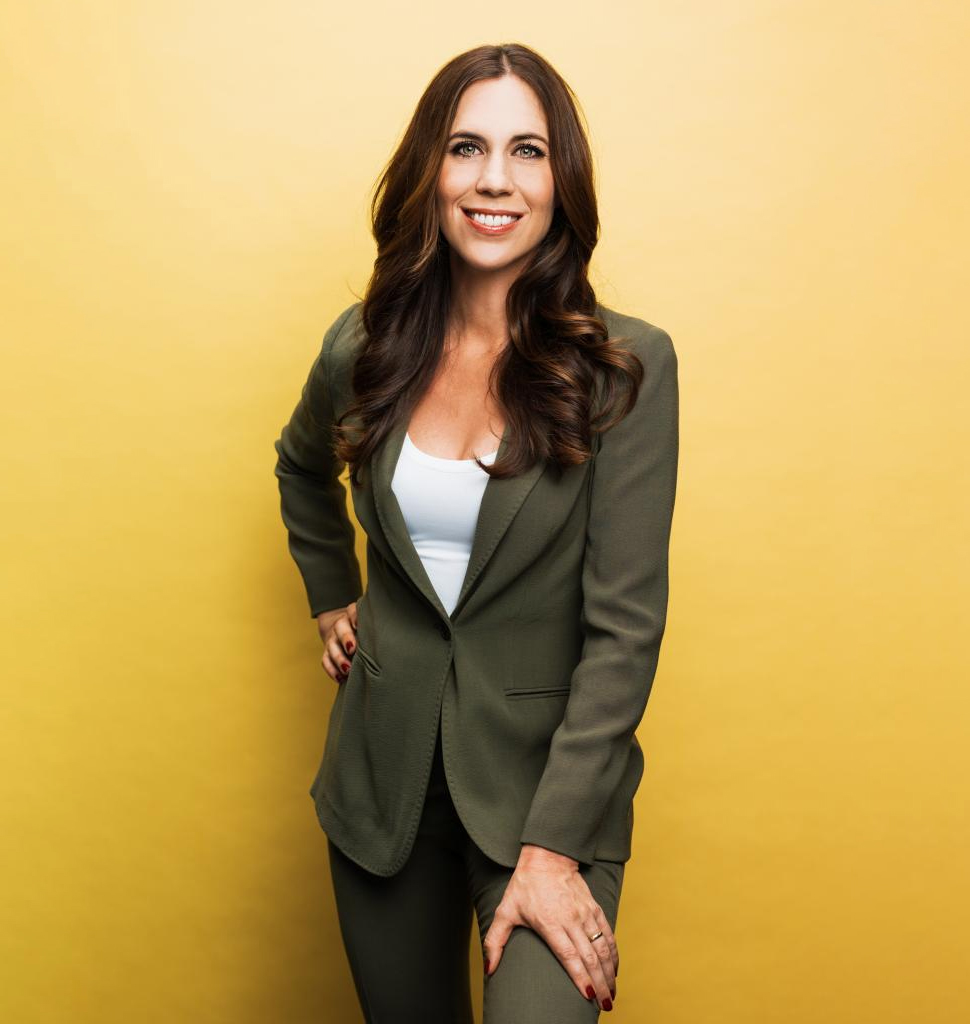
Susanne Wille deals with the digital transformation in the Information department as head of the Quality and Steering Board in the Newsroom. She is also on the operational project team for "SRF 2024," SRF's central transformation project. Wille also works as a political presenter for the news magazine "10 vor10" and hosts election broadcasts in Germany and abroad.
Photos: SRF
Isn't it precisely this focus on the smartphone that causes channel diversity to disappear in favor of a one-size-fits-all approach?
No, there will continue to be and need to be different channels and platforms. But media makers have to think about what journalistic content they offer where and in what form. This also means that they need an understanding of the technical possibilities of a channel on the one hand, and knowledge of how storytelling, addressing, and codes function on a digital platform on the other: Distribution issues can no longer be sharply separated from content issues. That changes the rules of the game.
You yourself work in a media company that is particularly affected by this change.
Of course, and SRF has a duty. We have the legal mandate to contribute to the formation of opinion. If these opinions are also increasingly formed in the digital space, we have to find answers here. A current example shows that this can certainly succeed. After the killing of the Iranian Major General Soleimani, an explanatory video on the conflict between Iran and the USA quickly attracted almost a million views on Facebook alone. This also shows how great the need is for simple classification in a complex world. By the way, despite change, some things remain the same. The desire for well-researched stories and the joy of the live feeling. Experiencing the same thing together with others at the same time.
Will live sports and infomercials like "Arena" or "10 vor 10" remain the last domains of TV to fight off Netflix and the like?
Counter question: Does television have to hold its own against Netflix and Co. In the future, for example, won't the question be more about which content I consume on which screen size, instead of sticking to a somewhat artificial distinction between digital and linear broadcast programs? A new mindset is needed. I don't think the world needs television, but it does need good journalism. Where and how this journalism is then distributed, however, is not secondary. On the contrary. Distribution issues - as I said - are becoming increasingly important. It is therefore important to take care of what works today and reaches many people. At the same time, it is essential to look radically ahead. It is also certain that in times of fake news and a fragmented digital opinion landscape, it is important to know where to find reliable, independent information.
As long as it's affordable.
For me, the focus is on developing an innovative strategy with two hundred percent commitment using the available resources and doing everything possible to achieve success. This applies to the media industry just as much as to any other industry. But it's also about the fundamental question of how much journalism is worth to us. Because the value of a democracy, of a strong society, is also measured by the diversity and quality of the media. I have worked in too many countries where a functioning, strong media system can no longer be taken for granted. Switzerland must be able to do better.