The term “logistics” naturally comes to mind as a common thread. In both cases, the goal is to reduce complexity so that implementation works reliably. Media agencies are the logistics experts of the communications industry. It’s an apt comparison—and one that immediately highlights the indispensability of the media industry.
What makes for a good media strategy and plan? And what can we learn from logistics? Five insights:
At the beginning instead of at the end
When media strategy and planning are integrated into campaign development from the very beginning, the result is not only more efficient visibility but also more effective, inspiring input for creative work and brainstorming.
In recent years, media planning has been pushed further down the workflow. It is often not brought into the process until a campaign has already been largely produced—with the task of distributing the existing assets (as advertising materials are called today) across channels as efficiently as possible. This is paradoxical: No company produces goods without considering distribution early on. After all, logistical requirements have a significant impact on production—including shape, packaging, consistency, and labeling.
Media agencies belong at the beginning of the value chain—at least on par with creative agencies.
2
Simultaneous
In the world of communications, sequential workflows dominate: first ideas, then planning, booking, implementation, monitoring, and billing. In logistics, however, processes run simultaneously. Service levels, transport routes, resources, capacities, and lead times are constantly being realigned—this is the only way to respond to constant change.
That is precisely what sets strong media work apart: campaigns are continuously improved. And that means more than just the automated optimization of programmatic delivery. Effective media work remains vigilant: it integrates new offerings during the campaign period, adjusts resource allocation based on competitor analysis, capitalizes on short-term developments in the social or economic landscape, and generates targeted momentum.
Anyone who understands media in this way automatically makes it the central tool for managing communication.
3
Individuality
There are tried-and-true models in media planning: high reach in the upper funnel, engagement in the mid-funnel, and conversion in the lower funnel. There are also standard approaches in logistics: large batches, scaled carriers, and long-term, cost-effective contracts.
Things get exciting, however, when projects are conceived individually rather than following a “copy-paste” approach. Sophisticated logistics concepts can even help shape a brand—for example, when cocoa beans are transported to Europe by sailing ship, thereby credibly underscoring sustainable brand positioning. The same applies to media: for example, when a German retailer advertises in Switzerland using regional or even local media campaigns, as if it had always been a Swiss retailer.
Media agencies should aim to approach campaigns in a more personalized way—and thereby become a key differentiator for the brand themselves.
4
Transparency
Transparency builds trust. In logistics, it’s always possible to track where a shipment is and what stage of the process it’s in. What was originally an internal management tool is now a central part of the customer experience. After all, in our daily lives, tracking notifications also show us the progress of our online orders in real time.
The same principle should apply in the media sector and be a matter of course. Clients must have full visibility into campaigns at all times—from planning through media buying to billing. Other approaches may produce the desired short-term results of a campaign, but in the long run they undermine the trust between the client and the agency.
5
Manual and mental work
Modern logistics can no longer function without automation. Otherwise, the complexity and speed would be unmanageable. Nevertheless, human labor and intellect are behind every step of the process. Even highly automated systems have their limits—as was recently demonstrated by striking robots at a distribution center.
In the media industry, too, data, tools, and automation are indispensable. They enable planning, delivery, and optimization on a whole new level. And artificial intelligence will further accelerate this development. The key is how the time saved is used: not merely for system monitoring, but to enhance strategic, planning, and operational quality.
6
Conclusion
Media works like logistics. It is a key management tool from start to finish.
In the media industry, too, data, tools, and automation are indispensable. They enable planning, delivery, and optimization on a whole new level. And artificial intelligence will further accelerate this development. The key is how the time saved is used: not merely for system monitoring, but to enhance strategic, planning, and operational quality.
Today, the reality is this: Nothing works without logistics. Nothing works without media. It’s baffling that media agencies have been pushed to the back of the workflow. Media belongs at the heart of modern communications planning and must be factored in from the very beginning. As complexity grows, so does the need for guidance and predictability. Anyone who reduces media to the mere purchase of ad space fails to recognize its potential. Through strategy and planning, media agencies can provide data-driven decision-making confidence—while simultaneously fueling the creative development of campaigns.
If they fulfill this role with awareness, dedication, and creativity, media agencies will become the lead agencies of the future.
The author
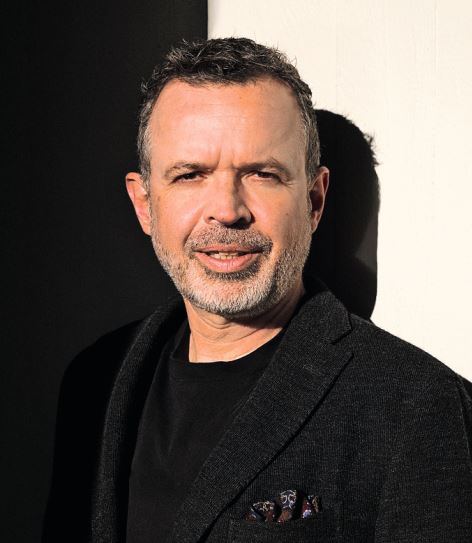
Christoph Bürge has been CEO of Mediaschneider in Zurich since 2025 and owner of Smple Creative Strategy since 2024. Christoph has held various consulting roles both in Switzerland and abroad for over 30 years—always focusing on his favorite and signature discipline: strategy. Among other things, he established Lintas’s Shanghai office, shaped numerous brand identities and campaigns for clients at AY&R, and, as an entrepreneur, served for two decades as co-owner and managing director of his own creative agencies in Zurich.
«Media agencies belong at the beginning of the value chain—at least on par with creative agencies.»
In demand
«There will be less and less of a fixed division of roles.»
m&k The article states, somewhat pointedly: «The media agency is the lead agency of the future.» What does a media agency need to do to actually fulfill this role?
CHRISTOPH BÜRGE The media agency must reflect on its origins, before specialized media agencies were established. It was an integral part of communications and advertising agencies, working side by side with creative teams and other disciplines such as branding, PR, and direct marketing. Media agencies must aspire to do more than simply buy advertising space.
In many processes, media has been pushed to the back burner. Do you think this trend is a mistake—and what would the ideal collaboration look like today?
Media has taken a back seat in the workflow because the business has increasingly been reduced to purchasing. Today, however, advertising media research provides a wealth of data that goes far beyond purchasing planning: precise sociodemographic information, insights into media consumption, values, and brand affinities. This data is central to strategy and planning and should be utilized early in the process. A data-driven decision-making foundation at the outset of the process, combined with corresponding strategy and planning services, creates sustainable added value.
The article argues that creative work and media should enrich each other. How can this collaboration work better in practice—beyond traditional handoffs?
Advertisers, media agencies, and creative teams sit down together right from the start. Initial broad media strategies and creative ideas develop in parallel, fueling each other, and are refined in close collaboration with the client. This is followed by detailed planning and implementation. If this constructive, inspiring interplay continues, a campaign can be continuously improved and advanced—even while it is already running.
As media takes on a more strategic role: Who will «lead» the campaign in the future—creative, strategy, or media?
If there is a shared understanding of holistic planning and simultaneous work is preferred over linear processes, any discipline—strategy, media, or creative—can, in principle, take the lead. It’s quite conceivable that media will assume this role more often.
What services will creative agencies, media agencies, and strategy consultancies each provide in the future—and where do the lines between them blur?
Fixed role divisions will increasingly become a thing of the past. Even today, clients are taking on creative or media work themselves, creative agencies are taking on media buying, and media agencies are developing and producing content. One thing is certain: anyone who wants to stand out must rely on the best combination of specialized expertise. No one can do everything best on their own.
Christoph Bürge, you have a background in creative work and now work in media. What can the media industry learn from this perspective?
I have been working in various consulting roles both in Germany and abroad for over 30 years, including about 20 years as a partner and managing director of creative agencies. My comprehensive experience across various communication disciplines gives me a broader perspective on the role of the media agency—as a strategic partner for a comprehensive and targeted communication strategy, rather than merely as a procurement entity.
The first 100 days in a new organization are often formative. What would you prioritize during this phase if you were strategically realigning a media organization?
During my first 100 days at Mediaschneider, I spoke with all clients and employees—not only to identify opportunities for improvement in our organization and processes, but above all to understand how our self-image and range of services can evolve. It quickly became clear just how many talented and dedicated communications professionals work here—and that they are capable of and eager to achieve much more. The increasing convergence of media formats requires a way of thinking and working that goes beyond previous boundaries.
The article describes media as a «navigation system» for modern communication. What is needed for media to truly assume this role—from an organizational, technological, and cultural perspective?
What matters most is a culture of curiosity toward new challenges—both in the market and in every single briefing. Equally important are people who are committed to developing the best possible, tailored solution for every task. When this mindset is fostered, media can provide creative and data-driven decision-making confidence and thus truly become a guiding force. Technology, of course, is an integral enabler in this process.

The term “logistics” naturally comes to mind as a common thread. In both cases, the goal is to reduce complexity so that implementation works reliably. Media agencies are the logistics experts of the communications industry. It’s an apt comparison—and one that immediately highlights the indispensability of the media industry.
What makes for a good media strategy and plan? And what can we learn from logistics? Five insights:
At the beginning instead of at the end
When media strategy and planning are integrated into campaign development from the very beginning, the result is not only more efficient visibility but also more effective, inspiring input for creative work and brainstorming.
In recent years, media planning has been pushed further down the workflow. It is often not brought into the process until a campaign has already been largely produced—with the task of distributing the existing assets (as advertising materials are called today) across channels as efficiently as possible. This is paradoxical: No company produces goods without considering distribution early on. After all, logistical requirements have a significant impact on production—including shape, packaging, consistency, and labeling.
Media agencies belong at the beginning of the value chain—at least on par with creative agencies.
2
Simultaneous
In the world of communications, sequential workflows dominate: first ideas, then planning, booking, implementation, monitoring, and billing. In logistics, however, processes run simultaneously. Service levels, transport routes, resources, capacities, and lead times are constantly being realigned—this is the only way to respond to constant change.
That is precisely what sets strong media work apart: campaigns are continuously improved. And that means more than just the automated optimization of programmatic delivery. Effective media work remains vigilant: it integrates new offerings during the campaign period, adjusts resource allocation based on competitor analysis, capitalizes on short-term developments in the social or economic landscape, and generates targeted momentum.
Anyone who understands media in this way automatically makes it the central tool for managing communication.
3
Individuality
There are tried-and-true models in media planning: high reach in the upper funnel, engagement in the mid-funnel, and conversion in the lower funnel. There are also standard approaches in logistics: large batches, scaled carriers, and long-term, cost-effective contracts.
Things get exciting, however, when projects are conceived individually rather than following a “copy-paste” approach. Sophisticated logistics concepts can even help shape a brand—for example, when cocoa beans are transported to Europe by sailing ship, thereby credibly underscoring sustainable brand positioning. The same applies to media: for example, when a German retailer advertises in Switzerland using regional or even local media campaigns, as if it had always been a Swiss retailer.
Media agencies should aim to approach campaigns in a more personalized way—and thereby become a key differentiator for the brand themselves.
4
Transparency
Transparency builds trust. In logistics, it’s always possible to track where a shipment is and what stage of the process it’s in. What was originally an internal management tool is now a central part of the customer experience. After all, in our daily lives, tracking notifications also show us the progress of our online orders in real time.
The same principle should apply in the media sector and be a matter of course. Clients must have full visibility into campaigns at all times—from planning through media buying to billing. Other approaches may produce the desired short-term results of a campaign, but in the long run they undermine the trust between the client and the agency.
5
Manual and mental work
Modern logistics can no longer function without automation. Otherwise, the complexity and speed would be unmanageable. Nevertheless, human labor and intellect are behind every step of the process. Even highly automated systems have their limits—as was recently demonstrated by striking robots at a distribution center.
In the media industry, too, data, tools, and automation are indispensable. They enable planning, delivery, and optimization on a whole new level. And artificial intelligence will further accelerate this development. The key is how the time saved is used: not merely for system monitoring, but to enhance strategic, planning, and operational quality.
6
Conclusion
Media works like logistics. It is a key management tool from start to finish.
In the media industry, too, data, tools, and automation are indispensable. They enable planning, delivery, and optimization on a whole new level. And artificial intelligence will further accelerate this development. The key is how the time saved is used: not merely for system monitoring, but to enhance strategic, planning, and operational quality.
Today, the reality is this: Nothing works without logistics. Nothing works without media. It’s baffling that media agencies have been pushed to the back of the workflow. Media belongs at the heart of modern communications planning and must be factored in from the very beginning. As complexity grows, so does the need for guidance and predictability. Anyone who reduces media to the mere purchase of ad space fails to recognize its potential. Through strategy and planning, media agencies can provide data-driven decision-making confidence—while simultaneously fueling the creative development of campaigns.
If they fulfill this role with awareness, dedication, and creativity, media agencies will become the lead agencies of the future.
The author
Christoph Bürge has been CEO of Mediaschneider in Zurich since 2025 and owner of Smple Creative Strategy since 2024. Christoph has held various consulting roles both in Switzerland and abroad for over 30 years—always focusing on his favorite and signature discipline: strategy. Among other things, he established Lintas’s Shanghai office, shaped numerous brand identities and campaigns for clients at AY&R, and, as an entrepreneur, served for two decades as co-owner and managing director of his own creative agencies in Zurich.
«Media agencies belong at the beginning of the value chain—at least on par with creative agencies.»
In demand
«There will be less and less of a fixed division of roles.»
m&k The article states, somewhat pointedly: «The media agency is the lead agency of the future.» What does a media agency need to do to actually fulfill this role?
CHRISTOPH BÜRGE The media agency must reflect on its origins, before specialized media agencies were established. It was an integral part of communications and advertising agencies, working side by side with creative teams and other disciplines such as branding, PR, and direct marketing. Media agencies must aspire to do more than simply buy advertising space.
In many processes, media has been pushed to the back burner. Do you think this trend is a mistake—and what would the ideal collaboration look like today?
Media has taken a back seat in the workflow because the business has increasingly been reduced to purchasing. Today, however, advertising media research provides a wealth of data that goes far beyond purchasing planning: precise sociodemographic information, insights into media consumption, values, and brand affinities. This data is central to strategy and planning and should be utilized early in the process. A data-driven decision-making foundation at the outset of the process, combined with corresponding strategy and planning services, creates sustainable added value.
The article argues that creative work and media should enrich each other. How can this collaboration work better in practice—beyond traditional handoffs?
Advertisers, media agencies, and creative teams sit down together right from the start. Initial broad media strategies and creative ideas develop in parallel, fueling each other, and are refined in close collaboration with the client. This is followed by detailed planning and implementation. If this constructive, inspiring interplay continues, a campaign can be continuously improved and advanced—even while it is already running.
As media takes on a more strategic role: Who will «lead» the campaign in the future—creative, strategy, or media?
If there is a shared understanding of holistic planning and simultaneous work is preferred over linear processes, any discipline—strategy, media, or creative—can, in principle, take the lead. It’s quite conceivable that media will assume this role more often.
What services will creative agencies, media agencies, and strategy consultancies each provide in the future—and where do the lines between them blur?
Fixed role divisions will increasingly become a thing of the past. Even today, clients are taking on creative or media work themselves, creative agencies are taking on media buying, and media agencies are developing and producing content. One thing is certain: anyone who wants to stand out must rely on the best combination of specialized expertise. No one can do everything best on their own.
Christoph Bürge, you have a background in creative work and now work in media. What can the media industry learn from this perspective?
I have been working in various consulting roles both in Germany and abroad for over 30 years, including about 20 years as a partner and managing director of creative agencies. My comprehensive experience across various communication disciplines gives me a broader perspective on the role of the media agency—as a strategic partner for a comprehensive and targeted communication strategy, rather than merely as a procurement entity.
The first 100 days in a new organization are often formative. What would you prioritize during this phase if you were strategically realigning a media organization?
During my first 100 days at Mediaschneider, I spoke with all clients and employees—not only to identify opportunities for improvement in our organization and processes, but above all to understand how our self-image and range of services can evolve. It quickly became clear just how many talented and dedicated communications professionals work here—and that they are capable of and eager to achieve much more. The increasing convergence of media formats requires a way of thinking and working that goes beyond previous boundaries.
The article describes media as a «navigation system» for modern communication. What is needed for media to truly assume this role—from an organizational, technological, and cultural perspective?
What matters most is a culture of curiosity toward new challenges—both in the market and in every single briefing. Equally important are people who are committed to developing the best possible, tailored solution for every task. When this mindset is fostered, media can provide creative and data-driven decision-making confidence and thus truly become a guiding force. Technology, of course, is an integral enabler in this process.

Orell Füssli, Switzerland's leading bookseller with a rich tradition, will be relying on the media expertise of OMD Switzerland in future. Since January 1, 2026, the agency has been responsible for the media strategy, planning and media buying of selected media channels, thus supporting the targeted addressing of book lovers and reading enthusiasts in the Swiss market.
By choosing OMD Switzerland, Orell Füssli is underlining its claim to pursue innovative communication channels and further strengthen the brand. The collaboration is based on mutual trust, sound industry knowledge and the common goal of placing the fascination for books and the reading experience at the center of the campaigns.
Tailor-made strategies for the Swiss book market
"Our team develops customized strategies based on sound local know-how and a deep understanding of our customers' needs. With a clear focus on customer centricity, we ensure that Orell Füssli's brand messages reach their target groups highly effectively and have a lasting impact," emphasizes Nannette Passberg, CCO Omnicom Media Switzerland.

"We are very much looking forward to working with Orell Füssli. Together we will realize innovative campaigns that focus on the diversity of the book trade and the enthusiasm for reading," adds Christian Rufener, Managing Partner, OMD Switzerland.
With this partnership, Orell Füssli and OMD Switzerland are providing new impetus for successful and future-oriented communication in the Swiss book market.
]]>
There was a particular decline in the number of documentaries viewed (down 8%) and European films (down 9%). In contrast, views of animated films increased by 4%, as reported by the Federal Statistical Office (FSO) on Friday.
The FSO recorded an even greater increase in Swiss films than in animated films in 2023, at 13%. However, their market share remained below 1%. The federal statistics have been collecting data on video on demand since 2019.
As in the previous year, American productions were the most popular in 2023. They accounted for 71% of views, followed by European films with 21%.
On the supply side, the growth of recent years slowed considerably. It increased by 2% to a total of 20,000 films. Subscription and streaming services offered 3% more films for rent and 6% more for purchase. According to the FSO, the offer grew by 46% in 2020. In 2021, the increase amounted to 22% and in 2022 to 15%.
Film rentals have stagnated since 2021 at a good 4.31 million rentals. After a 9% decline in the previous year, film purchases grew again by 8% to 0.94 million in 2023.
]]>
The industry organizations IGEM, LSA, Media Focus Switzerland, SWA, the Publishers Association of Swiss Media and Wemf support this new course of study as patron partners.
"Digital media are booming and the complexity of the media landscape is growing rapidly. Today's media planning requires broad knowledge and in-depth user expertise to ensure that advertising remains efficient, targeted and effective in the future," reads the HWZ release.
"In 2021, around CHF 4.5 billion was invested in paid media. According to Juniper Research, media spending on digital advertising will almost double worldwide from USD 407 billion today to USD 753 billion in 2026," says Lennart Hintz, co-director of the CAS Media Planning HWZ course and Head EMEA at the media agency Mediacom. It is therefore of great importance that employees of both media agencies and advertising clients have excellent expertise in strategic and operational media planning. "In addition to technical skills, individual solutions, creative concepts and excellent overall media competence are required. The new CAS Media Planning at the HWZ provides the necessary tools to meet these high demands. As a provider of relevant data and tools for media planning, Wemf for Advertising Media Research supports its implementation, among other things with a sound transfer of know-how," emphasizes Marco Bernasconi, CEO Wemf.
Media planning with university certificate
"I have long wanted to see in-depth training and continuing education in the field of media planning at university level. It's never been done before, and the HWZ fills an important gap," says Roland Ehrler, Director of the SWA Swiss Association of Advertisers. Catherine Purgly, Managing Director LSA Leading Swiss Agencies, adds: "Today's market demands a wide range of skills and extensive expertise to understand and apply media planning at a high level. The LSA very much welcomes the launch of the CAS Media Planning and supports its implementation, among other things, with the participation of top-class speakers from LSA agencies."
"Training is very important to IGEM. We are strongly committed to further education opportunities for our member companies. That's why we are pleased to support high-quality training such as the first degree program for media planners with a university certificate at the HWZ. This offers in-depth further training in the field of media and directly serves the concrete promotion of young talent," emphasizes Siri Fischer, Managing Director of IGEM Interessengemeinschaft elektronische Medien.
Marianne Läderach, Head of the Media Institute of the VSM Swiss Media Publishers Association, emphasizes: "This CAS-level course of study makes a significant contribution to the urgently needed promotion of young talent and continuing education in the industry. We are pleased to be able to support its realization as a patron partner."
Other game rules
"When it comes to developing a successful marketing strategy, the rules of the game are different today than in years past. It must adapt to changes in consumer behavior and technology - and these have been numerous and striking in recent times. Successful planners are therefore required to take into account the constant changes in the market. The new CAS Media Planning supports them in this. As a patron partner, we are very pleased to actively support the new CAS Media Planning," says Ueli Weber, CEO of Media Focus.
HWZ lecturer and co-director of the program Stefan Vogler, markenexperte.ch says that the new CAS is also open to experienced practitioners. "Admission to the new CAS Media Planning requires a university degree and two years of practice in media, media, marketing or communications. Those interested without a university degree with four years of relevant practice can also be admitted. And upon successful completion, the new CAS Media Planning HWZ can be credited toward obtaining a DAS (Diploma of Advanced Studies) or MAS (Master of Advanced Studies) Business Communications HWZ."
]]>