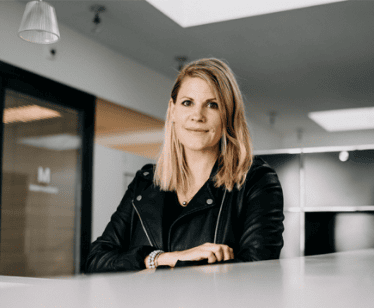
Martina Vogel is taking over as program director for the Rhetoric & Moderation department at MAZ. She brings with her many years of experience in communications consulting, crisis communications, media relations, rhetoric, and organizational development. She will further develop the programs in her department and design and conduct courses and media training tailored to corporate needs. Vogel is the owner and managing director of the Basel-based communications agency comm.versa GmbH, which she founded in 2011 and continues to lead. She has been associated with the MAZ for several years as a lecturer and trainer. Her focus is on crisis communication, media relations, and public speaking and media training. In addition, she has many years of teaching experience at various universities. «I look forward to helping shape the MAZ in this role—with a strong focus on practical application, a passion for learning, and an open-minded approach to what truly helps people improve their communication skills,» says Martina Vogel.
With Timo Grossenbacher, the MAZ is gaining an expert in artificial intelligence, digital media, and data journalism. He will contribute his professional and pedagogical experience to the development and implementation of training and continuing education programs, thereby further strengthening the MAZ’s expertise in a field that is central to the media industry’s future. Grossenbacher is an independent consultant specializing in AI and automation in the media industry. Until 2024, he led the «Newsroom Automation» team at Tamedia. Prior to that, he worked as a data journalist for SRF for about five years. He studied geography and computer science at the University of Zurich and earned a Diploma of Advanced Studies (DAS) in Data Science. In addition, Grossenbacher teaches data journalism and automation at various universities and vocational schools. «AI and automation can relieve media professionals of repetitive tasks and open up new journalistic possibilities. It is crucial that we use these technologies sensibly, transparently, and responsibly,» says Timo Grossenbacher.


Around one hundred guests celebrated the successful completion of the two-year diploma in journalism at the Kleintheater Lucerne yesterday evening. At the graduation ceremony, MAZ CEO Martina Fehr paid tribute to the exceptional value of the training, which imparts far more than technical skills: namely attitude, resilience, a sense of responsibility and the ability to operate confidently in a complex media environment. Fehr told the graduates that they would not only take away specialist knowledge with them, but also a strong network and an important foundation for their professional future.
Journalism as a lifelong enrichment
Keynote speaker Nadia Kohler, Head of AI & Data at Tamedia, emphasized: «With every article, every interview, every explanatory piece and every infographic you have done so far, you have filled your backpack. You will be able to use what you have learned again and again.» Despite seemingly endless crisis headlines, journalism is still able to generate interesting job profiles, great contacts and lifelong memories. «Welcome to the most exciting industry in the world,» said Kohler.
Diverse diploma theses from Langstrasse to southern Algeria
The graduates work in very different editorial departments - online, in print, in audio and in video. Their diploma theses are correspondingly diverse. Their research took them from Langstrasse to Istanbul, from Lattrigen to Cuba. One graduate reports on her village of Blatten and the home she has lost. One graduate visited refugee camps in southern Algeria and tells stories of people trying to find a new home in one of the world's most inhospitable regions.
They portrayed prayer healers and clergymen, top chefs and athletes, dancers and musicians. The graduates went into the depths of bunkers and climbed up to mountain villages - always in search of gripping and relevant stories.
A selection of diploma theses is available online at: https://www.maz.ch/publikation/best-of-diplomarbeiten-2024-2026.
The 2024-2026 journalism diploma program was completed by Anja Bieri, Noa Bühler, Thomas Conrad, Ramon Cunz, Joel Dittli, Felix Ertle, Manuel Fässler, Grégory Feger, Robin Furrer, Nicolas Geissbühler, Flurin Grass, Fabienne Grüter, Jennifer Gyseler, Yann-Alexander Hage, Jan Isler, Denise Jacob, Jasmin Jaun, Jelena Kalbermatten, Charlotte Koesling, Lisa Kwasny, Nuria Langenkamp, Rahel Lerch, Noah Merz, Tim Meyer, Jonas Mielsch, Lukas Mutzner, Emil Rohrbach, Mark Schoder, Leandra Sommaruga, Aran Emily Steffen, Leah Süss, Nicolás Valero, Geraldine Wälchli, Robin Walz, Stefanie Zumbach. Michael Höchner completed the Keystone SDA news journalist course.
More information: www.maz.ch
]]> Artificial intelligence makes solid design the standard. But if you want to achieve excellence in visual communication, you need more than just a prompt. This is precisely where the MAZ's new continuing education program comes in: The CAS Visual Communication combines analysis with practice and teaches sound design skills.
Judgment instead of automation
The availability of AI-generated images and videos has changed visual communication. What used to require elaborate design work is now created at the touch of a button. But this democratization poses a problem: it levels out the average. What everyone can do no longer makes a difference.
Rudi-Renoir Appoldt, Director of Studies at the new CAS, puts it like this: "Are you sure you understand what you see?" In the words of Socrates, knowledge begins where you recognize your own ignorance. And that is also where good vision begins.
Narrative structure and formal competence
The CAS Visual Communication runs from September 2, 2026 to March 11, 2027 and lasts 16.5 days. Participants learn not only to describe, but also to implement visual communication in a well-founded way. They develop judgment, formal confidence and a clear creative attitude.
According to the announcement, visual communication remains an interplay of narrative structure and formal competence. Tools have changed, but the logic of perception has not. Attention continues to follow clear principles. Effect is not created by chance, but through attitude, selection and responsibility.
Practical knowledge from experienced professionals
The MAZ promises to strengthen skills in visual communication with the practical knowledge of experienced professionals. The course takes place in Lucerne and the registration deadline is August 2, 2026.
To accompany the CAS, Appoldt recommends the book "Was Kommunikationsdesign kann", published by Niggli-Verlag. The handbook sheds new light on the social relevance, attitude and responsibility of visual communication.
Further information on the CAS Visual Communication: https://www.maz.ch
]]>The Federal Council wants to create more transparency and security in the digital space with the new Federal Act on Communication Platforms (KomPG). The MAZ - Institute for Journalism and Communication expressly welcomes and supports the law. The leading Swiss journalism school has taken a clear position in its consultation response to the draft law. The message: Yes to regulation, but with targeted protection mechanisms for editorial freedom and the media landscape in Switzerland.
The MAZ welcomes the Federal Council's efforts to curb the power of the major tech platforms and strengthen the rights of Swiss users. Nevertheless, the School of Journalism sees potential for improvement in three key areas in order to ensure the quality of public discourse and strengthen the local media landscape.
No "overblocking" for media companies
The MAZ sees a major danger in automated filters that delete content prematurely. The demand: Content from media companies that are subject to the Swiss Press Council should be given a legal "fast track" in the event of complaints. Editorially verified information must not be arbitrarily blocked by algorithms or have its reach restricted. A human preliminary check must ensure that the freedom of the press is not undermined.
Data access for training
The draft provides for better access to platform data for research in the future. The MAZ goes one step further: institutions for journalistic education and training as well as data journalism must also be given this access. Anyone who does not understand the mechanisms of information dissemination - for example Instagram or TikTok algorithms - cannot perform their role as a digital gatekeeper competently.
Transparency in AI and deepfakes
In the age of generative AI, the boundaries between reality and manipulation are becoming blurred. The demand: a strict labeling requirement for AI-generated content such as deepfakes, synthetic texts and images on Swiss platforms. This is the only way to distinguish professional photojournalism from AI manipulation and protect the credibility of the entire information ecosystem.
Conclusion: strengthening Switzerland as a media center
The MAZ expressly supports the Federal Council's course, in particular the planned transparency in political advertising and the disclosure of recommendation algorithms. However, for the law to be fully effective, journalistic expertise and freedom must be institutionally anchored.
]]>
 At the same time, a separate sponsoring association was founded, as required by federal law for universities of applied sciences.
With this step, the MAZ's long-established diploma training is to be placed on a new, nationally recognized basis. This will make the degree even more attractive for young professionals and media companies and allow for better national comparability.
"The MAZ has been training journalists for the Swiss media landscape for over 40 years. The recognition of journalism training as a university of applied sciences strengthens our educational mission and supports a quality development that is central to the entire industry," says Felix E. Müller, President of the MAZ Foundation Board.
Until the final recognition, the proven training format of the diploma program will continue to apply. The students will be continuously transferred to the modernized competence profile of a university of applied sciences: with a focused practical orientation, current technological orientation and an increased focus on media competence in a rapidly changing public sphere.
]]>
MAZ - The Swiss School of Journalism is expanding its educational offering with the compact course "Brand Storytelling". The six-day course starts on February 24, 2026 and is aimed at communication and marketing professionals, content creators and journalists.
Combining strategy, creativity and authenticity
Good stories don't fall from the sky - they are created when strategy, creativity and authenticity come together. The new compact course teaches the craft of how brands can become human and create connection and trust. Together with experts from agencies, companies and the media, participants work out how to translate a brand's identity into powerful stories that touch people.
AI tools for efficient storytelling
An important part of the course is the targeted use of AI tools. Participants learn how to use artificial intelligence to develop creative ideas, personalize content and make storytelling more efficient. The course also focuses on the effective implementation of storytelling across different channels.
Target group and course details
The course is aimed in particular at journalists who want to switch to corporate communications or establish a second mainstay with corporate media or corporate publishing. The compact course will take place from February 24 to April 10, 2026 at the MAZ in Lucerne. Tanja Maniglio Hofer, Head of Corporate Communications at the MAZ, is responsible for the new course.
In addition to the Brand Storytelling compact course, the MAZ offers further training in this area, including the course "Storytelling - Finding Topics, Building Stories" in June 2026 and the CAS Brand Journalism & Corporate Storytelling, which starts in August 2026.
]]>
This targeted fall campaign serves as a reminder that continuing education is a key element in shaping one’s personal and professional future—whether for communications professionals in companies, journalists in newsrooms, or administrative and municipal employees.
How the Campaign Works
A direct mailing is used to remind employees to prepare for their upcoming performance review. Since these reviews are a good time to decide on continuing education opportunities, a Search Filters on the campaign landing page in selecting appropriate courses.
Special attention is given to the ability to easily and simply bring the selected results into discussions with supervisors by sharing the search results via email. Alternatively, you can have the results sent to yourself as a personal reminder and to help you prepare for the conversation.
With this program, the MAZ aims to promote the professional development of journalists and communications professionals. It is accessible, practical, and forward-looking.
]]>
Around 100 guests celebrated the successful completion of the two-year training program at the Kleintheater Lucerne on Thursday evening. "A lot has changed fundamentally in the media world," said Maz CEO Martina Fehr at the start, addressing the graduates. "Job cuts, upheaval, uncertainty - you have experienced all of this first-hand, especially in the past year." But sometimes it is the unexpected turns in professional life that lead to goals that prove valuable and offer new opportunities. In this context, Fehr referred to Maz founder Peter Schulz: he would actually have liked to have become the director of Swiss television - but he didn't get the job. The supposed career setback prompted him to found a school for journalism: Maz.
"It's a great time to enter this profession"
Keynote speaker Lena Berger, deputy editor-in-chief at the Observer, conveyed confidence. Journalism is no longer fighting in the middle of a storm, she said. It is already stranded on a "new, unknown island". Now it is time to explore this new reality - creatively, courageously, experimentally. "It's a great time to enter this profession."
Berger distanced herself from nostalgic glorifications: "Not everything was better in the past - especially not journalism," she said. Although financial conditions are often more difficult today, there is more independence and journalistic integrity. The media are no longer the mouthpiece of the authorities - a major step forward.

Diploma theses with various topics
Graduates of the 2023-2025 journalism diploma program work for various media in the print, audio, video and online sectors. Their diploma theses cover a wide range of topics: One thesis uncovers how ideas from spiritual groups creep into the everyday life of schools - under the guise of reformist educational approaches. Another traces the path of a Swiss emigrant who left his homeland in the 1860s and rose to the highest social circles in Paraguay within a few years. Investigative research uncovers the dubious practices of a shipping company and the complex interdependencies in the cruise industry. How do people fall into poverty - and how do some find their way out again? - This is also a topic.
Other contributions deal with mental or physical illnesses, weapons training for civilians, the love of fans for their idols, or new AI-supported therapies. A selection of the theses can be found on the Website.
Milena Bassin, Deborah Bischof, Valentina Blaser, Jan Bolliger, Nico Bollinger, Andrea Brawand, Alice Britschgi, Sven Florin, Tim Haag, Maximilian Jacobi, Livia Jungo have completed the 2023-2025 journalism diploma course, Adrian Kamber, Pascal Kamber, Michelle Keller, Konstantin Kreibich, Isabel Langer, Sergio Lüthi, Anniina Maurer, Romy Möll, Vanessa Naef, Juan Riande, Jasmin Schnider, Sarina von Weissenfluh, Vanessa Zemp and Yannick Züllig.
]]>
Fabian Muster will contribute his extensive expertise at Maz to the implementation and further development of the Diploma in Journalism (DAJ), the CAS Journalism and other journalism training courses within the framework of university cooperation.
"Local journalism is the backbone of democracy and strengthens social cohesion: it is close to the people, deeply rooted in the regions and promotes public discourse. With Fabian Muster, we are gaining an experienced professional who will contribute his in-depth knowledge and leadership experience to the journalistic training of the next generation," Maz CEO Martina Fehr is quoted as saying in a press release.
Experienced local journalist
The 45-year-old Muster began his career in 2007 at the Solothurn newspaper. From 2010, he worked in various roles for AZ Medien and later CH Media - first as a print and online editor, later as deputy head of online, project manager and page editor at the Aargauer newspaper. Since 2016, he has been Deputy Editor-in-Chief, and from 2020 Editorial Director at Oltner Tagblatt. Most recently, he was also deputy editor-in-chief of the Solothurn newspaper and of the Grenchner Tagblatt. As a graduate of the Master's course and the leadership training at Maz, Fabian Muster already knows his new employer and what it has to offer very well.
"Strong local journalism is essential for a functioning democracy: this is where most politicians take their first steps, for example; journalists should accompany them critically and independently from the very beginning," says Muster. "I look forward to passing on my knowledge and experience at Maz and inspiring the next generation of journalists for this important task."
]]>
AI-supported videos open up new perspectives for media, companies and creatives. But as technological advances grow, so do the challenges: How is AI changing storytelling? What risks does automation entail? And how can quality, ethics and credibility be ensured in a media world increasingly shaped by AI?
These questions are at the center of the Themed conference "AI videos - opportunities and risks"which Maz will be holding in Lucerne on May 21, 2025. The event is aimed at media and communication professionals, creatives, scientists and decision-makers who want to find out about the latest developments in the field of AI and video.
Use cases and overarching perspectives
To kick things off, satirist and director Patrick "Karpi" Karpiczenko will shed light on the impact of AI-generated videos on journalism - with a critical but also humorous look at the media landscape. Filmmaker Jan Janutin and communicator Antonia Zahner will then show the extent to which AI videos can already be found in film production, marketing and corporate communications.
Prof. Touradj Ebrahimi from EPFL Lausanne and Dr. Patrick Raemy from the University of Fribourg will introduce the technical and scientific part of the conference. They will analyze the current possibilities and limitations of AI-supported videos and discuss the effects on credibility and media ethics.
The event will conclude with a panel discussion in which all speakers will debate the potential and risks of AI videos for media houses and companies.
]]>
The digital transformation remains a strategic focus for the NZZ. While the number of editors has risen continuously since 2015, the focus is increasingly shifting to new digital formats. The "Digital Knowledge" training initiative, which has now been completed after almost two and a half years, was a central component of this development, as the NZZ writes in a press release.
Since the beginning of 2023, around 300 editorial staff have completed an average of five days of training. The training courses were developed specifically for the NZZ in collaboration with the Maz Institute for Journalism and Communication and covered open source intelligence (Osint), data journalism, editorial data analysis and the use of artificial intelligence in journalistic work processes.
Editor-in-chief Eric Gujer emphasizes the importance of these investments: "The ongoing development of artificial intelligence is leading to an even greater flood of information - and therefore also to an increasing risk of disinformation and manipulation. This makes it all the more important that we as NZZ offer guidance with fact-based, credible journalism."
Deputy Editor-in-Chief and Head of Operations, Carola Ettenreich, draws a positive balance: "The high number of participants and the consistently positive feedback show that our employees really appreciated the training program. The investment in digital skills was right and important." Maz CEO Martina Fehr also sees the initiative as a forward-looking model: "The NZZ is taking on a pioneering role with this comprehensive training program."
Even after the completion of the program, the strengthening of digital skills will remain a focus at NZZ, the statement continues. In addition to further training, the company is investing in innovation and technological development in order to actively shape the digital transformation. Last but not least, these measures are also intended to strengthen the company's economic base in Switzerland and Germany.
]]>
In his role, André Caradonna is responsible for the strategic and operational development of Maz's marketing activities. His aim is to further strengthen the institution's position as a leading training center for journalism and communication.
"We are delighted to welcome André Caradonna with his extensive technical expertise and marketing experience. We are focusing on modern and targeted marketing to further increase our reach and impact in the education sector", Maz CEO Martina Fehr is quoted as saying in a press release.
Caradonna studied media and communication science, journalism and sociology at the University of Fribourg. He then worked for several years in various agencies before switching to the corporate side. As Head of PR/Sponsoring at Swisscom, he promoted the business customer sector, while at Bernexpo Groupe he was responsible for corporate and product communication. He also worked for the Insel Group and Ender Diagnostics, in each case as Head of Communications and Marketing.
André Caradonna will take on his new role at Maz with an 80% workload. He will also remain active as "KreativAgent Caradonna" and support companies with marketing concepts and projects.
]]>