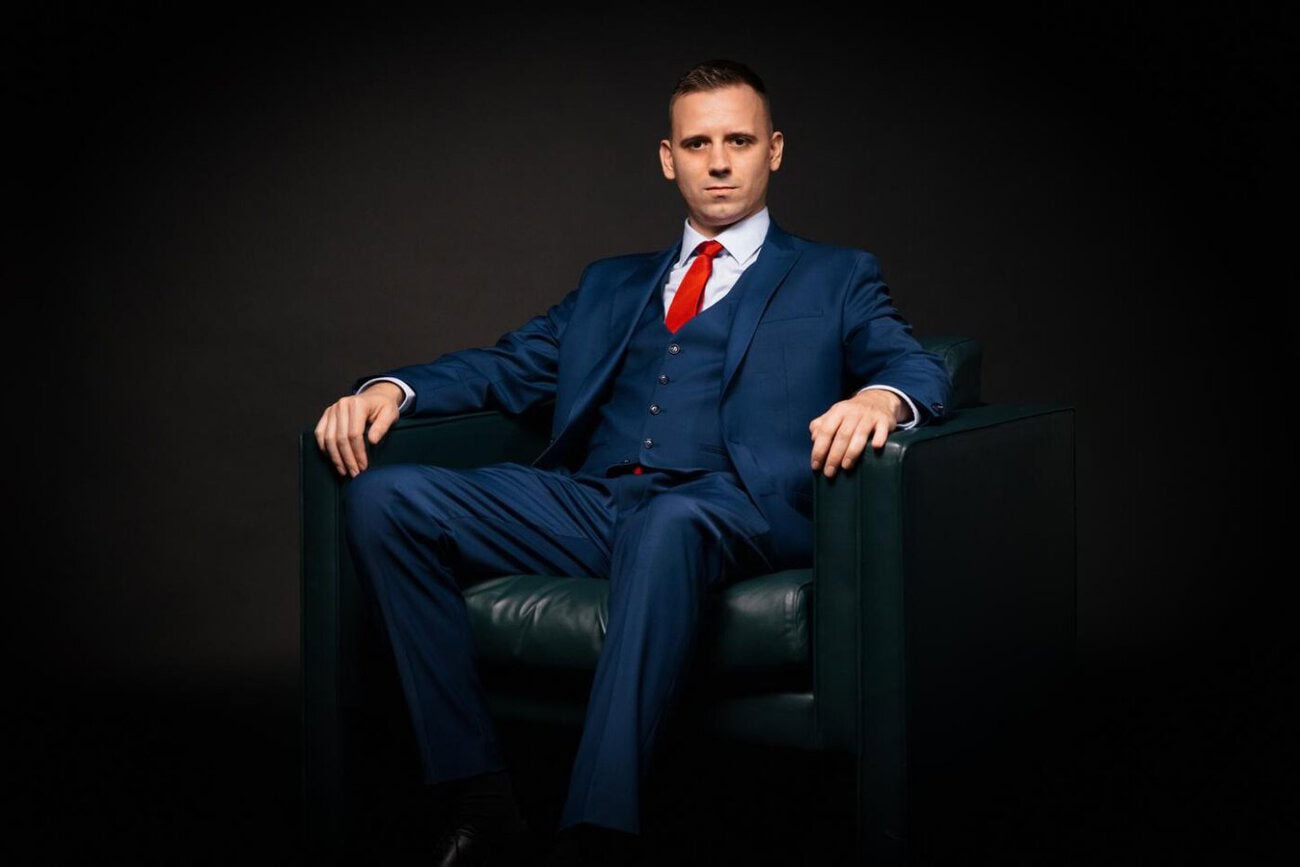
Lian Ospelt, CEO der Vaduzer Agentur Lian Management, hat im Finale des europäischen Branchen-Awards Manage Marketing Europe den ersten Platz der «Top 10 Marketing Leaders in Europe 2026» belegt. Nach Angaben der Mitteilung setzte er sich damit im direkten Vergleich gegen Führungskräfte europäischer Grosskonzerne durch.
Dass Ospelt den Sprung in die europäische Top Ten geschafft hatte, war bereits im Vorfeld bekanntgegeben worden. Zum Jahresende schloss das Expertengremium nun die finale Evaluierung der Rangfolge ab und wählte den Vaduzer Unternehmer an die Spitze.
Lian Ospelt und Manage Marketing Europe: von der Kundennominierung zum Jury-Votum
Dem Award ging ein mehrstufiges Auswahlverfahren voraus. Eine Direktbewerbung war ausgeschlossen: Voraussetzung für die Teilnahme war die Nominierung durch mehrere Geschäftspartner und Kunden. Über diese Fürsprache qualifizierte sich Ospelt für das Teilnehmerfeld der Top Ten.
Die Festlegung der finalen Ränge oblag einer Fachjury aus C-Level Executives sowie dem Redaktionsboard des Magazins. In die Bewertung flossen laut Mitteilung neben empirischen Erfolgen und Praxistauglichkeit auch strategische Weitsicht, Innovationskraft und messbarer Kundennutzen ein. Eine entscheidende Rolle für den Gesamtsieg spielten demnach die ausserordentlich hohen Bewertungen für die gelebte Transparenz im Agenturalltag sowie für den Kundensupport.
Platzierungen hinter dem Liechtensteiner
Hinter Ospelt belegen Marketingverantwortliche grosser Konzerne und europäischer Branchengrössen die weiteren Ränge. Dazu zählen unter anderem Troy Munns (Head of Marketing, Kering / Gucci, Yves Saint Laurent), Emma Collings (Group Head of Marketing, British Land), Albena Koleva (Marketing Director, Zagorka / Heineken Company) und Beth Boulton (Marketing Director, Eurocell).
Neben der Führung seines Kernunternehmens bringt Ospelt seine Expertise auch in eigene Markenprojekte wie Lian Original ein.
Bestätigung für den Kurs von Lian Management
Lian Management bietet nach eigenen Angaben ganzheitliche Lösungen an und setzt Markenstrategie, Webdesign, Events und moderne Zahlungssysteme als integriertes Gesamtsystem um. Das Unternehmen war bereits Ende 2025 von Branchenexperten ausgezeichnet worden. Die aktuelle Platzierung als Nummer eins sieht die Agentur als weitere Bestätigung.
Lian Management ist eine in Vaduz ansässige Marketing- und Dienstleistungsagentur mit Angeboten in den Bereichen Markenstrategie, Digitalpräsenz, Eventmanagement und Zahlungsabwicklung.
]]>
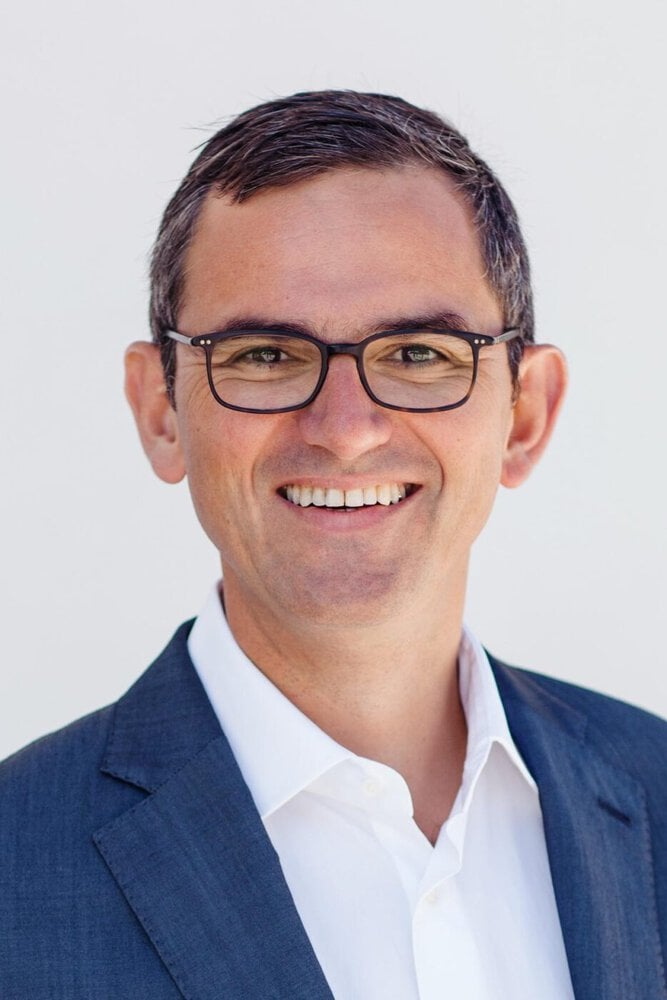
Libri’s management team is undergoing a reshuffle: Libri has appointed Hans-Peter Kübler as spokesperson for the management board. Effective October 1, he will serve as co-CEO of Libri GmbH alongside Ulrich Vollmer. Alyna Wnukowsky is stepping down from the management board after more than four years for personal reasons.
The Return of a Familiar Face
Hans-Peter Kübler is well known at Libri and throughout the book industry. He previously worked for Libri from 2011 to 2016. In the years that followed, the business graduate remained closely connected to the industry, serving, among other roles, as managing director of Taschen GmbH (2018–2022) and the Holtzbrinck subsidiary HGV (2023–2024). Since late 2024, Hans-Peter Kübler has served on the board of Sunseeker Intelligent Technology SE and has established the European subsidiary for the Chinese manufacturer of robotics products.
He is now returning to Libri, bringing with him extensive operational experience across the entire book value chain. He has extensive experience in transformation and is regarded as an expert in publishing and retail. According to the press release, Hans-Peter Kübler brings a comprehensive perspective on the book industry and will consistently continue the course set by Alyna Wnukowsky.
«I’m very familiar with Libri from my previous work. That makes me all the more pleased to be returning now and to contribute the experience I’ve gained in the various areas of my professional career,» says Hans-Peter Kübler. «Like almost no other company, Libri plays a key role in maintaining the industry’s competitiveness and diversity in the market.»
Hans-Peter Kübler will be responsible for Sales, Customer Service, Marketing, Purchasing, and IT going forward. Ulrich Vollmer will continue to oversee print-on-demand production and the logistics facility in Bad Hersfeld, as well as the administrative functions in Hamburg.
Assessment of Libri’s Management to Date
Under the leadership of Alyna Wnukowsky, Libri further expanded its position as a leading book wholesaler in Germany and Europe, according to the company. During her tenure, the company fully integrated its wholesale and print-on-demand operations, expanded its international business, and strengthened national and international strategic partnerships. Today, according to the company, Libri offers publishers, authors, bookstores, and readers a unique range of services: more than five million German and international book titles that are produced and delivered overnight.
As spokesperson for Libri’s management team, Alyna Wnukowsky was a strong advocate for the entire industry. As part of her work and as a member of the Executive Board of the German Publishers and Booksellers Association, she was particularly committed to the establishment and acquisition of owner-operated bookstores, as well as to the promotion of reading.
Contact at Libri: Hans-Peter Kübler, Spokesperson for the Executive Board; Ulrich Vollmer, Managing Director; Alyna Wnukowsky, outgoing Spokesperson for the Executive Board
]]>
Frédéric Lelièvre, a well-known figure in Swiss business and financial journalism, is returning to *Le Temps*. According to a press release, he will lead a new editorial project starting September 1, 2026, dedicated to major financial and economic issues.
Frédéric Lelièvre, *Le Temps*: A Significant Comeback
After six years as CEO and editor-in-chief of L’Agefi, Lelièvre is set to join «Le Temps,» where he will work closely with the management team, the editorial board, the head of the business section, and the business and finance journalists to strengthen coverage of markets, finance, companies, and economic transformations. According to the press release, his return underscores the publication’s commitment to expanding its editorial expertise in this area.
Lelièvre studied economics and finance at the University of Rennes-I and completed his education at Sciences Po Paris with a DEA in applied economics for business and international finance. He began his journalistic career in 1997 at the French weekly magazine *Problèmes économiques*.
Sixteen years at «Le Temps»—and a stint in Hong Kong
In 2001, Lelièvre joined *Le Temps* for the first time, where he helped shape the newspaper’s business coverage for 16 years. From 2008 to 2014, he headed the Économie & Finance section. He then moved to Hong Kong, where he worked as a correspondent for several media outlets—including «Le Temps,» «Le Figaro,» and TV5 Monde. He reported on the economic rise of China and the Asian markets, as well as on the Umbrella Movement, the first major political resistance by Hong Kongers against Beijing. According to the press release, this international experience has had a lasting impact on his journalistic approach, which focuses on the intersection of global financial issues and geopolitical realities.
After returning to Switzerland in 2017, Lelièvre helped launch CNNMoney Switzerland as deputy editor-in-chief. In 2020, he took over as head and editor-in-chief of L’Agefi, where he is said to have led the publication’s editorial and digital transformation.
Acclaimed author and president of the Club suisse de la presse
In addition to his journalistic work, Lelièvre co-authored the book *Krach Machine* with François Pilet, which explores high-frequency trading and was awarded the Prix Jean Dumur in 2013. Since 2024, he has served as president of the Club suisse de la presse and is thus considered one of the most influential figures in business journalism in French-speaking Switzerland.
«Le Temps» is the only French-language daily newspaper in Switzerland with a national and international scope. It has been owned by the Fondation Aventinus since January 2021. According to the publication, it employs approximately 170 staff members, including correspondents in Washington, Brussels, and Paris, and relies on a global network of freelance journalists. Founded in March 1998, «Le Temps» emerged from the merger of the «Journal de Genève,» the «Gazette de Lausanne,» and the «Nouveau Quotidien.».
For more information about «Le Temps,» visit https://www.letemps.ch.
]]>
Axel Scherger Takes Over as Head of Marketing at Swisscom
Axel Scherger, Swisscom: Effective June 1, 2026, Axel Scherger assumed the role of Head of Marketing Communications & Commercial Management for Swisscom’s Residential Business Unit. He succeeds Pierre Besnard, who left Swisscom on May 31, 2026.
Strategic experience in corporate settings and consulting
Axel Scherger has been with Swisscom since 2021 and most recently served as Head of Strategy for the Residential Business Unit, where he was responsible for the strategic development of the residential business. Prior to that, he worked at Deutsche Telekom and as a management consultant specializing in telecommunications at Horvath & Partners Management Consultants.
Dirk Wierzbitzki, Head of Retail Customers and a member of the Executive Committee at Swisscom Switzerland, explains the appointment as follows: «Axel has strong strategic skills, a deep understanding of the market and our customers, and the ability to effectively translate complex strategies into commercial decisions. Together with the team, he will ensure that we further strengthen our market position with relevant offerings, a clear value proposition, and a focused market approach.»
Focus on Quality and Customer Value
Axel Scherger himself comments on his new role: «I look forward to working with our team to further strengthen Swisscom’s leading market position. Our focus is on quality, strong performance, and offerings that make a difference for our customers every day.»
Swisscom thanks Pierre Besnard for his dedication and his contribution to the further development of marketing in the residential customer segment.
]]>The book tells the stories of thirteen women between the ages of 43 and 73. They are all "cool women who look great and deal well with getting older," as Aeschbach says. "It doesn't matter if they're starting their own business or raising three kids: They're confident and making something of their lives."
Aeschbach also describes in detail the appearance of the women portrayed. "Tall, slim, with shiny brown hair, large dark eyes and a pert nose, the 43-year-old is a real eye-catcher," she describes the owner of a hair salon. "On the street she is approached by complete strangers who are fascinated by her charisma and beauty," a 73-year-old model describes her. Who is the author behind this clichéd women's book - and why did she write it?
Journalist with fighting spirit
The inside cover of the book says: "Silvia Aeschbach is a journalist. She has worked for Swiss television and various magazines and newspapers." It's an understatement. Aeschbach has had quite a journalistic career. After her position as a presenter and editor at SRF, she worked as a department head in the founding team of the news magazine Facts, at 39 she became editor-in-chief of the former Meyers Modeblatt ( to "rejuvenate" it ), after which she worked for three years in the chief editorial department of Blick.
It has also collaborated with high-caliber journalists. Facts' founding team includes well-known names such as Linus Reichlin and Richard Reich, both of whom are now active as writers. She learned a lot from such journalists, Aeschbach says. "I was hired as a department head relatively young and inexperienced. I came from television, I didn't really know the print sector at all," she says. The management task appealed to her. That's because she's not only bubbling over with ideas and knows how to make a story that resonates with readers. "I can also get that across and pull a team along. That's what made the start-up phases at Facts or at Meyers a good fit for me." Later, she also held a management position in the editorial department of Blick.
Eight years ago, a break occurred. When Blick made a change of editor-in-chief, Aeschbach was demoted to columnist - and subsequently vacated the office. "That was difficult. Blick was like a locomotive that you got on in the morning and were spat out of in the evening. After I quit, I fell into a hole." On top of that, there was disappointment. "Along comes one person with whom it doesn't fiddle, and overnight it's all done. For the first time in journalism, I really came into the world. No one fought for me. Not even those who had previously planned my next career steps with me."
Aeschbach now blogs about beauty and health on Tagesanzeiger.ch, is responsible for the German-language edition of the lifestyle supplement Encore, and works as an independent journalist. She operates away from hierarchies ( with the exception of a small team at Encore). "I'm not a traditional boss and no longer work for a superior to whom I have to report on a regular basis." She says she enjoys it, discovering new freedoms. "My ideas are very much about myself. I do what I like and can also realize myself to a certain extent."
Breaking out of role models?
One of her latest publishing projects is "Getting Older for Beginners. With the book, Aeschbach wants to break down stereotypical role models, as she says. "Older women used to be sidelined in society - by business and fashion, but also by making themselves invisible," explains the author, who is 55 herself. "That is now starting to change very slowly. We're breaking out of traditional roles and no longer being told how to dress or behave as we get older."
Aeschbach is ambitious, "an attribute not commonly associated with women," as she herself says. And now the journalist, whose curriculum vitae does not correspond at all to the female role model of her generation, wants to break down traditional role models by writing about women who, despite being 40 plus, "are cool and look great"? Aeschbach is convinced that she is doing so. Without a doubt, she strikes a chord with a generation with this book. Numerous middle-aged female readers find themselves in the stories and say to her after the readings, "That's how I experienced it, that's how it was for me, too." However, the bestselling author does not want the fact that she serves an interesting target group to be understood as a motivation. "I never thought about which target group I was addressing. I wanted to pass on my own experiences with aging."
Text: Simone Isliker]]>
From serious content to cat movies to playful approaches to serious topics - Watson offers a wide range. Not every journalist is convinced by Hansi Voigt's concept of "good online journalism". He is. But his approach of constructive dialog and a practiced culture of error is finding great resonance - in the Watson community, user numbers and also among employees. "I give my employees a lot of trust, and they take on a lot of responsibility. At the same time, I also try to be forgiving when someone makes a mistake," says Voigt, describing his work attitude. Rather, he would be angry at those who always do the same thing without making a mistake. "Carefully trying something out is my focus, because you learn the most from mistakes," Voigts says of his leadership attitude. In the end, admitting to a mistake is no great art, and it is easy to correct and make transparent, especially in the digital world.
Not every area of his staff is in Voigt's own area of expertise. All the more surprising, therefore, is his attitude of letting the teams work very independently. He is well aware of how much overview and influence could slip out of his hands in the process. "Inventions are usually the result of random thoughts; innovations are rarely created in tight structures," he explains. If you want to create an innovative climate, this is usually also connected with a certain loss of control that you have to accept, he says. Voigt also likes to communicate his culture of failure to the outside world. "I said from the beginning: You will be able to watch us make mistakes," he adds. But this is only bad if you don't learn from it. Apart from that, such an error culture has nothing to do with a lack of diligence - even if you work very precisely, you still make mistakes. One should honestly admit that. "That's also what makes us, we don't cover up our mistakes," says Voigt.

Watson stays on
Even in the stairwell of the editorial office, the sounds of ping-pong echo out to the visitor. Two employees are playing a game of mini ping-pong on a folding table, incredibly fast and concentrated. Relaxed, they stroll back to work, where table to table the news team, reporters, community & marketing, sports and cat film managers turn to their work with motivation. The prospective intern, who arrives punctually for her interview, is only noticed minutes later. Hansi Voigt is not yet there, but appears inconspicuously in the room five minutes late, at the same time makes a quick effort at the reception, makes a coffee and then sits down comfortably in the meeting room. He doesn't seem to feel any pressure. That's not entirely the case, however. "We are all very motivated," he continues. "Besides, the entire team is following a tight business plan," says Voigt. But the start of the year has been successful. The monthly traffic targets have been exceeded, and commercially the site is clearly on target. Voigt admits: "We are still making losses. But the profit targets are clearly set for the end of 2018/2019, and then slowly move into the black." Sales are rising steadily. However, it is still important to continue building reader attention in order to commercialize these clicks and visits. "At Watson, the banner and especially the native ad development looks very good," Voigt says confidently. In terms of traffic, around 300 new people are currently downloading the Watson app every day.
However, Watson's development has not been without hitches: "We had to adjust some of the planning after the second year; as expected, the initial project turned into a marathon. Now, in the third year, we can draw on our own experience and have realistic targets. The aim must be to exceed current expectations and to use this scope for even faster growth. We are now slowly getting into this mechanism.
Just as important to him as the error culture Voigt likes to communicate is a playful approach, even to sometimes serious topics: "For example, you can pack an incredible amount of information into a quiz on the enforcement initiative. When you then play the quiz, you absorb this information and at the same time you can still check yourself for your own false prejudices." Behind this is the principle that every child learns fastest when playing and that the reader also wants to be entertained for a change. According to Voigt, some journalist colleagues should loosen up a bit: "Even the New York Times has a crossword puzzle. Every newspaper has a comic page or some other so-called page 12." In addition, "A journalist is not a teacher," Voigt clarifies, "our daily newspapers are teeming with tragic news. You can also try to illuminate a positive perspective on many topics instead of always lamenting that everything was better in the past."
Talent-free to manager
"I've been very lucky in my life so far," says Voigt, describing his career. By that he means not only the luck of finding the right working environment for him in each case, but above all "being able to work with the right people. He doesn't like to set up a project all by himself, but he has always found other madmen who want to try something out. As a result, Voigt's life so far has seen a number of startups. "A lot of it has turned out well," he emphasizes.
Voigt is no loner. "I'm insanely happy to be part of a team," he affirms, "but certainly loud to a good degree." He is primarily concerned with creating something together, with a new approach. Voigt is happy to talk about his new leadership philosophy in the creation of Watson. "We were awarded the money without ever drawing a classic organizational chart," he says confidently. He describes Watson as a living organism, interconnected and networked, constantly changing. For example, his head of app development is also the head of digital - the marketing department and community editorial team are combined in a single department - so that the community can also be seen as a marketing tool, and the sales team works closely with the editorial team. Voigt does not see a problem here. The dividing lines today are no longer straight as an arrow, but curved, but they are not blurred and are always transparent.
This organism, as Voigt calls Watson, accomplishes a lot in the group, is thus very innovative and has its finger on the pulse of interaction. "Moderating these group processes is something that probably still suits me," Voigt sums up somewhat too modestly. Voigt discovered his managerial side early on - but less as a talent than as a way out of his actual career aspirations. As a teenager, for example, he wanted to be a footballer. "I could play soccer pretty well, until I grew so insanely," he says, describing the shattering of his first childhood dream. His next career aspiration was photographer. But I didn't really have the talent," Voigt says with a sneer. After that, he tried his musical side as a drummer, but had to realize that he was not good enough to stand up to his demands. But Voigt was probably not quite as talentless as he describes himself - rather, he was demanding: "I'm just reasonably ambitious. Not being as good as I'd like would be embarrassing." That attitude led him to manage a band instead of playing along. He even started his own record label in Newcastle, England, and traveled the world with a female duo. In the end, it turned out that he preferred to organize and feed and manage an organism. A positive development, as he knows in retrospect: "I would always have liked to have a clear artistic talent. Today, however, I'm very glad that I had to find another way."
As a former journalist, Voigt still enjoys writing himself - but unfortunately this is usually only possible in his spare time. On the other hand, Voigt can now think of writing projects: "I'd like to write a book someday," he says enthusiastically. He has already decided what it will be about: media change. Whether it will be an analysis or a work of fiction, however, remains to be seen.
In favor of the new
Watson has just used up the first 20 million francs, and further investments have been made. Voigt himself speaks of good user numbers, of fulfilled expectations in the commercial figures as well - but managing such a major project could give the impression that its editor-in-chief is under a bit more pressure. However, Hansi Voigt sits in his chair more like Mister Easy-Peasy himself - not arrogant or underemployed, but also not at all stressed. Of course, he also works mostly in his free time - "at least that's what my partner would say," he quips. But he doesn't seem to be under pressure. He is too convinced of the news portal's success, too honestly enthusiastic about it. He takes the fact that the chief editors and management also had to cut part of his own salary at the end of last year more lightly than the departure of some employees. "That was very hard - especially also because you couldn't blame the individuals. Although they've all been rehired somewhere already, too. Watson is a good stay on the resume," he adds. However, the fact that he had to let some employees go last year would have been for the sake of the continuity of the whole thing, Voigt says. His explanations sound a bit utilitarian, but also a bit fatalistic - just like Voigt's journalistic career from Cash to the Observer, from 20 Minuten to Watson. Hansi Voigt doesn't see himself as a philosopher: "I just like to do something new and enjoy change," says Voigt succinctly, "because just wanting to preserve something so that nothing changes is the wrong way to go about it."
Ursina mason
"Children are not money machines"
Data protection is very important to Sandra Kissling. For example, anonymous visitors to Kinderagenturswiss. ch does not see any names. However, if one registers as a company, Kissling checks the details before access to the images is possible. Even registered companies and agencies do not see addresses or family names - only the first name with the necessary characteristics is then visible. The entire placement of the children as well as the organization of the appointments is handled by the children's agency. Over the past six years, she said, she has received an enormous amount of positive feedback from clients about the great parents whose children she places. "The whole project is a matter of the heart; it's the only way such a platform is even possible for me," Kissling emphasizes. That way, she says, dealing with each other is a joy. And that is exactly what motivates her to run the platform. "When I'm able to place an order, I experience the joy of the children themselves," she says. "Ultimately, that's also my motivation to keep going." The children she places, she says, are all excited to be in front of the camera. In no way, she says, does she want parents who want to impose their own desires on the children or make money off the children. "Children are not money machines," Sandra Kissling emphasizes and becomes very serious. "It is enormously important to me that the children enjoy what they are doing. That's the only way they can enjoy being in front of the camera, and that's the only way they come across authentically."
"There is a lot of child talent in Switzerland".
In recent years, Kissling has noticed that the naturalness of children and their authenticity is the reason why they are often booked for subjects and spots. "That's why we only have children on our portal who are neither made up nor pose too much, but appear in their natural appearance," says Kissling. So the customer also gets a good impression of how the child then looks, styling can still be done if necessary. The mothers can upload the pictures on the platform themselves. "That looks then perhaps not so professional with cell phone shots, because the pictures are just not edited. "Naturalness is in demand, that's what I've always said," says Kissling, who is honestly pleased about the success of this approach. Because every child is different and it is precisely this natural personality that she wants to convey. So she writes on the platform: "Every baby or child up to 15 years of age has the chance to be discovered, as advertising agencies are looking for very individual faces depending on the assignment." Sandra Kissling knows from experience that many children are very talented. That's why she is always trying to place new children at the request of clients. "Every child who wants to perform should also be given a chance. There are a lot of talented children in Switzerland," she says with conviction. Among other things, she is very happy and also proud of two projects with children from Kinderagenturswiss. ch, which she was able to realize together with Crunchy Communications: Migrosmania with the children Caterina and Morgan, who were able to take a balloon ride, and the music video "Oh wie schad" by Baschi. For this video, she was able to achieve that all the children who had applied could participate in the casting and meet the singer. "It was such a joy to see the beaming faces of the children," she says. In the end, it is precisely this joy of the children that motivates her today, after six years, to continue. How long, however, is not clear. At some point she would like to emigrate, she reveals, "but that is still a long way off."

Independent mother
When Sandra Kissling started Kinderagenturswiss.ch, she had "zero idea about the advertising industry," she says. She originally completed her commercial training at a local government office and then spent many years on the road as a globetrotter. In between, Kissling experienced various industries; hotel, car dealership, insurance, industry, managed a travel agency in Switzerland as well as a small resort in Sinai, Egypt. That would always have been the most fun for her, learning new industries. "I always need a new challenge," Kissling is aware. She never originally thought she would ever start her own business with child models in the advertising and film industry. "It just came about through my daughter," she says. In the beginning, Sandra Kissling simply kept approaching parents in their everyday lives with her business idea and was amazed at how many parents were immediately enthusiastic about it. "It's not at all a matter of course that a mother spontaneously gives you her e-mail address," she explains. Everything just fit very well right from the start, she says. Once she had accepted the first 100 children, she was able to launch the platform. She did not experience any uncertainties on the part of parents. "It actually turned out that I found a lot of great parents who trusted me and my project," she says. That's still the case today, she adds. Only once in the last six years would she have had to end a collaboration because the mother's attitude simply didn't match the agency director's basic ethical beliefs. In order to get to know children and parents, Kissling repeatedly participates in fairs. There is a very good relationship with all the families represented on Kinderagentur swiss.ch. At the same time as building up the business, Sandra Kissling was raising her daughter. "I had dozens of phone calls every day with advertising agencies, film productions, companies, and the little one was always with me," she says. But that's also how the child learned to play independently, she says. "It was also the best opportunity for me to be there for my daughter," she adds.
Ursina mason


After his apprenticeship, Fredy Espejo did not work a single day as an electronics technician. "Having to make a career choice at the age of 15 is a thankless thing," he says in response. At that age, you haven't really developed your passions and skills. He himself would not have discovered a great love for design until he was 18. Fortunately, DVD technology came onto the market at that time, and with it the combination of graphic design, moving images and technical implementation. It was through this medium that the then street artist entered the world of graphics. After six years of post-production and graphic design for the film production company Frame Eleven, Fredy Espejo became self-employed in 2005. At that time he founded the design agency Gemdesign. Eight years later, he joined forces with Emanuel Gürth to found January Designbureau. They specialize in branding, visual communication and web design. Emanuel Gürth's path led him from graphic designer to art director of a Zurich-based full-service advertising agency. In 2010, he set up his own business under the name Gürth Design.
From chance to perfection
Before starting his own business, Espejo was increasingly commissioned by major record labels to design artwork for CD covers, posters and cultural flyers, which ultimately led him to start his own agency in the first place. "I simply didn't have enough time to take on all the project requests alongside my job, " he explains. But he enjoyed this work so much that one day he took the numerous calls for his own agency seriously and set up Gemdesign. Today, Espejo says, he hasn't had any more such cultural assignments for a long time. And he's glad about that, too. "That kind of design was always very arbitrary. All it had to do was look good. There were rarely specific briefings or conceptual approaches. "The way we work today is much more content- and concept-driven, more sophisticated and, especially for our customers, more sustainable as a result. The creation of a new corporate design pursues a very specific purpose, has a solid foundation and is ultimately based on an overall design concept. We first have to understand the client holistically with its strategic intentions, services and brand values before we start the creation phase," says Espejo, describing his enthusiasm for puristic design that is all the more perfect for it. As an example, Espejo compares a poster design that is conspicuous for its exaggerated Photoshop effects with a design that simply shows a logo with a headline that stands alone in empty space. In the latter case, the focus is much more on the details, Espejo said. "Any slightest disharmony would stand out and disrupt the overall image - the essentials stand out all the more for that. This reduction to perfection is what fascinates me." Espejo and Gürth both like to focus on maximum reduction. This same philosophy can also be seen on their own website. Only one font style ("light") of the geometric sans-serif font Effra is used, no "bold", no "regular" and certainly no "italic". The only structure is a small number of font sizes and a lot of white space - this creates a sense of calm and puts the focus on the content. There is no competition between the two. On the contrary. Although they both like to leave out anything unnecessary, their lines usually leave a different impression. "We like to inspire each other. During a design process, there are many conversations and looks over each other's shoulders, which decisively influences the level in each case." He also sees this design exchange as an important driving force of January.

In the beginning there was a blind date
With their different personalities, the two complement each other perfectly. "I'm not a salesman," Fredy Espejo says about himself. Agency presentations often make me nervous. Emanuel Gürth takes over this part with his self-confident and light-hearted manner, bringing ease and open-mindedness to every meeting. "As soon as it comes to presenting the actual design work, I feel extremely comfortable again." When talking about design and branding, Espejo is very extroverted and his fascination with design comes through. He talks at length and with enthusiasm about upcoming assignments and the merits of different design concepts for the same client. "We have some financial clients who seem to be attracted to our style and signature. That makes us happy, of course, because this industry allows for high-quality and purist design." Currently, for example, January is working intensively on the rebranding of a life insurance company and the brand communication of a Zurich multi-family office. The two corporate design specialists met a few years ago through Xing. At the time, they were looking for business synergies on social media platforms. "In that sense, our first meeting was a blind date," he explains with a grin. "We had many exciting conversations about design, workflows and design trends at that time." Topics that are still relevant and discussed at January today, "We like to observe national and international design trends when it comes to typography, branding and web design, and spend a lot of time on design blogs, awards sites and watching the international competition. Even in our sparse free time, this passion doesn't let us go. In the last few years, for example, the Scandinavian design style has had a strong influence on us," says Espejo. From their point of view, the Scandinavians are the most progressive when it comes to graphic design.
Ursina mason

Design and realization of a contemporary responsive website for the traditional international family office Marcuard Heritage. The chosen design language was perfectly adapted to the upscale demands of the target group.

A self-confident rebranding makes the software company Qumram fit for international expansion. The creation of the abstract imagery combined with a striking color palette promises an independent and convincing appearance.

The Zürcher Verkehrsverbund (ZVV) has entrusted the January Designbureau with the redesign of the "Strategy Report 2018-2021". In it, concise colors and icons combine with meaningful infographics to create a high-quality publication.
For 15 years she was co-owner of the agency Lang Gysi Knoll/Neue LGK, now she has taken over the management of the Bernese design agency Noord.
At the end of 2014, Trasatti participated in a CAS for brand management at HSLU, working on a thesis about the Circus Knie brand. "This brand works as a tradition," Trasatti said, "thedifferent anchors consist of childhood memories, like the smell of popcorn, the acrobatics, the tent or the horses with their smells and sounds." Such recognition features are what make up the Knie brand. These traditional values of a brand, longevity and longevity are exactly what fascinate Trasatti. "Most make the mistake in branding of repositioning themselves far too soon without staying true to their roots." Other traditional Swiss brands, such as Swiss Post or SBB, have managed to communicate in a self-similar way for many years while still constantly updating their appearance. Where one could start, on the other hand, is in the design of train stations and, in keeping with the motto "At home on the way," improve the well-being of passengers when they get off the train. Now a new time has come for Trasatti - she doesn't see her life as a stringent career path and so she has now ventured into a new project; Noord. The agency combines two aspects that were fundamentally important to her when she decided to break away from self-employment: Design competence and creativity, as well as a good small team that is fun to work with.
"Experience in motion"
Trasatti took over as managing director at Noord after it became clear to her that she wanted to work in a team again. Going back to a traditional advertising agency was not an option for her, at least in terms of the often short-term mindset. She is more suited to dealing with long-term brand management. "Fast-moving communication hasn't fascinated me for a long time," she says. Rather, she says, she has always been more interested in the strategic background. "I'm fascinated by digging deep into what's actually happening and dealing with the fundamental assumptions of the brand - such as the customer's perspective and the company's history," Trasatti says. She needs solid foundations in order to deal with a topic in depth. So she soon became interested in brand management rather than developing short-term measures, she says. "That simply has to do with her own preferences," she adds. After many years in advertising, this preference of hers led her to drop out and start her own business as a consultant in brand management and brand communication. "That gave me back my passion," she says looking back. However, the origin for this step was the following thought: "To help companies make better briefings," says Trasatti. After all, brand communication starts much earlier than the implementation of measures that correspond exclusively to the management view. "Why does a company exist at all, what is its goal and how do they want to position themselves? " - dealing with these questions is Nicole Trasatti's passion. And these are the questions she deals with at Noord. The design agency is all about recognizing design issues and efficiently arriving at consistent solutions. Currently, Noord is working on a project for Isostar, for which it is designing the entire visual world and the website. Various corporate designs and logos are also in the pipeline.

Classic career
Nicole Trasatti was co-owner of the agency Lang Gysi Knoll (later Neue LGK) for more than 15 years, where she was head of consulting. She was responsible for campaigns for Swiss Post, Emmi and SBB. Trasatti is a trained marketing communications manager and specializes in brand management. In the last two years, she has worked independently as a consultant for brand management, branding and brand communication, serving SMEs, large companies, NPOs and supporting agencies as well as creative teams in the development of corporate presences and campaigns. In retrospect, Trasatti says she followed the classic career path. In addition to a few jobs on the client side - at Swissair, for example - she had gained experience in various large agencies. "At some point, the time simply comes to stop something and start something else," she says modestly, describing her career and her departure from Neue LGK. In the meantime, she had also become a mother, many things had changed, "and you don't have forever," she explains. You can just think about how you want to spend your time in the working world before a change becomes difficult at some point. In larger agencies, you're much more limited, says Trasatti, "most people are busy with themselves. She, on the other hand, likes to lead employees, wants to pass on something and coach teams. Positioning herself superficially is not her thing. For Trasatti, Noord fit perfectly into this image of a small agency that is willing to change, but is also able to do everything from a single source.
Ursina mason
Krebs realized a long-held dream when he took over Gestalten at the beginning of the year. For him, it was always clear that he wanted to become self-employed. And the course was guaranteed to be set before his 50th birthday, as he says. The previous owner of Gestalten was looking for a successor for the agency. "For me, this was a dream solution for various reasons," he enthuses. After all, as a loner, Krebs didn't want to become independent, but wanted to work exclusively with a great team. "For me, teamwork is very important," he emphasizes, "because in the service sector, we have nothing but the people with whom we can make our mark. Our customers are looking for support, solutions and, above all, ideas. And we are there for our customers - also as sparring partners." You can tell he loves his job and the many - also new - challenges.
Nomen est Omen
Also exciting for him is the name of the agency. "Because," says Krebs, "our name is also part of the program. Consulting, strategy and project management are central in today's environment, and a new definition of creativity is needed. So we want to design communication experiences that look at content, form and medium as a whole." And that requires a team that works and rallies various individual talents around one idea, Krebs said. Here, he says, he ideally complements the team of "designers" with his many years of agency experience, during which he led large teams as a consulting group leader and as a member of the executive board. He is thus no stranger to the entrepreneurial mindset. "That's why this challenge in particular appealed to me," he adds.

Learning from the sport
Being able to work in a team was an essential factor for his further career. This attitude is strongly influenced by his ambitions for sports. After all, Thomas Krebs is not only a convinced athlete and handball player, but above all a convinced team sportsman. He played handball very intensively for a long time and is convinced that he learned the most about it there - in terms of teamwork, assertiveness, humility, coping with defeats and learning from them. "An agency has a lot in common with a sports team," he sums up. One of the most beautiful things is to see how the team outgrows itself and achieves things that all the individuals could never do individually. It is this team spirit that ultimately motivated Krebs to take over the company. Part of the team spirit "à la Krebs" is basically a certain modesty on the part of the management level. "I firmly believe that commercial success requires performance of high quality and that quality is an important part of commercial success." In a small agency, you experience the impact of your own work much more directly, Krebs said. For example, as a small particle of a large agency or network, he has only ever been able to make a small difference. "An international agency concept, for example, means you have to apply the same concept to regional clients - even though it doesn't make much sense in their environment," he elaborates. Those were difficult phases, he says, in which the question of sense was also asked at times. Not so today as a small businessman: "My image of accountants - those who are responsible for ensuring that wages and creditors are paid on time and that customer invoices are also sent out on time - has definitely changed," he adds mischievously. In the past, as an exclusively operational customer advisor - he cursed them, but today the understanding is much greater.
The sofa from the 3D printer
"We live in an international and digital world - accordingly, there are also strong tendencies." Logically, that has a lot of good points - and, above all, its justification. Experiencing these changes is also very exciting, especially in international agencies. And Thomas Krebs knows what he's talking about. He has already absorbed the concentrated load of international agencies - such as McCann Erickson, Ogilvy & Mather, but also Publicis or TBWA. "I learned an incredible amount there, but of course you also recognize the limits of the system," Krebs says in retrospect. But what runs through centrally is the constant question, "Is our solution still right, or do we already need to go in a different direction?" Because even though no one knows exactly what the future will look like, Krebs says change is still the only constant. "Today, violins are produced with the 3-D printer. So of course it's not far to think that everyone will soon be able to produce a sofa in this way as well - and accordingly have such a printer in their home," Krebs elaborates. How these technical possibilities will change our world and, accordingly, our communication, is something that each and every one of us must consider. In this context, the general rhythm has changed completely in recent years. But this change is also a great opportunity for an agency. "With the necessary curiosity on this journey, even a small agency can cope better with the changes than if another specialist is hired for every detail," Krebs adds. After all, a specialist today may not be in demand tomorrow. At the same time, there are only a few who can orchestrate specialists well and bring in holistic thinking. Despite all the progress, there is one thing that should not be forgotten, says Krebs: "At the end of the day, it's always about people. Ursina mason

In a nutshell
Thomas Krebs was able to gain many years of experience in various national and international agencies.
1986-1987: Assistant Consultant, H. R. Abächerli, Zurich
1987: Assistant Consultant, Wyss+Gloor, Zurich
1987-1990: Consultant & Member of the Executive Board, Marti,Ogilvy & Mather, Zurich
1990-1992: Consulting Group Leader, H,S,G&L, Zollikon
1992-1996: Consulting Group Leader & Member of the Executive Board, McCann-Erickson, Zurich
1995-1997: Lecturer in communication strategy for advertising managers, SAWI, Biel/Bienne
1996-1997: Consulting Group Leader, Farner Publicis, Zurich
1997-1999: Deputy Managing Director, Consulting, Member of the Executive Board, McCann-Erickson, Zurich
1994-2001: Main expert for the higher professional examination for advertising manager, Swiss advertising industry
1999-2003: General Manager, Consulting, Member of the Executive Board, TBWA Switzerland, Küsnacht
2003-2004: Executive Director, Member of the Executive Board, Brainstore, Biel
2004-2007: COO, Consulting and Copywriting, Member of the Executive Board, Suter Global Communications,Zurich
2008-2014: Managing Director, Consulting and Copywriting, Member of the Executive Board,
Marti Communications, Zurich
2015: Communication consultant and owner, Gestalten, Zurich
"The publishing business is very important to us," emphasizes Meierfrankenfeld. After all, the focus is not only on the advertising business, but also on a high-quality publishing site. For example, a new editorial team has just been set up for GEO in Switzerland. Marco Vala is responsible for the entire operational publishing business in Switzerland and therefore also for Schöner Wohnen and Brigitte Switzerland.
"Portfolio and customer base are growing steadily"
Gruner + Jahr's largest portfolio of titles is based in Germany, the second largest in France. In Italy, where Stefanie Meierfrankenfeld has been for the last six years, the publishing house does not have its own reader base - the publishing business was sold - but it does have many advertising customers. In 2009, when Meierfrankenfeld moved to Milan to set up a sales office for Gruner + Jahr, the publishing house was still represented by third parties. As Italy is one of the most important foreign markets in terms of advertising business, it was decided that it would be better to develop the market in a local office, says Meierfrankenfeld. She then set up her own sales office in Milan with three employees. There are now nine employees. "It's going very well," she says happily.
The sales office in Milan, like the one in Switzerland, is responsible for all of the publisher's foreign media and those of some leading external publishing partners, i.e. for the portfolio of titles in Germany, France, the Netherlands, Spain, Denmark and China. Inflight magazines are also a major topic. Gruner + Jahr works with Lufthansa, Austrian Airlines and KLM as a publisher and for advertising sales, as well as a sales office for British Airways and several others. "The portfolio and customer base in Italy have grown steadily and so has the team," explains Meierfrankenfeld.

With Gala to Zurich - and back
After successfully setting up the international sales office in Milan, Stefanie Meierfrankenfeld has now moved to Zurich to work on the advertising market. "I've settled in very well in Zurich," says Meierfrankenfeld. Unlike before in the traffic-heavy center of Milan, she has already been invited to Halloween pumpkin soup dinners by her neighbors while the children make the neighborhood unsafe in their costumes. "There's much more going on outside here and the children play in the street," she says happily. It really is a bit like her childhood.
As Meierfrankenfeld is still responsible for international business in Italy, she commutes to Milan more often. She also wants to visit publishers in France and other countries. But she won't be spending as much time on the train to Milan as she is at the moment. "I think I will commute to Milan about every 14 days," she explains her plans. After all, she already knows the customers in Milan and her local Sales Director manages the team very well.
At the moment, she wants to spend most of her time getting to know customers in Switzerland. "Because Switzerland is also big," she explains, referring to the Swiss advertising market. In addition to German-speaking Switzerland, Gruner + Jahr also has many customers in French-speaking Switzerland for its international business - mainly watch customers. Although Meierfrankenfeld does not speak French, she does speak English and Italian. "Some people have a certain talent for languages - it takes me a little longer to be able to speak freely," she explains. "I have to get through a language logically somehow, it doesn't come naturally to me," she laughs.
In addition to watch and luxury customers, international customers in Switzerland also include the financial market, tourism, design, fashion - "and cheese", she explains. "One big difference to Milan is that here in Switzerland I deal with German-speaking customers who also know our products really well," says Meierfrankenfeld. This allows us to go into a little more detail with our partners. However, as far as title selection and placement are concerned, there is not much difference to the work she did in Milan, says Meierfrankenfeld. "In general, I have the feeling that both in Italy and here, in addition to all the figures and performance values, which of course have to be right, personal discussions are always considered very important in order to find creative approaches and get to know the people behind the titles."
The bubble bath moment
Stefanie Meierfrankenfeld was able to choose her entire workforce herself in Milan, gradually built up the team and has not yet lost any of these employees. "We all started with a start-up feeling, but always had the large parent company behind us," she says, describing the good starting position. This provided security, but also the necessary flexibility. This was always very motivating for the employees in particular. "We knew that the business plan had to be right and that we also had to look at costs and revenue. But we also have something new every year," explains Meierfrankenfeld. New countries and new titles are added every year. "All of this together is probably part of the success there," she summarizes.
As far as the international markets are concerned, everything fits into the picture, she says. "It works very well," she states, "especially in the international luxury goods sector, people continue to rely on high-quality print. There has already been a major shift in the national sector or other industries." The publishing house is therefore also taking part in the digital changes. "Gruner + Jahr offers high-quality journalistic content across all channels - and this certainly includes digital and mobile with an increasing share - and tailor-made solutions on how customers can be integrated there," she explains. "But luxury is still beautifully attached to print. People want opulence, especially in the watch and luxury segment, and only a certain environment."
In this way, Gruner + Jahr is very stable in the market - especially with the further developed flagships such as Stern, Capital, Häuser and Geo. Gala, for example, is not only stable on the international market, but is even recording rising circulation and readership in Switzerland. Exciting reports from the world of Swiss celebrities, news from fashion, beauty, gourmet and wellness. "Our readers in Switzerland really appreciate this mix of topics, it's like the bubble bath moment of the week," says Meierfrankenfeld. At the same time, the publisher is focusing on successful new launches. In Germany, for example, Grazia was launched five years ago and magazines such as Barbara only recently. "We also have the courage to launch new premium niche products," says Meierfrankenfeld, "such as Salon. This is very tactile, elegant and opulent." She compares the magazine to a "Vogue for food and hospitality", which is intended to appeal to a very high-end target group. "It's great fun to bring these magazines to the market."
Loyal to the publisher
Stefanie Meierfrankenfeld grew up in Westphalia. As a child, she was more focused on animals and agriculture. "I even briefly considered becoming a vet at one point," she says. During her A-levels, however, her interest in German and philosophy took her in a different direction. "But I couldn't write myself," she is convinced. "There are people who are brilliant at something. That was never me," she adds. What's more, she wasn't quite sure what she wanted to do at first. And business studies offered a relatively wide scope for decisions for a later career choice. After graduating, Meierfrankenfeld started in sales in the publishing industry. "My job now offers a good combination of my interests," she explains.
Meierfrankenfeld started out in the warehouse at Bertelsmann, which wholly owns Gruner + Jahr. Its headquarters are in Gütersloh, where she grew up. After an internship in NY and Hamburg and a traineeship at Gruner + Jahr, she worked as Portfolio Manager Digital before moving to AOL as Business & Sales Strategy Manager. Two and a half years later, she returned to Gruner + Jahr as International Sales Manager and has been with the publishing house for around eleven years since then. Her many years of experience have not only given her a good network. Proximity to the editorial teams and customers is also important to her.
What drives her is briefly described. Apart from the fact that she has a good level of self-confidence - which has also grown through the independent establishment of a sales office in Milan - Meierfrankenfeld describes her motivation very easily: "I have a clear idea of what is possible - and the will to simply do what is necessary well." In Milan, for example, she struggled a lot at the beginning, but in the end it was precisely this determination that led to success. "I'm probably quite strong-willed and also a bit impatient," she adds. "It just makes me happy when it works, for our advertising partners and therefore also for us."
Ursina mason
First impressions count. As a seasoned HR consultant who faces strangers almost every day, Sonia Soutter knows this: "It's often clear to me when a candidate enters the room whether he or she will fit into the environment I'm looking for." Sensing people, she says, is a gift you have - or lack. "You can't learn it," Soutter says emphatically. She has made this gift her business model.
The Werbekraft owner enters her meeting room energetically and a little excited before our first face-to-face conversation. As "head of the week," she is not the one asking the questions for once. An unfamiliar situation for the HR specialist? Not necessarily. She also conducts her numerous job interviews without a familiar pattern. She doesn't operate with standard questions or approaches, Soutter emphasizes. "I don't want to know what the person has done, but who they are. That requires me to be very natural in the conversation myself." Her goal is to recognize the other person, by whatever means. "In that way, every conversation is unique - that's why I never get bored," Soutter adds with a laugh.
Outside position with inside view
Gut decisions can only be made seriously if sufficient information and impressions have been gathered beforehand: That's Soutter's approach. It is important to her that she knows the client, has seen the potential team and the supervisor before she meets her candidates for an interview. With long-term clients, she says she knows which profile fits anyway. "There are clients with whom I already have long-standing relationships and have thus brought together a large part of the team," Soutter says.
As a personnel consultant, she can use her neutral external position: "Most of the time, the client has a clear idea of the desired profile. I then suggest a candidate who fulfills the ideas, but also two others with a completely different personality. That usually triggers something."
Sonia Soutter already knew after her commercial apprenticeship that she wanted to work with people. Project work, on the other hand, was less to her liking. Shortly after completing her apprenticeship, she started working in human resources at a small company. At the age of 33, she saw the time had come for her second professional dream: her own company. Together with a friend from the advertising industry, she founded a pool of qualified freelancers in 2000. Over time, Werbekraft placed
increasingly also permanent positions, which is now the core business of the personnel agency. "In doing so, we cover the entire industry, from polygraphs to marketing managers." Meanwhile, the two company founders are legally separated for organizational reasons. They now operate under the names "Werbekraft Nordost" and "Werbekraft Nordwest."
Coaching: Advice without advice
Something was always missing from Soutter's recruiting, however. "I had dealt with countless teams and came to the conclusion the longer the more that many changes weren't even necessary." In addition to the lack of development opportunities, he said, the supervisor's management style was the most common reason for a change. Team cohesion is also often not strengthened enough. It is rarely the case that the constellation of the team is fundamentally not right, says Soutter.
Five years ago, the HR specialist therefore completed the training to become an SCA coach and since this year has been offering various training courses for managers and teams as well as individual coaching for candidates with external coaches. "Leading is not easy - I have also run into the knife," she says with a smile. "It takes confidence, know-how and steadfastness." In the past, she says, she often gave tips. "But the counterpart has to come up with a constructive solution himself. Only then is it effective. Coaching is advice without advice: that's what I was looking for."
In team coaching sessions, she lets the team work out the solutions accordingly. "That's how you can prevent them from being understood as a reproach or an obligation. Because then a wall immediately goes up. It's amazing what becomes possible in coaching." Soutter would like to support her clients more with this in the future - and perhaps make a few job changes unnecessary. Her own heart already beats for coaching. "Psychology accompanies you not only through your professional life, but through all life situations."
Finally, Soutter expertly inquires about the USP - but not mine, hers. She is satisfied with the answer and sends me off into the afternoon with a hearty laugh.
Simone Isliker
]]>