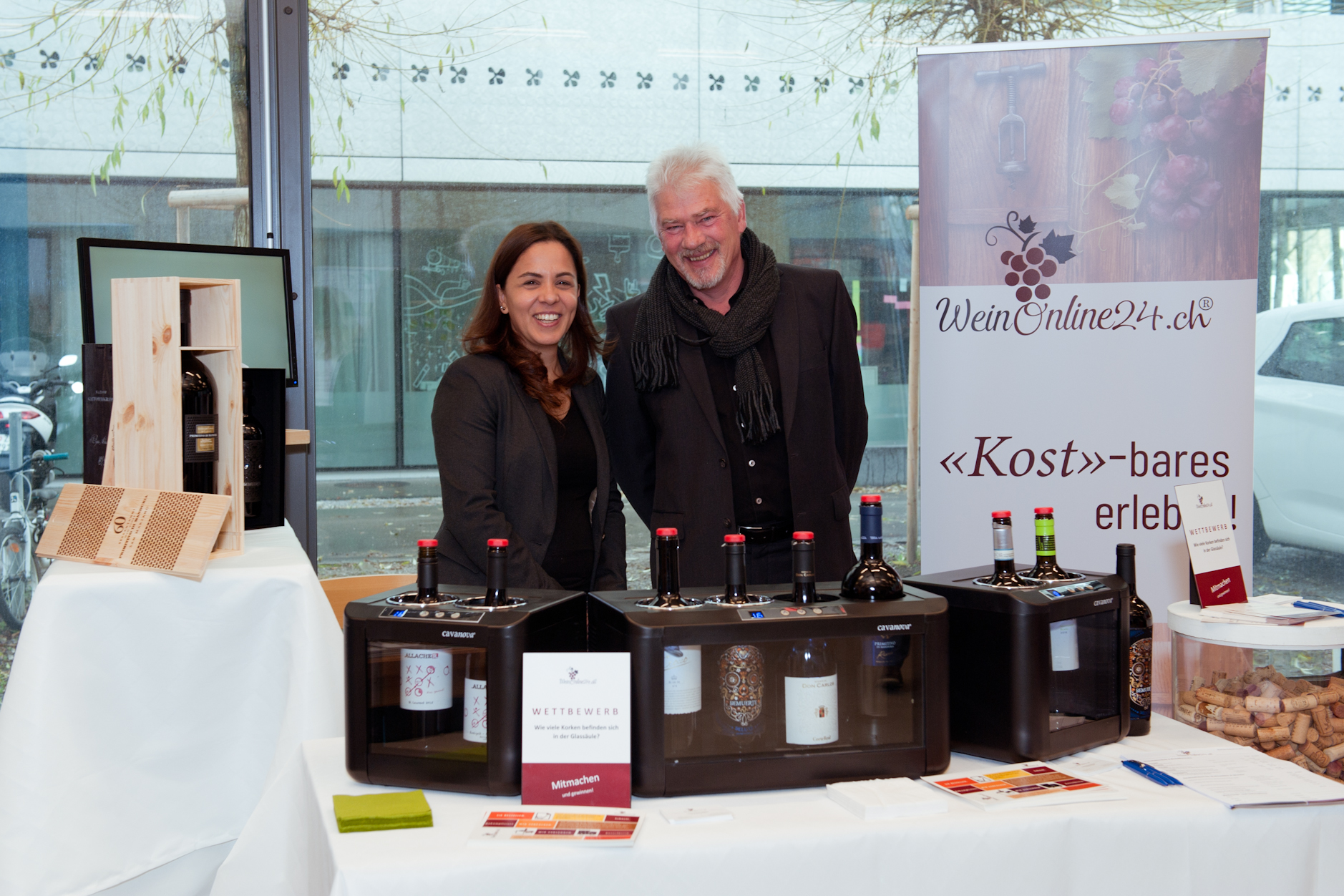
Some sell fashion accessories in individual design, others advise customers on self-management, style or health, and still others earn money with an online store for selected wines. These are just a few examples of how diverse the business fields of small businesses are. Seen in this light, the 40 or so exhibitors at the Business Expo, which took place on December 7 in Zurich, showed an almost representative picture of the small business "scene." Whereby: To speak of a "scene" is almost a bit of a stretch. The fact is that micro and small entrepreneurs make up the largest share of SMEs (98 percent), yet they have hardly any lobby.
Sandra Liliana Schmid also knows this from her own experience. The entrepreneur has already founded several companies and has now been advising mainly the Cs of SMEs as an organizational developer and management consultant since 2013. So she knows the challenges that micro-enterprises face in everyday business life - and also the frustration that can sometimes arise from a lack of recognition. That's why Sandra Liliana Schmid founded the Business Expo, in order to better connect entrepreneurs and position them more strongly in the market. Within six months, she organized the event, searched for and found sponsors, and also created an Entrepreneur Award.
"The event and the award should bring together female entrepreneurs, male entrepreneurs and a broad audience", Sandra Liliana Schmid explains her objective. The event concept was implemented accordingly: on the one hand, visitors to the Business Expo were able to see for themselves what a wide range of small businesses had to offer. On the other hand, concrete and practical information presented by experts was available in workshops: How do I do marketing via Whatsapp? How do I create a corporate film using a smartphone? How do I organize my finances in a low-interest environment? And in two speed networking sessions there was the opportunity to get in touch with like-minded people.
Being a small business owner is a full-time job. However, the achievements of micro-enterprises are hardly ever recognized. That's why Sandra Liliana Schmid launched the Entrepreneur Award. "The award is intended to give these entrepreneurs fame, honor and recognition for their great achievements and tireless work," says Schmid. And it should be an award by companies for companies: All entrepreneurs who run a company with up to 49 employees could be nominated. All nominees had until November 15 to collect votes from the community. A total of 7,473 people took part in the online voting, resulting in the first top 10 list. The independent, four-member jury also analyzed the nominated companies and in turn created a top 10 list. These lists were merged, resulting in the final Top 10 list. On December 7, visitors, together with the jury, were able to choose the Entrepreneur of the Year from the 10 finalists.
The first winner was Michèle Buschor-Frei with her company Caramba Beneficial GmbH. Her business idea: She sells high-quality knitwear made by women in the highlands of Peru under the CARAMBA label. The proceeds from the sales in Switzerland allow these "Mamitas" a way out of poverty and a secure income. Michèle Buschor-Frei's company, which has been on the market for ten years, can thus be cited as a successful example of social entrepreneurship. Michèle Buschor is correspondingly pleased about the win: "For me it is great to have won the prize. It is by no means a matter of course that our brand is so professional today. The prize also belongs to all the people who have supported me and continue to do so."
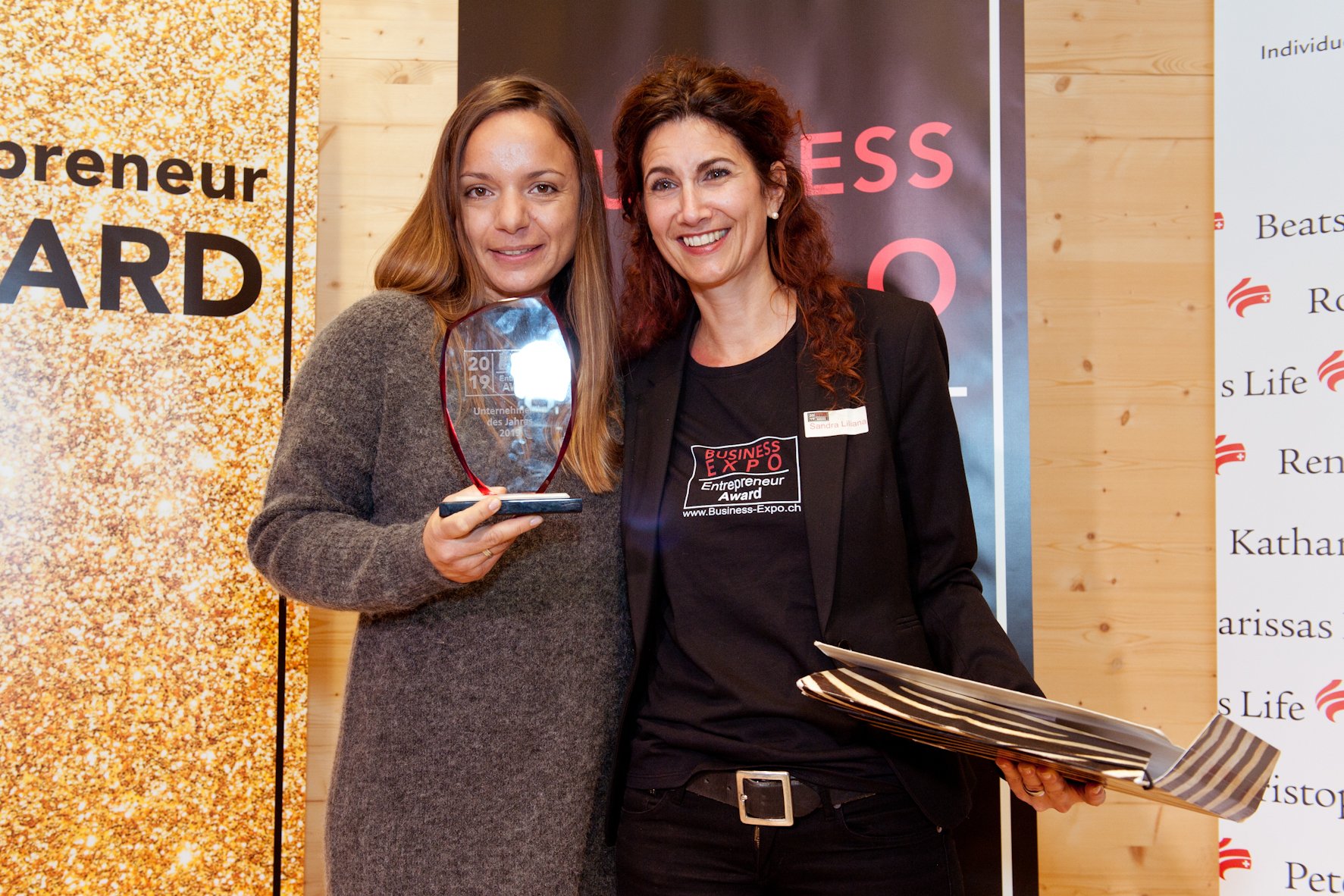
Michèle Buschor-Frei (left) sells high-quality knitwear with her Caramba Beneficial GmbH, which enables women in Peru to earn a fair living. Sandra Liliana Schmid, founder & organizer of the Business-Expo, is pleased with her.
Sandra Liliana Schmid draws a positive balance overall. "I've already received initial commitments from exhibitors who want to participate again next year," she says. She is now looking for additional partners who want to support her Business Expo idea. The event is expected to take place again in the first week of December 2020.
This text was written by Thomas Berner, Editor-in-Chief of the SME trade media Organizer and Management & Quality.
This principle applied then as it does today. In each issue, ORGANISATOR presents key topics for managing directors and managers of SMEs. Surprisingly, the topics have hardly changed in the last 100 years: It's all about organization, leadership, marketing, employment law and much more. What has changed, however, are the technologies used: Whereas in 1919 a well-managed card index formed the nerve center of a company, today this is handled by digitally based CRM and ERP systems. The ORGANIZER has always succeeded in anticipating developments and trends or even setting them itself.
The editorial team is using the anniversary year 2019 as an opportunity to look back into the past. Articles from the archive will be published in every issue. These are sure to elicit a smile or two from readers about the "good old days". In three issues, individual aspects will be explored in greater depth. The April issue, for example, will deal with the topic of "Corporate management in transition". The June issue will be dedicated to the topic "From business letters to social media marketing" and the October issue will feature a special section on "Employee management yesterday - today - tomorrow". For each of these focal points, a link to the present will be established, with comparative moments to be noted.
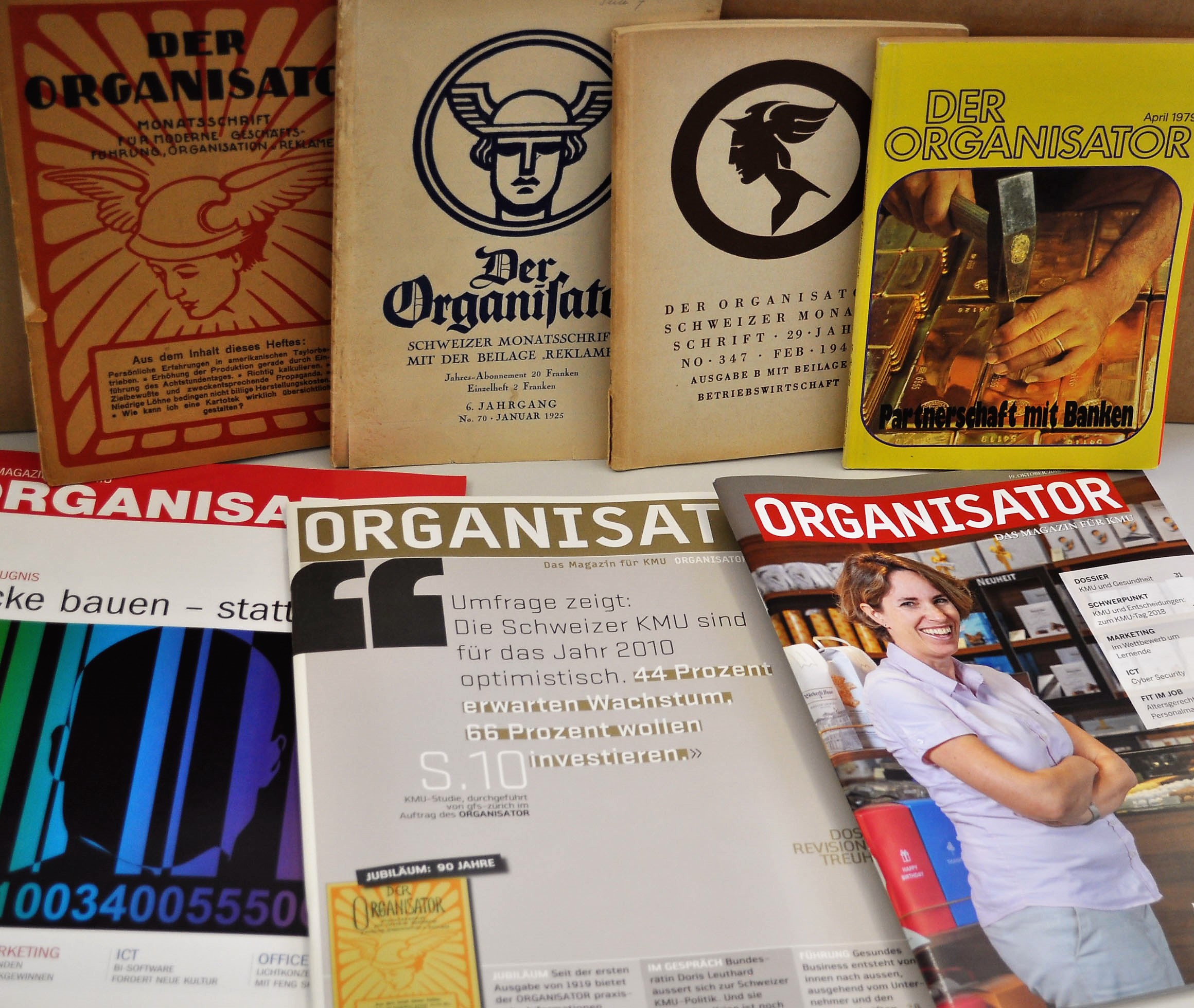
"Then - in 1919 - as now, companies faced major challenges. What was the final breakthrough of industrial mass production and the beginning of mass consumption immediately after the First World War is now the digital transformation," says ORGANISATOR Editor-in-Chief Thomas Berner. "The constant adaptation to changing conditions accompanies companies every day. This has hardly changed in the 100 years of ORGANISATOR's existence." And publishing manager Rolf Gubelmann adds: "Then as now, managers in SMEs need specialist information tailored to their needs. The founders of ORGANISATOR made this their mission. We want to continue to meet this demand - adapted to today's reading habits."
KMU-Magazin sees itself as a premium trade journal with a focus on knowledge transfer for decision-makers in SMEs. The revised layout and editorial content represent a modernization without losing continuity, according to a press release. New fonts, information boxes as well as new formats and elements are intended to ensure better reader orientation. The SME magazine is primarily aimed at imparting knowledge, but there will be more direct references to readers. A monthly interview, top managers on the cover and commentaries by external authors on economic and economic policy topics are intended to make the magazine more emotional.
"We have the know-how, the ability and the ambition to master the flood of information, to select in a target group-oriented manner and to not only reflect practical knowledge based on precise knowledge of the needs of decision-makers in SMEs, but also to make it available for implementation by the reader," says Editor-in-Chief Michael Drosten. At its core, KMU-Magazin remains the tried-and-tested premium medium for a premium readership.
The term "knowledge platform" is deliberately used in the claim, as the aim is cross-media communication. As a first step, the online presence will also be adapted. In the coming months, new functionalities will be added to the website to offer readers added value.
