
How close is the retail world to scenarios in which AI avatars recognize wishes in advance and drones deliver products in minutes? At Sybit's virtual expert talk "Brave new shopping world", representatives from IT, sales and marketing discussed what is already possible today and where the challenges lie. Among the participants were Klaus Höllerer and Markus Seydaack (EMUGE-FRANKEN) as well as Valeska Nagel and Saskia Cempel (Sybit).
Reality and hurdles
Digital end-to-end processes, AI-supported sales support and voice systems are already in use in some cases. However, key hurdles such as fragmented data, a lack of interfaces and organizational silos are hampering progress. "Technologies such as AI or automation can help companies to work more efficiently and in a more customer-oriented way. However, it is crucial to start with the right questions and align the strategy with the needs of customers," summarized Valeska Nagel.
Focus on people
Even in the digital future, personal contact remains essential, especially in the B2B sector. Technology can support, but not replace, as Markus Seydaack emphasized: "The personal relationship remains irreplaceable in sales, especially with complex or high-priced products."
Conclusion and outlook
The "brave new shopping world" requires clear strategies: customer needs as a guideline, a step-by-step approach and long-term digitalization concepts. The next Expert-Talk from Sybit on February 13, 2025 is dedicated to the "Business models of tomorrow".
Sybit designs end-to-end customer journeys with innovative SAP solutions for sales, eCommerce, service and marketing. As an SAP Platinum Partner and part of NTT DATA Business Solutions, Sybit supports over 350 employees and customers from the industrial, consumer goods and automotive sectors.
]]> For almost 100 years, Ricola has been producing its herbal candies in Laufen and supplying them to over 45 countries. Now the company is taking another step in its history. On May 26, 2023, the first experience store in Switzerland dedicated to the sweets will open in Laufen.

The concept is dedicated to Ricola herbal specialties. On the first floor, guests can expect a shopping experience with special offers and a Pick&Mix station where they can put together their own favorite candies in different flavors. Candy varieties from other countries that are not otherwise available in Switzerland are also offered here. On the way to the upper floor, the company history is shown. Once on the upper floor, an interactive process explains how the herbs get into the candy. Guests also create their own Ricola variety and learn all about herb cultivation. Candy chef performances take place at regular intervals right on site, where you can look over the shoulders of the candy professionals.

This makes Laufen a herb hotspot: In addition to the new experience store, there is also the herb center designed by Herzog & De Meuron and the Ricola Herb Garden Nenzlingen.
]]>
The Orell Füssli industrial and commercial group achieved a clear increase in book retailing sales in 2022. Orell Füssli Thalia Ltd, in which the Group holds a 50 per cent stake, generated CHF 224 million. This is 9 percent more than in the previous year.
For the Orell Füssli Group, this means a sales contribution of CHF 112 million to the total of CHF 217 million generated in 2022, the company announced. By contrast, the Group recorded declining sales in the security printing segment - where it prints Swiss banknotes - and in the industrial segment.
Consumers return to bookstores
It is therefore thanks to book retailing that Orell Füssli was able to generate more sales in 2022. According to the data, sales in the stationary trade in 2022 almost returned to the level seen before the pandemic. The Group had not assumed that people would visit bookstores so much again after two pandemic years. It was feared that many had become accustomed to shopping over the Internet during the pandemic and would continue to do so after Corona.
Online boom after Corona continues unabated
At the same time, sales via online channels have hardly slowed down after two booming Corona years. The online business is therefore to be further developed. In response to trends towards digital reading and hybrid reading habits, Orell Füssli has been cooperating with the e-book supplier Skoobe since 2022. Orell Füssli customers can thus access more than 400,000 e-books and several 10,000 audiobooks at a fixed monthly price, it says.
More bookstores
But stationary retailing is also to be expanded further. Last year Orell Füssli expanded its branch network by three stores in Lucerne, Wil and Kriens. In the current year, the fiftieth store was added in Solothurn. In the next three to five years, the Group intends to expand its branch network to 60 stores. Not least, this is also about customer loyalty. Overall, the Group is thus pursuing an omni-channel strategy, i.e. dovetailing online retailing and bookstores.
Orell Füssli also intends to make gains in the field of education. In the current year, for example, thanks to an agreement concluded with the ETH in 2022, its sales branches will be managed by Orell Füssli at the two Zurich locations. An important contribution to sales in 2022 was also made by the acquired teaching materials publisher Hep. (sda)
]]>
Coop was able to grow in the past year and, according to the newly published figures, achieved sales of CHF 34.2 billion. This corresponds to an increase of 7.3 percent. Cost increases of around CHF 250 million had been borne by the company itself at the expense of profits and not passed on to customers. This is one reason why profit, at CHF 562 million, was only slightly up on the previous year.
Total net sales in the retail business rose by CHF 304 million to CHF 19.9 billion. Net sales of Coop supermarkets including Coop.ch amounted to CHF 11.6 billion. This equates to an increase of 8.8 percent compared to the same year in 2019 before the pandemic, but remains below the corona-related record previous years.
The specialist formats generated net sales of CHF 8.4 billion. Compared to the previous year, they achieved an increase of 11.2 percent. Coop City, Jumbo, Import Parfumerie, Christ Watches & Jewelry, Coop Vitality and Coop Gastronomy all posted sales growth.
Net sales of the Wholesale / Production business unit increased by 14.9 percent and amounted to CHF 15.7 billion. This represents growth of CHF 2.0 billion. Transgourmet generated net sales of CHF 11.1 billion, an increase of
21.4 percent. All of Transgourmet's national companies outperformed the previous year.
Coop's online business achieved sales of around CHF 5 billion and increased by CHF 1.2 billion. In this context, the online supermarket Coop.ch with over 18,000 products grew by 8.5 percent. Customer orders increased by 12.5 percent. In the wholesale sector, online sales grew by 55.2 percent.
Sustainability sales could be increased by a total of around CHF 382 million to CHF 6.2 billion in 2022. The growth amounts to 6.5 percent.
]]> On behalf of Admeira, the market research institute GfK Switzerland conducted a representative online survey of over 1,500 people in German- and French-speaking Switzerland in September 2022. The aim of this study was to record TV usage and household spending in 13 different baskets of goods at person level, in order to ultimately map the economic relevance of target groups. The economic potential of viewers of the various TV stations was also surveyed.
Two standards combined
The study thus combines two standards: household spending from the Federal Statistical Office's basket of goods (household budget survey) and TV data from Mediapulse. This link enables strategic TV planning to be optimized. For the first time in Switzerland, it is possible to determine which TV target groups determine which spending budgets and how they are reached via advertising. In this way, it is already possible in the planning phase of a campaign to ensure that the advertising reaches the desired target group, which is willing and able to spend the desired amount on the advertiser's products and brands.
In the 13 shopping baskets analyzed, which include food, non-alcoholic beverages, package tours, health insurance, clothing and new cars, the Swiss population in the 15-74 age group spends CHF 1,258 million per week. The study shows how high the potential shopping cart shares of the various media target groups are in the respective shopping carts.
]]> The 2022 financial year of Migros Group was characterized by a normalization of economic development. Following the lifting of the Covid restrictions, the special effects of previous years declined - and with them the pandemic-related high sales of food and household goods. This was felt above all by the stationary retail trade. Online business, which had been characterized by high growth rates in previous years, continued to perform very well. In addition, relaxed restrictions and a high level of pent-up demand among customers ensured a resurgence in the travel and leisure business, as well as in the food service sector. Migros Group again increased sales and exceeded the CHF 30 billion mark for the first time in the company's history.
Group sales increased by 3.9 percent to CHF 30.069 billion. Retail sales in Switzerland remained stable year-on-year at CHF 23.115 billion (-0.2 percent). Total online sales grew by 15.3 percent to CHF 3.737 billion, with the Migros Online supermarket falling slightly short of the previous year's strong growth (-0.7 percent) and closing with sales of CHF 328 million. Digitec Galaxus, Switzerland's largest online department store, recorded growth of 7.4 percent.
Cooperative retail trade
Net sales of the ten regional Migros cooperatives, including subsidiaries, amounted to CHF 15.901 billion, of which CHF 1.384 billion was attributable to foreign business. As expected, cooperative sales fell short of the previous year's result (-2.0 percent . The reason for the decline was a normalization of demand following the lifting of the Covid measures. The supermarkets and hypermarkets, including Migros Online, generated domestic sales of CHF 12.276 billion, which was below the previous year's result (-3.1 percent). Compared to the previous year, customer frequency in the supermarkets and hypermarkets increased (+5.5 percent), but the basket of goods per purchase decreased. The specialist stores Micasa, SportXX, Bike World, Do it + Garden, Melectronics and OBI felt the subdued consumer demand in 2022. After the momentum of the Covid years, sales declined by 6.7 percent to CHF 1.612 billion. Gastronomy, which had suffered from pandemic-related closures and restrictions in previous years, increased its sales by +46.5 percent to CHF 577 million.
Department of Commerce
The Retail division increased its sales by 4.9 percent to CHF 8.582 billion. Following growth in the previous two years, several retail companies were able to improve sales again in 2022. For example, sales at online retailer Digitec Galaxus rose by 7.4 percent to CHF 2.206 billion, driven by continued encouraging growth in Switzerland and high growth rates in Germany (+78.6 percent). The discounter Denner was able to expand its market share in a declining overall market, but remained below the previous year's level with sales of CHF 3.686 billion (-3.2 percent). Convenience provider Migrolino continued on its growth path and achieved sales of CHF 784 million (+5.1 percent). Migrol increased sales by 23.7 percent to CHF 1.794 billion due to the sharp rise in oil prices.
Migros industry
With its industrial operations, Migros is one of the world's largest producers of private labels, while also supplying numerous third-party customers in Switzerland and abroad. In 2022, it recorded a slight overall increase to CHF 5.786 billion (+0.7 percent). The main driver of growth was the strong development abroad.
Health
The healthcare business area - Medbase Group, Fitness (Movemi), Bestsmile and Misenso - increased its sales by 18.9 percent to CHF 746 million. Within this business area, Medbase Group continued the growth trend of the previous year to CHF 523 million (+6.7 percent). In addition to organic growth in all business areas, acquisitions also contributed to this development. The newly established fitness company Movemi, with its Migros fitness formats, achieved growth of 23.2 percent.
Hotelplan Group
Driven by relaxed travel restrictions and a very strong pent-up demand, the propensity to travel increased significantly again from spring onwards. The two brands Hotelplan and Migros Ferien recorded more bookings overall in July and August than in the same period of 2019, while the vacation apartment broker Interhome closed 2022 with the best sales in its 57-year existence. Overall, the Hotelplan Group generated net sales of CHF 1.435 billion (+122.5 percent). The travel group will announce its detailed sales figures on January 26, 2023.
]]> To find out how customer service has changed, what customers want today, and what untapped potential lies in properly linking digital with physical channels, Deloitte studied more than 190 companies in 21 countries (from the banking, insurance, and telecommunications industries). The study focused on the synchronization of physical (branches, call centers) and digital channels as well as the opportunities that digitization of physical devices brings.
It became apparent: The younger generations are increasingly active and have different needs when it comes to staying in touch with companies. They appreciate customer service across multiple channels and digitization in personal contact, because they are not mutually exclusive - but function in parallel.
For example, 85 percent of Millennials and Generation Z, born after 1980, prefer to stay in touch with a company through multiple channels. However, one in two of them finds it important to be able to see a customer service representative in person when needed. One possibility, for example, is for employees to share a digital screen with customers. This is because they are also 1.5 times more likely to pre-sell cross-sell offers, collect contact details and follow up later.
Advertisingweek.ch spoke with Roger Lay, Deloitte Partner for Digital Marketing, about the key findings of the study:
Werbewoche.ch: Mr. Lay, you studied customer service in various industries in 21 countries. What surprised you most about the results of the study?
Roger Lay: The study shows how all three industries (banking, insurance & telcos) are relatively similar in certain aspects of an omni-channel proposition: Although the digitalization maturity for web and mobile is definitely different in these industries (and in many places already very mature), there is still a bigger gap when it comes to consulting with customers across all channels in a consistent and contextually relevant way. Data collected in one place just doesn't seem to be considered in the other.
How does Switzerland compare internationally - where are the biggest to-dos still?
Overall, Switzerland is quite comparable with the other European countries and often ranks in the middle. At the industry level, however, there are definitely differences: for example, in the insurance industry, quoting and the conclusion of more complex product contracts via purely digital channels is not yet as common as in England. In addition, customer centricity is very much channel-driven and not cross-channel. The biggest to-dos are probably company-dependent. In general, however, it can be said that these are located in the definition of an overarching experience strategy so that customer and marketing data from all channels can be collected, structured, processed, analyzed, and the respective insights then effectively orchestrated to all interaction channels.
What opportunities are there for companies in the evolution of customer needs toward omnichannel?
Companies can thus form a much closer relationship with customers. They can respond much better and faster to customers' needs through the insights gathered in the interaction channels. This helps to avoid drop-outs, conduct business more successfully, and make cross-selling and upselling more automated - just to name a few examples. In other words, productivity increases and transactional NPS is boosted, leading to a higher top line overall. In addition, employer attractiveness also increases and onboarding of new employees becomes more efficient. It should also be remembered that a lot of paper can also be saved in terms of environmental protection and sustainability.
Here you can download the report.
]]>
 Feed-based advertising technology is a solution that decides on a situational basis which content is displayed in the broadcast advertising. The aim is to reach those people who are to be addressed with the right message - regardless of whether they are new or existing customers. In this way, not only the relevance of the message for the users increases, but also its visibility, Ringier Advertising informs. The effort that advertisers have to make for the implementation of the advertising medium is reduced.
Video, banner or DOOH
All data is fed into the system and compiled in Converto's feed master engine. In this part of the software, advertisers have access to all data, templates, and the look and feel of the final ad. Here they also determine which KPIs the campaign should be optimized for. The campaign is then displayed to the end consumer as a video, banner or DOOH ad.
The dynamic playout of the message is particularly exciting for e-commerce customers, but it brings advantages for advertisers from all industries.
]]>

Fabrice Zumbrunnen will step down as President of the General Management of the Federation of Migros Cooperatives (MGB) at the end of April 2023. This was announced by the company. According to the statement, after ten years in the General Management and five years as its president, Zumbrunnen would like to pursue new career paths. Under his leadership, the company has strategically focused, successfully expanded its leadership position in online retailing and built up new areas such as health, the statement said.
Sustainability in focus
In an environment with increasing competition, Fabrice Zumbrunnen had initiated important developments and successfully implemented them at an operational level. Under his leadership, MGB has, in particular, streamlined its corporate portfolio, expanded Migros Group's leading position in Swiss online retailing, and driven forward the development and expansion of the health sector. Innovations such as plant-based products of the own brand V-Love or CoffeeB have also been implemented during his tenure. He has also led Migros Bank, Medbase and Hotelplan as Chairman of the Board of Directors. Sustainability for future generations has also always been an important concern for Zumbrunnen, such as the implementation of ambitious climate targets to achieve net zero by 2050 in accordance with the Paris Climate Agreement or initiatives to reduce and make plastic 100 percent recyclable.
A successor is now being sought.
]]>
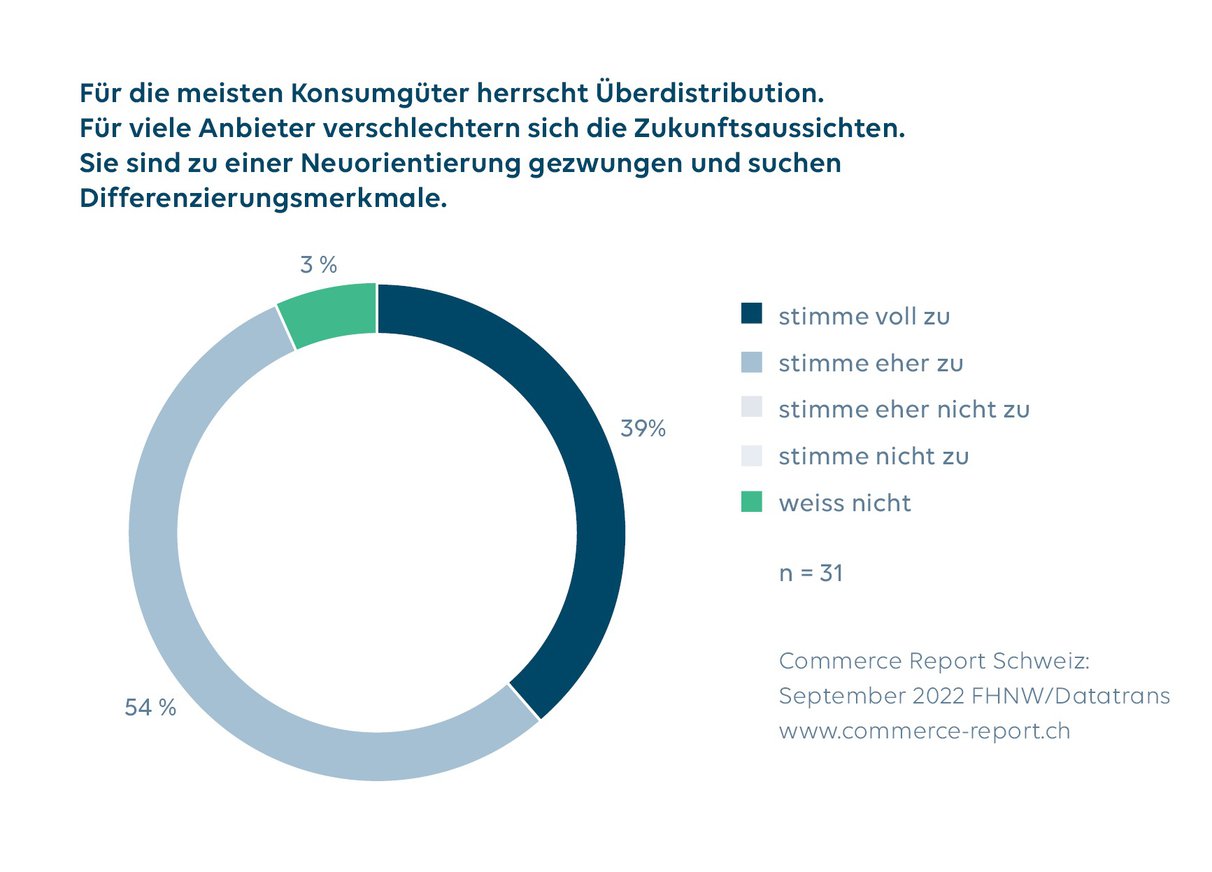
Now providers are desperately seeking differentiation. The increased value orientation of customers and a great openness to services provide starting points. Overall, online retail expects sales to increase by 50 percent by 2030.
"25 brick-and-mortar stores with the same product range spread across the whole of Switzerland make sense. But 25 identical online stores do not. If the same product is for sale in too many places, it's all about price," says study leader Prof. Ralf Wölfle, summarizing his survey results. "When it comes to price, however, only the biggest providers can keep up. That's why retailers now want to create attractive added value for their customers that goes beyond the interchangeable product."
Increasing diversity of offerings also due to social media
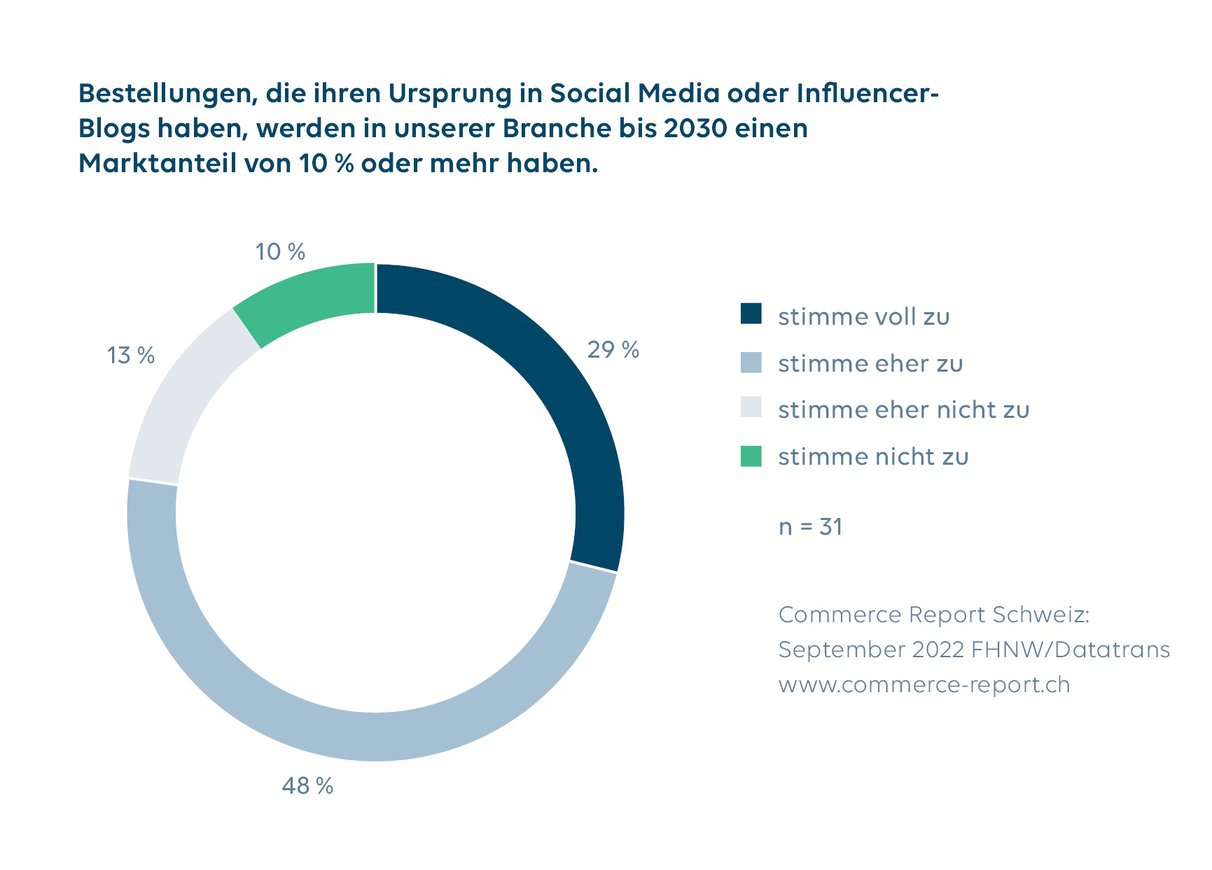
As retailers differentiate themselves through value and services, the variety of offerings is also set to increase further. Direct sales from brands to end customers and increasing sales via social media channels are playing into this development. Compared to conventional online marketplaces, social media is becoming increasingly important because it is easier to convey value-oriented offers.
Great service readiness in Quick Commerce
Online delivery services score points with a high level of service readiness. They benefit from the fact that almost half of all supermarket purchases are unplanned. If something is forgotten spontaneously, customers don't want to rush to the store again, but simply have the products delivered. With the fastest Zurich provider, this can be done in less than 15 minutes. The tests by various supermarket chains to deliver directly from the store are another example of emerging segments in food e-commerce.
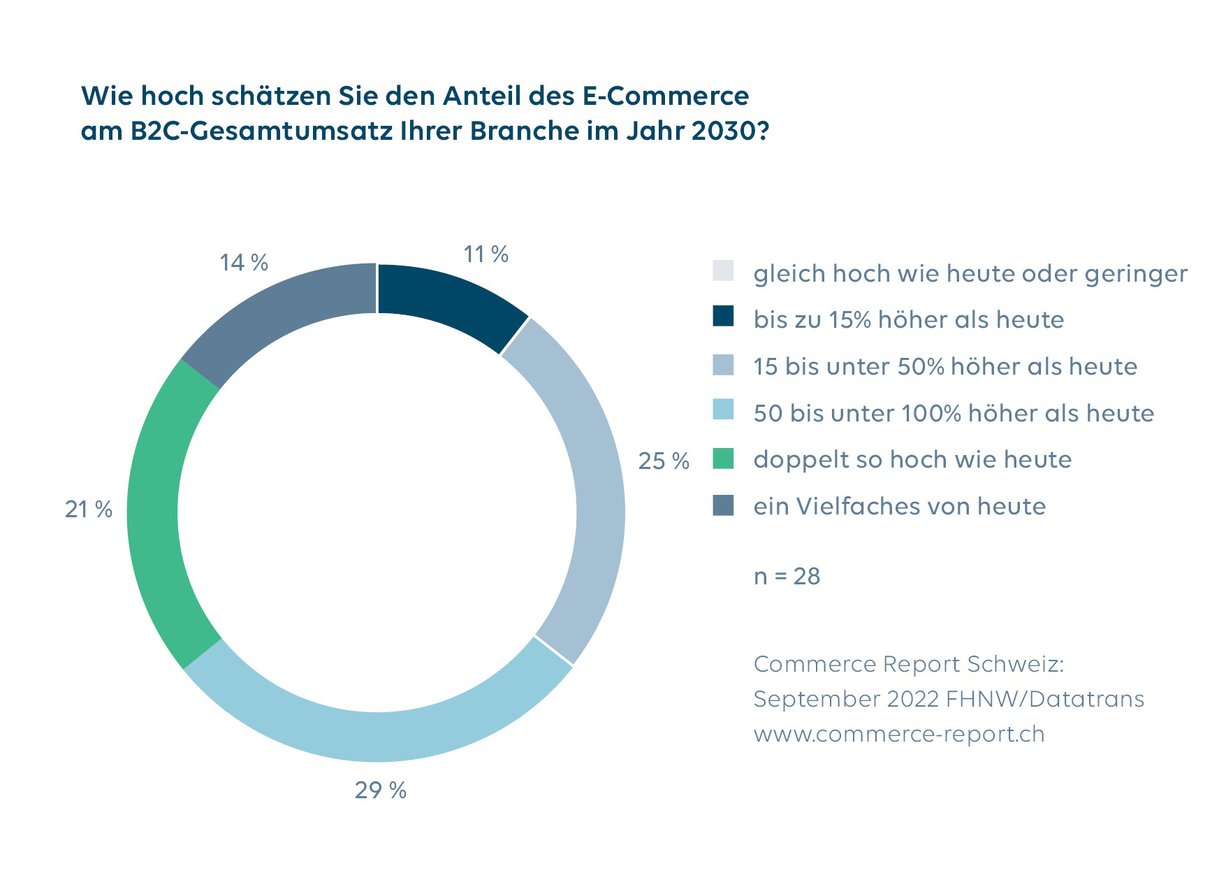
E-commerce sales to grow by 50 percent
Despite the rediscovery of stationary retail after Corona, online growth remains unbroken according to study participants: Two-thirds expect e-commerce sales in their industry to have increased by 50 percent or more by 2030. According to the participants, the trends that will have the greatest impact on the industry in the coming years are sustainability and upheavals in logistics.
Retailers and brands in a relationship crisis
What is currently preoccupying brands and retailers is a creeping conflict: Since stores have been closed due to the lockdowns, established brands have been pushing their direct sales to end consumers. Retailers feel increasingly competitive from their suppliers. Brands, in turn, complain that they do not represent retailers well enough and that they do not get enough data on customer behavior. The positions are deadlocked - even if retailers and brands will continue to need each other in the future.
More information at commerce-report.ch
]]>
Retail is in a state of flux. Customers increasingly expect shopping to be an experience and for individual advice to be provided on all aspects of a product. At the same time, brand awareness and the desire for identity-forming goods that underline one's own personality are on the rise. Consumer goods and services are increasingly becoming an expression of the consumer's social attitude. The question of what suits me as a buyer is being asked more and more frequently.
A trend that goes far beyond the mere satisfaction of needs. The answer to this question could increasingly be provided by retailers, who could stage individual brands and products directly at the point of sale. This could also become an attractive business model, especially for stationary retail.
"We will see that in the future, retail will no longer be measured only by the turnover of goods sold, but also by how it supports the marketing and brand communication of products and manufacturers," Matthias Hofmann is certain. Hofmann is DACH manager of digital signage market leader Scala and a proven retail expert.
In the medium term, this could lead to completely different business models. Instead of just putting goods on shelves and hoping that the customer will grab them, holistic worlds of experience could be created that bind shoppers to a particular brand and make it seem fascinating. Retailers could thus not only profit from trade margins and advertising cost subsidies, but also get a slice of the marketing and advertising budgets, much like the web currently does. "Where else but directly at the point of sale could a brand or product be made more tangible?" asks Hofmann. Ideally, strong retail brands ally with strong product brands in communication, thus ensuring maximum image transfers and advances in trust.
To make this possible, further digitization of retail and a new awareness of a modern customer experience are necessary. Technologies such as virtual and augmented reality, individual and customer-related information displays via monitors or the shopper's smartphone, as well as artificial intelligence, nearfield communication and social media applications would have to become more prevalent in retail. "Brand staging in retail means addressing customers with all their senses and individually and satisfying their information interests before they have thought or voiced them themselves. Modern brand communication is proactive," says the Scala manager.
Scala improves the customer experience through intelligent Internet-based digital signage solutions for displays in stationary retail, on mobile devices and websites. The subsidiary of US digital signage provider Stratacache delivers the software platform to create an optimal shopping experience that can be flexibly tailored to individual customer needs and preferences. Scala has 30 years of industry experience in developing and selling innovative, revenue-generating, best-of-breed technologies such as mobile and predictive analytics that are easy to use yet offer many options for individual benefit optimization. Scala has a presence in more than 90 countries and operates more than half a million digital advertising spaces worldwide. The company is headquartered in Philadelphia, USA, with EMEA headquarters in Sittard, Netherlands.