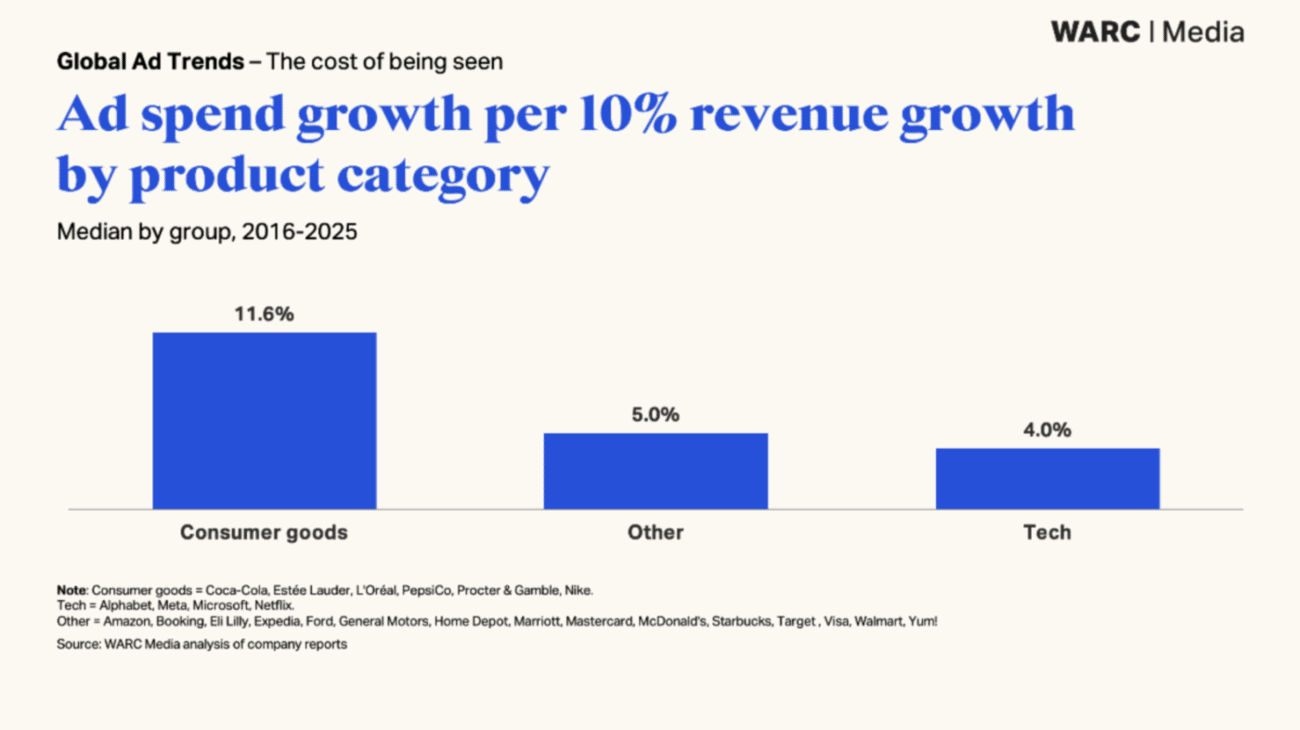
Ad spending by global brands is growing more slowly than their revenue. This is according to the report «Global Ad Trends: The Cost of Being Seen» by WARC Media. The study examines how advertising intensity has changed among 25 of the largest advertisers and to what extent major brand owners are driving the growth of the global advertising market. Consumer goods manufacturers are an exception to this trend.
Advertising Expenditures by Global Brands: Share of Revenue Declines
WARC Media forecasts that global advertising spending will grow by 11.9 percent this year to 1.34 trillion U.S. dollars. Adjusted for inflation, this represents a 61.3 percent increase over 25 years, driven by new channels such as retail media and platform advertising. However, advertising intensity has declined in recent years.
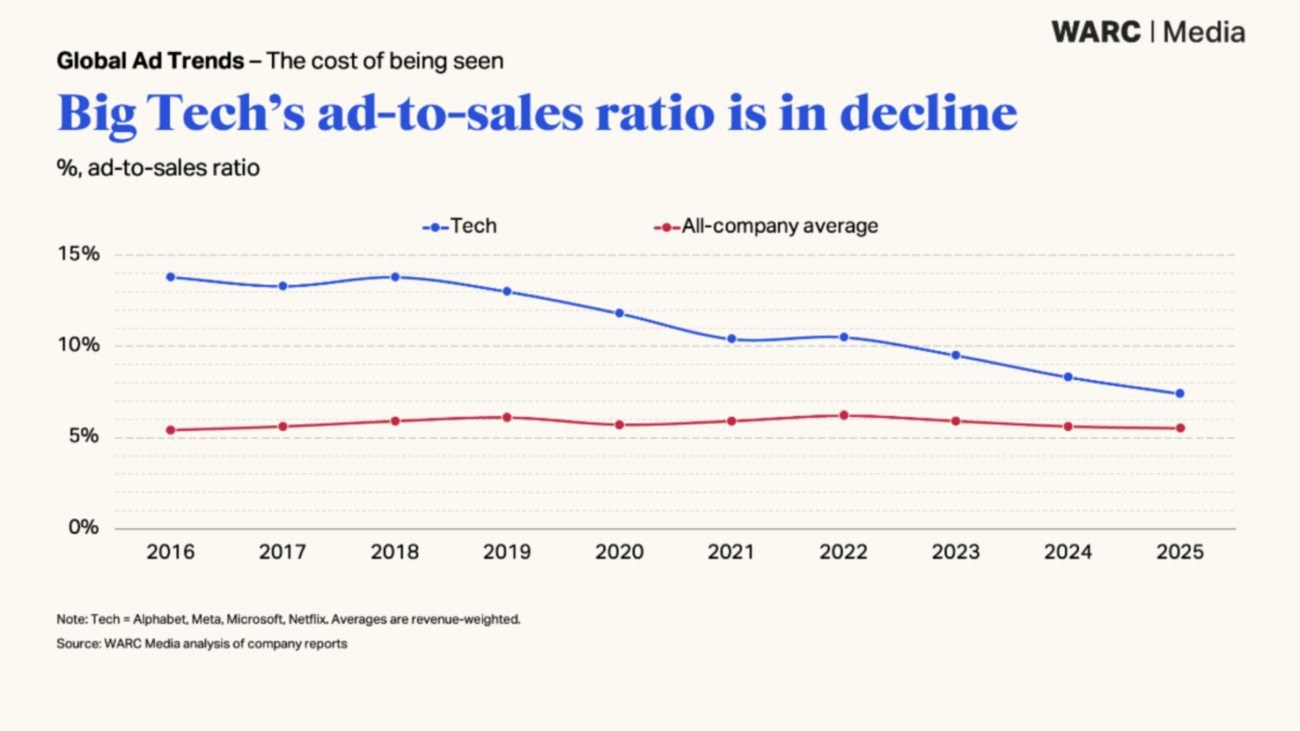
Among 25 major U.S. advertisers, the combined ratio of advertising spending to revenue fell from 6.1 percent in 2019 to 5.5 percent in 2025. This does not mean a retreat from advertising: Advertising spending rose by a combined 56 percent, while revenue rose by 73 percent.
Big Tech is driving down the rating
For Alphabet, Meta, Microsoft, and Netflix, the combined ratio fell from 13.0 to 7.4 percent between 2019 and 2025. Their combined revenue grew by 146 percent, from $379 billion to $931 billion. If the companies had maintained their 2019 spending rate, they would have invested $121 billion in 2025, according to WARC—$52 billion more than they actually did.
The consumer goods industry is taking the opposite approach
The six consumer goods brands analyzed—Coca-Cola, Estée Lauder, L’Oréal, Nike, PepsiCo, and Procter & Gamble—showed divergent trends. Five of them increased their ratio between 2019 and 2025, while PepsiCo’s remained largely stable. Due to weaker revenue growth, the combined ratio rose from 11.6 percent in 2023 to 12.5 percent in 2025. Their advertising spending grew by 36 percent from 2019 to 2025, while revenue grew by 29 percent.
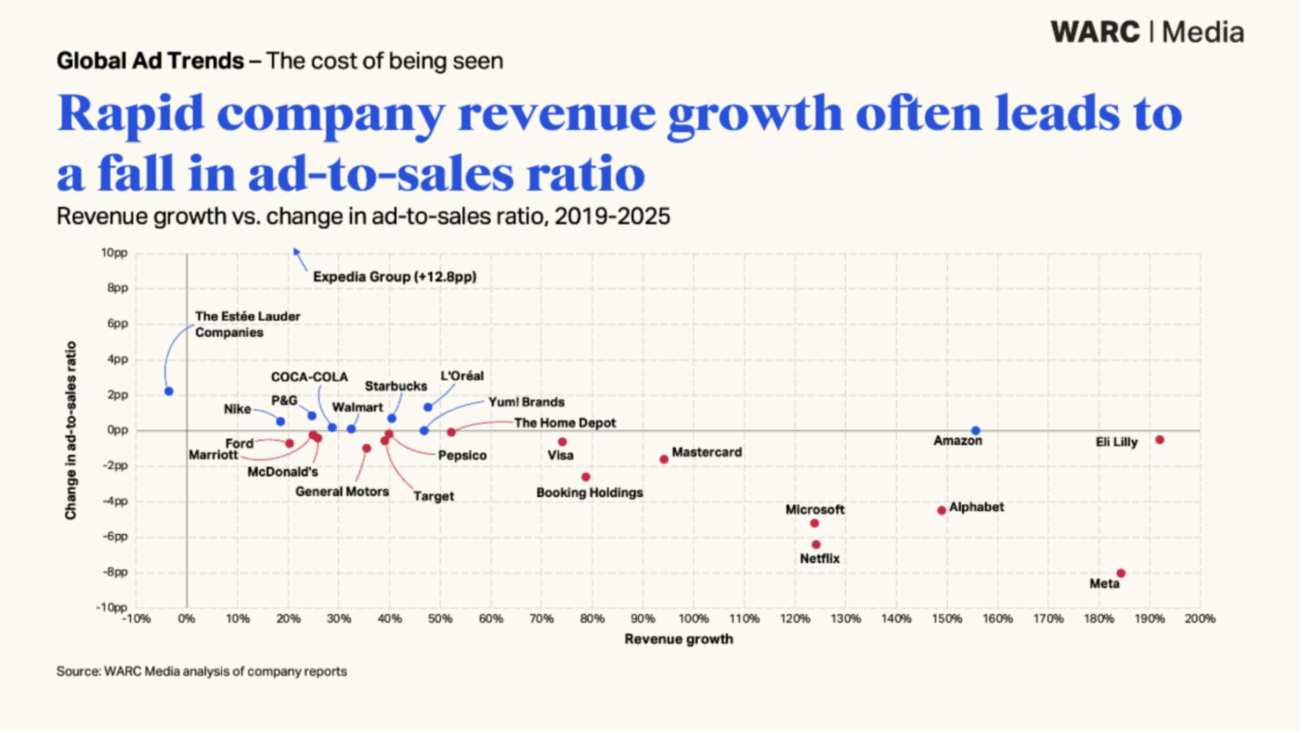
The picture is mixed for the remaining 15 advertisers. The revenue-weighted average remained the same or rose slightly, but ten companies saw their share decline. Ford fell from 2.3 to 1.6 percent, General Motors from 2.7 to 1.7 percent, Visa from 4.8 to 4.2 percent, Mastercard from 5.6 to 4.0 percent, McDonald’s from 1.7 to 1.3 percent, and Target from 2.0 to 1.4 percent. Marriott, Booking Holdings, Eli Lilly, and The Home Depot also saw declines. Amazon and Yum! Brands remained largely unchanged, while Walmart, Starbucks, and Expedia saw their shares rise.
Three Factors Behind the Divide
WARC identifies three factors that influence advertising intensity. First, weak sales: Companies that maintain their advertising spending during difficult market conditions may see an increase in advertising intensity. Second, budget shifts: Funds that used to be allocated to sales teams for trade and shopper marketing are now flowing into retail media and, consequently, into advertising placements. Third, ownership of attention: Companies like Alphabet and Meta own an audience and can grow without having to pay for attention.
Alex Brownsell, Head of Content at WARC Media, says: «The global advertising market is growing rapidly, yet companies ranging from Meta to Mastercard and McDonald’s are spending a shrinking share of their revenue on advertising.» Only consumer goods companies, which were suffering from slowing revenue growth and saw their trade budgets shift to measured media, increased their advertising intensity. The expansion of platform spending by smaller companies and cross-border e-commerce providers is far outpacing the growth in advertising investment by major brands. This has major implications for the ecosystem of agencies and service providers in the enterprise market.
Methodology
WARC analyzed annual SEC filings from 25 large publicly traded U.S. companies. The ratio is calculated by dividing annual advertising spending by revenue and multiplying by 100. Since some companies report only combined sales and marketing expenditures, WARC supplemented the data with industry figures from Schonfeld & Associates and its own ROI benchmarks. WARC Media subscribers can read the full report. A podcast discussing the findings is scheduled to be available starting November 17.
]]>
Timo Müller has been Head of Organic Growth at Attackera since September 21, 2026. He is responsible for building this new division, which combines traditional search engine optimization (SEO) with optimization for AI search systems (Generative Engine Optimization, GEO).
Timo Müller at Attackera: Ten Years of Digital Marketing
Müller brings about ten years of experience in digital marketing, both as an entrepreneur and on the agency side. Most recently, he served as Head of Digital Operations at Mediaschneider. There, he consolidated the Search, Social Media, and Programmatic Advertising teams under the Digital Operations umbrella and led the new division. Prior to that, from 2020 to 2023, he was a partner at MIK Group, one of Switzerland’s largest specialized SEO agencies, where he also served on the executive board. He began his entrepreneurial career in 2016 as a co-founder of the digital agency GOBOX. His client base ranged from international corporations to local SMEs.
Müller also explores AI in marketing from an academic perspective: In his master’s thesis in Digital Business, he examined where AI-driven personalization reaches its ethical limits. Today, as a peer reviewer, he evaluates scholarly articles on generative AI for the *Marketing Review St. Gallen*.
From Conversation to Collaboration
The collaboration arose from a conversation about a potential SEO partnership. «Timo and I quickly realized that we share the same goals,» says Stephan Frey, CEO of Attackera. «He has helped shape agencies and understands how paid and organic visibility work together. That’s exactly the combination we want to offer our clients.»
No Longer Just Focusing on Rankings
For Müller, it’s clear why SEO alone isn’t enough: «Viewing SEO as a silo no longer makes sense today. Just because a brand ranks well on Google doesn’t mean it will automatically be recommended by ChatGPT, Gemini, or Claude. That’s why we no longer focus solely on rankings, but rather on whether a brand is found and recommended—whether in a Google search or in an AI response.»
With this new division, Attackera is expanding its offerings in digital advertising, data analytics, and strategic consulting. Paid and organic visibility can now be planned and measured together. According to the company, Attackera is a Google Premier Partner and has been part of the Audienzz Group since 2024.
]]>
The Swiss advertising market continues its recovery following the summer break. In August, traditional advertising spend reached 262.0 million Swiss francs, up 1 percent from the previous year. Year-to-date (YTD), total advertising spending amounts to 2,395.9 million Swiss francs, representing a 1.1 percent increase compared to the previous year. This is according to the latest figures from Media Focus.
A Mixed Picture Among Traditional Media Groups
Among traditional media groups, the picture in August was mixed. Print saw a decline of 12.5 percent, while TV was down 8.5 percent from the previous year. In contrast, radio (up 6.4 percent) and movie theaters (up 5.8 percent) posted gains. Out-of-home advertising showed particularly strong growth, up 22.0 percent. According to Media Focus, in addition to the neutrality campaign by Pro Schweiz, campaigns by Galaxus, IKEA, and McDonald’s also contributed to significantly higher out-of-home advertising volume compared to August 2025.
Looking at the performance of media groups since the beginning of the year, all media groups are showing a decline, with the exception of out-of-home (up 17.5 percent). Out-of-home is thus a major driver of overall growth in the Swiss advertising market.
Digital Market Experiences a Decline Due to Technical Factors
In the digital market, gross advertising spending in August totaled just 114.5 million Swiss francs, marking the first time this year that it has fallen below the previous year’s figure—down 33.9 percent. According to Media Focus, however, this decline should not be interpreted as an organic market trend but is largely attributable to external technical factors affecting data collection. In early July, Google implemented a security update, which led to greater volatility in data collection. The report adds that the situation improved again as the month progressed. Year-over-year comparisons remain limited, particularly for Search and YouTube.
Search dominates the digital media mix with a 50.1 percent share, followed by display at 36.4 percent and YouTube at 13.5 percent.
Eleven sectors are growing, ten are in decline
In August, the Personal Care sector posted the strongest percentage growth at 32.2 percent, primarily due to the out-of-home campaign by Fielmann Optik Image and the TV campaign for Purina Pro Plan pet food and care products by Nestlé. Nevertheless, the sector ranks in the bottom third of the table. Construction, Industry, and Home Furnishings recorded the second-highest growth at 30.1 percent and ranks in the top third of the list. These are followed by Digital & Household (up 28.7 percent), Initiatives & Campaigns (up 25.2 percent), and Telecommunications (up 22.9 percent).
Despite a negative year-to-date performance, the food industry is at the top of the rankings this month with a 13.1 percent increase. The finance sector (up 18.6 percent) rounds out the top three. Transportation, fashion & sports, and services are also showing year-over-year increases.
In contrast, ten sectors have seen significant declines. The tobacco products sector has been particularly hard hit, with a 63.8 percent drop, followed by vehicles (down 35.1 percent), cosmetics and personal care (down 28.6 percent), energy (down 28.1 percent), and cleaning supplies (down 21.8 percent). Despite a 20.6 percent decline, the retail sector, as in the previous month, remains in second place in the table.
Food Industry Leads YTD Rankings in the Swiss Advertising Market
As of August, the food industry continues to lead the rankings in the traditional advertising market, followed by retail and finance in second and third place. This ranking has remained unchanged since June. The digital advertising market presents a similar picture: the financial sector and retail also hold second and third place, while the food industry ranks only twelfth here. Leisure, food service, and tourism clearly lead the digital ranking year-to-date (YTD); in August, the sector ranked second behind retail. In the traditional market, the sector grew by 17.5 percent, placing it in fourth position.
In both markets, the automotive industry ranks seventh. Pharmaceuticals & Healthcare, Fashion & Sports, and Beverages are in the middle third in both markets, while the Media, Energy, Cleaning, and Tobacco industries are in the bottom third.
Booking.com Remains at the Top in Search
Despite the technical difficulties mentioned in the survey, search continues to dominate the digital media mix with a 50.1 percent share. As in previous months, the advertising landscape is primarily shaped by travel, comparison, and financial services. Booking.com has remained at the top since the beginning of the year, followed by Trivago.ch and Swisscom.ch. Trivago.ch moved up from third to second place compared to the previous month.
Display and YouTube show a broader mix of telecommunications, consumer goods, entertainment, and tourism. The mobile carrier Spusu.ch tops the Display ranking, as it has since February, followed by Pet Recycling Schweiz in second place and Ricola herbal candies in third. On YouTube, the e-commerce company Digitec.ch ranks first, followed by Disney+ and the YouTube Music mobile app. Neither a product nor a service managed to stay in the top ten across multiple channels.
Further information on advertising market trends is provided by Media Focus.
]]>
For 20 years, ad agents has been helping companies take advantage of the opportunities offered by digital marketing. What began in 2006 with the goal of bringing more transparency and quality to the then-nascent field of search engine marketing has now grown into an established performance marketing agency with clients throughout the DACH region and its own subsidiary in Switzerland. To mark ad agents’ 20th anniversary, the independent, owner-managed agency is looking resolutely toward the future.
From the Black Box to a Strategic Growth Partner
When ad agents was founded in 2006, digital marketing was still in its infancy. Google had established itself as the leading search engine, and the Google AdWords advertising platform was gaining increasing prominence. For many companies, however, search engine marketing remained a “black box” that was difficult to understand.
The founders of ad agents therefore set out with a clear mission: transparent fee structures, transparent decision-making, specialized professionals, and collaboration as equals. The startup in Herrenberg has grown into a major player in German-speaking performance marketing. Since 2021, the agency has also been represented in Switzerland through its own subsidiary.
Transparency remains a central component of the collaboration to this day. According to the organization, this is reflected in clear recommendations, open access to data, transparent investment decisions, and a willingness to address even uncomfortable truths.
«Our success is based on the fact that we are not just a service provider for our clients, but an honest sparring partner,» explains Wolfgang Schilling, co-founder and managing director of ad agents GmbH. «Over the past 20 years, we’ve been part of many success stories, but we’ve also weathered economically challenging times alongside our clients. These experiences have sharpened our focus on what really matters: long-term partnerships, entrepreneurial thinking, and measurable quality.»
20 Years of Change—and the Ability to Reorient Ourselves
Hardly any other industry has evolved as dynamically as digital marketing over the past two decades. New platforms, advertising formats, and technologies have fundamentally changed user behavior and the possibilities for campaign management.
ad agents has consistently supported this transformation and gradually expanded its service portfolio. What began as a focus on search engine marketing has evolved into a cross-channel performance marketing agency with expertise in SEA, paid social, programmatic and AI advertising, SEO, and AI visibility, as well as data, analytics, and tracking. These services are complemented by strategic consulting and the development of performance-driven creative content.
Today, ad agents serves medium-sized companies as well as multinational corporations and manages complex structures across countries, brands, and digital channels. Long-standing clients and partners include, among others, the ADAC, Loberon, ERGO, Seeberger, Telenot, OLB, Kreissparkasse Böblingen, Radwelt, Stiftung Warentest, Keysight, Metro Boutique, Jansen, and the Coop Group Switzerland.
Despite all the technological changes, the agency's commitment has remained constant: not to view new opportunities as an end in themselves, but to use them in a way that makes a tangible contribution to clients' business goals, according to the press release.
Looking Ahead: Rethinking Performance Marketing
Performance marketing is on the verge of a fundamental transformation. Platforms are increasingly automating operational tasks, artificial intelligence is changing search and content creation, and limited tracking capabilities are requiring new approaches to data, measurement, and attribution.
For ad agents, it will therefore no longer be enough to manage individual channels efficiently. The ability to orchestrate strategy, media, creative, data, and technology across the entire funnel will be crucial.
The agency continues to expand its expertise, particularly in the areas of AI Visibility & AI Advertising, first-party data, analytics, tracking, and cross-channel full-funnel management. In doing so, ad agents follows one principle: strategy over tactics, data over gut feelings, creativity as a performance driver, and artificial intelligence where it creates demonstrable added value.
«Performance marketing is currently undergoing fundamental changes. AI is transforming search, platforms are taking on more and more tasks, and traditional measurement models are, in some cases, losing their relevance,» explains Dirk Lajosbanyai, co-founder and managing director of ad agents GmbH. «Our job isn’t to chase after every technological development. We want to strategically contextualize them and translate them into measurable growth for our clients. In doing so, we combine 20 years of experience with a willingness to constantly realign ourselves. That is precisely what has set ad agents apart from the very beginning, and that is exactly how we intend to continue developing performance marketing in the future.»
In this way, ad agents remains true to its original mission and adapts it to the modern era: making technological complexity understandable, ensuring transparency in decision-making, and turning new opportunities into tangible business results. Because even as platforms, technologies, and user behavior continue to evolve—products won’t sell themselves tomorrow, either.
]]>

Measuring AI Visibility: Kamano Addresses a Growing Gap
The Uster-based management consulting firm Kamano is launching Kamano AI, a Swiss platform designed to measure AI visibility—for the first time, systematically and based on scientific findings. The focus is on how visible companies are in ChatGPT, Gemini, Copilot, and other AI systems. The measurement approach was developed by Pascal Meier, former head of digital at UBS and a lecturer on digitalization at the University of St. Gallen.
The Background: Search is undergoing a fundamental transformation. AI systems are gaining importance alongside Google as channels for information and decision-making. According to Kamano, companies that are not mentioned or recommended in response to relevant queries lose visibility in the research and decision-making process. An analysis conducted with Kamano AI shows just how urgent the need for action already is: Half of the 280 Swiss companies examined were not visible in relevant AI queries. The study was conducted between April and June 2026.
More than just occasional queries: Systematic and recurring
According to Kamano, many existing analyses of so-called Generative Engine Optimization (GEO) are based on isolated queries, individual results, or snapshots. Kamano AI takes a different approach: The platform systematically and repeatedly measures AI visibility using verified prompts. This is intended to enable comparisons of trends over time, differences between AI systems, and changes in the competitive landscape.
Companies can also analyze how their visibility varies by region, language, and user location. Comparisons with relevant competitors reveal the areas where a brand is leading and where action is needed. According to Kamano, this analysis forms the basis for concrete GEO measures—which, upon request, can be supplemented by a personalized interpretation of the results as well as recommendations for content, technology, and digital strategy.
«Google rankings alone are no longer enough. Companies need to know whether their brand is visible and recommended in AI systems as well. Only when this visibility is systematically measured can GEO be managed in a targeted manner,» says Pascal Meier.
A Scientifically Grounded Approach to Measuring AI Visibility
According to the company, Kamano AI was developed based on current scientific findings and a structured measurement approach. The methodology takes real-world research and decision-making processes into account and relies on recurring measurements rather than one-off queries. It supports leading AI systems such as ChatGPT, Claude, Gemini, Copilot, Perplexity, Mistral, and Grok.
Behind Kamano AI is Pascal Meier, Managing Director of Kamano, who has more than 25 years of experience in digital business. He has been working in the fields of search, analytics, artificial intelligence, and digital visibility for years. «GEO is the new SEO. But AI visibility doesn’t happen by chance. Companies need to understand which queries mention them, which competitors are visible, and what content or signals they’re missing,» says Meier.
Kamano is an independent consulting firm specializing in digital transformation, artificial intelligence, and digital visibility. The firm provides consulting services independently of agencies, advertising platforms, and technology providers. Its client portfolio includes companies and organizations from the financial sector, industry, and the public sector, such as Vontobel, UBS, Swisscard, Init7, Hager Group, and CKW.
More information about Kamano AI: https://www.kamano.ch/ai
]]>
AI transparency at dentsu is taking shape with a concrete regulatory step: The company is the first global marketing and advertising holding company to sign the EU Code of Practice on Transparency of AI-Generated Content, which went into effect on August 2, 2026. With this move, dentsu joins a group of initial signatories that also includes Microsoft, Google, OpenAI, and Anthropic.
Binding Standards for AI-Generated Content
The voluntary code of conduct requires companies to comply with the requirements of the EU AI Act, which dentsu joined as early as 2025. Specifically, the EU Code of Practice is currently the only recognized standard that requires organizations to implement the provisions of Article 50 of the EU AI Act and demonstrate compliance with them. Today, high-quality images, videos, and text can be generated automatically and are often virtually indistinguishable from human-created content—a fact that is particularly relevant for marketing and communications professionals as well as content creators, according to the announcement.
Dentsu is to work with clients and partners to establish processes for clearly labeling relevant AI-powered or AI-edited content. This includes new workflows, technical solutions, and targeted training programs for employees. The goal is to permanently embed these standards into everyday work and to systematically integrate the use of AI into processes, decisions, and content, rather than viewing it solely from a regulatory perspective.

AI Transparency at Dentsu as Part of Its Growth Strategy
According to the press release, the signing marks another milestone in Dentsu’s «AI for Growth» strategy. The company views AI not only as a tool for improving efficiency, but also as a driver of innovation, growth, and sustainable business success. In addition, dentsu aims to deepen its collaboration with regulatory authorities, technology partners, clients, and industry representatives to advance common guidelines for the use of AI.
Lara Jelinski, CEO of Media Switzerland and Chief Growth Officer for Central Europe, comments: «Transformation can only succeed when innovation and trust come together—and that is precisely what this signing is all about. With this global commitment, dentsu is setting a uniform standard for the group that will also benefit our clients in Switzerland: unambiguous labeling, clear processes, and trained teams for handling AI-generated content.»
Will Swayne, Global Practice President of Media and Integrated Solutions at dentsu, adds: «The future of marketing will be significantly shaped by AI. This makes clear standards that promote transparency and accountability all the more important. By signing the EU Code, we are reaffirming our commitment to actively shaping the development and application of AI.»
For more information on dentsu's AI strategy, visit https://www.dentsu.com.
]]>
ChatGPT Ads EU: StackAdapt Taps into a New Touchpoint
Since August 24, 2026, StackAdapt has been providing advertisers with access to ChatGPT Ads in the European Union. This enables brands and agencies to reach users in the EU at the very moments when they are actively searching for information, comparing options, and preparing to make decisions. According to the company, the availability of ChatGPT Ads EU marks an expansion of an existing technology partnership with OpenAI.
On May 7, 2026, StackAdapt had already announced that, as a technology partner of OpenAI, it would provide advertisers with access to ChatGPT Ads. With the expansion into the EU, this channel is now also available for campaigns in the European market. StackAdapt aims to help advertisers strategically test this emerging channel, gain insights, and integrate it effectively into their cross-channel marketing activities.
Context-Based Display Within the Flow of Conversation
Ads in ChatGPT are clearly labeled as advertisements and visually separated from the AI’s responses. Their placement is based on the context of the conversation. This is intended to allow brands to place their messages in situations where users are already showing a specific interest and are exploring products, services, or potential solutions.
Yang Han, co-founder and CTO at StackAdapt, puts this into a strategic context: «Conversational AI is rapidly evolving into a new touchpoint in the customer journey. Our focus is on helping brands be present in these moments, seamlessly integrated into a comprehensive AI-powered marketing strategy.»
Integration into Existing Cross-Channel Strategies
StackAdapt combines integration with ChatGPT Ads EU with its expertise in contextual targeting, AI-based optimization, and cross-channel orchestration. This allows advertisers to integrate campaigns into a unified strategy across CTV, display, native, and other channels. According to the announcement, they receive support throughout the entire campaign process—from strategic consulting and creative optimization suggestions to operational support.
According to StackAdapt, its platform combines programmatic and proprietary channels—including CTV, DOOH, display, native, audio, and email—into a single integrated solution. The goal is to identify the right target audience, personalize creatives, manage and optimize campaigns, and centralize performance measurement.
]]>

A Deal with Significance
It is often the unassuming announcements that signal far-reaching developments. The partnership between Tamedia and Google is one such example.
With the introduction of Subscribe with Google, based on the Reader Revenue Manager, readers will be able to sign up for and manage a digital subscription directly through their existing Google account. Payment information is already on file, so there’s no need to fill out additional registration forms. Signing up for a subscription takes just two clicks.
For Tamedia, this is a logical response to one of the biggest challenges facing the digital media world: How can we encourage as many people as possible to pay for quality journalism?

Google, of all places
That is precisely why this partnership comes as a surprise.
For years, hardly any other company has faced more criticism from European and Swiss publishers than Google. Every day, millions of users access journalistic content through Google News, Google Search, and, increasingly, AI-powered search functions.
The criticism is well known: Google displays headlines, images, and text snippets directly within its own products. For many users, these previews are enough to get an overview of the news without even having to visit a publisher’s website. Publishers have therefore been talking for years about a shift in value in favor of the platforms.
Accordingly, the Swiss Publishers Association has long been advocating for better terms and conditions vis-à-vis the major U.S. platforms and is calling for a greater share of the revenue generated by journalistic content.
Against this backdrop, the new partnership takes on particular significance.
From Rival to Key Technology Partner
Just a few years ago, Swiss publishing houses were trying to become less technologically dependent on the major platforms.
One key project was OneLog. The idea was strikingly simple: Anyone who subscribes to multiple Swiss media outlets should, in the future, only have to sign up once. A shared login was intended to simplify access to paid content while keeping control of customer data in the hands of the publishers.
However, the project failed. Following a severe cyberattack, OneLog was discontinued as a unified login system for readers at the end of 2025. Google is now filling exactly this gap. The difference, however, is fundamental: Instead of a Swiss infrastructure, an American technology company is now handling the convenient login process.
Technology Trumps Ideology
This decision demonstrates one thing above all: In the platform business, the solution that works most easily for users often comes out on top in the end.
Google has an infrastructure that virtually every Internet user relies on every day anyway. Billions of people are permanently logged into their Google accounts. Payment information is already on file. Security mechanisms are in place worldwide.
Swiss publishers would have been unable to develop or operate a comparable technical platform at a reasonable cost over the long term.
This shifts the discussion away from the fundamental question, whether from working with Google to the question, how far how this collaboration should proceed in the future.
The Opportunities
There are numerous arguments in favor of Tamedia.
Signing up for a subscription will become much easier. Every additional step in the registration process costs potential subscribers. Experience shows that the shorter the path to purchase, the higher the conversion rate.
Login fatigue disappears. Users don't have to remember any additional passwords or create new user accounts.
Technical safety is also expected to improve. Especially in light of the experiences surrounding OneLog, a globally scaled infrastructure with a high level of security expertise is becoming increasingly attractive.
And finally, Google is likely to reach new target groups who have previously been deterred by cumbersome registration processes.

The Price of Convenience
But every convenience comes at a price. With the Reader Revenue Manager, Google is moving even closer to the business models of publishing houses.
In the future, the actual customer relationship will begin through the Google Account. While publishers will continue to receive their subscriber information, the user’s central identity will be managed by Google.
This means that strategic dependence continues to grow.
There is also a psychological effect: If signing up for a newspaper subscription is done through the same interface as YouTube Premium, Google One, or purchasing an app, the media company loses some of its independence as a brand.
The customer experience is becoming more convenient—but also more standardized.
The Real Question of Power
This move therefore raises a fundamental question:
Who will control access to high-quality digital journalism in the future?
In the analog world, publishers made their own decisions regarding distribution, customer relations, and subscription management.
In the platform economy, this interface is increasingly shifting toward the major technology companies.
This does not make Google a publisher of journalistic content—but it does increasingly position it as an infrastructure partner without which digital business models can hardly be operated efficiently.
That is precisely where the real shift in power lies.
Not everything has been clarified
Practical questions also remain unanswered.
This is how you can use Subscribe with Google Newspaper subscriptions are generally not shared through the Google Family Group. Unlike apps or YouTube Premium, newspaper subscriptions are not automatically included in family sharing. It remains to be seen whether individual media companies will offer their own solutions for this.
Will Tamedia become a door opener?
The symbolic significance is at least as exciting.
Tamedia is the first Swiss media company to introduce the Reader Revenue Manager. If this leads to a measurable increase in the number of digital subscriptions, the pressure on other publishing houses is likely to grow rapidly.
After all, all media companies face the same challenge: quality journalism must be funded—and they must do so in a market where users expect maximum simplicity.
Those who offer their readers the most convenient access gain a competitive advantage.

Adveritas LSA Membership: New Member Joins the Industry Association
The Leading Swiss Agencies (LSA) association welcomes Adveritas as a new member effective June 23, 2026. The owner-managed full-service agency, based in Belp, combines traditional media expertise, data-driven online marketing, and creative web solutions under one roof. With Adveritas’ LSA membership, the association also gains a certified Google Partner that ensures cross-media visibility across print and online channels.
The agency is led by owner Christof Ramseier and CEO Debbie Ramseier, who is responsible for day-to-day operations. The team currently consists of twelve employees, supplemented by a network of freelancers and external media consultants—together, they bring a combined 160 years of experience to the table, according to the agency. Their areas of expertise range from digital marketing management and performance marketing to software development and prepress design, as well as client and operations management.

Print Media Planning Using Our Own Software Solution
Adveritas’ service portfolio combines traditional media expertise with digital marketing and technological know-how. It is designed to encompass the planning and execution of advertising campaigns in print media, digital channels, out-of-home (OOH), radio, sponsorship, and event marketing. A particular focus is on media planning in the print sector: Here, the agency combines many years of experience with a custom-adapted software solution for planning and executing campaigns. This traditional media expertise is complemented by data-driven online marketing—such as programmatic advertising—as well as the development, optimization, and management of customized web solutions.
The firm takes a cross-media, digital, and data-driven approach—serving clients ranging from major national corporations to regionally based Swiss SMEs. The client portfolio includes, among others, Roche, Fenaco, Fust Küchen & Bäder, the SME Institute at the University of St. Gallen, eicher+pauli, Jenni Immobilien, as well as numerous associations and SMEs.
Networking within the industry as a clear goal
By joining Leading Swiss Agencies, Adveritas aims to foster closer collaboration within the communications industry. CEO Debbie Ramseier explains the move as follows: «We believe that in a fast-paced advertising world, we need accessible, partnership-based relationships, authenticity, and a high degree of reliability. This makes collaboration within the industry all the more important. We’re delighted to be part of Leading Swiss Agencies.»
For more information about the agency and its work, visit: https://www.adveritas.ch
]]>
With the RE/MAX Remaximal campaign, RE/MAX Switzerland is making a clear promise: national brand strength and local presence are not a contradiction, but rather complement each other. The Basel-based digital agency Mind Studios has developed a multi-tiered communication architecture for this campaign that unites all three linguistic regions of Switzerland while also allowing each RE/MAX location and every real estate agent to maintain a distinct identity. The campaign will run throughout Switzerland starting June 18, 2026.
A three-tiered structure: national, regional, and personal
The communication architecture of the Remaximal campaign is structured on three levels. At the national level, RE/MAX Switzerland is strengthening its market position and brand awareness in German-speaking Switzerland, French-speaking Switzerland, and Ticino. At the branch level, the offices generate regional leads for property appraisals and sales listings. At the third level, each real estate agent builds their own personal brand. This model is designed to enable RE/MAX to present a unified national image while maintaining a decentralized, local, and personal presence.
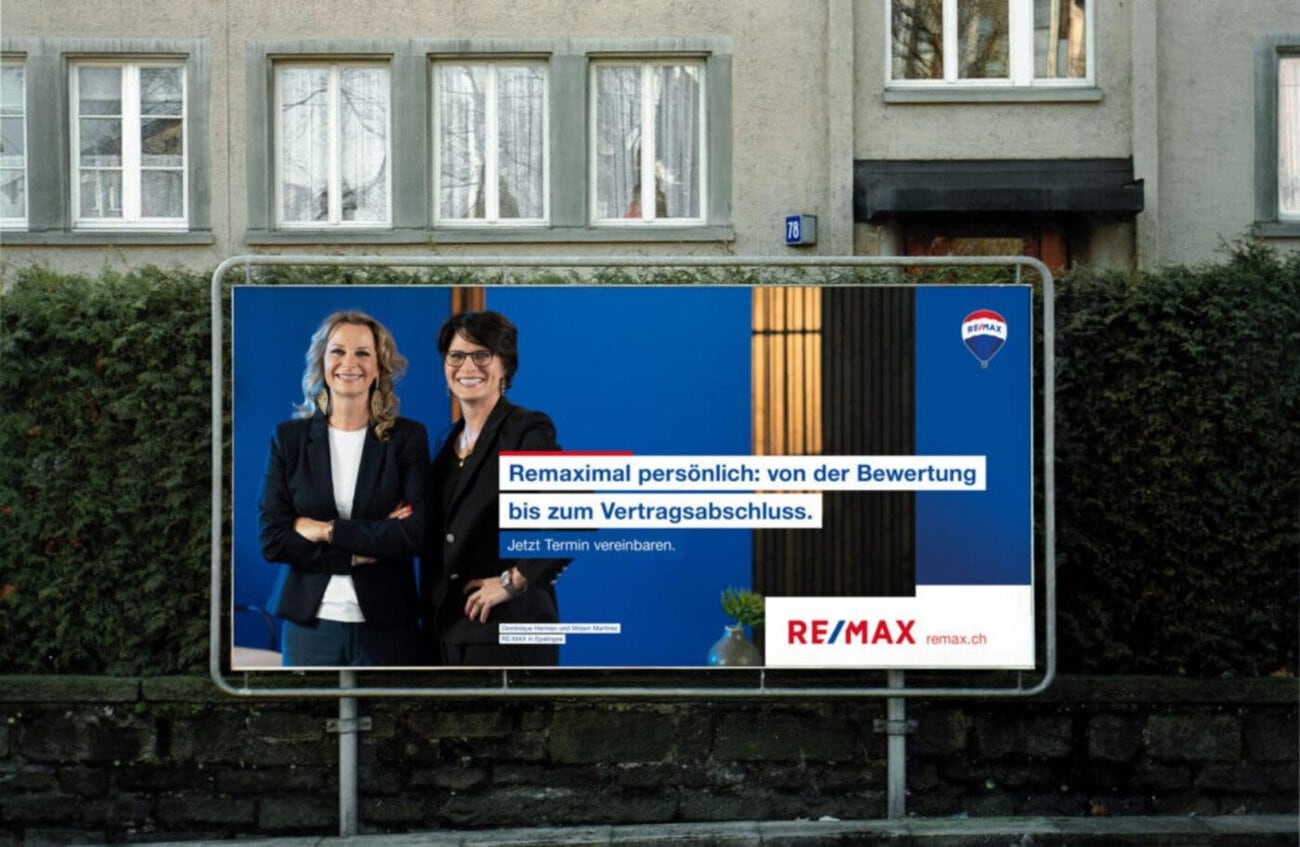
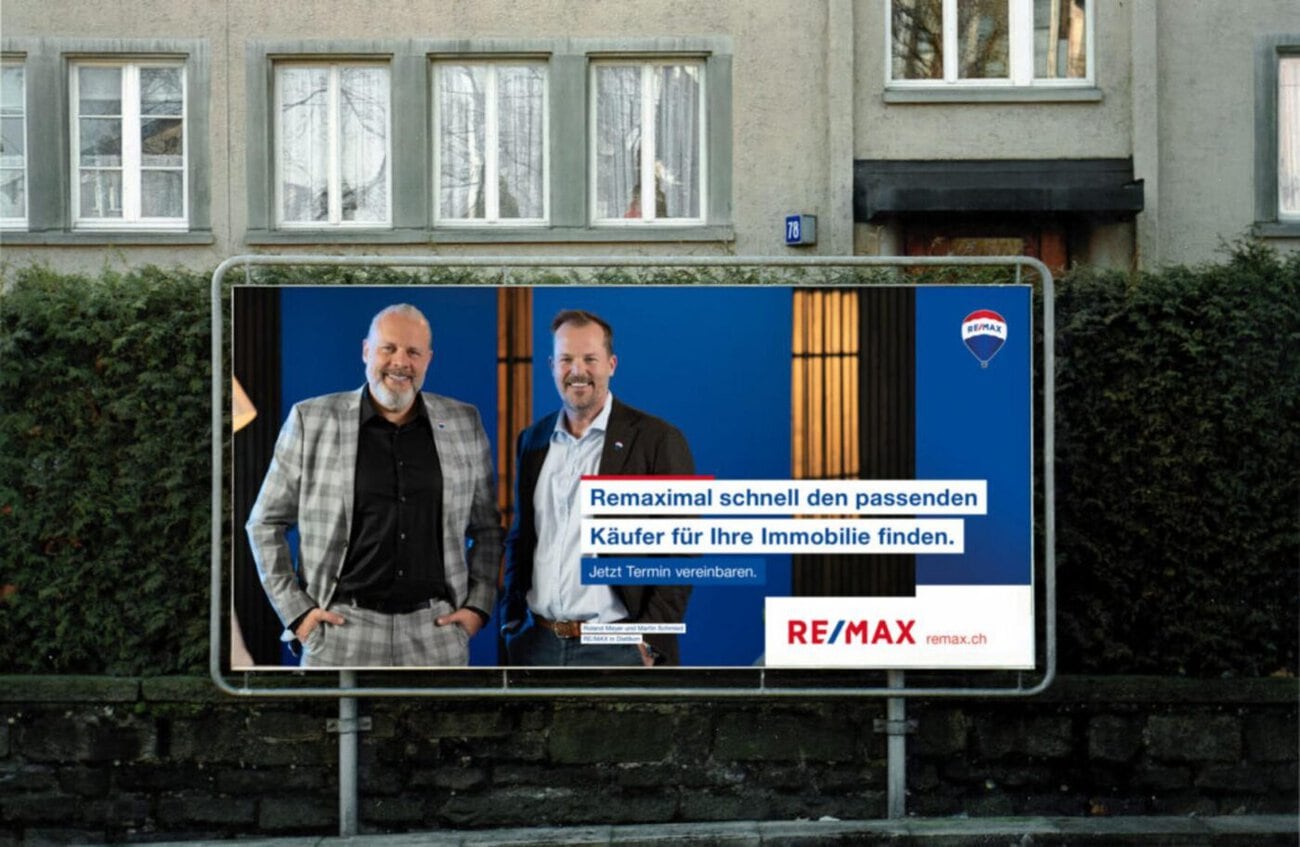
The advertising materials are being rolled out nationally as a cross-brand campaign and, in parallel, regionally, featuring the respective location and local ambassadors. In addition to online campaigns on Meta (Facebook, Instagram), Google, and LinkedIn, posters in the regions where the locations are based are part of the campaign.
Real people instead of models
At the heart of the RE/MAX Remaximal campaign is its own video and photo content. Over the course of three days of filming, Mind Studios photographed and filmed the office teams and real estate agents at the participating locations—real people, not professional models. According to the press release, the goal is to raise regional awareness of the faces behind the RE/MAX offices and to strengthen personal trust in local real estate agents.
Rainer Jöhl, CEO of RE/MAX Switzerland, sums up the campaign’s focus: «Remaximal stands for what RE/MAX has been known for for more than 50 years: doing our utmost for our clients when it comes to real estate. With this campaign, we’re showing that national strength and local presence aren’t a contradiction for us—they’re our promise.»
Mind Studios as the lead agency
As the lead agency, Mind Studios handled the concept development, the three-stage campaign architecture, the photo and video production, the development of all advertising materials for all channels and language versions, and the campaign booking. Daniela Kleck, CEO of Mind Studios, explains the approach: «A national campaign that resonates locally needs real faces. We wanted to show who really makes up RE/MAX in the regions: individuals who know their clients and earn their trust.»
Mind Studios was founded in Basel in 2004 and, with more than 20 employees, is one of the leading social media agencies in northwestern Switzerland. According to the agency, it combines strategic thinking with creative execution and technological expertise, focusing on social media, campaigns, and performance marketing.
Further information on the campaign: https://www.mindstudios.ch
Contact at RE/MAX Switzerland: Rainer Jöhl, CEO. Contact at Mind Studios: Daniela Kleck, CEO.
]]>
The Eventfrog Cashless app is now available on the App Store and Google Play. It’s designed to let event organizers turn their smartphones into a full-featured point-of-sale system in just a few minutes—without any additional hardware, without a monthly fee, and on fair terms. With this launch, Eventfrog—which claims to be Switzerland’s largest event platform—is introducing a solution designed to make cashless payment processing accessible even to smaller events and clubs.
Get started in two minutes with the Eventfrog Cashless app
According to Eventfrog, guests can choose between card payments, TWINT, and cash. Receipts are sent digitally via QR code or email and are VAT-compliant. The app also features a tipping function. «With Eventfrog Cashless, your smartphone becomes a point-of-sale terminal—without any additional hardware, complicated setup, or hidden costs,» says Mike Müller, founder and CEO of Eventfrog. Event organizers can use it to process payments in a matter of seconds, speed up on-site operations, and significantly reduce staffing and administrative costs.
Fair Terms for Events of Any Size
Eventfrog Cashless costs CHF 0.09 plus 1.5 percent per transaction, plus VAT—with no monthly fixed costs and no minimum sales requirement. This makes the solution significantly more affordable than traditional mobile payment solutions. From club parties to multi-day open-air festivals: According to the company, the app is designed for events of all sizes.
At large events, volunteers can pair their smartphones using a QR code and immediately start processing payments on multiple devices at the same time. All transactions are consolidated in one place, and sales statistics are available at any time.
According to the company, Eventfrog has been operating in the events industry for ten years. Among other things, the platform offers completely fee-free ticket sales and event advertising for a range of budgets.
For more information about the Eventfrog Cashless app, visit https://eventfrog.ch/de/cashless.
]]>
Google Business Automation as a Key to Success for Chicorée
The Google Business Profile is often underestimated in marketing—yet it’s frequently the first point of contact between a company and potential customers. For the Swiss fast-fashion retailer Chicorée, which generates 99 percent of its revenue in-store, Google Business automation therefore plays a central role. The Zurich-based digital agency avolut has developed a system for this purpose that centrally manages more than 180 Google Business Profiles, automatically updates them, and feeds them with data that is updated daily.
Chicorée was founded in Dietikon in 1982 and, with more than 15 million garments sold annually, is one of the leading companies in the Swiss youth fashion market. The company operates approximately 180 stores and employs about 900 people.

Automatic Management of Entries
Avolut's goal was to fully automate the management of Google Business Profiles. At Chicorée, new products are introduced practically every week, and the company sends out newsletters two to three times a week—according to the company, this activity should also be reflected in its Google Business Profiles.
The store master data, including opening hours, was already in the CMS. avolut consolidated it and provided an export that updates all Google Business Profiles at once. This ensures that the information is always up to date and consistent across all other channels. For each location, up to 25 images from current lookbooks, an automatically generated location description, and a link to the respective store page can also be displayed. Chicorée transmits news directly to all stores via an API connection—automatically in German or French, depending on the language region specified.
Check product availability online
For each store profile, customers can see which products are available at that location. This is made possible by Google Local Inventory: avolut transmits the daily updated inventory of all clothing items from the 180 stores to Google Business—according to Chicorée, that amounts to a good 500,000 entries per day.
AI Analysis of Reviews and Google Business: Automating the Evaluation Process
Every day, avolut retrieves new reviews for all 180 locations via the Google Business API. A large language model categorizes them by sentiment (positive/negative) and topic—retail store, staff, clothing—so that Chicorée receives clear statistics on the issues that matter to its customers.
The data is stored in the central Snowflake Data Platform, where it can be linked to additional first-party customer data and analyzed in a data mart using business intelligence software. avolut also exports metrics on impressions and interactions to Snowflake—making it possible to measure the impact of optimizations on visibility in Google products. The result: According to Chicorée, its stores generate approximately two million impressions per month on Google.
For more information about avolut's digital solutions, visit https://www.avolut.ch.
]]>