
The new children's cookbook "Globi and Betty Bossi" invites the whole family to discover the world of cooking and baking together. When two such popular figures from everyday Swiss culture combine their creativity and experience, the result is a work that not only inspires in culinary terms, but also emotionally. The varied book contains 100 pages with 45 child-friendly recipes - from frog sandwiches and penne cinque pi to Globi cake. The dishes have a difficulty level and are explained with illustrated step-by-step instructions and helpful tips from Globi and Betty Bossi. Children are thus introduced to cooking in a playful way and can celebrate their first kitchen successes.
Creative cooking for the whole family
"With this book, we want to inspire children and families to discover cooking - simply, successfully and with lots of fun," says Susanne Ullrich, who heads up the development of media and kitchen aids at Betty Bossi. Gisela Klinkenberg, Head of Globi Publishing, adds: "Globi is curious, energetic - and he loves to be creative. With Betty Bossi at his side, the kitchen becomes a place full of discoveries. This book shows how much fun cooking together can be."
The idea for a joint cookbook came from the children's non-fiction book "Globi meets people from Switzerland", in which Globi meets Emmi Creola-Maag - the inventor of Betty Bossi. Her story and the creation of Betty Bossi can be seen in the feature film "Hello Betty" in cinemas from November 20, 2025.
Betty Bossi has developed two Globi biscuit cutters to accompany the book, which children can use to bake their own Globi biscuits - for the upcoming Christmas or all year round. The combination set of children's cookbook "Globi and Betty Bossi" and cookie cutter is available on bettybossi.ch/globibetty available from CHF 39.90.
]]>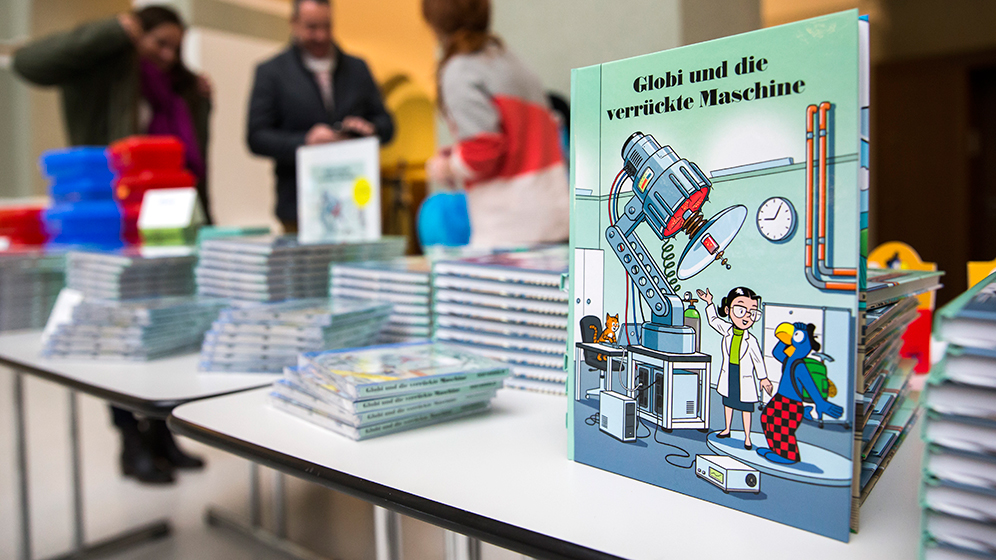
In the new book, Globi experiences numerous adventures at ETH Zurich. A professor at the university shows Globi around and proudly shows him her new invention. When the lab cat suddenly presses the button, they are both shrunk. Tiny, they both have to overcome many dangers.
Globi Publishing Director Gisela Klinkenberg was delighted to be able to present the 87th Globi Classic volume: "Globi is always about discovering, inventing and helping, so Globi is naturally in his element at ETH," she emphasized.
The Rector of ETH Zurich, Sarah Springman, was also an enthusiastic Globi fan. She explained: "We want to get as many children as possible interested in technology and science, and as early as possible." She went on to say: "Science can make children's eyes light up". For her, the new Globi book helps to spread this enthusiasm widely. Globi is particularly suitable for this because he himself is an explorer. Even at a technical university, it takes a lot of imagination and ideas to push boundaries and venture into new spheres - just like Globi, continued Prof. Springman.
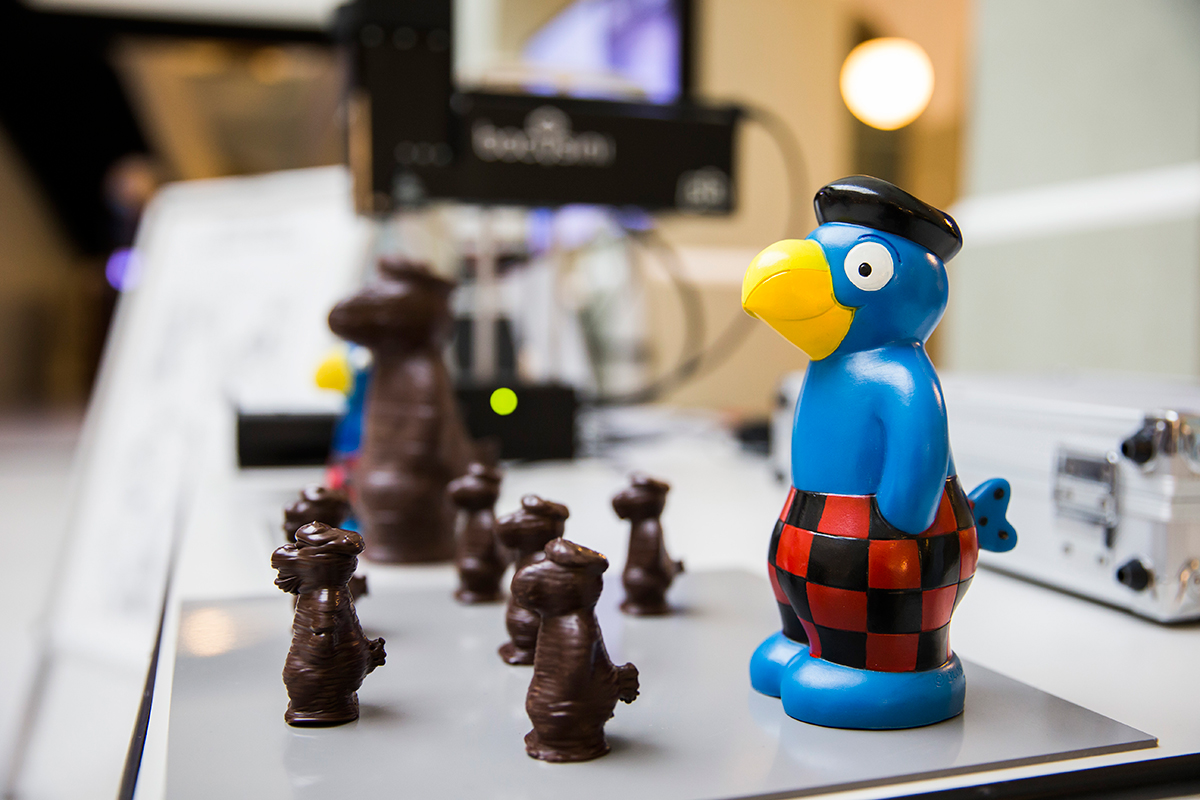
In addition to the book, there were ETH inventions to marvel at that also play a role in the book. For example, the children were fascinated by the chocolate printer, which produced a Globi made entirely of chocolate. The children tasted the "prints" straight away.

Children and adults were also able to try out the university's earthquake simulator. Despite all the science, Globi naturally provided plenty of fun with his own children's program. The youngest Globi fan on site was twelve weeks old and was beaming with Globi.
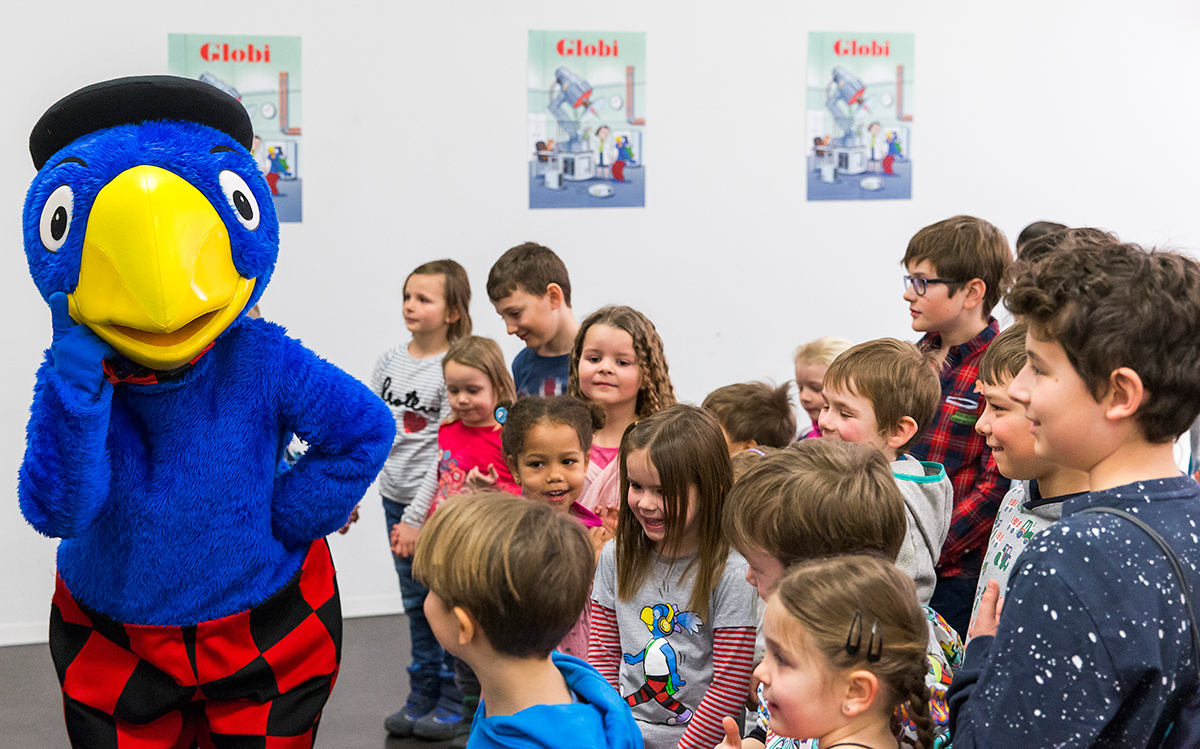
As hoped, the many inventions of the ETH and Globi's adventures made many children's eyes light up at the book presentation. Globi aroused the curiosity of the children present. For everyone else, "Globi and the crazy machine" is now waiting in bookshops. So perhaps ETH can look forward to many new researchers in the future. Thanks to Globi.
Heinzer's first Globi book was published in 1980 under the title "Globi in the Wild West". It was an instant success, selling 20,000 copies. The last Heinzer title to be published was "Globi für alle Fälle" in 2003. The Schaffhausen artist also created four "Papa Moll" volumes. The Globi stories drawn by Heinzer with verses by publishing director Guido Strebel are among the most popular and successful Globi books. Looking back, Strebel said that it was not sufficiently recognized that Heinzer had saved the Globi publishing house.

Heinzer was born in 1945 in Stein am Rhein SH. He attended the Zurich School of Arts and Crafts and completed an apprenticeship in graphic design in Schaffhausen. He became a freelance illustrator in 1972. He created comic figures such as the Redi bird, cartoons and animated films before becoming the inventor and illustrator of the Globi stories for two decades. In 1932, the Globi figure was created by advertising manager Ignatius Karl Schiele and illustrator Robert Lips for the 25th anniversary of the Globus department store: A blue bird with checked trousers and beret. The image has changed slightly over the years, but the most important trademarks have remained the same. Globi became the most successful Swiss children's book character.
Fascinated by the forest
In 1996, Heinzer and his wife moved to Hemmental near Schaffhausen, where he devoted himself entirely to painting. Far away from the hustle and bustle and noise, he explored barren plateaus and forests in the gorges and on the steep slopes and captured them on canvas. Heinzer's oil paintings are characterized by an almost photorealistic depth of field. (SDA)
Globi is allowed to visit television because he saves an expensive SRF camera from crashing. In the latest book, the Swiss cult bird quickly makes friends in Leutschenbach - including well-known presenters such as Stephan Klapproth, Kurt Aeschbacher and Roger Schawinski. He takes the children into the world of stars and presenters and takes a look behind the scenes. For the stories in the new Globi book and the correct reproduction of the premises, technology and other situations on location, Globi Verlag worked together with SRF, as detailed in a press release on Tuesday. Incidentally, this is the second time since 1961 that Globi has visited television. The first editions of the original of the same name are coveted among collectors today.

No money flowed
SRF is offering the book in its own store and is heavily promoting it in the run-up to publication. The question arises as to what role SRF played in the production of the book. The celebrities are real, company and broadcaster logos are shown. Did SRF co-finance the book in order to be able to advertise in Swiss children's bedrooms in this way? No, says SRF spokesperson Martin Reichlin when asked by Werbewoche.ch. SRF merely provided time and know-how to give the book an authentic insight into the world of television. "No money was involved," says Reichlin. SRF purchased a certain number of books from the Globi publishing house in order to be able to sell them in the SRF store. (hae)


Pictures: SRF / Cover picture "Globi on television" (1961): Globi.ch
Quotes from presenters: SRF message