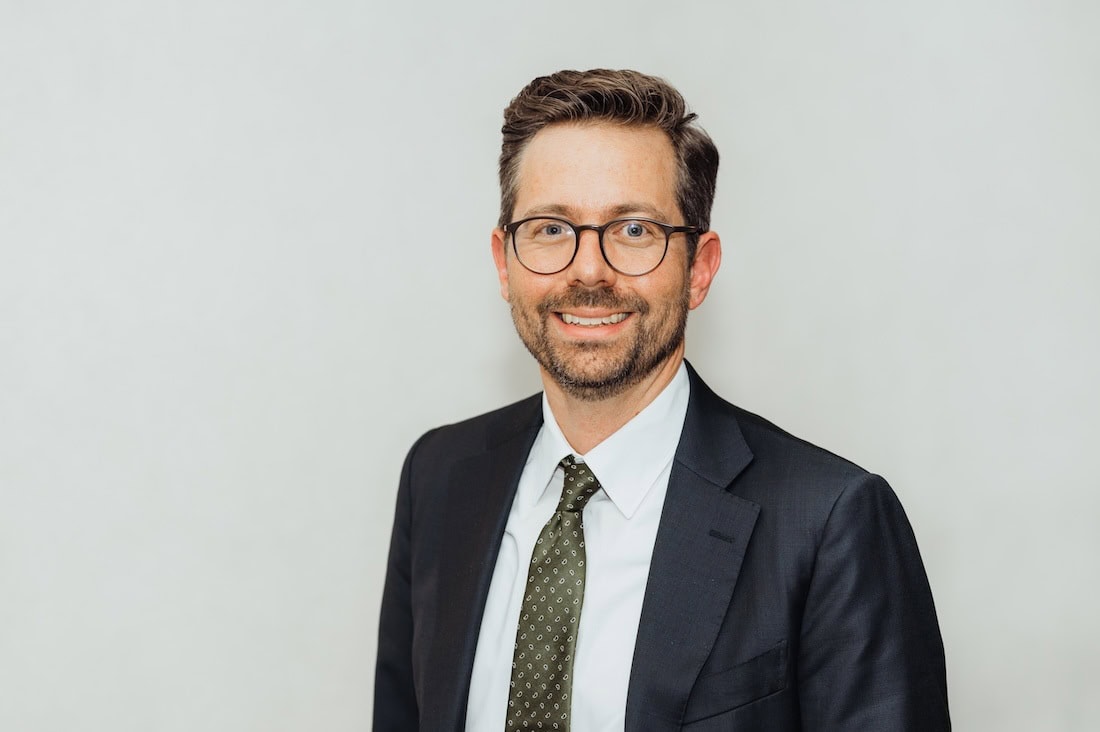
On July 1, 2026, Nico Luchsinger will become CEO of the Gottlieb Duttweiler Institute (GDI). The Migros Group institute, based in Rüschlikon, is Switzerland's first and oldest think tank and researches important issues for the future, such as society, the economy and technology.
Nico Luchsinger (43) has broad experience in various areas, from media and start-ups to international organizations. Most recently, he was Executive Director of the Asia Society Switzerland, a foundation dedicated to promoting Asian expertise in Switzerland. In various positions there over the last 10 years, he has played a key role in building up the organization and establishing it as an important platform for business, politics and society.
Previously, he worked at Mila, a digital marketplace for household and technology services, which was later acquired by Swisscom. He also co-founded the international entrepreneur platform Sandbox and built it up as CEO. This connects young entrepreneurs from all over the world.
In all of these roles, the aim was to promote new ideas, network people and further develop organizations. Exactly what the GDI also focuses on.
Andrea Krapf, Head of Engagement at the Migros Group, is delighted: «In Nico Luchsinger, the Gottlieb Duttweiler Institute has gained a visionary and experienced leader who knows how to network people and drive innovative ideas forward. I am convinced that he will further strengthen the GDI in its role as a think tank and provide decisive impetus for the future.»
«The Gottlieb Duttweiler Institute is a unique place where the big questions of our time are discussed and new perspectives are developed. I look forward to working with the GDI team to drive forward bold ideas and further promote dialog on the future of society, the economy, technology and geopolitics,» says Nico Luchsinger.
Jennifer Somm has managed the GDI ad interim with a high degree of professionalism in recent months and created stability during an important phase. She will remain in office until July 10, 2026 and will ensure a smooth handover. Migros would like to thank her warmly for her great commitment and valuable contribution to the institute.
With Nico Luchsinger at the helm, the GDI wants to further strengthen its role as a place for new ideas and discussions and continue to offer guidance on the major issues of our time.
]]>
The Gottlieb Duttweiler Institute GDI has developed the "GDI Major Shifts" model based on its many years of trend research. This identifies 20 key developments in five categories - society, technology, economy, environment and geopolitics - and classifies them within their respective life cycles. The aim is not to view macroeconomic trends in isolation, but to understand them as dynamic developments that reflect transition phases and strategic uncertainties more precisely.
The model is based on the established STEEP framework and is continuously supplemented with new findings. In practical application, it helps companies to classify future developments and derive specific options for action.
As part of the GDI Strategic Foresight service, the institute helps organizations to translate findings from trend analysis into concrete strategic measures. "With the GDI Major Shifts, we offer our clients a data-based analysis of the environment. It serves as a solid basis for sound strategic decision-making," says Susan Shaw, Head of Strategic Foresight and member of the Executive Board at the Gottlieb Duttweiler Institute.
A short version of the model is publicly available and can be can be downloaded free of charge.
]]>
Innovation is essential if a company wants to remain successful in its industry. The problem is that the innovation management process is often not structured, or knowledge acquisition is decentralized and therefore inefficient. This is where the GDI Innovation Hub to start with. The hub will enable users to research efficiently, access industry-relevant mega and macro trends and establish systematic knowledge management.
"With the GDI Innovation Hub, companies have direct access to the entire GDI inventory of studies, conference reports, presentations and trend updates. In the content area, users can find new inspiration every day in their search for innovations. In addition, the Food and Retail Radar provide an overview of the relevant mega and macro trends that have been evaluated by our industry experts," explains Susan Shaw, Head of Strategic Services and member of the GDI Executive Board.
Over 10,000 examples of innovation
To make research efficient, the GDI Innovation Hub offers access to more than 10,000 innovation examples from around the world, trends, technologies and start-ups. The database is curated by a professional scouting team, is constantly updated and can be filtered by mega and macro trends as well as by industry.
In the three workspaces on the topics of retail, nutrition and health, as well as in a general area, users can access expert assessments, studies, trend updates and interviews from the GDI.
Curated trend radars on retail and nutrition
In the Food and Retail Radar, GDI researchers have identified the relevant industry trends at mega and macro trend level and assessed their impact on the industry in Switzerland and Europe.
The radars are designed to help companies identify relevant trends in order to further develop their own strategy and competitiveness in the long term.

Tailor-made solution for in-house innovations
With corporate access, users can use the Innovation Hub confidentially for the company's internal innovation process. They can upload their own content and summarize it with the help of artificial intelligence. An AI-supported idea generator helps with the development of new products and services.
The GDI Innovation Hub can be tested free of charge for ten days.
]]>
Since 2024, the GDI has been offering innovation consulting and management development in addition to research. The think tank focuses its activities on the retail, food and healthcare sectors and examines these from the perspectives of society, technology and the environment. "Especially in times of increasing change dynamics like today, research into a possible future and the implementation of concrete innovations are all the more important for society and for companies," says CEO Lukas Jezler. "With our research, innovation consulting and management development, we provide our customers with the right services to meet and master their key challenges."

Susan Shaw is the new Head of Strategic Services
Susan Shaw has headed the innovation consultancy as Head of Strategic Services and member of the Executive Board since December 1, 2023. The social scientist has extensive experience in market research and was most recently Managing Director of GIM Suisse. Throughout her career, she has been intensively involved in the interaction of people with brands, products and services. She has conducted various studies on customer needs in a wide range of industries and worked with companies to develop future consumer behavior patterns.
"With Strategic Services, we address the question of what the findings from the think tank mean for the individual sectors and companies, as well as their target groups. We support companies from trend identification and evaluation, through the definition of fields of action, to the development of trend-based innovation concepts," says Shaw about the GDI's new offering.
Tanja Ineichen heads Leadership & Transformation
In addition to trend research at the societal level and strategic innovation consulting at the corporate level, the Leadership & Transformation offering under the direction of Tanja Ineichen completes the GDI's product range at the personal level.
"Future shapers in top management are the driving forces of innovation in the company. With their vision, they build the bridge between a possible future and one that is actually lived in the organization. With our services, we accompany managers in their personal development and support them in shaping their teams and organizations," explains Tanja Ineichen. She has extensive experience in the retail sector, where she built up and managed cross-group leadership development initiatives in the Migros Group for over 15 years.
]]> The Swiss population has more free time than ever before. Actually. Because the demands of work, family and leisure are growing. Time stress is becoming a social trend that affects all areas of life. And time management is one of the biggest challenges in everyday life. This is shown by a representative survey from the study "Ausgebummelt - Wege des Handels aus der Spass- und Sinnkrise" by the Gottlieb Duttweiler Institute (GDI).
Over the past 150 years, working hours have steadily decreased. Thanks to technological progress and the regulation of the labor market, people in Switzerland now have more free time than ever before. Automation and artificial intelligence could continue this trend. However, despite the steady increase in free time, the data from the GDI survey shows that around 30% of the Swiss working-age population (aged between 15 and 64) often or almost always suffer from time stress. Almost 60 percent of respondents state that time stress has increased in the last five years. With almost a third of all working people rushing after one obligation after another day after day, and the trend is rising, time stress is a social trend.

Time stress, especially among younger people
The results also show that a lack of time is a phenomenon in all areas of life: at work, in leisure time and in everyday life in general. While 36 percent of the Swiss population are often or almost always under time stress at work and in education, 19 percent of the working-age Swiss population often or almost always experience time stress in their leisure time.
Time stress in leisure time is particularly common among younger people. 34 percent of 16 to 24-year-olds often or almost always have time stress in their free time (work 47 %), compared to only 8 percent of 55 to 64-year-olds (work 28 %). Younger people often have the feeling that they have many obligations and expectations to fulfill. They want to try everything and are more driven by the fear of missing out.

Work-life blending is one of the biggest stress factors
Obligations at home also take up time. These include housework (32 % of respondents) and administrative tasks (25 %), such as dealing with the post or paying bills. But work that encroaches on leisure time also leads to increasing time stress (24 %). This work-life blending is one of the most important stress factors in leisure time. The expectation of having to be constantly available is a particular source of stress for the Swiss population (29 %). Both aspects are a consequence of hybrid working, which makes it difficult for many people to draw a clear line between work and leisure.
35% of all respondents in the GDI survey would like to have more time for themselves. This result illustrates how the tension between job, family and personal needs has intensified over the past five years, because how we organize our time has a direct impact on our life satisfaction.
More than 70 percent of those who never or rarely experience time stress are (rather or very) satisfied with their lives. Conversely, more than 40 percent of those who frequently or almost always experience time stress are not satisfied with their lives (neither satisfied, rather dissatisfied nor very dissatisfied). 50 percent of those who frequently or almost always experience time stress rate their mental state as rather or very negative.
When asked about their wishes, almost 40% of 25 to 54-year-olds would prefer to have more time than money, while the opposite is true for the older population. However, whether we feel happiness and satisfaction also depends on how much pleasure and importance we attach to an activity. The Swiss population perceives social activities such as spending time with family or friends and regenerative activities such as time spent relaxing or in nature as meaningful and enjoyable. Personal development, learning something new and gaining new experiences are also included.

Sport and work
Other activities are neither enjoyable nor meaningful. Commuting, for example, is perceived by most people as a waste of time and makes them unhappy. Housework is largely perceived as a time waster.
Other activities are less fun but are important. These include paid work or sport. Many people do not necessarily enjoy these activities at the time they are carried out, but they promote financial, physical and mental health in the long term. These activities also contribute to life satisfaction. The opposite is true for media entertainment: watching films or series is usually fun, but is rarely perceived as meaningful.
For the study, two representative consumer surveys were conducted in July and August 2023 among a total of 1,500 German-speaking Swiss. In addition, numerous international studies, scientific articles and databases were evaluated. On the one hand, this serves to validate the results. It also shows that the trends identified are valid beyond Switzerland's borders.
The study can here can be downloaded.
]]> With more than 300 participants, most of them on site and via livestream, the 13th Annual Reports Symposium 2022, which took place on June 13, set a new attendance record.
The guiding theme for 2022 was "Show Value, Build Trust. How can companies create value in the face of ever more diverse requirements and upheavals such as digitization, climate change and constantly new regulatory requirements? - Today and in the future. And how do they gain the trust of stakeholders and retain their loyalty in the long term?
The opening speech by Prof. David Bach, IMD Lausanne, at the VIP lunch already generated lively discussions with plenty of fuel. In his keynote address "CEO's in the political crossfire", he addressed what stakeholders expect from the top of a company today: CEOs should take a stand on controversial social and political issues and show that they live their values when circumstances demand it. He also shed light on the risks involved and the need for such communication to happen quickly in order to appear authentic and thus credible.
Afterwards, the opening presentation by Hilti CEO Dr. Christoph Loos continued seamlessly in the large hall of the GDI. The plenum of experts from Corporate Communications, Investor Relations, Finance, Sustainability and Governance heard first-hand why Hilti, a globally positioned family company, incorporated sustainability issues into its DNA at a very early stage and how it deals with them. Christoph Loos emphasized that the relevance of the measures must be in the foreground. For him, there can also be no successful reporting without consistent integration and uncompromising implementation of the programs of measures. Among other things, Hilti wants to achieve CO2 neutrality by 2023 and become a leader in the circular economy with innovative concepts in its industry
In her keynote address, which she noted was her last as CEO of BKW, the new Chairwoman of Sulzer, Dr. Suzanne Thoma, reported on how BKW has evolved over the past ten years or so from a company weakened by structural change into a strong player in the Swiss electricity industry. She went into detail on how stakeholder confidence was regained by focusing on value-driving business areas.
Best Practice Sessions
In 2022, the five best practice sessions on practice-oriented topics again formed the core of the Annual Reports Symposium. Renowned experts from leading international companies such as ABN AMRO, BASF, Coca-Cola, HBC, KPMG, Partners Group, Poste Italiane, Royal Schiphol Group, Swiss Life and Value Reporting Foundation provided practical insights into current developments and trends in corporate reporting. How can a business model be communicated convincingly in terms of content and visuals? How can the increasing requirements for non-financial reporting be implemented efficiently and with benefits for long-term corporate positioning? What is needed for ESG information to gain and sustain investor confidence?
Topic Sustainability Reporting
In the second part of the plenary session, Janine Guillot, CEO Value Reporting Foundation (VRF), joined live from New York to give an overview of key sustainability reporting initiatives, including the development of the International Sustainability Standards Board (ISSB) and the opportunities for companies to help shape the new ISSB standards. At the CFO Panel, Manuela Suter, CFO Bucher Industries, and Yves Gerster, CFO Dufry, took the plenary into the world of financial corporate governance. In particular, they addressed their insights from the two pandemic years and the evolution of the CFO function into a preserver:in corporate values and how they are mastering the increasing demands.
The humorous finale was the performance of cabaret artist Gabriel Vetter. As CEO, CFO, Chief Facility Services and Head of Corporate Communication as well as Management Director of Catering at "Fun, Fun, Fun & Sons," he described, among other things, how difficult it is for him as a one-man company to achieve a 50 percent quota of women.


Closing panel with speakers Prof. Binswanger and Dr. Bosshart
Historically, growth is a recent phenomenon - it only began in the 19th century. In the earlier agricultural economy, growth was limited by the finite land area. It was only with industrialization that this limitation became increasingly secondary - and strong growth was able to unfold.
Until recently, the term growth was associated with something positive. Parents were convinced that thanks to continuous growth, the next generation would have a better life.
This optimism is increasingly evaporating; citizens in developed industrial nations are concerned about whether our consumption of resources is ethically justifiable and sustainable. Recent studies show that the previous direct link between growth and happiness no longer exists. This saturation phenomenon is making more and more people think and question things.
Whereas in past decades the aim was to meet needs through growth, we are now in a situation where too many products on offer are frantically seeking buyers. Marketing and communication are increasingly becoming vicarious agents in the creation of needs. Professor Binswanger described it as a postmodern economic miracle that buyers can still be found at all for the gigantically large range of products.
Of course, before attending the event, it could not be expected that the two speakers would be able to show the way out of the dangerous growth spiral. Rather, both speakers were able to explain that a turn away from the growth path was not realistic for various reasons. Three reasons are listed here as representative of many others:
- The stock markets' expectation of the growth of listed companies
- The ever-increasing growth of the money supply and the associated devaluation of money
- The interconnectedness of economies through globalization.
Against this backdrop, marketers are increasingly asking themselves whether the previous task of marketing, to act as a sales stimulator, is still applicable and justifiable in the future.
In his introductory presentation, David Bosshard, Director of the GDI in Rüschlikon, soberly stated that technology can do more and more, but the question is whether we really know what we want with it. Using Amazon's Alexa as an example, he explained that this voice interface, which was actually developed for the efficient ordering process, is still very much a social tool today.
The proportion of orders placed is obviously not yet exhilarating. What is interesting here, however, is the fact that such bots or digital agents have something like a "soul. Bosshard wished the participants a good conference - with the ironic undertone that he assumed the guests would go home confused in the evening. But this at least on a higher level.
The brilliant speaker Tim Wu, professor at New York's Columbia University, argued that attention should be considered a key resource in the future. And yes, that (unfortunately) the US president is almost unbeatable in this discipline. In order to achieve attention for his cause, he needs so-called information filtering.
This focusing process takes place over four stages:
- Platform (be part of a prominent platform)
- Check-in (qualification via a check-in step)
- Addiction (Loyalty)
- Convenience (simplicity of use) must be ensured.
With this approach, he concludes that the three central intangibles are attention, convenience, and data. In the future, successful companies would operate within this triumvirate.

Professor Tim Wu of Columbia University explains his concept on attention hacking.
The MIT researcher from Boston explores the relationship ability and relationship quality between humans and machines. Her observation of children's imperative communication with Amazon's Alexa would also have an impact on the style of communication with peers.
This undesirable social effect - triggered by the use of Alexa - had caused Amazon to make Alexa accept prompts only with a preceding "please"! The speaker then asked the audience almost rhetorically whether the participants could imagine that people could fall in love with a digital assistant. The result of the online voting was astounding, as the graphic below shows.

MIT researcher Aleksandra Przegalinska is anxiously following the results of the voting.
Other exciting topics were pain diagnosis via image recognition or RFID chip implants for access and identification solutions in everyday life. The selection and abundance of relevant topics at this conference was remarkable and stimulating. We look forward to the program of the 16th European Trend Conference in 2020.
*About the author: Christoph Oggenfuss is a front office architect and CE-Owner MarkITing Zurich (Markiting.ch).
Data and robot journalism, blockchain, augmented reality, and new forms of work and job profiles - these are just a few of the many developments confronting media professionals and influencing how media content will be designed and offered in the future.
In a joint workshop, 20 Minuten and the Gottlieb Duttweiler Institute (GDI) defined the media trends that are most important to them and derived the following macro trends from them: "new content," "new values," "new channels," "new partners," "new users," and "new relationships. This has resulted in the "Media Innovation Map." This new working tool is intended to provide 20 Minuten employees with guidance in the complex world of technological change and digital innovation.
"The 'Media Innovation Map' is the ideal basis for approaching innovation in a more targeted way," explains Mike Herter, Head of Innovation, Social Media Advertising & Strategic Projects at Tamedia. "Above all, it should provide inspiration for our editorial team, product development and IT, as well as the publisher, in the ever-changing jungle of digital transformation."
"The changes in the media world are as fundamental as they are unmanageable," adds Jakub Samochowiec, senior researcher at GDI. "The 'Media Innovation Map' aims to put these trends and the resulting opportunities in order and help media professionals think about the new challenges in a more structured way."
The "Media Innovation Map" in full size (the image below shows a preview only) can be downloaded or ordered from 20 Minuten as a double-sided poster in world format (e-mail: [email protected]).


The boundaries between media, formats and communication channels are becoming blurred. Today, anyone can be both sender and receiver on any channel, can listen to others or tell something themselves.
In the digital age, with the rise of social media, the days when companies had sole control over what information reached consumers and in what form are over. In future, they will have to be happy if they are listened to at all. The new GDI study "Digital Corporate Publishing" describes why the classic sender-receiver model has had its day and how it is giving way to an uninterrupted conversation that is influenced and shaped by all players.
In order to adapt to the new media conditions, corporate publishing should be based on the following five guidelines:
- - Conversations are more important than messages - it's not about proclaiming, it's about being part of the conversation.
- - Networking is more important than content generation - the focus is not on what I say, but on who I talk to.
- - Information becomes part of the sales offer - I'm not just selling a product, but a story to go with it.
- - The competition for information dominates - the customer should find out everything that interests him from me.
- - More content for fewer people - give the individual what they are interested in.
These principles result in four possible strategic positionings of corporate publishing. They differ on the one hand in terms of the content of a publication (product information vs. editorial content) and on the other hand in terms of its objective (informing vs. selling). One of the possible scenarios is the corporate public service (editorial content, information). According to this scenario, companies would promote independent journalism in order to provide the population with information - and to position themselves as socially responsible. In addition to state support, generous patrons and cross-financing from other sources, this would provide media companies with another way of funding journalism.
Four possible strategic positionings can be derived from these guidelines. On the one hand, they result from the content of a publication , i.e. product information or editorial content . And on the other hand from its objective , namely informing vs. selling:
1. consumer empowerment (product information; information-oriented): Consumers are informed objectively and honestly about products and the company. It is not primarily about selling as much as possible, but about meeting the consumer as a partner at eye level. Because only honest and personalized information from the company is able to assert itself in the information competition for its own product.
2. media sales promotion (product information; sales-oriented): New media opportunities can be used to offer customers the most positive and exciting shopping experience possible. Facts about products can also be offered as long as they fit into the brand narrative and do not dampen the good shopping mood.
3. corporate "public service" (editorial content, information-oriented): In terms of social responsibility, companies take on the task of providing information to the population - either by employing journalists through their own channels or by promoting independent journalism, similar to cultural promotion (e.g. Culture Percentage).
4. image customer magazine (editorial content, sales-oriented): Stories are told that present the brand in a positive light, increase awareness and evoke positive associations. The stories are not directly about the company's products, but deal with topics with which the brand likes to associate itself and which should shape the brand identity.
The study "Digital Corporate Publishing - Who will be talking about your company tomorrow" is available as a free download here available.

Digitization is turning the media world upside down. New technologies are leading to new media formats, different user behavior and competitive conditions. Media companies must face up to the changes. This requires a forward-looking view of the changes in the media world. The Media Disruption Map provides such a view: It shows which media technologies will play a role in the future.
According to the GDI, a media technology must master two challenges in order to develop its innovative potential: First, it must be invented and implemented (technological feasibility), and second, it must be accepted and used (social acceptance). Both hurdles are not suddenly overcome by surprising upheavals or quantum leaps. They are subject to continuous processes, which are depicted in the Media Disruption Map as seven stages of increasing feasibility and acceptance.
Examples from the Media Disruption Map illustrate the processual changes in the media world:
- Internet TV is technologically very mature and already so widely accepted that many consider the technology part of everyday life.
- Memory enhancement: Implanting memory chips into the brain is the subject of controversial public debate and is technically at the experimental stage.
- Babelfish: The desire to master all languages with the help of intelligent translation programs is highly desirable socially. However, the Media Disruption Map shows that their development is still in its infancy.
See the whole Media Disruption Map an.
The media concepts listed in the Media Disruption Map are taken from the GDI study "Public 4.0" commissioned by SRG and Gartner's "Hype Cycle for Media and Entertainment" (2014). The concept of the Disruption Map emerged in 2014 from a collaboration between the GDI Gottlieb Duttweiler Institute and Cisco. The positioning of the individual concepts on the axes of technological progress and social acceptance is based on the collective assessments of GDI and SRG. (pd)