
Black Frame Sets a New Record on Social Media for the Street Parade
With 15 million organic Instagram views within 30 days, Black Frame set a new record for the Street Parade’s social media outreach for the 2026 event. This represents a 4.4-fold increase compared to the same period last year. At the same time, the community grew by 16 percent—adding approximately 23,000 new followers.
The Zurich-based production agency has been collaborating with the Street Parade since 2019. Since 2024, Black Frame has also been responsible for all of the event’s social media communications. 2026 marks the partnership’s strongest season to date.

Stefan Epli, Executive Board Member for Media, PR, and Finance at Street Parade, comments on the results: «Our collaboration with Black Frame has continued to evolve since the start of our partnership in 2019. The Street Parade is a unique event that changes every year. Accordingly, we are also constantly refining our communication strategy.»
New Strategy: Real-Time Production Right on Site
The social media strategy was fundamentally realigned for 2026. Fast-paced, dynamic videos were strategically combined with still images, original audio, and candid moments from the parade. Editorial and editing operations were moved closer to the event so that content could be produced and published while the Street Parade was still underway.
Tony Mola, CEO of Black Frame, describes the challenges behind this approach: «The way social media is used is constantly changing and presents new challenges for us every year. At the Street Parade, this is compounded by long distances, severely limited internet connections, and the event’s short timeframe. That’s why we’ve adapted our processes and consistently focused on on-site production. This allowed us to react more quickly and make the Street Parade digitally accessible even while the event was still underway.»

A 30-person team, 14 videos, and four drone crews
On the day of the event, the Black Frame team—consisting of about 30 people—published 14 videos and three photo carousels within 11 hours. The content was also posted on TikTok and Facebook with minor adjustments. Black Frame was also responsible for publishing and community management.
Thanks to a specialized collaboration, four drone crews captured aerial footage that could be integrated directly into the ongoing social media production. The content production culminated in the official aftermovie, which was released five days after the Street Parade.
Outlook: Street Parade Social Media to Be Further Expanded in 2027
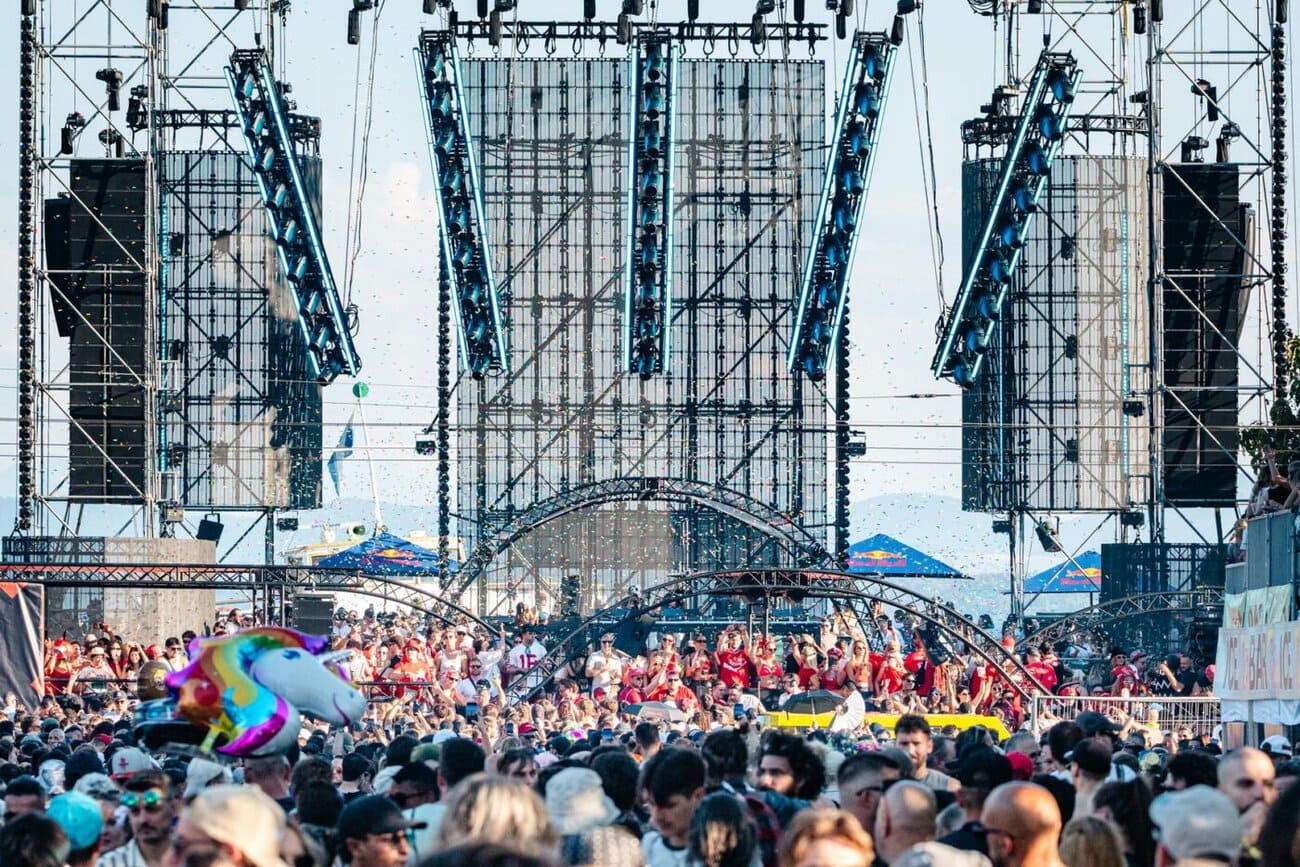
The Street Parade has been held in Zurich since 1992 and is one of the world’s largest electronic music events. It attracts hundreds of thousands of visitors each year. For 2027, the strategy is set to be further expanded, with a focus on increasing content output while maintaining the same high standards of quality.

More about Black Frame's work: https://www.blackframe.ch
Organizers of the Street Parade: Stefan Epli, Executive Board, Media, PR, and Finance. Person in charge at Black Frame: Tony Mola, CEO.
]]>
Internet group Meta is introducing a paid subscription for ad-free use of Facebook and Instagram in Europe. Anyone who wants to use the two social networks without advertising will have to pay ten euros a month in the European Union, Switzerland, Iceland, Liechtenstein and Norway. Meta made the announcement in a blog post on Monday.
For an additional linked account - for example, if someone wants to use both Facebook and Instagram ad-free - an additional six euros will be due after a transition period. Until March 1, 2024, the first subscription covers all linked accounts in a user's account center.
The prices for subscriptions taken out on the smartphone are higher. There, the subscription will cost 13 euros instead of 10. Meta is thus passing on its commission payments to app store operators Apple and Google to end customers.
Meta responds to regulation in Europe
Meta is responding to the changing data protection situation in Europe with its paid subscriptions. Following court rulings and decisions by regulators, it is being enforced more strictly, among other things, that users' permission is required for the use of their data to personalize advertising. Also, data from different services under the umbrella of a group may only be combined with the express consent of users.
The option to purchase an ad-free subscription takes into account the requirements of European regulators, the blog post continues. At the same time, the option gives users a choice and allows Meta to continue serving everyone in the EU, the European Economic Area and Switzerland.
At the beginning of the year, the Irish data protection authority had imposed a fine of 390 million euros on Meta for breaches of data protection regulations. In the process, Meta was banned from using the so-called contract legal basis to play out personalized advertising based on tracked user activity. The group then announced that it would ask users in the EU for their consent before allowing providers to serve targeted ads. Those who accept personalized ads can now continue to use the networks free of charge. For all others, the subscription model is to be an alternative. (SDA)
]]>
Since last Friday, August 25, certain rules have been legally enforceable for 19 very large online platforms and search engines in the EU. For example, the companies must remove child pornography or terrorist propaganda more quickly than before.
In turn, it will be easier for users to report such content. Online marketplaces such as Amazon are now obliged to remove counterfeit products or dangerous toys as best they can and to warn buyers. In addition, the companies must regularly report to the EU Commission on the extent to which their platforms pose a threat to mental health or freedom of expression, for example.
EU sees risk to society in platforms
The background is the new EU Digital Service Act (DSA). It lays down very strict requirements for very large platforms and search engines with more than 45 million active users per month. In the EU's view, they pose a particularly high risk to society. If the companies fail to comply with the requirements, they could face a fine of up to six percent of their annual global revenue.
The 19 platforms and search engines initially affected include Zalando, Wikipedia, Booking.com, Amazon Marketplace and Apple's Appstore, as well as Alibaba Aliexpress, Google Play, Google Maps, Google Shopping, Instagram, Linkedin, Pinterest, Snapchat, YouTube, and the search engines of Google and Bing. In a few months, the rules will also apply to smaller companies covered by the law.
]]>
The case is about Facebook's involvement in mass surveillance by Anglo-American intelligence agencies, which was revealed ten years ago by U.S. whistleblower Edward Snowden. Austrian privacy activist Max Schrems brought a complaint against Facebook at the time.
The fine imposed by the DPC dwarfs Amazon.com's previous record fine of €746 million in Luxembourg. In addition, Meta must stop any further transfer of European personal data to the United States, as the company remains subject to U.S. surveillance laws.
Is Meta fighting back?
Meta did not comment on the record fine for the time being. However, experts assume that the U.S. company will appeal the decision. The court proceedings, however, could stretch on for years. In the meantime, a new data pact between the European Union and the U.S. could come into force, which will re-regulate transatlantic data traffic.
Meta had previously threatened several times to withdraw completely from the EU if transatlantic data transfer was not possible on a permanent basis. Schrems explained that the fine imposed could have been much higher: "The maximum fine is over four billion. And Meta knowingly violated the GDPR for ten years to make a profit." If U.S. surveillance laws are not changed, Meta will now likely have to fundamentally restructure its systems, Schrems explained.
Years of struggle
For years, the Irish data protection authority DPC had refused to take action against Facebook in this matter. Ultimately, the European Data Protection Committee (EDSA) obliged the DPC to impose a penalty on the social network. The current decision only applies to Facebook, not to other services from the meta group such as Instagram or WhatsApp.
However, Meta had already been fined 390 million euros by the DPC in January for forcing Facebook and Instagram users to agree to personalized advertising.
So far, the new penalty for Meta has seen fines totaling four billion euros since the General Data Protection Regulation came into force five years ago. Meta now features six times in the list of the ten highest fines, with penalties now totaling 2.5 billion euros. (SDA)
]]>
Meta also ramped up share buybacks by $40 billion and founder and chief executive Mark Zuckerberg held out the prospect of further cost cuts.
Zuckerberg said 2023 should be a "year of efficiency" for the Group. The focus is on being "stronger and more nimble," he said. Meta will remove layers in middle management so decisions are made faster, he said. Projects that don't produce the desired results will be stopped more quickly, he said.
11,000 jobs eliminated
Meta had already announced last fall that it would cut around 11,000 jobs. The Group now recorded restructuring costs of $4.2 billion for the quarter. In the current year, expenses are also expected to be lower than previously estimated, among other things due to lower investments in data centers.
Mt business pillars Facebook and Instagram, Meta had already been hit by the cooling of the online advertising market in previous quarters. Now, it said, there have been signs of recovery in travel and healthcare ads. Bottom line, quarterly profit fell 55 percent to $4.65 billion.
Huge loss
Meanwhile, user numbers continue to grow. Facebook now has two billion daily active users - an increase of 16 million within three months. At least one app from Meta was used by 2.96 billion users per day, up from 2.93 billion three months earlier.
Despite the new austerity, the Group continues to let the controversial development of digital worlds under the buzzword "Metaverse" cost a lot of money. The Reality Labs division, which bundles the virtual reality business, posted an operating loss of around $4.3 billion in the past quarter.
This also included restructuring costs, said Chief Financial Officer Susan Li. For the full year 2022, the operating loss added up to $13.7 billion - on sales of just $2.16 billion.
Chief Financial Officer Li reiterated earlier projections that the Reality Labs loss would be even higher this year. Zuckerberg had declared the Metaverse the future of the company and changed the corporate name from Facebook to Meta (Werbewoche.ch reported).
Artificial language intelligence
Zuckerberg now also highlighted artificial intelligence software such as ChatGPT, which can mimic human speech or independently generate images from text descriptions, as an "exciting area." Meta is aiming for a leading role in such technologies, he said. At the same time, the aim is to reduce the currently high costs of computing power for such applications through greater efficiency.
For the current quarter, Meta forecast sales of between $26 billion and $28.5 billion. At least closer to the upper end of the range, this is above analysts' expectations of a good 27 billion. And the Group could thus manage an increase in revenue even after several quarters of shrinking revenue - the comparable figure from the first quarter of 2022 is $27.9 billion. (SDA)
]]>
At the same time, it imposed a fine of 390 million euros. The DPC announced that the group had violated the EU's General Data Protection Regulation with its Facebook and Instagram platforms.
Both cases are about personalized advertising and the way Meta collects and processes users' personal data. Facebook will be fined 210 million euros for the infringement, and Instagram 180 million euros.
Demand from EU authority
The Irish regulator had long been reluctant to take action against Facebook or Meta following complaints from Facebook customers and privacy activists. In December, the European Data Protection Board overruled the DPC and called on the Irish authority to take decisive action against the Internet giant.
Since 2018, the General Data Protection Regulation (GDPR) has regulated the conditions under which personal data may be used. In some cases, this can be done without the explicit consent of the customer, for example when an online store transfers data to the parcel service provider.
Interpretation not accepted
After the entry into force of the GDPR in 2018, Facebook (now Meta Platforms) had declared in its terms of use the playing of personally tailored advertising as part of the service, for which no separate consent was required. This interpretation has now been overturned.
The authority concluded that the company then in a sense pressured its users to accept certain conditions, as otherwise the services would no longer have been usable for them. In a first reaction, Facebook stated: "We strongly believe that our approach respects the GDPR and are therefore disappointed by these decisions."
The Irish authority is also requiring Meta to change its data processing practices within three months.
Data protection activist Max Schrems, who is one of the complainants, criticized Meta's approach, saying, "Instead of having a yes/no option for personalized advertising, they simply moved the consent clause to the terms and conditions. That's not only unfair, it's clearly illegal."
]]> There were already at the beginning of the week first reportsIt's official: Facebook's Meta Group is laying off more than 11,000 employees in the largest job cuts in its history. That's about 13 percent of the workforce, Group CEO Mark Zuckerberg announced. He pointed out that he had overestimated the online boom at the beginning of the Corona pandemic and had therefore increased investments. Now, however, the online business has returned to earlier trends - and in addition, the weakening economy and increased competition are weighing on revenues. He takes responsibility for the decisions and their consequences.
Concentration on fewer areas
Meta has the problem that its core business with advertising in online services such as Facebook and Instagram is generating less revenue than before. At the same time, the development of virtual worlds driven by founder and CEO Mark Zuckerberg under the catchphrase Metaverse is gobbling up more and more money. Zuckerberg had already announced recently that the number of employees at Meta could no longer grow for the time being and could also shrink in the coming year because the group would concentrate on fewer areas.
In the last quarter alone, the Reality Labs division, which is working on the Metaverse, posted an operating loss of nearly $3.7 billion. Since the beginning of the year, a deficit of $9.4 billion has accumulated - on revenue of $1.4 billion in the division. And Zuckerberg announced that Reality Labs' losses would "grow significantly" in the coming year.
The decline in sales accelerated. Meta is seeing itself hit by the thriftiness of advertisers, who are spending less money on online ads in the face of high inflation and concerns about the economy. Meta's revenues fell four percent year over year to $27.7 billion. Bottom line profits slumped 52 percent to around $4.4 billion. The stock price has been under pressure for months as investors find Metaverse's investments too high. (sda)
]]>Facebook parent Meta plans to cut thousands of jobs, according to a report. The US newspaper Wall Street Journal reported on Sunday, citing insiders, that "many thousands" of employees could be affected by the job cuts. An official announcement by the group may be made as early as Wednesday.
Meta, which in addition to the online network Facebook also includes the picture service Instagram and the messenger service Whatsapp, has around 87,000 employees worldwide. The group had reported a slump in profit and a decline in revenue in the third quarter. Revenue fell from $29 billion to $27.7 billion, and profit halved to $4.4 billion.
Group CEO Mark Zuckerberg had nevertheless spread optimism at the end of October when presenting the quarterly figures. Meta could "master the current environment and emerge as an even stronger company," he explained. Like other large Internet companies whose revenue is based primarily on advertising, Meta is currently suffering from advertisers cutting their marketing budgets in the gloomy economic climate. (sda)
]]> The "Lindt Home of Chocolate" has been open for two years and, despite Corona, has become a popular Swiss sweet spot. In spring, the Lindt Chocolate Competence Foundation invited to the pitch for the communication for the next two years, Erdmannpeisker could prevail again. The agency was able to convince the museum with a social media campaign, which can now be seen on Youtube, Instagram, Facebook and now also on Tiktok. The campaign includes more than 20 different video assets for posts and stories, which are used as content and advertising material.
Responsible at the Lindt Chocolate Competence Foundation: Martina Kessler (Marketing). Responsible at erdmannpeisker: Sybille Erdmann (Consulting), Gabriel Peisker (Creative Director), Christina Weisser (Art Direction), Laura Fässler (Motion Designer). Film/Photo: SeyHey, Laura Fässler.
]]>When Facebook founder Mark Zuckerberg proclaimed the focus on virtual worlds a year ago and gave the group the new name Meta, he was not stingy with big words. "We are convinced that the Metaverse will be the successor to the mobile Internet," he announced. The technology, he said, will create a sense of presence - "like we're right there with people, no matter how far away we actually are."
A year later, this vision seems no closer. The company is now called Meta instead of Facebook. But its mainstay is still advertising revenue, which Facebook and Instagram bring in with their billions of users. Zuckerberg now stresses that change will take time. "It's not like these things are going to be ready in one year or even two, three years," he said recently in an interview with tech blog The Verge. However, he said the group is determined to press ahead with development - "we'll do it for the next decade - or as long as it takes."
Operating loss of around $5.77 billion
The invention of the future gobbles up billions. In the first half of this year alone, Reality Labs - the Group division that bundles everything to do with the Metaverse and glasses for displaying virtual reality - accumulated an operating loss of around $5.77 billion.
That is definitely money that the Facebook Group can shoulder. However, Zuckerberg and Meta have the problem that their core business is making less money. The Meta apps generated an operating profit of $22.65 billion in the first half of the year, down from $28 billion a year earlier.
On the one hand, advertisers are cutting back on their marketing spending due to inflationary pressures and concerns about the economy. On the other, Apple's privacy measures are costing Meta billions. App providers like Facebook now have to ask iPhone users for permission if they want to track their behavior across different services and apps. Many refused - shattering business models in online advertising based on this permanent tracking.
Saving in other areas
However, Zuckerberg assured that investments in the future will not be cut. Instead, savings will be made in other areas. And Meta hopes to get companies excited about the idea of virtual worlds that could accommodate their operations and businesses. The roughly 200 million PCs purchased each year, mainly for professional purposes, could be replaced by Metaverse technology like glasses, he said. Eventually, anyway. Because even with the just-introduced Quest Pro VR goggles, which cost $1400, he qualified that only later generations will have reached the necessary level of maturity.
Zuckerberg summed up by saying that he was glad to have initiated the realignment in the rather ideal world a year ago, rather than under today's pressure. How long he can continue to chase the Metaverse dream, however, will largely depend on the profitability of Facebook's business.
Zuckerberg's desire to play the leading role in the next computing platform is understandable. After all, in the mobile Internet with today's smartphones, Meta is only a guest on the platforms of Apple and Google, which plays the key role in the Android system, despite billions of users.
However, Meta is also far from the only company that wants to gain a foothold in the metaverse. For example, Nvidia, which specializes in graphics cards and artificial intelligence, operates its "Omniverse" platform, in which companies can set up entire virtual factories to optimize processes, for example. "From our point of view, the Metaverse is the direct continuation of the Internet," says Rev Lebaredian, the Nvidia manager in charge. Except that you're moving from a two-dimensional world into a 3D environment. And for that, he says, a lot of standards will be needed, with all players having to pull together in the end.
And the Apple group, with which Meta is currently at loggerheads, has also been lining up its Metaverse components for years, although the concept may not be called that there. Apple is initially expected to develop a pair of glasses that - similar to the Quest Pro - can record their surroundings with cameras and display them to the user with additional details. According to media reports and analysts, this could be possible by 2023. Then the battle for the Metaverse is likely to come to a head once again. (sda/dpa)
]]>
The Group is planning a savings program of at least 10 percent, writes the Wall Street Journal. Meta declined to comment on the report when asked, but referred to statements made by Zuckerberg in late July.
At that time, the Group had suffered a decline in sales for the first time in its history. In the second quarter of 2022, sales fell 1 percent year-on-year to $28.8 billion. Profit slumped 36 percent to $6.7 billion.
Weak economy slows meta
Meta is suffering from the current turbulence in the global economy and from competition from the video platform TikTok. Like TikTok, the Group is now increasingly focusing on short videos that are recommended to users with the help of a powerful algorithm.
Apple's measures to better protect privacy on the iPhone also upset the business model. At the same time, the focus on virtual worlds - the "metaverse" - entails development costs in the billions.
Zuckerberg sees the future of the Internet in the metaverse, virtual worlds where users work, play and communicate using avatars. That's why he renamed Facebook Meta a year ago (Werbewoche.ch reported).
Cautious planning
He had hoped that the economic trend would have stabilized more by now, Zuckerberg said, according to Bloomberg. But since it doesn't look like that, Meta wants to plan more cautiously. There are to be budget cuts across various areas, he said.
Meta had grown rapidly in recent years, partly to meet requirements for security and filtering out hate speech. As of June 30, the Group had 83,553 employees, up from 63,404 a year earlier. (SDA)
]]> Based on the GfK Campaign Performance Analysis (CPA) method, which is now also available in Switzerland after other European markets, the study provides novel insights into the contributions of different media to campaign performance.
For example, what reach and contact frequency TV and meta platforms (Facebook & Instagram) and in some cases YouTube contributed to the overall reach. Or what incremental reach was achieved by individual channels in cross-media campaigns, which target groups were addressed by the various media, and how cost-efficient the various channels were in building reach.
More reach in relation to the budget
The most significant findings from the study: The budget share of meta is still quite low compared to TV; meta budgets averaged CHF 128,000 net, while TV budgets averaged CHF 3 million gross. Despite the low budget share, Facebook and Instagram achieved high net reach. With the given budgets, Meta achieved an average reach of 35 percent among 15-74 year olds, TV reached 61 percent. At its peak, Meta achieved 54 percent reach, TV 67 percent.
TV and meta platforms complement each other well, and both media have a high proportion of exclusive reach compared to the other medium; on average, 44 percent of the people reached via meta were not reached on TV. In comparable studies in Germany, this figure was 37 percent. Meta delivers a very efficient cost per Gross Rating Point (GRP), averaging CHF 425 net.
Meta platforms are scalable: The share of exclusive reach remains high, even with increasing total reach. The costs per GRP remain relatively low at 100 to 750 Swiss francs in the measured budget spectrum of 25,000 Swiss francs to 340,000 Swiss francs as the total reach increases....
Meta reaches attractive target groups for advertisers: Both Facebook and Instagram reach a disproportionate number of 15- to 34-year-olds, while the share of over-55s is only 9 percent (TV: 29 percent). The proportion of unemployed/retired people is 47 percent lower in the meta audience than on TV.
Basis: 12 studies on campaigns from 2021 to 2022
The reach study comprises 12 studies on campaigns that were played out on meta platforms and on TV from 2021 to 2022 and is based on GfK's Campaign Performance Analysis solution, which measures contacts between individual members and campaigns in various media in a single-source panel with 6,200 members. Both on the meta platforms and on TV, the campaigns ran for an average of just under seven weeks. Campaigns of different sizes were measured - the TV campaigns had gross budgets of CHF 1.2 - 7.8 million.
]]>