
Today, digital offerings have only seconds to make an impression. Even before users begin exploring features, they can sense whether a platform feels intuitive and builds trust. User experience in B2B is therefore far more than just an aesthetic design feature—it’s a strategic investment category with directly measurable impacts on revenue, conversion, and customer loyalty. This is demonstrated in a new white paper from dotSource, which highlights the economic relevance of UX and provides practical insights.
UX is a significant economic factor
The numbers speak for themselves: Companies that make targeted investments in user experience increase their revenue by up to 32 percent over a five-year period. More than 90 percent of users cite poor design as the main reason for not trusting a website. 88 percent will not return after a poor user experience. In contrast, a well-designed user interface is said to be able to increase the conversion rate by up to 200 percent. The topic has also gained traction in the German-speaking B2B sector: 76 percent of German B2B companies integrate user experience measures into their conversion optimization efforts.
Christian Otto Grötsch, founder of dotSource and e-commerce expert, draws on more than 20 years of project experience to confirm: «A good user experience creates clear competitive advantages. But many people still associate it solely with attractive design and eye-catching buttons. Customers only realize that there’s a great deal more expertise behind it after extensive UX audits.»

Four basic elements and three measurement steps
User experience encompasses the entire user’s interaction with a brand, product, or service—from the first point of contact to ongoing use in everyday life. According to dotSource, four fundamental elements define a strong UX: utility, usability, joy of use, and user research (user research). A positive user experience is seamless and effortless: information appears at the right time, the next step is obvious, and the system responds when something isn’t working.
Anyone who thinks UX is purely a matter of taste is mistaken, according to dotSource. The company recommends a three-step measurement model: Experience indicators such as satisfaction scores (CSAT) or the Net Promoter Score (NPS) show whether users find an offering easy to understand. Behavioral indicators such as task success rates, abandonment rates, and conversion rates demonstrate whether tasks are being completed efficiently. Finally, financial metrics such as revenue growth, customer retention, support ticket volume, or return rates highlight the service’s contribution to the business.
Human-Centered Design as a Systematic Process
An excellent B2B user experience isn’t created through individual workshops or last-minute tweaks before launch, but rather through a systematic, human-centered design (HCD) process. This process follows four steps: Analyze, Specify, Design, and Evaluate. In the analysis phase, interviews, observations, online surveys, and analytics data reveal typical usage contexts and pain points—which are then used to create personas and customer journeys. In the specification phase, insights are prioritized and aligned with business goals. During the Design phase, wireframes and prototypes are created to facilitate early discussions and testing—including accessibility in accordance with WCAG and regulatory requirements such as the European Accessibility Act. The Evaluation phase includes usability tests, heuristic evaluations according to ISO 9241-110, A/B tests, and in-product surveys. The insights gained are continuously fed back into the design and development processes.

Three Real-World Examples from the B2B Sector
Three project examples from the dotSource portfolio illustrate the concrete impact of UX investments. The online store myAGRAR optimized its user-friendliness through systematic A/B testing of key elements such as purchase buttons. The result: The conversion rate on the product detail pages increased by about 65 percent.
The Stadtwerke Jena Group faced the challenge of consolidating services in the areas of energy, housing, and mobility into a single platform. Based on target audience analyses, personas, and customer journeys, a centralized information and navigation structure was developed using a CMS. Live prototyping and tests with real users quickly revealed how content was understood. The result is a consistent web design that efficiently guides users through the wide range of offerings.
S-Klima, a Stulz brand, completely redesigned the support app for service technicians and the spare parts store. A clear information architecture and optimized navigation structure ensure that technicians can access relevant information more quickly. The success was immediately apparent: more orders through the shop, fewer returns, and significantly fewer follow-up inquiries. Combined with technical tracking, S-Klima can better analyze user behavior and plan further optimizations in a targeted manner.
Design systems sustainably scale UX quality
Human-centered design yields isolated successes—design systems make them sustainable. As a strategic «operating system,» they consolidate reusable standards: design tokens (colors, typography, spacing, icons), a component library, patterns and flows, as well as guidelines and governance regarding language, interaction behavior, and accessibility. According to dotSource, the result is consistent interfaces, a lower learning curve, and fewer errors—along with measurably higher conversion and satisfaction rates.
Those who put UX issues on the back burner in favor of quick, short-term gains end up with what are known as “UX legacy issues”: structures and processes that have evolved over time lead to user drop-offs and make later modernization efforts more expensive. Mature companies therefore keep both in mind—the measurable business benefits and the sustainable quality of the user experience.
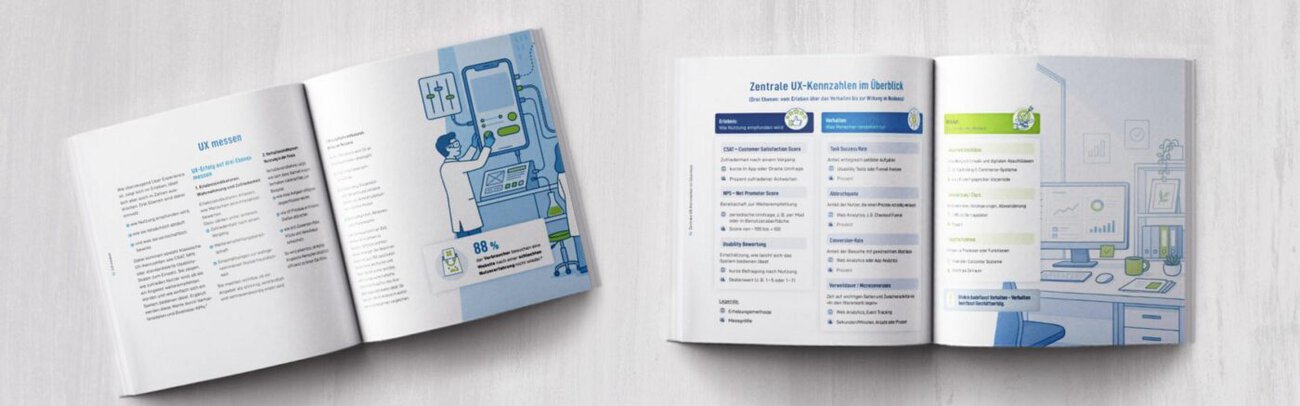
For more information and practical guidance on user experience design, see the white paper «User Experience Design» by dotSource: https://www.dotsource.de
]]>