
The timing of a major marketing campaign after the forced takeover of CS is probably no coincidence. All the more, UBS wants to make clear in a broad-based campaign on television, in the cinema, in newspapers, online, and with posters in particular: UBS "acts responsibly" and "is rational, conservative and thoughtful." In other words: UBS is not CS.
Since the emergency takeover was announced in March, UBS had already made a conspicuous effort in its communications to distance itself from CS - for example, with regard to the abuses in risk management that prevailed there. UBS President Colm Kelleher, for example, spoke about a "cultural filter" through which CS employees from investment banking had to pass in order to work at UBS.
Great commitment
The UBS management under the new CEO Sergio Ermotti disappointed many a Swiss at the end of August with its decision to fully integrate CS Switzerland. Many had hoped until the end that the traditional Credit Suisse brand would survive in some form, at least here in Switzerland.
According to the information available, the motto of the campaign is also appropriate: "A bank like Switzerland. Meaning: UBS is a Swiss bank with its roots in Switzerland. It is regionally anchored in Swiss society in the communities and also wants to promote young talent.
After the decision to integrate CS Switzerland, UBS immediately announced that it would continue to sponsor Credit Suisse at least until the end of 2025. This involves the promotion of sports, culture and society.
"A bank like Switzerland"
The campaign will initially be launched digitally next week: on YouTube, social media and in UBS's own channels such as the website and branches. It will then go live on TV and in cinemas in the week beginning October 9. The campaign will be visible until December. When asked, UBS itself only confirmed that a campaign for Switzerland was planned.
According to information from the film production environment, there will be commercials in various lengths, in all four national languages and in English. The production company Solid & Haller Film from Zurich is apparently involved; the film was directed by Eduardo Vieitez.
How does UBS want to get its message across? The video clips are intended to create an analogy between UBS and the country and Swiss society. According to reports, there are several scenes with a wide variety of people: for example, at a cocktail party, in a restaurant.
No prominent advocates
People in Switzerland should recognize themselves. So no celebrities are shown and no one from bank management. But Ermotti would be a suitable advertising figure. The 63-year-old from Ticino has an excellent reputation in the banking world. He did many things right during his first CEO tenure at UBS from 2011 to 2020.
UBS has also run major image campaigns in the past, such as the one now underway. In 2015, a global campaign ran with a very emotional commercial: to the well-known song "Hero" by Family of the Year, questions were displayed one after the other that accompany a life from birth to death. The core message of the ad was that, together with UBS, one could find an answer to these life questions.
Advertising alone will not be enough
Unlike the commercial that now appears, it was a clip based purely on text at the time. Then there was the international UBS commercial from 2010 - after the financial crisis and the near-death of Switzerland's largest bank in 2008, as well as the rescue by the state. Under the slogan "We will not rest," the tattered image was to be improved by associating the brand with historical celebrities: Astronaut Neil Armstrong, boxer Muhammad Ali, cellist Yo Yo Ma, opera singer Maria Callas.
But advertising alone - without subsequent action - is not enough. And in the case of the integration of CS, with the restructuring of the problematic areas and the necessary reduction of costs, UBS still has a long rocky road ahead of it that will drag on for several years. So a reassurance pill for the Swiss with regard to what is now the only major bank in Switzerland - i.e. an even bigger cluster risk in the financial center than before - is not a bad thing at all. (AWP/Young-Sim Song)
]]> Recently, it became public that the major Swiss bank Credit Suisse is being taken over by UBS. This raises questions: To what extent has this caused uncertainty among the population? Which banks are benefiting from this takeover? Based on study data on the period before and after the takeover, the market research institute Link provides answers. Population-representative data from two survey waves are used for this purpose: Wave 1 took place shortly before the takeover was communicated, Wave 2 in the week after.
Banks lose ground
Uncertainty about the future of Credit Suisse is reflected in the consideration of the Swiss population. There was a significant drop in the proportion of people in the population who could imagine becoming a Credit Suisse client. In the days before the takeover, the corresponding figure was 10 percent; after the takeover, it was only 5 percent. UBS also lost ground, albeit to a lesser extent, with consideration falling from 33 percent to 27 percent.
A similar picture of consideration can also be seen in the segment of individuals with disposable assets of over CHF 100,000, which is of particular interest to the banks. Here, too, both Credit Suisse (down from 13 % to 8 %) and UBS (down from 40 % to 31 %) recorded losses. Conversely, the competitors with the largest market shares - the cantonal banks, Raiffeisen and PostFinance - have each recorded a slight increase in consideration. These could therefore benefit from the takeover.
The events surrounding the takeover are viewed critically by the majority. A majority of respondents state that they believe the reputation of "Switzerland as a banking center" has been damaged by these events (61 % "agree" / "strongly agree"). Likewise, many respondents agree with the statement that these events demonstrate the need for increased regulation in the financial market. However, the events hardly trigger any fears about their own finances - only 14 percent are worried about this.
Struck brand confidence in Credit Suisse continues to fall
A decline in trust values can also be seen in Link's weekly brand tracking, the Swiss Brand Observer. Due to its continuous measurement (since September 2021), the instrument is suitable, among other things, for recording unforeseen events in connection with the perception of various metrics, such as brand trust or client satisfaction. In the week following the UBS takeover, only around 2 percent of the population perceived Credit Suisse as particularly trustworthy. This value remained at this level one week later. In the week before the takeover, this figure was around 7 percent, and in December 2021 it was still around 16 percent. UBS, on the other hand, lost less trust; overall, however, the trust scores for UBS and other banks over the last two weeks also show a slight downward trend, at best stagnating.
In terms of the so-called "buzz" (which financial service providers have respondents heard something positive or negative about in the news, in conversations with friends & relatives, etc. in the last 7 days), Credit Suisse shows a very strong negative increase, as expected, although the curve has flattened out slightly again in the past week. An increase is also present at UBS, but comparatively at a lower level. The net buzz score (ratio of positive to negative) is significantly better at UBS than at Credit Suisse.
]]>
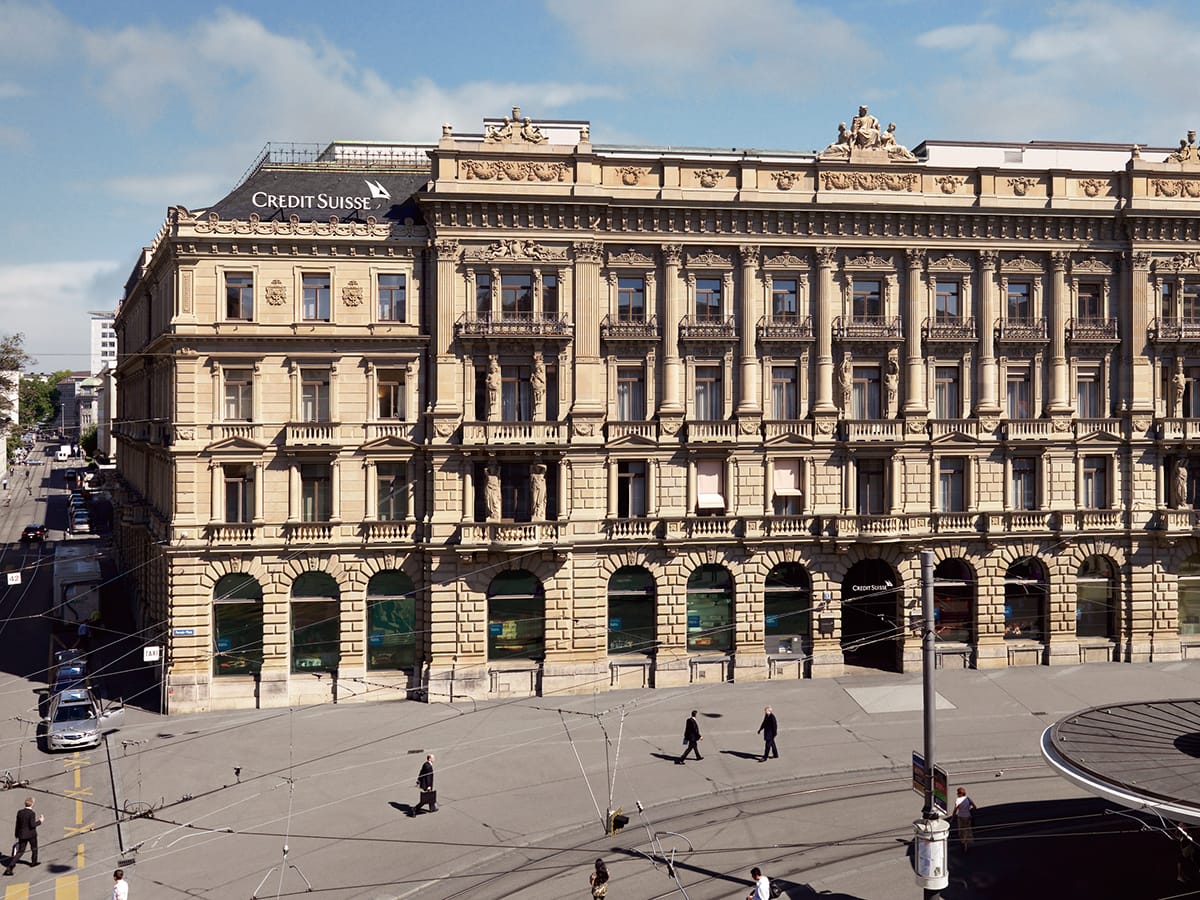
Since Sunday evening, the end of Credit Suisse has been sealed: The takeover of Switzerland's second-largest bank came about under pressure from politicians and regulators after CS's situation deteriorated drastically.
The transaction was preceded by marathon negotiations lasting all weekend, involving representatives of the two banks as well as federal councillors, the Swiss National Bank and the Financial Market Authority. This is what the Swiss media have to say about it:
Tamedia: "This takeover is a historic scandal."
For Tamedia, the takeover of Credit Suisse by the big bank UBS is a "historic scandal. The Confederation, Finma and the National Bank had allowed themselves to be taken to the cleaners by UBS. The new mega-bank has the advantages. Taxpayers, customers and employees the disadvantages. The largest Swiss bank is snatching up the 166-year-old Swiss institution Credit Suisse for a purchase price of three billion francs, not even half of Credit Suisse's already low stock market value. The federal government's measures burdened taxpayers with a risk of 9 billion francs. Switzerland's image as a stable financial center has been permanently damaged by the demise of Credit Suisse.
NZZ: "A zombie is gone, but a monster is born".
No one would have thought the failure of Credit Suisse possible just months ago, comments the New Zurich Newspaper. However, this was not an accident. In 2007, the Swiss bank had a stock market value of 100 billion francs, and last Friday 7 billion of that was still left - the same amount as the Vaud Cantonal Bank. Thus, a huge destruction of value had taken place, caused by managers who had negligently underestimated risks and helpless board members who had too often failed to control the bank. The fact that the National Bank and the financial supervisory authority pushed for the takeover of Credit Suisse by UBS had to do with the fear of a Monday stock market panic and pressure from Washington and London, he said. "Switzerland has now gotten rid of a zombie bank, but will wake up on Monday with a monster UBS bank," writes the NZZ.
View: "Financial plan with a colossus".
The Credit Suisse case is also a case of the Swiss financial center, comments the View. Switzerland had been asleep and had watched for far too long as the once proud Escher Bank slid into ruin with its eyes wide open. But "why didn't the authorities intervene sooner when it became increasingly clear that the bank's restructuring plan would not work? And "why were there no alarm signals from other Swiss banks?" "Why did it take pressure from foreign regulators and finance ministries" for the Swiss to carve out a stopgap solution overnight? These are questions that, according to the Viewmust be answered urgently. Because only losers were left behind.
Aargauer newspaper: "Solution catastrophic"
In the end, there was no other choice, comments the Aargauer newspaper. A solution had to be found by Sunday evening - even before the first stock exchanges in Asia opened. Otherwise Credit Suisse would have collapsed on Monday, the Swiss financial system would have been shaken - and with it the global financial system. It could have triggered a conflagration, an international banking crisis. No one in Switzerland wanted to take that risk. "No good solutions can be found under such tremendous pressure, and what was communicated in Bern last night is not just bad, it is catastrophic," the newspaper writes. Credit Suisse is being sacrificed, it says, for greater goals, for the stability of the financial system. UBS is taking over CS at a bargain price of 3 billion francs, and is having the assumed risks compensated by the federal government with a guarantee of 9 billion francs.
Südostschweiz: "Tragic end to a tragedy".
The commentary of the Südostschweiz describes the end of Credit Suisse as tragic and sad. It is tragic, he says, because the bank was actually well positioned in terms of capital and the board of directors and top management had an idea of how CS could get back on a stable footing in two or three years. However, the uncertainties triggered by bank failures in the US, which were later fueled by highly inept statements by CS's major Saudi shareholder Saudi National Bank, had snatched this opportunity away from Credit Suisse. But it would be too easy to blame external circumstances for its collapse. Rather, the end of CS is also the end of a years-long tragedy of management failures and scandals that brought the bank into this predicament in the first place, from which it was unable to extricate itself on its own.
La Liberté: "The unthinkable has happened".
The unthinkable has happened and in a flash, comments the newspaper La Liberté the takeover of CS by the big bank UBS . Credit Suisse had become the victim of a spectacular crisis of confidence last week. The Federal Council had no choice in its measures. The newspaper asks above all about the fate of the employees. Whatever the managers said, the result will be "painful" for them. There will also be a bitter taste for taxpayers, as the Swiss National Bank will have to advance up to 200 billion francs, the newspaper says. (SDA/swi)
]]>
Gold in the Direct category: Terence Fuchs and his brother Cedric Fuchs with their work "Franken Fakten".

Gold in the Cyber category was won by Selina Engeli and Naomi Gulla with #ChangeThePants.

In the Outdoor category, Julia Fuchs and Nathan Bastino were convincing with "Invest in Yourself".


And last but not least: The winners of the Film category are Natalie Friedrich and Josephine Ducret with "Nachspielzeit im Rentenalter".

Credit Suisse acted as the briefing donor. "Change the Game" was the motto and the young talents were to put the spotlight on finance and women with the involvement of the women's soccer team (Advertising week reported).
]]> Since 2019, Credit Suisse has been celebrating "Entrepreneur Day" on February 20. To mark the birthday of its founding father Alfred Escher, the bank is collaborating with the Startups.ch platform to enable entrepreneurs to set up a company free of charge. As part of the continuation of the "Bank for Entrepreneurs" campaign, Credit Suisse is launching three portrait films of young entrepreneurs. In doing so, it not only offers them a platform, but also positions itself as the bank for entrepreneurs.
Over the past five years, Credit Suisse has already enabled hundreds of companies to start up on February 20. These include the start-ups Kuori, Grow-Grow Nut and Storabble. In three short portrait films, the founders talk about their experiences and encourage budding entrepreneurs to take the step into self-employment. The main message of the spots conveys the simplicity of starting a business on "Entrepreneurs' Day" and inspires to turn hurdles and concerns into a "why not" moment.
Credit Suisse is also demonstrating its commitment in 2023: On February 20, it will once again be supporting the leap into Swiss entrepreneurship by covering the start-up costs.
The spots are available on the Instagram and LinkedIn channels as well as on credit-suisse.com/stories to find.
Responsible at Credit Suisse: Sandra Biering (Head Marketing Initiatives and Advertising Corporate/Institutional Banking), Sandra Seydel, Deisha Jaggi (Marketing Initiatives & Advertising Corporate Banking), Valon Saiti, Amira Beya (Social Media), Simon Bachofner, Joel Gerber (Digital Campaigns). Responsible at thjnk Zurich: Alexander Jaggy, Pablo Schencke (GF Creation), Raymi Mendoza (Art Direction), Anna-Fiona Geller (Text), Andrea Bison (GF Consulting), Angela Cristofari (Consulting), Gordon Nemitz (GF Strategy). External partners: Filmgerberei (production), Stefan Tschumi (camera), Marike Löhr (producer), Sarah Luo (edit), Silvio Gerber (grading).
]]>
Despite a robust labor market and immigration, the retail sector recorded declining sales growth in 2022 as the industry faced the fading of the pandemic special effects. In addition, recruiting difficulties and labor shortages troubled retailers. A lack of new entrants to the industry and a shortage of junior staff are currently weighing on the personnel situation. The authors of the study expect non-food sales to grow by around 0.8 percent and food/near-food sales to increase by around 2.1 percent in the coming year.
The Swiss economy proved thoroughly resilient to the difficult global environment in 2022 - the resilient labor market and immigration supported consumption. However, the retail sector was confronted with the fading of the pandemic special effects. As a result, the sector recorded a decline in sales after two years of strong pandemic-related sales. However, retail sales were still higher than before the pandemic. In particular, those segments that were able to benefit from the circumstances of the pandemic lost sales growth without these special effects. These included first and foremost the food/near-food segment. The non-food segment held up comparatively better, supported by pent-up consumption, particularly in the leisure sector.
Digital competencies support online commerce
Last year, online retailing was unable to match the high growth rates of the previous two years, but sales remained at a high level. This was due not least to consumers' enhanced digital skills and interests. Due to the special circumstances of the pandemic and the associated incentives of online retailing, these have once again improved significantly - especially among the age group 60 and older. Meanwhile, the use of social media has also reached high levels. Accordingly, 62 percent of the population participate in a social network, and among 15- to 29-year-olds the figure is as high as 91 percent. This points to the potential for another emerging channel of online commerce, shopping via social media. Credit Suisse economists therefore expect online retail sales in Switzerland to rise to around CHF 13 billion in 2023.
The good labor market situation following the pandemic is also evident in the retail sector: Unemployment is at a record low and the number of vacancies is high. As a result, numerous retailers are increasingly facing recruitment difficulties and labor shortages.
Experts expect economic growth to slow in the new year. However, a continued stable labor market situation, slight real wage growth and immigration should support retail sales. Nominal sales in the food/non-food sector are expected to increase by around 2.1 percent, not least due to the anticipated inflation rate (+1.6 percent). Across all non-food segments, the Credit Suisse economists expect sales to grow by around 0.8 percent. In addition, the shift in sales from the offline to the online channel is likely to remain important.
Here you can download the study.

 "Credit Suisse positions itself as the bank for the courageous and curious. Among other things, this also means that our client:ing approach is always breaking new ground. That's why we're thrilled that young and talented Swiss creatives are engaging with the Credit Suisse brand, which is steeped in tradition. It is a pleasure for us to support the ADC Young Creatives Award 2023 and we are looking forward to bold, disruptive and inspiring concepts!" says Dang Nguyen, Global Head Brand, Strategy & Advertising at Credit Suisse.
The ADC Young Creatives Award is the competition for young creatives under 30; participants must have been born after June 23, 1992. Detailed information on the content of the briefing will be available at the warm-up event on January 25, 2023 at 6:30 p.m., for which you can register at here log in.
Time until February 22, 2023
Participants then have until February 22, 2023 to submit their work. There are four ADC Young Creatives Awards to be won in the categories Film, Outdoor, Direct and Cyber. The winners of the Young Creatives Award can also become members of "Young ADC" and thus part of ADC Switzerland. The special thing about this is that the Young Professionals receive a "ticket" to join the jury at the next ADC judging and thus decide on the Shortlist and Bronze Awards on the first jury day.
In addition to Credit Suisse as briefing partner, APG|SGA Out of Home Media, Blick, Die Post, Swissfilm Association and Keystone SDA are supporting the award. Media support for the important creative young talent competition comes from the trade media m&k advertising week and Personal. The organizer is ADC Switzerland, supported by the LSA Leading Swiss Agencies association.
]]>

It's not really a goodbye. The bank says it will remain at Roger Federer's side. Credit Suisse is convinced that his qualities will make a big difference, and not just in professional tennis. Because people retire - personality does not.
The campaign surrounding the retirement announcement and the Laver Cup was also created with this in mind: "Attitude never retires." As a kick-off, an animated social media post went live one day after Federer's announcement, which is one of the most attention-grabbing posts ever made by Credit Suisse Switzerland. All moving image assets were produced by TBWA\Vido.
This was followed by further measures, both international and national, with digital and print advertisements.
Responsible at Credit Suisse: Roman Reichelt (CMO); Dang Nguyen, Stephanie Trachsel, Reimund Immoos, Tanja Klotz (Strategy, Brand & Advertising); Sandra Caviezel, Mira Song Mäder, Marcel Steiner (Sponsoring); Anette Hiscott, Simon Bachofner, Valon Saiti, Bettina Wolf (Digital & Data Marketing). Responsible agency: TBWA\Zurich (concept), TBWA\Vido (implementation).
]]>Credit Suisse has been the main partner of the Swiss Football Association (SFV) since 1993 and has now also been the main partner of the Swiss women's national soccer teams for 14 years. In this role, it has been committed to equal opportunities - and as an employer for much longer. Socially, however, the goal has still not been fully achieved.
Now Credit Suisse wants to go one step further and is launching its new #ChangeTheGame initiative. The initiative will give global efforts around equal opportunities a platform to bring about concrete change. True to the motto: Equal opportunities for all. Everywhere.
Players receive the same bonuses
So there is also a change in Credit Suisse's sponsorship commitments: From now on, the same premiums will be paid to the women's and men's national teams. This is a long overdue and well-deserved change. Credit Suisse is also expanding its support for club soccer and, in addition to the men's Super League, is now also sponsoring the women's league and cup in Switzerland.
Credit Suisse's internal measures as an employer are also part of the initiative. For example, the "Real Returns" program has been in place since 2014 to help professionals who have taken a longer (baby) break to continue their careers in attractive positions. In addition, Credit Suisse was recognized for its fair wages by the Social Partnership Office for Equal Pay in the Banking Industry.
#ChangeTheGame is set to really take off with UEFA Women's EURO 2022 starting July 6, 2022. The focus of the women's empowerment campaign is the film "Walk On". For the film, probably the best-known football anthem of all, "You never walk alone" by Gerry & The Pacemakers, was reinterpreted.
Credit Suisse's message is: "Keep at it, keep fighting - in other words: Walk on and change the game." A number of players from the national team are playing prominent roles, namely Lia Wälti, Eseosa Aigbogun, Ramona Bachmann, Luana Bühler, Ana Maria Crnogorčević, Sandy Maendly, Coumba Sow, Meriame Terchoun, Gaëlle Thalmann, and Riola Xhemaili.
The campaign starts at the end of June shortly before the UEFA Women's EURO 2022 and accompanies it. In addition to a TV flight, digital channels are being used in particular. It is no coincidence that the "#" was used as a symbol of dialog. Thus, the campaign is to be carried by Influencer:innen in the social media and amplified accordingly. In addition, the campaign will also be experienced in DOOH.


Responsible at Credit Suisse: Roman Reichelt (Chief Marketing Officer); Dang Nguyen (Global Head Strategy, Branding & Advertising); Sandra Caviezel (Global Head Sponsorships & Partnerships); Thierry Pool (Global Head Digital & Data); Stephanie Trachsel (Global Head Brand Management, Strategy & Insights); David Schätti (Head Marketing Initiatives & Advertising CH); Sabrina Mock-Marty (Head Marketing Initiatives & Advertising Digital Banking); Marisa Piffari, Isabelle Reiser (Marketing Initiatives & Advertising Digital Banking); Björn Fröhle (Head of Football Sponsorship); Michael Rütti, Patricia Ottenburg, Vanessa Marra (Football Sponsorship); Mia Marti (Marketing Strategy); Anette Hiscott (Head of Digital Campaigns); Simon Bietenhader, Linda Mullan (Digital Campaigns); Valon Saiti (Head of Social Media Content Planning); Reimund Immoos (Head Global Media & Cross Channel); Tanja Klotz, (Media & Cross Channel). Responsible at Thjnk Zurich: Alexander Jaggy, Pablo Schencke (GF Creation), Lukas Amgwerd, Tobias Roeben (Text), Lukas Frischknecht, Lukas Wietlisbach (Art Direction), Josephine Jeanguenin, Marco Martoglio, Leorah Uhricek (Graphic Design), Gordon Nemitz (GF Strategy), Fabienne Peyer (Strategy), Andrea Bison (GF Consulting), Angela Cristofari, Marie Vuilleumier, Linda Zaugg (Consulting), Axel Doepner, Julia Koop (Producing). External partners: Animals (director), Hillton (production), Jingle Jungle (sound studio), Per Kasch (photographer), POP Postproduction GmbH (post-production image), Supreme Music GmbH (music production).
More about the initiative on credit-suisse.com/change
]]>
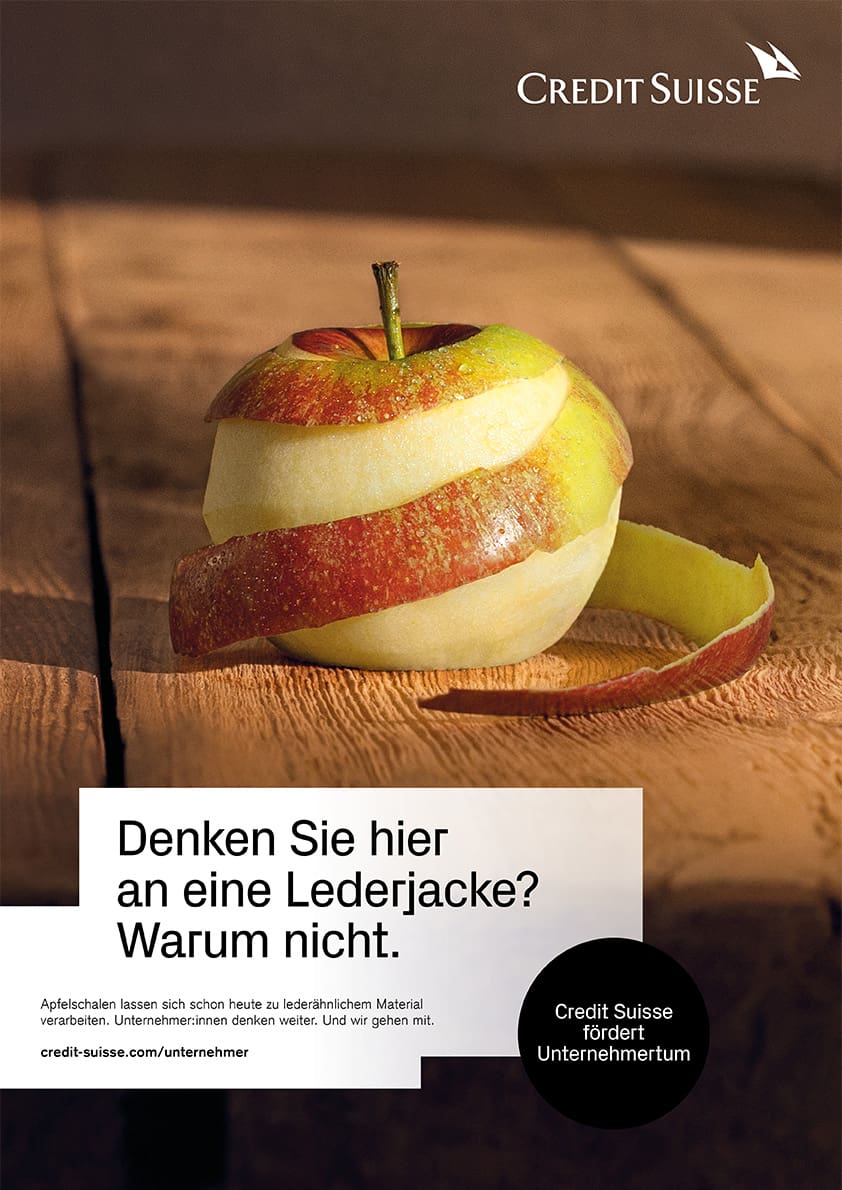
Entrepreneurs are constantly looking for new business or product ideas. To do so, they need a healthy dose of optimism. Two years ago, Credit Suisse therefore established the communication platform "Why not? (Werbewoche.ch reported).
Now Thjnk Zurich continues the ode to entrepreneurs. Three new subjects - spider, mold and apple peel - show current cases that inspire further thinking. The familiar campaign mechanics are retained. A first moment of irritation lets the viewers dive into the head of the entrepreneurs and experience a little "aha" moment themselves. The new subjects complement the existing motifs, which are being used once again for the current campaign.
In addition, new clips for the "10vor10" sponsorship will be shown for the three subjects and the Entrepreneurs' Day will be promoted. On February 20, all Swiss citizens can start a company for free. The campaign will be seen throughout Switzerland.


Responsible at Credit Suisse: Roman Reichelt (Chief Marketing Officer); Dang Nguyen (Head Strategy, Brand & Advertising), David Schätti (Head Marketing Initiatives & Advertising Switzerland), Sandra Biering (Head Marketing Corporate & Institutional Banking), Tobiasz Kisow, Nicole Schweizer, Sandra Seydel, Deisha Jaggi (Project Team Marketing Initiatives & Advertising), Ray Immoos (Head Media), Tanja Klotz (Media Strategy & Planning), Anette Hiscott (Head Digital Campaigns), Joel Gerber, Simon Bachofner (Digital Campaigns), Valon Saiti (Social Media Content Planning), Reto Brändli (Marketing Content). Responsible at Thjnk ZurichAlexander Jaggy, Pablo Schencke (GF Creation), Johannes Gorsboth (Text), Carolin Widemann, Stefanie Huber (Art Direction), Andrea Bison (GF Consulting), Angela Cristofari (Consulting), Alexandra Niggeler (Agency Producing), Gordon Nemitz (GF Strategy); External partners: Stillstars, René Hauser; Douglas Mandry (photographer); PX2 (image editor).
]]>
In October 2020, Credit Suisse launched CSX, its digital banking offering, in response to changing client needs and a market environment in which "mobile-first" solutions are becoming established at an increasingly rapid pace. CSX is said to combine the simplicity and flexibility of neo-banks with the expertise and service offering of a major bank. One year after its launch, CSX is considered the best-known Swiss brand for digital banking in Switzerland: Every second person knows the name, as shown by the Neo-Bank Study and the HSG Swiss Payment Monitor.
Rapid growth, lively use
Since launching CSX just over a year ago, the bank has seen a tripling of downloads of its online banking app and a doubling of account openings in Switzerland. For Credit Suisse, the level of activity among clients is confirmation that CSX is reaching the digitally affine, younger target group very well: Half of the now more than 100,000 CSX clients are younger than 34.
Customer feedback central
The CSX Offering was designed from the outset with customer needs in mind. These needs would continue to be consistently involved in product development. Since October 2020, the digital offering has been continuously expanded with new services, functionalities and strategic partnerships, which should further increase the attractiveness of CSX and lead to a unique positioning in the market.
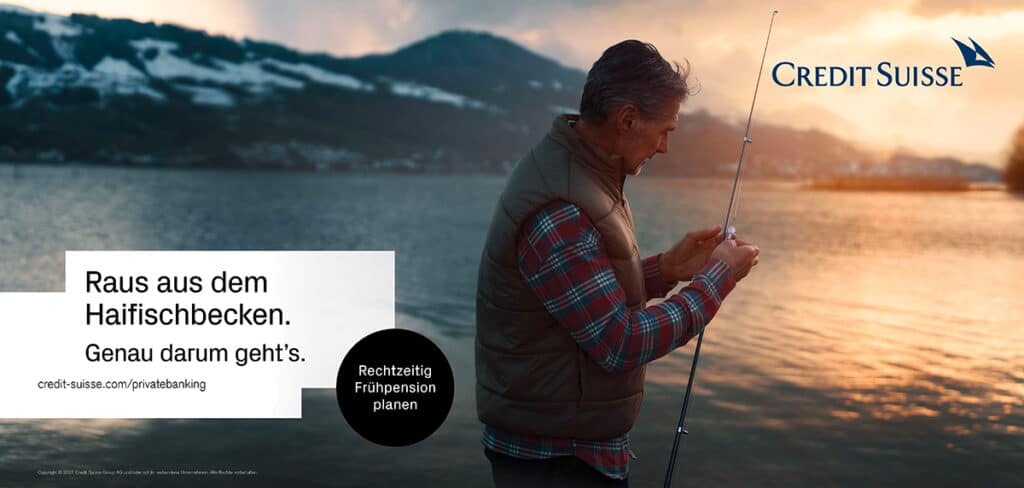
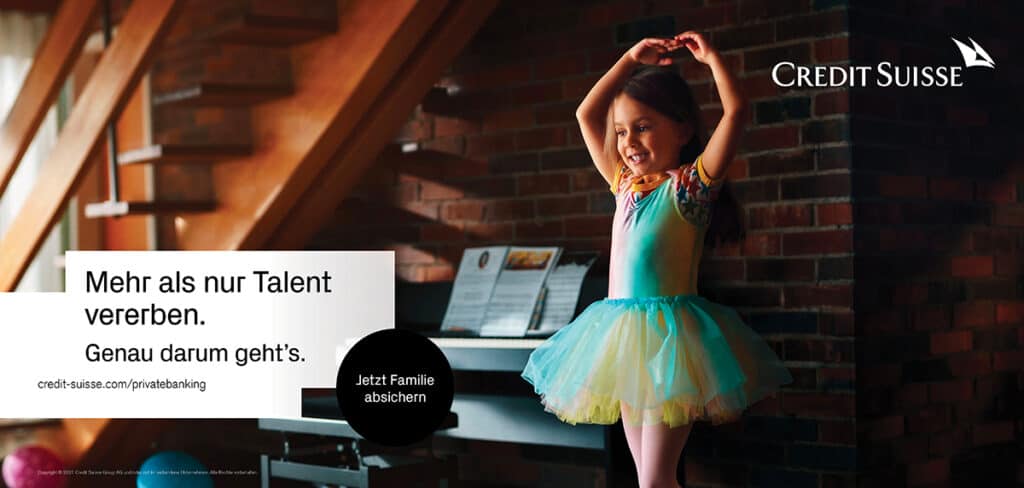
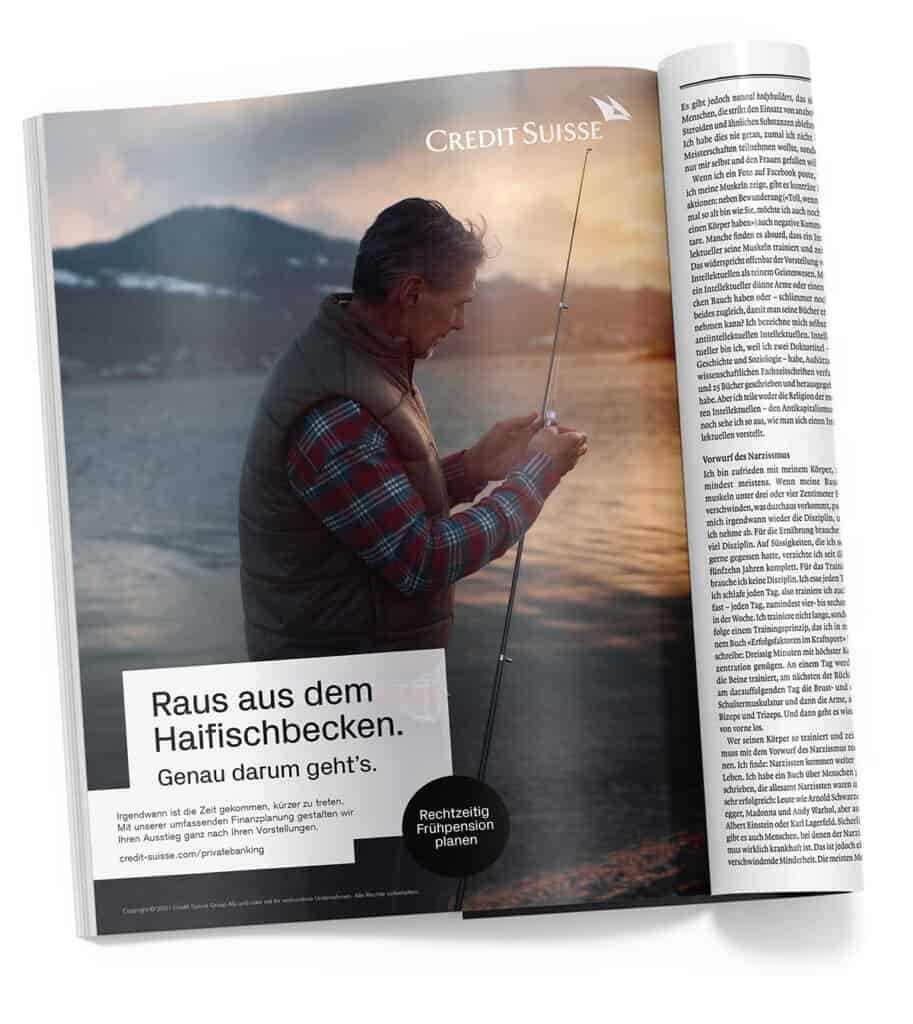
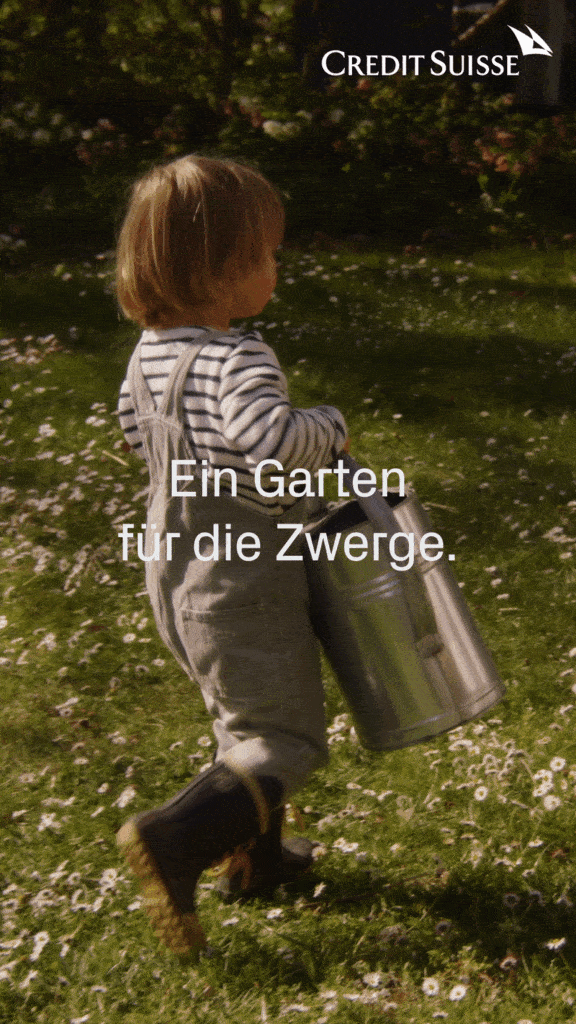
]]> Under the communicative umbrella "That's what it's all about," the campaign will feature numerous measures both on and offline. The measures are intended to position Credit Suisse as a facilitator of individual life goals. TBWA\ and the bank do not remain on the surface, but ask the question "What is life really about?
"Private banking isn't just about accumulating wealth, it's about understanding exactly what they want to do with that wealth," explains Angelo Sciullo, Creative Director at TBWA\. "Most people have moments in life when you stop for a moment and ask yourself 'What are my priorities in life? What is really important to me?' That's exactly the kind of moments we want to create with this campaign."
Broad-based, long-term platform
The campaign is designed as a long-term platform to meet all the requirements of effective marketing communications. In addition to the image component, it also covers various product areas such as mortgages, investments, and wealth planning, and addresses not only the private banking target group but also more specific customer groups such as high-net-worth individuals (UHNWI).
The multi-stage campaign, which consists of an awareness, consideration and performance tier, will launch Monday - all with data-driven digital, social, TV, print and POS advertising segmented by target audience.


Responsible at Credit Suisse: Roman Reichelt (CMO), Dang Nguyen (Head Brand, Strategy & Advertising), David Schätti (Head Intiatives CH), Anja Herrmann, Susanne Bill, Simone Höller, Cyrill Steiner (Private Banking Advertising & Initiatives), Angelo Pellicorio, Marco Dalla Valle (Digital), Ray Immoos, Kristel Gschwend, Tanja Klotz (Media). Responsible at TBWA\: Manuel Wenzel, Angelo Sciullo, Katharina Binder, Gaston Filippo, Sarah Rüegger, Jonathan Grubenmann, Tom Kees, Domenico Catena (creation), Stephanie Trachsel (strategy), Marcel Mägerle (consulting). Implementation: Sebahat Film + Foto (Art Buying/FFF), Per Kasch (Photo & Video), Markenfilm Schweiz (Film Production) / Esteban (Director), Florian Studer (Producer), Mokoh Music (Music Production), Jingle Jungle (Recording Studio).
]]>