
What influence does or did the Corona pandemic and the associated measures have on our personal well-being? And above all, for whom? That's what Marketagent.com Switzerland wanted to know in a current, representative survey. It was conducted from July 7 to 16, 2022 in German- and French-speaking Switzerland. A total of 1,036 people between the ages of 14 and 74 were surveyed.
The results confirm that the Corona measures, with their sometimes profound changes in everyday life, were a challenge for many. This is especially true for an age group that has often remained under the radar in the public discussion so far: young adults.
The 20- to 29-year-olds are fighting on several fronts
For example, more than half (52 percent) of 20- to 29-year-olds say that the pandemic has been psychologically stressful for them. That is 14 to 24 percentage points more than among all other age groups.
"We can only speculate about the reasons," says Cornelia Eck, Managing Director of Marketagent.com Switzerland, and elaborates: "Many are facing a new phase of life at this age, starting their studies, positioning themselves in their careers. This is the worst possible time to have to do without interpersonal contacts and exchanges with fellow students and peers."
In addition, partnerships and relationships in this age group are usually also first established and strengthened, which is more difficult to implement in view of the isolation and limited opportunities. At least this is how the results can be interpreted: For example, one-fifth of young adults (21 percent) say that the pandemic has negatively affected their relationship. This proportion is significantly higher than among those aged 50 to 74 (9 percent) and also tends to be higher than among those aged 30 to 49 (16 percent) and those under 20 (17 percent).
Teenagers: thrown back on the family
As far as the family is concerned, the picture is somewhat different. Here, it is mainly the under-20s who have difficulty. This is not too surprising, since this is the age at which young people seek new, social contacts and distance themselves from the parental home. Instead, they saw the pandemic as being thrown back on the family. 38 percent of them say that Corona has had a negative impact on family life.
However, this is not the case for the representatives of those age groups most likely to have teenagers at home. Here, the proportion is significantly lower (30 to 49-year-olds: 17 percent; 50 to 74-year-olds:15 percent).
Hardly any influence on physical well-being
For a majority of 53 percent, the pandemic did not affect their physical well-being according to their own assessment. This is particularly true for 30 to 49-year-olds and 50 to 74-year-olds (52 percent and 61 percent, respectively). However, if we look at who felt negatively affected physically, the comparatively high proportion among young adults is again striking. One-third of 20- to 29-year-olds (34 percent) say Corona has negatively affected their physical well-being, while "only" a quarter (25 percent) of 30- to 49-year-olds say the same, for example.
As far as the professional situation is concerned, a majority of 55 percent see no influence. For one fifth of respondents (21 percent), the professional situation has even had a positive impact. Here, the flexibilization of working models will have been welcomed by many.
]]>She comes from a communications background and can put the skills she learned in this job to good use: Zurich's health director Natalie Rickli. Originally she had done the KV, then worked in various media companies, most recently she was a freelance communications consultant. This helped her in her political career as a member of the National Council of the SVP and, since 2019, as a member of the government and Health Director of the Canton of Zurich.
How did she experience the Corona period as health director? How good was her directorate's communications work? Did she hire crisis communicators? What does she say about the wrangling between the federal government and the cantons? How is the relationship with her party, which she also contradicted at times during the Corona period? And how well is Switzerland prepared for a possible new Corona wave in the fall? Is a new booster vaccination coming this fall?
The ComSumCast is the replacement for the Communication Summit of the ZPRG (Zurich PR Society) and the ZPV (Zurich Press Association). Due to the pandemic, the annual event at ETH Zurich is cancelled. A new episode of the Comsumcast is published every month. Journalist and presenter Reto Lipp talks to pioneering minds from the world of media and communication. The basic topic is the pandemic and its impact on the communications industry.
The ComSumCast is also available on Spotify and with Apple Podcasts to listen to. It is produced by Tablecast.


The first ten weeks of 2020 have dramatically changed life for virtually every country and almost every person. COVID-19 has the world in its grip - people are moving to home office, the virus is dominating the news, upending financial markets and having a dramatic impact on industries from travel to healthcare to hospitality. Mobile is no exception. App Annie has taken a look at apps for business, education, gaming, social, finance and dating and shows how media consumption is evolving.
Time spent on the cell phone increases enormously
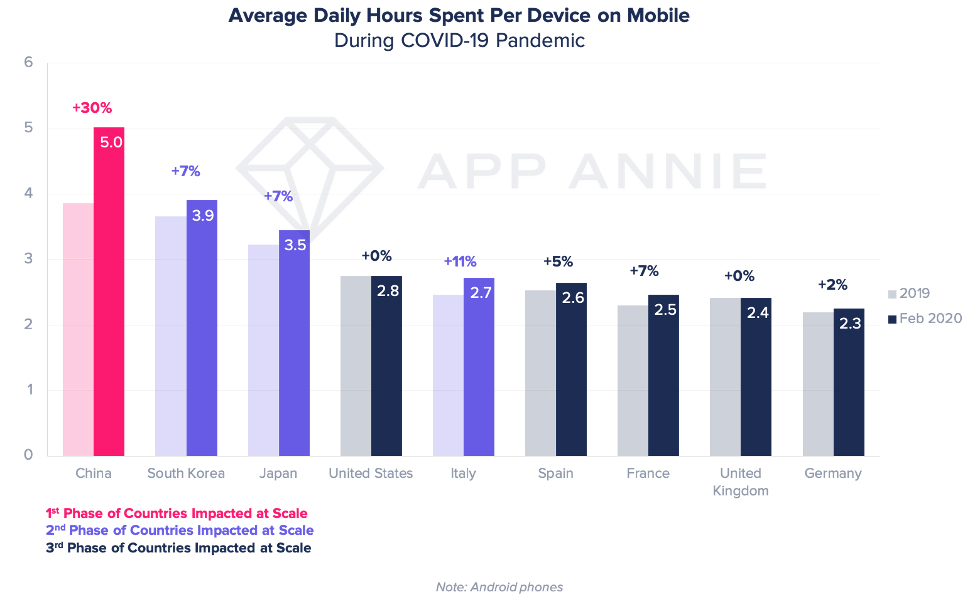
Overall, daily smartphone use has risen significantly in the most affected countries. In China, consumers spent an average of 5 hours a day on their cell phones in February during the crisis, an increase of 30% compared to the 2019 average. In Italy, the figure rose by 11%, i.e. to 2.7 hours a day.
Office and educational apps: doubling the duration of use
The amount of time Chinese people spend using office apps has doubled since the lockdown and the associated social distancing policy. Before the outbreak, it was around 10 hours a week, after the outbreak around 20 hours.

The most popular apps included Huawei Cloud WeLink, DingTalk and Zoom Cloud Meetings. In the week starting February 23, around 761,000 downloads of office apps were made in the App Store and on Google Play in Italy, an increase of 135 percent compared to the average of the previous 52 weeks.
Gaming: China records growth of 80 percent
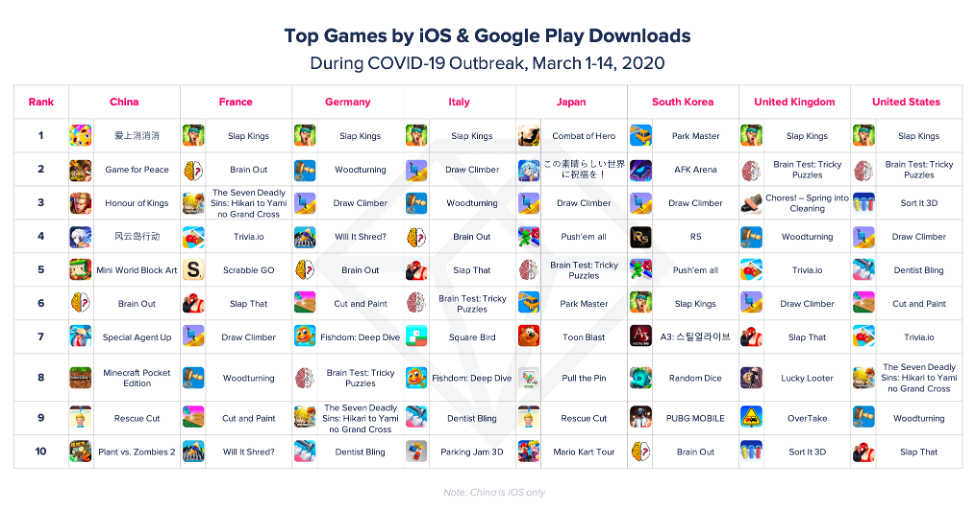
Game downloads also rose rapidly. In China, there was an 80% increase in February compared to the average from the previous year.
Social media and entertainment apps: alone together
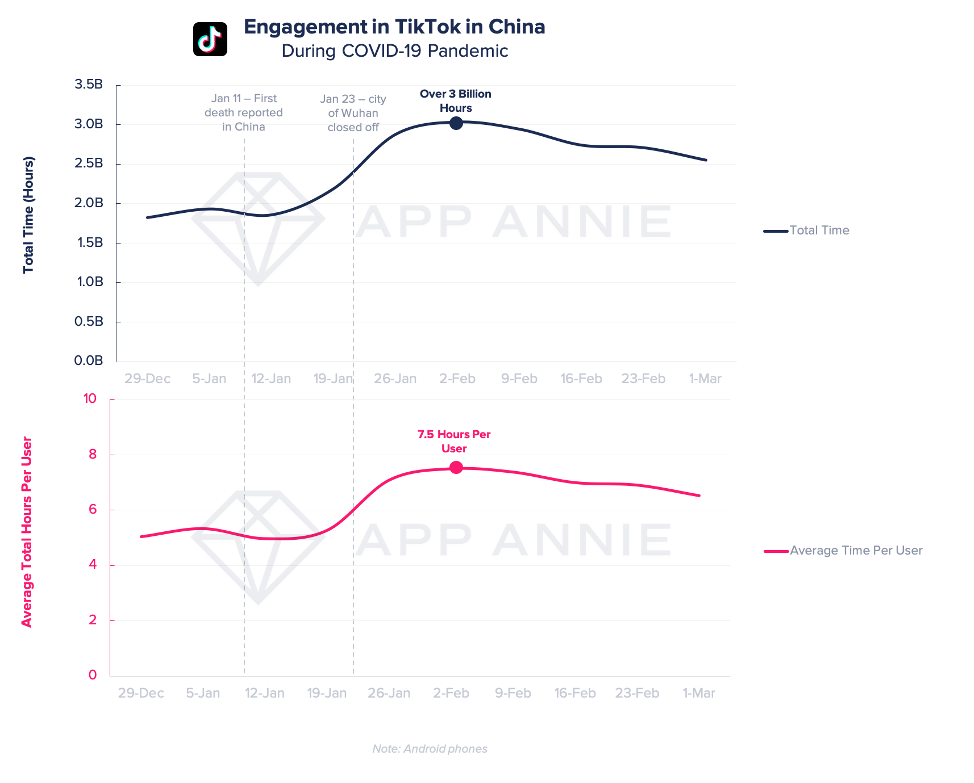
In China, TikTok recorded an increase in average time per user and total time spent on the app on Android phones after the first COVID-19 outbreak. In total, users spent more than 3 billion hours on the app in the week starting March 1, 2020. A 130% increase compared to the weekly average in 2019.
Fintech apps: Usage time in Japan doubles
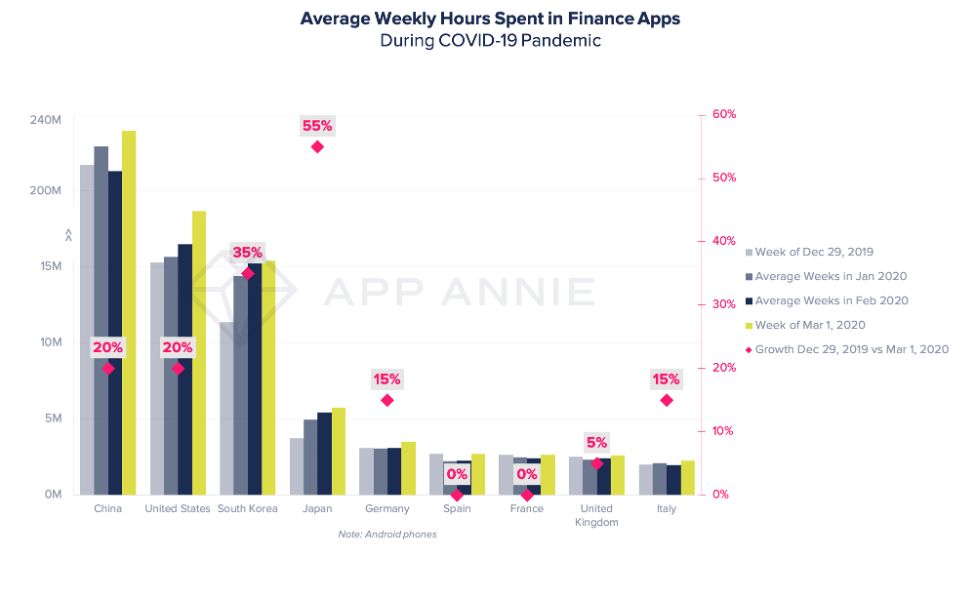
The economic instability of the stock market has also led to an increase in the use of fintech apps. Weekly usage in Japan, for example, has increased by more than half since the end of December. In Italy, South Korea, China, the United States and Germany, a double-digit percentage increase can also be observed.
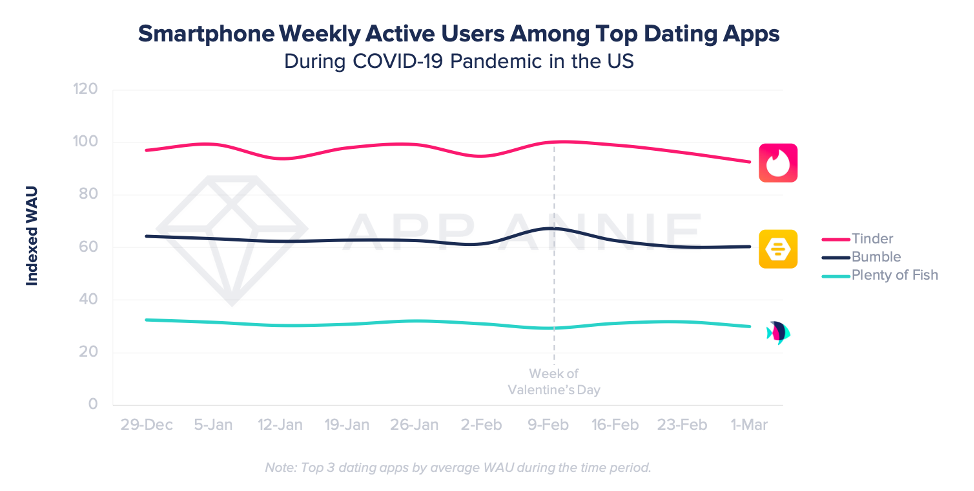
Dating: online flirting remains popular
Within dating apps, users can still actively exchange information without meeting in person. After Valentine's Day, the use of dating apps in the United States declined. However, this observation can be made every year.
* App Annie is a mobile data analytics service that provides trusted app data and insights to help companies position themselves for success in the global app market. The company is headquartered in San Francisco with 12 offices worldwide.