Digital Outdoor Advertising in St. Gallen: New Screens for the Downtown Location
Displayactive.ch continues to expand its digital advertising network: The company has put new premium advertising screens into operation at the Central parking garage, located at Unterer Graben 25 in St. Gallen. In addition to the newly installed displays, the existing elevator screens have also been successfully integrated into the network. This creates a high-quality advertising offering at one of the busiest parking garages in the city of St. Gallen, engaging visitors to the downtown area throughout their entire customer journey.
The Central parking garage is owned by Aurora Anlagestiftung and operated by Indigo Suisse. It offers convenient daily parking in close proximity to shopping, dining, and services. According to displayactive.ch, the screens’ prime locations allow advertising messages to be effectively placed in an attractive downtown setting.
Versatile for use in regional and national campaigns
By integrating into the Switzerland-wide network of displayactive.ch, advertisers will benefit from high visibility at a high-traffic location. According to the company, the new screens are suitable for both regional businesses and national campaigns and can be flexibly combined with other locations in the displayactive network.
Marc Steiner, Managing Director of displayactive.ch, comments on the new location: «With the Central parking garage, we are gaining another high-quality, premium location in Eastern Switzerland. The screens reach a large number of passersby and enable our clients to communicate in an eye-catching and effective way.»
Aurora Investment Foundation Sees Added Value for Visitors
The owner of the parking garage also views the collaboration positively. Silvan Schneider of the Aurora Investment Foundation says: «The new screen solution allows us to flexibly combine our own content and information with high-quality advertising campaigns. This way, we create added value for our visitors while also enhancing the parking garage’s status as a modern communication hub.»
Advertising spaces in the Central St. Gallen parking garage are now available for booking. With the launch of this location, displayactive.ch continues its growth trajectory and strengthens its position as a provider of digital out-of-home (DOOH) advertising in Switzerland.
]]>
The Swiss advertising market continues its recovery following the summer break. In August, traditional advertising spend reached 262.0 million Swiss francs, up 1 percent from the previous year. Year-to-date (YTD), total advertising spending amounts to 2,395.9 million Swiss francs, representing a 1.1 percent increase compared to the previous year. This is according to the latest figures from Media Focus.
A Mixed Picture Among Traditional Media Groups
Among traditional media groups, the picture in August was mixed. Print saw a decline of 12.5 percent, while TV was down 8.5 percent from the previous year. In contrast, radio (up 6.4 percent) and movie theaters (up 5.8 percent) posted gains. Out-of-home advertising showed particularly strong growth, up 22.0 percent. According to Media Focus, in addition to the neutrality campaign by Pro Schweiz, campaigns by Galaxus, IKEA, and McDonald’s also contributed to significantly higher out-of-home advertising volume compared to August 2025.
Looking at the performance of media groups since the beginning of the year, all media groups are showing a decline, with the exception of out-of-home (up 17.5 percent). Out-of-home is thus a major driver of overall growth in the Swiss advertising market.
Digital Market Experiences a Decline Due to Technical Factors
In the digital market, gross advertising spending in August totaled just 114.5 million Swiss francs, marking the first time this year that it has fallen below the previous year’s figure—down 33.9 percent. According to Media Focus, however, this decline should not be interpreted as an organic market trend but is largely attributable to external technical factors affecting data collection. In early July, Google implemented a security update, which led to greater volatility in data collection. The report adds that the situation improved again as the month progressed. Year-over-year comparisons remain limited, particularly for Search and YouTube.
Search dominates the digital media mix with a 50.1 percent share, followed by display at 36.4 percent and YouTube at 13.5 percent.
Eleven sectors are growing, ten are in decline
In August, the Personal Care sector posted the strongest percentage growth at 32.2 percent, primarily due to the out-of-home campaign by Fielmann Optik Image and the TV campaign for Purina Pro Plan pet food and care products by Nestlé. Nevertheless, the sector ranks in the bottom third of the table. Construction, Industry, and Home Furnishings recorded the second-highest growth at 30.1 percent and ranks in the top third of the list. These are followed by Digital & Household (up 28.7 percent), Initiatives & Campaigns (up 25.2 percent), and Telecommunications (up 22.9 percent).
Despite a negative year-to-date performance, the food industry is at the top of the rankings this month with a 13.1 percent increase. The finance sector (up 18.6 percent) rounds out the top three. Transportation, fashion & sports, and services are also showing year-over-year increases.
In contrast, ten sectors have seen significant declines. The tobacco products sector has been particularly hard hit, with a 63.8 percent drop, followed by vehicles (down 35.1 percent), cosmetics and personal care (down 28.6 percent), energy (down 28.1 percent), and cleaning supplies (down 21.8 percent). Despite a 20.6 percent decline, the retail sector, as in the previous month, remains in second place in the table.
Food Industry Leads YTD Rankings in the Swiss Advertising Market
As of August, the food industry continues to lead the rankings in the traditional advertising market, followed by retail and finance in second and third place. This ranking has remained unchanged since June. The digital advertising market presents a similar picture: the financial sector and retail also hold second and third place, while the food industry ranks only twelfth here. Leisure, food service, and tourism clearly lead the digital ranking year-to-date (YTD); in August, the sector ranked second behind retail. In the traditional market, the sector grew by 17.5 percent, placing it in fourth position.
In both markets, the automotive industry ranks seventh. Pharmaceuticals & Healthcare, Fashion & Sports, and Beverages are in the middle third in both markets, while the Media, Energy, Cleaning, and Tobacco industries are in the bottom third.
Booking.com Remains at the Top in Search
Despite the technical difficulties mentioned in the survey, search continues to dominate the digital media mix with a 50.1 percent share. As in previous months, the advertising landscape is primarily shaped by travel, comparison, and financial services. Booking.com has remained at the top since the beginning of the year, followed by Trivago.ch and Swisscom.ch. Trivago.ch moved up from third to second place compared to the previous month.
Display and YouTube show a broader mix of telecommunications, consumer goods, entertainment, and tourism. The mobile carrier Spusu.ch tops the Display ranking, as it has since February, followed by Pet Recycling Schweiz in second place and Ricola herbal candies in third. On YouTube, the e-commerce company Digitec.ch ranks first, followed by Disney+ and the YouTube Music mobile app. Neither a product nor a service managed to stay in the top ten across multiple channels.
Further information on advertising market trends is provided by Media Focus.
]]>
For a long time, the click was the most convenient link between interest and action. Anyone looking for a product would click on a result, visit a website, and make a purchase. Reporting painted a picture of a seemingly seamless chain: costs here, sales there. According to the Swiss Advertising Statistics Foundation, search engine advertising in Switzerland has, for the first time, surpassed the combined volume of all domestic electronic media: approximately 1.42 billion Swiss francs compared to approximately 1.38 billion Swiss francs. Search and social media combined total more than two billion Swiss francs. This means that a significant portion of the Swiss advertising market is accounted for by digital environments, whose usage and measurement dynamics are changing.
At the same time, budget pressures are mounting. According to the LSA/SWA Industry Indicator 2026, only 15 percent of the companies surveyed plan to increase their communications budgets, while about one-third expect a decline. On average, 57 percent of media budgets are expected to be allocated to digital channels. Discussions with clients consistently reveal that what can be measured quickly and is easier to justify internally is given greater weight. What appears on the dashboard also shapes the media plan.
When the search ends without a click
Since Google introduced AI Overviews in Switzerland in March 2025, some information searches have ended directly on the results page. The search engine summarizes relevant content and provides links to additional sources. Users who find the answer they’re looking for right there no longer need to visit a website. A Sistrix analysis of more than 100 million Google keywords in Germany illustrates the scale of the impact: For search terms with AI-generated answers, the click-through rate to the first organic result dropped from 27 to 11 percent. Extrapolated, this amounts to approximately 265 million fewer organic clicks per month, though the impact varies significantly depending on the category.
Some Swiss media outlets are also observing this effect. According to their own reports, SRF and Swissinfo are seeing more of their content appear in search results, while click-through rates are declining. According to the IGEM Digimonitor 2025, 60 percent of the internet-using population between the ages of 15 and 75 also use AI tools at least occasionally. AI is therefore no longer a niche phenomenon in this country either. These figures pertain to organic search, not Google Ads conversion tracking. The gap arises before measurement even begins: part of the information-gathering phase ends on the search results page. Fewer organic clicks therefore do not automatically mean less demand or revenue. A familiar part of the customer journey simply becomes visible less frequently than a website visit. Paid search remains important. It capitalizes on existing search intent and can measurably guide users all the way to conversion. Where organic traffic is becoming scarcer, paid visibility may even gain in importance. However, those who focus their budget heavily on existing demand will face fiercer competition for the same search queries. Rising click prices are a possible consequence. And if insufficient interest is generated earlier in the process, brand- or offer-related search demand is also likely to grow more slowly.
The result is not a shift away from search. The key is making a distinction: Which part of the budget captures existing demand, and which part builds future demand? Without this distinction, interactions that occur close to the visible action are given greater weight, while earlier contributions to impact are overlooked in reporting.
Every contact needs a task
People don’t engage with a brand based on the logic of a media plan. Yet campaigns are planned and evaluated exactly that way: along individual channels, with clearly assigned tasks. This provides clarity but only partially reflects the decision-making process. The key is not to use as many channels as possible, but to assign a clear role to each touchpoint. The contribution a touchpoint makes depends on the target audience, the message, the timing, and the usage context. The same channel can fulfill a different role depending on the starting point and the objective. Three questions help determine this role.
What demand already exists, and what demand still needs to be created?
A high number of search queries and conversions can be a sign of a well-managed campaign—or simply indicate that the brand is already well-known and the category is in high demand anyway. When allocating the budget, it should therefore be clear which portion captures existing demand and which builds new interest. A practical starting point: Which measures respond to already visible interest, and which ones create awareness, relevance, or a reason to search in the first place? A touchpoint shortly before a purchase can trigger immediate action. Awareness, recall, and trust usually take more time. If both objectives are evaluated within the same short measurement window, the contact closest to conversion will almost inevitably come out on top. The numbers may add up, yet still provide a distorted picture of the actual impact.
What is the purpose of this contact?
The context in which a message is viewed plays a key role in determining whether people pay attention to it, skim over it, or click away. An offer that requires an explanation takes more time than a short-term price promotion. Some products need to be experienced. A reminder, on the other hand, assumes that interest already exists. Before a campaign is launched, it should therefore be clear what each touchpoint is intended to achieve. Different advertising formats create different conditions for this. In a survey of 2,005 people commissioned by Swiss Post Advertising and conducted by intervista, outdoor advertising on billboards and digital screens, direct mail, and television were among the most frequently noticed forms. When it comes to the statement «I take the time for this,» direct mail performs the best. The survey measures perception, not sales, and does not assign fixed roles to the channels. However, it shows that the medium and the usage situation play a role in determining how intensively people can engage with a message.

Do the metric and measurement period match the task?
A contact intended to trigger immediate action requires different metrics than one designed to prepare a decision. The CMC Print Mailing Study 2026 demonstrates just how critical the time frame is: The Collaborative Marketing Club and Deutsche Post analyzed 858,490 mailings from 35 German online stores. Forty-six percent of the orders attributed to the mailings were not received until the fifth week after mailing. The measurement period belongs in the campaign plan, not in the post-campaign analysis. The study examines a clearly defined use case from a mail-related context and cannot be applied indiscriminately. Nevertheless, the result highlights what short measurement windows overlook: Anyone who had taken stock after four weeks would have missed nearly half of the orders attributed later.
Measurement begins before playback
Effective measurement doesn’t start with reporting—it begins before the campaign launches. A campaign therefore needs not only a goal but also a clear logic of impact. Marketing managers, agencies, and advertising providers must define what contribution individual contacts are expected to make and how this contribution can be realistically assessed later on. Equally important is transparency regarding what can actually be attributed to the campaign and where there is only a plausible correlation. There is no universally applicable budget allocation. However, every budget proposal should separately identify which portion builds demand and which captures existing demand. This distinction alone shows which portion of the investment captures short-term reactions and which creates the conditions for future demand. With the increasing use of AI, this distinction is becoming even more important. Systems consistently optimize for the goals they are given. This makes it all the more important for marketing to carefully decide whether a campaign should build brand awareness, explain an offer, or capture existing demand. Clicks remain an important metric, but they are not the sole proof of advertising effectiveness. With generative search, this metric becomes even less reliable.
Not every impact results in a click. Those who invest too heavily in what gets clicks today are sacrificing tomorrow's interest and demand.
The author
Sabrina Wettstein is the Head of Sales at Swiss Post Advertising. Together with her team, she assists companies with questions regarding targeted, data-driven, and effective marketing communications.
]]>
Zattoo, a CTV and TV streaming provider in Switzerland, Germany, and Austria, will rely on goTom’s ad sales management platform for its CTV advertising business going forward. The Zattoo-goTom combination integrates CRM, order management, and billing into a single system and, according to the companies, automates the entire ad sales process—from quote generation to invoicing.
Scalability as a Key Objective
The CTV market is one of the fastest-growing segments of the digital advertising industry. According to the announcement, for Zattoo’s marketing team, this primarily means making the business and operational processes consistently scalable—by further developing ad management and existing processes, which are designed from the outset to meet the demands of the coming years. The partnership with goTom addresses precisely this need and marks a step forward in the development of Zattoo’s sales infrastructure: processes are set to become faster and smoother, and the CTV and TV streaming provider is positioning itself for an increasingly AI-driven future.
«What excites us about working with Zattoo is the potential for significant business impact: Our platform improves and optimizes the key use cases for their marketing team—from the speed of day-to-day operations to inventory visibility and access for advertisers. With AI at the core of goTom, we’re providing the necessary structure to support this growth,» says Yasin Korkmaz, Senior Account Executive at goTom.
A system for CRM, booking, and billing
CRM, order management, and billing will be handled through a single system in the future, which is intended to create quotes, bookings, and invoices as part of a seamless process. This would allow CTV bookings—such as those for dynamic ad insertion or action-triggered interstitials—to be created, modified, and activated more dynamically, more quickly, and with less manual effort. Fewer sources of manual error, an intuitive user interface, and data-driven recommendations are intended to simplify work, speed up processes, and give the team more time to focus on client strategy and consulting rather than administrative tasks.
«In the CTV business, speed is often the deciding factor: how quickly we can respond to short-term demand, revalue inventory, and adjust campaigns. As a CTV sales house in Switzerland, the centralized and flexible management of various publisher inventories is crucial for us. That’s exactly where the difference becomes apparent: goTom not only automates these complex processes, but the platform is also built from the ground up to leverage AI—for example, when creating offers and generating reports. This gives us a real efficiency edge in the market,» says Jan Luley, Director of Advertising Operations at Zattoo.
Joint Presentation at Dmexco
At Dmexco 2026 on September 23 and 24 in Cologne, goTom and Zattoo will share a booth in Hall 8.1, Booth E-029, together with IAB Switzerland. Interested parties can meet both companies and learn more about their partnership in person at the event.
Zattoo was founded in 2005, employs more than 220 people, and has its headquarters in Zurich as well as an additional office in Berlin. The Swiss TX Group has held a stake in Zattoo since 2008 and has owned more than fifty percent of the shares since 2019. GoTom was founded in Zurich in 2015 and offers a SaaS solution for ad sales management, centered around CRM, order management, and the native AdCP Sales Agent, which is designed to automate campaign processes.
For more information about goTom and the platform, visit https://www.gotom.io.
Person in charge at goTom: Yasin Korkmaz, Senior Account Executive; Person in charge at Zattoo: Jan Luley, Director of Advertising Operations
]]>
AI transparency at dentsu is taking shape with a concrete regulatory step: The company is the first global marketing and advertising holding company to sign the EU Code of Practice on Transparency of AI-Generated Content, which went into effect on August 2, 2026. With this move, dentsu joins a group of initial signatories that also includes Microsoft, Google, OpenAI, and Anthropic.
Binding Standards for AI-Generated Content
The voluntary code of conduct requires companies to comply with the requirements of the EU AI Act, which dentsu joined as early as 2025. Specifically, the EU Code of Practice is currently the only recognized standard that requires organizations to implement the provisions of Article 50 of the EU AI Act and demonstrate compliance with them. Today, high-quality images, videos, and text can be generated automatically and are often virtually indistinguishable from human-created content—a fact that is particularly relevant for marketing and communications professionals as well as content creators, according to the announcement.
Dentsu is to work with clients and partners to establish processes for clearly labeling relevant AI-powered or AI-edited content. This includes new workflows, technical solutions, and targeted training programs for employees. The goal is to permanently embed these standards into everyday work and to systematically integrate the use of AI into processes, decisions, and content, rather than viewing it solely from a regulatory perspective.

AI Transparency at Dentsu as Part of Its Growth Strategy
According to the press release, the signing marks another milestone in Dentsu’s «AI for Growth» strategy. The company views AI not only as a tool for improving efficiency, but also as a driver of innovation, growth, and sustainable business success. In addition, dentsu aims to deepen its collaboration with regulatory authorities, technology partners, clients, and industry representatives to advance common guidelines for the use of AI.
Lara Jelinski, CEO of Media Switzerland and Chief Growth Officer for Central Europe, comments: «Transformation can only succeed when innovation and trust come together—and that is precisely what this signing is all about. With this global commitment, dentsu is setting a uniform standard for the group that will also benefit our clients in Switzerland: unambiguous labeling, clear processes, and trained teams for handling AI-generated content.»
Will Swayne, Global Practice President of Media and Integrated Solutions at dentsu, adds: «The future of marketing will be significantly shaped by AI. This makes clear standards that promote transparency and accountability all the more important. By signing the EU Code, we are reaffirming our commitment to actively shaping the development and application of AI.»
For more information on dentsu's AI strategy, visit https://www.dentsu.com.
]]>
APG|SGA Wins transN Bid
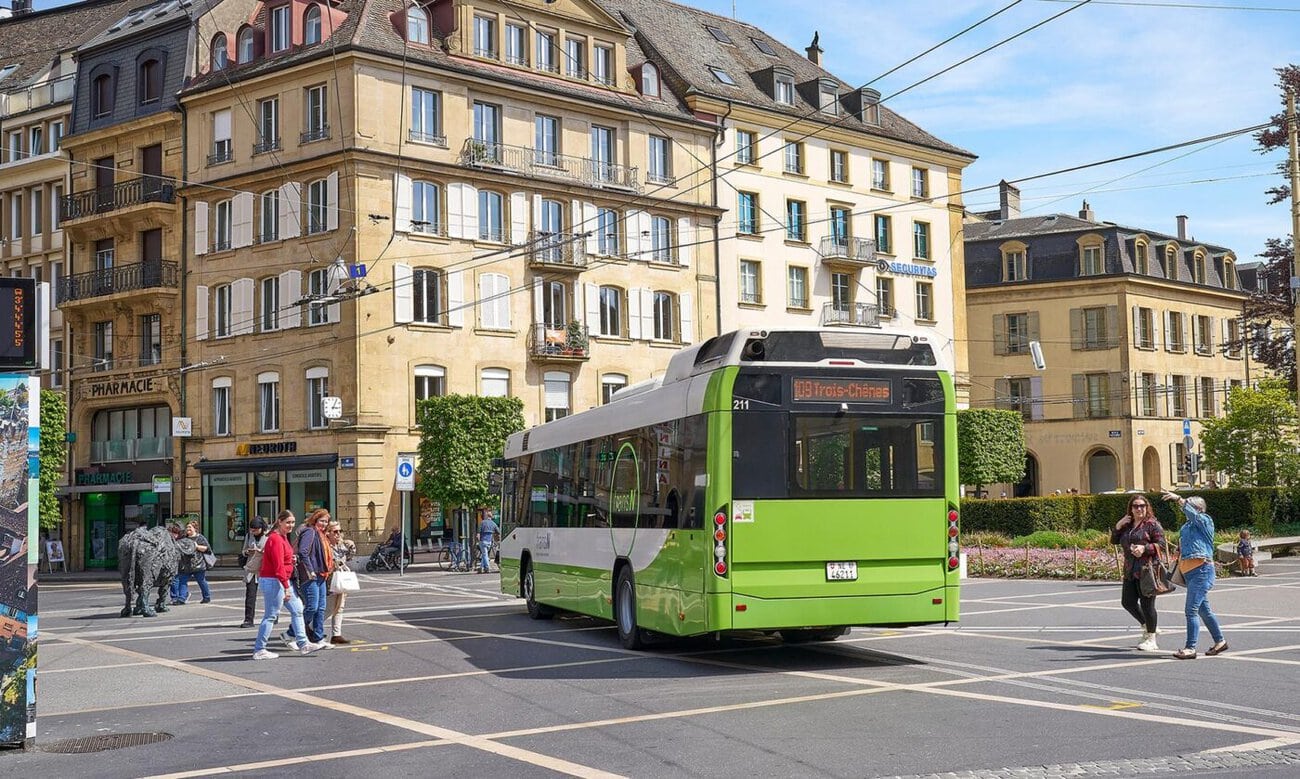
APG|SGA transN – this partnership will shape outdoor advertising in the Canton of Neuchâtel starting in 2027: APG|SGA, Switzerland’s leading outdoor advertising company, has won the public bidding process for the marketing of the analog outdoor and indoor advertising spaces of the transit company transN. The contract begins on January 1, 2027. According to the press release, APG|SGA is said to have received the highest rating in all three award criteria—the commercial proposal, the quality of services, and the bidder’s suitability.
The request for proposals, published on April 22, 2026, covered all analog advertising spaces on the vehicle fleet as well as seven F12 spaces and four F4 spaces.

transN: Reaches 28.5 million passengers per year
TransN is the largest transportation company in the canton of Neuchâtel. With a 293-kilometer route network and a fleet of 172 vehicles—including 108 buses, 42 trolleybuses, 17 trains, and five funiculars—and serving approximately 28.5 million passengers annually, the company offers advertisers broad reach and a strong presence in public spaces.
Olivier Chabanel, Head of Partner Market Romandie at APG|SGA, commented on the decision: «Being awarded the contract confirms APG|SGA’s competitiveness and the trust placed in its many years of experience, high-quality service, and proven marketing expertise. At the same time, the partnership with transN strengthens APG|SGA’s portfolio in French-speaking Switzerland and expands the attractive range of advertising opportunities on public transportation.»
APG|SGA transN Expands Its Offerings in French-Speaking Switzerland
With the acquisition of transN, APG|SGA will further expand its portfolio of public transportation advertising services in French-speaking Switzerland starting in early 2027. According to the press release, this is intended to offer advertisers high visibility and an effective presence in the Neuchâtel region and the Jura Arc, as well as throughout French-speaking Switzerland.
According to its own statements, APG|SGA is Switzerland’s leading outdoor advertising company. Specializing in digital and analog advertising solutions as well as special advertising formats, the company covers all areas of outdoor advertising—from high-traffic street locations to train stations, points of sale, and points of interest, as well as public transportation and airports. More than 500 employees across Switzerland are responsible for operating the digital screens and billboard spaces.
For more information on APG|SGA's advertising opportunities on public transportation, visit: https://www.apgsga.ch/media
]]>
Digital Out of Home as a Stage at DMEXCO 2026
On September 23 and 24, 2026, the Institute for Digital Out of Home Media (IDOOH) will once again transform Hall 8 in Cologne into a central gathering place for the industry. Under the title «IDOOH World,» the initiative brings together more than 30 expert presentations, a Mediterranean-themed networking area, and a green outdoor area to create a comprehensive experience centered on Digital Out of Home—or DOOH for short.
The two-day program kicks off on September 23 with the DOOH Summit on the World of Media Stage. In three concise sessions, IDOOH will explore key questions about the industry’s future: What trends are shaping the market today and tomorrow? Why is the real-world media landscape becoming a competitive advantage for brands amid the AI wave? And how can the potential of at-retail DOOH be successfully tapped?
More than 30 sessions on the topics of tomorrow
Following the summit, the spotlight shifts to IDOOH World’s own stage. In approximately 30 presentations and panel discussions, leading companies in the industry will showcase the full spectrum of modern digital out-of-home (DOOH) communication. The program covers topics such as programmatic DOOH, retail media, artificial intelligence, creative excellence, attention and advertising impact, brand safety, and responsible media. The lineup is rounded out by international trends, innovative technologies, and real-world examples from successful campaigns.
A Mediterranean atmosphere as a deliberate contrast
In addition to the content-focused program, networking remains at the heart of IDOOH World. Spanning approximately 600 square meters, olive and citrus trees, plenty of greenery, and natural materials create a relaxed atmosphere—deliberately designed as a tranquil contrast to the hustle and bustle of the trade show. The design is intended to encourage visitors to linger, network, and engage in spontaneous conversations.
The Institute for Digital Out of Home Media serves as the umbrella organization behind IDOOH World. The event is a joint initiative of Adform, Adlocaite, airtango, Cittadino, ECE, ECN Executive Channel Deutschland, eisbach.media, HYGH, INOVISCO, It Works, LAYA, One Tech Group, Rechargy, RetailFellas, Ströer, TV-Wartezimmer, Virtual Minds, Wall, Weischer.OOH, and Wildstone.
More information about IDOOH World and the program at DMEXCO 2026 is available at: https://idooh.media/
]]>
Swiss Retail Media Day Draws More Than 100 Industry Professionals to Zurich
The 2nd Swiss Retail Media Day (RMD26), organized by IAB Switzerland, took place on September 3, 2026, at the Volkshaus in Zurich. More than a hundred industry professionals gathered to discuss the rapid developments, strategies, and challenges in the field of retail media. According to the organizers, the event once again highlighted the effectiveness and subject-matter expertise of the IAB’s internal working groups in organizing professional events.
After the guests arrived and the «welcome bites» were served, host Marc Götti (CEO, Excom Media) opened the program together with Roger Baur, President of IAB Switzerland.
International Keynote Speeches on the State of Retail Media and AI Commerce
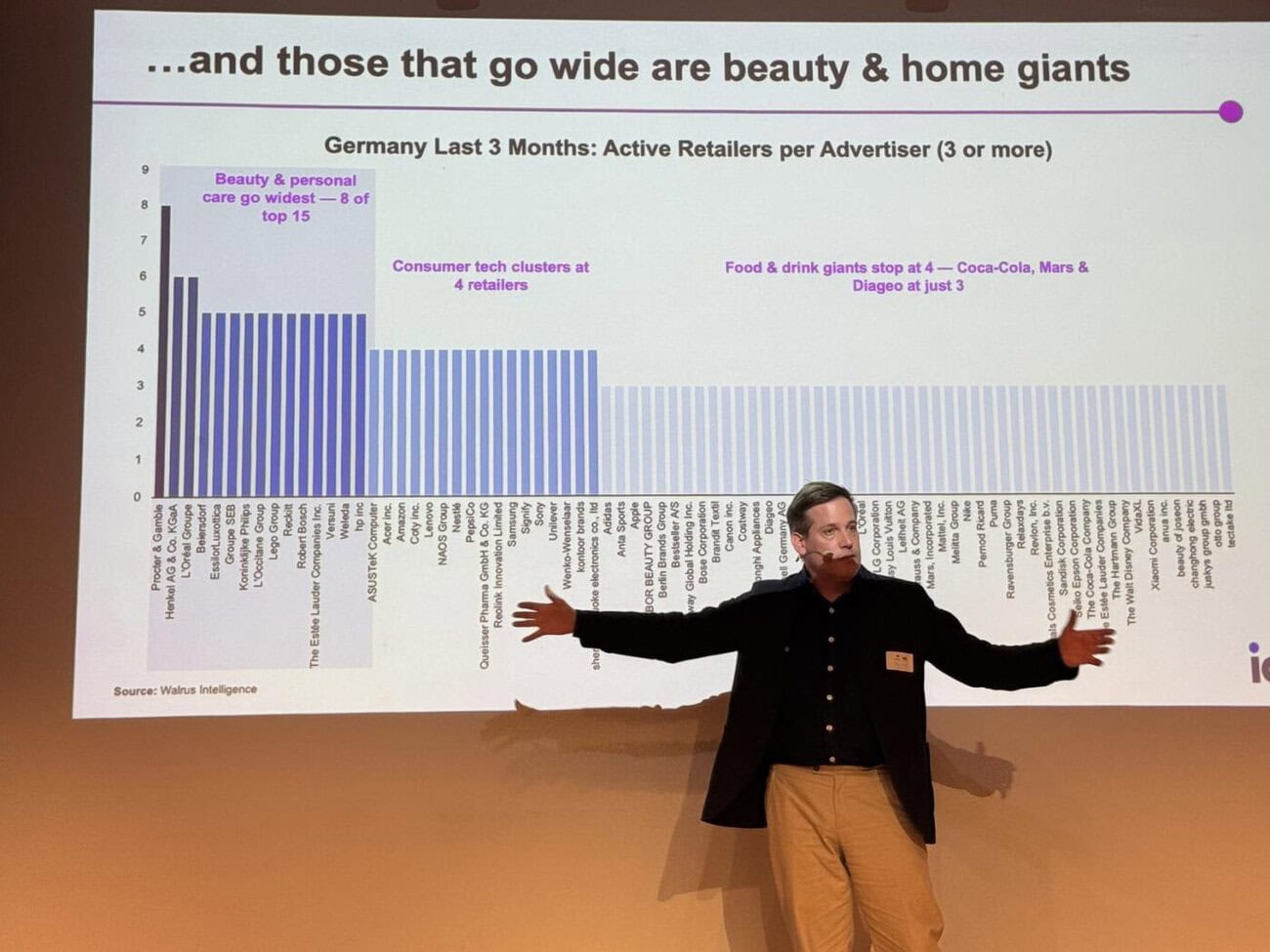
Daniel Knapp (Chief Economist, IAB Europe) kicked off the technical session with his opening keynote on «The State of Retail Media.» Markus Caspari (Dentsu Germany) then provided a visionary outlook, exploring the question: «Retail Media & AI Commerce: Are We on the Verge of a Paradigm Shift?».
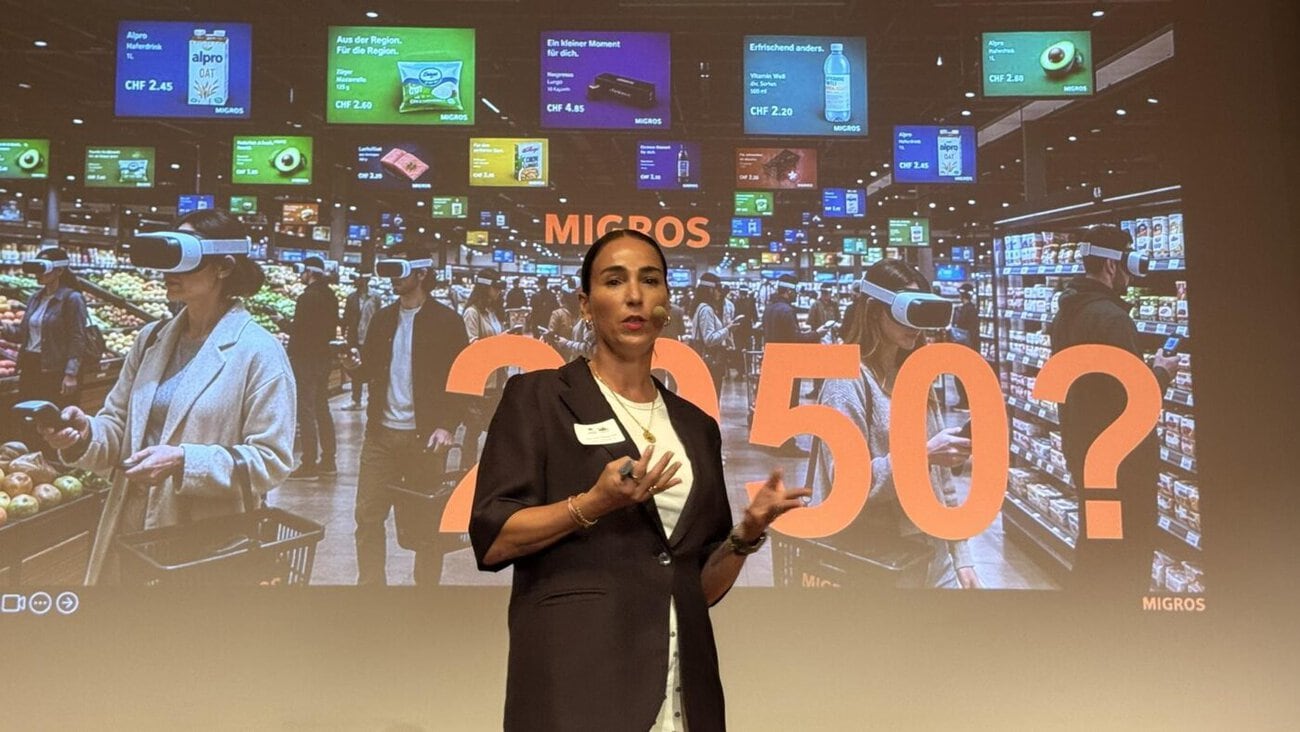
Séverine Hubatschek (Migros Supermarket) and Sven Ruoss (Post Futurum) bridged the gap to Swiss practices by providing an overview of the local market and detailing its implementation. The evolution of retail media through «Scale, Data & Reach» was presented by Mitja Grušovnik (Ringier Advertising).
Focus on Measurability, POS, and In-Store Retail Media
After a coffee break, the Swiss Retail Media Day program shifted its focus to specific applications. Gian Berger (Migros Supermarket) and Albert Gubler (WPP Media) discussed the role of retail media in the marketing mix. Felicia Wegmann (MediaMarkt Switzerland) addressed the essential task of making retail media measurable.
The point of sale (POS) was also a key focus of innovative solutions: Patricia Grundmann (OBI Advertising) joined the event live from Germany and presented a pilot project on sensor technology and real-time audiences. Daniel Siegmund (One Tech Group) then demonstrated the possibilities of scalable in-store retail media.
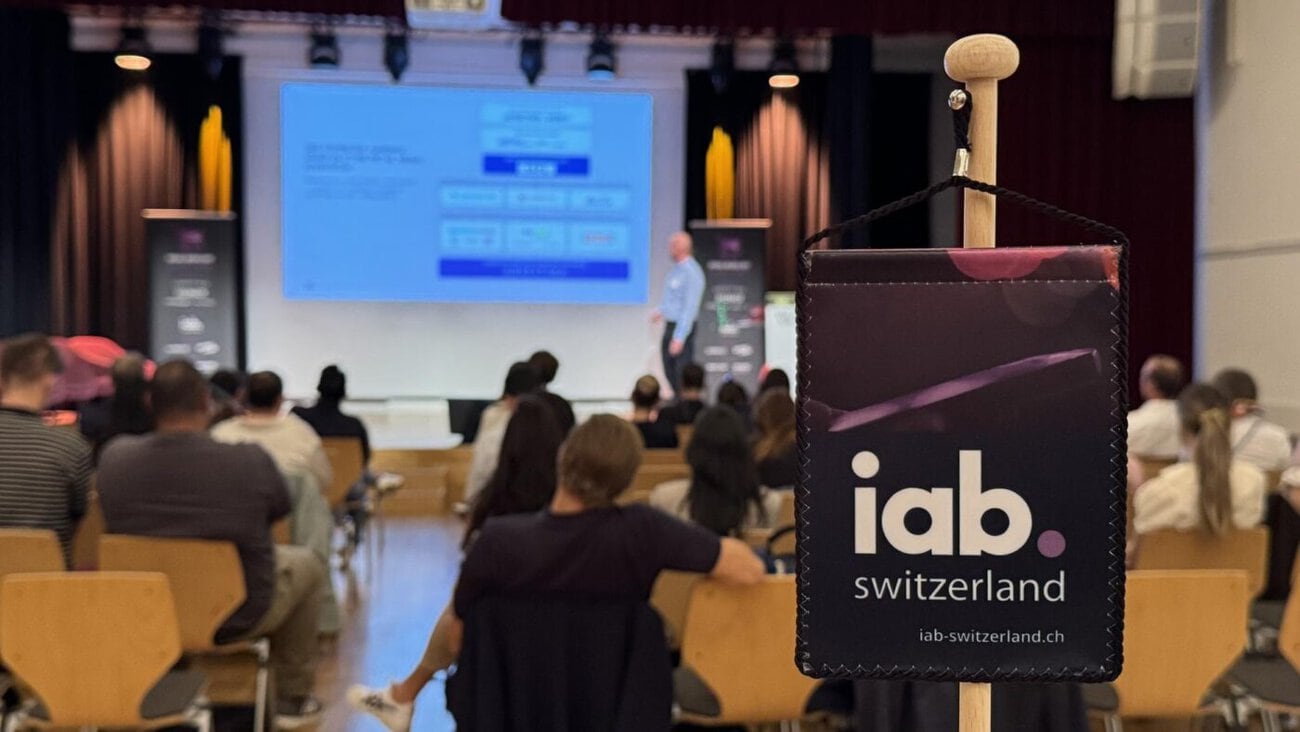
Closing Panel: A Reality Check for Brands, Retail, and Tech
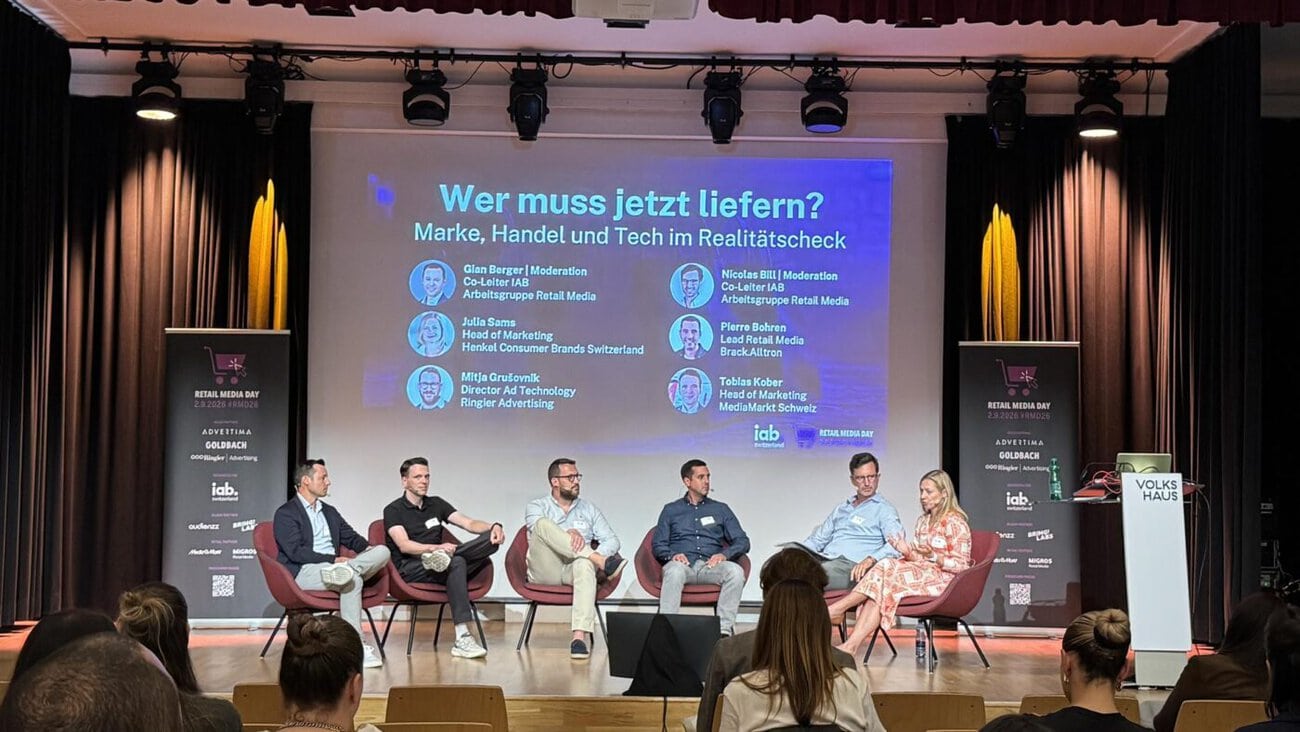
The day concluded with the panel discussion «Who Has to Deliver Now? Brands, Retail, and Tech Put to the Test.» Moderated by the two co-chairs of the IAB Retail Media Working Group, Gian Berger and Nicolas Bill, Julia Sams (Henkel Consumer Brands Switzerland), Pierre Bohren (Brack.Alltron), Mitja Grušovnik (Ringier Advertising), and Tobias Kober (MediaMarkt Switzerland) discussed the practical challenges facing the market. Following a wrap-up by Marc Götti, the day concluded with a networking reception.
According to the press release, IAB Switzerland is solidifying its role as the primary source of information and practical guidance in the digital ecosystem with this format. The association’s members include agencies, media companies, advertisers, and technology companies.
For more information about IAB Switzerland and its events: https://www.iab-switzerland.ch
]]>
A Consistent Response to Market Changes
Digital distribution channels, the podcast boom, and programmatic advertising solutions have permanently transformed the Swiss audio landscape in recent years. With the rebranding to Goldbach Audio The Goldbach subsidiary is now formally taking this step and sharpening its profile as a comprehensive specialist covering the entire spectrum of audio advertising. At the same time, the company is aligning itself even more closely—both visually and strategically—with the overarching Goldbach Group AG umbrella.
Managing Director Ralf Brachat had already hinted that the course for the future had been set on the sidelines of this year's Radio Night at the Carlton in Zurich. Now the official announcement has been made.
«The transformation from Swiss Radioworld to Goldbach Audio is a logical next step for us. With our many years of experience, our dedicated team, and our innovative strength, we are ideally positioned to proactively meet the needs of our customers and offer future-proof solutions for radio and digital audio.»
- Ralf Brachat, Managing Director of Goldbach Audio
Focus on Technology, Programmatic Advertising, and Podcasts
The growing diversity of distribution and consumption channels demands greater technological expertise and cross-media consulting in the advertising market. In recent years, the former Swiss Radioworld has systematically built up expertise to offer advertisers not only traditional radio but also innovative products such as its in-house podcast network and forward-looking programmatic radio. The company intends to further advance this path of innovation under the new Goldbach Audio label.
Continuity for Partners and Customers
For our market partners—including media agencies, clients, and radio stations—nothing will change in their day-to-day operations: the well-coordinated team, the familiar points of contact, and all processes and services will remain the same.
]]>
Teads, the omnichannel outcomes platform, and V (formerly Vidaa), the smart TV operating system used by Hisense and other leading OEMs, have extended their strategic partnership through 2028. At the heart of the agreement is a market-unique 10-day HomeScreen takeover centered around Black Friday and Cyber Monday—a tool designed to take smart TV advertising to the next level. Teads serves as the exclusive global marketing partner for HomeScreen advertising on smart TVs running the V operating system.
New Possibilities on the Largest Screen in Your Home
For the first time, this partnership gives global advertisers the opportunity to leverage hardware-level insights: They can target audiences based on specific screen sizes—including high-end «Platinum» displays—as well as the device’s placement within the home. This feature is available to brands in approximately 30 markets across EMEA (including Switzerland), APAC, and the Americas. During the ten-day promotional period surrounding Black Friday and Cyber Monday, this will bring highly relevant, premium advertising experiences directly into the living room.
According to the company, the booking model goes beyond previous approaches in the TV advertising market: Advertisers receive centralized, unified access to the HomeScreen—combined with context-based targeting and global reach.
Study Results Demonstrate the Effectiveness of Smart TV Advertising
The relevance of the TV HomeScreen format has been demonstrated by studies conducted in collaboration with the MediaMento Institute, which specializes in media impact. According to these controlled tests, Teads’ HomeScreen video ads achieved an attention rate of 48 percent, outperforming traditional skippable formats by 16 percent. Interactive 3D creative formats also captured viewers’ attention 29 percent faster and held it significantly longer.
David Kostman, CEO of Teads, comments: «This partnership goes far beyond traditional TV buys—it reimagines how brands connect with consumers on the largest screen in the home. By providing exclusive global access to the HomeScreen during key shopping periods such as Black Friday, we offer advertisers a centralized, unified way to reach audiences based on screen size and room context.»
Guy Edri, CEO of V, adds: «The partnership with Teads gives our platform a unique advantage by transforming the TV home screen into an active discovery hub. We offer brands access to relevant audiences across screen sizes and household contexts during the most important shopping period of the year.»
A recurring model for seasonal events
Through this multi-year agreement, Teads and V aim to establish a recurring global model for seasonal highlight events. According to the press release, the goal is to combine hardware intelligence and full-funnel performance to strengthen brands during high-revenue shopping periods.
According to the company, Teads partners with more than 10,000 publishers and 20,000 advertisers worldwide and employs approximately 1,700 people in more than 30 countries. V powers tens of millions of smart TVs worldwide and combines entertainment, e-commerce, smart home control, and advertising into a unified platform.
]]>
For years, connected TV has been regarded as a powerful advertising medium for brand building. However, whether the channel also contributes directly to sales remained an open question for many brands for a long time. Decathlon Switzerland put this to the test in the spring of 2026: The sports retailer relied on Teads’ CTV Traffic solution and measured the impact all the way through to the point of purchase. The result after a two-month campaign: 30,000 attributed purchases and a visit rate of 11 percent—seven times higher than the global benchmark. This case study thus provides concrete evidence that connected TV can deliver performance well beyond the upper funnel.
Engage Outdoor Enthusiasts for the Spring Season
Decathlon wanted to reach outdoor enthusiasts in Switzerland at the start of the spring season and inspire them to go on their next hike, bike ride, or camping trip. However, in addition to reach, one key question took center stage: Does CTV also drive qualified visitors to the website and noticeably boost sales during a critical sales period?
Teads ran the campaign in an instream format targeting households with a demonstrable interest in outdoor activities. A custom-built measurement model then linked the CTV impressions to actions on the Decathlon website and tracked them over an additional 30-day attribution window. This made it possible to measure not only the number of visits but also their quality and the actual impact on sales.
Making the Cross-Device Customer Journey Traceable
This methodological approach made it possible to establish a link between the large screen in the living room and the purchase made on another device. «Connected TV has long been more than just an awareness channel in the upper funnel. By measuring website traffic from other devices in the household following a CTV ad, we were able to gain a much better understanding of the cross-device customer journey. Our collaboration with Teads has shown that TV advertising drives website visits with a high intent to purchase,» says Quentin Perceval, Digital Media Planner at Decathlon Switzerland.
Connected TV Performance: Significantly More Efficient Than the Market Average
The numbers confirmed the approach. In addition to the 30,000 purchases made during the campaign period and the 30 days that followed, the cost per visit was 40 percent below the DACH benchmark. The bounce rate was 59 percent lower than the benchmark—an indication that visitors had a genuine interest in making a purchase. On average, they spent about three minutes on the site.
«This case study shows that CTV in Switzerland has long been more than just an additional reach channel for the top of the funnel. When exposure and website action are clearly linked, the big screen becomes a channel that drives results all the way through to the point of purchase,» says Claudio Lumbiarres, Managing Director for Switzerland and the Nordics at Teads.
Contact at Decathlon Switzerland: Quentin Perceval, Digital Media Planner. Responsible at Teads: Claudio Lumbiarres, Managing Director for Switzerland and the Nordics.
]]>
Anyone looking for a coffee maker today no longer has to limit themselves to a few keywords. Both ChatGPT and Google’s AI Search make it possible to describe your needs in detail, compare models, and gradually narrow down your options by asking follow-up questions. People are no longer just looking for an espresso machine, but for a model that fits their small kitchen, limited budget, and personal coffee consumption.
This creates something on both platforms that can be even more valuable to the advertising industry than a traditional keyword: a nuanced picture of what a person needs, which criteria are decisive, and how far along the decision-making process already is.
Starting Monday, August 24, this feature will also be commercially available on ChatGPT in Europe. OpenAI is launching ChatGPT Ads in 31 markets, including Switzerland, Germany, Austria, France, Italy, and Spain. Ads will initially appear only to users of the free version and the more affordable Go subscription. Plus, Pro, and Enterprise plans will remain ad-free.
At launch, advertisers will have access through the OpenAI Ads Solutions Team as well as through agency and technology partners. The agency groups mentioned include Publicis, WPP, Omnicom, MediaPlus, Havas, and dentsu. Self-service access via Ads Manager is expected to follow later.

The battle for dialogue has begun
With ChatGPT Ads, OpenAI isn’t entering a blank market. Google itself has evolved its search into a conversational system with AI Overviews and AI Mode. Users can ask complex questions, compare options, and delve deeper into a topic by asking follow-up questions. The context is preserved throughout. Google now refers to this as a seamless AI search experience that leads directly from the initial question, via the AI Overview, into an ongoing dialogue.
Advertising has also long been a part of this new search experience. Google is integrating ads into AI Overviews and AI Mode and is developing formats such as Conversational Discovery Ads, Highlighted Answers, and AI-powered shopping ads for this purpose. Brands are not only meant to appear alongside a search query but to be integrated into the decision-making process with product information, comparisons, and specific offers.
The difference between Google and ChatGPT therefore lies less in the conversational format than in their starting points. Google is expanding its search, shopping, and advertising infrastructure—which has been established over decades—to include generative AI. The company integrates the dialogue with its web index, Merchant Center, Shopping Graph, and a well-established ecosystem of advertisers, agencies, and analytics tools.
ChatGPT takes a different approach. The platform is primarily designed as an assistant that helps people solve problems, develop plans, or complete tasks. A commercial decision may only emerge in the course of a conversation. Advertising, therefore, does not necessarily target an explicit product search, but rather a context from which a need may emerge.
The competition is thus playing out between two increasingly similar interfaces with different origins: Google is bringing conversation to search, while OpenAI is bringing advertising to conversation.

From the Attention Economy to the Intelligence Economy
People come to ChatGPT with a question, a problem, or a goal. They might be planning a vacation, comparing software, furnishing an apartment, or looking to get started with a new hobby. In doing so, they often explain not only what they’re looking for, but also what’s important to them and what constraints they face.
According to OpenAI, 20 percent of conversations already have a clear commercial intent. Many others are at least related to a personal or business decision. This creates an additional opportunity for brands to appear at the very moment a need arises.
Dave Dugan, VP of Ads at OpenAI, sums up the strategic vision in a catchy phrase:
“People come to ChatGPT with goals. In the attention economy, brands had to be interesting; in the intelligence economy, they have to be useful. ChatGPT Ads is designed to help businesses contribute in a meaningful way when someone is deciding to take action, while maintaining user trust and upholding our principles of answer independence, privacy, and user choice and control.”
Dugan’s comparison of the “attention economy” and the “intelligence economy” is, of course, also a pitch for her own product. Nevertheless, it describes a fundamental shift. On social media, advertising is effective when it stops the scroll. In the conversational systems developed by OpenAI and Google, it must, at best, build on a thought, simplify a decision, or enable a specific action.
It's no longer enough to be interesting. A brand must be useful.

Ad space becomes a decision-making tool
This also changes the creative challenge. A traditional display ad can focus on brand recognition, emotion, or surprise. Advertising in an AI dialogue, on the other hand, appears right alongside content that usually already serves a specific purpose. Any random message is more likely to seem out of place there.
The fictional ad for an espresso machine illustrates how OpenAI envisions this interaction: When asked what to consider when buying a coffee machine, a clearly labeled offer appears. The ad does not replace the answer, but rather supplements it with a commercial option.
The key difference from other forms of advertising lies less in the format than in the available context. Brands must understand which questions they can actually help answer. This requires precise product information, clear benefits, and creative content that stands out not because of the biggest promise, but because of its high relevance.
For the advertising industry, this also shifts the definition of what constitutes good data. Product names, prices, and attractive images alone are not enough. AI systems must be able to understand the needs, situations, and constraints for which a product is suitable. Brands therefore require structured, up-to-date, and linguistically precise product information. Discoverability in conversational systems is becoming a new form of distribution.
OpenAI’s advertising platform is already significantly more advanced than one might expect from a service that’s only been available for half a year. Campaigns can be optimized based on impressions, clicks, or conversions. In addition, there is geographic targeting, product feeds, a measurement pixel, and a server-side conversions API. The Advertiser API allows for programmatic management of campaigns, ads, creatives, and performance data. The Official OpenAI Documentation reflects an infrastructure that is increasingly modeled after established performance marketing systems.
Trust cannot be bought at auction
The most sensitive issue, however, isn’t bidding, but rather the separation of information and advertising. As soon as people suspect that a paid placement is influencing an AI’s response, the model loses its credibility. And without credibility, the advertising environment also loses its value.
OpenAI therefore emphasizes that ads are clearly labeled and separated from the responses. Advertising does not influence the responses, conversations remain private from advertisers, and customer data is not sold. Users should also be able to control the level of personalization.
These principles are more than just background noise in communication. They form the foundation of the business. In a dialogic system, the line between neutral information and a commercial offer is particularly delicate. The response has a voice, comes across as personal, and is often perceived as a coherent recommendation.
OpenAI must therefore fulfill two promises at the same time—promises that could very well conflict with each other from a business perspective: Advertising should be as relevant as possible, but it must not compromise the independence of the response.
The same applies to Google. The more AI Search summarizes answers, makes recommendations, and carries on the conversation, the more important it becomes to clearly distinguish between algorithmically generated information and paid listings. For both providers, trust thus becomes the true currency of their advertising business.
A New Source of Funding for OpenAI
For OpenAI, advertising opens up an additional source of revenue. Developing and operating powerful AI models requires enormous investments in data centers, chips, energy, and research. Subscriptions, enterprise solutions, and API revenue remain key pillars of the business. However, advertising can help help fund free and low-cost access to ChatGPT—while also tapping into a market that generates billions annually for Google and Meta.
According to OpenAI, tens of thousands of advertisers have already used ChatGPT Ads. Over the past six weeks, the average cost per purchase has fallen by about 60 percent, and the cost per 1,000 impressions has dropped by about 20 percent. These figures come from the provider and should be interpreted accordingly. However, they show where things are headed: ChatGPT Ads are not intended to remain an experimental innovation budget but to become a measurable performance channel.
The expansion into Europe six months after the advertising business was launched is therefore a strategically important step. Europe consists of markets that are very diverse in terms of language, culture, and regulation. Accordingly, OpenAI emphasizes not only relevance but also data protection, freedom of choice, and the independence of the responses.
If this balancing act succeeds, advertising could become a major pillar for OpenAI. If it fails, more is at stake than just the performance of individual campaigns. Trust in ChatGPT as a whole will suffer.
Quality is the new quantity
For traditional media and other platforms, this entry into the market intensifies competition. Every advertising franc that goes to ChatGPT or Google’s AI Search is potentially missing elsewhere. The obvious reaction would be to view OpenAI as yet another all-powerful tech giant that’s inserting itself between providers and audiences.
That alone isn't very helpful. It's nearly impossible to compete with global platforms in terms of reach. The same goes for generic content. The most effective response, therefore, lies in the very areas that the new AI-powered advertising environments also claim to excel in: relevance, credibility, and tangible benefits.
For publishers, this means original journalistic content, exclusive access, strong brands, and trustworthy environments. For agencies, it means better understanding the intent behind a question. And for brands, it means explaining products and services so well that advertising is actually perceived as a helpful next step.
In this new market, quality is not merely the opposite of quantity. Quality has become a prerequisite for even attracting attention.
ChatGPT Ads therefore do not signal the end of traditional advertising. However, they are accelerating a shift that Google is also driving with AI Search: away from interrupting, toward assisting; away from mere visibility, closer to decision-making.
And, of all things, artificial intelligence brings the advertising industry back to a very human question: Is what a brand has to say really helpful at the crucial moment?
]]>