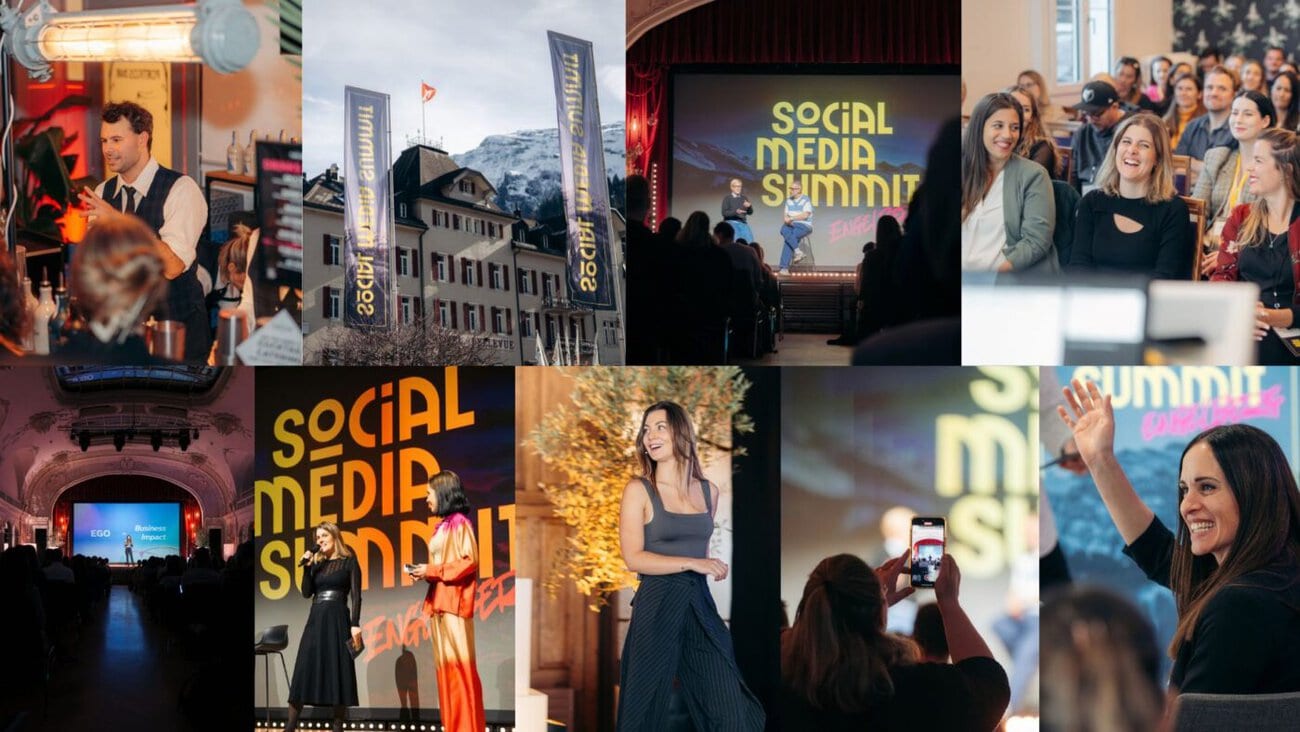
 m&k The Social Media Summit will take place for the ninth time in November. What has changed since its inception, and what topics will be on everyone’s mind in 2026?
Tanja Hermann Nine years ago, we were still getting several inquiries asking if people could just drop by, because they thought it was more of a «selfie with a ball pit» kind of leisure event. People weren’t yet aware that social media was a marketing discipline in its own right. But there was also a lot going on behind the scenes. At first, I organized the event mostly on the side while working my main job at the agency. Now, an interdisciplinary team works on the event, which has grown to two days. We also changed locations—from the X-Tra in Zurich to the Dolder and finally to Engelberg, with four stages and various side events spread throughout the village. And last but not least: At the beginning, nobody knew who we were. It was almost impossible to get access to the platforms. After nine years, a professional Swiss social media community has developed where everyone knows each other.
Coop, Rivella, SBB, and PostFinance are sharing their case studies. What criteria do you use to select these examples, and what do you want the participants to take away from them?
For all speaking slots, we first have a one-on-one conversation with me. During that conversation, we explore which topics the speakers could cover and what kinds of case studies or research they have to support them. This ensures that we can cover a wide variety of industries, platforms, and topics. With nearly 70 preliminary discussions, a clear picture quickly emerges of what’s driving the industry. While one year the focus is on storytelling, the next year it’s all about AI. This year, we’re seeing a strong emphasis on data and intelligent performance campaigns that can hold their own in a sea of AI-generated content.
Meta, TikTok, Pinterest, YouTube, and Reddit are providing firsthand accounts of their platform updates. What does this mix reveal about the evolution of the social media landscape?
This, too, shows how the social media landscape has changed in recent years. When we started out, TikTok wasn’t even on the radar. Pinterest surprises its audience year after year, as the platform remains massively underestimated even all these years later, and Reddit is our newest addition. Just a few years ago, it was dismissed as an irrelevant niche channel, but now everyone is trying to figure out how Reddit works for them.
The Industry Round Tables are a new initiative that bring together industries ranging from B2B to tourism and finance. What works better within the confines of one’s own industry than in a large plenary session?
Everyone knows the feeling: you’re sitting at a conference, someone on stage is presenting a really great case study, explaining that anyone can implement it this way, and you think to yourself: but not in my industry, not with our customer journey, and certainly not with our regulatory requirements. That’s why we want to make it even easier for our participants to exchange ideas within their own industries and talk specifically about the things that work a little differently for them. To do this, we looked at which industries were most represented during ticket sales and created the Industry Round Tables specifically for them.
With the ZHAW, the Bern University of Applied Sciences, and Media Focus Switzerland, there are also new studies in the program. What question do you hope they will answer?
The academic articles are certainly critical—and that is by design. They are intended to stimulate thought, to put the media usage statistics into proper perspective, and at the same time to show how our activity on social media influences the consumption behavior of younger people.
Yoga in the mountains, country-style meals, pub quizzes, fondue with strangers, and Gin Night are all part of the Social Media Summit. What role does the supporting program play in what’s taking shape in Engelberg?
Every year, we’ve continued to expand the supporting program. Since most people stay overnight in the village, this gives us the opportunity to develop entirely new concepts. Yoga before the second day gets underway, or a group fondue at the Alpenclub—because no one has to rush home, but just has to waddle across the street to bed with a belly full of cheese. This creates space for interaction, and that’s just as much a part of the event as the traditional educational sessions on stage.
Social media has come of age, and advertisers are planning differently today than they did during the hype years. How do you perceive brands’ approach, and where do you see the greatest potential for them right now?
We see that social media (and influencer marketing) functions countercyclically to a certain extent. When large advertising budgets are cut, the remaining funds suddenly shift to social media, because there’s still a lot that can be done with them there. And for almost all companies, social media is now part of their media mix. But I see the greatest potential in companies realizing that the days of «social media is free» are long gone. It’s an advertising channel that requires a paid budget. That’s why the greatest potential lies in performance marketing and clearer strategies. There’s more than enough content out there. So anyone who isn’t absolutely clear about who they’re creating content for, what they’re creating it for, and with what goal—and who doesn’t know how to measure it—is wasting their resources.
Anyone visiting Engelberg for the first time will find 16 master classes, 22 lectures, and four stages. What's your tip for getting the most out of these two days?
Personally, I would sort the posts based on two criteria: which topics are most relevant to my work right now, and which topics are completely new to me. I would focus most on the topics where I absolutely want to stay up to date. And then I would pick out a few «wild cards.» Platforms, approaches, and studies that inspire me with new ideas.
]]>

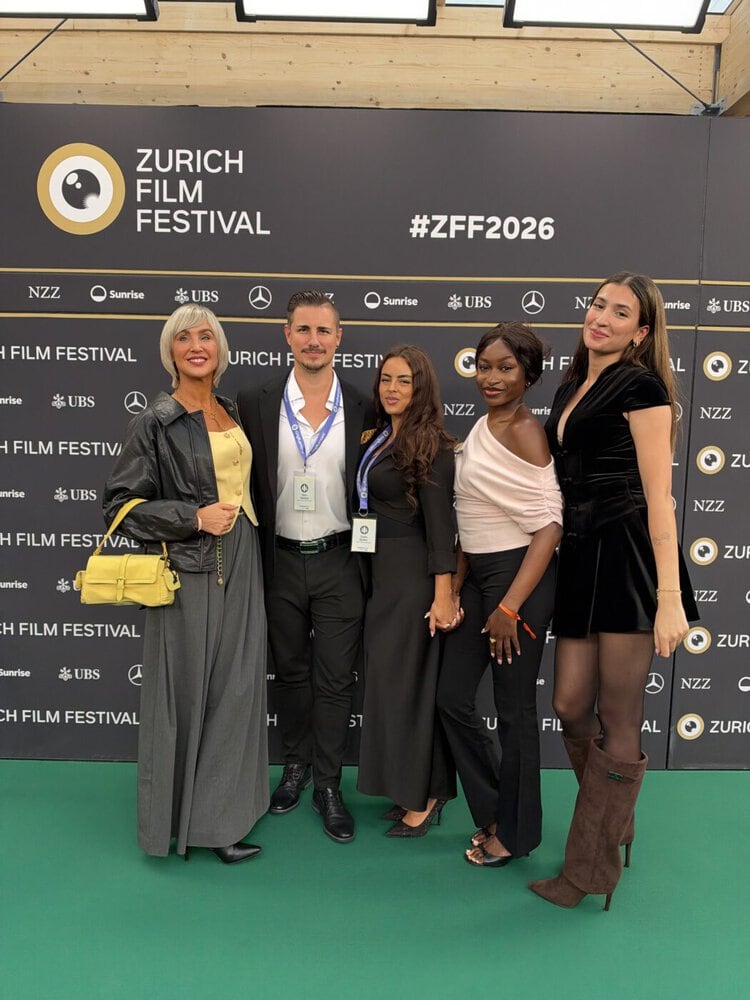
Kingfluencers is continuing its partnership with the Zurich Film Festival (ZFF) and is once again organizing a comprehensive creator engagement campaign around the event this year. Approximately 20 creators were involved through various formats and touchpoints. Their goal is to help their communities experience film and culture in new ways.
Kingfluencers Zurich Film Festival: Creators Complement the Audience
The renewed collaboration demonstrates how communication surrounding established cultural and major events is changing, according to the press release. Traditional media and prominent figures continue to play an important role. However, creators complement this public presence by providing direct access to diverse communities and target audiences. Their followers gain personal insights and can participate more closely in the events. For events like the ZFF, this creates an opportunity to make film and culture accessible through new channels and to appeal in particular to younger and digitally savvy audiences.
Before, during, and right at the festival
The campaign was deliberately designed to span multiple areas of the festival. According to Kingfluencers, nearly 400,000 views underscore its impact and reach: The festival was brought directly into the creators’ communities and extended digitally beyond the event itself. Kingfluencers designed and coordinated the activations, connecting creators, the festival, and brands through various touchpoints. According to the agency, the approach went beyond individual posts: Creators were engaged before, during, and directly at the festival, combining digital reach and content with the on-site experience.
Hospitality Event as a Personal Touch
Another highlight was the agency’s own Kingfluencers Hospitality Event at the ZFF. Together with selected creators and clients, the agency brought together various stakeholders for an evening centered on film, discussion, and networking. This complemented the digital engagement with in-person interactions. At the same time, it created a platform where brands and creators could engage with one another outside the context of traditional campaign formats.
«Major events like the Zurich Film Festival thrive on stories, emotions, and shared experiences. That’s exactly where creator marketing can really shine,» says Luca Obrist, Head of Marketing at Kingfluencers. It’s particularly effective when creator marketing isn’t viewed as a standalone communication channel, but rather as part of the overall experience across various touchpoints.
According to the statement, influencers do not replace established media or prominent figures, but rather expand communication to include new perspectives, communities, and forms of participation.
]]>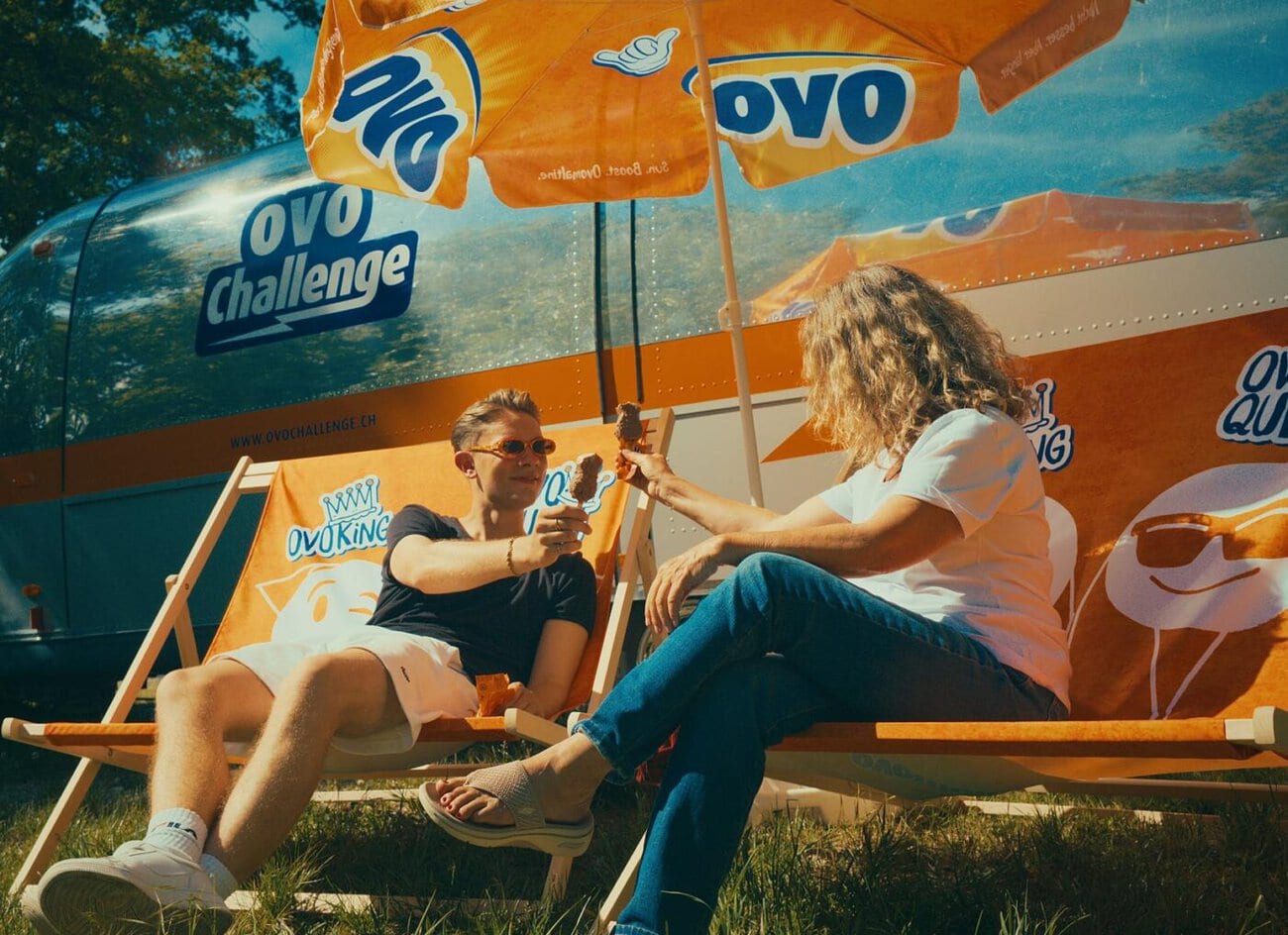
This summer, the Zurich-based agency Pas Mal transformed Ovomaltine’s festival sponsorship into an Ovomaltine social media series—proving that traditional sponsorship communication and serial storytelling don’t have to be mutually exclusive. In 15 videos, followers accompanied the characters Jan and Ruth on their Airstream road trip through Switzerland.
A road trip as the central theme
The idea behind the campaign was as simple as it was effective: Instead of promoting Ovomaltine’s individual festival appearances—at Greenfield, Heitere Openair, and Openair Gampel—in isolation, they were woven into a cohesive narrative. Jan, a new Ovomaltine employee, and Ruth, who has been doing the job on her own for decades, travel together from festival to festival to represent the brand’s sponsorship presence. True to the motto, «With Ovo, you can’t do it better, but you can do it longer.».
The chemistry between the two characters thrives on contrasts: Jan provides the humor with his mishaps—most notably his pronounced inability to tell left from right, which regularly leads him astray on the festival grounds— while Ruth, as an experienced staff member, pulls the strings, even if her patience is occasionally put to the test. This running gag serves as a unifying element throughout all 15 episodes.
Nina Romang, Brand Manager at Ovomaltine, describes the duo this way: «Jan and Ruth are the perfect Ovo duo: He provides the popular Ovo humor with his mishaps, while she, as an experienced Ovo employee, keeps everything running smoothly—even if she loses her patience every now and then. It’s precisely this interplay of chaos and experience that makes the two of them so endearing and ensures that our followers enjoy following them on their road trip.»
Cameo, Parking Assist, and the Ovomaltine Social Series with Reach
A highlight of the series was rapper Jule X’s cameo appearance at the Heitere Openair—a moment that underscores Jan’s commitment as a brand ambassador but also lands him in navigational trouble once again. He wins her over in another scene when he helps Ruth park—so charmingly, in fact, that she doesn’t even mind not seeing him in her rearview mirror.
The numbers speak for themselves: Between organic views and ad views, the series is said to have generated approximately 4,595,051 views and more than 14,098,184 impressions.
Noah Nüssli, who is in charge of storytelling and social video production at Pas Mal, explains the core concept: «It’s precisely this episodic structure—with short, self-contained scenes and recurring humor—that transforms a sponsorship campaign into something much more: it turns the campaign into a series that people want to follow. Even though everyone knows there’s a brand behind it.»
"Pas Mal" relies on a serial narrative format
The Zurich-based agency Pas Mal—formerly Be Loud—designed and executed the entire campaign in close collaboration with Ovomaltine and the creators. The company, which is based in Zurich’s 4th district and works for clients such as Migros and Helvetia Insurance, consistently focuses on content designed specifically to meet the demands of social media.
The two main characters are played by Nathalie Trachsel as Ruth and Jan Löning as Jan. Löning has been active as a host for "20 Minuten" on TikTok, Instagram, and the web since 2022 and has established himself in the Swiss media landscape with a mix of humor, spontaneity, and self-deprecating humor.
For fans of Jan and Ruth, the story isn't over yet: The series is set to continue on social media this fall—this time under the theme «Off to the world's highest-altitude Ovo Shop.».
For more information about the Ovomaltine brand, visit https://www.ovomaltine.ch available.
Responsible at Wander: Nina Romang (Brand Manager), Lena Cina (Brand Manager), Migana Paramsothinathan (Digital Manager), Christof Stulz (Marketing Manager); In charge at Pas Mal: Jonas Bayona (Creative Direction), Valérie Gantenbein (Account Direction), Nicole Michel (Storytelling), Noah Nüssli (Storytelling and Social Video Production), Julia Suter (Project Management). Cast: Nathalie Trachsel as Ruth; Jan Löning as Jan.
]]>
Black Frame Sets a New Record on Social Media for the Street Parade
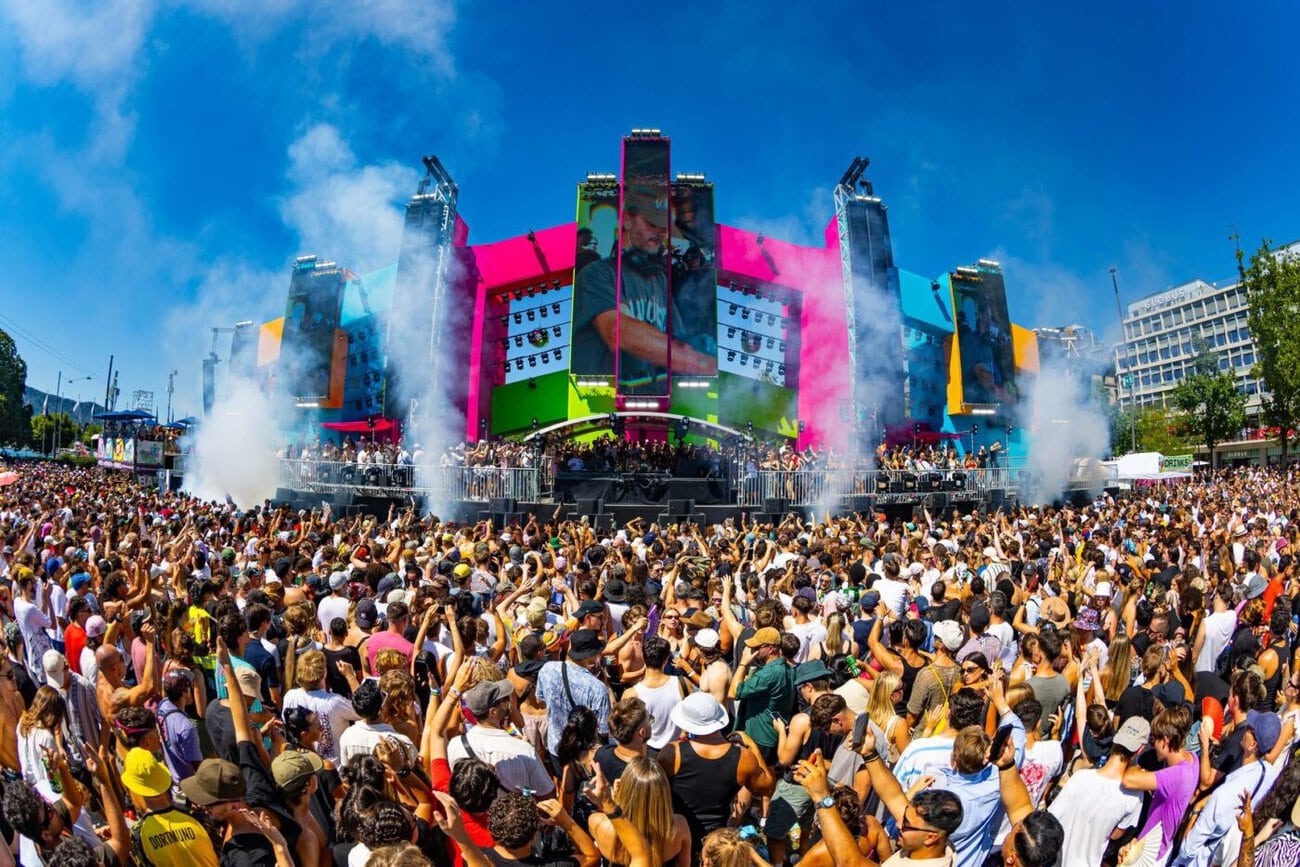
With 15 million organic Instagram views within 30 days, Black Frame set a new record for the Street Parade’s social media outreach for the 2026 event. This represents a 4.4-fold increase compared to the same period last year. At the same time, the community grew by 16 percent—adding approximately 23,000 new followers.
The Zurich-based production agency has been collaborating with the Street Parade since 2019. Since 2024, Black Frame has also been responsible for all of the event’s social media communications. 2026 marks the partnership’s strongest season to date.
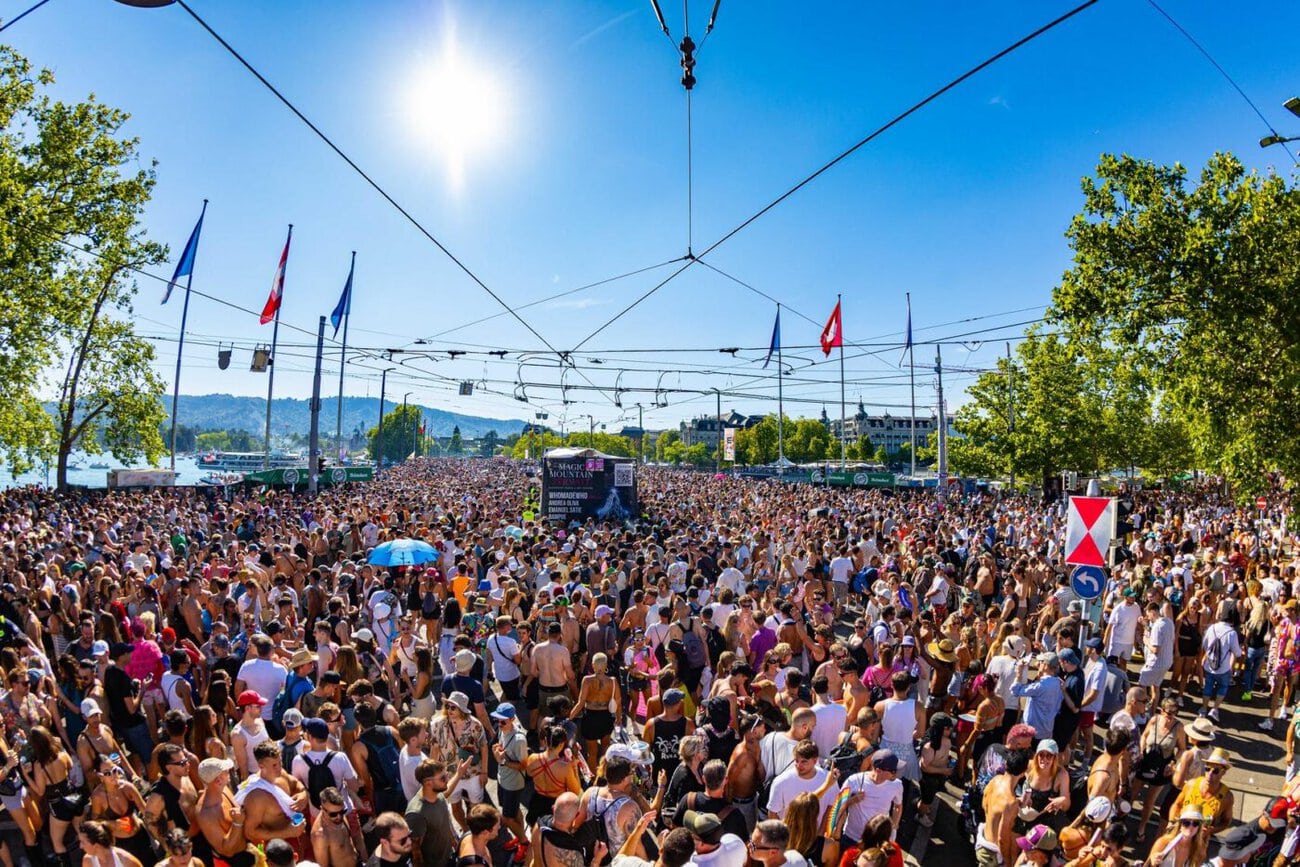
Stefan Epli, Executive Board Member for Media, PR, and Finance at Street Parade, comments on the results: «Our collaboration with Black Frame has continued to evolve since the start of our partnership in 2019. The Street Parade is a unique event that changes every year. Accordingly, we are also constantly refining our communication strategy.»
New Strategy: Real-Time Production Right on Site
The social media strategy was fundamentally realigned for 2026. Fast-paced, dynamic videos were strategically combined with still images, original audio, and candid moments from the parade. Editorial and editing operations were moved closer to the event so that content could be produced and published while the Street Parade was still underway.
Tony Mola, CEO of Black Frame, describes the challenges behind this approach: «The way social media is used is constantly changing and presents new challenges for us every year. At the Street Parade, this is compounded by long distances, severely limited internet connections, and the event’s short timeframe. That’s why we’ve adapted our processes and consistently focused on on-site production. This allowed us to react more quickly and make the Street Parade digitally accessible even while the event was still underway.»
A 30-person team, 14 videos, and four drone crews
On the day of the event, the Black Frame team—consisting of about 30 people—published 14 videos and three photo carousels within 11 hours. The content was also posted on TikTok and Facebook with minor adjustments. Black Frame was also responsible for publishing and community management.
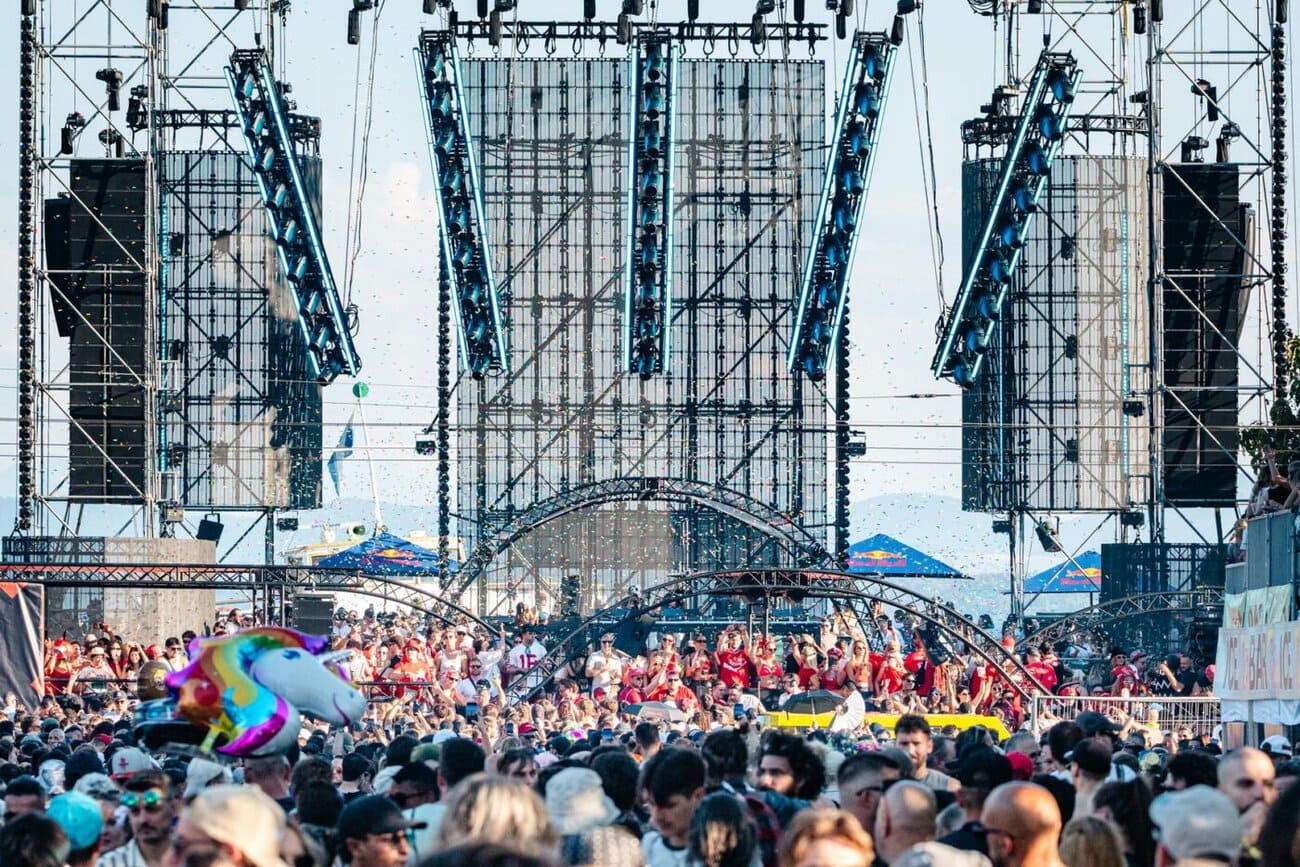
Thanks to a specialized collaboration, four drone crews captured aerial footage that could be integrated directly into the ongoing social media production. The content production culminated in the official aftermovie, which was released five days after the Street Parade.
Outlook: Street Parade Social Media to Be Further Expanded in 2027
The Street Parade has been held in Zurich since 1992 and is one of the world’s largest electronic music events. It attracts hundreds of thousands of visitors each year. For 2027, the strategy is set to be further expanded, with a focus on increasing content output while maintaining the same high standards of quality.

More about Black Frame's work: https://www.blackframe.ch
Organizers of the Street Parade: Stefan Epli, Executive Board, Media, PR, and Finance. Person in charge at Black Frame: Tony Mola, CEO.
]]>
Veractiv is focusing on social media, specifically Instagram and TikTok
Veractiv, one of the leading vitamin and mineral brands in Swiss pharmacies and drugstores, is expanding its presence and launching its own social media channels. In collaboration with the Zurich-based digital agency dreifive, the brand is adopting a modern communication strategy on Instagram and TikTok to further increase its brand awareness and reach new target audiences. The Veractiv social media strategy is specifically aimed at younger consumers.
The new channels focus on Veractiv’s versatile dietary supplements and their practical applications in everyday life. Authentic and inspiring content is designed to show how Veractiv supports people in various life situations—whether it’s for more energy during the workday, during sports activities, or in entertaining interviews with passersby offering personal energy tips. The content is supplemented by informative articles on ingredients, areas of application, and the various product solutions.
Stories from everyday life instead of product advertisements
Miriam Westermann, Digital Manager at Verfora, explains: «Social media gives us the opportunity to bring Veractiv to life in a new, dynamic way. With stories rooted in everyday life, informative content, and an authentic perspective on the topic of energy, we want to reach people where they find inspiration every day and show how Veractiv can support them in various life situations.»
According to the announcement, the new social media channels are intended to create a platform that combines inspiration, entertainment, and product information. The approach is deliberately tailored to the target audience in order to reach younger users in particular where they spend their time every day.
dreifive is responsible for Veractiv's social media strategy
Marleen Albert, Head of Social Media at dreifive, says: «Veractiv Recharge stands for energy—and that’s exactly what we’re bringing to social media now. With a strategy tailored to our target audience and creative storytelling, we’re bringing the brand to life for new audiences and giving it a real social media boost.»
According to Verfora, dreifive has been supporting the company for many years in the areas of SEA and digital brand communication, including for other brands in its portfolio. With dashboards updated daily and continuously optimized campaigns, the agency follows a performance-based approach while taking into account regulatory requirements and sensitive content in the healthcare industry.
More information about the digital agency dreifive: https://www.dreifive.com
Responsible at Verfora: Miriam Westermann (Digital Manager), Stephanie Berkien (Brand Manager). Person in charge at dreifive: Megan Riva (Junior Social Media Consultant), Max Müller (Digital Arts Designer), Julia Baur (Senior Digital Advertising Consultant), Marleen Albert (Head of Social Media | Partner).
]]>
Kingfluencers naoo Worlds: From a Campaign Stop to a Lasting Creator Experience
Kingfluencers is launching naoo Worlds, a new creator format on the social media platform naoo. The format combines creator content, interactive maps, local businesses, and communities into a seamless discovery experience. This provides brands with new opportunities not only to reach consumers digitally but also to guide them throughout the entire customer journey, right up to a visit to a physical location.
With naoo Worlds, Kingfluencers takes things a step beyond traditional influencer campaigns. Instead of one-off collaborations, brands become part of long-term creator experiences in which recommendations, locations, and local offerings are authentically integrated into the content. Restaurants, retailers, event organizers, and other local businesses gain visibility within thematically relevant “Worlds” and benefit from a continuous presence in relevant communities.
Kickoff with «Fresh & Groovy» in Zurich
The first World to launch is «Fresh & Groovy,» which was developed in collaboration with creator and DJ Dennis Bauer. Building on his established brand, it guides users through Zurich’s food, drink, pop-up, and lifestyle scenes. Recommendations are displayed as social content and also pinned on an interactive map and linked to local businesses. Users can seamlessly switch between the feed and the map to discover new places right away.
In addition to Dennis Bauer, Steve Merson and Kevin Lütolf are among the first World Creators. Together, they already reach a community of more than three million followers through their social media channels.
A New Approach to Local Brand Activation with Kingfluencers naoo Worlds
This creates a new approach to local brand activation for brands. Instead of being visible solely through individual campaigns, they become part of continuously growing creator ecosystems in which content, recommendations, communities, and local offerings are interconnected. According to the company, this results in a significantly longer brand presence throughout the entire discovery journey—from the initial inspiration to a visit to a store, restaurant, or event.
Thanks to the scalable platform architecture, additional worlds are set to be developed in the future in collaboration with local creators for other cities, regions, and themed worlds. This opens up new opportunities for brands to embed their communications in cultural, geographic, and thematic contexts over the long term and to engage communities in a sustainable way.
Gregor Doser, Managing Director of naoo, comments: «Influencer marketing is evolving from individual campaigns toward long-term creator experiences. With naoo Worlds, we’re creating a new format that permanently connects creators, communities, and local businesses. That’s exactly where the most relevant touchpoints between content and real consumer behavior emerge.»
Kingfluencers plans to continue expanding the format in the coming months in collaboration with other creators.
For more information about naoo Worlds and the opportunities it offers brands, visit https://www.kingfluencers.com.
Responsible at Kingfluencers: Luca Obrist, Head of Marketing
]]>
m&k How has your agency changed over the past 10 years, and how has the social media industry changed in general?
Tim Schärer It’s hard to believe, but we’ve actually grown up (laughs). While we used to be a wild bunch with even wilder ideas, today we try to strike the ideal balance between that craziness and the professionalism required these days. We’re always saying how lucky we are to be able to evolve alongside the social business movement. Our greatest advantage is knowing where everything we have today comes from. Manuela: Especially in the last few years, we’ve invested a tremendous amount in our processes, our organizational structure, our strategic planning, and our production quality. And alongside our ideas, it’s precisely these investments that help us win our pitches today. Fortunately, we really enjoy change—we need trends to breathe—so the ongoing transformation doesn’t hurt at all. On the contrary, we’re almost glad when something new comes along every now and then, and we can dive right into it together with our clients. Everyone who works with us is fundamentally curious—then as now.
What can you expect in the future? How will Monami continue to evolve, and how will the market develop?
Manuela Brunner AI is, of course, changing a lot of things, especially in our business. But we don’t want to let that drive us crazy; instead, we’ve been taking advantage of the benefits it offers us from day one. We want to focus more on real thinking, a high degree of creativity, problem-solving, and guidance—and less on what AI is replacing. Of course, we think it’s great that AI helps us continue to refine our processes, but we never even want to consider, for example, eliminating jobs because of it. Common sense is and will always be at the center—for us, our clients, and our employees. Tim: That’s a super important point! Our employees. We’ve always been lucky to have great people on our team—people who want to shape the agency and our business. And so, almost every week, initiatives emerge—including from our employees—that help our agency evolve. As an agency, we want to increasingly foster entrepreneurial thinking and, along with that, the way we collaborate with our clients. It’s no longer just about having the best idea for a cool TikTok video; it’s about putting together the holistic solution—the ideal strategy, the right tools, KPIs, and information—that drives the markets and communities of the brands we serve.
How do you generally approach the topic of innovation?
Come to our Monami Lab and see for yourself! Since we’ve noticed that the social business landscape undergoes significant disruption every year, we’ve created a space that puts innovation at the center. Want to know how AI is transforming your processes or content? Let’s take a look! Want to take social commerce to the next level in Switzerland, too? Let’s try a few things out! We want to take action. Because action makes a difference. Tim: Whether you want to challenge your content with AI, automate data for reporting, streamline information processes in general, or replace overpriced tools. Or if you want to challenge your team structure: We’ll examine the strategy behind it and develop new solutions together with our clients. We’re not an agency that claims to be able to do everything. But we do claim that, together, we’ll figure it all out.
You're part of the MYTY universe—how do you collaborate with individual agencies?
TS We’ve been part of MYTY for over 3 years now. We’d be lying if we said everything stayed the same. We now have “siblings”! Sometimes we benefit from them more, sometimes less. We’re closer to certain agencies for business reasons—for example, Sesamy, Sir Mary, or CRK—and less so to others. But even with agencies whose areas of expertise are somewhat outside our own, we work together to figure out how to come up with better solutions for our clients. Manuela: Because an outside perspective or different kinds of experience sometimes lead to the best and most innovative solutions. For example, with Norisk and their e-commerce expertise. Or SHAPE, with their exceptionally strong technology and AI know-how. And when it comes to brand-related questions—which aren’t quite so far removed from our business anymore—we enjoy exchanging ideas with Strichpunkt. Because we love to think big. Even if, stereotypically speaking, you might think our business, with all its content pieces, is primarily made up of small, detailed elements (laughs).
How do you approach the topic of strategy and social media?
MB These days, you can’t have one without the other. Social media has largely become a consultative and data-driven business: What should I do with my community, and on which channels? Which trends will help me achieve organic growth, and which ones should I avoid? How do I generate leads? Where do I offer real added value? What is my brand’s voice? Tim: And those are by no means all the questions we encounter. We enjoy working with our clients over the long term, evolving alongside them. We go through the ups and downs together. Data and a smart strategy help us maintain a clear overview and keep finding new paths forward.
How do you approach creativity?
TS Monami has always been known for its crazy ideas. We’re incredibly curious, and our ambition is always to know more about our clients’ businesses than they do themselves. It doesn’t always work out, but it’s an important goal. Manuela: Here, too—especially in the age of AI—we have to actively fight against the homogenization of ideas and implementations. That way, we can use the time we free up to find the best ideas. We do this with passion. Targeted rituals help us, and once again: processes. Tim: And then we can also avoid letting AI clutter our minds.
People say that social media agencies are the new lead generation agencies. Is that true? And if so, how do you plan to address that?
MB Having worked for many years at influential advertising agencies, I can absolutely confirm this. We do have to be a little careful not to get too cerebral in the social media space and end up producing strategy white papers that are simply no longer relevant. Also, the agency-client dynamic is more similar to what it used to be in traditional agencies. Back then, our social media clients trusted us much more and simply “let us do our thing,” which fostered unique and crazy ideas and encouraged “trial and error.” Today, we have to be careful to maintain a healthy balance between reason and creativity. Our clients also need to work on not trying to control everything—or, rather, to consider which parts of our work their budget should really be allocated to. Tim: We’re noticing that our clients—like us—are becoming more and more professional. That also means we have to strengthen our consulting skills. We need to make our case more thoroughly, because social media has generally become more important in the marketing mix. But we’re also happy that we get to think more and more in 360°. Does Monami do posters, TV ads, and events? Absolutely—we’ve actually always done the latter, and with great passion. Here, too, our biggest advantage is that we haven’t done everything before. When you do something new, you simply think more creatively. And our clients can then reconnect with us. I think it’s easier to slow down than to push forward!
What industries do your customers come from?
TS We serve a diverse mix of clients from a wide range of industries: telecommunications, banking, pharmaceuticals, beauty, tourism, higher education, transportation, politics, food and beverages, insurance, security… We’re not afraid of complex topics. And so there are also some B2B projects or topics where, at first glance, you wouldn’t make the connection to us. But that’s exactly where the beauty of it all lies. Manuela: Exactly! We’ve really been able to build an incredible client portfolio over the past few years. Both in Switzerland and in Germany. And we still don’t talk about it nearly enough! Because, honestly, we’re so proud. We absolutely have to change that. So stay tuned to see what stories we’ll be writing with our clients soon. Because even after 10 years, we still think: we’re just getting started.
]]>
What The Duck and Minerva: Educational Content with a Touch of Humor in Your Feed
The Minerva Schools are among the largest private educational providers in Switzerland. With its expanded offerings—the multilingual tenth grade and the multilingual business school—Minerva is now taking the next step in its social media campaign: Together with the Zurich-based social media agency What The Duck, the school aims to raise awareness of its new educational offerings where its target audience actually spends its time.
Real School Life Instead of Glossy Magazines
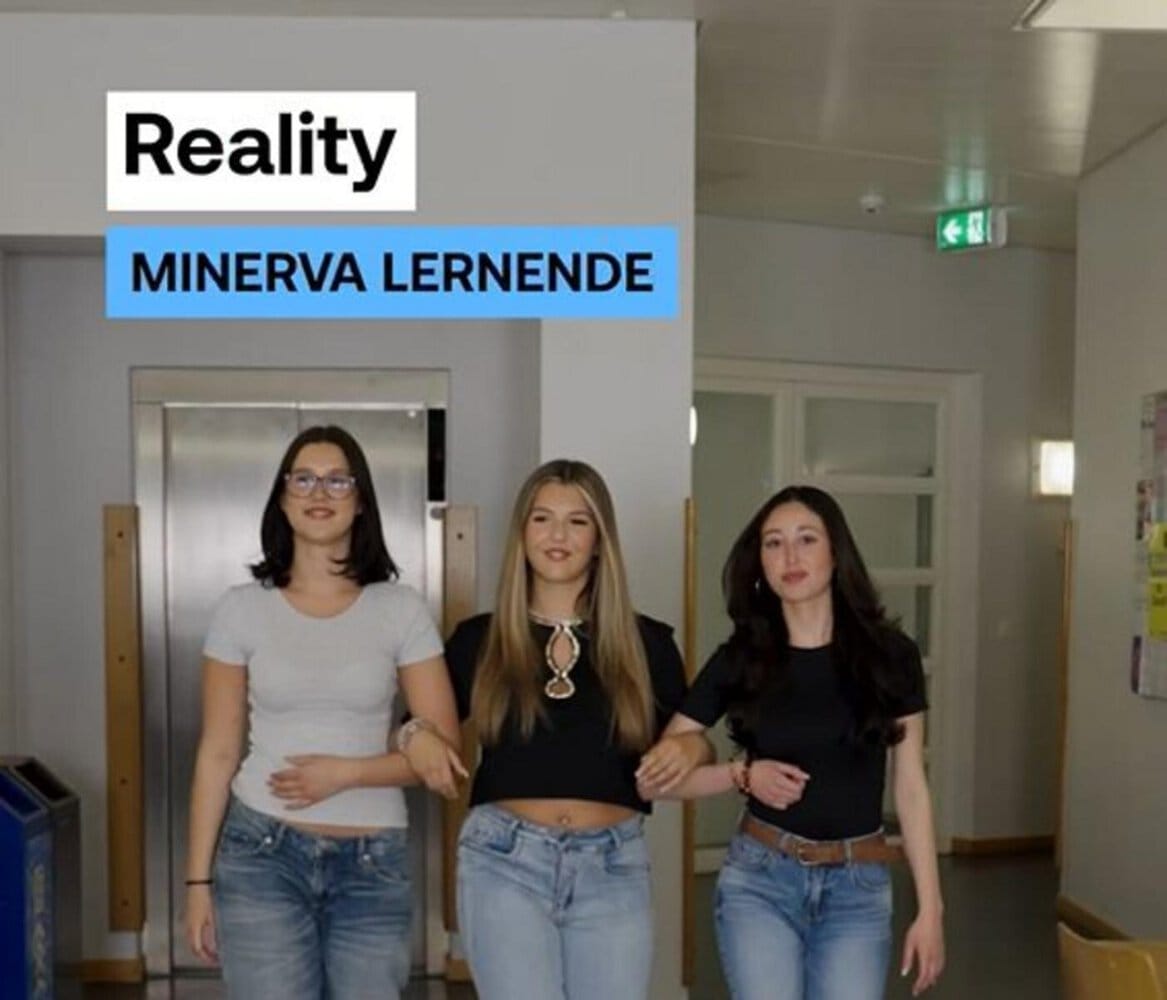
Young people on social media—especially on TikTok—are interested in authentic and entertaining content. That’s exactly what the collaboration between Minerva and What The Duck is all about: Real students share insights into their everyday lives on camera and bring the new educational offerings to life—without any staged, glossy productions. The content formats developed are designed to both inform and entertain, serving as an invitation for young people to learn about Minerva’s educational offerings—right in their social media feeds.
The content was filmed by both What The Duck and the students themselves. The agency’s experts put the finishing touches on the content the students created. Marina Milillo, a multimedia producer at What The Duck, is thrilled about the collaboration: «It’s great to be able to create fantastic content with such motivated people. I’m sure this will give us a super-entertaining look at Minerva’s new educational offerings.»
What The Duck – Part of the ROSAROT Group
What The Duck is a Zurich-based social media agency and part of the ROSAROT agency group. The agency focuses on authentic, target-audience-specific content that leverages the unique features of individual platforms and aligns with users’ habits in both content and format. For Minerva, this means: less campaigning, more real life.
Responsible at Minerva: Martina Merotto (Marketing Manager), Christina Bürgin (Company Director). Responsible at What The Duck: Matthias Koller (Managing Director), Laila Kalman (Head of Social Media Consulting), Franz Neugebauer (Senior Copywriter), Seraina Kurer (Junior Copywriter), Tuna Ertugrul (Social Media Manager), Marina Milillo (Video), Moritz Egger (Performance), Philipp Jeker (AI Specialist)
]]>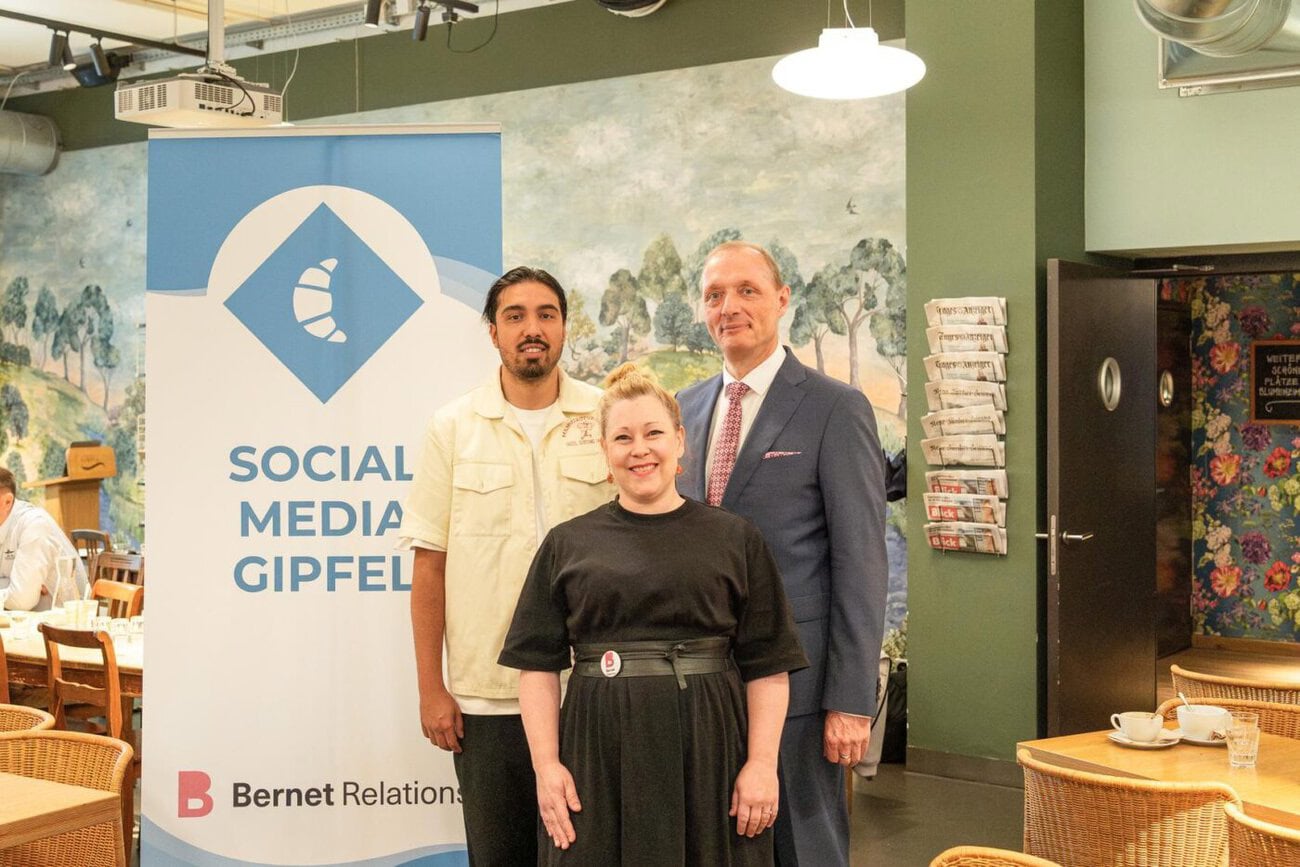
The 83rd Social Media Summit took place on June 3, 2026, at the fully booked tibits in Zurich. More than 120 participants from the Swiss communications and social media community gathered early in the morning to discuss the topic: Creating Content with AI—Between a Creative Boost and Legal Guidelines. Bernet Relations is responsible for organizing this community event.
Even a failure can be an opportunity
Sharuch Shabbir, Migros« social media manager, rose to fame in December 2025 as the rapper behind the song »Grittibänz im Benz” under the pseudonym Sha38. The AI-generated TikTok video went viral and sparked a craze. At the Social Media Summit, he provided insight into how AI is used to create content for Migros’ social media channels.
In addition to the success story of «Grittibänz,» he also touched on an AI glitch from late fall 2025: the five-legged reindeer on a cookie tin. Migros’ social media team responded with a giveaway and a touch of self-deprecating humor—thus turning the mistake into an opportunity.

AI output never comes without human input
Markus Näf, a partner at Eversheds Sutherland and an adjunct lecturer in computer science law, drew on the example of the rapping Grittibänz in his brief presentation. He asked: Who owns this content? And who can assert legal claims, and on what grounds?
After an introduction to copyright law—only human creations are protected—and a discussion of a liability case involving misinformation provided by a chatbot, Näf offered the communications professionals in attendance specific practical tips. The human contribution to AI output should be documented, and he recommended checking the licenses of the tools used, since not every license version permits commercial use.

Checklist and Upcoming Social Media Summits
In anticipation of the 83rd Social Media Summit, Bernet Relations has updated its checklist titled «Using Generative AI Effectively in Communications.» In addition, Bernet Relations is offering AI workshops and shorter “coffee sessions” on this topic.
The next events will take place on Wednesday, September 2, 2026, in Bern, and on Wednesday, November 4, 2026, in Zurich.
For more information and to register for upcoming events: https://bernet.ch
]]>
The Social Media Study 2026 The Zurich-based digital agency xeit paints a clear picture: The Swiss social media market has come of age. For the 17th edition of the study, xeit surveyed more than 1,000 people in Switzerland about their digital usage habits—and the results signal a turning point. For the first time, there has been a slight decline in overall social media usage.
Instagram, YouTube, and TikTok: Platforms Caught Between Stability and Fatigue
According to the study, Instagram remains one of the key platforms in Switzerland, though it has seen a slight decline for the first time. YouTube maintains its strong position, while TikTok is growing at a slower pace than in previous years. The report states that LinkedIn is well-established in the Swiss market, and Facebook remains relevant despite a downward trend. X continues to lose ground, with no clear successor having emerged so far.
The study thus describes a new phase: Not every platform continues to grow automatically. Instead, it becomes clear which channels are firmly embedded in the daily lives of Swiss people—and where the first signs of fatigue are appearing.
AI Is Changing the Way We Search for Information
One focus of this year’s 2026 Social Media Study is generative AI. According to the study’s authors, ChatGPT and similar tools have become widely adopted among the Swiss population and are increasingly being used to search for information. At the same time, social media is gaining importance as a channel for searching and finding inspiration—especially among younger target groups.
This raises the question of what roles traditional search engines, social networks, and AI tools will play alongside one another in the future. Visibility no longer comes solely from Google, but increasingly also from social search and AI-powered answers—a development that is likely to become central to digital communication.
Additional trends from the 2026 Social Media Study
In addition to the major platform trends, the study highlights other relevant developments: Gen Y is spending less time on social media. AI in advertising is polarizing—the majority of users react critically to AI-generated advertising content. Short-form video is well established, but its growth is no longer unchecked; certain formats are losing momentum.
According to the study, WhatsApp remains unrivaled: No other messaging app in Switzerland comes even close to matching the reach of the Meta service. Political opinion-forming continues to shift toward social media, with Instagram in particular gaining importance in this context. Meanwhile, social commerce is still waiting for its breakthrough: While social networks do trigger purchasing impulses, direct shopping via social media remains limited in Switzerland.
Another topic is digital detox: Many Swiss people would like to take a break—at least occasionally—from being constantly online.
Differentiation Instead of Growth Momentum
When platforms hardly differ in terms of growth, the nuances become more important: Who actually uses which channels? Which formats hold people’s attention? Where are new search habits emerging? The xeit Social Media Study 2026 addresses these questions for the Swiss market and highlights where social media remains stable, where usage habits are changing, and what role AI, creator content, political communication, and digital detox play in everyday digital life. The study examined topics such as social networking, social business, live communication, blogs, podcasts, and influencers, as well as a generational analysis ranging from Boomers to Gen Z.
Xeit offers the full report and a preview version of the study on its website: https://www.xeit.ch
]]>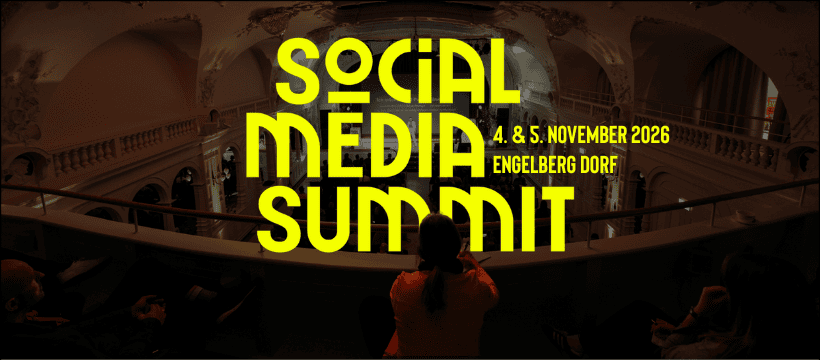
What began in 2017 as a niche conference in Zurich under the name WebStage Masters has become a must-attend event for the Swiss social media industry: The Social Media Summit will return to Engelberg for the ninth time on November 4 and 5, 2026. Nearly 850 experts are expected to attend—representatives from Meta, Pinterest, and other platforms will meet with decision-makers from companies, government agencies, tourism organizations, NGOs, and research institutions.
Four stages, more than 50 speakers
The program of the Social Media Summits spans four stages. Through talks, panels, masterclasses, and Q&A sessions, more than 50 speakers will offer exclusive insights into current trends, new platform features, and successful strategies. Topics range from the latest usage statistics from Switzerland to AI-powered content strategies, performance marketing, and storytelling—always with a local focus and a practical approach.
The event’s concept deliberately focuses on a manageable size: large enough to bring together the scene’s most influential figures, and small enough to facilitate meaningful conversations. It’s not the anonymous hustle and bustle of a trade show, but rather a setting for exchange and networking in an idyllic mountain village.
Networking in the Alps – with a new pub quiz
In addition to the professional program, the Social Media Summit offers a varied social program: a group lunch, a morning yoga session, a fondue night at Engelberg’s oldest restaurant, and a farewell beer round out the two-day event. The most frequently mentioned networking highlight is Gin Night at the world’s largest gin bar, where the first evening comes to a relaxed close before new best practices and insights are shared on the second day.
New this year: Following the Farewell Beer event, the conference invites you to the first Social Media Pub Quiz at the Yucatan.
Organizer Tanja Herrmann describes the conference’s focus as follows: «With the Social Media Summit, we’ve built an entire social media ecosystem in a mountain village. Our goal each year is to strike the right balance between knowledge and networking—intimate enough to forge genuine connections, yet large enough to embrace new ideas.»
The Social Media Summit is organized by House of Influence, an influencer and social media marketing agency based in Zurich. Since 2025, House of Influence has also been the organizer of Switzerland’s largest AI-in-marketing conference.
Tickets are now available. Until early June, those interested can still take advantage of the limited-time early-bird prices: https://www.social-media-summit.ch
]]>
Five Brands, Five Strategies: Monami Manages Heineken's Social Media
Since January 2026, the Zurich-based agency Monami has been managing Heineken Switzerland’s social media account. What makes this project unique is that It’s not about a single brand, but rather five distinct beer brands in a saturated market—Heineken, Birra Moretti, Calanda, Eichhof, and Ittinger. Each brand targets its own audience, speaks its own language, and manages its digital channels according to a custom-developed strategy.
Monami secured the contract through a multi-stage pitch. The scope of services covers the entire value chain: from strategy to concept development and content production to community management.
Differentiated Brand Management as a Core Competency
In the first few months, Monami developed a unique strategy for each of the five brands—tailored to their tone, platform logic, and target audience. The result: Each brand has its own voice and language in the digital space. For Birra Moretti, Calanda, Eichhof, and Ittinger, content has been actively posted on these channels since early 2026; Heineken itself is set to follow shortly.
Isabel Einhorn, Marketing Manager at Heineken Switzerland, explains the decision as follows: «In the bid, Monami demonstrated that creativity and brand discipline are not mutually exclusive—that’s rare, and it’s exactly what we were looking for.»
The agency is just as motivated. Tim Schärer, Head of Creative Strategy at Monami, says: «Working for such legendary brands, immersing myself in these strong communities, and watching them grow is a dream come true—and it’s incredibly motivating.»
Initial Implementations in Heineken's Social Media Presence
Content for all four current brands has already been created and is available for the public to view. For Calanda, the first Instagram Reel is available at https://www.instagram.com/reel/DWqltxFil7o/ available; for Eichhof, see https://www.instagram.com/reel/DU8iIlNCBym/, for Birra Moretti at https://www.instagram.com/reel/DW0j-pyjP7t/ and for Ittinger at https://www.instagram.com/reel/DXv5V92jwY7. The Reels illustrate how different the visual language and tone of voice can be depending on the brand—from Calanda’s down-to-earth, regional character to Birra Moretti’s Mediterranean positioning.
Responsible at Heineken Switzerland: Isabel Einhorn, Marketing Manager. Responsible at Monami: Tim Schärer, Head of Creative Strategy.
]]>