Commerce Kategorie - m&k
https://www.markt-kom.com/en/kategorie/digital/commerce/
The creative side of the economyThu, Oct 1, 2026 7:00:32 AM +0000en-US
hourly
1 https://wordpress.org/?v=7.1.2https://www.markt-kom.com/wp-content/uploads/2024/07/favicon-150x150.pngCommerce Kategorie - m&k
https://www.markt-kom.com/en/kategorie/digital/commerce/
3232Swiss E-Commerce Confidence Study: Vertrauen statt Checkout
https://www.markt-kom.com/en/digital/commerce/swiss-e-commerce-confidence-study-vertrauen-statt-checkout/
Thu, Oct 1, 2026 7:00:32 AM +0000https://www.markt-kom.com/de/?p=262272Swiss people are increasingly shopping online. Source: Unsplash
Swiss E-Commerce Confidence Study Provides New Data Set
YouGov’s Swiss E-Commerce Confidence Study 2026 provides a solid data foundation on the digital shopping behavior of the Swiss population. The survey focuses on digital access points and navigation tools, consumers’ confidence in decision-making, relevant barriers, and the factors that build trust throughout the digital shopping journey.
Why Online Shopping Isn't Won in the Shopping Cart
About 88 percent of respondents in German-speaking and French-speaking Switzerland have searched for products online, compared prices, or purchased products in the past three months. This seems to largely answer the question of adoption. However, according to the study, it remains unclear what it takes for digital engagement to actually lead to a purchase.
The YouGov study shows that consumers primarily use the Internet as a source of guidance. At the same time, the data indicates that uncertainties often do not arise in the areas where many e-commerce initiatives focus their efforts. Only 8 percent cite the checkout process as an area where they feel particularly insecure when shopping online. Far more often, concerns center on trust in the provider and the store, returns, warranties, customer service, and product reliability.
Trust as a Key Factor for Success
According to the study, this means that for retailers, platforms, and brands, online success isn’t just a matter of reach, price, and seamless technology. What matters most is whether sufficient trust is built throughout the digital shopper journey—before the purchase, at the moment of purchase, and with regard to what happens after the purchase. The data points presented here already show which factors particularly shape trust in Swiss e-commerce.
]]>Das 380-Millionen-Erwachen: Wie Retail Media die Schweizer Werbewelt auf den Kopf stellt
https://www.markt-kom.com/en/markom/das-380-millionen-erwachen-wie-retail-media-die-schweizer-werbewelt-auf-den-kopf-stellt/
Thu, Sep 3, 2026 8:35:09 AM +0000https://www.markt-kom.com/?p=260246
Anyone who walked into the theater at Zurich’s Volkshaus on September 2, 2026, sensed it immediately: This wasn’t about some distant pipe dream, but about concrete budgets and tectonic shifts in marketing. Moderator Marc Götti (CEO of Excom Media AG) and IAB President Roger Baur summed it up right from the start: Retail media has come of age in Switzerland. What was still a vague promise just two years ago is now a top priority in the executive suites of retailers, brands, and agencies.
Marc Göttti, CEO of Exot Media AG
The fact that the industry is booming was evident not least in the audience. IAB Managing Director Urs Flückiger noted in an interview with m&k A happy conclusion:
„It was an extremely successful event—we had one of the lowest no-show rates ever. While the topic of retail media isn’t quite as advanced here as it is among publishers, that’s precisely where the enormous opportunity lies. The IAB working group is actively helping retailers exchange ideas on neutral ground, talk to one another, and establish common standards.“
- Urs Flückiger, Managing Director of IAB Switzerland (in conversation with m&k)
But what exactly is going on here? Why are CFOs suddenly eyeing shelf facades, why is MediaMarkt displaying cars next to coffee makers, and why might the RMD26 have been the last of its kind?
Roger Baur, Urs Flückiger, Martin Radelfinger
1. The Macro-Quake: Capital Allocation Instead of Advertising Romance
The theoretical and statistical highlight of the afternoon came from Daniel Knapp, Chief Economist at IAB Europe. With analytical precision, he dissected the European advertising market—and in the process debunked a myth: Advertisers do not think primarily in terms of media categories. For them, advertising is simply a matter of capital allocation: How do I achieve the highest return with the least amount of friction?
Daniel Knapp, Chief Economist, IAB Europe
The numbers speak for themselves: In Europe, digital advertising now accounts for about 70 % of the total market. However, nearly 90 % of that growth goes to a handful of global U.S. platforms. The big exception, with true European champions: Retail Media.
Knapp estimated a hypothetical market potential for Switzerland of approximately 380 million Swiss francs if the local market were to reach the level of maturity seen in Germany or the United Kingdom. In an exclusive interview with m&k Daniel Knapp emphasized what matters most right now:
„The European retail media market is on track to reach 14 to 15 billion euros by 2026. To fully realize this potential, the retail sector must undergo a genuine cultural shift: Retailers must begin to think in a media-centric way and act like media companies—not just like retailers. At the same time, advertisers must reallocate their budgets and break down the traditional separation between traditional media budgets and retail promotion (WKZ).“
- Daniel Knapp, Chief Economist at IAB Europe (in conversation with m&k)
Daniel Knapp, Chief Economist, IAB Europe
2. Are We Facing a Paradigm Shift? AI Commerce vs. Agent-Based Commerce
Immediately afterward, he threw Markus Caspari (Managing Partner of Digital Innovation & Transformation at Dentsu Germany) offers a nuanced perspective on the current hype surrounding artificial intelligence:
Markus Caspari, Managing Partner, Digital Innovation & Transformation, Dentsu Germany
99.9% of the market's % are not yet autonomous: Following the model used in the automotive industry (Levels 0 through 5), we are still in the very early stages of fully autonomous shopping („Agentic Commerce“). The idea of bots shopping autonomously on behalf of people is fascinating, but it’s still a long way off.
Shopping vs. Buying:Shopping is discovery, inspiration, and emotion. Buying is purely utilitarian—meeting basic needs (toilet paper, toothpaste). AI agents will primarily and radically optimize emotionless „buying.“.
The Protocol Revolution: With standards such as the UCP (Google & Shopify's Universal Commerce Protocol) and WebMCP For the first time, platforms are joining forces. If Google starts rendering search results directly in the browser using AI, or if ChatGPT builds in-app stores through partnerships, the funnel will shift entirely.
Markus Caspari, Managing Partner, Digital Innovation & Transformation, Dentsu Germany
Opposite m&k Markus Caspari emphasized the close interconnection between commerce and technology:
„Retail media and AI commerce are two sides of the same coin. Retail media is an interdisciplinary field at the intersection of retail and media—right where search, social, and e-commerce meet. For agencies and brands, this means that retail media should never be viewed in isolation as a standalone channel, but rather must be firmly embedded within a holistic overall strategy.“
- Markus Caspari, Managing Partner of Dentsu Germany (in conversation with m&k)
3. The Swiss Reality Check: From the Corner Store Poster to the 1,500-Screen Machine
It has been proven that Switzerland is not just a theoretical concept Sven Ruoss (CEO of Post Futurum) and Séverine Hubatschek (Head of Retail Media, Migros Supermarkt AG).
Sven Ruoss, CEO & Founder | Post Futurum and IAB Retail Media Service Providers Working Group
Ruoss opened with a pointed provocation: „Retail Media Day 2026 will likely have been the last one—because in the future, we’ll be talking about Commerce Media.“ It has long since ceased to be just about supermarkets; it's now about all commercial transaction platforms—from SBB and Twint to the Swiss Post app.
Sven Ruoss, CEO & Founder | Post Futurum and IAB Retail Media Service Providers Working Group
The Five Unbeatable Advantages of Retail Media:
Actual purchase data: First-party transaction data instead of third-party cookies.
Brand Safety: Zero risk of deepfakes or questionable environments.
Context & High Intent: Anyone who's in a store or shop is in the mood to shop.
Native Integration: Advertising right at the shelf or at the digital checkout.
Closed measurability: Proof of actual sales (closed-loop).
Séverine Hubatschek highlighted how the Swiss giant Migros is putting these PS to use: «»We are Switzerland's new advertising space."
Séverine Hubatschek, Head of Retail Media | Migros Supermarkt AG
100 years ago, Migros was still advertising pears from its sales truck. Today, there are 660 stores in the center, where 97 %: All transactions still take place physically. By spring 2027, Migros will be rolling out across Switzerland 1,500 digital screens Combined with the tremendous reach of the Cumulus program (over 3.1 million households, more than 5 million people, over 70% in-store scan rate, and over 90% online), Migros is building an ecosystem for highly granular targeting.
In conversation with m&k Séverine Hubatschek explained the strategic dimension for the retail giant:
„For Migros, retail media isn’t just an afterthought that we do ‚on top‘ of everything else. We’ve firmly anchored retail media in our supermarket strategy and professionalized it. The biggest innovation in recent months has been the establishment of our technology partnership with Criteo for Sponsored Products on Migros Online. Through this partnership, we use our first-party purchase data in compliance with data protection regulations to offer consumers genuine guidance at the right moment.“
- Séverine Hubatschek, Head of Retail Media at Migros Supermarkt AG (in conversation with m&k)
4. The Marketer's Perspective: Why Retail Media Can't Scale Without Publishers
The fact that retail media has long since expanded beyond the confines of online stores was demonstrated by Mitja Grušovnik (Director of Ad Technology at Ringier Advertising). From a marketer's perspective, he shed light on the evolution of «Scale, Data & Reach»—and brought a dash of realism to the debate:
Mitja Grusovnik, Director of Ad Technology | Ringier Advertising
More than five years ago, Ringier was already experimenting with e-commerce models and on-site retail concepts (at the time, including geschenke.de, among others). Yet the fundamental problem facing many retailers remains their limited organic reach. With the gradual phase-out of third-party cookies and the demand for maximum brand safety and first-party data, the time has now come for strategic alliances:
„Retailers have fantastic purchase and transaction data, but eventually reach the limits of their reach on their own platforms. As marketers and publishers, we bring exactly what’s missing for scaling in the off-site space: mass reach and relevant journalistic contexts on the open web. The future lies in seamlessly integrating retail data with our publisher reach through smart interfaces.“
- Mitja Grušovnik, Director of Ad Technology at Ringier Advertising (on RMD26)
It is only through this integration of retail data and large media networks that retail media becomes programmatic and bookable on a large scale for agencies and brands.
5. The Comeback of Physical Spaces: 85 % Events Take Place in Stores
The contributions from MediaMarkt, OBI, and the One Tech Group reinforced the notion that the physical point of sale is the real gold mine. Daniel Siegmund (One Tech Group) provided the number of the day: 85 % of the trading volume in Switzerland is processed through brick-and-mortar locations. Anyone who thinks of retail media as nothing more than a banner in an online store is missing out on the lion's share of the market.
Daniel Siegmund, Founder & Managing Director | One Tech Group GmbH
Just how spectacular in-store activation can be was demonstrated by Felicia Wegmann (Team Lead, Partner Marketing & Retail Media, MediaMarkt Switzerland), based on a best-practice case study developed in collaboration with Publicis for Opel: To launch the new Opel Frontera, MediaMarkt simply placed a real car right in the middle of its electronics store. Combined with synchronized TV walls, in-store screens, newsletters, and on-site advertising, the key metrics skyrocketed:
+444 % Web Traffic for Opel
+660 % more vehicle configurations
Doubling (+100 %) of vehicle orders
Felicia Wegmann, Team Lead, Partner Marketing & Retail Media | MediaMarkt Switzerland
Opposite m&k Felicia Wegmann emphasized the value of this cross-channel approach:
„Our case study with Opel and Publicis has impressively demonstrated how cost-effective retail media can be compared to traditional media—even for non-endemic brands outside the electronics sector. By combining a physical ‚space experience‘ in-store with a digital extension, we were able to demonstrate a massive increase in brand awareness and tangible leads.“
- Felicia Wegmann, Team Lead, Partner Marketing & Retail Media, MediaMarkt Switzerland (in conversation with m&k)
Felicia Wegmann, Team Lead, Partner Marketing & Retail Media | MediaMarkt Switzerland
Joining us from Germany, [Name] presented Patricia Grundmann (Managing Director of OBI Advertising) on what the future looks like on the shelves: A pilot project is underway in the 15 OBI stores in Switzerland with Advertima. Using smart sensors, the displays analyze passing customers in real time (length of stay, eye contact, target audience segments) and programmatically deliver the appropriate advertising message. If a potential homeowner stands in front of the display, they see professional tools; if a family stops by, the gardening campaign plays.
Patricia Grundmann, Managing Director | OBI Advertising
6. The Reality Check in the Panel: „Who Has to Deliver Now?“
The fact that retail media must become an integral part of media planning was also highlighted in the presentation by Albert Gubler (Director of Expert Practices at WPP Media) and Gian Berger (Head of Product & Business Development, Retail Media, Migros) in the spotlight. In conversation with m&k Albert Gubler summarized the agency's perspective:
„There’s a tremendous sense of momentum in the Swiss market. For us as a media agency and for our clients, retail media is an incredibly exciting field because it brings advertising messages extremely close to the point of sale. However, for retail media to become an established part of the media mix, it requires absolute transparency, standardized formats, seamless bookability, and reliable comparability with other media types.“
- Albert Gubler, Director of Expert Practices at WPP Media (in conversation with m&k)
Gian Berger, Head of Product & Business Development, Retail Media | Migros Supermarkt AG (right) Albert Gubler, Director of Expert Practices | WPP Media
At the closing panel discussion, moderated by Gian Berger (Migros) and Nicolas Bill (Co-Leaders of the IAB Retail Media Working Group) discussed Julia Sams (Henkel), Pierre Bohren (Brack.Alltron), Mitja Grušovnik (Ringier Advertising) and Tobias Kober (MediaMarkt Switzerland).
The answer to the panel question „Who has to deliver now?“ was unanimous: Everyone involved needs to pitch in.
Retailers must deliver: A shift away from the siloed thinking of traditional advertising cost subsidies (WKZ) toward transparent, predictable digital and media standards. Advertisers are calling for standardized metrics, booking interfaces, and reliable measurability.
Brands must deliver: Marketing decision-makers must reallocate their budget allocations. Retail media should no longer be funded from whatever is left over in the retail promotion budget; rather, it belongs in the core media mix as a permanent performance and branding channel.
Tech companies and agencies must deliver: The fragmentation of the Swiss market is detrimental to scaling. Agencies need programmatic booking channels (DSP/SSP integrations) and standardized formats to manage campaigns across multiple retailers without incurring significant additional effort.
The bottom line: A gold rush atmosphere with a test of maturity
The 2nd Swiss Retail Media Day proved that retail media is not just a passing fad, but the link between digital precision and real-world consumption.
Switzerland is at a turning point. The potential is enormous, the technology is in place, and retailers sit on the country’s most valuable data treasures. But the era of siloed solutions is over. If retailers, brands, and tech service providers establish common standards now, retail media will transform Swiss marketing for the long term—and the targeted 380 million francs will become a reality sooner than some media planners currently believe.
]]>Shopfully-Studie: KI im Shopping noch eine Nische
https://www.markt-kom.com/en/digital/commerce/shopfully-studie-ki-im-shopping-noch-eine-nische/
Tue, Jun 30, 2026 08:07:51 +0000https://www.markt-kom.com/de/?p=258292AI helps consumers compare prices, according to a Shopfully study. Source: zvg
Consumers appreciate advertising when it offers tangible added value—and despite growing interest, AI in shopping is still far from widespread use. These are two key findings from the latest Shopfully survey, «The State of Shopping 2026,» for which a total of 6,605 users in eight European countries were surveyed in March 2026.
Advertising is effective when it provides guidance
For retailers and brands, the key factor is when communication is perceived as helpful. According to the study, advertising is most effective when it provides concrete support in the context of offers and information. 46 percent of respondents find advertising useful when it highlights promotions that would otherwise be overlooked. 38 percent say advertising is helpful when it supports their shopping planning. 30 percent appreciate advertising when it showcases products that match their needs.
The study suggests that advertising is most effective when it is specific and relevant to everyday life: as a reminder of relevant offers, as a planning aid, or as a suitable product recommendation. According to the study, if you want to make an impact, you don’t need to be louder—you need to be more relevant.
AI in retail remains a niche market for now
AI is making its way into everyday shopping—still gradually, but with a clear direction. Thirteen percent of respondents have used AI to make purchasing decisions in the past twelve months. So far, AI plays a minor role as a source of information before making purchasing decisions: When asked where they look for information online, 4 percent cite AI platforms such as ChatGPT or Gemini.
If consumers were to use AI while shopping, they would do so primarily for clearly defined, everyday tasks. 38 percent are interested in comparing prices across retailers. 24 percent would like help identifying misleading offers or pricing tricks. Twenty-one percent find features that track price drops on desired items appealing. At the same time, skepticism toward AI features remains high: 49 percent say they do not want to use any of the AI-powered shopping features surveyed and prefer to make decisions on their own.
A look at the tools used also shows that, so far, AI in shopping has tended to be used via general-purpose platforms rather than specialized shopping assistants. Among those who have already used AI to prepare for shopping, 91 percent cite traditional AI platforms, while virtual shopping assistants have been used significantly less frequently so far (nine percent).
Data Sharing: Added Value as a Prerequisite
When it comes to data, a clear pattern emerges. When consumers see a tangible financial benefit, their willingness to share data increases significantly. 39 percent would be willing to share their data if it led to better offers and discounts—at the same time, 39 percent do not want to share their data under any circumstances. Many make their willingness to share data contingent on clear conditions: 33 percent want to be able to easily manage or revoke their consent, and 21 percent want to understand exactly how their data is being used. Personalized product recommendations, on the other hand, convince only a few: Just 8 percent would share their data for that purpose.
According to the study, this presents a clear mandate for retailers and brands. Personalization does not work as an end in itself; rather, it must be transparent, controllable, and offer tangible benefits.
Julian Klein, Country Manager for Germany at Shopfully, summarizes the findings as follows: «The results show that consumers do not fundamentally reject advertising and technology. However, they expect a clear benefit. Ad formats must provide guidance and concrete benefits for individual shoppers, and AI, too, is only relevant if it creates transparency and helps people save money.»
About the study
Shopfully conducted the study «The State of Shopping 2026» in March 2026, collecting data from a sample of 6,605 users in eight European countries (Austria, Bulgaria, France, Germany, Italy, Romania, Spain, and Hungary) who are at least 25 years old and use Shopfully’s proprietary apps.
]]>Einzelhandelskaufkraft in Europa: Schweiz weit vorne
https://www.markt-kom.com/en/digital/commerce/einzelhandelskaufkraft-in-europa-schweiz-weit-vorne/
Wed, June 17, 2026 07:55:33 +0000https://www.markt-kom.com/de/?p=257469Germany's purchasing power is below the European average. Source: zvg
Retail Purchasing Power in Europe: Switzerland Ranks Second
Germany is one of Europe’s largest retail markets—yet in terms of per capita retail purchasing power in Europe, the country falls below the European average. This is shown in the new study «NIQ Retail Purchasing Power in Europe,» which is now available. According to the study, the average retail purchasing power in the 25 countries surveyed is 6,714 euros per capita. Germany’s figure stands at 6,226 euros per capita, which is about seven percent below this average.
In total, consumers in the European countries surveyed have approximately 3.5 trillion euros available for retail spending. Luxembourg leads the way with 12,518 euros per capita—more than 86 percent above the European average. Switzerland ranks second with 12,080 euros, followed by Denmark with 9,452 euros per capita.
Market size and purchasing power are diverging
Filip Vojtech, a retail expert in the geomarketing division at NIQ, explains: «Northern and Western European countries dominate the top spots in the ranking. At the same time, some of Europe’s largest retail markets in terms of volume fall below the European average when measured on a per-capita basis. For example, despite their high total market volumes, Germany, Spain, and Italy all have below-average retail purchasing power. This shows that market size and individual purchasing power often diverge.»
In total, twelve of the 25 countries surveyed have above-average per capita retail purchasing power, while 13 countries fall below the European average. At the bottom of the ranking are primarily countries from Eastern and Southeastern Europe. Serbia brings up the rear with 3,849 euros per capita, reaching just over 57 percent of the European average.
Metropolitan regions with disproportionately high retail purchasing power in Europe
In addition to national averages, there are also significant differences at the regional level. In many countries, capital cities and large metropolitan areas significantly outpace their respective surrounding regions. In France, for example, Paris reaches 12,944 euros per capita, while the neighboring department of Seine-Saint-Denis records only 6,314 euros—less than half the capital’s figure. In the United Kingdom, central London regions such as the City of London achieve purchasing power figures of up to 15,785 euros per capita, while regions such as Birmingham reach only about 5,846 euros per capita.
Vojtech therefore emphasizes: «It is important for retailers to take regional dynamics into account.» According to the study, large metropolitan areas account for a disproportionately high share of retail purchasing power, while regional spending patterns and levels of concentration vary significantly from state to state.
Methodology of the study
The «NIQ Retail Purchasing Power in Europe» study is available for 25 European countries at fine-grained levels such as municipalities and ZIP codes. Supplementary data on general purchasing power, product category purchasing power, as well as residents and households, is also available. NIQ Retail Purchasing Power refers to that portion of general NIQ purchasing power that can be spent in the retail sector. General purchasing power corresponds to disposable income after taxes and social security contributions, including transfer payments, and is reported as an index in euros per capita per year. The values are based on nominal income and are not adjusted for inflation. The calculations are based on data from income tax statistics, statistics used to calculate transfer payments, and forecasts from economic research institutes.
]]>Automatenshops Schweiz: Gen Z kauft längst rund um die Uhr
https://www.markt-kom.com/en/digital/commerce/automatenshops-schweiz-gen-z-kauft-laengst-rund-um-die-uhr/
Tue, Jun 9, 2026 5:41:38 AM +0000https://www.markt-kom.com/de/?p=256919Being open around the clock is the biggest advantage. Source: zvg
Vacant retail spaces, changing consumer habits, and the desire for flexible shopping options are transforming the Swiss retail sector. A representative study by the market and opinion research institute Marketagent shows that vending machine shops are widely known among the Swiss population and are being used more and more—especially by Generation Z.
Concerns About Vacancies in City Centers
The development of many town centers is a growing source of concern for the public. Sixty-three percent of Swiss people feel that the number of vacant storefronts is increasing, and 72 percent view this trend as generally worrisome. Finding new uses for vacant retail spaces is therefore becoming increasingly important.
For the study, 1,000 people aged 14 to 75 who were representative of the Swiss population were surveyed. The survey was conducted between April 30 and May 11, 2026, via online interviews on the Marketagent reSEARCH platform.
High brand awareness, growing interest among vending machine shops in Switzerland
88 percent of respondents have already heard of vending machine stores—unstaffed stores where products can be purchased from vending machines around the clock. 29 percent have already shopped at such a store themselves. The younger generation is particularly open to this concept: among Generation Z, the proportion of people who have used these stores so far is already around 40 percent. By comparison, among baby boomers, this figure is only 14 percent.
Flexible and practical—but not without its critics
The biggest perceived advantage is their round-the-clock availability: 64 percent appreciate that vending machine stores are open 24/7. 57 percent see them as a practical solution for emergencies, such as when a product is needed urgently and traditional stores are already closed. One in four also appreciates the time savings: 25 percent see this as a way to get their shopping done quickly. Other benefits mentioned include the ability to access products even outside of regular business hours (about 38 percent) and the potential to offer regional products (about 21 percent).
On the other hand, there are significant concerns: 46 percent cite the threat of job losses in the retail sector as the biggest drawback. Possible technical glitches and a limited product selection are each cited by 41 percent of respondents, while 40 percent also mention price markups on products.
A complement to, rather than a replacement for, retail
According to the study, train stations and bus stops (56 percent) as well as rural areas (36 percent) are considered particularly suitable locations—that is, places where there is demand for flexible shopping options or where there are gaps in local services.
Overall, a majority does not view vending machine stores as a replacement for existing retail outlets, but rather as a complement to them. Nearly two-thirds—62 percent—see them as a useful addition to brick-and-mortar retail. Fifty percent believe that vending machine stores could help fill vacant storefronts and revitalize streets. At the same time, half the population advocates for clear rules: one in two supports restrictions at night or in residential areas. Only 14 percent completely reject shopping at a vending machine store—though among baby boomers, that figure rises to 29 percent.
Roland Zeindler, Managing Director of Marketagent Switzerland, summarizes the findings: «Vending machine stores are also tapping into the spirit of the times in Switzerland. The concept is particularly popular with Generation Z: For them, flexibility, speed, and round-the-clock availability are clearly the top priorities. Older consumers, on the other hand, are significantly more cautious about vending machine stores. This shows that, as a complement to traditional retail, vending machine stores have potential—but they must build trust, operate in a way that’s easy to understand, and clearly communicate their added value. Especially in areas where local supply chains have gaps or where vacant spaces call for new usage concepts, they can be an exciting building block.»
For more information about the study and Marketagent Switzerland's research opportunities, please visit https://www.marketagent-schweiz.ch.
]]>Bring! Shopper Guide 2026: Kaufentscheid fällt auf dem Sofa
https://www.markt-kom.com/en/digital/commerce/bring-shopper-guide-2026-kaufentscheid-faellt-auf-dem-sofa/
Tue, May 26, 2026 09:43:23 +0000https://www.markt-kom.com/de/?p=256001Bring! Shopper Guide 2026: Purchasing Decisions Are Made at the Kitchen Table
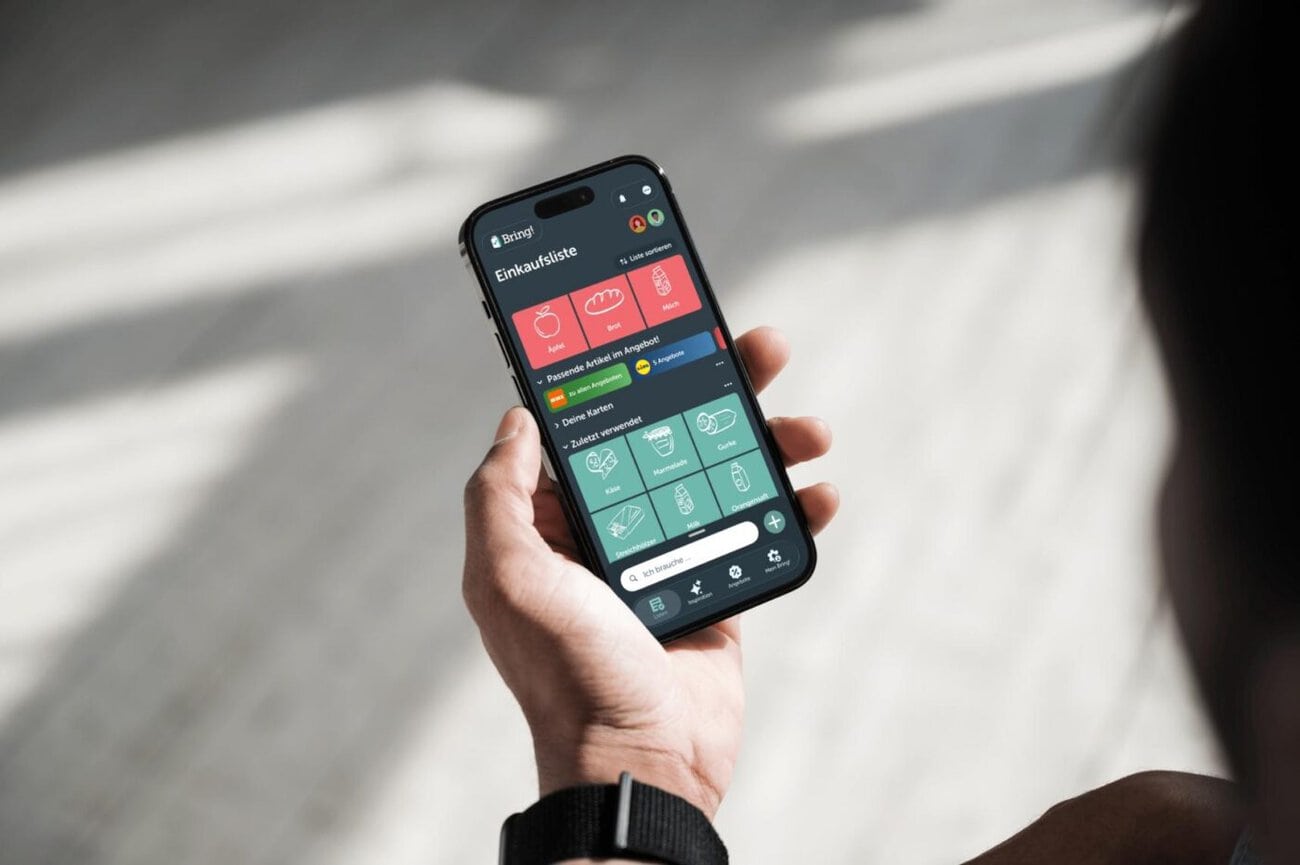
These days, purchasing decisions are no longer made in stores, but at home—at the kitchen table, while cooking, or on the sofa. This is shown by the latest Bring! Shopper's Guide 2026 from the Zurich-based mobile tech company Bring! Labs. For the report, the company analyzed anonymized data from the shopping list app Bring! covering the period from March 2025 to March 2026, as well as the results of a survey of 21,139 users from Germany, Austria, and Switzerland.
86 percent of consumers in Switzerland create their shopping lists at home—56 percent while relaxing on the sofa or at the dining room table, and another 30 percent while cooking in the kitchen. Planning often begins as early as two days before the shopping trip and takes place in several short stages.
The Bring! app influences purchasing decisions during the pretail phase. Source: zvg
The Pretail Phase as the Most Important Touchpoint in Shopper Marketing
It is precisely in this quiet, everyday situation that the actual purchase decision is made—not just in the store in front of the shelf. The so-called «pretail» phase thus becomes the most important touchpoint in shopper marketing. Juan-Pablo Schmid, CCO of Bring! Labs, sums it up: “The pretail phase—the time between the initial thought of making a purchase and the actual store visit—is the most important moment in shopper marketing. This is where the decision is made about which brands even make it into the shopping cart. Whoever is present and relevant during the planning phase ultimately wins the receipt.”
What’s on the list ends up on the checkout conveyor belt: More than half of Swiss consumers (59 percent) stick to their shopping list almost 100 percent of the time while in the store. While spontaneous additional purchases do occur, only a very small number of shoppers completely change their minds while in the store. For just under half of Bring! users (49 percent), special offers prompt them to buy products to stock up—preferably food items with a long shelf life, such as coffee or pasta.
The Bread Comeback, Cabbage Craze, and Protein Boom in the Bring! Shopper Guide
On Swiss shoppers’ grocery lists, protein is moving out of the fitness niche and into everyday life. Compared to last year, sales of protein drinks have risen by 86 percent, protein shakes by 83 percent, and protein powder by 81 percent. Other functional foods are also making their way to the checkout counter more and more often: Goji berries are up 103 percent year-over-year, and psyllium husks are up 97 percent. Matcha is booming with a 135 percent increase—among caffeinated beverages, classic coffee continues to top the list, followed by cola and energy drinks.
The bread market is experiencing a true renaissance: sales of sourdough and multigrain bread have each increased by more than 200 percent. In the produce aisle, cabbage is the new rising star—fermented and Asian varieties in particular, such as kimchi and pointed cabbage, are becoming increasingly popular. Meanwhile, milk, eggs, and bread remain staples in the shopping cart, continuing to top the lists of Swiss Bring! users.
Bring! Shopper Guide 2026 shows how to plan before visiting a store. Source: zvg
Beauty Boom Driven by Social Media
There’s also a lot going on beyond the grocery aisles. In the beauty sector, the social media makeup trend is driving demand: Lip gloss (+360 percent), bronzer (+131 percent), and blush (+77 percent) are benefiting from viral glow and contouring tutorials on TikTok and Instagram and are posting the strongest year-over-year growth.
Bring! Labs was founded in 2015 and now employs around 100 people at locations in Zurich, Basel, and Berlin. In addition to the shopping list app Bring!, the company also owns the deals app Profital. According to the company, the two apps support more than 21 million consumers worldwide through all phases of the shopping experience. With more than 4.2 million monthly active users in the DACH region, the platform aims to provide brands and retailers with touchpoints throughout the entire shopper journey.
]]>Google dreht Retail auf Agentic Commerce
https://www.markt-kom.com/en/markom/google-dreht-retail-auf-agentic-commerce/
Thu, Jan 15, 2026 10:24:47 +0000https://www.markt-kom.com/?p=249313
The National Retail Federation (NRF) is regarded as the central stage for the "future of retail" - with a focus on technology, customer experience, omnichannel and efficiency. In this setting, Alphabet and Google CEO Sundar Pichai clearly locates the current platform change as an AI platform shift.
The core of the Google thesis: Shopping is becoming "agentic"
Google's term for this is agentic commerce - AI agents perform tasks on behalf of customers, from product searches to transactions and aftercare. Google CEO Pichai describes a fundamental change: AI Mode shifts the search from keywords to natural conversations, with AI taking over the pre-sorting. Google cites the Shopping Graph with over 50 billion product listings as the database; more than 2 billion of these are updated every hour.
What Google is specifically announcing
1) The Universal Commerce Protocol (UCP): common language
UCP is a new open standard that acts as a common language for AI agents, merchants and payment providers across the entire customer journey. UCP establishes a standard for agents and systems to collaborate across user interfaces, businesses and payment providers. UCP is designed to be cross-industry and compatible with existing protocols such as Agent2Agent (A2A), Agent Payments Protocol (AP2) and the Model Context Protocol (MCP). UCP was developed together with industry leaders such as Shopify, Etsy, Wayfair and Target and is supported by more than 20 other companies in the commerce ecosystem, including American Express, Stripe, Visa and Zalando.
The "Universal Commerce Protocol" (UCP) connects AI Mode/Gemini with the retailer backends and standardizes steps such as discovery, cart, identity, checkout and order - based on APIs and standards such as MCP and A2A.Google wants to make Agentic Commerce scalable with the Universal Commerce Protocol (UCP): An open standard, supported by a broad partner ecosystem of platforms, retailers and payment providers - from Shopify and Walmart to Visa, Stripe and Zalando.
2) Business Agent: brand chat directly in Google Search
The Business Agent is also new: customers can chat directly with brands in Search - like with a virtual sales consultant, in the "Brand Voice". Activation and customization take place via the Merchant Center; in the future, training with own data, insights, offers and direct purchases are planned.
Google AI Commerce: Business Agent
3) Direct Offers: Offers in AI mode as a new ad play
This new pilot project for Google Ads enables advertisers to present exclusive offers, such as a special discount, directly in AI fashion to customers who are ready to buy. When users ask questions about products (e.g. looking for a carpet for a dining room), the AI can not only suggest suitable products, but also display exclusive offers directly. The display is AI-controlled: with Direct Offers, retailers specify in their campaign settings which offers they want to highlight and the AI decides when an offer is relevant.
Google AI Commerce - Direct Offers
4) Gemini Enterprise for Customer Experience: Shopping + Service as one agent platform
On the cloud side comes Gemini Enterprise for Customer Experience (CX): Google is introducing a central platform that combines shopping and customer service. Based on Google's latest Gemini models, ready-made and configurable AI agents are available there that can be implemented by companies within a few days. These agents can accompany the entire customer lifecycle, from the discovery of new products to solutions for potential problems after the purchase. The focus is shifting from simple chatbots to proactive digital concierges that can independently solve problems and carry out transactions under the supervision of companies. US retailers Lowe's and Kroger are among the first users of these agent tools, while Papa John's is the first company to use Google Cloud's omnichannel ordering agent (Food Ordering Agent).
Vanessa Lee, Shopify
What does this mean for the Swiss retail trade?
Google's NRF story can be boiled down to a simple key question: How do you not only get found in AI interfaces, but how do you get to the conclusion?
1) Product data becomes the "language" of AI
When shopping becomes conversational, classic keyword feeds are no longer enough. Product data must be able to answer questions: What goes with what, what alternative is available, which accessories are compatible - and why is the product the right choice. This is exactly where Google's Merchant Center logic is heading: away from a pure catalog and towards a data foundation that enables consultation in dialog.
2) "Buy where you browse" massively shortens the journey
With UCP and the checkout in AI Mode/Gemini, Google is moving the conclusion of the purchase directly to the moment of research. Shopping is thus completed more "in the conversation" - fewer click paths, fewer bounces, faster conversion. This is an opportunity for retailers, but also an architectural issue: as soon as the checkout takes place on platform interfaces, the customer relationship must still remain with the retailer.
This is why an early reality check is worthwhile for Swiss retailers: Are loyalty mechanisms (member prices, bonuses, benefits) already in place at the moment of purchase? Do transaction data and preferences flow cleanly back into your own CRM? And does the after-sales process - from service to re-engagement - remain in your own hands? In short: platform checkout can accelerate transactions. The decisive factor is that it also strengthens the relationship that counts afterwards.
Google's "Shopping Assistant" shows where commerce is heading: a query ("plan 4th birthday") becomes a dialog-based shopping experience - including inspiration, video, a specific product list and a direct route to the transaction.
3) Brand Voice becomes operational
With the Business Agent, Google puts the brand where retail is most sensitive: in the decision-making moment. Not as a banner, not as a claim, but as a conversation partner. This is precisely what makes the shift for branding so explosive: "brand voice" is transformed from a communication asset into an operative sales instance. Suddenly, tonality is no longer something that is polished in campaigns - it becomes a conversion lever in dialog. If you want to win here, you need more than a brand book in PDF format: You need an agent playbook that translates brand management into rules. In other words, in clean language, clear product truths instead of vague promises, defined no-goes and a brand safety that is capable of dialog and does not protect advertising environments, but answers.
The "Shopping Assistant" becomes a controllable retail infrastructure: In the Agent Builder, retailers define conversation and process paths (order, support, returns), while "Conversational Insights" shows in real time what the assistant is doing - from containment rate and CSAT to measurable sales uplift.
What's more, goodwill is branding - and is "communicated" early on in agent-based shopping. Returns, exchanges, guarantees and delivery issues are not just service details, but part of the brand personality. And even cross-selling takes on a new quality: not as an upsell trick, but as helpful relationship management at the right moment, like a digital concierge. This is an opportunity for the Swiss retail trade because the sector traditionally thrives on advice, reliability and trust - and it is precisely these strengths that can now be scaled digitally. The key question is therefore not: "Do we need an agent?" But rather: If our brand speaks in the future - how should it sell?
Conclusion
Google is not presenting a "search refresh" at NRF 2026, but a new architecture: AI search as an assistance interface, UCP as a transaction layer, agents as new touchpoints - and ads as contextual completion assistants. The task for Swiss retailers is to prepare data, offers, brand voice and service in such a way that they function in an agent-based shopping world.
]]>
Studie: KI und Handelskonflikte verändern das digitale Konsumverhalten
https://www.markt-kom.com/en/digital/studie-ki-und-handelskonflikte-veraendern-das-digitale-konsumverhalten/
Mon, Dec 15, 2025 10:16:44 +0000https://www.markt-kom.com/de/?p=248182Adrian Ott, Chief AI Officer EY Switzerland (Source: zvg)
Geopolitical uncertainties, the increasing influence of artificial intelligence and a high level of price sensitivity will shape digital consumer behavior in Switzerland and globally in 2025. These are the findings of the new study "Decoding the Digital Home 2025" by auditing and consulting firm EY. Trust, data protection and loyalty will become decisive factors - from streaming to connectivity.
For the study, 20,500 consumers in 14 countries were asked about their behavior and attitudes towards technology, media and telecommunications. In addition to Switzerland, Australia, Germany, France, Italy, Canada, the Netherlands, Norway, Austria, Sweden, Spain, South Korea, the United Kingdom and the USA took part. From Switzerland, 1000 consumers took part in the study.
Trade conflicts increase price sensitivity
In Switzerland, the vast majority express strong concerns: 86% of respondents fear that trade conflicts could further increase the prices of electronic devices such as smartphones, connectivity or streaming subscriptions. Only around 15% are not at all concerned about the potential impact of trade conflicts on their monthly spending.
Cost sensitivity remains high: 62% of households want to spend as little as possible on communication services. 43% of respondents would be prepared to switch to a cheaper package - even if this meant lower service quality or limited customer support. 69% would like broadband and internet providers to do more to offer fixed price guarantees for households.
Roman Haltinner, Cybersecurity Competency Leader at EY Switzerland (Source: zvg)
In Switzerland, 63% of respondents consider annual price increases by their internet provider to be unfair, while 53% describe them as difficult to understand. Geopolitical considerations also play a role in the choice of provider. Many respondents prefer local providers - such as broadband and mobile phone companies with customer service in their own country (27%), domestic technology manufacturers (23%) or content from Swiss producers (21%).
Streaming in transition: increasing willingness to cancel
In Switzerland, over half of households (66%) use at least one paid video streaming service. Almost half of those surveyed (47%) spend between 10 and 29 Swiss francs per month on this. Price and content are decisive factors when choosing a provider: 55% pay attention to attractive prices, 36% to their favorite content and 32% to an extensive media library.
Streaming remains popular, but the willingness to cancel is increasing. Within a year, the proportion of respondents in Switzerland who have canceled or plan to cancel their streaming subscription has risen from 26% to 38%. The main reason for canceling is cost savings (28%), while 85% are also slightly to extremely concerned that trade conflicts could further increase streaming prices.
Nevertheless, the user base remains stable: 36% users in Switzerland rarely think about canceling their subscription. At the same time, high-quality and exclusive content is gaining in importance as an incentive for new users. 36% of Swiss users are primarily interested in certain films or series, 32% in large content libraries.
Generative AI is establishing itself - trust remains fragile
Generative AI is gradually changing consumer behavior worldwide. In Switzerland, the technology is already established in everyday private and professional life: 45% of respondents actively use it. Acceptance in everyday life is growing: 52% of Swiss people find AI functions on their smartphone - such as for voice assistance, text creation or photo editing - helpful. 45% find AI-supported customer support such as chatbots useful. In addition, 42% find AI-generated search results more helpful than traditional ones.
"Despite the growing acceptance of AI systems, the survey shows that there are still major question marks over the use of personal data and the traceability of generated content," says Adrian Ott, Chief AI Officer EY Switzerland.
At the same time, trust in data protection remains fragile: 58% of Swiss respondents fear that their personal data could be misused to train AI systems. 59% fear that governments and regulators are not doing enough to limit the potential risks of AI. 61% express concern that AI will make online content less trustworthy and 66% fear abuse by "bad actors". 75% call for clear labeling of AI-generated content.
Customer loyalty in transition
The Swiss market is stable, but not very dynamic: 58% of respondents are satisfied with the price-performance ratio of their internet provider. A common reason for not switching providers is the perceived expense: in Switzerland, 42% cite this. This confirms a globally observable pattern of contradictory loyalty - customer loyalty that consists of genuine approval as well as concern about the complexity of switching.
Internet speed also plays a role. 56% of the Swiss believe that switching to faster internet is not financially worthwhile, while 40% state that they are frustrated that the fastest packages are not available in their region.
Roman Haltinner, Cybersecurity Competency Leader at EY Switzerland, says: "The increasing interdependence of digitalization, global risks and artificial intelligence clearly shows that trust is becoming a decisive success factor. Companies must create security architectures that are not only technically robust, but also convey transparency and reliability. This is the only way to restore consumers' lost sense of security and create the basis for stable digital ecosystems."
]]>450 Millionen: Black-Friday-Tagesumsatz sinkt weiter
https://www.markt-kom.com/en/markom/business/450-millionen-black-friday-tagesumsatz-sinkt-weiter/
Sun, Nov 30, 2025 12:52:04 +0000https://www.markt-kom.com/?p=247188Monday is Cyber Monday, the last of the big shopping events. The day offers shoppers another opportunity to find attractive discounts in online retail. Following the decline in sales on Black Friday, we also expect Cyber Monday to see a negative trend.
Black Friday: Sales fall for the second time in a row
According to our projections, yesterday's Black Friday generated sales of CHF 450 million in Swiss non-food retail within 24 hours. This is around CHF 10 million less than in the previous year. While brick-and-mortar retail recorded a noticeable decline, online sales stagnated. The two-year downward trend thus continues.
A key reason for the decline in sales is the now common practice of many retailers to extend their promotions over several days or even weeks instead of concentrating on the 24 hours of Black Friday. In addition, the ongoing economic uncertainty and the strong Swiss franc, which makes imports cheaper, have dampened sales.
Retail expert Julian Zrotz from blackfridaydeals.ch says: "The decline in sales in the 24 hours of Black Friday shows the ongoing structural change in the market. The previous massive sales peak is flattening out somewhat in favor of a broader distribution of purchases over the entire Black Friday week and the rest of November."
We predict that this trend will continue in the coming year and that almost all retailers will extend Black Friday to several days or even weeks. The classic 24 hours of Black Friday will therefore continue to lose relevance. Due to the ongoing pressure on margins and the significantly earlier and more strategic planning of promotions, we hardly expect discount campaigns that are unprofitable for retailers, as was often the case a few years ago. Instead, retailers will increasingly focus on expanding their loyalty programs and personalized offers for shopping events.
Monday is Cyber Monday: online retail sales fall to 75 million francs
Cyber Monday concludes the three big shopping days. Unlike Black Friday, the focus on this day is primarily on electronic items and online retail. However, the attractiveness of the offers is comparable. Numerous retailers extend their existing Black Friday discounts, while other providers add to their promotions or even launch completely new promotions.
We are forecasting a slight decline in sales in non-food online retail for Cyber Monday. This is expected to amount to CHF 75 million, which corresponds to a drop of around CHF 5 million compared to the previous year. The main reason for this development is the shift in sales away from individual shopping days to the surrounding days and weeks. This trend is exacerbated by the ongoing economic uncertainties. Sales of non-essential products, such as consumer electronics, are particularly affected by this decline.
The proximity of shopping days to Christmas has little impact. A representative DemoSCOPE survey conducted on behalf of blackfridaydeals.ch shows that just under half of Swiss people think that the shopping days are too close to Christmas and therefore commercialize the Advent season unnecessarily. A third, on the other hand, find this proximity practical. For many consumers, the campaign days offer the opportunity to buy gifts at particularly low prices. Retailers, in turn, make targeted use of the increased demand and focus on typical gift items.
]]>Faire Märkte Schweiz warnt: Zunehmende Marktmacht im Lebensmittelhandel
https://www.markt-kom.com/en/big-picture/faire-maerkte-schweiz-warn-zunehmende-marktmacht-im-lebensmittelhandel/
Tue, Nov 25, 2025 11:29:18 +0000https://www.markt-kom.com/de/?p=246775Source: zvg
The new Report of the German Monopolies Commission on the increasing market concentration in the food trade ruthlessly reveals the extent to which a small number of retail chains influence prices, producers and consumers. The fairness and transparency organization Fair Markets Switzerland sees a direct parallel to Switzerland in the developments highlighted there - albeit with even more serious structural consequences.
The German Monopolies Commission was commissioned in the course of the 2024 farmers' protests to investigate market power in the retail sector. A comparable independent body in this form does not exist in Switzerland, although protests here have also drawn attention to abuses in the value chains. Fair Markets Switzerland has been fulfilling this role for some time and has submitted several complaints and requests for investigations to the Competition Commission (ComCo) - but no concrete interventions have yet been made.
Market imbalances in Switzerland even more pronounced
The report from Germany states that large retail chains have systematically expanded their position vis-à-vis food producers. Agriculture is benefiting less and less from rising prices, while retail companies and some producers are expanding their position of power.
According to Fair Markets Switzerland, this assessment is particularly true for Switzerland. In Germany, according to the special report, four suppliers form an oligopoly in the food trade and share large parts of the market. In Switzerland, two major distributors, including their own significant industrial operations, dominate around 80 percent of the food market. The Swiss market is also more compartmentalized due to agricultural protection measures and has a smaller structure, which further increases the effect of concentration.
As a result, producers tend to receive less of the final retail price, small processors come under increased pressure and it is becoming less and less transparent for consumers how the price is made up. The recent discussion about the "rock-bottom prices" for 500 gram bread is a good example of the effects of structural market failure and abusive behavior, which undermines confidence in fair and functional pricing.
Sharper instruments and better structures needed
In its report, the Monopolies Commission calls for the remaining competition to be consistently protected. Fair Markets Switzerland also calls for market transparency and fair pricing.
According to Fair Markets Switzerland, the competition authorities need more effective instruments to be able to investigate highly concentrated sectors. At the same time, the almost 50,000 mostly small Swiss farmers must be given the opportunity to join forces effectively in order to build up real negotiating power vis-à-vis powerful buyers. Fair Markets Switzerland has developed political proposals launched.
Significantly more transparency along the entire value chain is also key. This is the only way to make the existing market imbalances visible. Only then can politicians and authorities react at all.
]]>Teads und Alpro steigern Kaufbereitschaft um 12 Prozent mit CTV-Kampagne
https://www.markt-kom.com/en/digital/teads-und-alpro-steigern-kaufbereitschaft-um-12-prozent-mit-ctv-kampagne/
Tue, Nov 25, 2025 09:45:07 +0000https://www.markt-kom.com/de/?p=246782Teads and Danone show how CTV advertising can be effectively integrated into an omnichannel campaign. Source: zvg
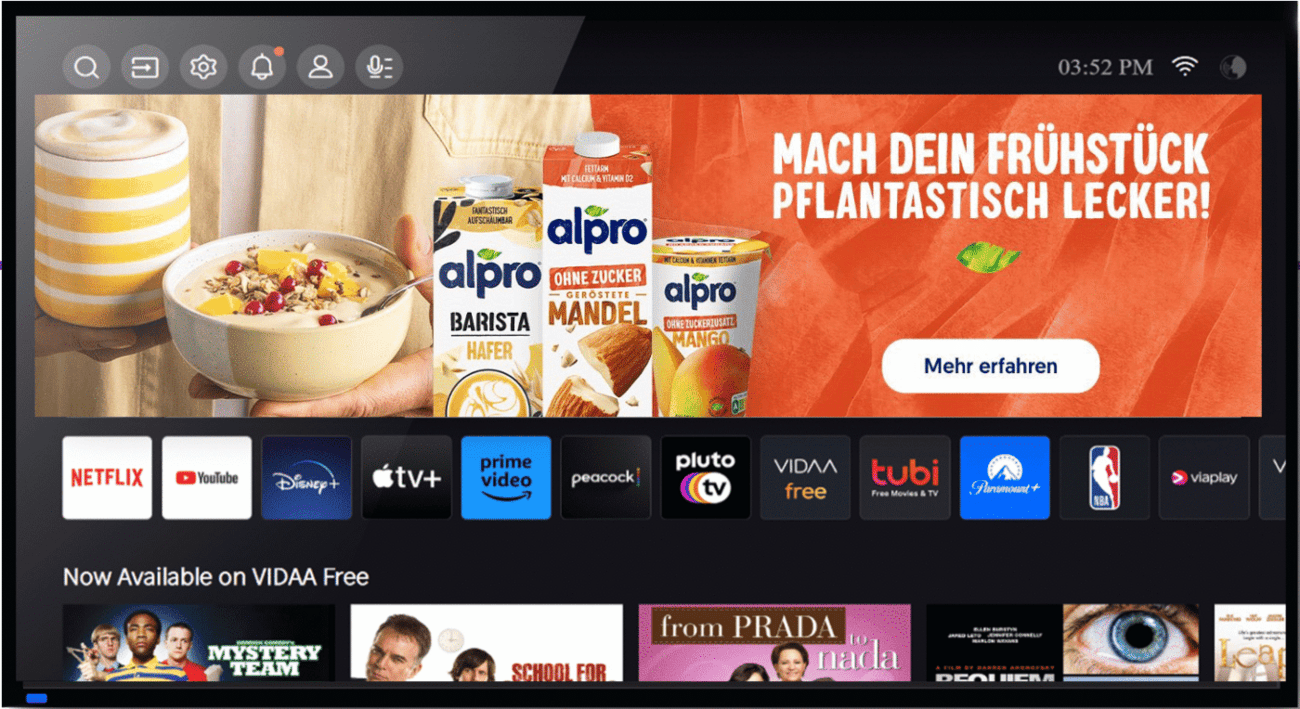
Alpro, Danone's plant-based brand, has partnered with Teads, the omnichannel outcomes platform for the open web, to deliver a successful omnichannel advertising campaign. The campaign used Connected TV (CTV) and interactive InRead formats to achieve measurable results along the entire marketing funnel. The result: purchase intent increased by twelve percent and eight percent more people from the target group considered the Alpro brand for their next purchase.
Alpro has been a pioneer of plant-based nutrition for over 40 years. In the face of increasing competition and changing consumer needs, the brand wanted to strengthen its relevance and visibility in the target group. The main objective was clear: to increase brand awareness and perception in order to position Alpro as the first choice in plant-based products.
Integrated omnichannel strategy with AI support
To achieve this goal, Teads implemented an integrated omnichannel strategy that seamlessly combined large-format advertising on Connected TV (CTV) with attention-grabbing, interactive in-read formats across a network of leading online publishers. The strategy was supported by Teads Studio's AI-powered optimization, which adjusted ads and video elements in real time to best engage the target audience and increase their attention.
At the same time, the campaign was continuously optimized for maximum attention in collaboration with Lumen Research. The impact of the campaign was confirmed by a comprehensive brand lift study conducted by the market research company Cint.
CTV significantly outperforms industry benchmarks
The evaluation shows the strong performance: with CTV HomeScreen and InRead placements, Alpro achieved significantly higher attention values than industry benchmarks. While, according to Lumen, standard display formats achieve an average view rate of 34% and attention of 2.5 seconds, the campaign was significantly higher - at 71% and 2.7 seconds.
The brand lift study also showed clear effects throughout the entire funnel. CTV contributed to increased brand awareness, increased consideration - especially among consumers with an affinity for plant-based products and wellness - and led to a ten percent higher purchase intention. The results had the strongest impact on people who had seen both branding and performance formats.
"CTV is more than just a branding tool; it's a catalyst across the entire funnel," says Bastian Sarott, CTV Business Lead at Teads. "In the Alpro omnichannel campaign, CTV played a crucial role in driving awareness, branding and performance together with other formats. The placements on the CTV home screen in particular showed how strongly integrated content can captivate viewers in the navigation environment."
"The collaboration with Teads has shown how we can measurably increase the attention and impact of our campaigns," says Katharina Esposito, Senior Media Strategy Manager DACH at Danone. "The results of the Attention and Brand Lift studies prove that CTV not only achieves reach, but also contributes to stronger brand values and a higher purchase intention."
]]>APG|SGA baut digitales Angebotsportfolio in Olten und Solothurn aus
https://www.markt-kom.com/en/digital/apgsga-baut-digitales-angebotsportfolio-in-olten-und-solothurn-aus/
Wed, Nov 12, 2025 10:22:44 +0000https://www.markt-kom.com/de/?p=24574316 City ePanels are now available to advertisers in Olten. Source: zvg
APG|SGA is strengthening its digital presence in the cities of Olten and Solothurn with the commissioning of a total of 32 screens. The core of the projects implemented with the two city authorities was the conversion of a total of ten analog city map systems into digital ones. Six are in Olten and four in Solothurn. Both cities can also use a third of the broadcasting time on the commercially usable screens, which are located on public land, for their own content such as cultural information, political information and official notices.
Emergency function for rapid population information
A special feature is an "emergency function": in the event of extraordinary events, the authorities can immediately override all areas, both the commercial and the Cityplan systems, and thus warn or inform the population in good time in the event of flooding, fire disasters or kidnappings. APG|SGA provides its own CMS for this purpose, which is used by both cities for broadcast planning.
Six City ePanels are in use in Solothurn. Source: zvg
One special feature is the "emergency function": in the event of exceptional incidents, the authorities can immediately override all areas and thus warn or inform the population in good time.
All the panels in Olten and Solothurn are in prime locations. In the city of Olten, 16 City ePanels are now available to advertisers. There are six in Solothurn. At the request of the city of Olten, all ePanels were produced in a special color that blends in particularly well with the surroundings.
The rollout of the new digital facilities is an example of how the needs of a city and its population can be implemented in harmony with commercial content.





























 Bring! Shopper Guide 2026: Purchasing Decisions Are Made at the Kitchen Table